Teen Winter Break Reading: Let Them Pick, Set a Page Goal, Skip the Nagging
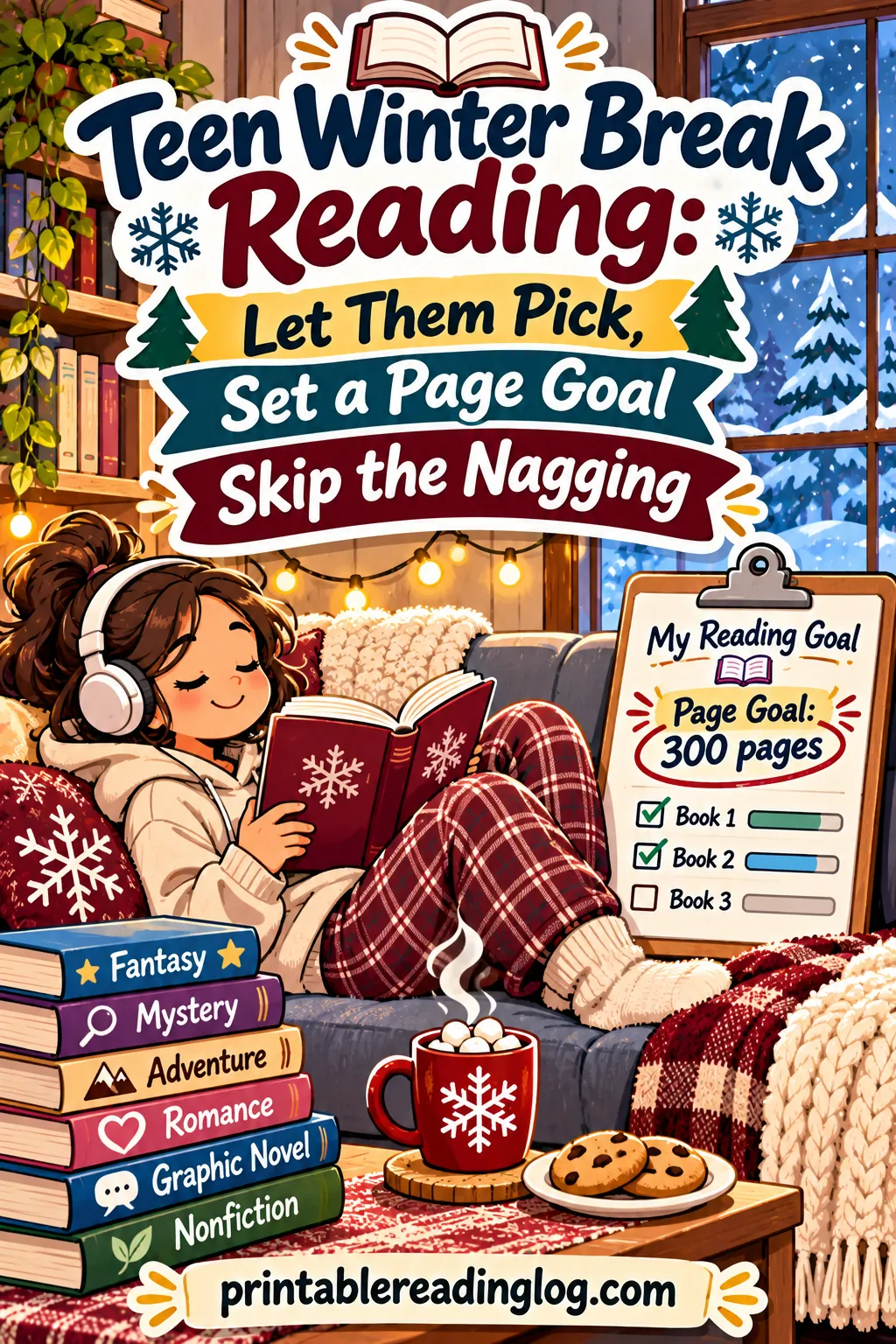
The teen winter break reading challenge that actually works has three parts: your teen picks every book (any format, any genre, rereads included), you agree on one simple page goal for the week, such as 100 pages, and they keep their own plain log that you don't sign, check or comment on. Nothing more elaborate than that. The goal is small enough that nobody fights about it, and the log puts your teen in charge instead of you.
The sheet itself comes from our reading log builder, set to a clean, grown-up layout with a pages column, a row of squares to color, and a short "read next" list, with no cartoon stars and no parent signature line. Below you'll find how to pick the goal with real numbers, the exact tool settings, what counts as reading, word-for-word scripts for the conversation, a two-week plan, and fixes for the usual snags.
📚 Printable Reading Log: make this log in 10 seconds
Set the name and goal, preview it, then print it free.
Free printables for this page
Ready-made, one-page PDFs from Printable Reading Log. Print as is, or change the columns in the maker above. See all free printable reading logs.
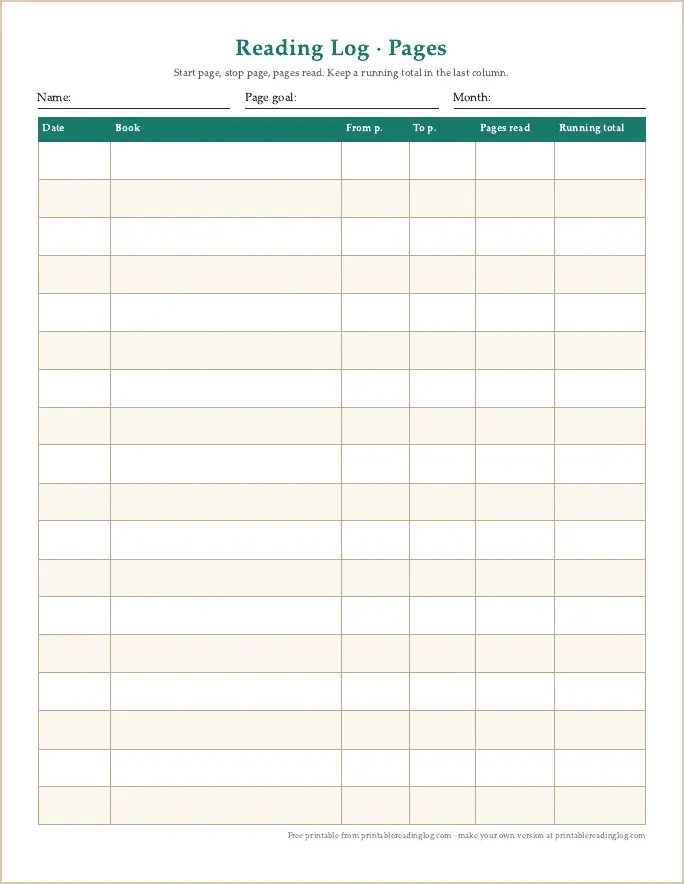
Reading Log by Pages
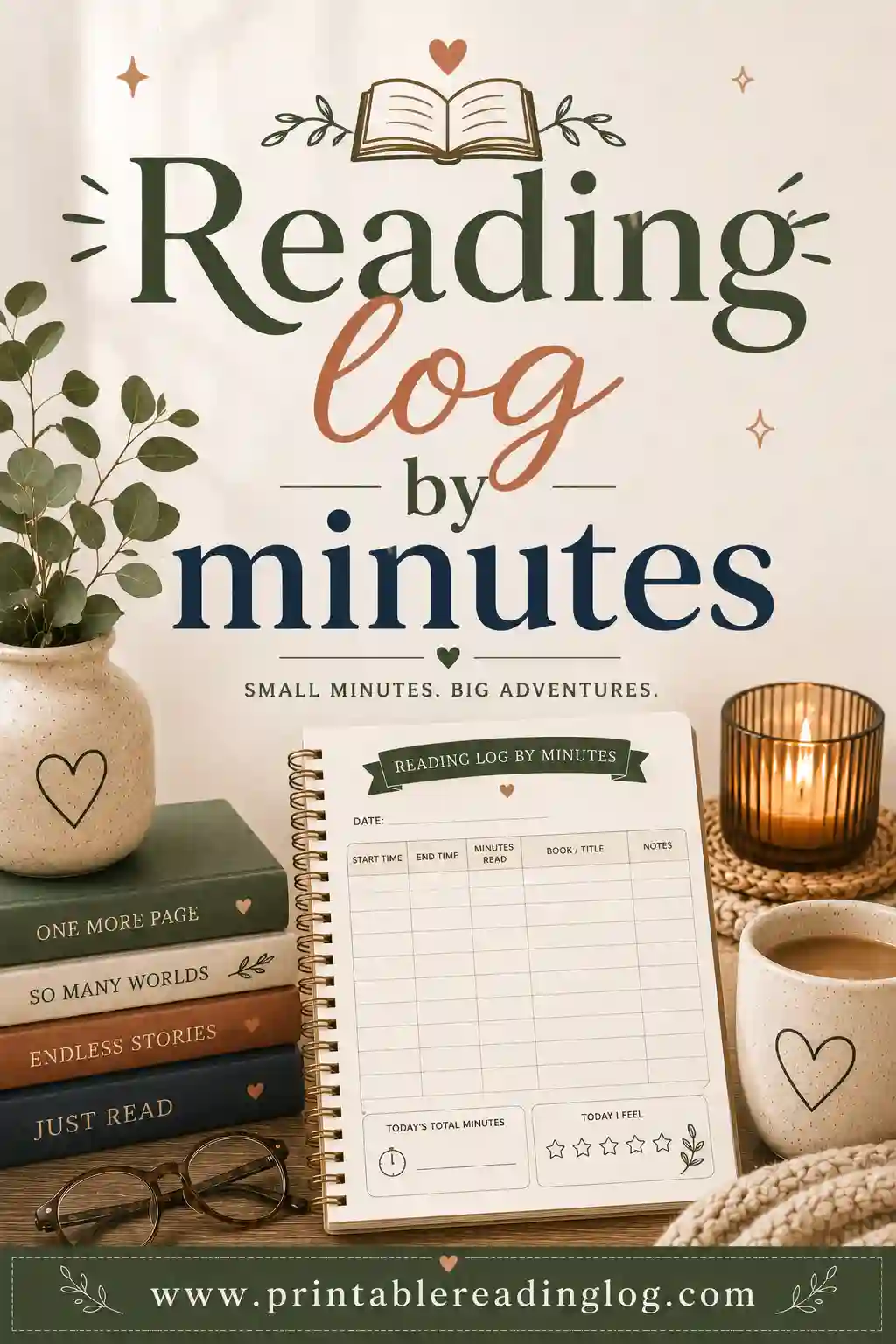
Log the page you started and stopped on each day; the sheet adds up pages read and a running total.
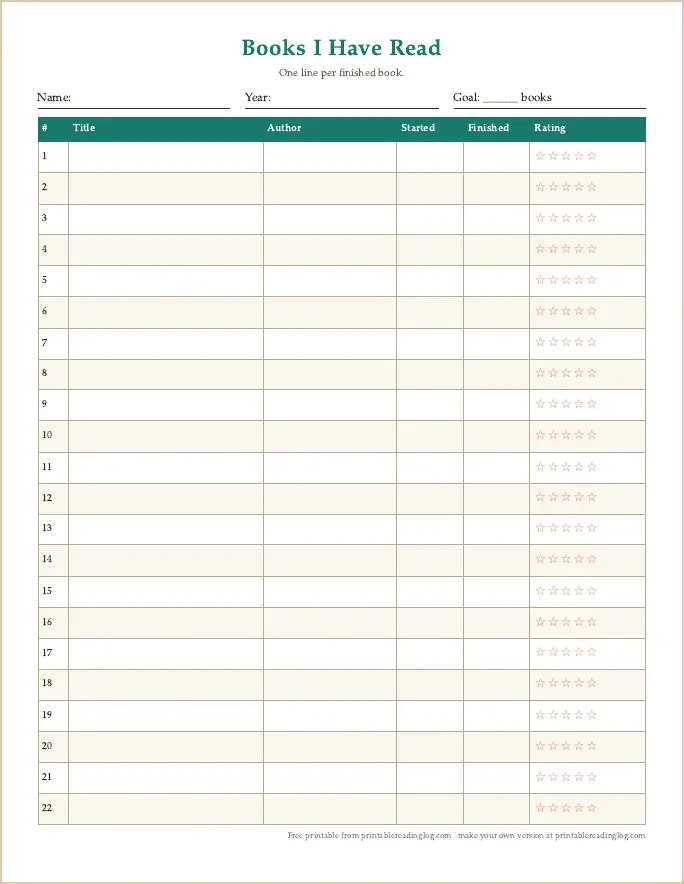
Book Log (books read)
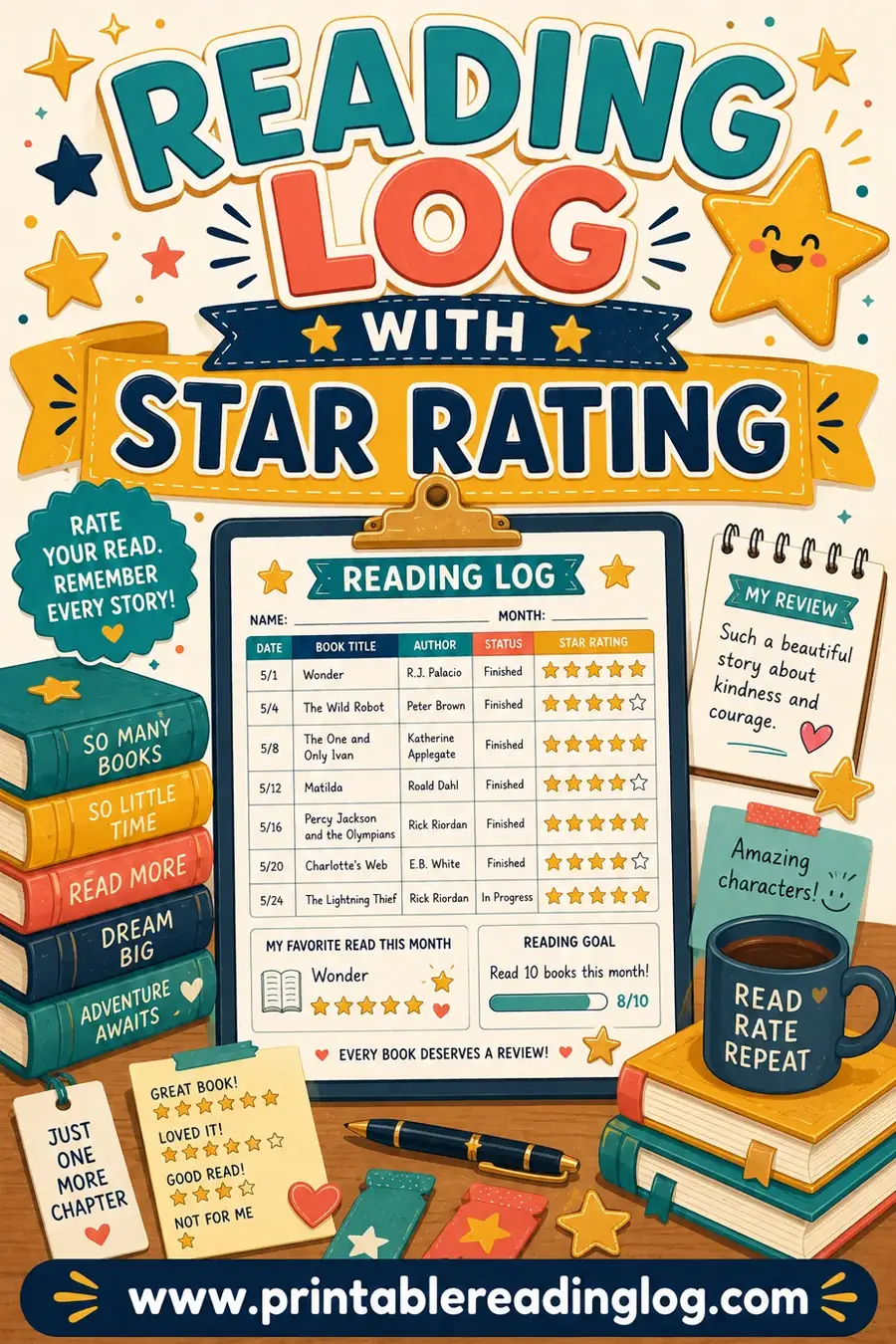
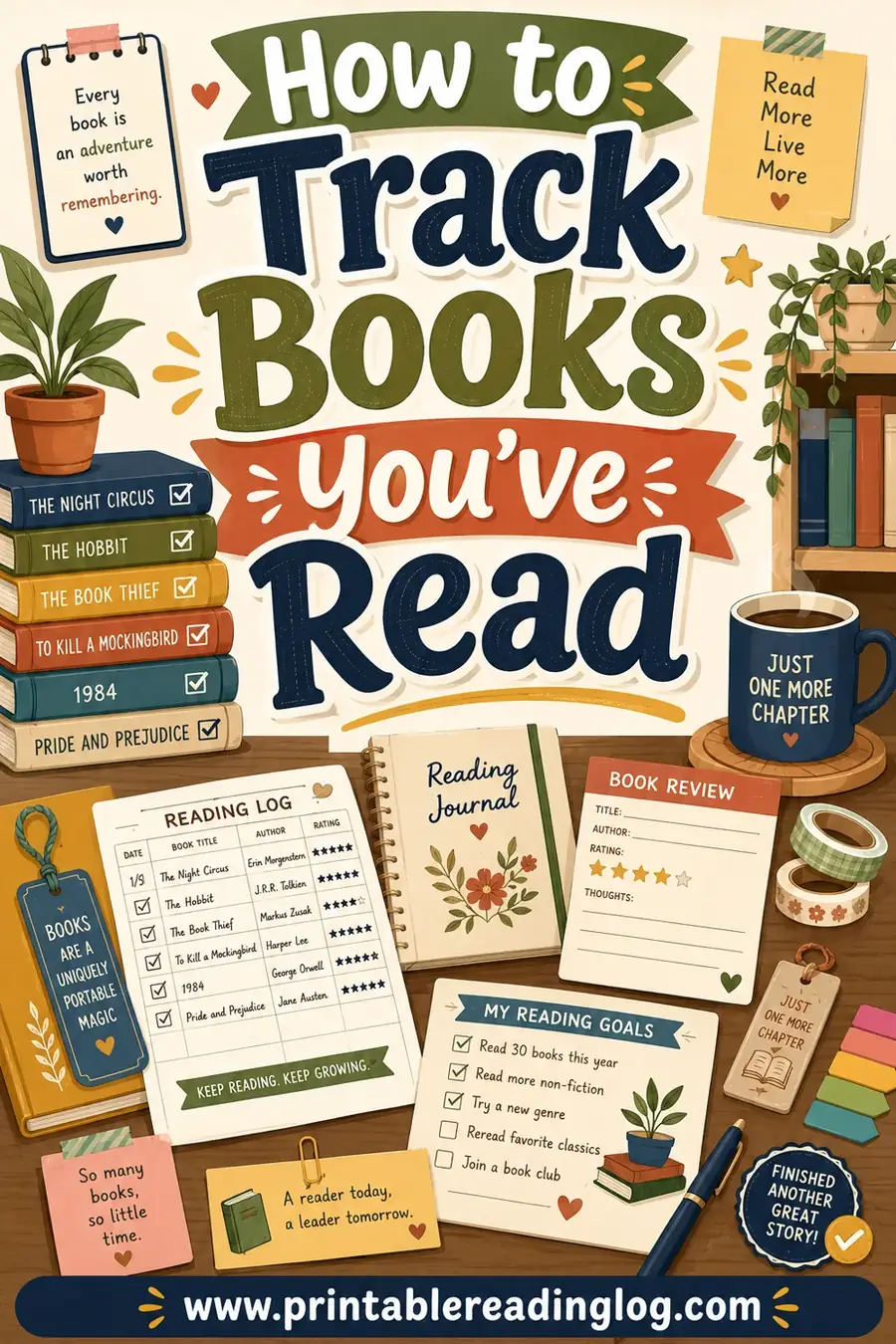
A clean list of every book you finish: title, author, dates started and finished, and a five-star rating.
What goes wrong when you hand a teen "a good book"
Most parents start with good intentions. School's out, the days are long, and the phone seems glued to your teen's hand. So you say something like, "You should read something this break," maybe with a book you picked out. And it lands like homework.
The first problem is ownership. A teen handed a "good book" by a parent often reads it as a message about who you wish they were, and even a great pick starts to feel like an assignment. The second is a goal with no edges. "Read more" has no finish line, so your teen can never be done, which means there's no reason to start.
The opposite mistake is a goal that's too big. "A book a week" sounds reasonable to an adult. To a 15-year-old who hasn't finished a book for fun in two years, it sounds impossible, so they don't try. Then there's the checking. Asking "Did you read today?" every evening turns reading into a chore you supervise, and most teens push back on supervision; they should be learning to run their own time anyway. And if reading is framed as the cure for too much phone time, it becomes the punishment, full stop.
A better speech won't solve any of this. A better setup will. When your teen chooses the book, the target is concrete and small, and the record belongs to them, there's very little left to argue about.
What a page goal does that a time goal doesn't
You could set a minutes goal instead, and some families like that. Pages suit teens over break for a few reasons, though. "15 pages" ends, while "20 minutes" can feel like watching a clock. A teen who reads hard for 12 minutes and hits their pages is done, and that feels fair to them. Pages are also easy to track without you: they glance at the page number when they start and when they stop, with no timer involved. And watching "212 pages" grow on a sheet is simply more satisfying than "180 minutes."
Pick a Page Goal Your Teen Can Hit
The single most important choice is the number. Set it low enough that your teen hits it in the first week without strain. You can always raise it later. You can't easily win back a teen who failed in week one and decided the whole thing is pointless.
A weekly goal works better than a daily one over break. Holidays are lumpy: travel days, family days, late nights, a day spent entirely on the couch. A weekly number lets your teen read 40 pages on a quiet Tuesday and zero on a busy Thursday without "failing."
Start from what they read now, not what you wish they read
Ask yourself honestly how much your teen reads for fun in a normal week right now. Then pick from this table.
| Where your teen is now | Weekly page goal for break | About per day | Rough time per day* |
|---|---|---|---|
| Hasn't read for fun in months | 50 pages | 7 pages | 10 minutes |
| Reads a little, now and then | 75 pages | 10 to 11 pages | 10 to 15 minutes |
| Reads sometimes, finishes a book or two a year | 100 pages | 14 to 15 pages | 15 to 25 minutes |
| Reads most weeks | 150 pages | 21 to 22 pages | 25 to 35 minutes |
| Already a big reader | Their own number, or no goal | Their call | Their call |
*Time depends a lot on the book and the reader. A fast-paced novel with lots of dialogue goes much quicker than dense nonfiction. Treat these as loose estimates, not targets.
For most teens, 100 pages a week lands well. It's about 15 pages a day, which is one or two chapters of a typical novel. It feels like "a real amount" to a teen without eating their break.
Worked example: a two-week break
Say your teen's break runs from Saturday, December 20, through Sunday, January 4. That's 16 days, or a bit over two weeks. (Check your school's calendar; breaks vary a lot by district.)
At 100 pages a week, two weeks plus two spare days comes to 200 pages total. If they read every single day, that's 200 ÷ 16 = 12.5, so about 13 pages. If they skip four days for travel and family, it's 200 ÷ 12 reading days, or about 17 pages on the days they do read.
Either way, it's well under 20 pages a day. That's the point. The goal is a floor, not a ceiling. If your teen gets into a book and reads 90 pages in one night, great. That counts.
Turning the goal into squares to color
The sheet can carry a row of goal squares. In pages mode, each square stands for 10 pages (or one reading session, if your teen prefers). So:
| Break length | Weekly goal | Total pages | Squares to set |
|---|---|---|---|
| 1 week | 100 | 100 | 10 |
| 2 weeks | 100 | 200 | 20 |
| 2 weeks | 75 | 150 | 15 |
| 3 weeks | 100 | 300 | 30 |
| 3 weeks | 150 | 450 | 45 |
Coloring a square every 10 pages gives your teen a small, quick win every time they sit down. It sounds young, but plenty of adults do the same thing on their own reading logs, and teens tend to like it once it's theirs.
Building a log that doesn't look like homework
A paper log works well over break for one big reason: it isn't on the phone. It sits on a desk or the fridge, it doesn't buzz, and nobody has to open an app to see it. If your teen does most of their reading on a screen anyway, the e-book log for teens handles percentages instead of page numbers.
Start from the High school preset, which gives the clean adult layout: serif heading, tighter rows, no kid graphics. Switch the logging mode to Pages so the amount column matches the goal. For the reader name, type something your teen won't roll their eyes at, like Break Reading, or hand them the keyboard and let them name it. The goal line has room for a short phrase such as 100 pages a week, my picks, any format.
Keep four columns: date, title, pages and notes. The one to switch off is the initials column. The high school preset turns it on for homework logs, but this sheet belongs to your teen, so there's no parent signature. Author, genre and star rating can stay off unless your teen asks for them.
Set 16 rows, which covers a two-week break with room for the odd day with two sessions; a three-week break needs the maximum of 24. Turn on the goal squares and set the count to your total from the table above (20 for 200 pages), and add the read-next list, a short block of lines where your teen can jot titles friends mention. Leave the challenge bar off, since it counts books and this goal is in pages. Classic, Sky and Mint all look grown-up, so let your teen choose the color. Then print, and save a PDF too, so a replacement is easy when the first copy vanishes under a pile of wrapping paper.
The same choices in one table
| Setting | Choose | Why |
|---|---|---|
| Preset | 🎓 High school | Clean adult layout |
| What are you logging? | Pages | Goal is in pages |
| Reader name | Break Reading (or their name) | Theirs, not yours |
| Reading goal | 100 pages a week, my picks, any format | The whole deal in one line |
| Columns | Date, Title, Pages, Notes | Short and fast to fill in |
| Initials (P/T) | Off | No parent signature |
| Rows per page | 16 (24 for three weeks) | One row per session |
| Goal-tracker bar | On, squares = total pages ÷ 10 | Quick visual wins |
| Read-next list | On | Plans the next pick |
How your teen fills it in
Each reading session gets one row. A typical one reads "12/22, [short book title], 23, P, good twist." The pages number is how many they read in that sitting, not the page they stopped on, so reading from page 41 to page 63 counts as 23. In the notes, a single letter marks the format (P for print, E for e-book, A for audiobook), and anything after it is optional.
Then they color one square for every 10 pages. Partial pages carry over, so 23 pages is two squares with 3 pages banked toward the next one. Some teens shade half a square instead, and that works just as well, because it's their sheet and their system.
Let Them Pick: What Counts as Reading Over Break
This is where most of the fighting comes from, so decide it before you hand over the log. The simple rule: if your teen chose it and it has words in it, it counts. That includes things a lot of parents quietly don't count.
| Format or type | Does it count? | How to log it |
|---|---|---|
| Novels, any genre | Yes | Pages read |
| Comics and graphic novels | Yes | Pages read |
| Manga | Yes | Pages read |
| Rereading a favorite | Yes | Pages read |
| Nonfiction on a hobby (sports, cars, cooking, music, games) | Yes | Pages read |
| Poetry or short story collections | Yes | Pages read |
| E-books on a phone or e-reader | Yes | Pages, or percent read times total pages |
| Audiobooks | Yes | Minutes, counted as about 1 page per minute |
| Long magazine or feature articles | Yes, if you both agree | Pages or minutes |
| Books for a school assignment | Your call, decide up front | Pages read |
| Social media posts, captions, texts | No | Not logged |
Comics, graphic novels and manga
Some parents worry these are "too easy." For many teens, they're the bridge back to reading for fun. They're also real reading: following a plot across panels, reading dialogue, keeping track of characters. A page of a graphic novel goes faster than a page of a dense novel, so a teen who reads mostly comics will blow past a 100-page goal. Let that happen without comment, or let them enjoy it, or agree on a higher page number for comic days. Don't do both, and don't change the rules mid-week. If you're still on the fence, our piece on counting graphic novels lays out the case.
Audiobooks
Audiobooks are a gift over break. They fit into time that can't hold a print book: long car rides to see family, walking the dog, shoveling snow, doing chores, winding down at night. A teen who says they hate reading may still love a well-narrated story.
The easiest way to log them on a pages sheet: write the minutes in the Pages column and put A in Notes. Then use a simple swap rule your teen agrees to, such as 1 minute of listening = 1 page. It's not exact, since it depends on the narrator's pace and the book, but it's fair enough for a break goal, and it keeps the math simple. If your teen mostly listens, print a separate minutes log instead, or use our audiobook tracking sheet, which is built around listening time.
E-books and reading on a phone
If your teen reads on a phone or e-reader, many reading apps show a percentage instead of page numbers. To turn that into pages, multiply the percent read by the book's total page count. For example, going from 22% to 30% of a 340-page book is 8% of 340, which is about 27 pages. Or just agree that each chapter counts as a set number of pages. Pick a rule once, then let it be.
Reading on a phone does come with the obvious risk: one notification and the book's gone. That's your teen's problem to manage, not yours to police. If they find it hard, they might switch to print on their own. A screen-free version of the challenge is an option too; see the screen-free reading log if your family wants to try that, but only if your teen buys in.
School assignments
Lots of teens have assigned reading over break, especially in high school English classes. Decide in advance whether it counts. Two fair options:
The first is to let it count. That's simple, and the log then helps them finish homework, but the whole challenge can turn into the assigned book and the choice disappears. The second is to leave it off the log and shrink the goal instead, say from 100 to 50 pages of their own picks during weeks with assigned reading. That protects at least some reading that's purely for them.
Many families pick the second option. The point of a break challenge is to remind your teen that reading can be something they do for themselves.
Where to find books they'll actually want
You don't need to buy anything. The public library is the obvious first stop: many let you place holds online and pick up in a day or two, and most lend e-books and audiobooks through library apps with just a card. Holiday hours can be shorter, so check your branch's schedule before break.
Friends are the other big source. Teens often take a recommendation from a friend over anything an adult suggests, so ask, "What's your friend group reading?" and leave it there. Interests work too. A teen who loves basketball might read a sports memoir, a gamer might love a fantasy series with a similar world, and a teen into cooking might enjoy a food memoir. Rereading a childhood favorite counts as well, and it's often a comfortable way back in. Our list of books teens tend to finish is there if they want somewhere to browse.
The read-next lines at the bottom of the sheet give them a spot to jot titles as they hear about them, so the next pick is waiting the moment they finish.
For more on letting older kids take the lead, the guide on how to encourage independent reading goes deeper.
The No-Nag Conversation: What to Say (and What Not To)
How you bring it up matters more than the log itself. Keep it short, say it once, and make it sound like an offer with a clear deal, not a lecture.
Script: the opening
You can adapt this to your own voice:
"Hey, I want to try something over break, and I want it to be easy for you. Read whatever you want, any format. Comics and audiobooks count. Aim for about 100 pages a week, and nothing beyond that. I printed a log you can keep yourself. I'm not going to check it or sign it. If you hit it by the end of break, we'll do [something they'd like]. Deal?"
Then stop talking. Let them respond.
If they push back
Teens often test the edges, and a calm answer ready in advance keeps it from turning into a debate:
- "That's so much." "Okay, what would feel doable? 75? 50?" Agree on whatever they name, as long as it's above zero. A goal they set themselves is worth more than a bigger one you set.
- "Wait, can I just listen to something?" "Yes. Minutes count as pages."
- "Can I read [a comic, a series you think is silly]?" "Yes. Anything you pick."
- "Why do I have to?" "You don't have to love it. I'd just like you to have some reading in your break, and I'd like you to pick what it is. If you have a better idea for how to do that, I'm listening."
- "What happens if I don't?" Have an honest answer. Ideally: nothing bad. The reward just doesn't happen. Punishments tend to sink this kind of challenge fast.
What not to say
- "When I was your age, I read all the time." Even if it's true, it won't help.
- "You'd read more if you got off your phone." Now reading is about the phone.
- "Did you read today?" every evening. This is the nagging the whole plan is built to avoid.
- "That's not a real book." About comics, manga, rereads or anything they chose.
- "How about this one instead?" right after they pick something. Suggest once, early, then let it go.
The check-in, once a week
Instead of daily questions, do one quick check-in at the end of each week. Not a review of the log, just a conversation:
"How's the reading going? Anything good?"
If they want to show you their log, great. If not, take their word for it. If they're short with you, say, "No worries, new week starts tomorrow." The log is the accountability. You're just being friendly.
Rewards that work for teens
A reward isn't required, but a small one for finishing the break goal can help. Experiences and a bit of extra freedom tend to land better with teens than stuff: picking dinner one night, a late movie or game night they plan, a library trip with no time limit, an extra hour of curfew on a night of their choice, a day off from one chore, or a breakfast outing with just you if that's something they enjoy.
Keep the reward tied to the whole break goal, not daily pages. Daily rewards turn reading into a transaction.
A Two-Week Winter Break Reading Plan
This is roughly how a break plays out with a 100-page weekly goal. Your dates will differ, so adjust. The rhythm is the useful part: easy start, room for the holidays, a gentle finish.
| When | What happens | Pages to aim for |
|---|---|---|
| 2 to 3 days before break | Have the talk. Agree on the goal and the reward. Print the log. | 0 |
| Last school day | Teen picks a first book, places library holds, or downloads an audiobook. | 0 |
| Day 1 to 2 | Sleep in. Start the book whenever. First square colored. | 10 to 30 |
| Day 3 to 5 | Most teens find their rhythm here, often at night. | 40 to 60 |
| Day 6 to 7 | End of week one. Quick friendly check-in. | Reach 100 |
| Holiday days | Family, travel, gifts. Reading is optional. Audiobooks in the car count. | 0 to 20 |
| Day 8 to 10 | Start or finish book one. New picks on the "read next" list. | 30 to 60 |
| Day 11 to 13 | Steady reading. Any extra pages are a bonus. | 40 to 60 |
| Day 14 | End of week two. Check-in, color the last squares, do the reward. | Reach 200 |
| First day back at school | Keep the log on the desk. No pressure to continue, but it's there. | Optional |
Before break: a quick checklist
- Talk once, calmly, about the deal.
- Agree on a weekly page goal your teen named or accepted.
- Agree on what counts (formats, assigned reading, audiobook swap rule).
- Agree on one reward for the whole break.
- Print the log and hand it over. Your teen decides where it lives.
- Make sure they have a first book, or a way to get one.
- Check library holiday hours if you plan to visit.
Making reading time without making a rule
You'll get further by making reading easy than by scheduling it. Leave books where your teen actually sits: the couch, the car, the kitchen table. Read in the same room yourself, because a parent with a book nearby feels like company rather than supervision. And use the car. Long drives to see relatives are made for audiobooks, so let your teen pick, even if it isn't your taste. Families on the road a lot over the holidays may like the travel reading log for those days.
Variations by Age, Reader Type and Busy Schedules
Teens aren't one group. A 13-year-old and a 17-year-old with a part-time job need different setups, but the core idea stays put: their pick, one goal, their log. Younger siblings can join in with the kids' version of the break challenge.
Ages 13 to 14
Younger teens are often still open to a little structure, as long as it doesn't look childish. The adult layout helps with that. Keep the goal modest (50 to 100 pages a week), and it's fine to offer a short list of three or four options if they're stuck, as long as "something else entirely" is always one of the choices. Coloring squares still lands well at this age, even if they won't admit it.
Ages 15 to 16
This is often the most resistant stretch. Lean hard on choice and privacy. Don't ask what they're reading unless they bring it up. Let them name the goal. A teen who sets 60 pages and hits it is in a much better place than a teen who was assigned 120 and quit.
Ages 17 to 18
Older teens are close to running their own lives. Treat this as an offer, not a rule. You might simply print the log, leave it on their desk with a note ("If you want it, it's yours"), and say nothing else. Some older teens like the challenge of a bigger personal goal, like one long book they've been meaning to read. College-bound teens home from a first semester can use the same log; just let them set everything. The high school reading log page has more setups for older students.
Reluctant readers
If reading has been a struggle, start smaller than you think: 30 to 50 pages a week, with audiobooks counted generously. Short books, comics and high-interest nonfiction are all fair game. The aim is a few good experiences, not a big number. The guide to a reading log for reluctant readers has more ideas for keeping the bar low and the wins frequent. If your teen has a reading difficulty, their teacher or school support staff can suggest formats that make reading easier.
Teens who already read a lot
Don't fix what isn't broken. A teen who reads every day doesn't need a goal. Offer the log as a record of what they read over break, if they want one, and leave the goal line blank or let them write their own. Some avid readers enjoy filling the read-next lines with a winter wish list more than anything else.
Teens with jobs, sports or long travel
Holiday jobs, tournaments and long trips eat up break. For these teens, lean on audiobooks and drop to a goal like 50 pages a week. A weekly goal is especially forgiving here: a 6-hour drive can cover most of a week's goal in one go.
| Teen | Weekly goal | Best format mix | Your role |
|---|---|---|---|
| 13 to 14, open to it | 75 to 100 pages | Mostly print, some comics | Offer a few picks if asked |
| 15 to 16, resistant | 50 to 75 pages (their number) | Anything they choose | Stay out of it |
| 17 to 18 | Their call | Their call | Leave the log, say little |
| Reluctant reader | 30 to 50 pages | Comics, audiobooks, short books | Make reading easy to start |
| Avid reader | Optional | Whatever they love | Supply library trips |
| Busy with job or sports | 50 pages | Audiobooks heavy | Protect one quiet hour |
Day four and the log hasn't moved
Even a good setup hits bumps. These are the ones parents of teens mention most, with what usually helps.
| Problem | What's probably going on | What to try |
|---|---|---|
| Log hasn't been touched after 3 days | First book isn't grabbing them | Say once: "Bailing on a book is allowed." Let them switch. |
| "I lost the log." | Normal | Reprint it from the saved PDF, or rebuild it in two minutes. No lecture. |
| They read 300 pages in two days, then stopped | They finished a book they loved and don't have the next one | Help them get the next pick fast. Library holds, a friend's recommendation. |
| They're logging pages you doubt | Trust feels shaky | Let it go. The log is theirs. Over-checking costs more than a few padded numbers. |
| They want to quit halfway | Goal feels too big or the novelty wore off | Offer to drop the goal, not the reading. "Want to make it 50?" |
| Holidays wiped out a whole week | Normal life | Week two starts fresh. No catch-up debt. |
| They only want to read on a phone | Fine, if it's reading | Agree on the percent-to-pages rule and move on. |
| They finished the goal on day 5 | The goal was too easy | Celebrate. Ask if they want a bonus goal, but don't push. |
| They say it's dumb and won't start | Feels like control | Step back fully. Leave the log out. Some teens start once nobody's watching. |
When to stop pushing altogether
If the challenge is causing real tension, it's okay to drop it. A break without reading isn't a disaster, and a break full of fights about reading can make the next attempt harder. Keep books in the house, keep reading yourself, and try again in summer with your teen setting the terms from the start.
What parents of teens ask the week before break
How many pages should a teenager read over winter break?
There's no official number. For a teen who reads now and then, 100 pages a week is a comfortable target, about 15 pages a day. For a reluctant reader, start at 30 to 50 pages a week. Over a two-week break, 100 pages a week adds up to about 200 pages, which is roughly one full novel.
How do I get my teenager to read over break without nagging?
Make the deal once, clearly, then step back. Let them choose what to read, agree on a goal they think is fair, and give them a log they keep themselves. Replace daily "Did you read?" questions with one casual check-in at the end of each week.
Do audiobooks count for a teen reading challenge?
Yes. Audiobooks are real reading for a break challenge and they fit into car rides, chores and walks. An easy rule is to count 1 minute of listening as 1 page. Write the minutes in the Pages column and mark the Notes column with an A.
Do comics and graphic novels count?
Yes. They involve following a plot, reading dialogue and keeping track of characters, and they're often what brings teens back to reading for fun. Because the pages go faster, you can agree on a higher page goal for comic-heavy weeks, or just let your teen enjoy them.
Should I make my teen read books from a list?
It usually backfires over break. A list from a parent can feel like homework. If your teen is stuck, offer three or four ideas tied to their interests, plus "something else entirely," then let them choose. Friends' recommendations and library browsing tend to work better than any list you make.
Should the reading log have a parent signature line?
Not for a break challenge. A signature line turns the log into a homework sheet and puts you in the role of inspector. When you build the sheet, the High school preset with the initials column switched off gives you a log that belongs to your teen.
What if my teen reads on their phone?
That still counts. Many reading apps show a percentage instead of page numbers, so multiply the percent read by the book's total pages to get a page count. If phone reading keeps getting interrupted by notifications, your teen may decide on their own to switch to print.
What reward should I offer for finishing the challenge?
Keep it small and tied to the whole break goal, not to daily pages. Experiences and freedom work well with teens: picking dinner, planning a movie night, a library trip with no time limit, or a night with a later curfew. A reward is optional; many teens are happy just to finish a book they chose.