Reading Log for High School: Free Printable
A reading log for high school is a sheet where a teen tracks their reading, both assigned books and independent reading, usually with the title, author, date, pages read, genre, and a short response or analysis note. By high school the log works as a study tool, a record of class reading, and a way to keep a personal reading habit alive through busy years. The easiest way to make one is with a free printable reading log maker where you set the columns, add a pages or minutes tracker, and print a clean, grown-up looking sheet at home.
Want to make one right now? Open the free tool, pick the layout that fits, and print as many copies as you need. No sign-up, no fee, nothing to install.
What Goes on a High School Reading Log?
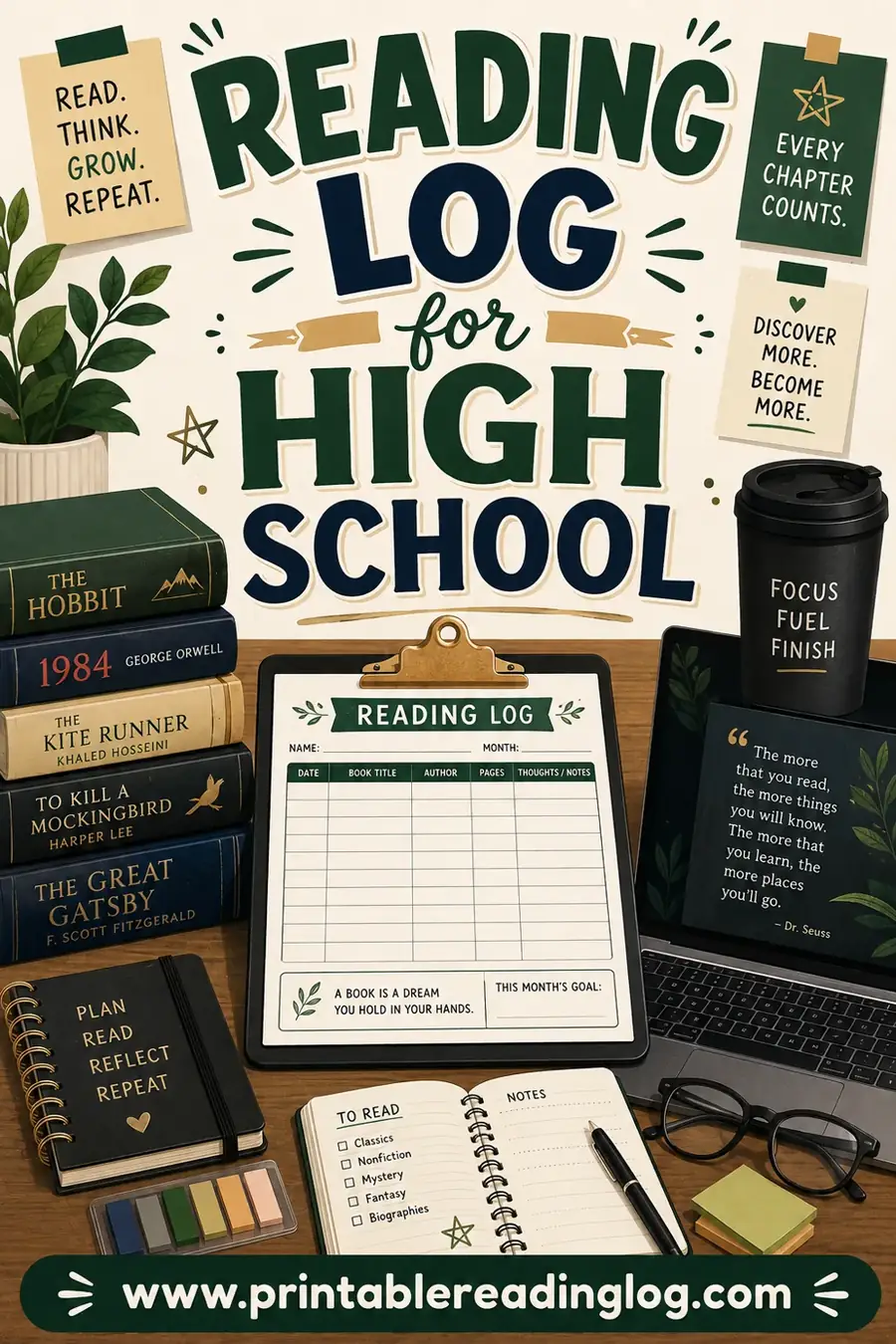
By high school, a reading log pulls double duty. It tracks assigned books for English class and protects independent reading for fun. The format should feel mature and useful, not like an elementary worksheet, or a teen won't bother with it.
A strong high school reading log usually includes:
- Title and author. Standard, and useful for citing in essays later.
- Date and pages read. The backbone, especially for pacing through a long assigned novel.
- Genre or category. Helps balance class texts with personal reading.
- A response or analysis note. A line or two on theme, a key quote, or a personal reaction.
- An optional minutes column. For independent-reading requirements measured in time.
The best high school log fits a week on a page and gives just enough room for a thoughtful note without demanding a full paragraph. That balance is what keeps a busy student using it.
Why a Reading Log Still Helps in High School
High schoolers are stretched thin between classes, activities, and screens. That's exactly why a log matters. It keeps reading from quietly disappearing and turns a stack of assigned chapters into a manageable plan.
A reading log for high school earns its keep:
- It paces assigned reading. Breaking a 300-page novel into nightly page goals beats a frantic all-nighter.
- It builds essay material. Quote and reaction notes become ready-made evidence for analysis papers.
- It protects reading for pleasure. A log keeps personal books on the radar during a packed semester.
- It satisfies class requirements. Many English classes require a logged number of independent reading minutes or books per term.
The goal isn't to grade reading into the ground. It's to help a teen keep reading, both for class and for themselves, during the years when that habit is easiest to lose.
A Sample High School Reading Log
Here's a filled-in week mixing an assigned novel with independent reading. The student handles all of it.
| Date | Title | Author | Pages | Type | Note |
|---|---|---|---|---|---|
| Mon | The Great Gatsby | F. Scott Fitzgerald | 20 | Assigned | Green light = hope |
| Tue | The Great Gatsby | F. Scott Fitzgerald | 22 | Assigned | Daisy's voice "full of money" |
| Wed | The Hate U Give | Angie Thomas | 35 | Independent | Loved Starr's voice |
| Thu | The Great Gatsby | F. Scott Fitzgerald | 18 | Assigned | Tom's hypocrisy |
| Fri | The Hate U Give | Angie Thomas | 40 | Independent | Couldn't put it down |
Five days, around 135 pages, a mix of class and personal reading, and a set of notes that double as essay prep.
Great Books for a High School Reading Log
The right independent pick keeps reading from feeling like all homework. You want books that are gripping and conversation-worthy. Here's a list grouped by category so students can balance assigned and personal reading.
| Book | Category | Why it resonates |
|---|---|---|
| The Hate U Give | Contemporary YA | Urgent, voice-driven, hard to stop |
| The Book Thief | Historical | Beautiful prose, unforgettable narrator |
| 1984 | Classic / Dystopian | Endlessly relevant, great for essays |
| The Poet X | Verse novel | Fast, powerful, accessible |
| Long Way Down | Verse / Realistic | Short, intense, perfect for reluctant readers |
| Educated | Memoir | Gripping nonfiction that reads like a novel |
| Pride and Prejudice | Classic | Witty, rewarding, often assigned anyway |
Mix assigned classics with independent picks students choose themselves. Verse novels and memoirs are real reading and often re-hook a teen who'd burned out on dense assigned texts. The "type" column on the log keeps the balance visible so reading for fun doesn't vanish under the class workload.
How to Make a Reading Log in 4 Steps
The free reading log maker sets up the columns so you skip the formatting hassle. Here's the whole process.
- Choose your columns. Title, author, date, pages, type (assigned vs. independent), and a note line cover a full high school log.
- Match your class requirement. If a teacher wants logged independent minutes, add a minutes column. If they want pages or a book count, feature those.
- Add a response line. A short space for a quote or reaction makes the log useful for essays later.
- Print. One sheet covers a week or a month. Print a stack and keep them in the English binder.
Print a term's worth at once so the log is never the reason a reading assignment slips.
Using the Log to Pace Assigned Reading
The single most useful high school move is turning a daunting assigned novel into nightly bites. This is where the log shines.
Break the book into a plan
Say you have two weeks to read a 280-page novel. Divide it up: 20 pages a night gets you there with room to spare. Write the nightly page target right on the log so each session has a clear finish line. No more cramming half the book the night before the test.
Capture quotes as you go
Keep the note column for one quote or one reaction per session. By the time you finish, you have a built-in bank of evidence and page numbers for any essay or discussion. That habit alone can lift an analysis paper from scrambled to sharp.
Reading Goals for High School
Set goals that fit a packed schedule and still move the needle. Specific and reachable beats ambitious and ignored.
- 20 to 30 minutes of independent reading a night. Even a busy student can protect this.
- A nightly page target for assigned books. Pace the novel so you never cram.
- A book or two of independent reading per month. Realistic alongside class texts.
- A term reading list. Track every book finished this semester and aim to beat last term's count.
Tie goals to something real, like a quieter weekend with a good book or a bookstore gift card for hitting a term target. Keep it motivating, not another source of stress.
Tips to Keep a High Schooler Logging
Teens will drop any tracker that feels like busywork. These moves keep the log useful and alive.
- Keep entries short. One line of note, not a paragraph. Fast logs survive.
- Separate assigned from independent. Seeing both keeps reading for fun from disappearing.
- Use it as essay prep. Frame the note column as "evidence I'll need later," not extra homework.
- Let them pick independent books. Choice is what keeps the personal reading habit breathing.
- Pair it with a routine. Read before bed or during a study block. Attach it to something steady.
When you've got younger readers at home too, the format scales down: our reading log for middle school is a lighter version, while the reading log for 3rd-5th grade and the reading log for 1st-2nd grade keep it simple for early readers.
Common Reading Log Mistakes to Avoid
A reading log should make a busy high schooler's life easier. These mistakes do the opposite.
- Writing essays in the note column. One quote or one reaction per session is the goal. A paragraph per night is unsustainable and the log gets dropped fast.
- Logging only assigned books. If the log holds nothing but class texts, reading for pleasure quietly dies. Keep a column for independent reading and protect it.
- Cramming instead of pacing. Reading half a novel the night before a test defeats the purpose. Use nightly page targets so the book never piles up.
- Treating it as graded busywork. Frame the log as a tool that builds essay evidence and paces assignments, not as another thing to be checked off for a grade.
- Ignoring personal taste. Let students pick independent books and let memoirs, verse novels, and genre fiction count. Respecting taste is what keeps the habit alive.
Avoid these and the log becomes a genuine study aid and habit-keeper, not one more assignment. The goal is a teen who reads well for class and still reads for themselves.
Using a Reading Log to Prep for Discussions and Tests
Beyond essays, a well-kept log is a quiet study superpower. The notes you jot while reading pay off when class moves fast.
Track themes as they emerge
Use the note column to flag a recurring theme or symbol each session, the green light in Gatsby, the mockingjay, the conch shell. By the end of the book you have a thread of evidence ready for a Socratic seminar or a test essay, with page numbers attached.
Note your own questions
Whenever a passage confuses you or sparks a question, log it. Bringing two or three real questions to class makes discussions easier and shows engagement. It also flags exactly what to review before a test instead of rereading the whole book.
Build a quick-review sheet
The week before a test, your log is already a study guide. Skim your notes to refresh the plot, themes, and key quotes in minutes. A student who logged as they read rarely needs a panicked all-night reread.
Frequently Asked Questions
How many minutes should a high schooler read each day?
Aim for 20 to 30 minutes of independent reading on top of assigned schoolwork. Consistency matters more than long sessions, so a steady habit beats weekend cramming. For assigned novels, set a nightly page target instead and log your progress so the book never piles up at the last minute.
Should a high school reading log track assigned and independent reading?
Yes, and keeping them separate is the smart move. A "type" column showing assigned versus independent keeps reading for pleasure visible alongside class texts. It also helps meet teachers' independent-reading requirements and ensures a heavy assigned workload doesn't crowd out personal reading entirely.
How can a reading log help with English essays?
Use the note column to jot one quote or reaction per session, along with the page number. By the time you finish the book, you have a ready bank of evidence for any analysis paper or discussion. It turns nightly reading into built-in essay prep instead of a separate scramble later.
What books are best for a high school reading log?
Balance assigned classics with gripping independent picks: The Hate U Give, The Book Thief, 1984, The Poet X, Long Way Down, Educated, and Pride and Prejudice. Let students choose their independent books, and let verse novels and memoirs count, since they often re-hook burned-out readers.
Can I print the reading log for free?
Yes. The reading log maker is free with no sign-up and no watermark. Choose your columns, add a pages or minutes tracker and a response line, and print as many copies as you need. Print a term at a time so the log is always ready when an assignment lands.
How do I keep a high schooler motivated to read for fun?
Let them choose their own independent books, keep log entries short, and pair reading with a steady routine like before bed. Frame the log as essay prep rather than busywork, separate assigned from independent reading, and set a reachable monthly goal with a small reward to keep the personal habit alive.
Ready to Print Your High School Reading Log?
Pick an independent book your teen actually wants alongside their assigned reading, open the free reading log maker, and choose the layout with title, author, pages, type, and a note line. In about a minute you'll have a printable reading log for high school that paces assigned novels, banks essay evidence, and keeps reading for pleasure alive. It's free, there's no sign-up, and you can print fresh sheets whenever you need them. Happy reading.