Printable Reading Log: Free, Customizable & Easy to Use
A printable reading log is a simple sheet you print and fill in to record what you read, when you read it, and how much. You jot down the book title, the date, and the time, pages, or chapters you covered, then watch the rows fill up over the days and weeks. The fastest way to make one that fits exactly how you read is to use a free reading log generator that lets you choose your format and print as many copies as you need.
Want to skip the reading and just build one? Open the free tool, pick whether you track by books, minutes, or pages, choose a kid or adult style, and print. No sign-up, no fee, no software to install.
What Is a Printable Reading Log?
Think of it as a scoreboard for your reading. Each row is one reading session or one book, and the columns capture the details you care about: title, author, date, and a number that shows how much you read. Some logs track minutes, some track pages, and some just list the books you finish.
The reason people reach for a printable version is simple. Paper sits on the fridge, on a nightstand, or in a school folder where you'll actually see it. There's no app to open, no battery to charge, and no notification to ignore. You read, you write it down, and the page does the rest.
A good log answers three questions at a glance:
- What did I read? The title and author.
- When did I read it? The date or the day of the week.
- How much did I read? Minutes, pages, or chapters.
Why Use a Reading Log at All?
A log turns a vague goal ("I should read more") into something you can see. That visible progress is what keeps most people going.
- It builds the habit. Checking off a row feels good, and that little reward makes you want to come back tomorrow.
- It shows real progress. A month of filled-in rows is proof you're reading more than you thought.
- It works for school. Lots of teachers ask kids to log nightly reading, and a clean sheet makes that painless.
- It helps you remember books. Months later, your log is a record of everything you read and loved.
It's also a gentle accountability tool. When you have to write down a zero, you notice. Most people would rather pick up the book for ten minutes than leave the row blank.
Types of Printable Reading Logs
There's no single "right" log. The best one matches how you actually read. Here are the most common formats and who each one suits.
| Log format | Tracks | Best for |
|---|---|---|
| Books-finished log | Titles you complete | Adults and goal-setters chasing a yearly count |
| Minutes log | Time spent reading | Kids with nightly reading homework |
| Pages log | Pages read per session | Anyone working through long or dense books |
| Chapter log | Chapters per book | Readers tackling chapter books or textbooks |
| Daily/weekly grid | A checkbox per day | Habit-builders who want a streak |
You don't have to pick just one. Many people run a minutes log for daily sessions and a separate books-finished list for the year. The reading log generator lets you build whichever style you want, so it's easy to try a couple and keep the one that sticks.
Minutes vs. pages: which should you track?
If you're building a habit, track minutes. "Read for 20 minutes" is a clear, fair goal no matter how fast you read or how hard the book is. If you're working through a specific book or a long series, track pages or chapters so you can see the finish line getting closer. Kids' reading logs almost always use minutes, because it keeps the bar the same for every reader in the class.
What to Put on Your Reading Log
A reading log only works if it captures the right details without becoming a chore. Here's a sample of what a clean, useful log looks like in practice.
| Date | Book title | Pages / Minutes | Notes |
|---|---|---|---|
| Mon 6/2 | The Hobbit | 18 pages | Loved the riddle scene |
| Tue 6/3 | The Hobbit | 22 min | Read before bed |
| Wed 6/4 | The Hobbit | 15 pages | — |
| Thu 6/5 | Charlotte's Web | 20 min | Started a new one |
| Fri 6/6 | Charlotte's Web | 25 min | Finished chapter 4 |
Notice the "Notes" column. It's optional, but it's where a log goes from a chore to something you'll actually want to keep. A one-line reaction ("scary part!" or "didn't love it") turns the sheet into a tiny reading diary you'll enjoy looking back on.
Keep the columns to the four or five things you'll really fill in. A log with ten columns looks impressive and gets abandoned by day three.
How to Make a Printable Reading Log in 4 Steps
You don't need a spreadsheet or any design skills. Here's the whole process.
- Choose your format. Books, minutes, or pages. Pick the one that matches your goal.
- Pick a style. A colorful kid version with space to draw, or a clean adult layout. The generator has both.
- Set the length. A week per page, a month per page, or a simple running list.
- Print. Hit print, stick it somewhere you'll see it, and start your first row tonight.
That's it. If you want to reuse the same sheet, slip it into a clear sleeve and fill it in with a dry-erase marker, then wipe and start fresh next week.
Reading Log Ideas for Every Reader
The same basic sheet flexes to fit almost anyone. A few of the most popular setups:
For kids and students
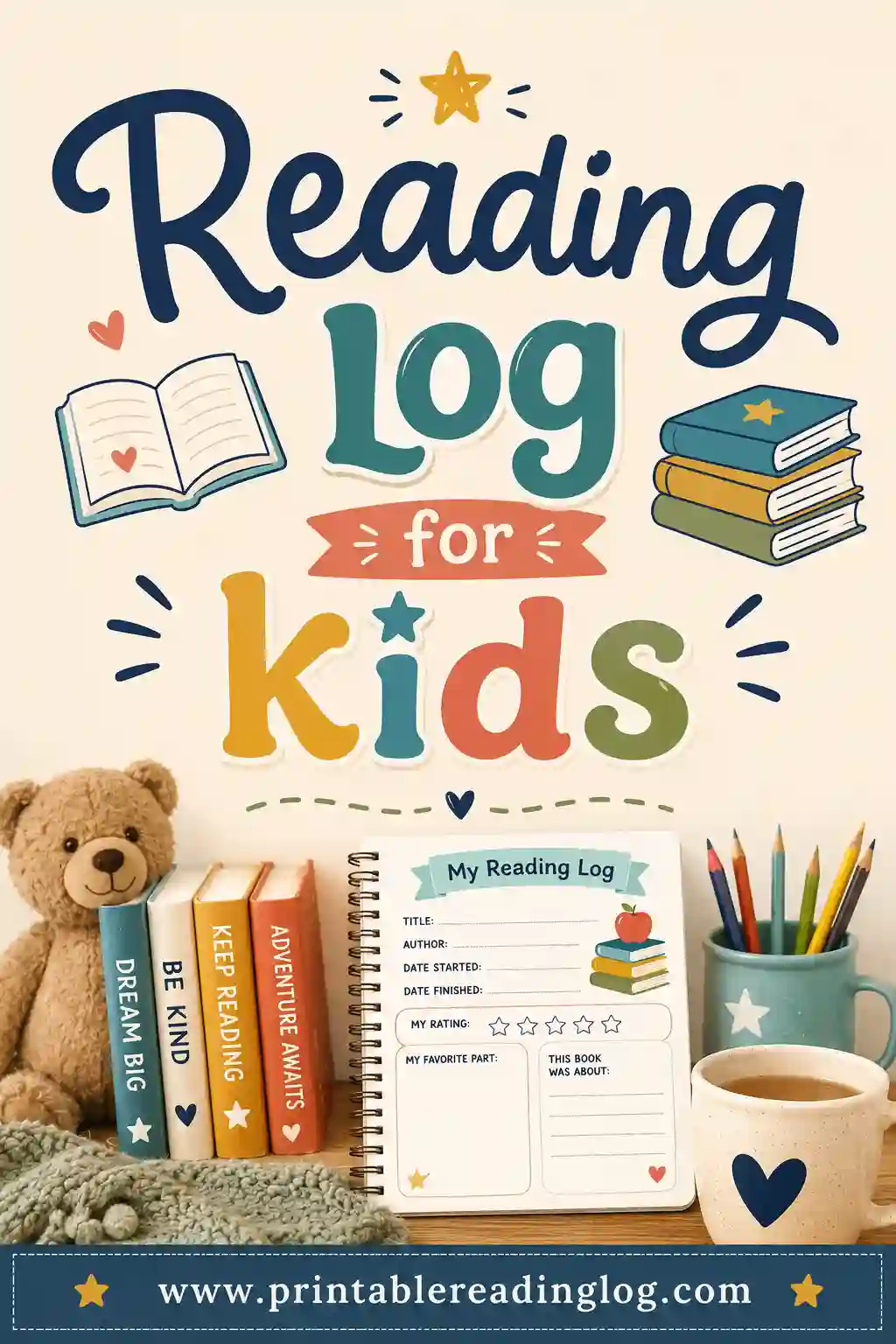
Use a minutes log with big rows and a spot for a parent or teacher signature. Add a small drawing box so younger kids can sketch a scene from the story. Pair it with a simple goal like "20 minutes a night" and let them color in a star each time they hit it.
For adults building a habit
Try a daily grid where you check off any day you read, even for ten minutes. The goal isn't a page count, it's the streak. Seeing five days in a row checked off is a surprisingly strong nudge to make it six.
For book-challenge fans
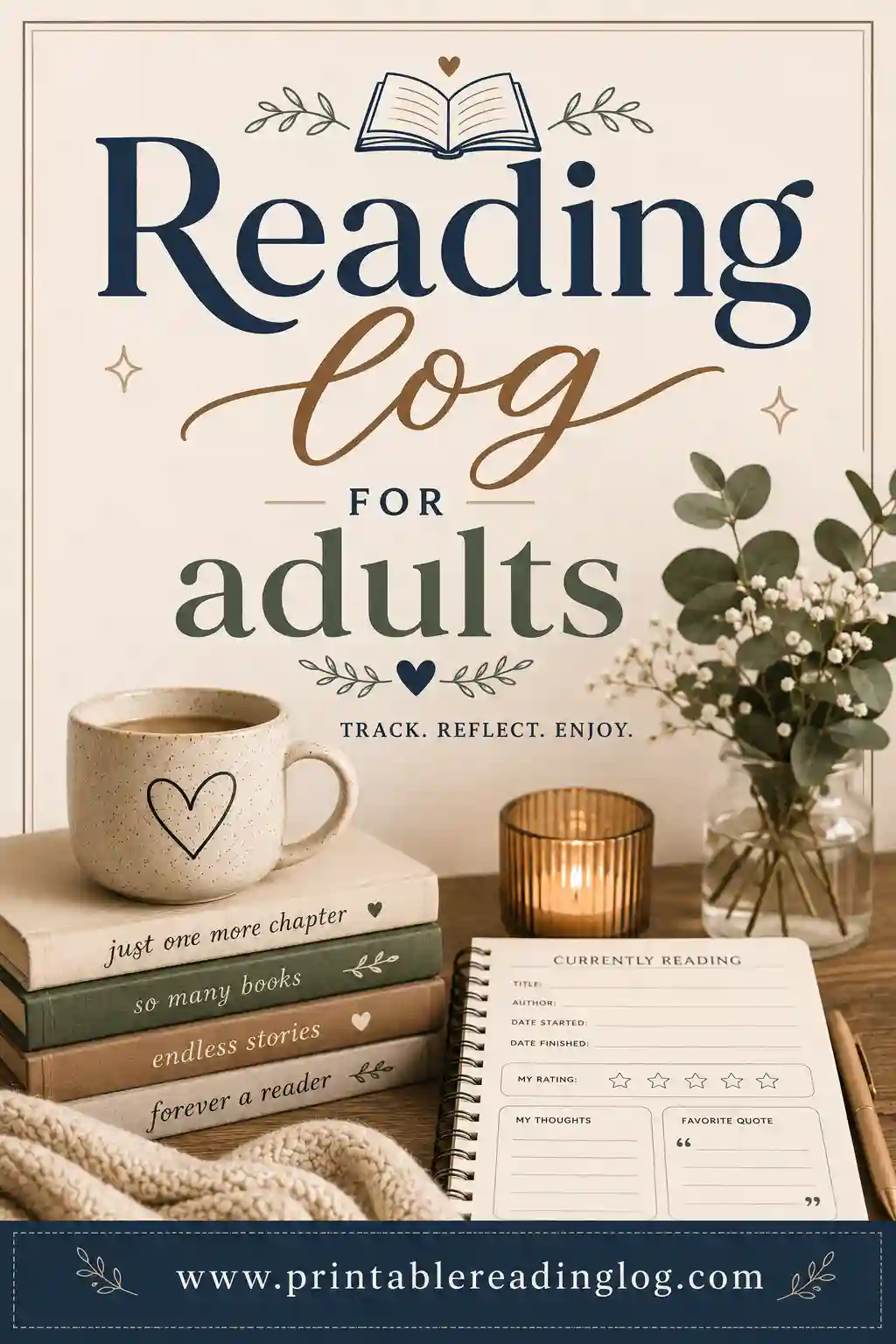
If you're chasing a yearly number, keep a books-finished log: one row per book, with the title, author, date finished, and a star rating. By December you'll have a complete list of your reading year, which is half the fun of a challenge.
For families
Print one log per person and put them all on the fridge. A little friendly competition ("who read the most this week?") gets everyone reaching for a book.
Printing Tips for Logs You'll Actually Use
A few small choices make your log nicer to use and last longer.
- Print on regular paper for kids. They'll want to write big and maybe color, so cheap paper they can replace weekly is perfect.
- Use cardstock for a keeper log. If you're tracking a whole year, print the books-finished list on sturdy paper so it survives twelve months on a shelf.
- Slip it in a sleeve for reuse. A clear sleeve plus a dry-erase marker turns one printout into a reusable weekly tracker.
- Print a test page first. Check your margins so no column gets cut off before you print a full month's worth.
- Keep a stack handy. Print a few weeks at once so a finished sheet is instantly replaced and the habit never stalls.
Common Reading Log Mistakes to Avoid
A log is easy to set up and easy to abandon. Sidestep these and yours will stick.
- Too many columns. If filling a row takes longer than a tweet, you'll quit. Track three or four things, no more.
- An unrealistic goal. "Read 100 pages a day" sets you up to fail. Start small, like 15 minutes, and raise the bar once it's a habit.
- Hiding the log. A log in a drawer is a log you forget. Tape it somewhere you pass every day.
- Skipping the notes. Even one word per book makes the log fun to revisit. A pure number grid gets dull fast.
- Logging only big sessions. Ten minutes counts. Logging the small reads is exactly what builds the streak.
Frequently Asked Questions
What is a printable reading log?
It's a sheet you print and fill in to track what you read and how much. You record the book title, the date, and a number, usually minutes or pages, so you can see your reading add up over time. You can make one free with the reading log generator in about a minute.
Is the printable reading log really free?
Yes. You build it and print it yourself at no cost. There's no sign-up, no watermark, and no limit on how many copies you print, so a whole family or classroom can run on a single design.
Should I track minutes or pages?
Track minutes if your goal is a daily reading habit, since it's a fair target for any reader. Track pages or chapters if you're working through a specific book and want to watch the finish line get closer. You can build either style with the tool.
Can I make a reading log for my kids?
Absolutely. Pick the kid style for big rows, a signature line, and a little drawing box. A simple "20 minutes a night" goal paired with a printable log is a classic way to build a young reader's habit. See our dedicated reading log for kids guide for more ideas.
How often should I fill in my reading log?
Right after each reading session, while it's fresh. It takes ten seconds to jot the date and a number. Doing it in the moment is what keeps the log accurate and the habit alive.
Can I reuse the same printed log?
Yes. Slip the sheet into a clear plastic sleeve and fill it in with a dry-erase marker. Wipe it clean at the end of the week and you've got a fresh log ready to go again.
Ready to Build Your Printable Reading Log?
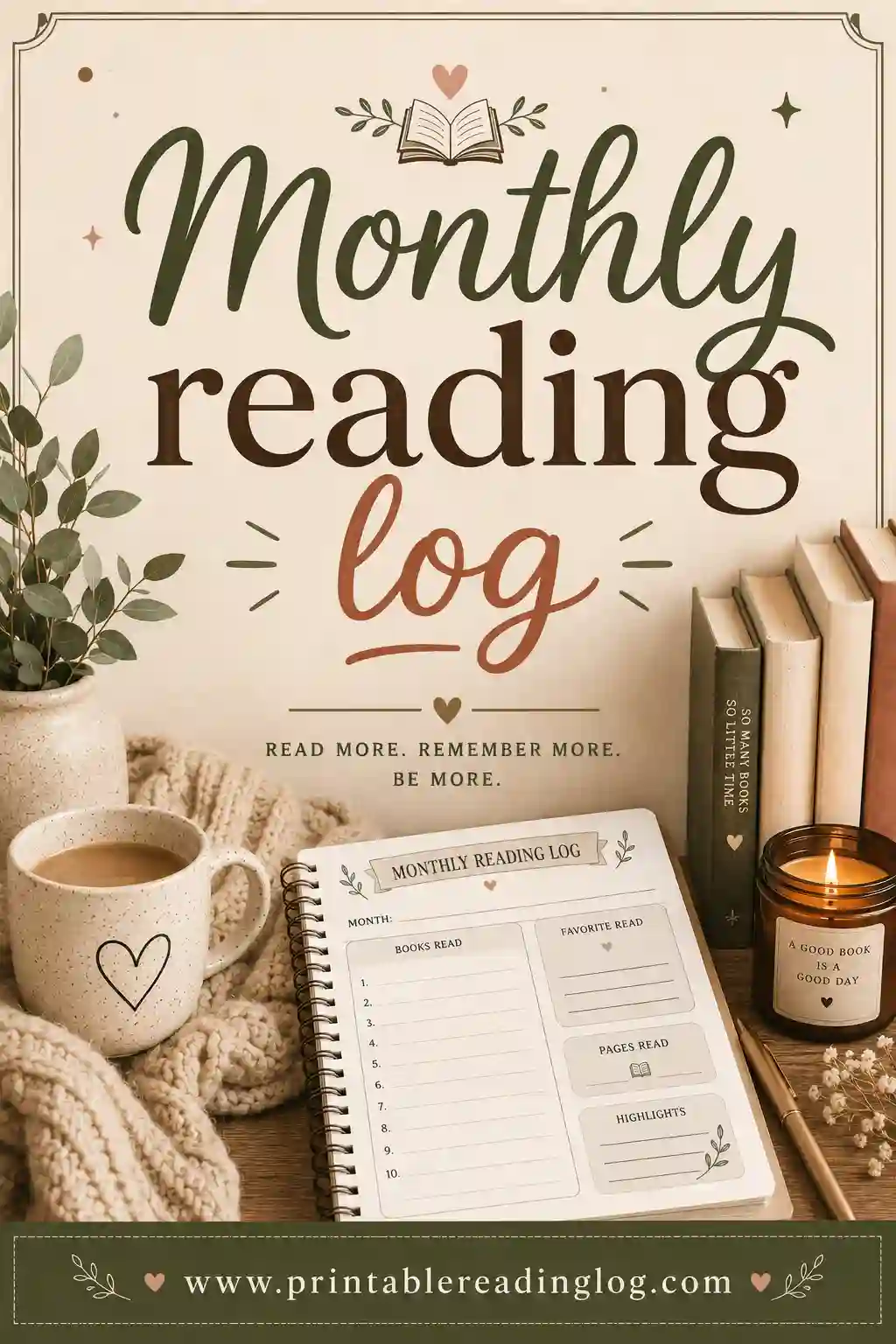
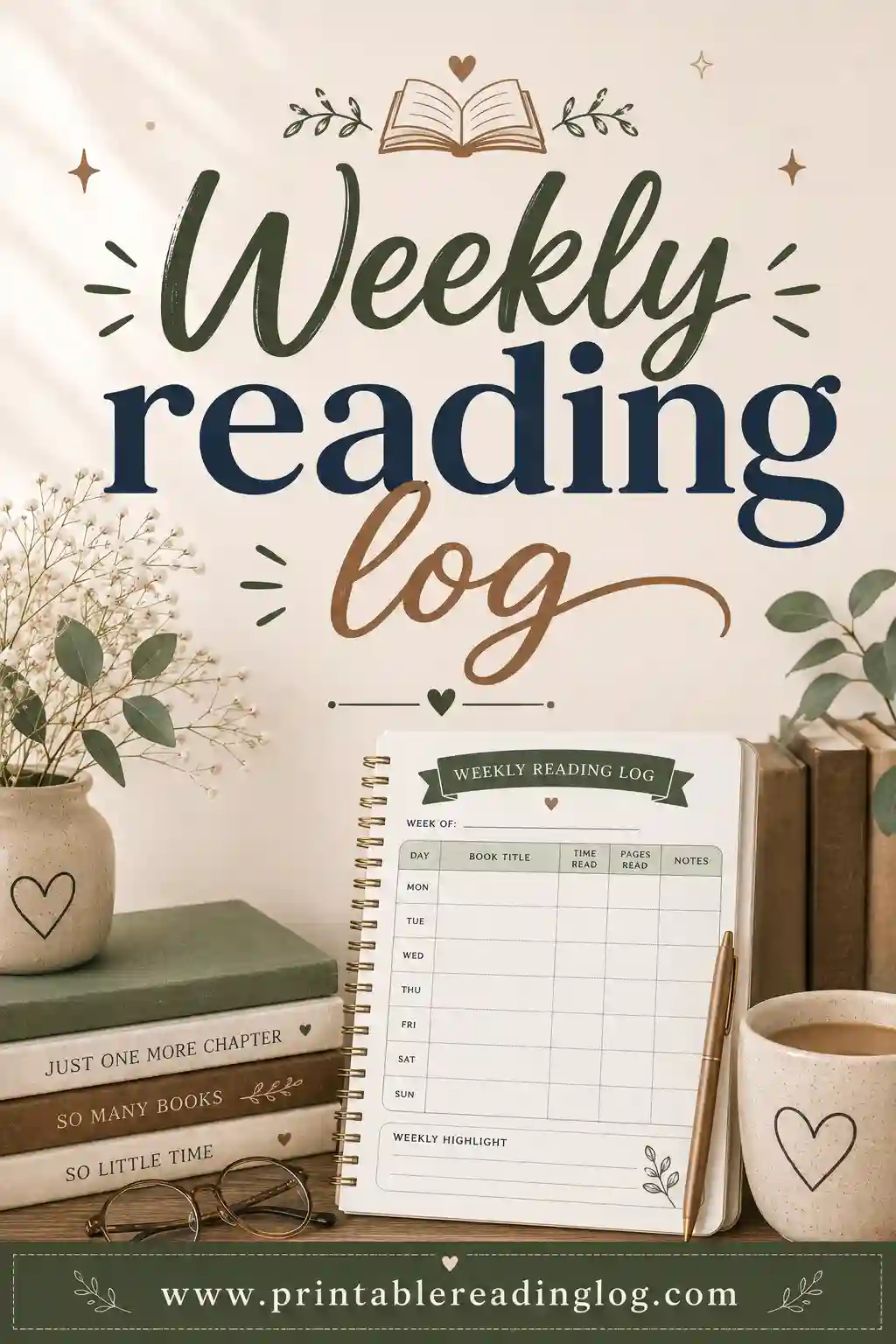
Pick your format, choose a kid or adult style, and open the free reading log generator to print a clean, ready-to-use sheet in minutes. It's free, there's no sign-up, and you can print as many as you need. Start your first row tonight, even if it's just fifteen minutes, and watch the rows fill up. For more ideas, peek at our monthly reading log and weekly reading log guides.