Reading Log for Kids: Free Printable & Fun to Use
A reading log for kids is a simple sheet where a child records the books they read and how long they read each day, usually with a spot for a parent or teacher to sign. It turns nightly reading into something a kid can see and feel proud of. The easiest way to make one that matches your child's age and reading goal is to use a free reading log generator and print a fresh sheet whenever you need it.
In a hurry? Open the free tool, choose the kid style, set a goal like "20 minutes a night," and print. No sign-up, no fee, and you can run a whole class on one design.
What Is a Reading Log for Kids?
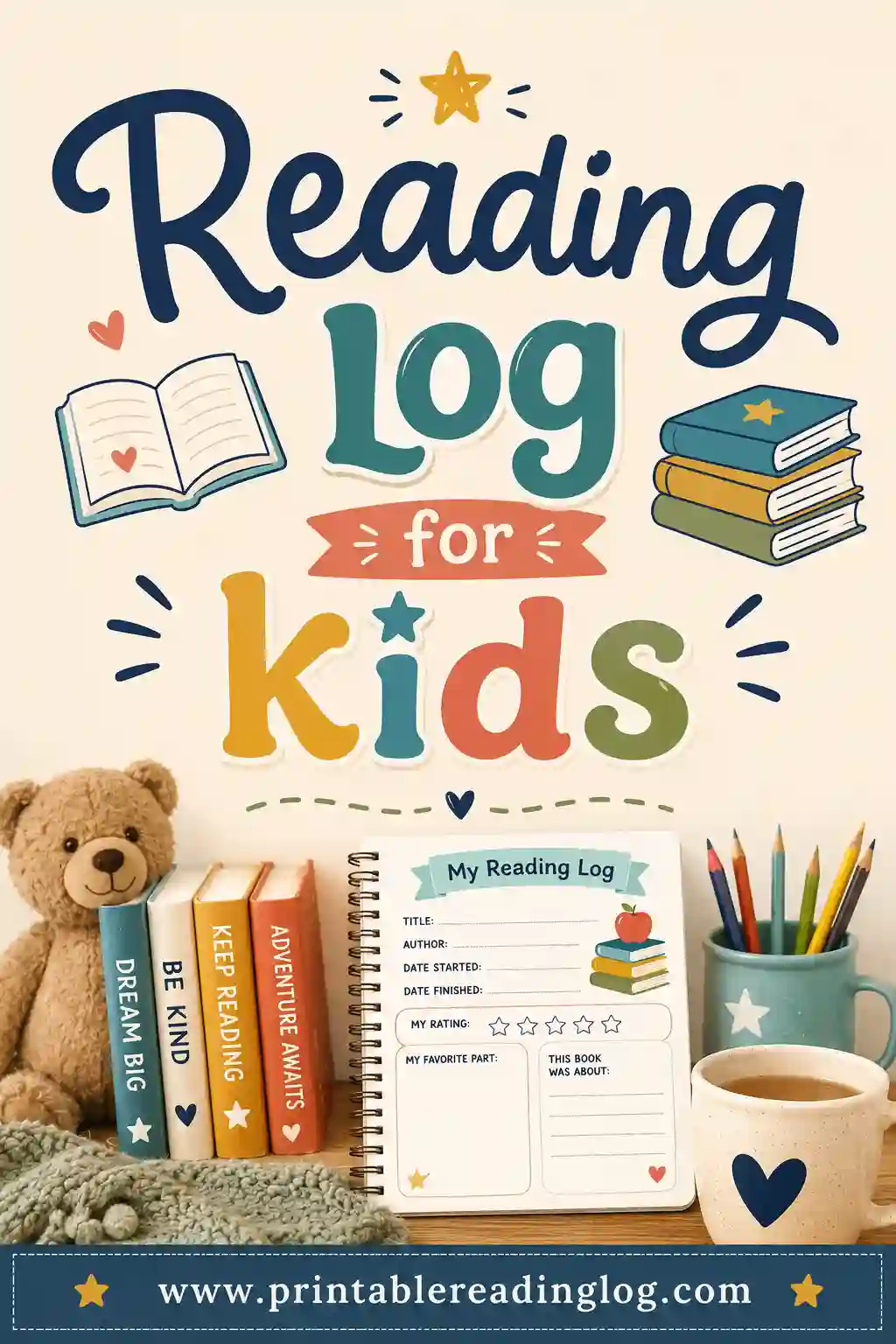
It's a kid-friendly version of a reading tracker. Instead of dense columns, it uses big rows, simple labels, and often a little drawing box so even non-readers can join in. Each row captures the book, the date, the minutes read, and a signature.
The signature line is the part teachers care about. It's how they know a parent saw the reading happen at home. For families, that same line turns reading into a shared moment: the kid reads, a grown-up listens, and someone signs off. That tiny ritual is half the magic.
A strong kids' log keeps it to a handful of fields:
- Book title — what they read.
- Date — the day they read it.
- Minutes — how long, usually 10 to 20.
- Signed by — a parent or teacher initial.
Why Reading Logs Work So Well for Kids
Kids love to see progress, and a log makes progress visible. Every filled-in row is a tiny win.
- It builds a daily habit. Reading at the same time each day, then logging it, quickly becomes routine.
- It motivates. Coloring in a star or checking a box gives an instant reward that keeps kids coming back.
- It supports school. Most reading homework asks for a signed log, so you'll likely need one anyway.
- It celebrates books. Looking back at a full month of titles makes a kid feel like a real reader, because they are one.
The trick is to keep it light. A log should feel like a game, not a worksheet. When it does, kids ask to fill it in.
Reading Log Styles by Age
A toddler and a fifth-grader need very different logs. Match the sheet to the child and it'll actually get used.
| Age group | Style | What to track | Tip |
|---|---|---|---|
| Pre-readers (2–4) | Picture log | A sticker per book read aloud | Let them choose the sticker |
| Early readers (5–7) | Minutes log + drawing box | 10 minutes a night | Add a space to draw the story |
| Growing readers (8–10) | Minutes or pages log | 20 minutes a night | Add a star-rating column |
| Tweens (11–13) | Books-finished list | Titles and authors | Let them set a monthly book goal |
You can mix elements too. A six-year-old might love a minutes log and a sticker chart. The generator lets you build whichever combo fits your reader, so it's easy to adjust as they grow.
Should kids track minutes or books?
For most kids, track minutes. "Read for 20 minutes" is fair whether they're on picture books or chapter books, and it keeps the goal the same across a whole class. Switch to a books-finished list once a child is reading longer books and wants to chase a number, like "ten books this summer."
A Sample Kids' Reading Log
Here's what a clean, filled-in week looks like. Notice how short each entry is. That's on purpose, so a tired kid can finish a row in seconds.
| Date | Book | Minutes | Star | Signed |
|---|---|---|---|---|
| Mon | Frog and Toad | 15 | ⭐⭐⭐ | M.R. |
| Tue | Frog and Toad | 20 | ⭐⭐⭐⭐ | M.R. |
| Wed | The Gruffalo | 10 | ⭐⭐⭐ | Dad |
| Thu | Dog Man | 25 | ⭐⭐⭐⭐⭐ | M.R. |
| Fri | Dog Man | 20 | ⭐⭐⭐⭐ | Dad |
The star column is the secret weapon. Letting kids rate each book gives them a voice and makes the log feel like theirs, not a chore handed down from a teacher.
How to Make a Reading Log for Kids in 4 Steps
No design skills needed. Here's the whole thing.
- Pick the kid style. Big rows, a signature line, and an optional drawing box.
- Set a goal. "10 minutes" for little ones, "20 minutes" for grade-schoolers.
- Choose the length. A week per page is friendly for kids, so a fresh start comes often.
- Print. Hang it at kid height, on the fridge or by the bed, where they'll see it.
That's it. Print a few weeks at once so a finished sheet is instantly replaced and the streak never stalls.
Great Books to Pair With Your Kids' Reading Log
A log is more fun when there are great books to fill it with. Here are dependable, kid-loved picks by reading level to get you started.
| Reading level | Book suggestion | Why kids love it |
|---|---|---|
| Picture book | Where the Wild Things Are | Wild, wordless fun and a cozy ending |
| Early reader | Frog and Toad Are Friends | Short, sweet, easy to finish |
| Early chapter | Mercy Watson | Big print, big laughs, a pig who loves toast |
| Chapter book | The Bad Guys | Comic-style, hooks reluctant readers |
| Middle grade | Charlotte's Web | A classic that holds up across generations |
Let your child pick from a list like this. Choice is one of the strongest drivers of reading motivation, so a kid who picked the book is a kid who'll read it.
Tips to Keep Kids Reading (and Logging)
The log is the easy part. Keeping a kid excited to use it takes a few small habits.
- Read at the same time daily. Right before bed works for most families. Routine beats willpower.
- Let them log it themselves. Handing a kid the pen makes the log feel like their accomplishment.
- Celebrate the streak, not just the count. "You read every night this week!" lands better than "you read 140 minutes."
- Keep goals small and winnable. Ten minutes a night is plenty for a young reader. Raise it only when it's easy.
- Make it visible. A log on the fridge gets filled in. A log in a backpack gets forgotten.
Easy rewards that aren't screens
You don't need a prize closet. A few low-key rewards that work:
- A sticker or stamp for each night read
- Picking the next bedtime book
- Staying up ten extra minutes to finish a chapter
- A family trip to the library after a full week
- Choosing the family movie on the weekend
- A special bookmark once they fill a whole sheet
The best rewards keep the focus on reading itself. A new book or an extra chapter at bedtime tells a kid that reading is the treat, not just the chore that earns a treat. That small framing shift is what turns a logged habit into a lasting love of books.
Common Mistakes With Kids' Reading Logs
A few easy missteps can turn a fun log into a fight. Steer around these.
- Making it feel like homework. If logging feels like a test, kids resist. Keep it short and let them own it.
- Setting the bar too high. A 30-minute goal for a five-year-old leads to blank rows and frustration. Start small.
- Doing it for them. It's tempting to fill in the row, but the kid writing it down is the whole point.
- Forgetting to celebrate. A finished log deserves a little fanfare. Notice it out loud.
- Tracking too much. Title, minutes, and a signature is enough. Drop anything that slows a tired kid down.
Frequently Asked Questions
What is a reading log for kids?
It's a simple printable sheet where a child records the books they read, how many minutes they read, and gets a parent or teacher signature. It makes nightly reading visible and rewarding. You can make one free with the reading log generator in about a minute.
Is the kids' reading log free to print?
Yes. You build it and print it yourself at no cost, with no sign-up and no watermark. Print one for your own child or a full set for a whole classroom on a single free design.
How many minutes a day should a kid read?
A common goal is 10 minutes for early readers and 20 minutes for grade-schoolers, which is what most school reading logs ask for. The point is consistency, so a smaller daily goal that gets hit beats a big one that gets skipped.
Should the reading log have a parent signature line?
If it's for school, yes, since teachers usually require a parent or guardian to sign off on home reading. Even for home use, a signature line turns reading into a shared moment a kid looks forward to. The kid style includes one by default.
What if my child can't read yet?
Use a picture log and count read-aloud time. A pre-reader can still "log" a book by adding a sticker or coloring a box after you read to them, which builds the habit early. See our printable reading log guide for more format ideas.
How do I keep my kid from losing interest?
Keep goals small, let them log it themselves, and celebrate streaks out loud. A star-rating column and the freedom to pick their own books go a long way. Pair the log with a weekly reading log so each fresh week feels like a clean restart.
Ready to Build Your Kids' Reading Log?
Choose the kid style, set a friendly goal, and open the free reading log generator to print a fun, ready-to-use sheet in minutes. It's free, there's no sign-up, and you can print as many as a whole class needs. Hang it at kid height, hand over the pen, and let your young reader fill in that first proud row tonight. For more setups, see our guides on the reading log for adults and the printable reading log.