Reading Log for Reluctant Readers: Free Printable That Works
A reading log for reluctant readers is a low-pressure sheet that tracks small, winnable reading goals so a kid who avoids books can rack up easy successes. The trick isn't more reading, it's making the bar low, the choices wide, and the wins visible. The fastest way to get a log built for this is a free reading log tool where you set a tiny daily goal, count any kind of reading, and print a tracker that feels like a game, not a punishment.
Want to skip ahead? Open the free tool, set a five- or ten-minute goal, pick a kid-friendly style, and print it. No sign-up, no cost, nothing to download.
Why a Standard Reading Log Backfires for Reluctant Readers
For a kid who already dreads reading, a normal log can make things worse. A sheet demanding 20 or 30 minutes a night just stares back at them as proof of what they're not doing. Empty rows feel like failure. The log becomes one more reason to dig in their heels.
The fix is to flip what the log measures. Instead of a high bar they keep missing, give them a low bar they keep clearing. Instead of tracking only solo reading of "real" books, count comics, joke books, graphic novels, audiobooks, and re-reads. Every win goes on the sheet. The log stops being a scoreboard of failure and starts being a streak of small victories.
That shift, from pressure to wins, is the whole game. A reluctant reader who fills in five minutes a night and sees the streak grow is building a habit. One who stares at an unfilled 30-minute log is learning to avoid the page.
What "counts" should be wide open
For reluctant readers, almost anything with words counts. Be generous:
- Comics and graphic novels — heavy on pictures, rich in story, and they fly by.
- Audiobooks — listening builds vocabulary and comprehension; it's real reading.
- Re-reads — a beloved book read for the tenth time still counts.
- Joke books, fact books, magazines — short bursts that feel like fun, not work.
- Reading aloud to a pet or sibling — low stakes, high motivation.
When everything counts, the log fills up. When the log fills up, the kid feels like a reader. That feeling is what you're really building.
Free Printable Log Setups That Lower the Pressure
Here are log styles built specifically to make reading feel doable for a hesitant kid. Pick the one that fits and build it with the tool.
| Log style | Why it works | Daily goal | Best for |
|---|---|---|---|
| Tiny-goal minutes log | Easy daily win | 5–10 min | Kids who avoid starting |
| Sticker streak log | Visual reward | 1 session | Young kids, big motivation hit |
| "Any reading counts" log | Removes book snobbery | 1 thing read | Comic and audiobook fans |
| Choose-your-own log | Gives control | Kid sets it | Older kids who resist rules |
| Short-burst log | No long sittings | 2 × 5 min | Kids with short focus |
The tiny-goal minutes log is the best starting point for most. Five minutes is almost impossible to refuse, and once a kid is in a book, they often keep going past the goal on their own.
A first week that builds confidence
Here's what a reluctant reader's first week can look like when the bar is low and everything counts.
| Day | What they read | Type | Minutes | Win? |
|---|---|---|---|---|
| Mon | Dog Man | Graphic novel | 8 | ⭐ |
| Tue | (audiobook in car) | Audiobook | 12 | ⭐ |
| Wed | Same Dog Man again | Re-read | 6 | ⭐ |
| Thu | Joke book | Fun read | 5 | ⭐ |
| Fri | Dog Man #2 | Graphic novel | 15 | ⭐ |
Five wins in five days. None of it looks like traditional "reading homework," and that's exactly why it worked. The kid ended the week feeling successful, which is the foundation everything else builds on.
How to Set Up a Low-Pressure Reading Log
It takes a couple of minutes, and the settings matter more than the design. Here's how:
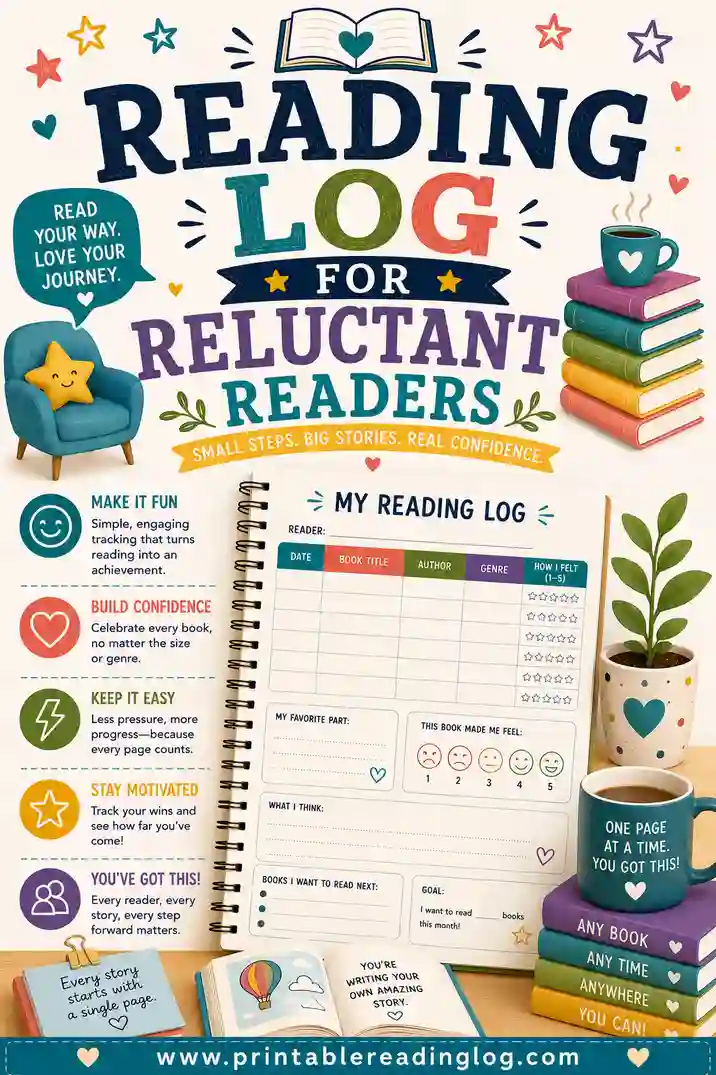
- Open the reading log tool. It runs in your browser, no install.
- Set a tiny goal. Five or ten minutes, or even "one thing read."
- Pick a fun, kid-friendly style. Stickers and big boxes beat a serious grid.
- Add a streak or reward row. A visible streak is huge for motivation.
- Print it and post it somewhere visible. The fridge or their bedroom door.
The goal is a sheet that looks inviting, not like a worksheet. Keep the boxes big, the goal small, and the vibe playful.
Use rewards the right way
Rewards can help a reluctant reader build momentum, as long as you use them to celebrate, not to bribe. A few that work:
- Streak rewards. Five days in a row earns a library trip or a new comic.
- Choice rewards. A full week lets them pick movie night or the next book.
- Small and frequent early on. Tiny, regular wins beat one giant far-off prize.
- Fade them out. As the habit takes hold, lean less on rewards and more on the books themselves.
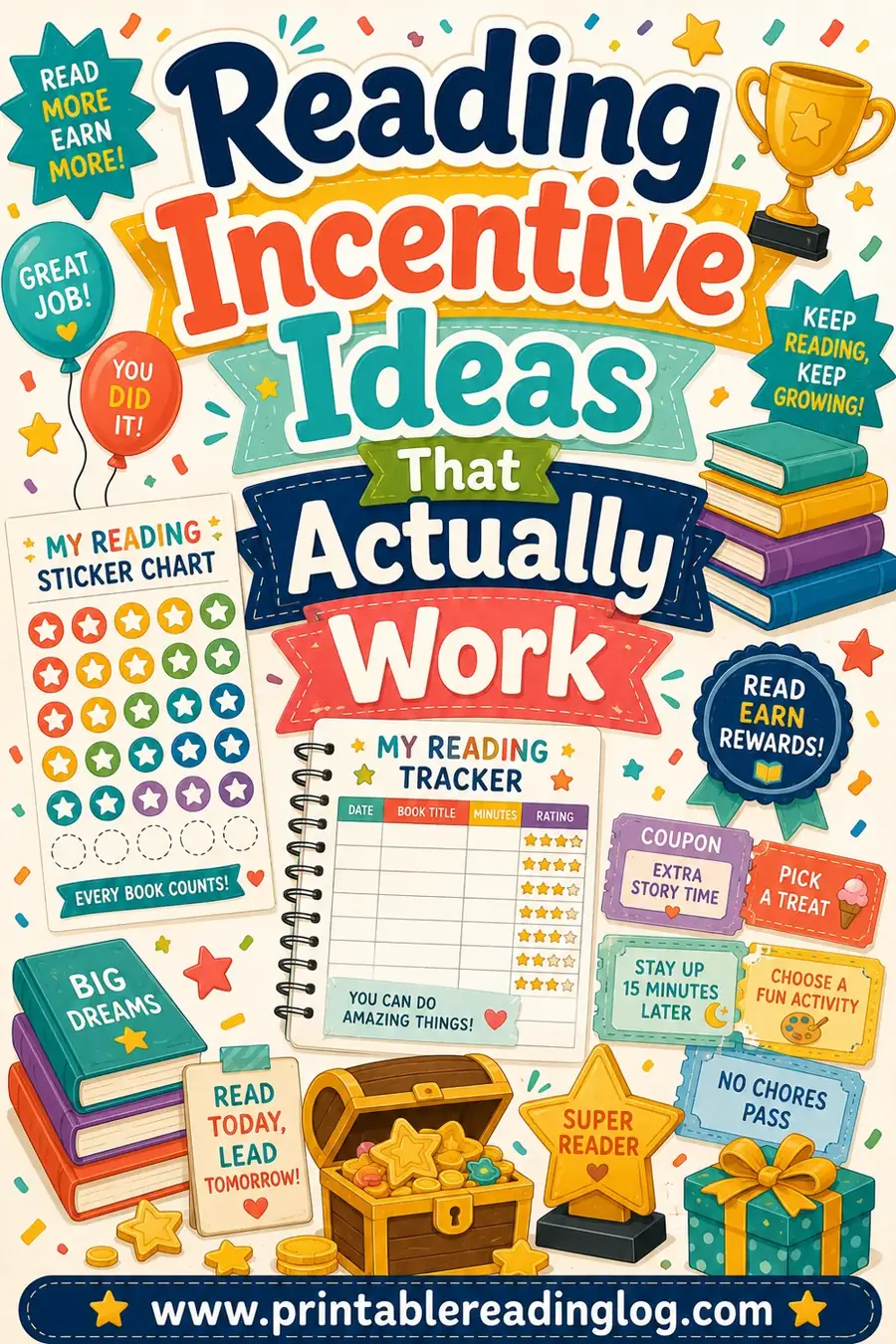
For a full menu of ideas, our reading incentive ideas article has dozens of low-cost rewards that motivate without turning reading into a transaction.
Picking Books a Reluctant Reader Will Actually Open
The log only works if there's something the kid wants to read. Half the battle with reluctant readers is the book, not the habit. A few rules:
- Let them choose. Ownership beats your "better" pick every time.
- Go below their level. Easy and fun builds confidence; hard and "good for them" builds dread.
- Chase their interests. A kid obsessed with sharks will read a shark fact book they'd never touch as a novel.
- Short wins. Comics, chapter books with big print, and short story collections feel finishable.
- Series are gold. Once a kid likes one, the next five are pre-sold.
When the book is a yes, the log fills itself. For more on this, see our guides on how to make reading fun for kids and how to motivate kids to read.
Keeping the Momentum Going
The first few weeks are about wins. After that, you can gently stretch the goal, but slowly. Bump five minutes to seven, not to twenty. Add an independent book alongside the comics. Celebrate the first time they finish a longer book. The whole arc is small step, win, slightly bigger step, win again.
Watch for the signs it's working: they read past the goal, they ask for the next book in a series, they bring up a story unprompted. Those moments mean the habit is taking root. When they happen, ease off the rewards and let the books carry it. And on the days reading just doesn't happen, let it go. One skipped day won't undo a streak, but pressure can.
Common Mistakes That Push Reluctant Readers Away
Even with good intentions, it's easy to do things that make a hesitant reader dig in harder. If the log isn't working, check whether one of these is creeping in.
- Setting the goal too high. Twenty minutes feels like a mountain to a kid who avoids books. Start at five and grow slowly.
- Vetoing their book choices. Telling a kid their comic "doesn't count" teaches them their reading isn't real. Let it count.
- Turning it into a quiz. Following every reading session with questions makes it feel like a test. Save chatter for casual moments.
- Making rewards the whole point. If the only reason to read is the prize, the habit collapses the moment rewards stop. Keep prizes light.
- Comparing to a sibling. "Your sister reads a chapter a night" lands as criticism. Keep each kid's log about their own wins.
Most reluctant-reader trouble comes from pressure, not laziness. When you remove the pressure and protect the fun, the reading usually follows.
A Gentle Plan to Grow the Habit
If you want a roadmap, here's a simple month-by-month arc that has worked for a lot of families. Adjust the pace to your child, faster or slower is fine.
| Phase | Goal | Focus | Win to celebrate |
|---|---|---|---|
| Weeks 1–2 | 5 min / any reading | Pure wins, no pressure | A full week's streak |
| Weeks 3–4 | 7–10 min | Add a favorite series | Finishing a book |
| Month 2 | 10–15 min | Mix in one solo book | Reading past the goal |
| Month 3 | 15 min | Independent choice | Asking for the next book |
Notice how slowly the goal climbs. The reluctant reader's progress isn't measured in minutes added, it's measured in attitude shifting from "I hate reading" to "what's next?" Hit that shift and the minutes take care of themselves.
Frequently Asked Questions
How do I set a goal for a kid who hates reading?
Start tiny, five or ten minutes a day, or even "read one thing." A goal that's almost impossible to refuse builds early wins, and reluctant readers often keep going once they start. Stretch the goal only after the habit is steady, and do it slowly.
Do comics and audiobooks count on the log?
Absolutely. Comics, graphic novels, audiobooks, and re-reads all build vocabulary, comprehension, and a love of stories. For reluctant readers especially, counting everything keeps the log full and the kid feeling like a reader, which is the whole point.
Is this reading log really free?
Yes. You build and print it yourself with no cost and no sign-up. There's no watermark, so you can print fresh low-pressure logs as often as you need while the habit takes hold.
Should I reward a reluctant reader for reading?
Small, frequent rewards tied to streaks work well early on, a library trip or a new comic for a five-day streak. Keep prizes light, celebrate effort, and fade rewards as the habit grows so reading becomes its own payoff.
What if my child still won't read?
Make the goal smaller, widen what counts, and double down on letting them choose. Try audiobooks, comics, or reading to a pet. If a child consistently struggles with the words themselves, not just motivation, it's worth checking in with their teacher about reading support.
Will a low goal like five minutes actually help?
Yes. The goal of a low bar isn't five minutes of reading, it's a win the child can't fail and a habit that starts. Most reluctant readers read longer than the goal once they begin, and the daily streak builds confidence that carries into bigger reading later.
Ready to Build a Reading Log That Works?
Set a tiny goal, count every kind of reading, and open the free reading log tool to print a tracker that feels like a win instead of a chore. It's free, there's no sign-up, and you can tune it to your child's level in a couple of clicks. Print it, post it, and start stacking small victories tonight. For more help, see our guides on motivating kids to read and reading incentive ideas.