Weekly Reading Log: Free Printable & Customizable
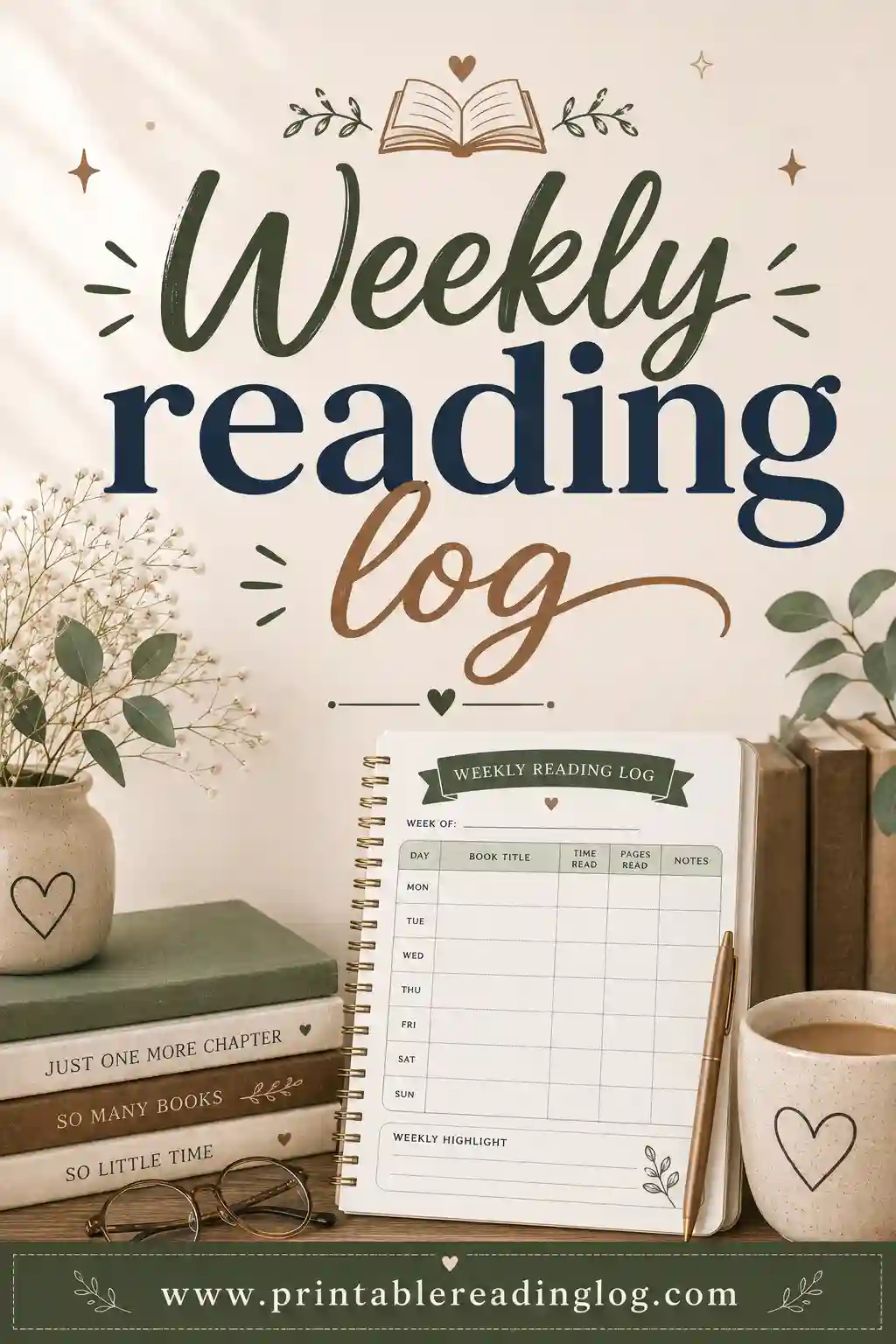
A weekly reading log is a one-week grid where you record what you read each day, usually with a row or column for every day from Monday to Sunday. It's built for daily readers and kids with nightly reading goals, because it makes a seven-day streak easy to see and chase. The fastest way to make one that fits how you read is to use a free reading log generator and print a fresh week whenever you need it.
Ready to start? Open the free tool, choose the weekly grid, set a daily goal like "20 minutes," and print. No sign-up, no fee, no software to install.
What Is a Weekly Reading Log?
It's a reading tracker scoped to one week. Each day gets its own row, and you fill in what you read, how long, and maybe a quick note. At the end of seven days you can see your whole week at a glance: which days you read, which you skipped, and how the streak is going.
The weekly view is the favorite for habit-building. A day is too small to feel like progress, and a month can feel far away. A week is the perfect unit for a streak. Seven boxes, seven chances to read, and a clean restart every Monday. That short, repeatable cycle is what makes daily reading stick.
A good weekly log usually has:
- A day row for each day — Monday through Sunday.
- A book column — what you read that day.
- A minutes or pages column — how much you read.
- A goal line — your daily target, like 20 minutes.
Why a Weekly Reading Log Builds the Habit
The weekly frame is built for consistency, which is the thing that turns "I want to read more" into "I read every day."
- It makes the streak visible. Five checked days in a row is a strong nudge to make it six and seven.
- It resets often. A missed day doesn't ruin a month. Each Monday is a fresh, full week.
- It keeps the goal daily. Weekly logs focus on showing up every day, which beats chasing a big number.
- It fits a routine. Most people's lives run on a weekly rhythm, so a weekly log slots right in.
The key insight is that habits are built daily but tracked best weekly. A week gives you enough days to feel momentum and few enough that one slow day doesn't matter. That's the magic balance a weekly log captures.
What a Weekly Reading Log Looks Like
Here's a sample of a clean, filled-in week. Each row is one day, kept short so it takes seconds to fill in.
| Day | Book | Minutes | Hit goal? | Note |
|---|---|---|---|---|
| Mon | The Wind in the Willows | 20 | ✅ | Cozy start |
| Tue | The Wind in the Willows | 25 | ✅ | — |
| Wed | The Wind in the Willows | 10 | ✅ | Tired but read |
| Thu | — | 0 | ❌ | Busy day |
| Fri | The Wind in the Willows | 30 | ✅ | Long evening read |
| Sat | A Wrinkle in Time | 35 | ✅ | New book! |
| Sun | A Wrinkle in Time | 20 | ✅ | 6 of 7 days |
That "Hit goal?" column is the engine of the whole log. A row of checkmarks is its own reward, and even Thursday's miss is fine, because the week still shows six strong days. The visible streak is what keeps you reaching for the book.
Setting a Daily Reading Goal
A weekly log works best with a clear daily target. The goal should be small enough that you can win it on a busy day.
- Start small. 15 to 20 minutes a day is plenty to build a habit. You can always raise it later.
- Make it the same every day. A steady target is easier to hit and track than one that changes.
- Aim for most days, not all. Six of seven is a great week. Don't let one miss feel like failure.
- Tie it to a time. "20 minutes before bed" beats "20 minutes sometime today," which never quite happens.
Here's a quick guide to weekly reading goals and what they add up to.
| Daily goal | Days per week | Weekly total |
|---|---|---|
| 15 minutes | 5 days | 75 minutes |
| 20 minutes | 6 days | 120 minutes |
| 30 minutes | 7 days | 210 minutes |
| 1 chapter | Most days | A book every week or two |
Pick a target you can hit even on a hectic day, write it on your log, and let the week's checkmarks do the motivating.
How to Make a Weekly Reading Log in 4 Steps
No design skills needed. Here's the whole process.
- Choose the weekly grid. A row for each day, Monday through Sunday.
- Pick your format. Minutes, pages, or a simple read/didn't-read checkbox.
- Set the daily goal. Write your target at the top so every day has a clear bar.
- Print. Hang it somewhere you pass daily, then print a fresh one each Monday.
That's it. Print a stack of weeks at once so a finished sheet is instantly replaced and your streak never stalls between weeks.
Weekly Reading Log Ideas to Try
The basic weekly grid flexes into several fun setups. A few favorites:
The streak challenge
Focus only on showing up. Use a simple checkbox per day and try to fill the whole week. The goal isn't minutes or pages, it's seven checked boxes. Then try to beat it next week.
The family week
Print one weekly log per person and post them together. A shared wall of weekly logs turns daily reading into a low-key family game everyone can see.
The classroom week
Teachers love weekly logs for nightly reading homework. One sheet covers a school week, with a signature line so parents can confirm the reading at home. See our reading log for kids guide for a setup built for young readers.
The two-book week
Run two books at once, a fun one and a slower one, and use the note column to track which you read each day. It's a nice way to always have something that fits your mood.
Tips to Keep Your Weekly Log Going
A weekly log is low-effort, but these habits make it click.
- Reset every Monday. A fresh page each week keeps the clean-slate feeling that powers a streak.
- Read at a fixed time. Same time daily beats waiting for free time. Bedtime works for most people.
- Log right after you read. Fill the row the moment you finish, while the minutes are easy to count.
- Celebrate a full week. Hitting most or all of your days deserves a small reward. Notice it.
- Aim to beat last week. A little friendly competition with your past self is a strong, simple motivator.
What counts as "reading" on a busy day
Be generous with yourself. On a hectic day, all of these still count:
- Ten minutes before bed
- A few pages over coffee
- An audiobook on a commute
- Reading aloud to a kid
The point is to keep the streak alive, even on the small days. A short read still earns the checkmark.
Common Weekly Reading Log Mistakes
A few easy slips can break the streak you're building. Avoid these.
- A goal that's too big. "Read an hour a day" collapses the first busy week. Start at 15 or 20 minutes.
- Treating one miss as failure. A single skipped day is normal. Six of seven is a win. Don't quit over Thursday.
- No fresh page. Reusing last week's sheet kills the restart feeling. Start a clean week each Monday.
- Tracking too much. Day, book, and minutes is enough. A grid with ten columns gets abandoned.
- Logging only big reads. Ten minutes counts. Logging the small days is exactly what keeps the streak alive.
Frequently Asked Questions
What is a weekly reading log?
It's a one-week grid where you record what you read each day, with a row for every day from Monday to Sunday. It's built to make a daily reading streak easy to see and chase. You can make one free with the reading log generator in about a minute.
Is the weekly reading log free to print?
Yes. You build it and print it yourself at no cost, with no sign-up and no watermark. Print one week or a whole stack of weeks on a single clean design.
How much should I read each day?
Start with 15 to 20 minutes a day, which is plenty to build a strong habit, and raise it later if it feels easy. The point of a weekly log is consistency, so a small daily goal you hit on most days beats a big one you skip.
Is a weekly log better than a monthly one for building a habit?
For daily readers and kids, yes. A weekly log keeps the goal daily and resets every Monday, which is ideal for a streak. A monthly reading log suits readers who finish a book every week or two and want a one-page overview. Many people use both.
Can teachers use a weekly reading log for homework?
Absolutely. A weekly grid covers a full school week and usually includes a signature line so parents can confirm home reading. The kid style is built for exactly this. See our reading log for kids guide for a classroom-ready setup.
What if I miss a day on my weekly log?
Just leave that row blank and keep going. One missed day doesn't break the week, and six of seven days is a great result. The weekly format is forgiving by design, with a clean restart every Monday.
Ready to Build Your Weekly Reading Log?
Choose the weekly grid, set your daily goal, and open the free reading log generator to print a clean, ready-to-use sheet in minutes. It's free, there's no sign-up, and you can print a fresh week every Monday. Pick a goal you can hit even on a busy day, log each day as you read, and watch the checkmarks line up. For more setups, see our printable reading log and monthly reading log guides.