Do Graphic Novels, Comics and Rereads Count on a Reading Log?
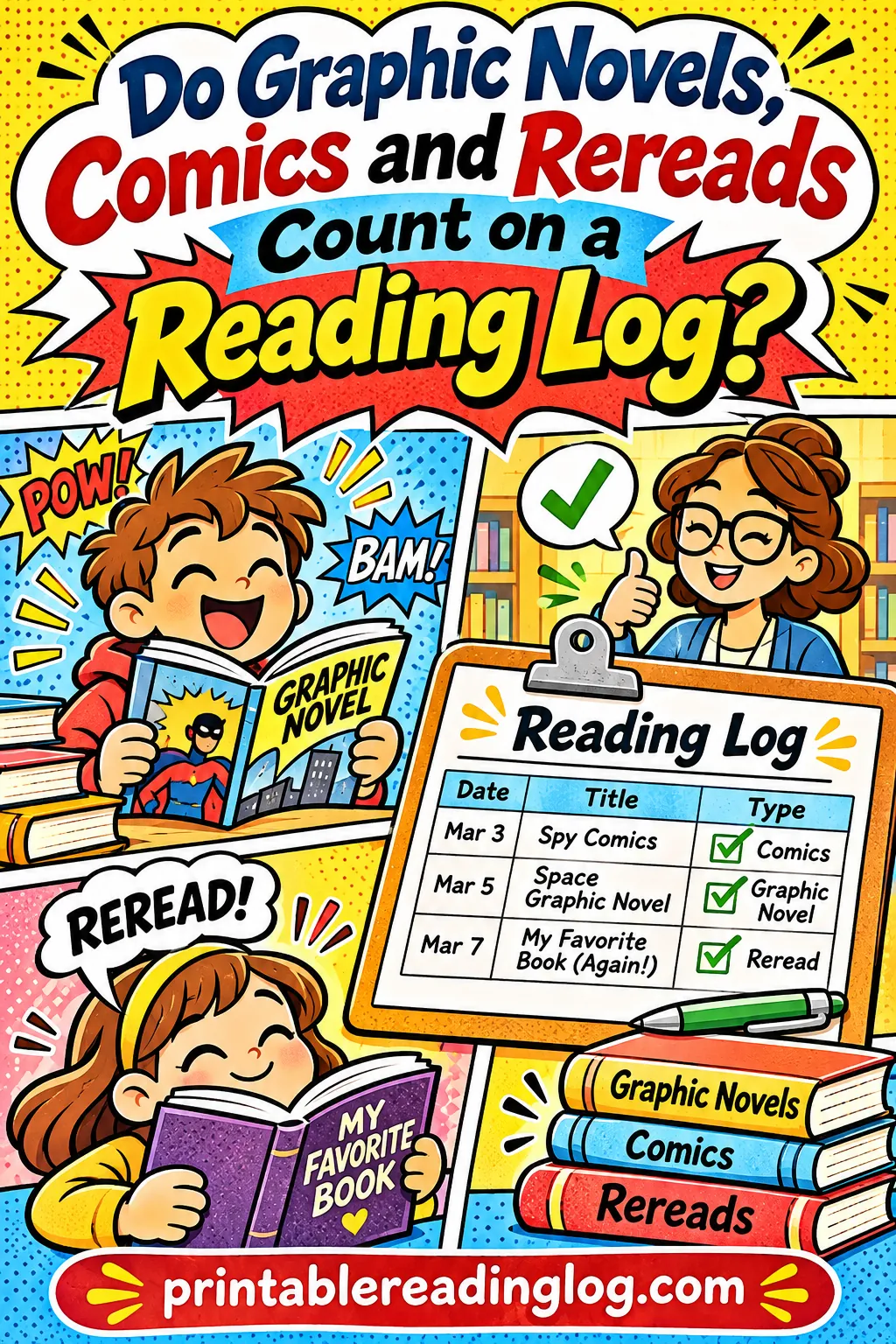
Graphic novels count as reading, and so do comics, manga and rereads: your child is decoding words, following a story and making sense of characters, which is exactly what a reading log is meant to record. The only real exception is a teacher who has set a specific rule for one assignment, and even then a short, friendly note usually clears it up.
The easiest way to head off any argument is to write the format next to each title, so the teacher sees the whole mix in one glance. A sheet like that takes a few minutes to set up in our reading log maker. Further down you'll find a format-by-format table, a note you can send to the teacher, the column settings that make the mix visible, and gentle ways to widen your child's reading without taking away the books they love.
📚 Printable Reading Log: make this log in 10 seconds
Set the name and goal, preview it, then print it free.
Free printables for this page
Ready-made, one-page PDFs from Printable Reading Log. Print as is, or change the columns in the maker above. See all free printable reading logs.
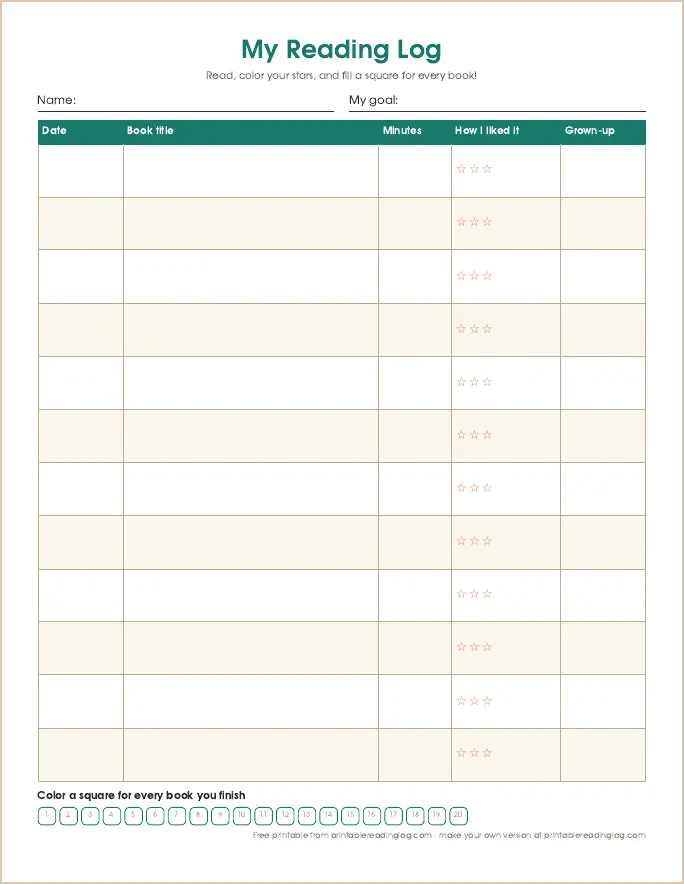
Kids Reading Log
Big rows for the date, book, minutes and a grown-up's initials, three stars to color for each book, and 20 goal squares.
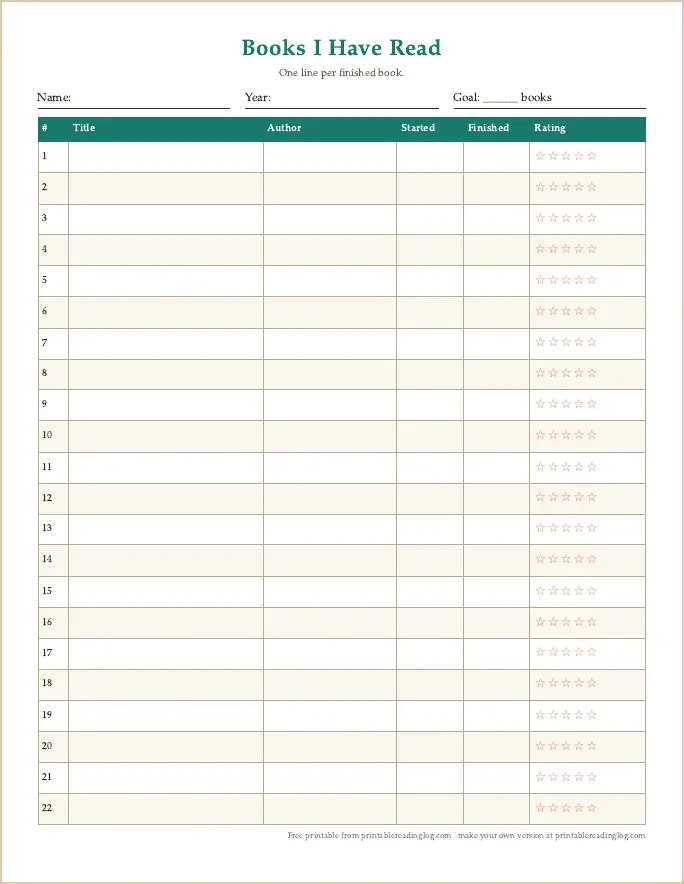
Book Log (books read)
A clean list of every book you finish: title, author, dates started and finished, and a five-star rating.
What a child is actually doing with a graphic novel open
If your child would read graphic novels all day, every day, you're in very large company, and you haven't done anything wrong. Plenty of parents feel uneasy anyway. The pages look busy, there are fewer words than in a chapter book, and the books fly by. It's natural to wonder whether that time "counts."
Watch a kid with one for ten minutes and you'll see a lot of work going on. They are reading words in speech bubbles, captions, sound effects and signs, and the story falls apart if they skip them. They are following a plot with a beginning, a problem, turning points and an ending, the same bones as any novel. They are reading the pictures as part of the meaning, because facial expressions, the order of panels and tiny background details carry information that the words leave out.
They are also inferring constantly. A lot happens in the gutter between two panels: how a character got from the kitchen to the bus, or why a friend suddenly looks upset. And they are meeting real vocabulary. Many graphic novels use the same words you'd find in chapter books, sometimes harder ones, because the art helps carry the meaning of an unfamiliar word.
For a reading log, the most valuable part may be the simplest: they chose to read. A child who picks up a book on their own, without being reminded, is building the habit the log was invented to encourage.
Librarians and teachers tend to welcome the format, and you'll find graphic novels in school libraries, classroom libraries and public library children's sections. They have appeared on major children's book award lists, including the Newbery Medal. They're a real part of children's literature, not a side door into it.
Where the pushback usually comes from
Some adults worry that graphic novels are "too easy" or that kids will never move on to text-heavy books. Those are fair worries and they deserve a calm conversation rather than a standoff. Usually the concern isn't that the books don't count. It's that a child might read only one kind of book. That's a balance question, covered later on. For the log itself, a graphic novel is a book, and reading it is reading.
Format by format: what usually goes on the log
Graphic novels aren't the only format that makes parents hesitate. This table covers what normally counts on a home or school log, with a note on each.
| Format | Usually counts? | Notes |
|---|---|---|
| Graphic novels | Yes | Full stories told in words and panels |
| Comic books and comic strip collections | Yes | Shorter, but still text and story |
| Manga | Yes | Read right to left in many editions, which is its own skill |
| Rereads of a favorite book | Yes | Rereading builds fluency and comprehension |
| Picture books | Yes | Especially for younger readers; older kids read them too |
| Chapter books and novels | Yes | The format most logs were designed around |
| Nonfiction, including fact books | Yes | Animal books, sports facts, how-to books all count |
| Magazines for kids | Usually | Articles count; check if the log asks for "books" |
| Audiobooks | Often | Many teachers count listening; some want eyes-on-text time |
| Read-alouds (you reading to them) | Often, especially for younger kids | Some logs track independent reading only |
| Reading along with an audiobook | Usually | Following the text while listening |
| Recipes, game instructions, signs | Sometimes | Real reading, but many logs want sustained time |
| Video game text or captions | Rarely | Often doesn't fit what the log is asking for |
The "usually" and "often" rows are where teacher rules come in. If an assignment says "independent reading," a read-aloud might not fit that particular sheet, even though reading aloud to your child is still wonderful. If a log asks for "eyes on text," an audiobook on its own might not qualify, while reading along with the print copy probably would.
Comics
A comics log works like any other: the title, the date and how long your child read. Short comics are easier to log by minutes than by books, since a ten-page comic and a 300-page novel shouldn't be compared one for one. If your school sheet counts time, the minutes-based reading log is the natural fit.
Rereads
Kids love to reread, and it's good for them. A second or third pass through a favorite builds speed and expression, and they often notice things they missed the first time. Write the title again on a new line and, if you like, add "reread" in the Notes column so the teacher knows it was on purpose. A child who has read the same book eleven times in a row hasn't got a reading problem; they've found a book they love. Offering a similar "next book" usually works better than forbidding the twelfth read.
Manga
Manga is a style of comic, often from Japan, and many editions run right to left. Kids who read it are handling text, long plots and big casts of characters. Log it the same way as a graphic novel, with the volume number after the title.
Listening to a book
This is the format where teacher rules vary most. Listening builds vocabulary and comprehension, and many families and teachers count it. Some logs are specifically about time with print, and then an audiobook might go on a separate line or not count toward the main goal. If your child loves audio, ask the teacher, and see the audiobook log for simple ways to record listening time.
Reading the fine print on a teacher's log
Most of the time a school log says something like "read 20 minutes a night and write the title," and graphic novels fit that perfectly. Sometimes the sheet comes home with extra instructions, and it helps to read them carefully before you worry.
Wording such as "any book you choose" or "self-selected reading" means graphic novels count, full stop. "Independent reading" means your child should be the one doing the reading, so graphic novels count but read-alouds may not. A log that simply asks for minutes with no format rules accepts everything in the table above.
The phrases worth a question are narrower. "Chapter books only" or "no picture books" may mean the teacher is steering toward longer texts for a particular goal, and it's fair to ask whether graphic novels fall under the rule. "Reading at your level" or "just-right books" means the teacher has a difficulty range in mind; many graphic novels fit, and the teacher can tell you if a particular one doesn't. If the log names one assigned book, it's about that book only, and everything else your child reads belongs on a separate home sheet.
A two-minute note to the teacher
If the log seems to exclude graphic novels, or your child comes home upset because someone said comics "don't count," a short note goes a long way. Teachers are juggling a whole class, and a rule written for one purpose sometimes gets applied more broadly than they meant. You can copy this and adjust it:
Hi, I wanted to check in about the reading log. My child has been reading a lot of graphic novels lately and is really excited about them. Would those count toward the nightly reading time? If you'd like, I can also add a chapter book or nonfiction read a couple of times a week so there's a mix. I've started writing the format next to each title so you can see what they're reading. Thanks so much for everything you do!
That note asks instead of arguing, offers a balance before anyone requests one, and shows the teacher you're already tracking format, which gives them the information they need to say yes.
When the answer is still no
Sometimes a teacher has a specific reason, like a unit on longer texts or a goal for one child that they've noticed in class. In that case, use the books they've asked for on the school sheet and keep a separate home log for everything else, so graphic novels, rereads and comics still count somewhere your child can see. It's worth asking what the goal is. If the teacher wants your child to build stamina for longer books, a longer graphic novel or a heavily illustrated chapter book might satisfy both of you.
At home, don't let the rule turn graphic novels into "bad" books. They're still welcome on the shelf; they just aren't part of this one assignment. If your child has an IEP, a reading plan or extra reading support, follow what their teacher or reading specialist recommends for format and level, since they know your child's goals.
Turning the Genre column into a Format column
The most useful thing you can do is make the format visible. When a teacher sees "graphic novel, chapter book, graphic novel, nonfiction, reread, audiobook" running down the page, the conversation changes from "is my kid only reading comics?" to "look at everything my kid is reading."
In the maker, start from the Kids preset for elementary readers, Classroom if you want it to resemble a school sheet, or High school for teenagers. Type your child's name, and match the teacher's target in the goal line, whether that's 20 minutes a night or 15 books this quarter. Younger readers usually like the kid style; middle schoolers often prefer the plainer adult look. Choose minutes if the teacher counts time, books if the goal is a number of titles, and let your child pick one of the five color themes.
For columns, switch on title, pages/minutes, genre, finished date, initials and notes, plus a rating if your child enjoys judging books (smileys for little ones, stars or numbers for older kids). A goal grid of 25 squares to color is a nice touch for kids who like seeing progress, and the "next books" list gives them a place to park the series volumes they're waiting for.
There's no column literally named "Format," so use Genre for it. Instead of "mystery" or "fantasy," write the format, or both together, like "GN - mystery." Short codes keep it quick for kids:
| Code | Means | Example line |
|---|---|---|
| GN | Graphic novel | GN, 25 min |
| C | Comic or comic collection | C, 15 min |
| CB | Chapter book | CB, 20 min |
| PB | Picture book | PB, 10 min |
| NF | Nonfiction | NF, 15 min |
| AB | Audiobook | AB, 20 min |
| RR | Reread | GN RR, 20 min |
| RA | Read-aloud with a grown-up | CB RA, 20 min |
Write the code key along the bottom of the printed sheet so the teacher doesn't have to guess, and feel free to cross out "Genre" in the heading and write "Format" in pen.
Initials and notes do quiet persuading
The initials column is there for a parent or teacher to sign each entry. Initialing every line also tells the teacher you saw the format and you're comfortable with it, which answers the "does this count?" question before anyone asks.
The Notes column is where you show what reading a graphic novel actually looked like. A few words are enough: "explained the plot twist to me at dinner," "noticed the flashback was drawn in gray," "reread to catch the jokes," or "started book four right away." Lines like those show comprehension and enthusiasm, which is what teachers care about most.
One mixed week, written out
This is how seven days might look on a minutes log with the Genre column used for format.
| Day | Title | Format | Minutes | Notes |
|---|---|---|---|---|
| Mon | Graphic novel, book 3 of a series | GN | 25 | Couldn't stop, asked for 5 more minutes |
| Tue | Animal fact book | NF | 15 | Told me three shark facts |
| Wed | Same graphic novel | GN RR | 20 | Reread to find the hidden jokes |
| Thu | The Tale of Peter Rabbit | PB RA | 15 | Read it to little sister |
| Fri | Chapter book from class | CB | 20 | Chapter 2, likes the main character |
| Sat | Comic collection | C | 30 | Read in the car |
| Sun | Audiobook with the print copy | AB | 20 | Followed along in the book |
That adds up to 145 minutes across seven formats. Even with two graphic novel days, nobody looking at this sheet would say the child "only reads comics." For more on what to put on any log, see what to include in a reading log.
Widening the reading diet without banning comics
Your child doesn't need to stop reading graphic novels. You may still want them reading other things, and a few gentle approaches work far better than taking comics away. When a favorite kind of book becomes a reward, or gets confiscated, reading starts to feel like a punishment. Keep graphic novels freely available and aim for "and," not "instead."
Some families like a light structure. One is "two plus one": for every two graphic novels, one other kind of book, which can be anything from nonfiction to a short chapter book. Another splits the week, with school nights for the teacher's sheet and weekends for whatever your child wants. Some start each session with ten minutes of a chapter book and then switch to a graphic novel, and others keep a chapter book as the bedtime read-aloud while comics fill the daytime. None of these come from anywhere official. Pick one if it fits, or skip the whole idea if your child is already reading happily.
Kids who feel in charge of their reading read more, so let your child fill in the next-books list on the sheet themselves. If every entry is a graphic novel, leave it. You can add one suggestion of your own at the bottom, with their permission. Our guide to picking books a child will actually finish has more ideas.
Bridge books and comic versions of the classics
Some books sit between graphic novels and chapter books, and they tend to suit kids who love comics but are ready to try longer text. Heavily illustrated chapter books, with short chapters and lots of white space, are one kind. Hybrid novels, which are part text and part comic panels with doodles in the margins, are another. Diary-style books with handwritten-looking pages work for many kids, and so does nonfiction told in panels, which covers history, science and biography. Ask your librarian for any of these; librarians are very good at "if your child likes this, try that."
Classic stories in the public domain have also been retold as graphic novels many times. Alice's Adventures in Wonderland, The Wonderful Wizard of Oz, Treasure Island, The Jungle Book, Around the World in Eighty Days, The Call of the Wild, A Christmas Carol, Peter Pan and The Secret Garden all turn up in comic form, along with Robin Hood stories, Greek myths and Aesop's fables. Reading the adaptation first can make the original feel less intimidating later.
That gives you a nice "same story, two formats" pair on the log. Write both titles, mark one GN and one CB, and jot which version your child liked better and why. It's a small comparison, but it's exactly the kind of thinking teachers hope a log will capture.
What graphic novel reading looks like from 4 to 13
| Age | What it often looks like | Easy way to add variety |
|---|---|---|
| 4 to 6 | Early comics with very short text, read with a grown-up | Picture books at bedtime, fact books about favorite animals |
| 6 to 8 | First graphic novels, often funny and fast | Early chapter books with pictures, comic-style nonfiction |
| 8 to 10 | Series, sometimes reread many times | Hybrid novels, graphic classics, a chapter book read-aloud |
| 10 to 12 | Longer graphic novels, manga, more complex plots | Middle grade novels in a favorite genre, graphic biography |
| 13 and up | Graphic novels and manga with serious themes | Novels and memoirs on similar topics, poetry, long nonfiction |
These ages are rough. Kids grow at their own pace, and a strong reader of any age can still love a funny comic. For younger children who are just starting with panels, the picture book log is often a better fit than a full chapter sheet, and middle schoolers may prefer the plainer middle school log.
Sticky situations parents run into
| Situation | What it usually means | What to do |
|---|---|---|
| Child only wants graphic novels | They've found a format they love | Keep them available; try a light mix or bridge books |
| Log says "chapter books only" | The teacher may have a specific goal | Send a friendly note; keep a home log if needed |
| Same book reread over and over | Comfort, fun and fluency | Log every reread; offer a similar next book |
| Teacher counts books, not minutes | Graphic novels may inflate the count | Log minutes at home, or agree how to count them |
| Grandparent says comics aren't real reading | A common generational view | Show the log with formats and notes; read one together |
| Manga series with dozens of volumes | A long story with lots of characters | Log each volume as a book, with its number |
A fast reader isn't necessarily a skimming reader. Some graphic novels really are quick, and a confident reader can finish one in a sitting. If you're unsure, ask your child to tell you what happened or what their favorite page was. If they can retell the story, they read it, and switching the sheet from books to minutes takes the question off the table.
Reading level and reading enjoyment are different things, and both matter. Adults read easy, fun books all the time and nobody thinks less of them. If you're concerned about your child's level, the teacher can tell you how they're doing in class; our page on reading levels explains what the letters and numbers mean.
For a reluctant reader, graphic novels may be the open door, so count every one and make sure your child hears "you read a whole book!" The log built for hesitant readers uses smaller goals and a gentler layout. If reading is hard because of a learning difference such as dyslexia, follow the guidance of the teacher or reading specialist; our page on what counts as reading with dyslexia covers that in more depth.
Three sheets worth printing tonight
For grades 1 to 5, the "show the teacher the mix" sheet is the one to start with: Kids preset, kid style, minutes, with title, pages/minutes, genre used as format, initials and notes, smiley ratings, a 25-square goal grid and the current month at the top. Write "Format" over Genre and the code key at the bottom by hand.
For a series devourer, set the sheet to count books instead, with title, author, genre, finished date and star ratings, and use the next-books list for the volumes still to come. Write the volume number after each title so you can see the series march down the page.
For the home log when school says no, keep it cheerful: Kids preset, books, title, genre, a rating and the recommend column, with the coloring strip for younger children and a 50-square goal grid. Every book your child loves still counts somewhere, and the recommend column gives them a way to pass favorites to friends. Once one of these is printed, write "GN" next to tonight's book and let your child color the first square. You can also make a fresh copy any week from the log builder on our home page, or start from the reading log for kids.
What parents ask about comics on the log
My child's teacher counts books, not minutes. How should graphic novels be counted?
Ask the teacher how they'd like quick reads handled. Some are happy to count each graphic novel as one book, while others prefer minutes for short titles. Another option is to log minutes on your home sheet and books on the school one, so neither number feels inflated.
What do I say if my child comes home told that comics don't count?
Send a kind note asking whether graphic novels can count toward reading time, and offer to add a chapter book or nonfiction read a few times a week. If the teacher has a specific goal, follow their sheet for the assignment and keep a separate home log for everything else.
Should rereads go on a new line or be skipped?
Give each reread its own line with the date, and add "reread" or "RR" in Notes. Rereading builds fluency and understanding, and a teacher who sees it marked will know it was deliberate rather than a copying mistake.
Is it a problem if graphic novels are all my child reads?
Not on its own. Your child is reading and enjoying it. If you'd like more variety, try hybrid novels or illustrated chapter books, or a comic adaptation of a classic followed by the original, and keep graphic novels on the shelf rather than using them as a reward.
How should a long manga series be logged?
Log each volume as its own book with the volume number after the title, or log the minutes your child spent reading if the teacher counts time. Manga has full stories, plenty of text and large casts, so it deserves the same treatment as any other series.
Does reading along with an audiobook count the same as reading a graphic novel?
On most home logs, yes. On school logs that ask for eyes on print, following the text while listening usually qualifies, while listening alone may not. Mark it "AB" so the teacher can see what kind of reading it was and decide.
Where on the sheet should the format codes go?
Use the Genre column and write the code there, with the key printed or handwritten at the bottom of the page. If you also want the genre, combine them, such as "GN - mystery" or "manga - adventure."