Monthly Reading Log: Free Printable & Customizable
A monthly reading log is a one-page sheet that tracks everything you read across a single month, with rows for each book or session and a clear monthly goal at the top. It's the sweet spot between a daily tracker and a yearly list: long enough to show real progress, short enough to feel fresh and doable. The fastest way to make one that fits your reading is to use a free reading log generator and print a new page each month.
Just want to get started? Open the free tool, choose the monthly layout, set a goal like "read 4 books" or "20 minutes a day," and print. No sign-up, no fee, no software needed.
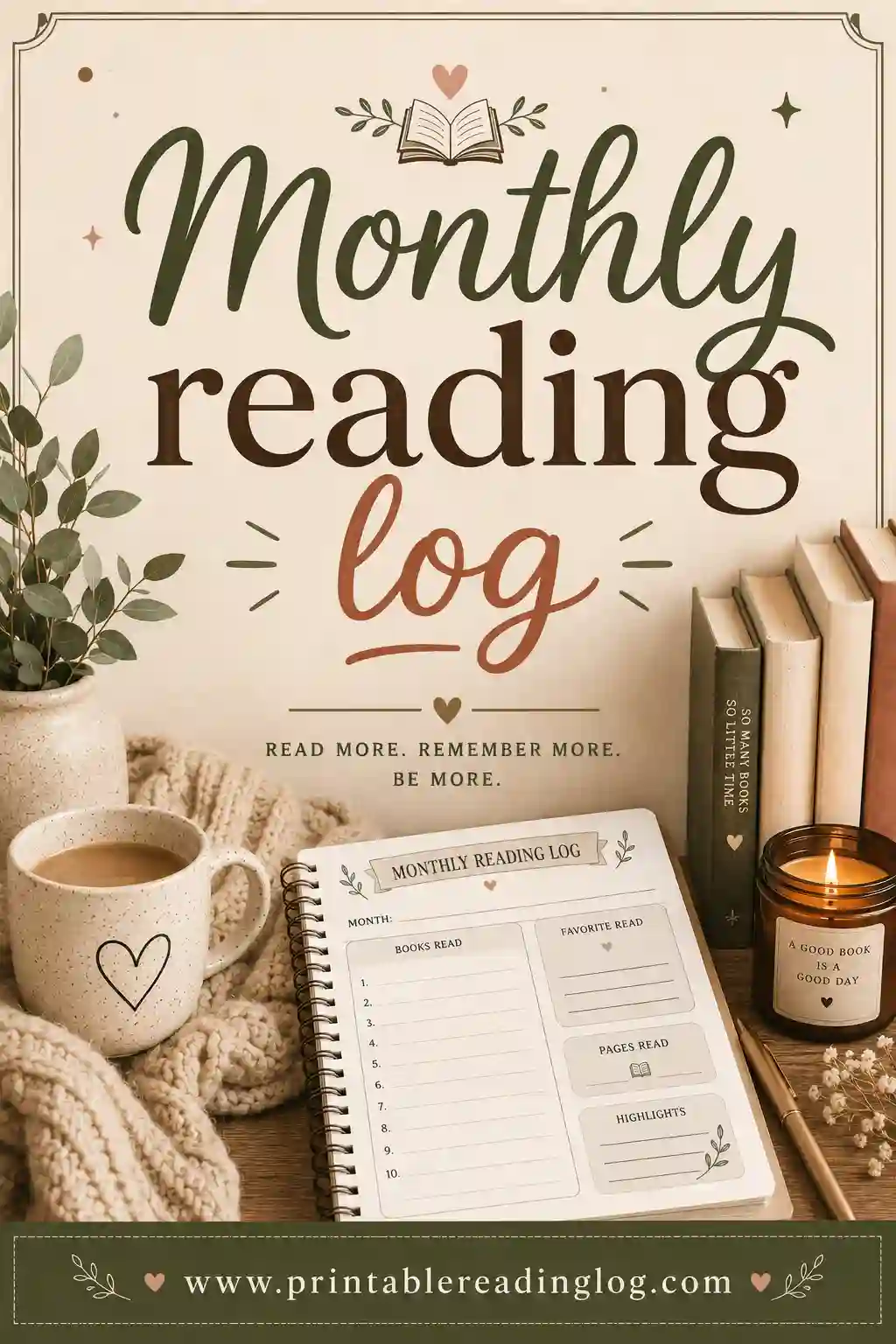
What Is a Monthly Reading Log?
It's a reading tracker scoped to one month. At the top you set a goal for the month, then each row records a book or session: the title, the dates, a rating, and maybe a quick note. When the month ends, you glance at the page and see exactly how you did, then start a clean one.
The monthly view is popular for a reason. A daily log can feel relentless, and a yearly list can feel too far away to motivate. A month is a satisfying chunk. You can fill it, finish it, and feel a small win twelve times a year. That rhythm of fresh starts is what keeps people logging.
A solid monthly log usually has:
- A goal box — your target for the month.
- Book rows — title, author, and dates.
- A rating — a quick star score per book.
- A wrap-up line — total books or minutes for the month.
Why a Monthly Reading Log Works
The monthly frame solves the two big reasons reading trackers get abandoned.
- It beats burnout. Unlike a daily grid you must touch every day, a monthly log only needs you when you finish a book or session.
- It feels achievable. "Read 4 books this month" is concrete and close. "Read 50 books this year" is easy to put off.
- It gives you fresh starts. A bad month doesn't sink the whole year. You flip the page and reset.
- It shows your patterns. Twelve monthly pages side by side reveal your reading highs, lows, and favorite seasons.
There's a quiet psychology here. Monthly goals are short enough that you stay motivated, but long enough that one slow day doesn't matter. That balance is exactly why so many readers prefer the monthly view.
What to Put on a Monthly Reading Log
Keep it to the fields you'll actually fill in. Here's a sample of a clean, useful monthly layout.
| Date range | Book (Author) | Pages | Rating | Notes |
|---|---|---|---|---|
| 6/1–6/8 | Klara and the Sun (Ishiguro) | 320 | ⭐⭐⭐⭐ | Quiet and lovely |
| 6/9–6/15 | The Silent Patient (Michaelides) | 336 | ⭐⭐⭐⭐⭐ | That twist! |
| 6/17–6/24 | Born a Crime (Noah) | 304 | ⭐⭐⭐⭐⭐ | Funny and moving |
| 6/26–6/30 | Circe (Miller) | 60 so far | — | In progress |
Notice the goal sits above this table and the wrap-up sits below it. At a glance you can see the month taking shape, which is the whole appeal of a one-page view. Everything you read this month lives on a single sheet.
Setting a Monthly Reading Goal
A monthly log shines when it's pointed at a clear target. The trick is picking a goal that fits a real month, with all its busy weeks.
- Base it on your pace. If you usually read two books a month, aim for three, not eight.
- Pick books or minutes, not both. "4 books" or "20 minutes a day." One clear target is easier to chase.
- Account for the calendar. A busy holiday month deserves a smaller goal than a quiet one. Adjust without guilt.
- Leave room for a stretch. Set a base goal you'll hit and a stretch goal that feels exciting if the month goes well.
Here's a quick guide to common monthly goals and what they ask of you day to day.
| Monthly goal | Roughly equals | Daily reading |
|---|---|---|
| 1 book | ~300 pages | 10–15 minutes |
| 2 books | ~600 pages | 25–30 minutes |
| 4 books | ~1,200 pages | 45–60 minutes |
| 600 minutes | 20 min a day | 20 minutes |
Pick the row that feels doable for the month ahead, write it in the goal box, and let the log keep you on track.
How to Make a Monthly Reading Log in 4 Steps
No design skills needed. Here's the whole process.
- Choose the monthly layout. One page, a goal box at the top, rows for the month.
- Pick your format. Books-finished, pages, or daily minutes.
- Set the goal. Write your target for the month right at the top.
- Print. Put it somewhere you'll see it daily, then print a fresh one next month.
That's it. Print twelve at once if you like, hole-punch them, and keep a year of monthly logs in a binder for an instant reading journal.
Monthly Reading Log Ideas to Try
The basic monthly sheet flexes into all kinds of fun setups. A few favorites:
The theme month
Pick a theme and fill your log with books that fit: a "spooky October," a "memoir March," or a "classics summer." Themes give a month focus and make choosing your next book easy.
The genre-balance month
Use your monthly log to read more widely. Set a rule like "one fiction, one nonfiction, one re-read" and track how the mix turns out. It's a gentle way to break out of a reading rut.
The minutes-streak month
Skip book counts and just protect 20 minutes a day. Add a small calendar to the page and color in each day you read. The goal is the streak, and a full month of colored squares is deeply satisfying.
The family month
Print one monthly log per person and compare at month's end. A little friendly competition gets the whole house reading.
A Year of Monthly Logs
Here's the best part of the monthly approach: stack twelve of them and you've built a reading journal for the entire year, without ever facing a giant intimidating tracker. Each month you only deal with one page.
| Month | Goal | Why it works |
|---|---|---|
| January | 4 books | Fresh-start energy, long dark evenings |
| April | 2 books | Spring is busy; keep it gentle |
| July | 20 min/day | Vacation reading, minutes over counts |
| October | A "spooky" theme | A theme month keeps it fun |
| December | 1 cozy book | Low pressure during a packed month |
Adjusting the goal month to month is the secret. Your reading life isn't the same in July as it is in January, and a monthly log lets you flex with it instead of fighting it.
Tips to Keep Your Monthly Log Going
A monthly log is low-maintenance, but these habits keep it useful all year.
- Set the goal on day one. Open the month by writing your target. It frames the next four weeks.
- Log the moment you finish. Write the row right when you close the book, while your rating is fresh.
- Do a month-end wrap-up. Tally your books or minutes and jot one favorite. It's a satisfying close and a fast win.
- Keep last month visible. Seeing a strong past month nudges you to match it.
- Reset without guilt. A slow month is just a slow month. Flip the page and start clean.
Common Monthly Reading Log Mistakes
A few easy slips can stall even a low-effort log. Sidestep these.
- An unrealistic goal. Eight books in a busy month sets you up to quit. Match the goal to the month.
- Forgetting the wrap-up. The month-end tally is where the payoff lives. Skipping it drops the best part.
- Over-tracking. A monthly log with ten columns gets abandoned. Keep it to title, dates, rating, and a note.
- No fresh page. Cramming two months onto one sheet kills the clean-restart feeling. Use one page per month.
- Letting a bad month spiral. One off month isn't failure. The whole point of monthly logs is the reset.
Frequently Asked Questions
What is a monthly reading log?
It's a one-page sheet that tracks all your reading for a single month, with a goal at the top and rows for each book or session. It's the sweet spot between a daily and a yearly tracker. You can make one free with the reading log generator in about a minute.
Is the monthly reading log free to print?
Yes. You build it and print it yourself at no cost, with no sign-up and no watermark. Print one page or a full year of monthly logs on a single clean design.
How many books should I read in a month?
Base it on your pace and aim to stretch a little. If you usually read one or two books a month, target two or three. A realistic monthly goal you hit beats an ambitious one you abandon, and you can adjust it month to month.
Should I track books or minutes each month?
Track books if you have a monthly count in mind, and minutes if your real challenge is reading every day. Many readers track minutes in busy months and switch to book counts when they have more time. The tool builds either layout.
Can I keep a whole year of monthly logs?
Absolutely. Print twelve monthly pages, put them in a binder, and you've got a complete reading journal for the year, one page per month. It's a low-pressure way to track a whole year without facing one giant sheet.
What's the difference between a monthly and a weekly log?
A monthly log shows a whole month on one page and suits readers who finish a book every week or two. A weekly reading log gives each week its own grid and suits daily readers or kids with nightly reading goals. Pick the rhythm that matches how you read.
Ready to Build Your Monthly Reading Log?
Choose the monthly layout, set your goal, and open the free reading log generator to print a clean, ready-to-use one-page sheet in minutes. It's free, there's no sign-up, and you can print a fresh page every month. Set a goal that fits the month ahead, log each book as you finish it, and enjoy that month-end wrap-up. For more setups, see our printable reading log and reading log for adults guides.