Classroom Reading Log: Free Printable for Teachers
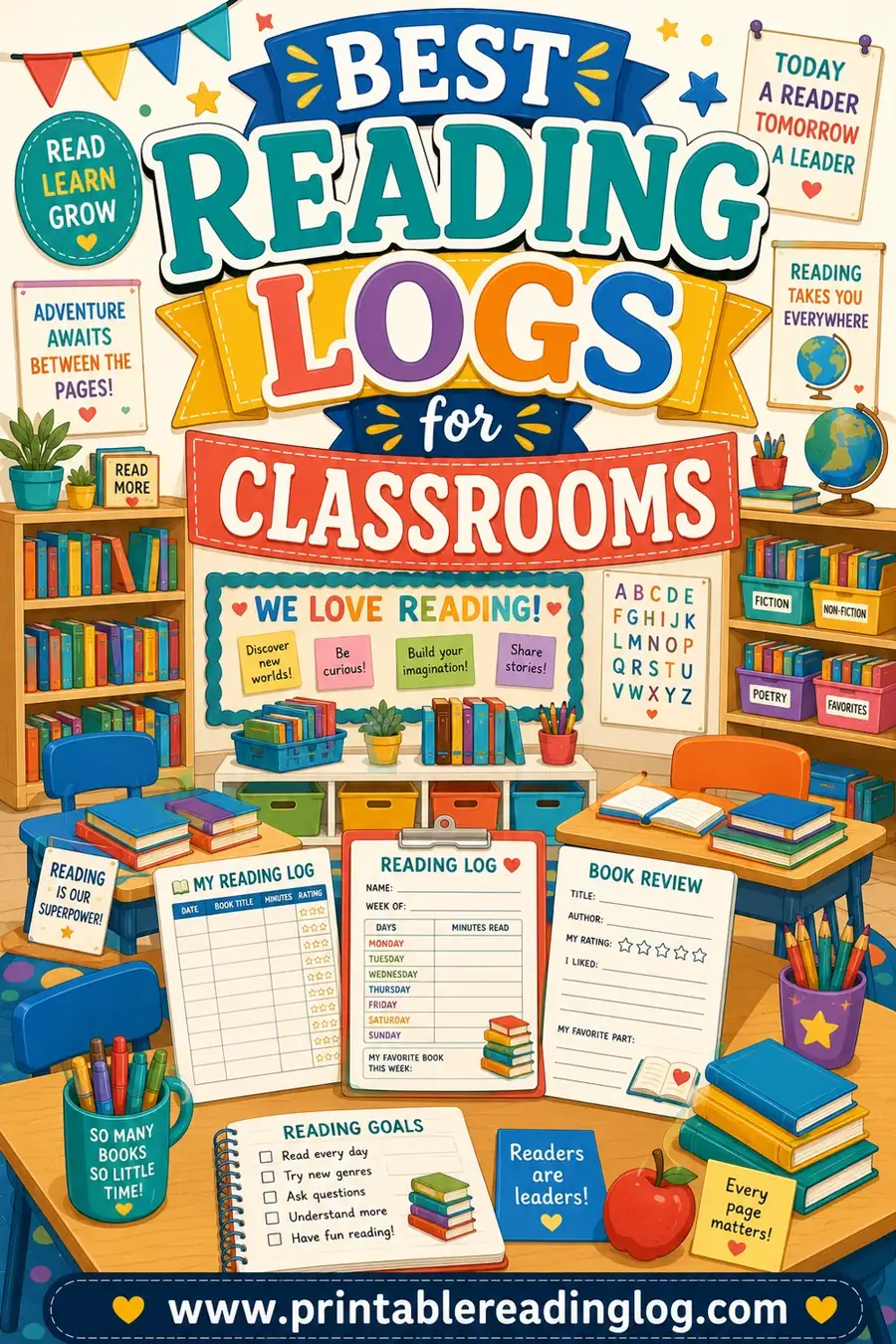
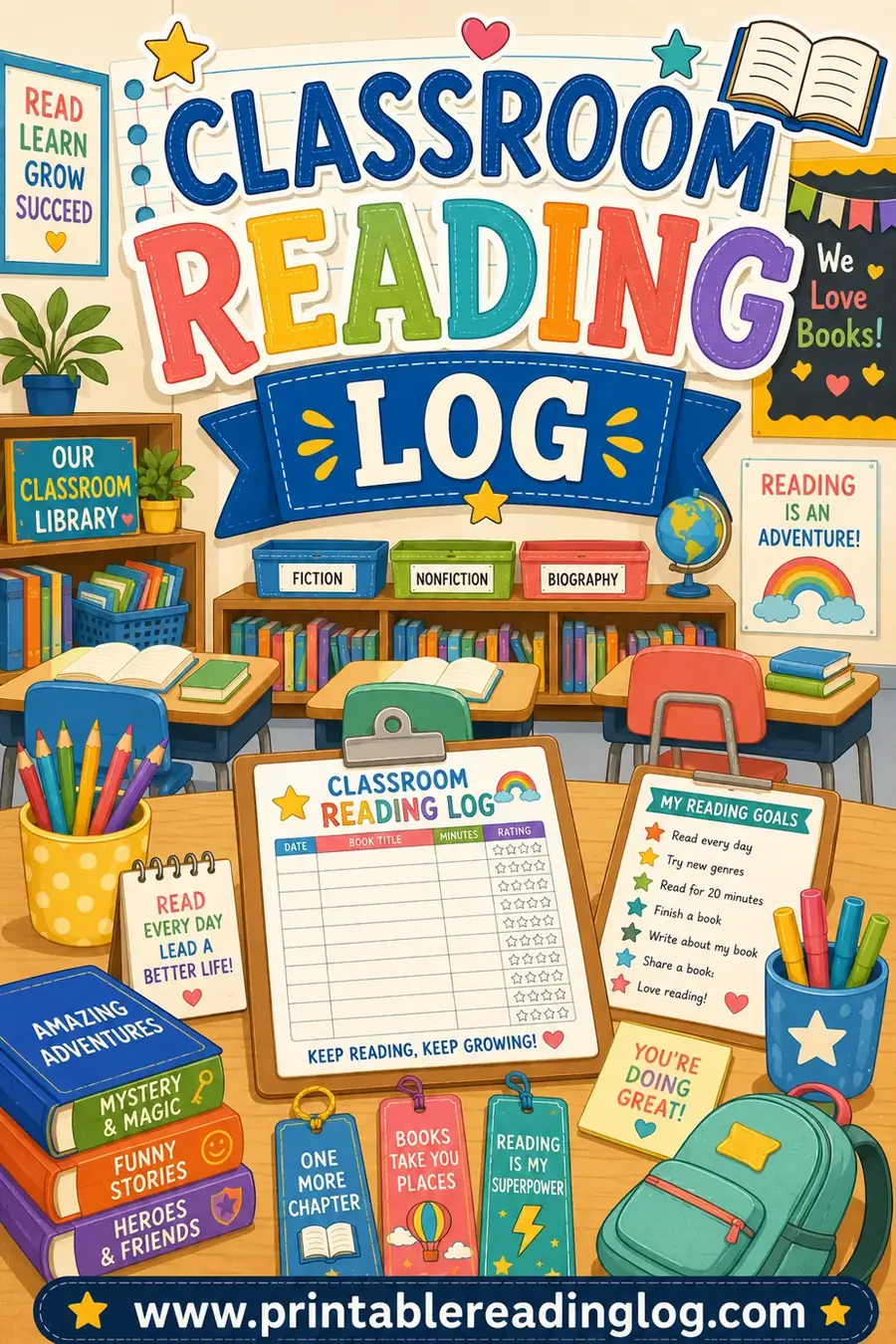
A classroom reading log is a sheet your students use to record what they read: the book title, the date, minutes or pages read, and often a parent or teacher signature. It gives you a simple, consistent way to track reading across a whole class without a pile of apps or logins. The quickest way to set one up is to use a free printable reading log, pick a layout that fits your grade, and print a class set.
Need one for tomorrow? Open the free log builder, choose a minutes, pages, or books layout, and print a clean class set in minutes. No sign-up, no software, no cost.
Why Use a Classroom Reading Log?
A reading log is one of the oldest tools in teaching, and it endures for good reasons. Done right, it does real work for you and your students.
- It builds the daily reading habit. A log makes nightly reading a visible expectation, not a vague suggestion.
- It loops in parents. A signature line turns reading into a home-and-school partnership.
- It gives you data. At a glance you can see who's reading, who's stuck, and who needs a nudge.
- It supports reading programs. Logs feed straight into incentive programs, AR points, and reading challenges.
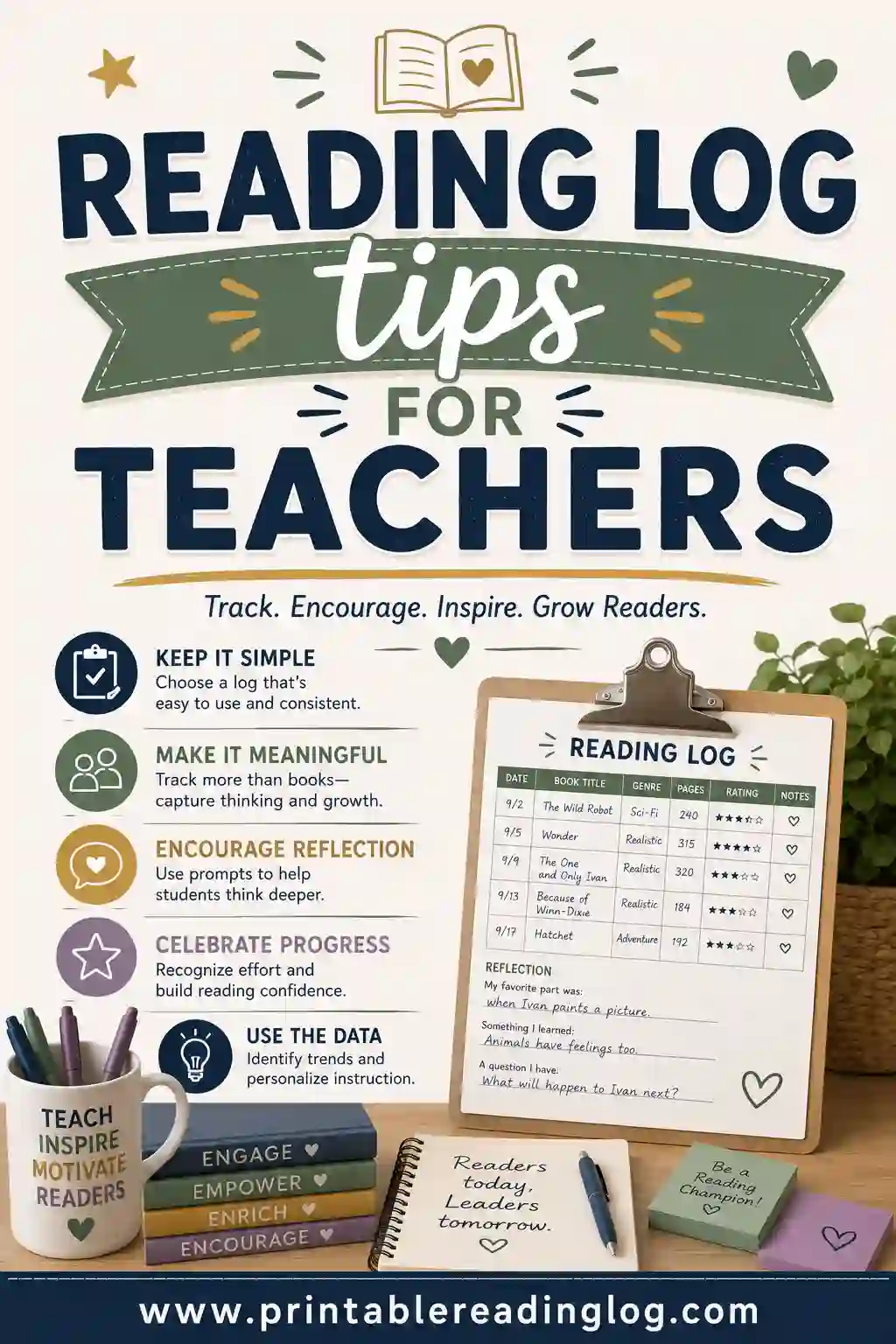
The trick is keeping it light. A log that takes thirty seconds a night gets done. One that feels like a worksheet gets faked or forgotten. For more on running logs well, see our reading log tips for teachers.
What to Include in a Classroom Reading Log
The right columns depend on your grade and goals, but a few show up in almost every classroom log.
| Column | Purpose |
|---|---|
| Date | Tracks the daily habit and builds a streak. |
| Book title | What the student read. |
| Minutes or pages | Your tracking unit (pick one). |
| Genre | Optional: nudges variety in reading. |
| Parent signature | Verifies at-home reading. |
| Teacher initials | Your weekly check-in mark. |
Pick one tracking unit, minutes for younger grades and pages for older ones, and stick with it. Mixing units across a class makes the data hard to read. Our breakdown of the best reading logs for classrooms covers which unit fits which grade.
A sample student row
Here's what a few filled-in days might look like on a student's sheet.
| Date | Book | Min | Parent |
|---|---|---|---|
| Mon | Frog and Toad | 20 | ✓ J.M. |
| Tue | Frog and Toad | 20 | ✓ J.M. |
| Wed | Magic Tree House #1 | 25 | ✓ J.M. |
| Thu | Magic Tree House #1 | 20 | ✓ J.M. |
| Fri | The Bad Seed | 15 | ✓ J.M. |
Simple, fast, and it tells you everything: the student is reading nightly, building stamina, and a parent is signing off. That's the whole point.
How to Set Up Your Classroom Log
You can have a class set ready in well under ten minutes.
- Open the builder. Head to the free reading log builder.
- Pick your layout. Choose minutes, pages, or books based on your grade.
- Add your columns. Date, title, your unit, and a signature line cover most classrooms.
- Add a header line. Leave a spot for student name and week-of date.
- Print a class set. Print one per student, plus a few spares for new arrivals.
Run a single test copy first to check your margins, then print the full stack. A test page saves you from a cut-off signature column on thirty sheets.
Classroom Reading Logs by Grade Level
A kindergarten log and a fifth-grade log shouldn't look the same. Match the format to your students.
| Grade | Unit | Layout tips |
|---|---|---|
| K–1 | Minutes | Big boxes, picture cues, parent reads with child |
| 2–3 | Minutes | Add a title column, simple parent signature |
| 4–5 | Pages | Add genre, short "what happened" line |
| Middle school | Pages or books | Add ratings, summaries, less parent oversight |
| ESL/support | Minutes | Bigger spacing, simpler labels, visual cues |
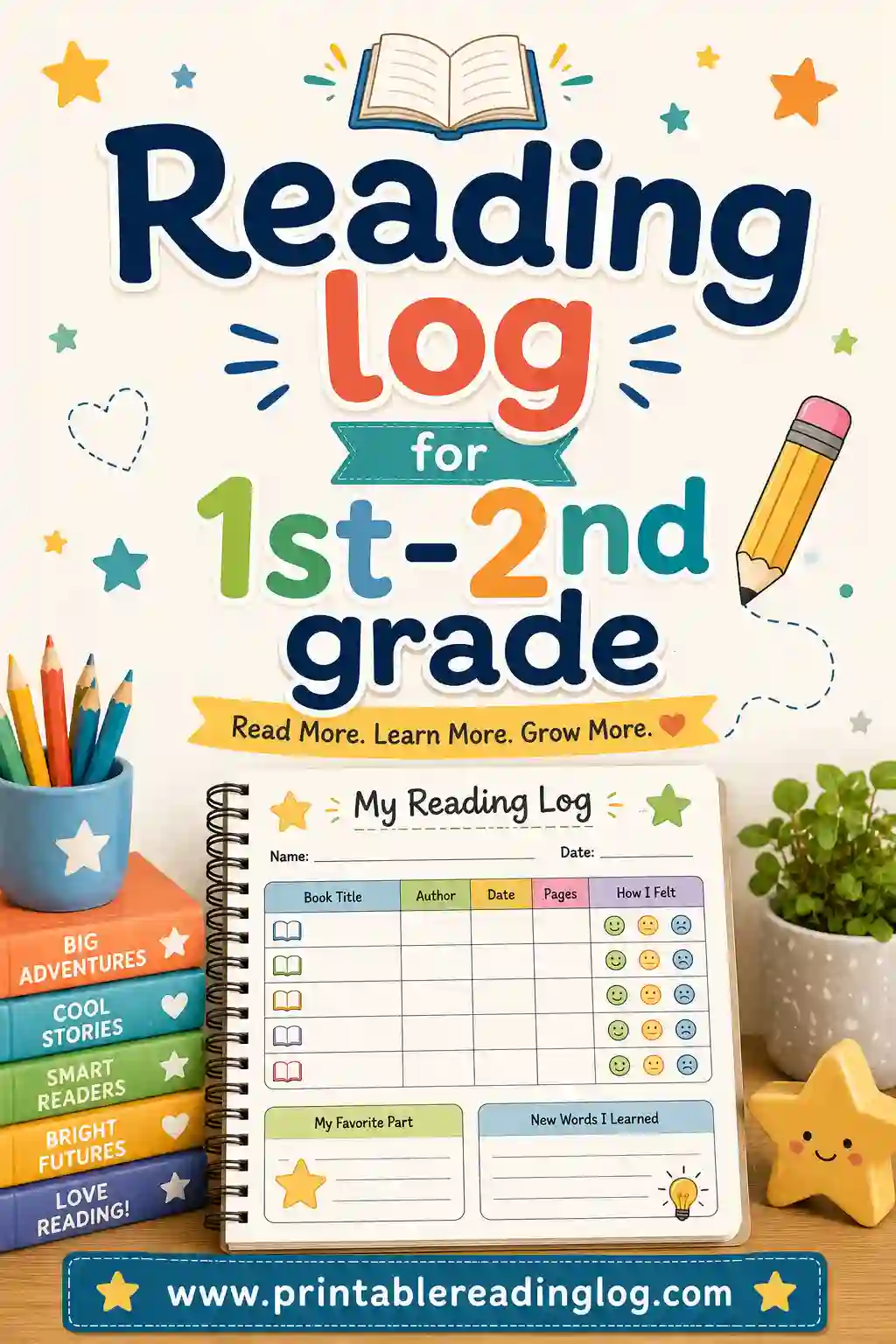
For the youngest students, keep it visual and let parents do the writing. Our reading log for 1st and 2nd grade is sized for little hands and early readers. Older students can handle more columns and take ownership of their own logs.
Getting Students (and Parents) to Actually Use It
A log only works if it gets filled in. These habits keep your return rate high.
- Make it a routine, not a chore. Same expectation every night, same place to turn it in every morning.
- Keep nightly reading short. Fifteen to twenty minutes is plenty for most grades. A doable goal gets done.
- Send a clear parent note. A one-paragraph explainer at the start of the year sets expectations and boosts signatures.
- Check it quickly. A weekly stamp or initials is enough. You don't need to grade every line.
- Celebrate streaks. A small reward for a full week keeps motivation high without much effort.
Handling the logs that don't come back
Some logs will come back blank or not at all, and that's normal. Don't let it derail the system for everyone. Keep a few spare copies in the classroom so a forgotten log isn't an excuse, and focus your energy on celebrating the students who do read rather than policing the ones who don't. Pair the log with a classroom incentive and participation tends to climb on its own.
Tying the Log Into Reading Programs
A classroom log is the backbone of almost any reading initiative.
Reading challenges
Set a class goal, like 1,000 minutes by the end of the month, and use the logs to track collective progress. A wall chart that fills in as logs come back makes the goal feel real and shared.
Incentive and points programs
Logs feed directly into reading-rewards systems and AR-style points. The log is the proof of reading; the program is the payoff. Keeping the log simple makes the whole program run smoother.
School-wide events
For read-a-thons or summer reading kickoffs, a consistent printable log means every class tracks the same way. That makes tallying school-wide results painless. Our guide for teachers digs deeper into running these.
Making the Log Meaningful, Not Just a Checkbox
The biggest knock on reading logs is that they can become a box-ticking chore that kids fake and parents resent. A few tweaks turn the log into a tool that actually grows readers instead of just policing them.
- Skip the rigid minute requirement sometimes. For a free-reading week, let students log titles and a quick rating instead of minutes. Choice and enjoyment matter more than the clock on some nights.
- Add a tiny reflection. A single line, "the best part was…" or a star rating, turns mindless logging into a moment of thinking about the book.
- Let students pick their books. A log of self-chosen reading gets filled in willingly. A log of forced reading gets faked. Choice is the engine.
- Talk about the logs. A two-minute "what are you reading?" share each morning makes the log feel social and real, not just paperwork.
- Watch for the fakers gently. If a log is always exactly "20 minutes" with vague titles, the student may be inventing it. That's a sign to reconnect them with a book they'll love, not to crack down harder.
A quick book-recommendation list for reluctant readers
When a student says "there's nothing to read," a ready list saves the day. These titles tend to hook even hesitant readers and get logs filling up again.
| Grade band | Try these hooks |
|---|---|
| K–2 | Elephant & Piggie, Pete the Cat, Mercy Watson |
| 3–5 | Dog Man, The Bad Guys, Magic Tree House |
| Middle school | Wonder, New Kid, Amulet (graphic novel) |
Graphic novels deserve a special mention. They count fully as reading, they build vocabulary and visual literacy, and they're often the gateway that turns a reluctant reader into a logging machine. Let students count them, and watch participation climb.
Print, Customize, and Reuse
Because you build the log yourself, you control every detail.
- Print a class set at once. One layout, thirty copies, done. Keep a master to reprint.
- Match the unit to your grade. Minutes for the little ones, pages for upper grades.
- Add your school's branding. Drop in a header with your class name or a fun reading slogan.
- Use sleeves for reusable logs. Slip a weekly log in a clear sleeve so students mark with dry-erase and you wipe it clean.
Everything adjusts in the free builder, so the log fits your classroom instead of forcing your classroom to fit a template.
Frequently Asked Questions
What should a classroom reading log include?
At minimum: the date, the book title, your tracking unit (minutes or pages), and a parent signature line. Many teachers add a genre column to encourage variety and a spot for their own weekly initials. Keep it simple enough to fill in nightly.
Minutes or pages, which should I track?
Use minutes for younger grades (K–3), since reading speed varies so much and a time goal is fairer. Switch to pages for older students who read faster and longer. Pick one unit for your whole class to keep the data consistent.
Is the classroom reading log free to print?
Yes. You build and print it yourself at no cost, with no sign-up and no watermark. Print a single page or a full class set, as many copies as you need.
How do I get parents to sign the logs?
Send a short note at the start of the year explaining the goal and the routine. Keep the nightly reading short (15–20 minutes) so it's easy for families, and add a clear signature line. A simple, low-effort log gets signed far more often than a complicated one.
How much should students read each night?
For most elementary grades, 15 to 20 minutes a night is the standard and plenty effective. Older students can read longer. The key is a consistent, doable amount that students and parents can actually keep up with.
Can I use one log for the whole year?
You can reprint the same layout all year, which keeps things consistent. Most teachers print a fresh weekly or monthly sheet per student rather than one giant log, so pages stay clean and easy to check. Use the same template each time for consistency.
Start Your Classroom Reading Log Today
Pick your grade-level layout, open the free reading log builder, and print a class set you can hand out tomorrow. Track minutes or pages, loop in parents with a signature line, and watch your students' reading habit grow week by week. It's free, there's no sign-up, and your whole class can start tracking by morning. Happy teaching.