Yearly Reading Challenge Log: Free Printable Tracker
A yearly reading challenge log is a single sheet that tracks every book you finish over a whole year toward a goal, like "read 24 books in 2026." You set a target, fill in one line per book as you go, and watch the list grow until you hit your number. The easiest way to build one is with a free reading log maker that creates a clean, printable challenge tracker in seconds.
Want to start now? Open the free tool, set your yearly goal, pick a by-books layout, and print a sheet you can pin up all year. No sign-up, no cost, no software needed.
What Is a Yearly Reading Challenge Log?
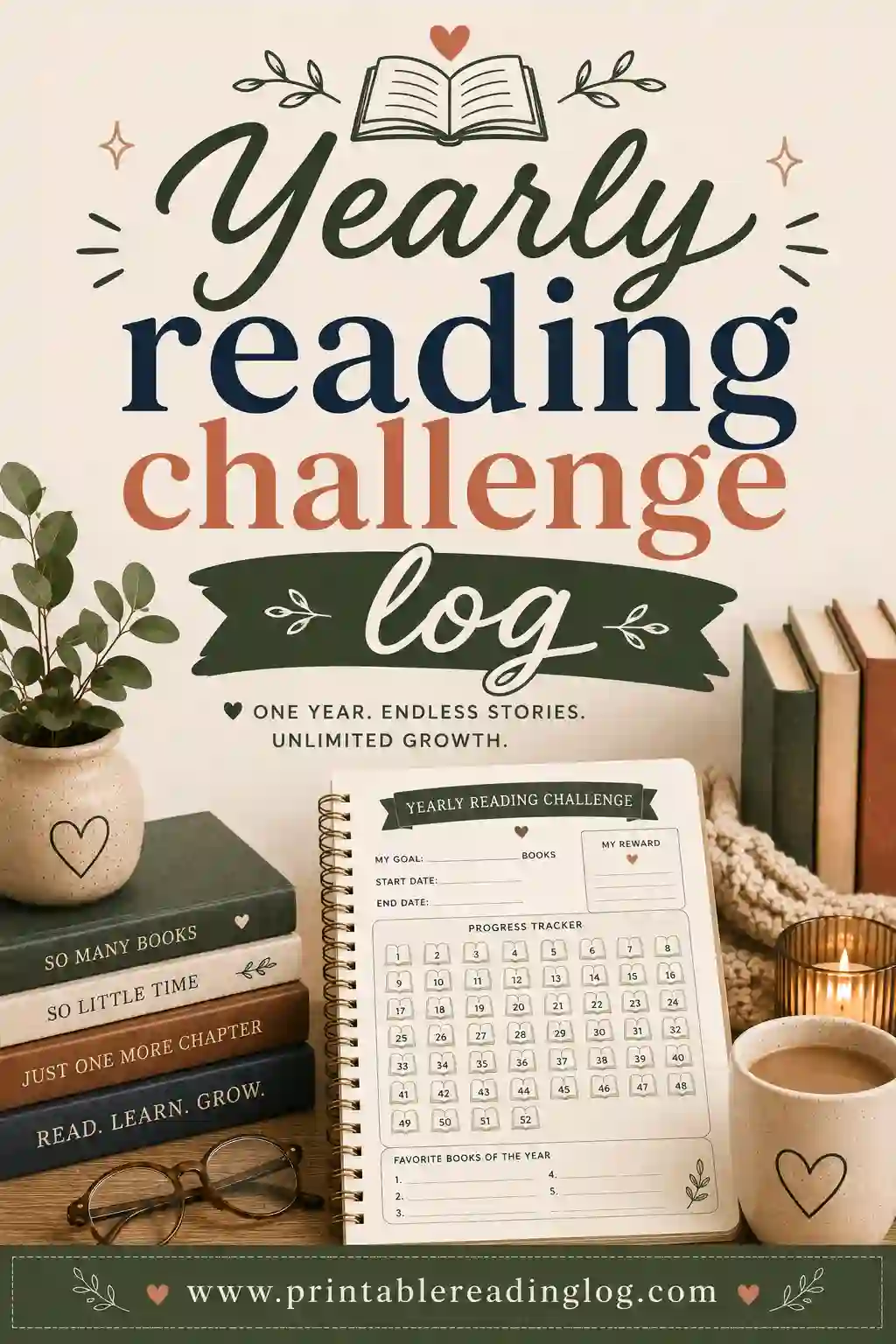
A yearly reading challenge log is a goal-based tracker that runs from January to December. Instead of one row per day, it usually has a numbered list of slots, one per book you plan to finish. As you complete each book, you fill in the title, author, and maybe a rating, watching the page fill up toward your target.
The "challenge" part is the goal. You decide on a number, say 12, 24, or 52 books, and the log gives that number a home. Seeing 11 of 24 lines filled in July tells you exactly where you stand and whether you need to pick up the pace.
Most yearly challenge logs include:
- A goal box at the top ("My 2026 goal: 30 books").
- Numbered lines for each book, often pre-numbered so you can see progress at a glance.
- Title and author columns.
- A rating (stars) and sometimes a date-finished column.
- An optional category column for themed challenges.
You can keep it minimal or load it up with extra columns. Building your own means you tune it to the exact challenge you're running.
Why a Yearly Reading Challenge Works
Setting a yearly book goal is one of the most reliable ways to read more, and a log is what makes the goal stick. Here's why.
It gives your reading a finish line
"Read more" never ends, so it's easy to drift. "Read 24 books this year" has a clear target and a deadline. That structure turns a vague wish into something you can actually chase, and a log keeps the target in front of you.
It makes progress visible
A full year is long enough to lose track. A challenge log fixes that. Halfway through the year, you can count your finished lines and instantly know if you're ahead, behind, or right on pace. That feedback is gold for staying motivated.
It builds a record you'll love
By December, your log is a snapshot of your whole reading year, every title, every rating, in one place. People who keep one often say the finished sheet is half the fun. It's a tiny reading journal that doubles as a trophy.
How Many Books Should You Aim For?
There's no "right" number. The best goal is one that stretches you a little without feeling impossible. Here's a rough guide to pick a target.
| Goal | Books / month | Good for |
|---|---|---|
| 12 books | 1 | New or busy readers; one book a month is very doable |
| 24 books | 2 | A solid, motivating goal for most adult readers |
| 52 books | ~1 / week | Avid readers who finish a book a week |
| 100 books | ~2 / week | Fast readers, audiobook lovers, big-time bookworms |
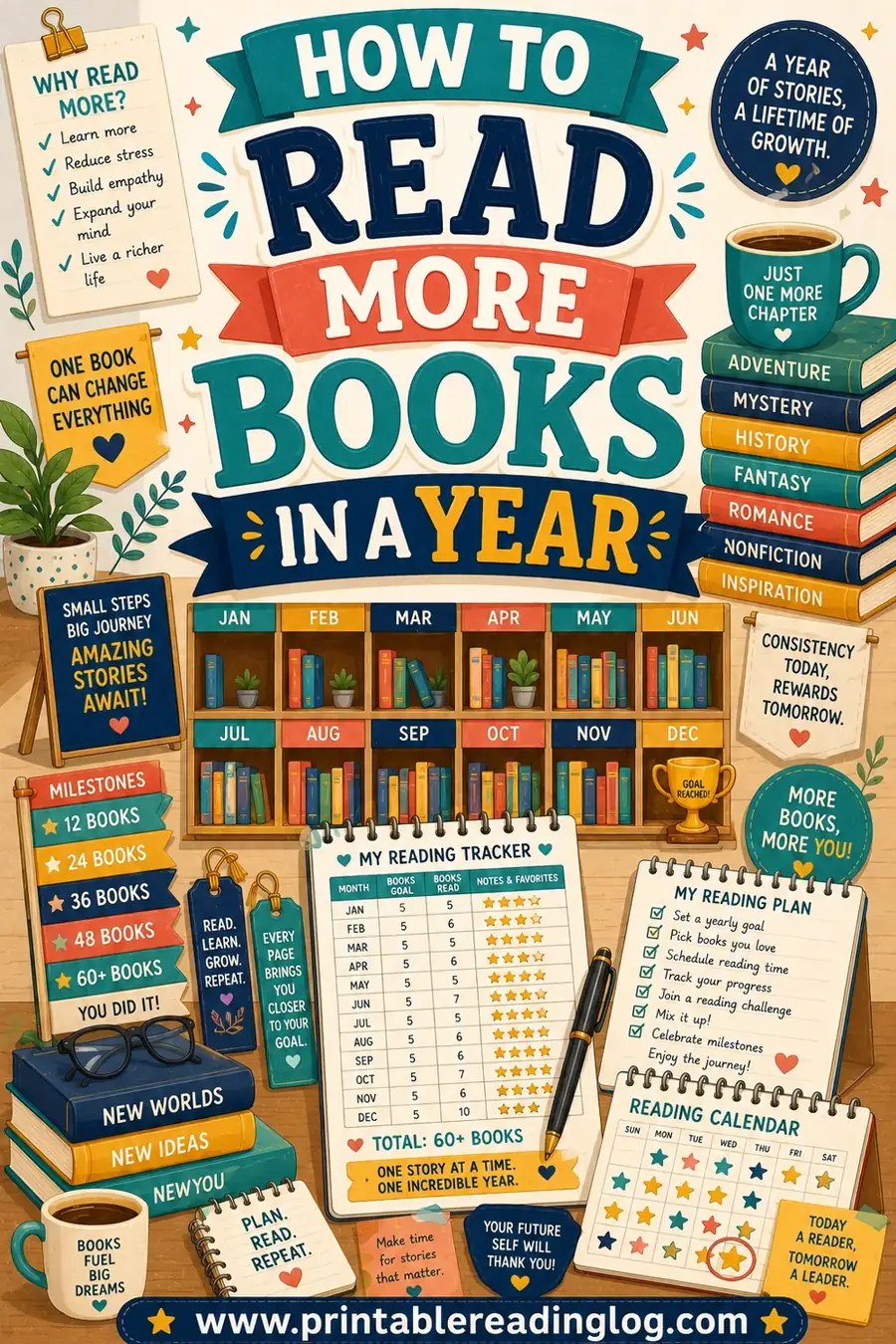
If you're not sure, start lower than you think. Hitting 12 and feeling great beats setting 50 and quitting in March. You can always raise the bar next year. For more on choosing a target, see how to read more books in a year.
Don't forget audiobooks and short books
A book is a book. Audiobooks, novellas, and graphic novels all count toward your challenge if you want them to. Counting formats you actually enjoy keeps the challenge fun instead of feeling like a chore.
Fun Yearly Reading Challenge Themes
A plain "read X books" goal works fine, but a themed challenge adds spice. Here are a few popular twists you can build into your log with a "category" column.
- One book per genre. A mystery, a memoir, a fantasy, a classic, and so on. Great for breaking out of a rut.
- Around the world. A book set in (or by an author from) a different country each month.
- Clear your shelf. Only count books you already own but haven't read. A satisfying way to tackle that to-be-read pile.
- Decade hop. A book from each decade, from the 1920s to today.
- Backlist and new. Alternate between an old favorite-author title and a brand-new release.
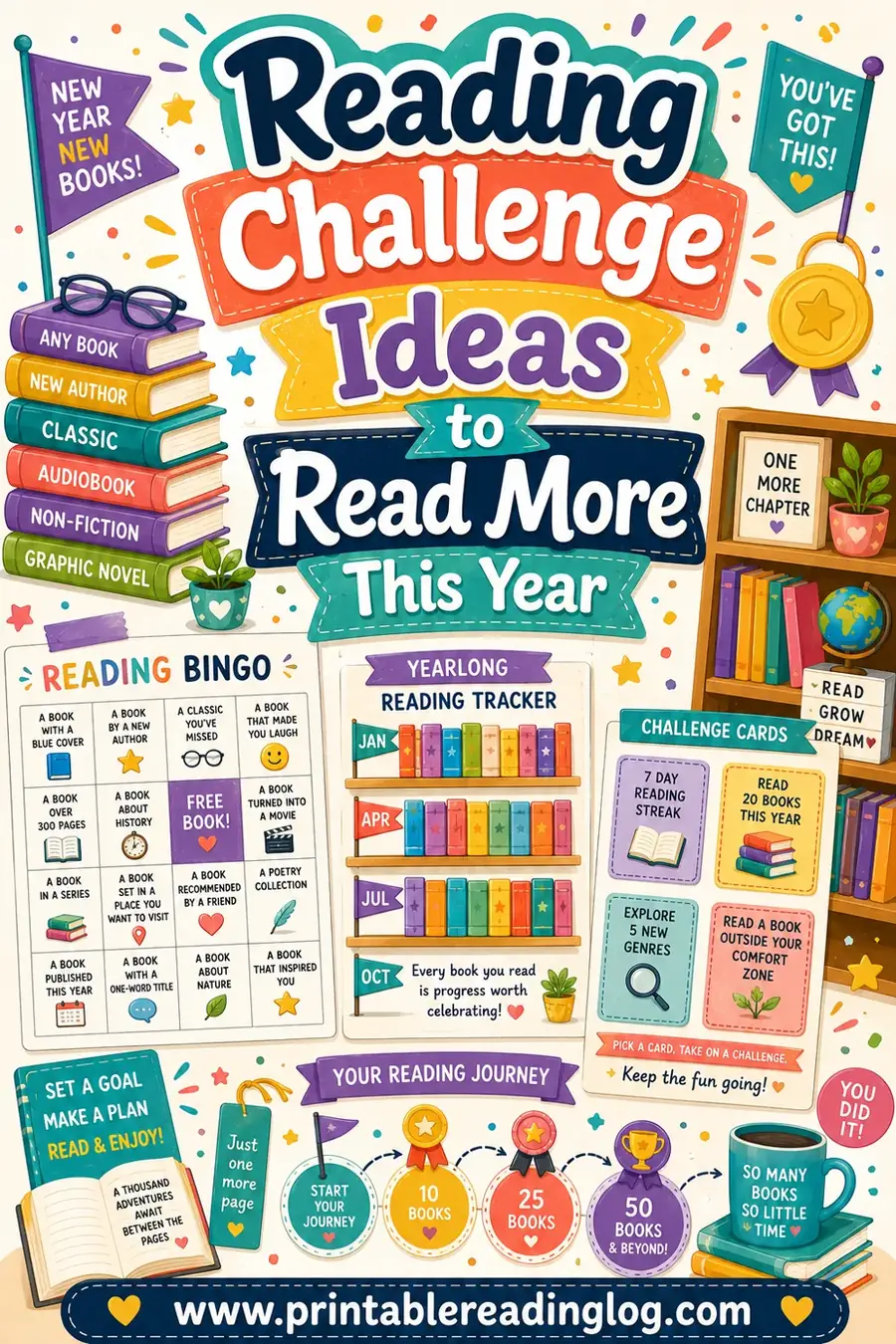
Want more inspiration? Our list of reading challenge ideas has dozens of themes you can drop straight into your log.
How to Make a Yearly Reading Challenge Log in 4 Steps
You can have your tracker printed in just a few minutes.
- Open the reading log maker. It runs right in your browser.
- Pick a by-books layout. This gives you numbered lines, perfect for a yearly count.
- Set your goal and details. Type in your target number, add a title like "2026 Reading Challenge," and turn on rating or category columns if you want them.
- Print and pin it up. Put it somewhere you'll see it daily, your desk, your fridge, or the inside cover of your current read.
That's it. If your goal is big, print a couple of sheets so you've got room for every book.
Sample Yearly Challenge Log
Here's what a few filled-in lines look like, so you can picture the finished sheet.
| # | Title | Author | Finished | Rating |
|---|---|---|---|---|
| 1 | Project Hail Mary | Andy Weir | Jan 14 | ⭐⭐⭐⭐⭐ |
| 2 | The Midnight Library | Matt Haig | Feb 2 | ⭐⭐⭐⭐ |
| 3 | Educated | Tara Westover | Feb 28 | ⭐⭐⭐⭐⭐ |
| 4 | Klara and the Sun | Kazuo Ishiguro | Mar 19 | ⭐⭐⭐⭐ |
| 5 | Atomic Habits | James Clear | Apr 5 | ⭐⭐⭐⭐ |
Seeing the list build like this is the whole appeal. Each finished line is a small win, and the gaps below it are a gentle nudge to keep going.
Tips to Actually Hit Your Goal
A log helps, but a few habits make the difference between finishing and fizzling out.
- Always have your next book ready. The gap between finishing one book and starting the next is where momentum dies. Line up your next read before you finish the current one.
- Track your pace at month's end. A quick check-in keeps you honest. If you're behind, a shorter book or an audiobook can help you catch up.
- Count what you enjoy. Audiobooks, comics, and re-reads all count if you say they do. A fun challenge is one you'll actually finish.
- Use small windows. Ten minutes at lunch, a chapter before bed, an audiobook on your commute. Those scraps add up to whole books over a year.
- Don't quit over a bad month. A slow stretch is normal. One strong month can put you right back on track.
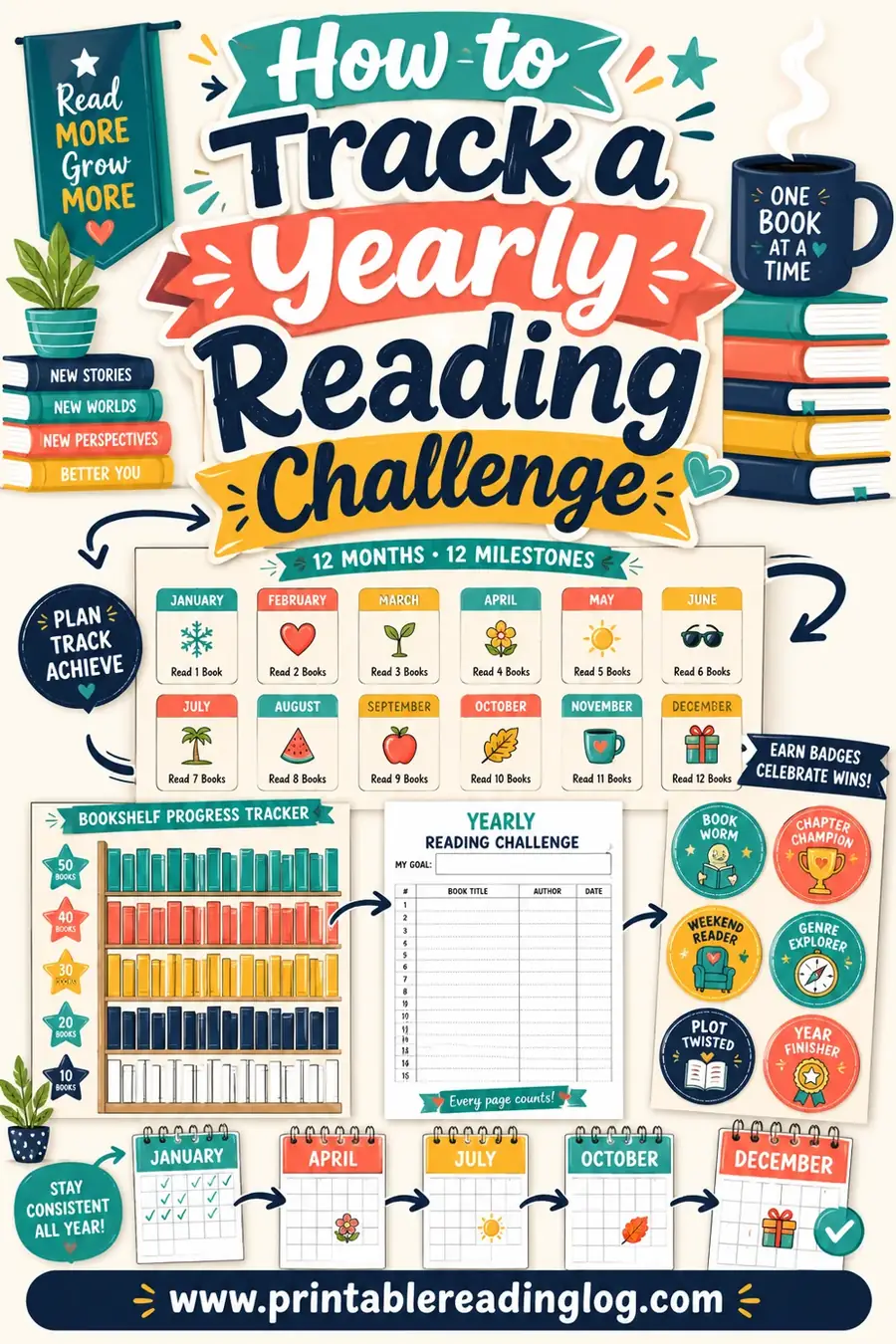
For a fuller game plan, see how to track a yearly reading challenge.
Keeping Momentum All Year Long
The hardest part of a yearly challenge isn't January, when motivation is high, it's the middle months when the novelty wears off. This is exactly where a printed log earns its keep. A goal you can see every day is much harder to abandon than a number you set once and forgot. Pin the sheet somewhere unavoidable, and your goal stays alive even when your enthusiasm dips.
Break the year into smaller checkpoints. Instead of staring at "24 books by December," aim for "two books by the end of this month." Hitting a series of small, near-term targets feels far more achievable than chasing one distant number, and a dozen small wins add up to the big one without the pressure.
Build in a recovery plan for slow stretches, because every reader hits them. A busy month, a long book that drags, a reading slump, all normal. The readers who finish their challenge are the ones who shrug off a bad month and keep going, not the ones who quit the moment they fall behind. A shorter book or a gripping audiobook is often all it takes to find your rhythm again.
And keep the challenge fun. The point of a yearly goal is to read more of what you love, not to grind through titles to hit a number. If a book isn't working, set it aside guilt-free and pick another. A challenge you enjoy is a challenge you'll finish, and your log will be all the richer for the books you actually wanted to read.
Printing and Reuse Tips
- Print on cardstock if the log will live on a wall all year, it holds up better than thin paper.
- Frame it or use a clip so it stays flat and visible. A challenge you can't see is a challenge you'll forget.
- Print a fresh sheet each January so every year gets its own clean record you can keep.
- Go black and white to save ink; you can color in finished lines yourself for a sense of progress.
Frequently Asked Questions
What is a yearly reading challenge log?
It's a single sheet that tracks every book you finish in a year toward a set goal, like 24 books. You fill in one line per book with the title, author, and rating, and watch your list grow until you hit your target. The free tool builds one in seconds.
How many books should I read in a year?
Pick a number that stretches you a little. Twelve books (one a month) is a great starting goal; 24 is a popular, motivating target; 52 means a book a week for avid readers. Start lower than you think and raise it next year if it felt easy.
Do audiobooks count toward a reading challenge?
Yes, if you want them to. A book is a book, no matter the format. Many readers count audiobooks, graphic novels, and novellas toward their yearly goal. The challenge is yours, so set rules that keep it fun.
What if I fall behind on my goal?
Don't panic or quit. Check your pace, then catch up with a few shorter books or an audiobook. One strong reading month can erase a slow one. The point of the log is to guide you, not to shame you.
Can I make a yearly reading challenge log for free?
Yes. The reading log maker is free with no sign-up and no watermark. You set your goal, choose your columns, and print at home, as many copies as you need.
How is a challenge log different from a regular reading log?
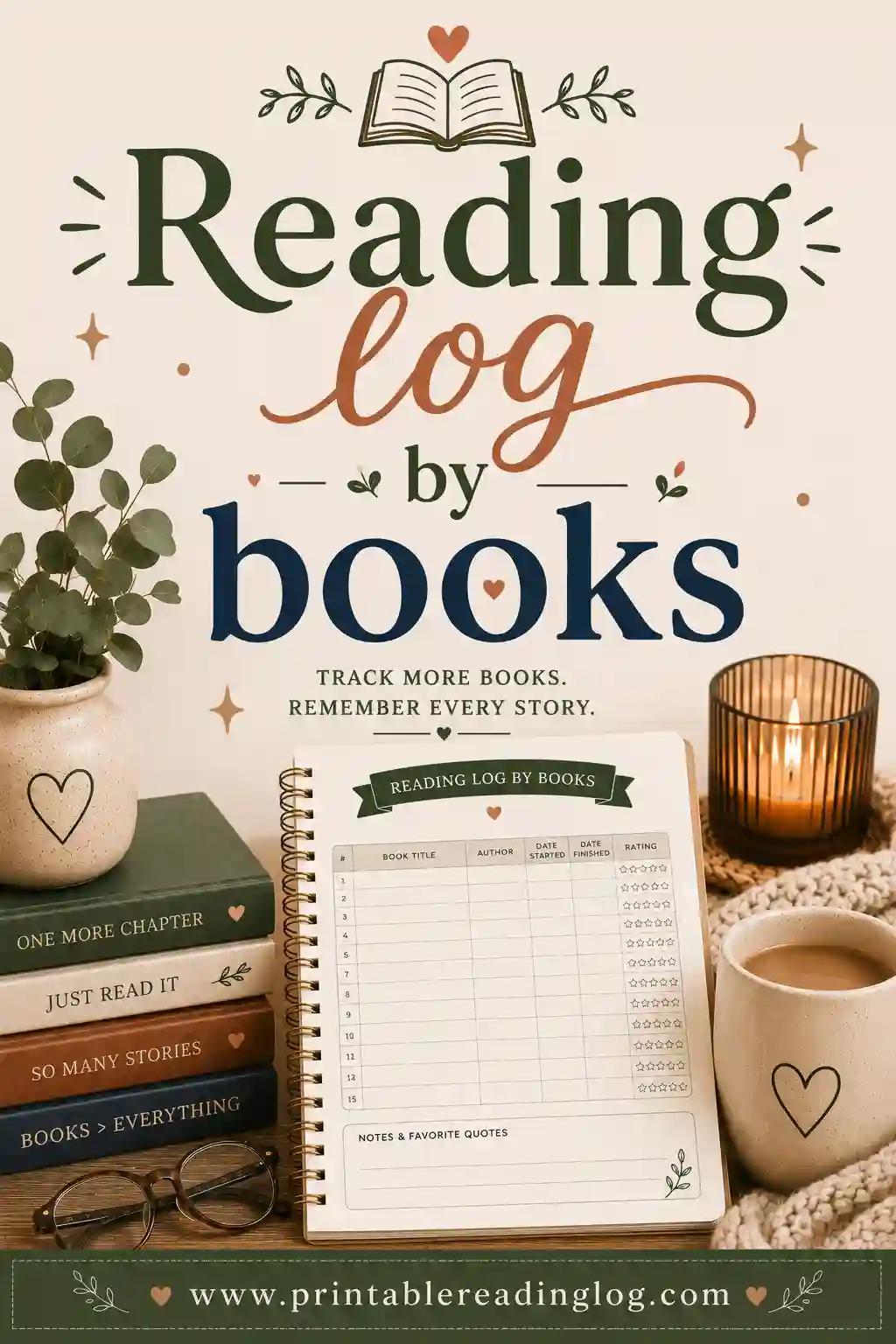
A regular reading log by books just tracks what you read. A challenge log adds a goal and a deadline, turning your reading into a year-long target you can chase and measure. It's a reading log with a finish line.
Ready to Start Your Reading Challenge?
A yearly reading challenge log turns "I want to read more" into a real, trackable goal you'll actually hit. Open the free reading log maker, set your number, and print a sheet you can pin up for the year. Fill in a line with every book you finish, and by December you'll have a full page to be proud of. Happy reading.