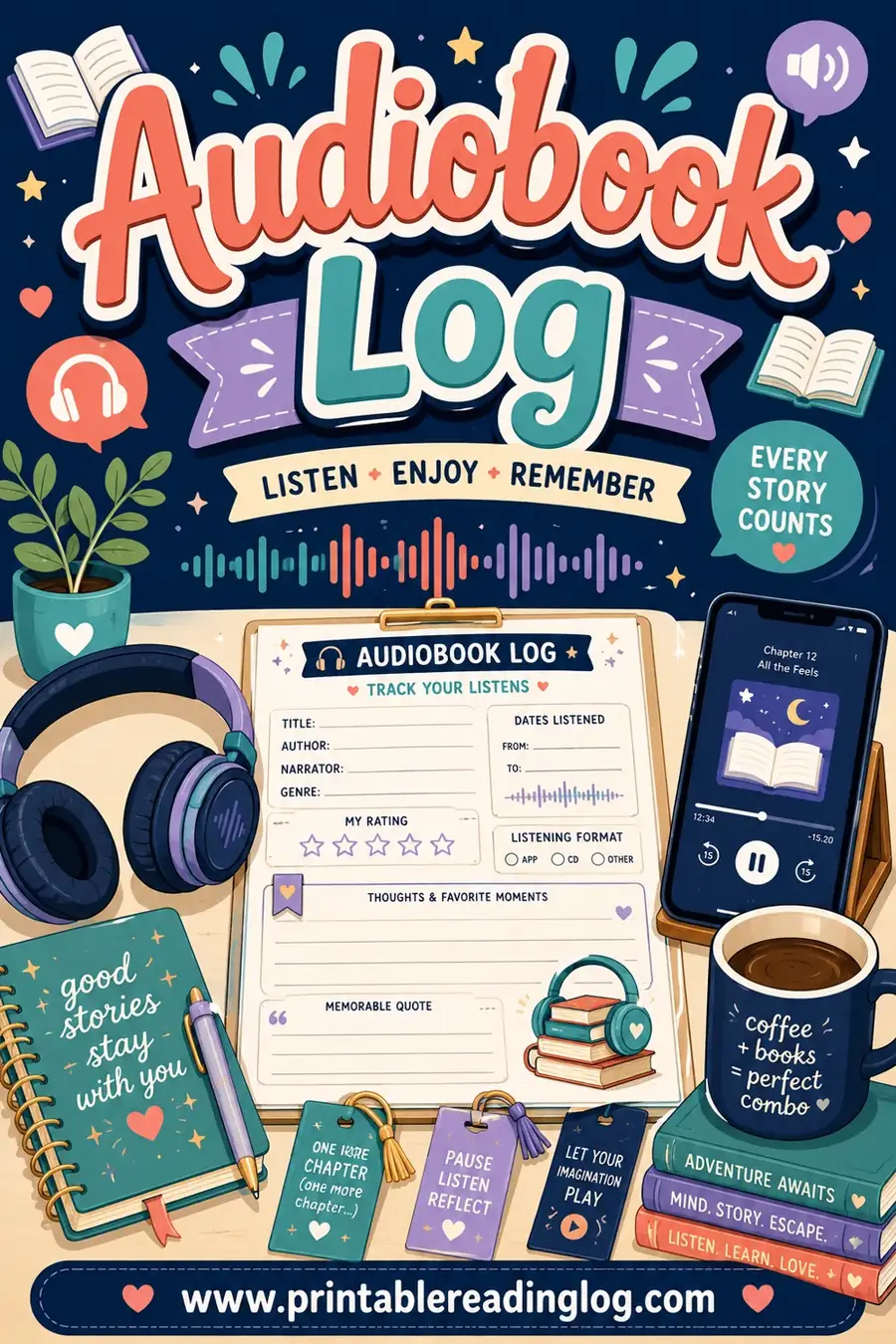
Audiobook Log: Free Printable Listening Tracker
An audiobook log is a sheet where you record the audiobooks you listen to: the title, the author, the narrator, the length in hours, the date you finished, and a quick rating. It works just like a reading log, only tuned for listening, so all those hours in the car or on a walk finally show up as books you've "read." The fastest way to make one is to use a free printable reading log, relabel the columns for narrators and listening hours, and print a page.
Want to start tracking now? Open the free log builder, pick a layout, and print an audiobook log you can keep by your desk or stick in a planner. No app, no account, no cost.
Why Keep an Audiobook Log?
Audiobooks are easy to lose track of. You finish one on a long drive, start another the next week, and by month's end you can't remember which titles you actually completed. A log fixes that, and does a few other nice things along the way.
- It counts your listening as reading. Finishing an audiobook is finishing a book. A log gives those hours the credit they deserve.
- It tracks narrators. A great narrator can make or break a book. Logging who read it helps you find their other work.
- It captures your verdict fast. A quick star rating and one line of notes saves "wait, did I like that one?" later.
- It feeds your next pick. A running list of what you've loved makes choosing the next listen easy.
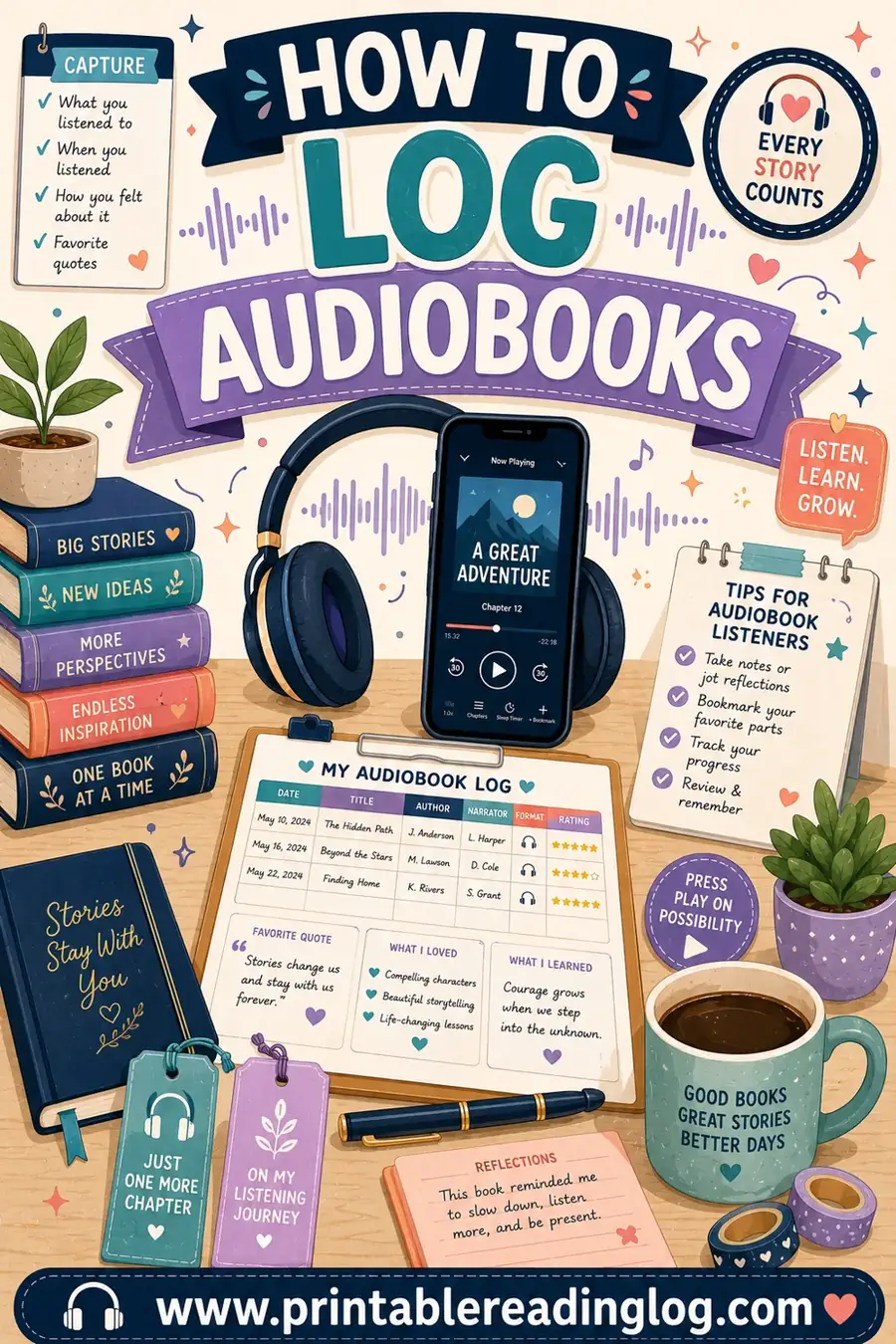
If you're brand new to this, our walkthrough on how to log audiobooks covers the basics in detail.
What to Put in an Audiobook Log
An audiobook log has a couple of columns a normal reading log doesn't. Here's what earns a spot.
| Column | Why it matters |
|---|---|
| Title | The book itself, obviously. |
| Author | Helps you spot favorite writers over time. |
| Narrator | Audiobook-specific. A standout narrator is worth chasing. |
| Length (hrs) | Lets you tally total listening hours for the year. |
| Date finished | Builds a timeline of your year in listening. |
| Rating | A 1–5 star score for a quick gut-check later. |
| Where I listened | Optional: car, gym, dishes. Surprisingly fun to track. |
You don't need every column. Pick the four or five that matter to you and leave the rest off. A simpler log is a log you'll actually fill in.
A sample filled-in row
Here's what a couple of finished entries might look like, so you can picture it.
| Title | Narrator | Hrs | Date | ★ |
|---|---|---|---|---|
| Project Hail Mary | Ray Porter | 16 | Mar 4 | ★★★★★ |
| The Hobbit | Andy Serkis | 11 | Mar 19 | ★★★★☆ |
| Educated | Julia Whelan | 12 | Apr 2 | ★★★★★ |
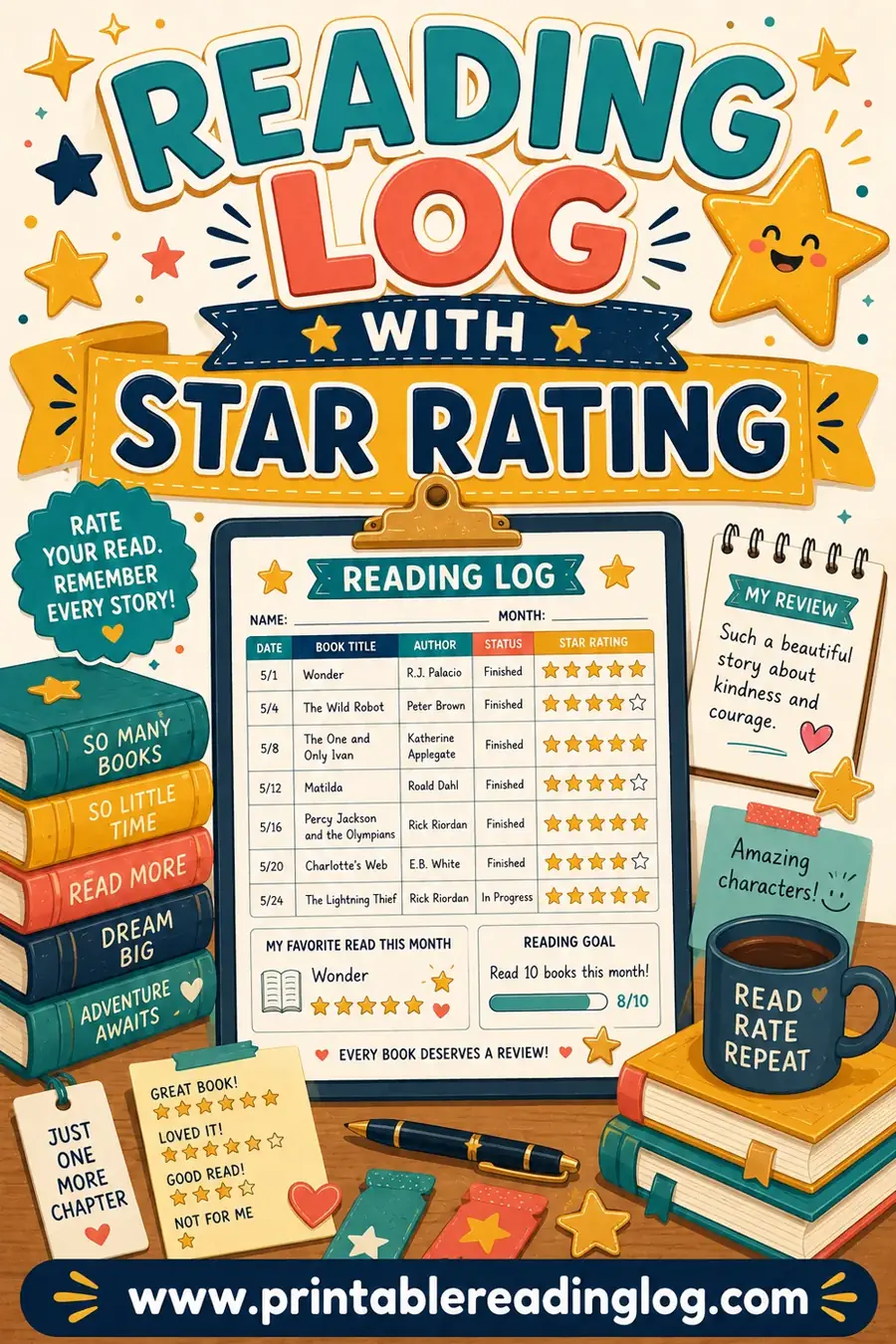
Notice the narrator column. After a few entries you'll start recognizing names like Ray Porter or Julia Whelan and seeking out their work. If star ratings are your thing, our reading log with star rating layout is built around them.
How to Set Up Your Audiobook Log in Minutes
No design skills needed. Here's the whole flow.
- Open the builder. Head to the free reading log builder.
- Choose your columns. Add Title, Narrator, Length, Date, and Rating. Drop any you don't need.
- Pick how many rows. One sheet of 20–30 rows usually covers a couple of months of listening.
- Print it. Print one page now, or a few to last the year.
- Log right after you finish. Tap "finished" in your app, then fill in the row while it's fresh.
That last step is the secret. Log the moment you finish, not "later." Later never comes, and the details fade fast.
Tracking Listening Hours and Goals
One thing audiobooks make easy is counting time, since every app shows the length in hours. That turns into a satisfying yearly stat.
- Tally hours per month. Add up the Length column and you'll see exactly how much you listened.
- Set an hours goal. "100 hours this year" is a fun, concrete target that a log lets you measure.
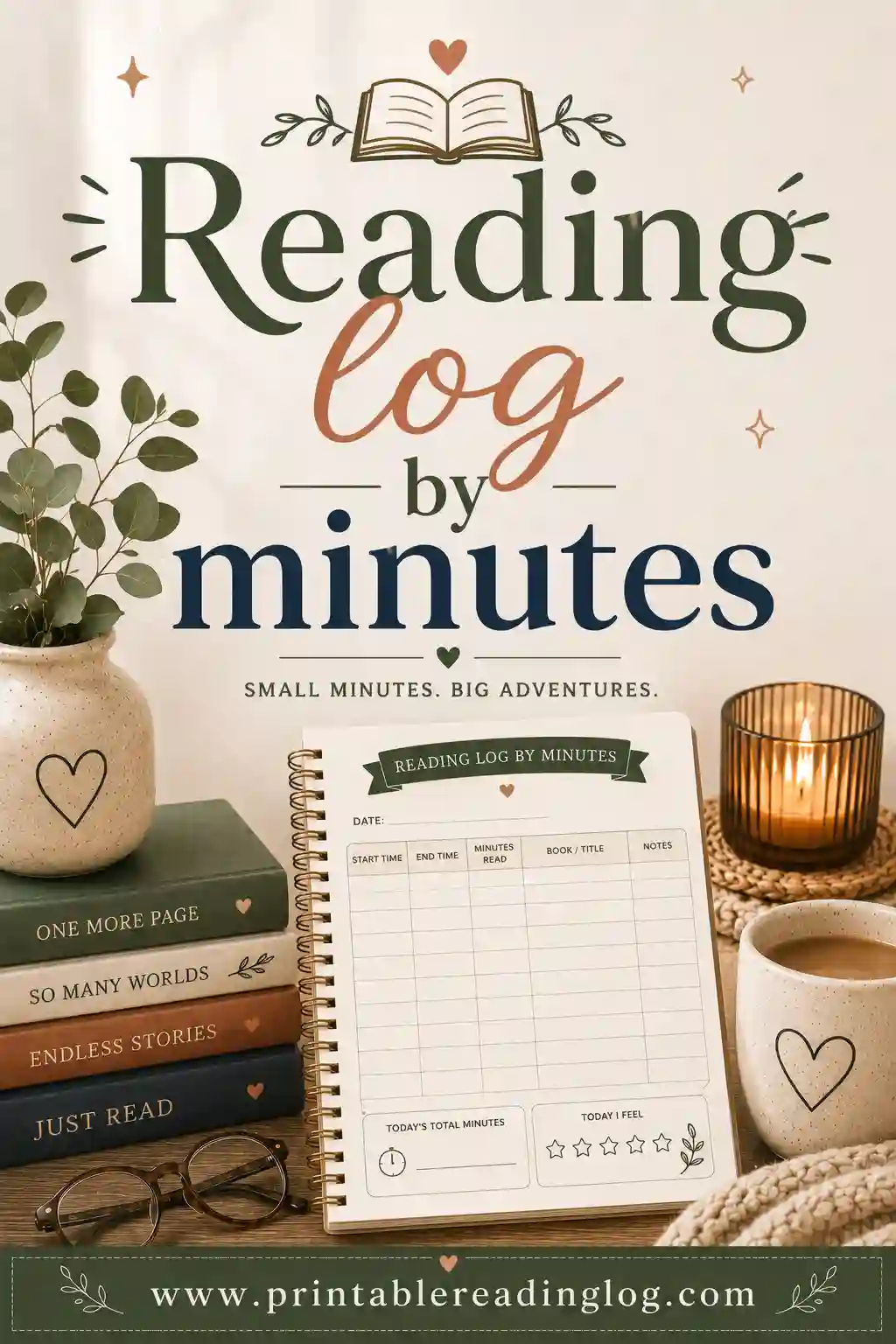
- Mix with minutes. If you also do print reading, a reading log by minutes lets you combine both into one daily reading total.
Audiobooks count as reading
Some people feel sheepish counting audiobooks toward a reading goal. Don't. You're processing the same story, the same words, the same ideas. Studies on comprehension find listening and reading land in much the same place for most adults. Log them with pride, and let them push your yearly book count higher.
Audiobook Logs for Different Listeners
The same basic log flexes to fit how you listen.
Commuters
If you listen mostly in the car, add a "where" column and watch your commute turn into a dozen finished books a year. Keep the log in your car's console or a phone-side notebook so you can jot the title the second you park.
Multitaskers
Listening while you cook, clean, or walk the dog adds up fast. A simple hours column shows you just how much "found time" you're putting to use. Many multitaskers are shocked to learn they finish more audiobooks than print books.
Kids and families
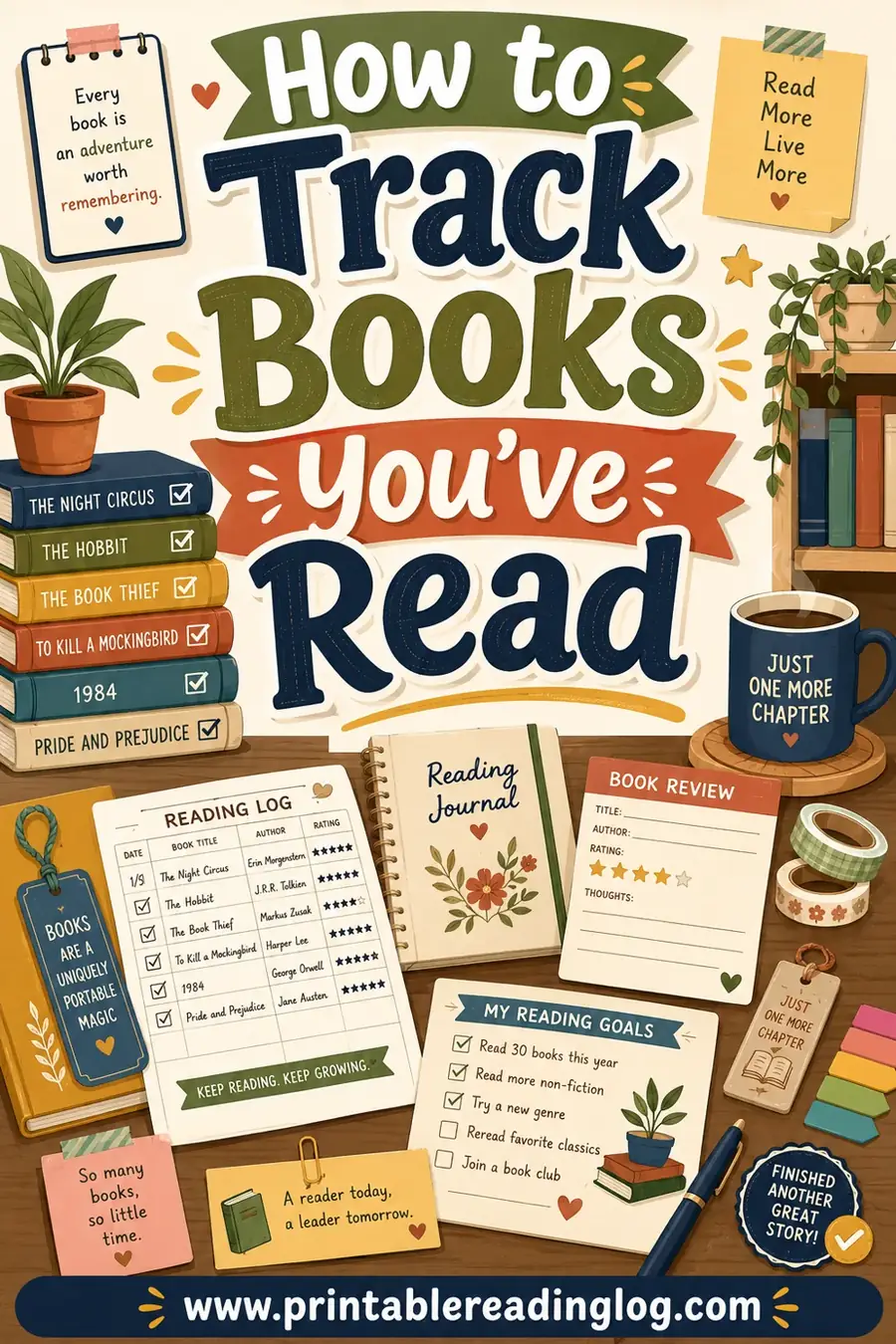
Audiobooks are fantastic for car trips and quiet time. A kid-friendly log with big checkboxes and a "favorite part" column makes listening feel like an achievement. It also pairs naturally with tracking everything else they read. See our guide on how to track books you've read for a kid-friendly approach.
Tips for a Log You'll Actually Keep
A few small habits keep the log from going stale after week one.
- Log finishes, not starts. Only fill a row when you complete a book. It keeps the log clean and honest.
- Keep it nearby. A log buried in a drawer never gets used. Put it where you'll see it daily.
- Rate immediately. Your gut reaction right after finishing is the most accurate rating you'll ever give.
- Don't log abandoned books. If you DNF (did not finish) a title, leave it off, or add a small "DNF" list at the bottom so you remember not to retry it.
- Review monthly. Glance back at the month's entries. It's genuinely satisfying and helps you spot patterns in what you love.
Print or digital?
A printable log is hard to beat for simplicity: nothing to sync, no app to update, no account to log into. You jot a row and you're done. If you ever want to go digital later, your printed log is an easy reference to copy from. But for most listeners, a single printed page per month is all they ever need.
Building an Audiobook Habit That Sticks
A log doesn't just record your listening, it quietly grows it. Once you start counting hours, you naturally look for more pockets of time to fill, and the habit snowballs.
- Stack listening onto chores. Dishes, laundry, and tidying turn into story time. These "double-duty" hours add up to whole books over a month.
- Make the commute count. A 30-minute drive each way is five hours a week, which is roughly one short audiobook every other week without any extra effort.
- Walk with a book. A daily walk plus an audiobook is good for your body and your reading count at once. The log shows both growing together.
- Set a "next book ready" rule. The moment you finish one, queue the next. The empty gap between books is where listening habits go to die.
- Use speed wisely. Many listeners bump playback to 1.25x or 1.5x once they're comfortable. It can meaningfully raise how many books you finish, and the log makes that gain visible.
The satisfying part is watching the page fill. Each finished row is a small reward, and that visible progress is exactly what keeps a habit alive. For the deeper science of daily consistency, our reading-habit guides walk through anchoring new routines to existing ones.
Pairing audiobooks with print
Plenty of readers run an audiobook and a print book at the same time: the audiobook for hands-busy moments, the print book for quiet evenings. A single log can hold both if you add a small "format" column (📖 print or 🎧 audio). At year's end you'll see exactly how your reading split between the two, and most people are pleasantly surprised by how much the audio side contributed.
Print and Customize Your Audiobook Log
Because the log is yours, you can shape it however you like.
- One page per month. A clean sheet each month keeps things tidy and easy to total up.
- Match columns to your habits. Care about narrators? Make that column wide. Don't track location? Drop it.
- Add a yearly tally box. Leave a spot at the bottom to add up total books and total hours.
- Make a kid version. Big boxes, a smiley-face rating, and a "favorite character" column work great for young listeners.
Everything is adjustable in the free builder, so the log matches how you actually listen instead of forcing you into someone else's format.
Frequently Asked Questions
What should an audiobook log include?
At minimum: title, author, narrator, length in hours, date finished, and a rating. The narrator and length columns are what set an audiobook log apart from a regular reading log. Add a "where I listened" column for fun if you like.
Do audiobooks count as reading?
Yes. You're absorbing the same story and ideas, and comprehension research finds listening and reading are very similar for most adults. Count every finished audiobook toward your reading goal with confidence.
Is the audiobook log free to print?
Yes. You build and print it yourself at no cost, with no sign-up and no watermark. Print a single page or enough to last the whole year.
How do I track total listening hours?
Add a "length (hrs)" column and write each book's runtime, which your app displays. Tally the column monthly or yearly to see your total. Many listeners set an hours goal, like 100 hours a year, and use the log to track it.
Should I log books I didn't finish?
Generally, no. Keep the main log for completed books so your count stays accurate. If you want to remember a title you abandoned, add a small "DNF" note at the bottom of the page.
Can kids use an audiobook log?
Definitely. Use big checkboxes, a simple smiley rating, and a "favorite part" column. Audiobooks are great for car trips and quiet time, and a log turns each finished book into a small win kids feel proud of.
Start Your Audiobook Log Today
Pick your columns, open the free reading log builder, and print an audiobook log that fits how you listen. Track titles, narrators, and hours, and watch your year of listening add up to a real stack of finished books. It's free, there's no sign-up, and your next great listen is just a press of play away. Happy listening.