Reading Log for Adults: Free Printable & Customizable
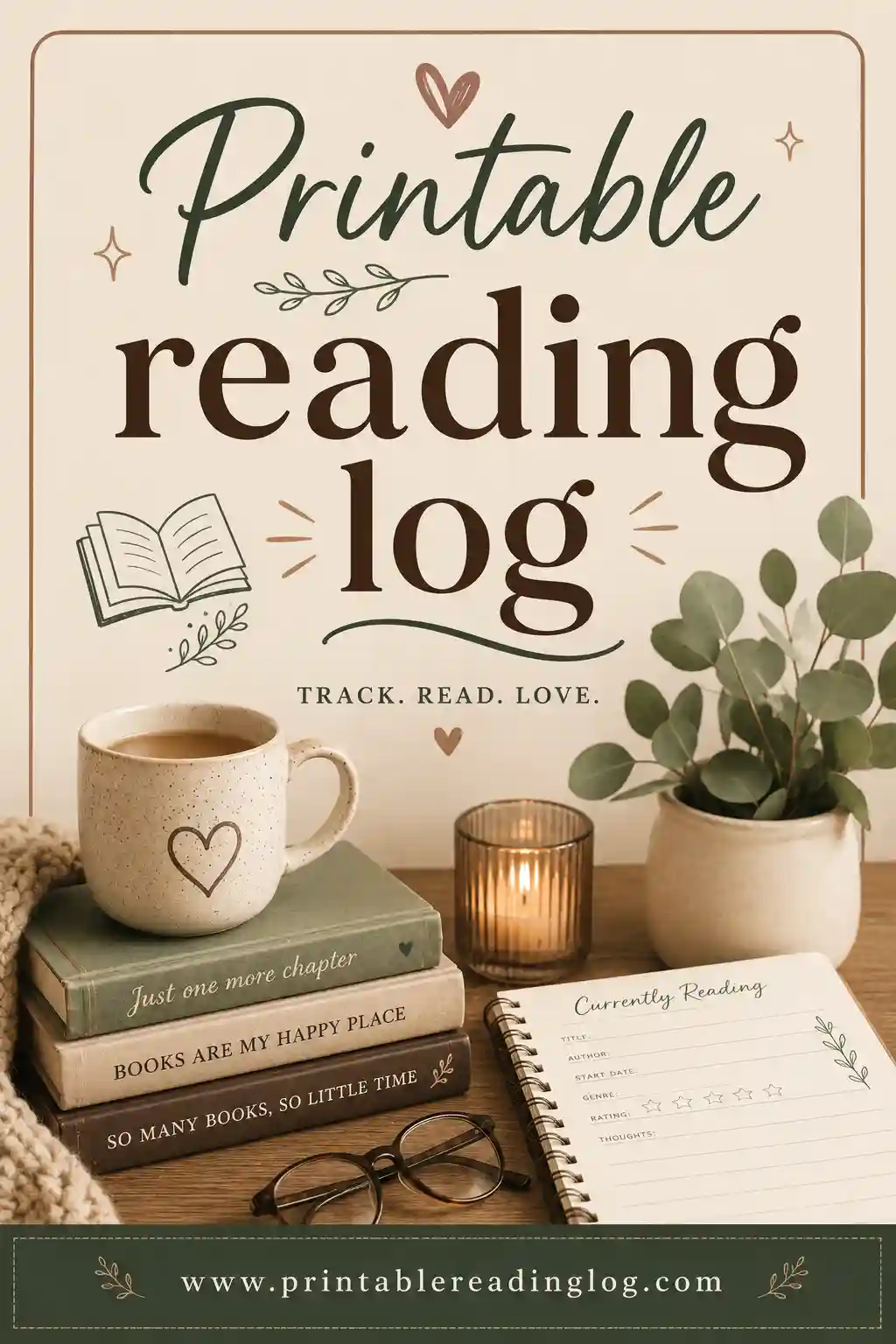
A reading log for adults is a clean sheet where you record the books you read, the dates, and details like pages, ratings, or quick notes. It's the grown-up version of a habit tracker, built for hitting a yearly book goal or simply remembering what you've read. The quickest way to make one that fits your reading life is to use a free reading log generator and print a layout you'll actually keep up.
Short on time? Open the free tool, pick the adult style, choose whether you track books, pages, or minutes, and print. No sign-up, no fee, no software to install.
What Is a Reading Log for Adults?
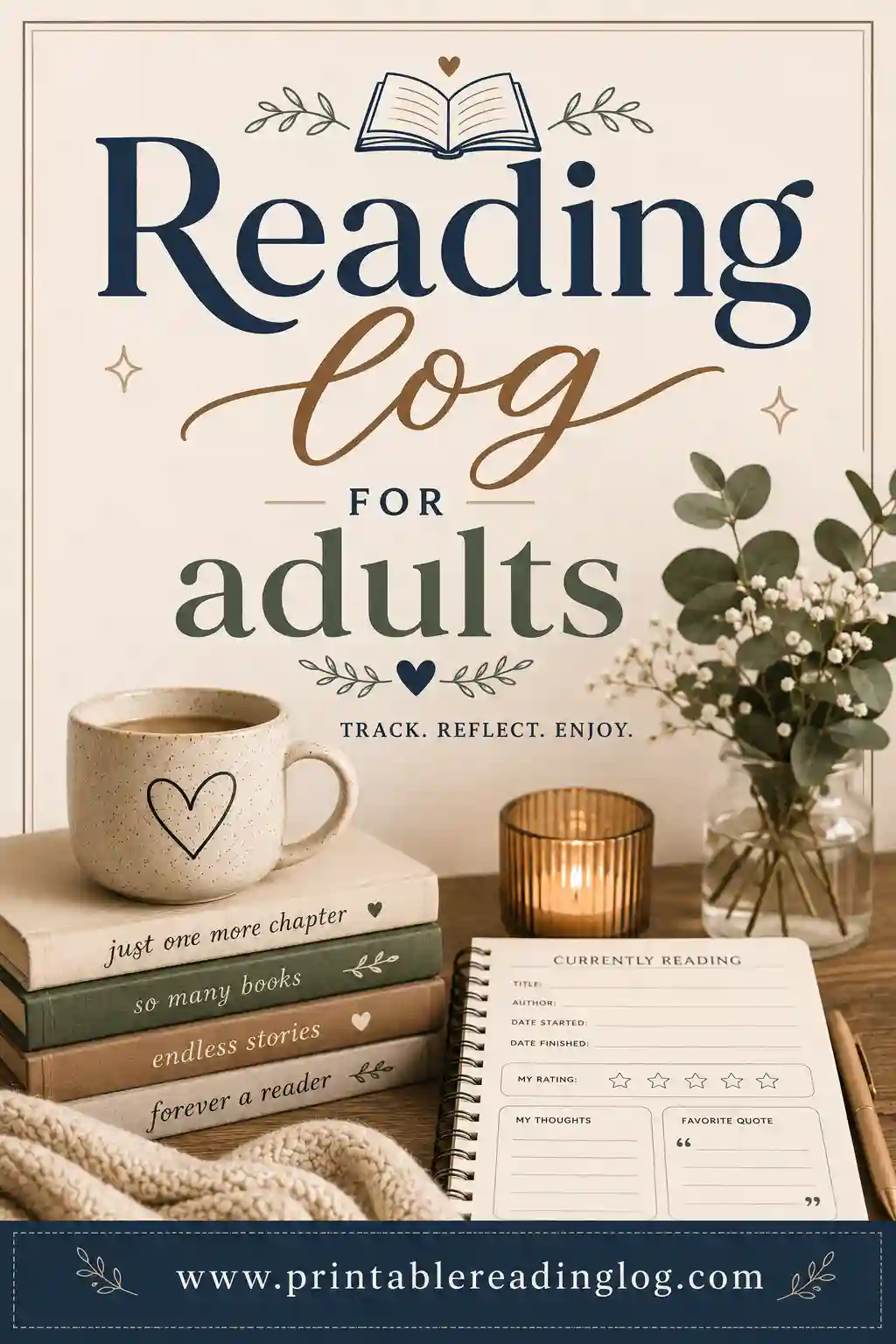
It's a record of your reading, kept on paper instead of an app. Each row is a book or a session, and the columns hold whatever you want to remember: the title and author, the dates you started and finished, a star rating, and a line of notes. Some adults keep a running list of finished books; others track daily minutes to protect their reading time.
Why paper, when apps exist? Because a log on your nightstand or in your planner is one you see and use, with no algorithm, no social feed, and no friction. You finish a book, you write the row, and you feel the quiet satisfaction of a list that's growing. For a lot of readers, that satisfaction is the whole point.
A useful adult log usually captures:
- Title and author — the basics.
- Dates — started and finished.
- Rating — a quick star score so you remember how you felt.
- Notes — one line: a favorite quote, a takeaway, or a verdict.
Why Adults Keep a Reading Log
A log does more than count books. It changes how you read.
- It protects your reading time. A daily minutes goal turns "I'll read if I have time" into a kept appointment.
- It hits your yearly goal. If you're aiming for a number, a log is the scoreboard that keeps you honest.
- It builds a memory bank. A year from now, you'll have a record of every book and what you thought of it.
- It reveals your taste. Patterns emerge: the genres you devour, the ones you abandon, the authors you return to.
There's also a slower benefit. Writing a one-line note after each book makes you reflect, even briefly, which helps the book actually stick. A log nudges you from passive reading to active reading.
Reading Log Formats for Adults
The right format depends on your goal. Here's how the common styles stack up.
| Format | Tracks | Best for |
|---|---|---|
| Books-finished list | Titles completed | Hitting a yearly reading goal |
| Pages-per-day log | Pages each session | Working through long or dense books |
| Minutes log | Daily reading time | Protecting a consistent reading habit |
| Daily streak grid | A check per day | Building the habit before chasing a count |
| Rating journal | Stars + notes per book | Readers who love reflecting and revisiting |
You can run more than one. A popular combo is a daily minutes log to guard your reading time plus a books-finished list for the year. The generator builds any of these, so you can test a couple and keep what fits.
Should you track books, pages, or minutes?
Track books if you have a yearly target, like 24 books in a year. Track minutes if your real challenge is finding time to read, since a 30-minute daily goal is something you can win every day. Track pages if you're grinding through a long book and want to see the end approach. Most adults find minutes the most forgiving and motivating place to start.
A Sample Adult Reading Log
Here's what a clean, filled-in log looks like. The notes column is short on purpose, just enough to jog your memory later.
| Started | Finished | Title (Author) | Rating | Notes |
|---|---|---|---|---|
| 1/4 | 1/19 | Project Hail Mary (Weir) | ⭐⭐⭐⭐⭐ | Couldn't put it down |
| 1/21 | 2/10 | Educated (Westover) | ⭐⭐⭐⭐ | Tough but worth it |
| 2/12 | 2/28 | The Midnight Library (Haig) | ⭐⭐⭐ | Nice idea, slow middle |
| 3/2 | 3/20 | Atomic Habits (Clear) | ⭐⭐⭐⭐⭐ | Reread the last chapter |
That rating column does a lot of quiet work. Months later, a quick glance reminds you which books to recommend and which to skip on a reread. It's the difference between a list and a personal reading history.
How to Set a Reading Goal You'll Hit
A log works best when it's pointed at a goal. The key is choosing a goal that fits your real life, not your aspirational one.
- Start from your true pace. If you read three books last year, aim for six, not fifty. Double, don't fantasize.
- Convert it to a daily action. A "24 books a year" goal becomes "read 30 minutes a day." The small action is what you actually track.
- Build in slack. Plan for busy weeks. A goal with no flexibility breaks the first time life gets hectic.
- Count what counts for you. Audiobooks, re-reads, DNFs (did-not-finish) — decide your own rules and log consistently.
Here's a quick reference for translating a yearly book goal into a daily reading habit, assuming an average book around 300 pages.
| Yearly goal | Books/month | Rough daily reading |
|---|---|---|
| 12 books | 1 | 15–20 minutes |
| 24 books | 2 | 30 minutes |
| 36 books | 3 | 45 minutes |
| 52 books | ~1 a week | 60 minutes |
Pick the row that feels doable, set that as your daily target, and let the log hold you to it.
How to Make a Reading Log for Adults in 4 Steps
No spreadsheet required. Here's the whole process.
- Choose the adult style. A clean, minimal layout with room for ratings and notes.
- Pick your format. Books-finished, pages, minutes, or a streak grid.
- Set the page length. A month per page, a year on one sheet, or a running list.
- Print. Tuck it into your planner, journal, or a spot by your reading chair.
That's it. Print on nicer paper if you're keeping a year-long log, so it survives twelve months of use and looks good on the shelf.
Tips to Make Your Reading Log Stick
The log is simple. The habit is the hard part. These small moves make the difference.
- Keep it where you read. A log by your chair or in your planner gets filled in. One in a drawer gets forgotten.
- Log right after you finish. Write the row the moment you close the book, while your reaction is fresh.
- Protect a daily window. Same time each day beats waiting for free time that never comes. Mornings or bedtime work well.
- Write one honest line per book. Not a review, just a verdict. It makes the log fun to revisit and helps the book stick.
- Don't punish slow weeks. A blank week isn't failure. Just start the next row. Consistency over a year is what matters.
Habits that pair well with a reading log
A log works even better alongside a couple of supporting habits:
- A "to-read" list so you never finish a book without a next one lined up
- A no-phone rule during your reading window
- A monthly review where you skim your log and pick a favorite
Common Reading Log Mistakes Adults Make
Even motivated readers trip on these. Avoid them and your log will last all year.
- An aspirational goal. Aiming for 52 books when you read 5 last year leads to a guilt-filled, abandoned log. Be honest.
- Too many columns. A ten-field log looks thorough and gets skipped. Track four things you'll actually fill in.
- Logging only finished books. If you only count completed reads, you miss the daily habit that gets you there. Log sessions too.
- Hiding the log. Out of sight, out of mind. Keep it where you read.
- Quitting after a gap. One missed week isn't the end. The readers who succeed are the ones who just start the next row.
Frequently Asked Questions
What is a reading log for adults?
It's a printable sheet where you record the books you read, the dates, and details like ratings and notes. It helps you hit a yearly reading goal and remember what you've read. You can make one free with the reading log generator in about a minute.
Is the adult reading log free to print?
Yes. You build it and print it yourself at no cost, with no sign-up and no watermark. Print a single sheet or a year's worth on one clean, customizable design.
Should adults track books, pages, or minutes?
Track books if you have a yearly target, minutes if your real challenge is finding time to read, and pages if you're working through a long book and want to see progress. Many adults start with a daily minutes goal because it's the easiest to hit consistently.
How many books should I read in a year?
Start from your true pace and aim to roughly double it. If you read 12 books, target 18 to 24. A realistic goal you hit beats an ambitious one you abandon. Convert it to a daily minutes target and let the log track that.
Can I use a reading log as a book journal?
Absolutely. Add a rating column and a notes line, and your log doubles as a book journal: a record of every book, your verdict, and a favorite quote. It's one of the best reasons to keep a log on paper.
How do I keep my reading log going all year?
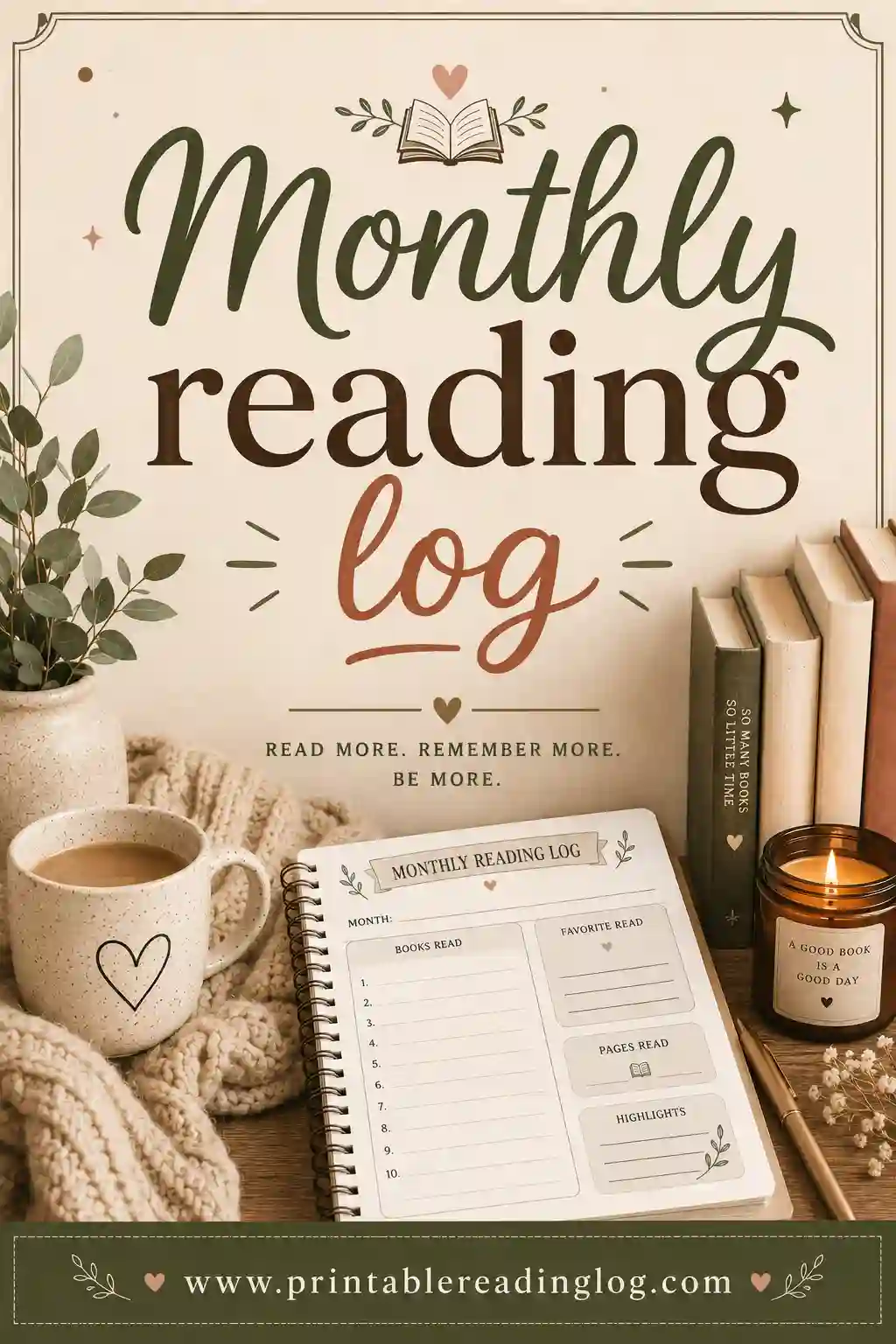
Keep it where you read, log right after you finish a book, and protect a daily reading window. Don't punish slow weeks, just start the next row. Pairing it with a monthly reading log gives you a natural fresh start every month.
Ready to Build Your Reading Log?
Choose the adult style, pick your format, and open the free reading log generator to print a clean, ready-to-use sheet in minutes. It's free, there's no sign-up, and you can customize it to match exactly how you read. Set a goal you can actually hit, keep the log where you read, and watch your reading year fill in one row at a time. For more setups, see our printable reading log and reading log for kids guides.