Reading Log for Screen-Free Challenges: Free Printable
A reading log for screen-free challenges is a sheet that tracks the time someone spends reading instead of staring at a screen. It turns "put the tablet down" into a positive goal you can see and celebrate. The simplest way to make one is to use a free reading log maker that builds a printable log around your challenge, whether it runs a week, a month, or a whole summer.
Ready to make one now? Open the free tool, set it to track minutes, add a goal box, and print a copy for each kid or for the whole family. No sign-up, no fee, nothing to install.
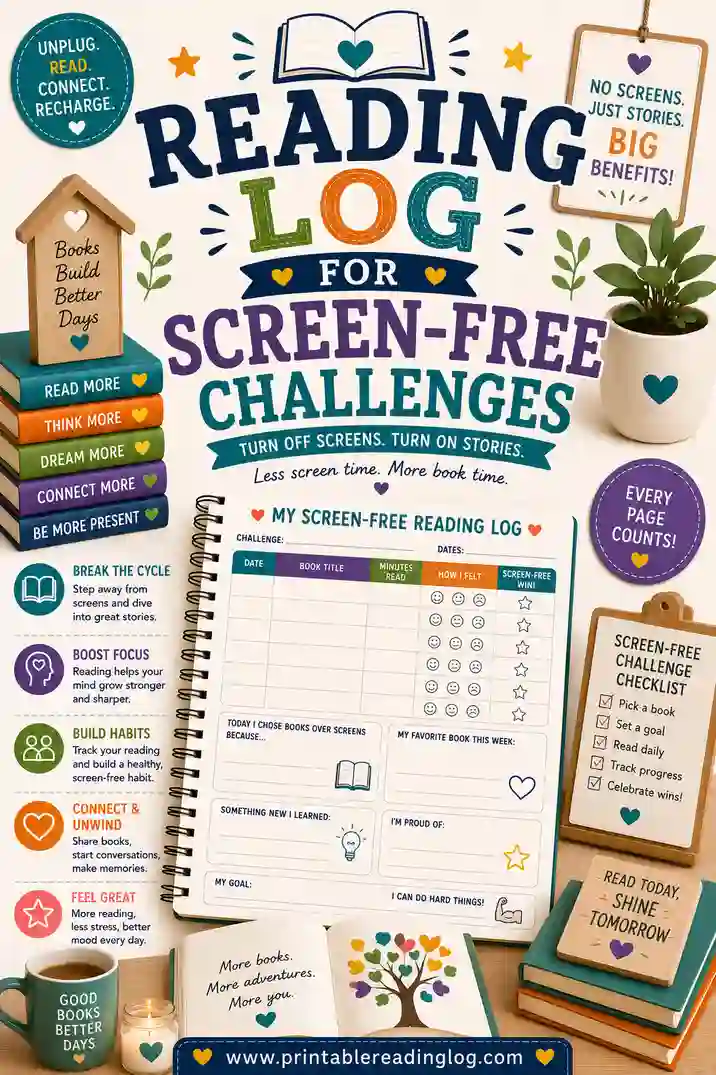
What a Screen-Free Reading Challenge Is
A screen-free challenge swaps screen time for reading time over a set stretch, like Screen-Free Week, a no-device weekend, or a whole unplugged summer. Instead of telling kids what to stop doing, you give them something to start: reading, and racking up minutes toward a goal.
The reading log is the engine. It does three things:
- Makes the goal visible. A blank row of boxes is a quiet invitation to fill them.
- Counts the right thing. You track reading minutes, which naturally crowd out screen minutes.
- Turns it into a game. Hitting a daily or weekly target feels like leveling up.
Without a log, a screen-free challenge is just a rule. With one, it becomes something kids actually want to win.
Why a Log Makes Screen-Free Challenges Work
Telling a kid "less screens" rarely sticks. Giving them a reading target they can chase does. A log flips the whole thing from a restriction into a quest. Here's why it works.
- It replaces, instead of removes. Screens are sticky because they're easy. A log gives kids a clear, rewarding alternative to reach for.
- It shows progress fast. Minutes add up quickly. Seeing the total climb gives the same little hit of progress a game would.
- It builds a real habit. A week or a month of logged reading often outlasts the challenge itself. The screen-free part fades, the reading sticks.
- It makes the win concrete. "We read 600 minutes this week" is a tangible thing to celebrate, far better than a vague "good job staying off screens."
The log carries the motivation so you don't have to nag. The boxes do the reminding.
Choose the Right Challenge Length and Format
Screen-free challenges come in different sizes. Match the log to the length so it never feels overwhelming or too thin.
| Challenge | Length | Best log format |
|---|---|---|
| No-screen weekend | 2 days | A simple two-day minutes sheet |
| Screen-Free Week | 7 days | A weekly minutes log with a daily goal |
| Unplugged month | 30 days | A monthly grid, one box per day |
| Screen-free summer | 8–10 weeks | A long-haul log with weekly totals |
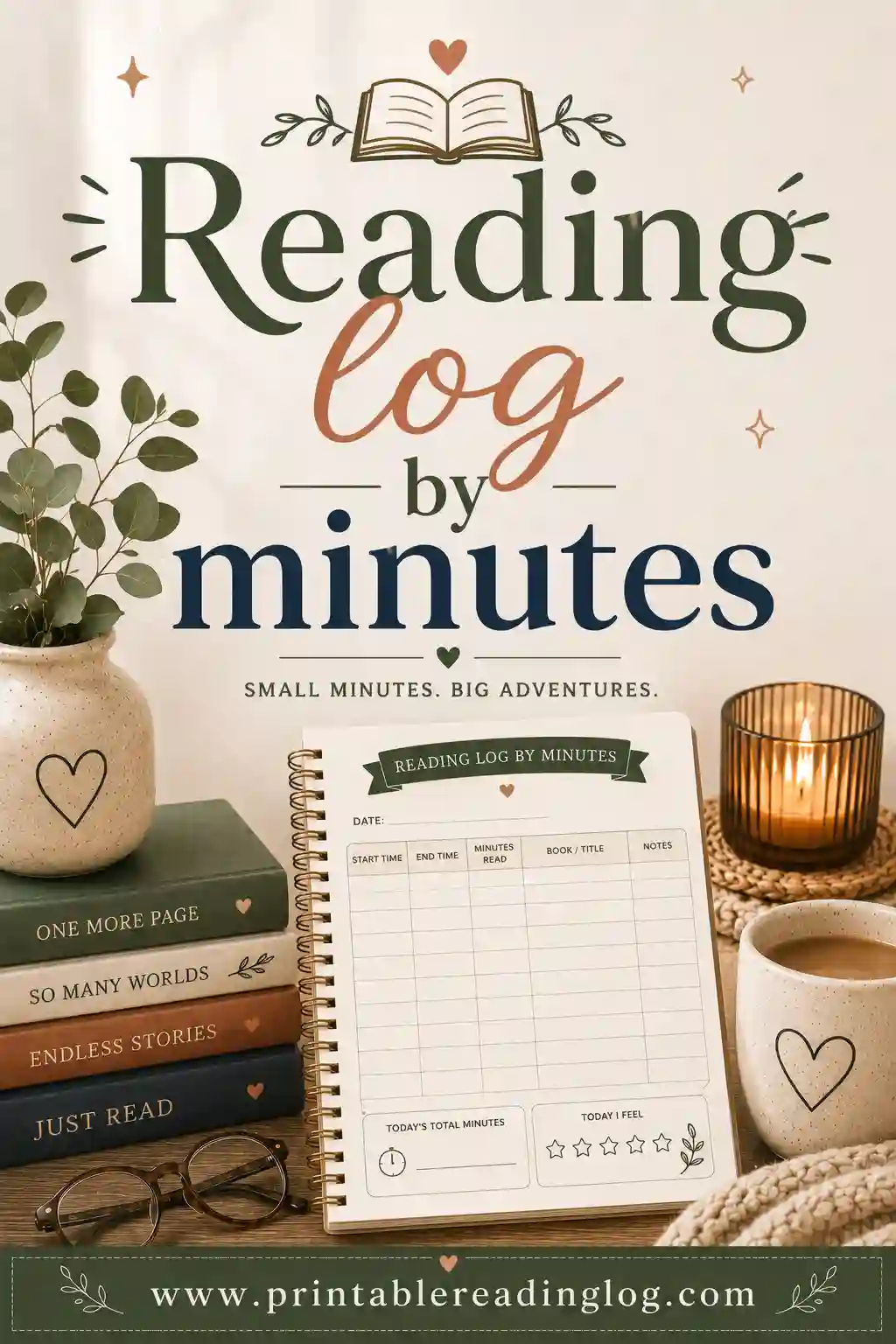
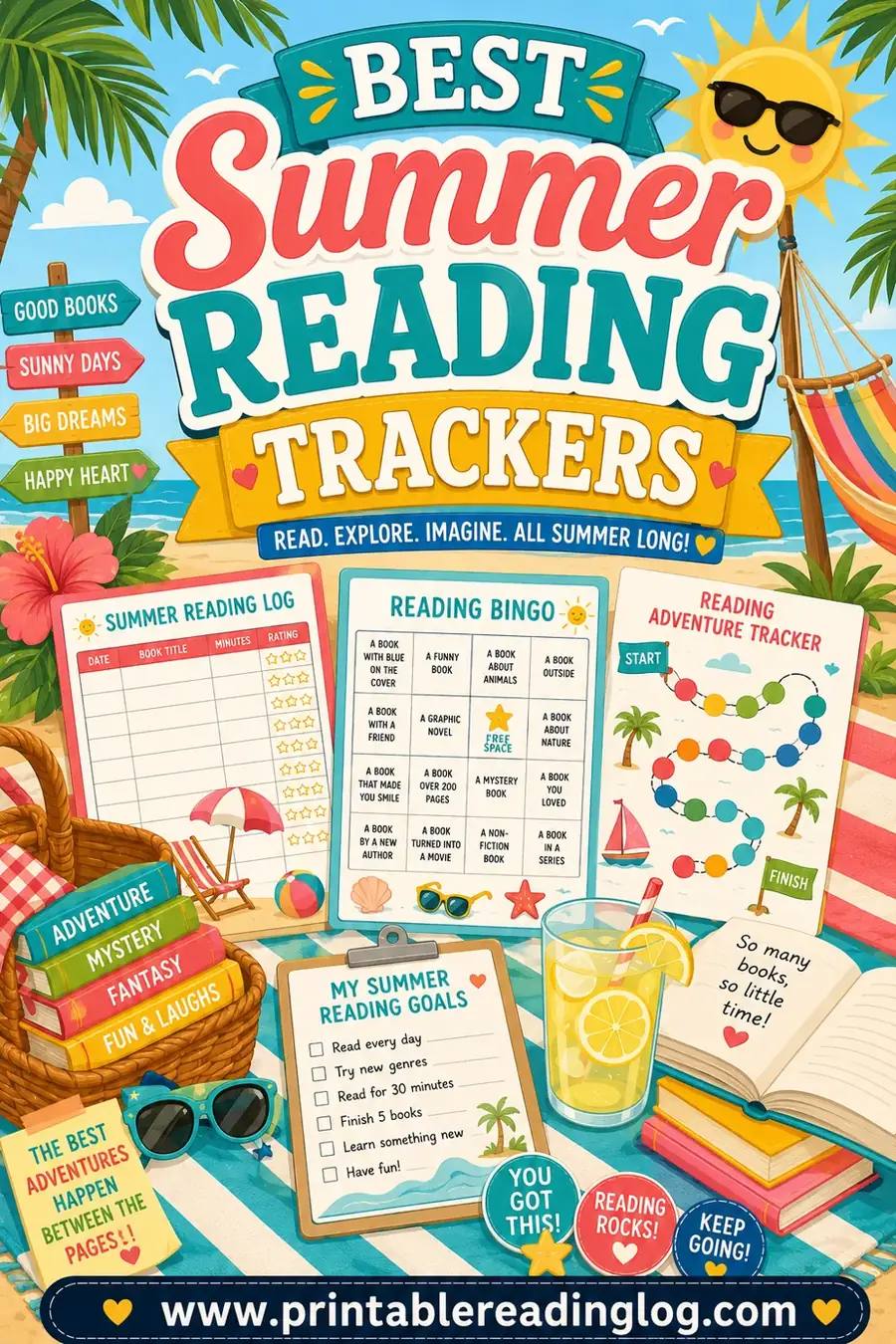
For almost any screen-free challenge, a by-minutes log is the natural fit, since minutes are exactly what you're shifting away from screens. For a summer-long version, pair it with a summer reading log so the challenge has a home for the whole break.
A sample screen-free week log
Here's what a filled-in week might look like, so you can see the finished idea:
| Day | Book | Minutes read | Goal: 30 min |
|---|---|---|---|
| Mon | Charlotte's Web | 35 | ✔ |
| Tue | Charlotte's Web | 30 | ✔ |
| Wed | Dog Man | 25 | — |
| Thu | Dog Man | 40 | ✔ |
| Fri | A comic book | 30 | ✔ |
| Total | 160 min | 4/5 days |
The total at the bottom is the headline number you celebrate at the end of the week. Watching it grow each day is what keeps the screens off without a fight.
How to Run a Screen-Free Reading Challenge
A challenge runs best with a little structure. Here's a simple way to set one up from start to finish.
- Pick your window. A weekend, a week, or a summer. Shorter is easier to win, which builds momentum for next time.
- Set a daily reading goal. Something realistic, like 20 to 30 minutes a day. The log should make this goal obvious.
- Make the log. Use the free tool to build a minutes log with a box for each day and a totals line.
- Post it where screens live. Put it near the TV or the spot where devices usually get grabbed. The log becomes the new reflex.
- Celebrate the total. At the end, add up the minutes and mark the win together with a small reward.
Keep the first challenge short. A quick, clear win makes kids ask to do it again, which is exactly what you want.
Tips to Keep Screens Down and Reading Up
The challenge gets easier when the environment helps. A few small changes make reading the path of least resistance.
Stock up on easy wins
Have a basket of books, comics, magazines, and graphic novels within arm's reach. When a kid reaches for a screen out of boredom, the book should be closer than the device. Comics and graphic novels count fully on the log, and they're an easy yes for reluctant readers.
Read alongside them
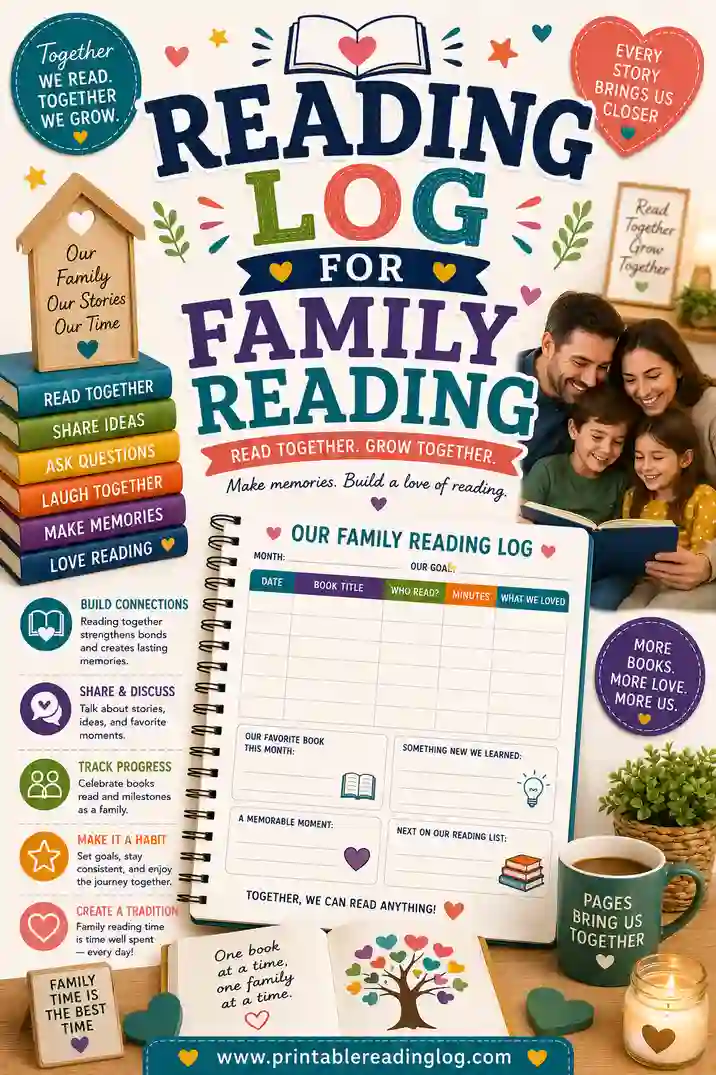
A screen-free challenge works far better when the whole house plays. If a parent is scrolling while a kid is supposed to be reading, the challenge collapses. Turn it into a family reading challenge and log everyone's minutes together.
Make the goal beatable
Set a target low enough to hit on a busy day. A kid who reads 20 minutes and checks the box feels like a winner. A kid who falls short of 60 minutes feels like a failure and quits. Aim for "easy to win, fun to beat."
Let the rewards match the effort
Tie the end-of-challenge reward to the total. A weekend challenge might earn a special outing. A screen-free summer might earn a bigger prize. For a long run, a yearly reading challenge log keeps the momentum going well past the unplugged weeks.
Screen-Free Challenge Ideas to Try
Once the basic minutes log is working, mix in a theme to keep it lively.
- Beat the screen. Each day, aim to read more minutes than you'd usually spend on a screen. Log both and watch reading pull ahead.
- Minute marathon. Set a big group total, like 1,000 minutes for the family in one week, and fill a progress bar together.
- Reading streak. Mark every day in a row you read without screens. Try to beat the longest streak.
- Genre week. Each day's reading is a different type: a comic, a poem, a nonfiction book, a chapter book. The log just tracks minutes; the variety keeps it fresh.
Short, playful challenges beat long, strict ones. The log keeps score so the fun stays the focus.
Handling the Hard Days
Every screen-free challenge hits a wall around day two or three. The novelty wears off, a kid gets bored, and the tablet starts calling. This is normal, and it's exactly where the log earns its keep. A few moves get you past the slump.
When boredom strikes, don't lecture. Point at the log instead. "You're only ten minutes from beating yesterday" reframes the moment from "you can't have the screen" to "you're winning a game." Kids respond to progress they can see, and the log makes that progress impossible to miss.
It also helps to change the scenery. Reading doesn't have to happen at a desk. Let kids read in a blanket fort, in the backyard, in the car, or upside down on the couch. A fresh spot can reignite a flagging challenge, and every one of those minutes still goes on the log.
Plan for the times screens usually win
Screens tend to take over at predictable moments: the long stretch before dinner, a rainy afternoon, a boring car ride. Stock those exact moments with reading material in advance. A bag of comics by the door, a book in the car, a basket of magazines in the living room. When the usual screen-grab moment arrives, the book is already there, and the log is waiting for another box.
Don't aim for perfect
A screen-free challenge doesn't have to be all-or-nothing. If a movie night sneaks in, the challenge isn't ruined. Just keep logging reading minutes around it. A family that reads more and screens less is winning, even if the week wasn't spotless. The log measures progress, not perfection, and that forgiving spirit is what keeps kids coming back to it.
Frequently Asked Questions
How does a reading log help with a screen-free challenge?
It gives kids a positive goal to chase instead of just a rule to follow. By tracking reading minutes, the log naturally shifts time away from screens and toward books, and the visible progress keeps kids motivated without nagging.
How many minutes a day should a screen-free reading challenge aim for?
Start with 20 to 30 minutes a day for most kids. Pick a number that's easy enough to hit on a busy day so checking the box feels like a win, then let kids beat it on the days they're really into a book.
What counts as reading in a screen-free challenge?
Anything on paper counts: chapter books, picture books, comics, graphic novels, magazines, and poems. The goal is reading off a screen, so comics and graphic novels are great for reluctant readers and still earn full minutes on the log.
How long should a screen-free challenge last?
It depends on your goal. A weekend or a single week is great for a first try and easy to win. Once kids enjoy it, you can stretch to a screen-free month or a whole unplugged summer using a longer log.
Is the screen-free reading log free to print?
Yes. You build it and print it yourself at no cost, with no sign-up and no watermark. Print one per kid or one for the whole family, and reprint as many as you need for the next challenge.
How do I keep kids reading after the challenge ends?
Keep the log going. The habit often outlasts the challenge, so just roll the screen-free log into an ongoing reading log. Keep books within easy reach and celebrate totals now and then to keep the momentum alive.
Ready to Build Your Screen-Free Reading Log?
Pick your challenge length, set a daily goal, open the free reading log maker, and you'll have a printable screen-free log ready in minutes. It's free, there's no sign-up, and you can size it for a weekend, a week, or a whole unplugged summer. Print it, post it near the screens, and watch those reading minutes climb.