Daily Reading Log: Free Printable to Track Every Day
A daily reading log is a simple sheet where you write down what you read each day, usually the date, the title, and how long (or how many pages) you read. You fill in one row per day, watch the page build up, and suddenly you can see your reading habit instead of just hoping it's happening. The fastest way to get one is to use a free reading log maker that builds a clean printable in seconds, no design skills needed.
Want to skip ahead and make yours right now? Open the free tool, pick "daily" as your layout, choose whether you're tracking minutes, pages, or books, and print as many copies as you want. No sign-up, no cost, no app to download.
What Is a Daily Reading Log?
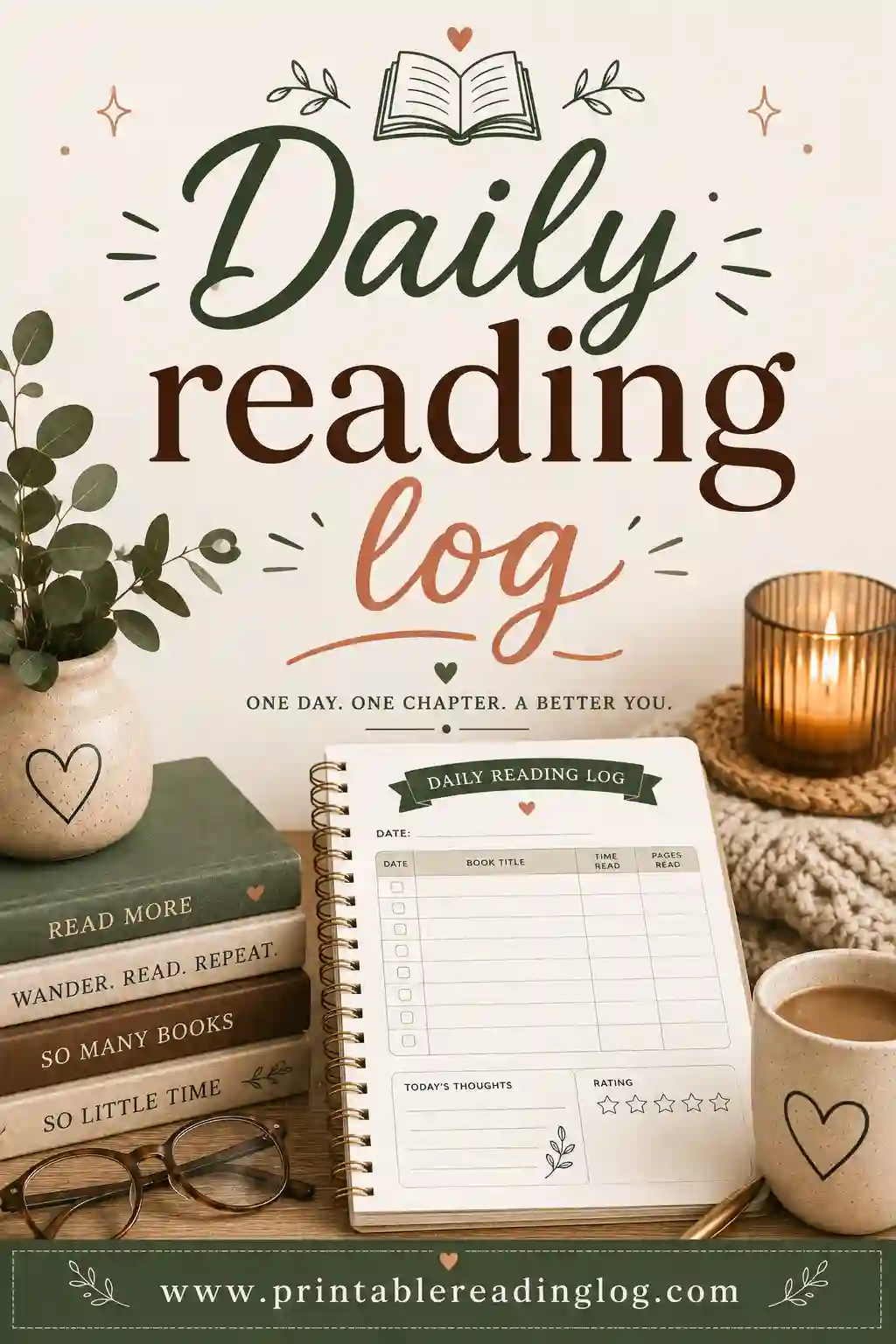
A daily reading log is a one-row-per-day record of your reading. Each row holds the basics: the date, the book or article you read, and a measure of how much you read. That measure can be minutes, pages, or chapters, whatever matters most to you.
The point isn't to turn reading into homework. It's to make an invisible habit visible. When you can glance at a page and see ten days in a row filled in, you don't want to break the streak. That little pull is what keeps a daily reading habit alive.
A good daily log usually has columns for:
- Date — so you can spot streaks and gaps.
- Title and author — what you actually read that day.
- Time or pages — your daily reading amount.
- A rating or note — a quick star or a one-line thought.
- A parent or reader signature — handy for school logs and reading challenges.
You don't need every column. A toddler's log might just have a date and a sticker space. An adult's might add a "favorite line" column. The beauty of building your own is that you keep what helps and drop what doesn't.
Why Track Your Reading Every Day
People who log their reading read more. It's not magic, it's feedback. Here's why a daily log works so well.
It turns reading into a streak
Crossing off a day feels good. After a few days, the chain of filled-in rows becomes its own reward, and missing a day starts to feel like dropping the ball. This is the same trick fitness apps and habit trackers use, and it works just as well for books.
It shows real progress
"I should read more" is vague. "I read 22 days this month, about 18 minutes a day" is real. A daily log gives you numbers you can actually look at, which makes it far easier to stay motivated or set a smarter goal next month.
It's perfect for kids and school
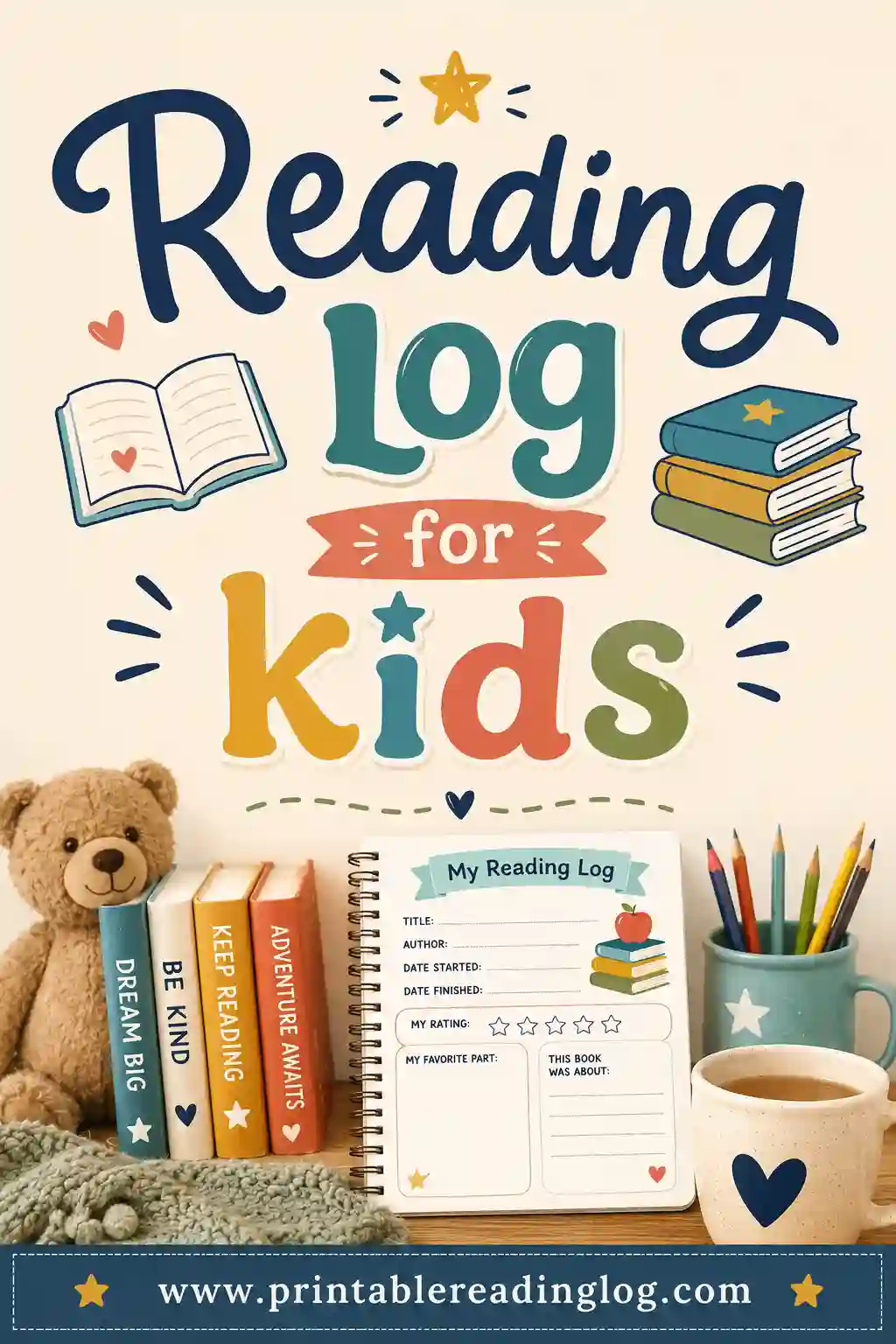
Teachers love daily reading logs because they prove the reading actually happened at home. For a child, coloring in a box or adding a sticker each night turns "go read" into a small daily game. If you're tracking for a classroom, our reading log for kids has age-by-age tips.
Free Daily Reading Log Template (What to Put on It)
Here's a sample of what a filled-in daily log looks like. Copy this layout into the tool or use it as a guide for your own.
| Date | Book / Title | Minutes | Pages | Rating |
|---|---|---|---|---|
| Mon 1 | Charlotte's Web | 20 | 12 | ⭐⭐⭐⭐ |
| Tue 2 | Charlotte's Web | 15 | 9 | ⭐⭐⭐⭐ |
| Wed 3 | Dog Man | 25 | 30 | ⭐⭐⭐⭐⭐ |
| Thu 4 | Dog Man | 20 | 24 | ⭐⭐⭐⭐⭐ |
| Fri 5 | The BFG | 18 | 14 | ⭐⭐⭐ |
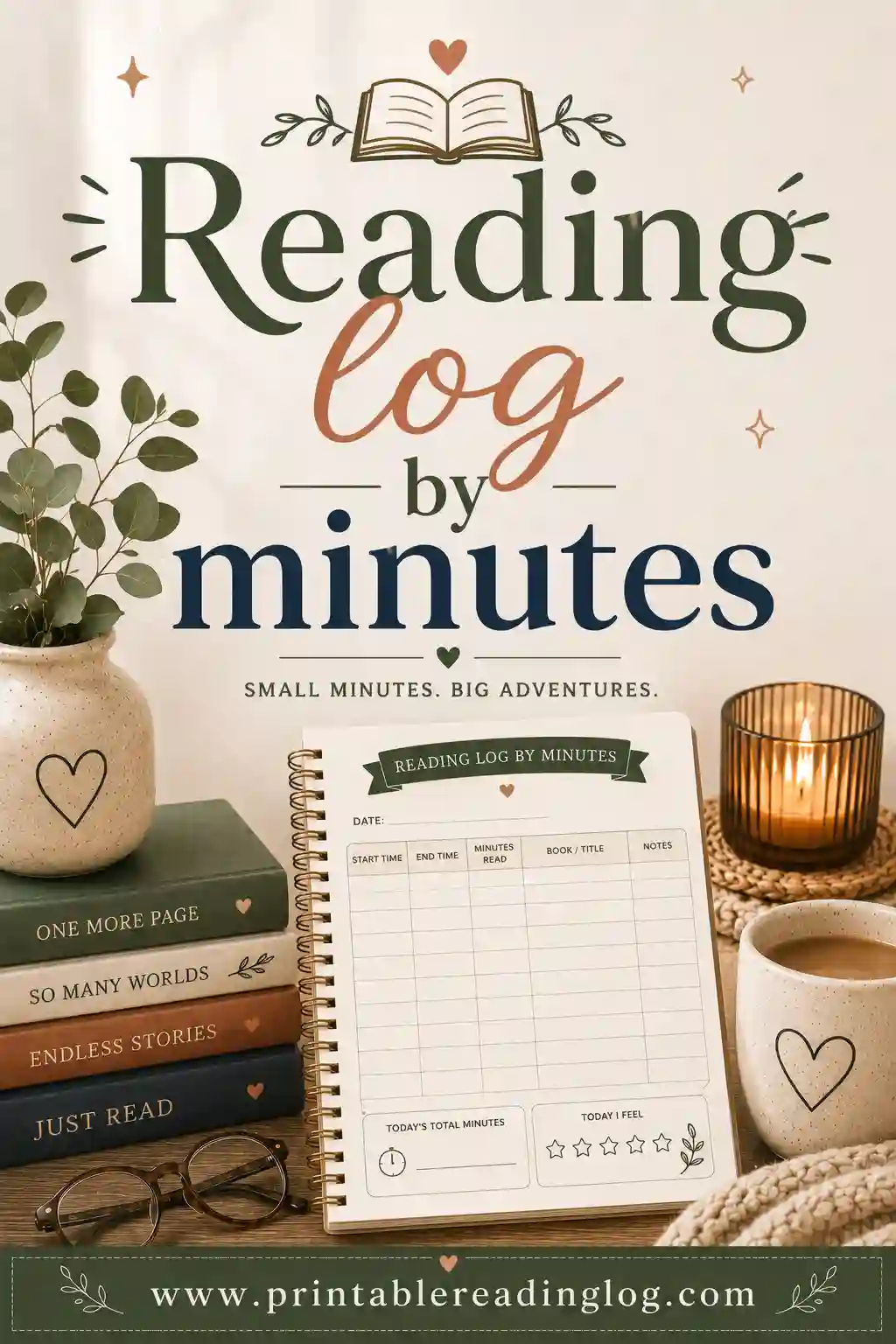
You can keep all those columns or trim down to just date, title, and minutes for younger readers. If you'd rather track only one number, see our guides on a reading log by minutes or a reading log by pages.
How many rows do you need?
That depends on how you like to print. Here's a quick guide.
| Layout | Rows per page | Best for |
|---|---|---|
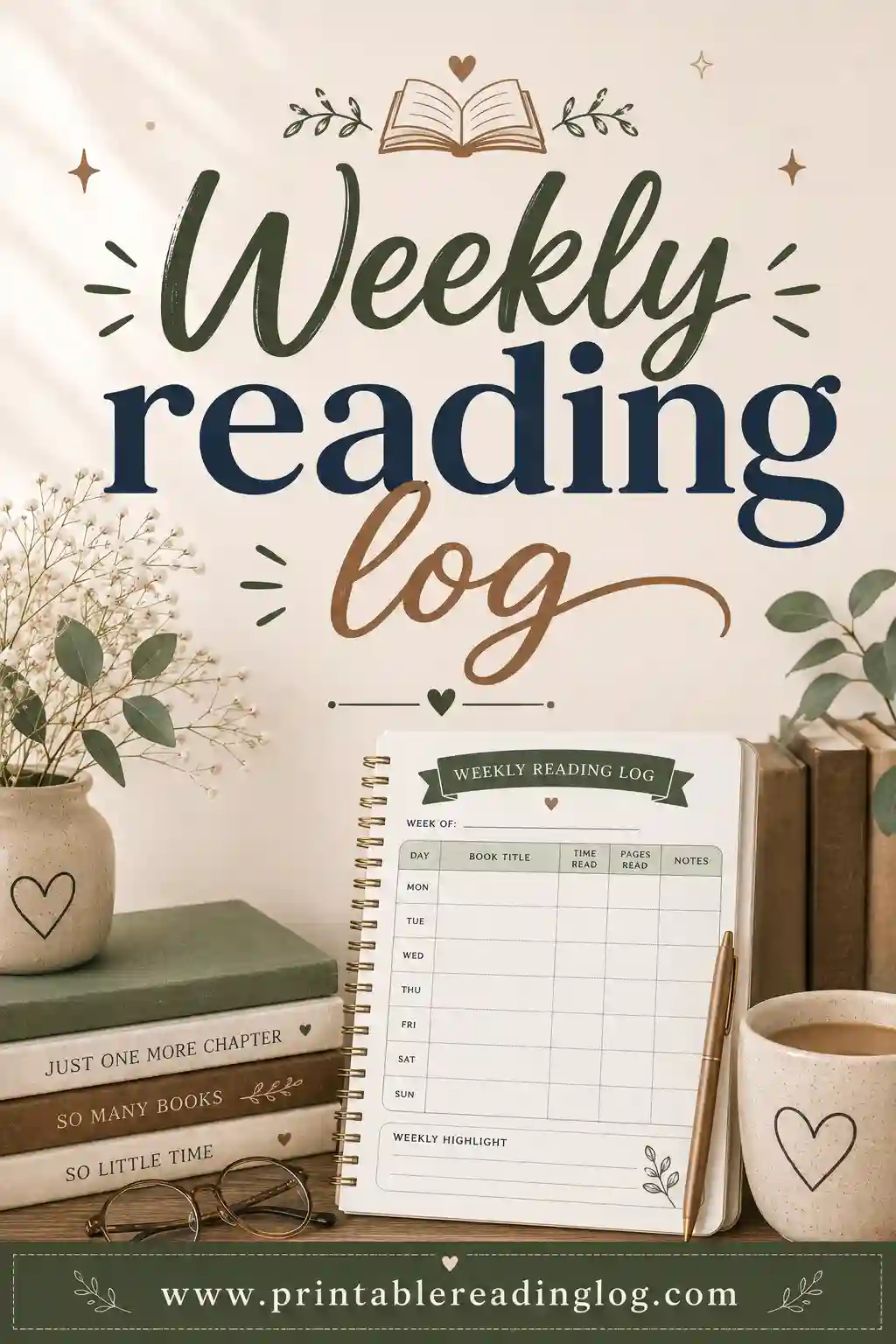
| One week | 7 rows | Kids, weekly homework, fridge-door logging |
| Two weeks | 14 rows | Reading challenges, habit streaks |
| One month | 28–31 rows | Adults, monthly goals, a full-page overview |
A weekly sheet feels less overwhelming for little kids, since there's a clear finish line every seven days. Adults often prefer a full month on one page so they can see the whole picture at a glance.
How to Make a Daily Reading Log in 4 Steps
You can go from "I need a log" to "it's printed" in under five minutes.
- Open the reading log maker. It loads instantly in your browser, nothing to install.
- Choose your daily layout. Pick how you want to measure: minutes, pages, or books read.
- Add your details. Set the number of rows, add a title like "October Reading Log," and a name line if it's for a child.
- Print it. Hit print and stick it somewhere you'll see it, the fridge, a nightstand, or a binder.
That's the whole process. If you want to reuse the same log, print on cardstock or slip it in a sheet protector and mark it with a dry-erase marker.
Daily Reading Log Ideas for Different Readers
The same basic log flexes to fit almost anyone. Here's how to tweak it.
For young kids (ages 4–7)
Keep it short and visual. Use big boxes, a spot for a sticker or a smiley face, and a parent signature line. Tracking minutes (like a 15-minute nightly goal) usually works better than pages, since page counts vary wildly between picture books.
For older kids and teens
Add a star rating and a "would I recommend it?" column. Tweens and teens like a bit of opinion in their log, it makes reading feel personal instead of assigned. A daily log also pairs well with a yearly goal; see our reading log by books for that.
For adults
Treat it like a tiny reading journal. Add a "favorite line" or "one thought" column so each day's row captures something, not just a number. Many adults use a daily log to protect a small habit, even 15 minutes before bed adds up to a dozen-plus books a year.
For families
Run one shared log on the fridge with a row per family member each day. It turns reading into a quiet little competition and makes "did everyone read today?" easy to answer at a glance.
Tips to Actually Stick With It
A log only helps if you fill it in. These small habits make that easy.
- Keep it where you read. A log buried in a drawer gets forgotten. Tape it near your bed or your kid's reading spot.
- Log right after you read. Don't wait until the end of the week to remember. Fill the row in while the book is still in your hand.
- Aim for "good enough," not perfect. Missed a day? Just start the next row. A log with a few gaps still beats no log at all.
- Pair it with a reward. Ten days in a row earns a small treat, a new book, or a movie night. Kids especially love a tangible payoff.
- Make the goal small. "Read every day" beats "read an hour a day." A tiny daily target is easy to hit, and hitting it is what builds the streak.
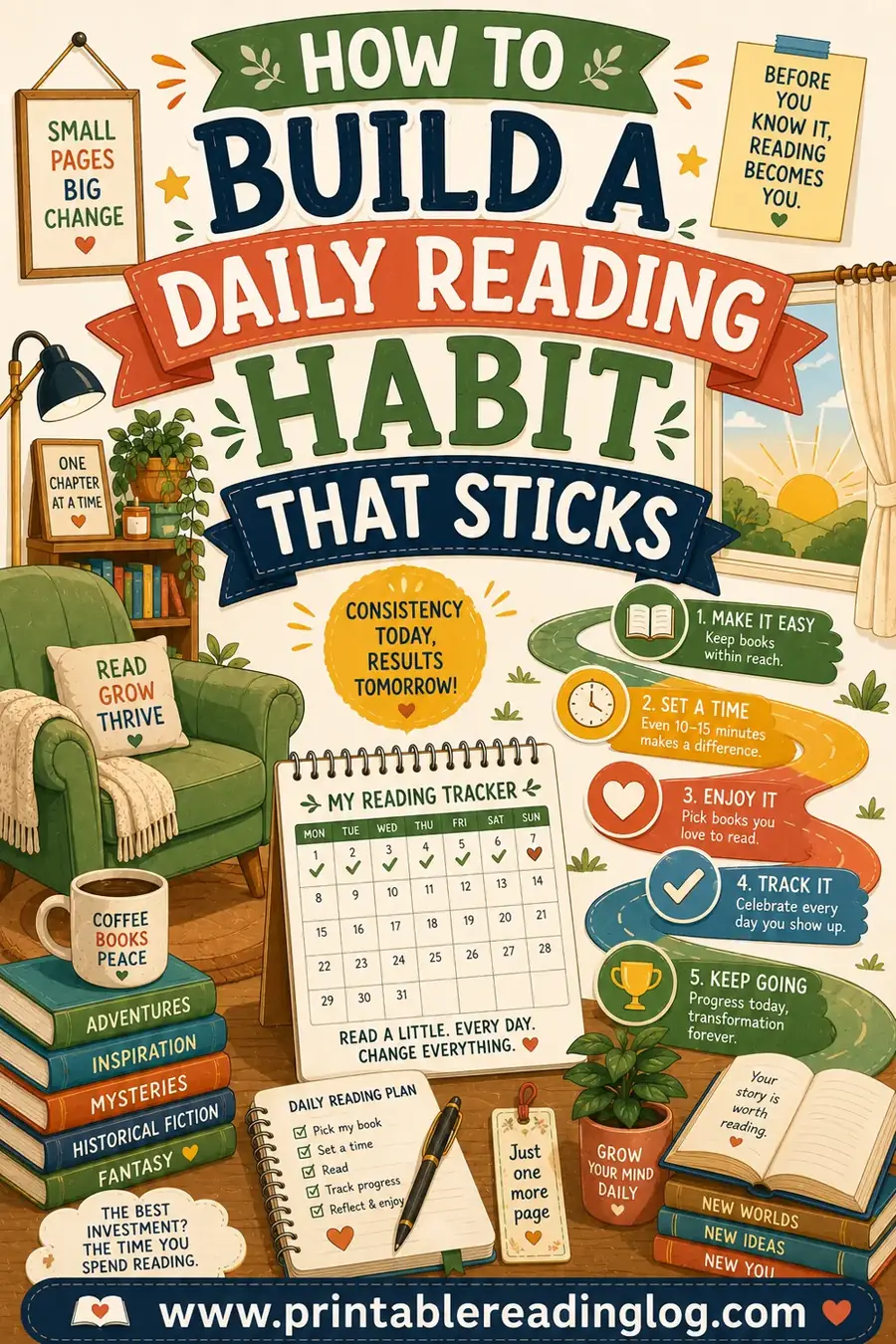
If you want a deeper plan for making reading automatic, our guide on building a daily reading habit walks through it step by step.
Printing Tips for a Log You'll Reuse
A few small choices make your printed log last longer and look better.
- Use cardstock for fridge or binder logs. It survives spills and curious little hands far better than thin paper.
- Laminate or use a sheet protector if you want to reuse the same sheet with a dry-erase marker every week or month.
- Print a test page first so you can check the margins and box sizes before running a stack.
- Go black and white to save ink. A daily log reads perfectly fine without color, and kids can decorate it themselves.
Frequently Asked Questions
What should a daily reading log include?
At minimum: the date, the title of what you read, and how much you read (minutes or pages). Many people add a star rating, a short note, and a signature line for school logs. The free tool lets you turn any of these columns on or off.
Should kids log minutes or pages each day?
For young kids, minutes usually work better, because page counts swing wildly between thin picture books and dense chapter books. A simple goal like "read 15 to 20 minutes a day" is easy to track and fair across different books. Older kids can track pages or chapters as they move into longer reads.
How do I keep a daily reading log without forgetting?
Keep it where you actually read and fill it in the moment you finish, not later. Tape it near the bed, make the row quick to complete, and tie it to a small reward. The easier it is to reach, the more likely you'll keep it up.
Is a daily reading log better than a weekly one?
It depends on the reader. Daily logs build stronger streaks and give a clearer picture of a habit, but they need more discipline. If a daily sheet feels like too much, a weekly reading log with one summary row per day is a gentler option.
Can I make a daily reading log for free?
Yes. The reading log maker is completely free, with no sign-up and no watermark. You choose the layout, print it at home, and make as many copies as you need for yourself, your kids, or a whole classroom.
How many minutes a day should I aim for?
For adults, even 15 to 20 minutes a day adds up to a serious stack of books over a year. For kids, 20 minutes a day is the common school recommendation. Start small and let the streak pull you toward more.
Ready to Build Your Daily Reading Log?
A daily reading log is one of the simplest tools for reading more, and it costs nothing to make. Open the free reading log maker, pick your daily layout, and print a clean sheet you'll actually fill in. Tape it where you read, log one row a day, and watch the habit grow. Happy reading.