Summer Reading Log: Free Printable to Beat the Slide
A summer reading log is a simple chart where kids (or adults) record the books and minutes they read over the break, so the habit doesn't slip during the months away from school. The fastest way to get one is to use a free printable reading log maker — pick a summer style, set a goal like "read 20 minutes a day," and print it the same minute. No app, no sign-up, no cost.
Want to skip ahead? Open the free reading log builder, choose whether you want to track by books, minutes, or pages, and print a fresh summer tracker for each kid. You can have it on the fridge in under two minutes.
What Is a Summer Reading Log?
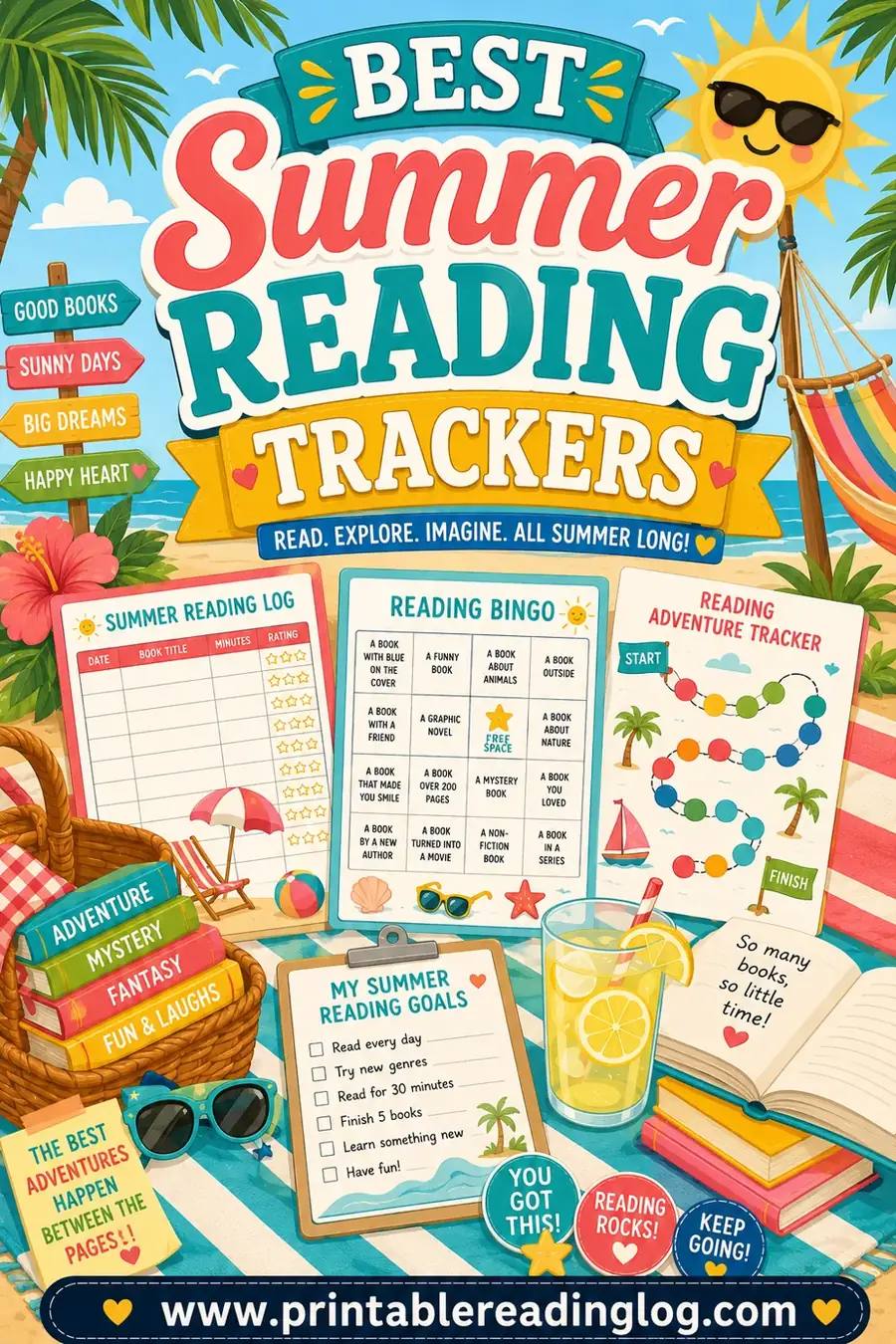
Picture a regular reading log, but built for the long, loose months of summer. Instead of a teacher checking it every Monday, it lives on your kitchen counter or in a beach bag. Each row holds a book title, the date, and either the minutes read or the pages finished.
The point isn't paperwork. It's momentum. School gives reading a built-in structure, and summer takes that away. A log puts a little structure back — just enough to keep the habit alive without it feeling like homework.
Most summer logs track one of three things:
- Minutes — great for younger kids. "Read 20 minutes" is an easy, fair daily goal.
- Books — perfect for kids who finish chapter books fast and love crossing titles off.
- Pages — good for longer reads where one book might take a week or two.
You can mix them, too. A log that counts both minutes and books gives a fuller picture of the summer.
Why a Summer Reading Log Matters
There's a real reason teachers send reading lists home in June. Over a long break with no reading, many kids lose ground — often a couple of months of reading skill. People call it the "summer slide," and the fix is wonderfully low-tech: read a little, most days. A log is how you make "a little, most days" actually happen. If you want the full breakdown, our guide on how to prevent the summer slide digs deeper.
A few things a summer log does well:
- Makes progress visible. Kids love seeing a row fill up. It turns reading into a small, satisfying game.
- Keeps it consistent. A blank box is a gentle nudge. No nagging required.
- Sets up easy rewards. Hit 10 books or 500 minutes? Time for a prize.
- Builds reading identity. Kids who track their reading start to see themselves as readers.
And it's not just for kids. Plenty of adults use a summer log to finally get through that stack on the nightstand.
Free Summer Reading Goal Ideas (by Age)
Not sure what to aim for? Here's a quick starting point. Adjust up or down based on your reader — the best goal is one they can hit most days without a fight.
| Age group | Suggested daily goal | Summer-long target |
|---|---|---|
| Preschool (3–5) | 10–15 min (read aloud) | 30 picture books |
| Early readers (6–8) | 15–20 min | 12–15 books |
| Kids (9–11) | 20–30 min | 8–12 chapter books |
| Tweens & teens | 30+ min | 5–8 books |
| Adults | 20–30 min | 4–6 books |
These are friendly starting points, not rules. A reluctant reader hitting 10 minutes is a win worth celebrating. For more on matching goals to age, see our notes on the best reading goals by age.
Make the goal feel like summer
Tie the goal to the season so it doesn't feel like school snuck into July:
- "Read around the world." Pick books set in different countries.
- "Beat the heat." Read during the hottest part of the day instead of screens.
- "Porch reading." Twenty minutes outside before dinner.
- "Vacation pages." Set a small daily goal for road trips and flights.
How to Make a Summer Reading Log in 3 Steps
You don't need craft supplies or design skills. Here's the whole thing.
- Pick what you're tracking. Minutes, books, or pages. Younger kids usually do best with minutes.
- Set a goal. Use the table above, or just ask your kid what feels doable. Write it at the top of the log.
- Print and post it. Open the generator, choose a summer style, and print one per reader. Stick it somewhere visible — the fridge works great.
That's it. From there, the only job is filling in a row after each reading session.
If you'd rather compare a few digital options first, we round up the best summer reading trackers too — but a printed log on the fridge beats an app you forget to open.
What to Put on a Summer Reading Log
A good summer log is simple. Too many columns and kids stop filling it in. Here's a clean layout that works for most ages:
| Column | What goes here |
|---|---|
| Date | The day they read |
| Book title | What they read (or "various" for browsing) |
| Minutes / Pages | How long or how far |
| Stars | A quick 1–5 rating for fun |
| Done? | A box to check when a book is finished |
That's plenty. The "stars" column is optional but kids love it — it gives them a tiny opinion to record, which makes the log feel like theirs.
Add a fun twist
A few extras that keep summer logs from getting stale:
- A reading thermometer to color in as minutes add up.
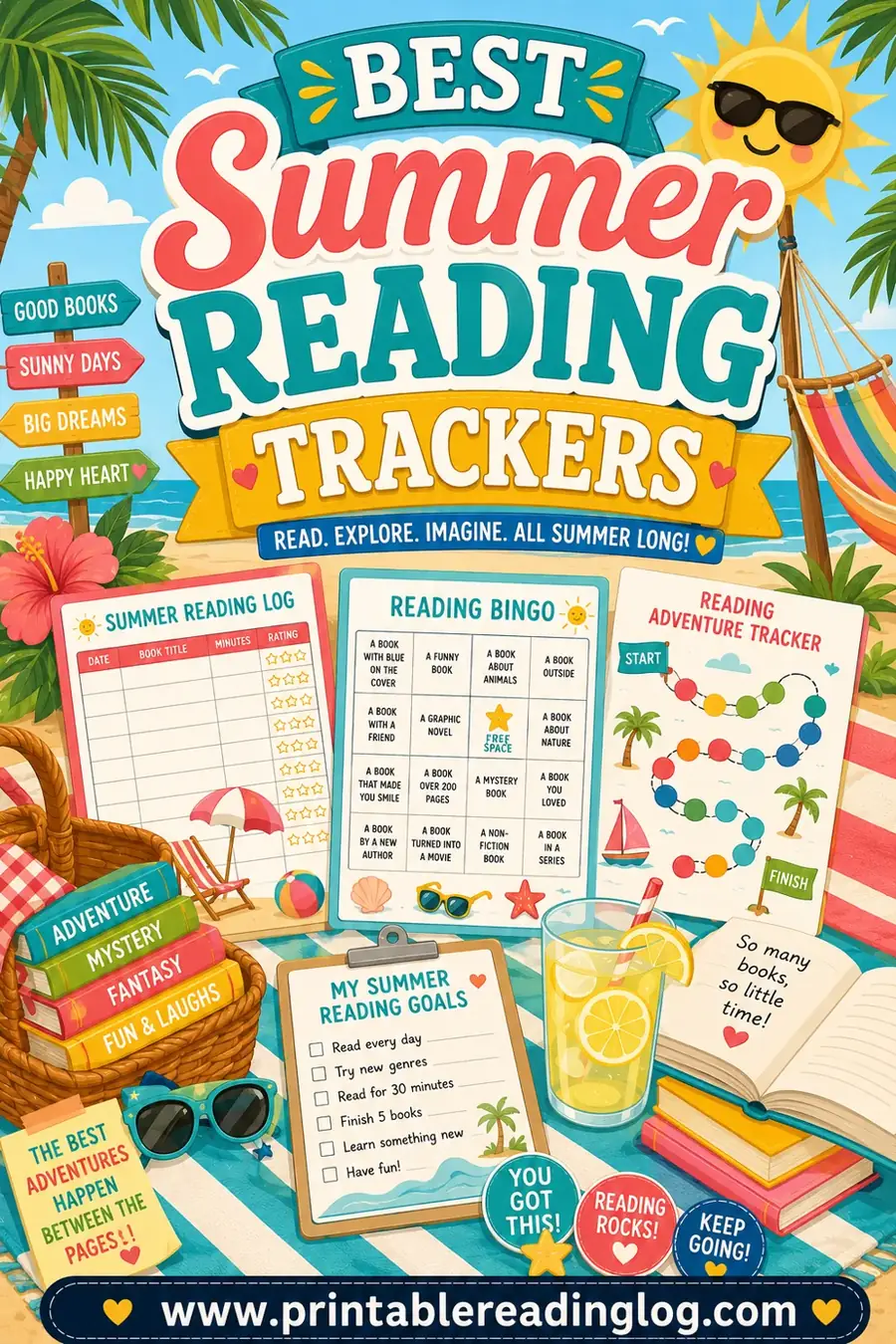
- A bingo row of reading challenges, like "read outside" or "read to a pet." (We have a whole reading bingo log you can print for the season.)
- A reward ladder — every 100 minutes unlocks a small treat.
Summer Reading Log Tips That Actually Work
The log is only half the battle. Here's how to keep it going past week two.
Keep it visible and easy
A log buried in a drawer is a log that never gets used. Tape it where reading happens — by the bed, on the fridge, in the car. Keep a pen clipped right to it.
Read alongside them
Kids copy what they see. If you've got your own row on the log (or your own summer log nearby), reading becomes a family thing, not a chore handed down. Our summer reading tips for parents has more on this.
Count everything
Comics, graphic novels, audiobooks, recipe books, even the cereal box at breakfast — it all counts. The goal is keeping eyes on words and building the habit, not policing what "real" reading is.
Celebrate the small stuff
Don't save all the fuss for the end. A high-five for a full week, a sticker on the log, a "you picked a great book" — small wins keep kids motivated through August.
Don't punish a slow day
Some summer days are pool days, and that's fine. A missed box isn't a failure. The log is a friendly tracker, not a report card. Just pick it back up tomorrow.
Who a Summer Reading Log Is Great For
This little chart bends to fit almost any reader:
- Parents wanting to keep skills sharp over the break without buying a workbook.
- Kids in library summer programs who need to log minutes to earn prizes.
- Homeschool families keeping a light routine through July.
- Teachers sending a take-home tracker before the last bell.
- Adults finally tackling the beach-read pile.
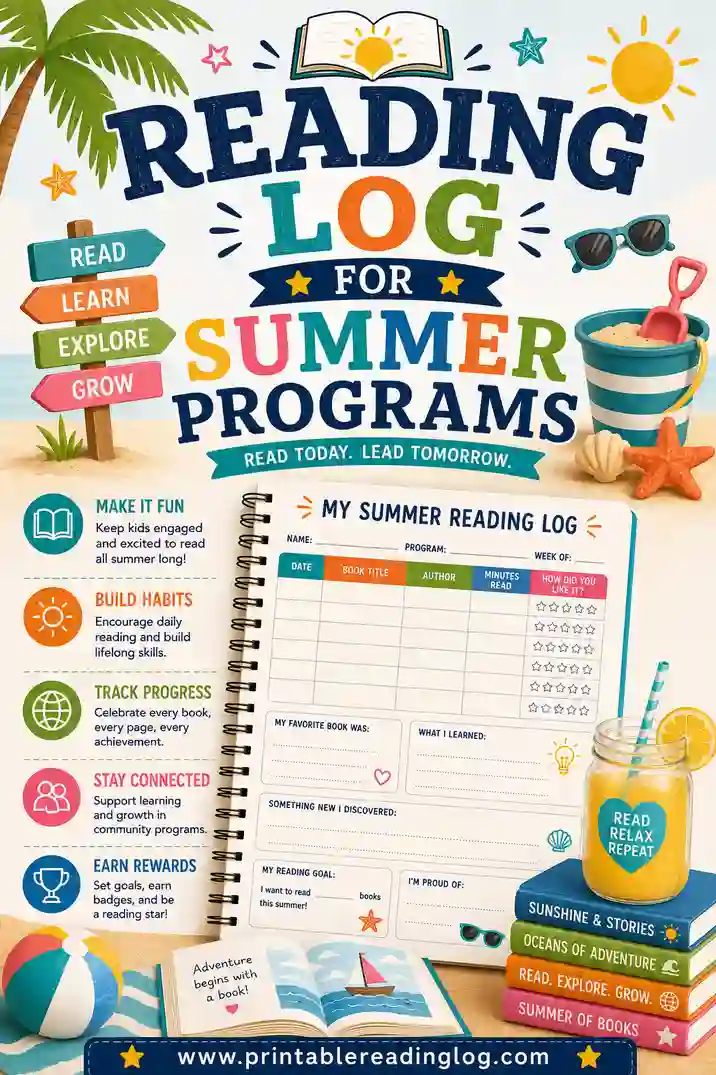
For library and camp programs specifically, a printable that kids can carry and stamp works better than an app. See our reading log for summer programs for that exact use.
A Sample Week on a Summer Reading Log
Wondering what a real week looks like? Here's a filled-in stretch for an eight-year-old aiming for 20 minutes a day. Notice it's not perfect — and that's the point.
| Day | Book | Minutes | Stars |
|---|---|---|---|
| Mon | Dog Man | 25 | ⭐⭐⭐⭐⭐ |
| Tue | Dog Man | 20 | ⭐⭐⭐⭐⭐ |
| Wed | (pool day — skipped) | 0 | — |
| Thu | Magic Tree House | 20 | ⭐⭐⭐⭐ |
| Fri | Magic Tree House | 15 | ⭐⭐⭐⭐ |
| Sat | Comic books | 30 | ⭐⭐⭐⭐⭐ |
| Sun | Bedtime read-aloud | 15 | ⭐⭐⭐ |
That's 125 minutes across six days, one finished book, and one happily skipped day. A summer of weeks like this adds up to real reading without a single argument. Total it up at the end and you'll be surprised how much they read.
Common Summer Reading Log Mistakes to Avoid
A few easy traps can stall a summer log before July. Steer around these:
- Setting the goal too high. An hour a day sounds great in June and gets abandoned by week two. Start small and let success build momentum.
- Making it look like school. Worksheets and quizzes kill the summer mood. Keep the log light and the book choices free.
- Only counting "real books." Comics, audiobooks, and magazines all build the habit. Count them all.
- Forgetting the reward. A log with no payoff gets boring. Tie small treats to milestones from day one.
- Hiding the log away. Out of sight, out of mind. Keep it taped where everyone walks past it.
Avoid those five and your summer log practically runs itself.
Frequently Asked Questions
How many minutes should kids read over summer?
Most experts suggest around 20 minutes a day for elementary-age kids, five or so days a week. That's enough to hold off the summer slide. Older kids can aim for 30 minutes or more. Adjust to your reader — consistency beats long, rare sessions.
Is the summer reading log really free to print?
Yes. You build it and print it yourself at no cost, with no sign-up and no watermark. You can print a fresh log for each kid or a new one every month all summer long.
What should I track — minutes, books, or pages?
For young kids, track minutes; "read 20 minutes" is fair no matter the book. Older kids who finish books fast enjoy tracking books. Pages work well for longer reads. The free generator lets you pick whichever fits.
How do I get a reluctant reader to use the log?
Let them pick their own books, count comics and audiobooks, and tie small rewards to the log. Keep daily goals tiny at first — even 10 minutes — and celebrate every checked box. Filling in the log itself becomes part of the fun.
Can adults use a summer reading log too?
Absolutely. Plenty of adults use one to finally get through their summer stack. Set a goal like four books or 20 minutes a day, and track it the same way. Modeling it also nudges your kids to read.
What's a good summer reading goal for the whole break?
A common target is around 1,000 minutes over the summer, or roughly 8–12 books for a solid reader. Pick a number your reader can actually reach, then celebrate when they pass it. The point is a sustained habit, not a record.
Ready to Build Your Summer Reading Log?
Pick your goal, open the free reading log maker, choose a sunny summer style, and print one for every reader in the house. It's free, there's no sign-up, and you can reprint as often as you like all summer. Set the goal, post it on the fridge, and watch those rows fill up by Labor Day. Happy reading.