Bible Reading Log & Plan: Free Printable Tracker
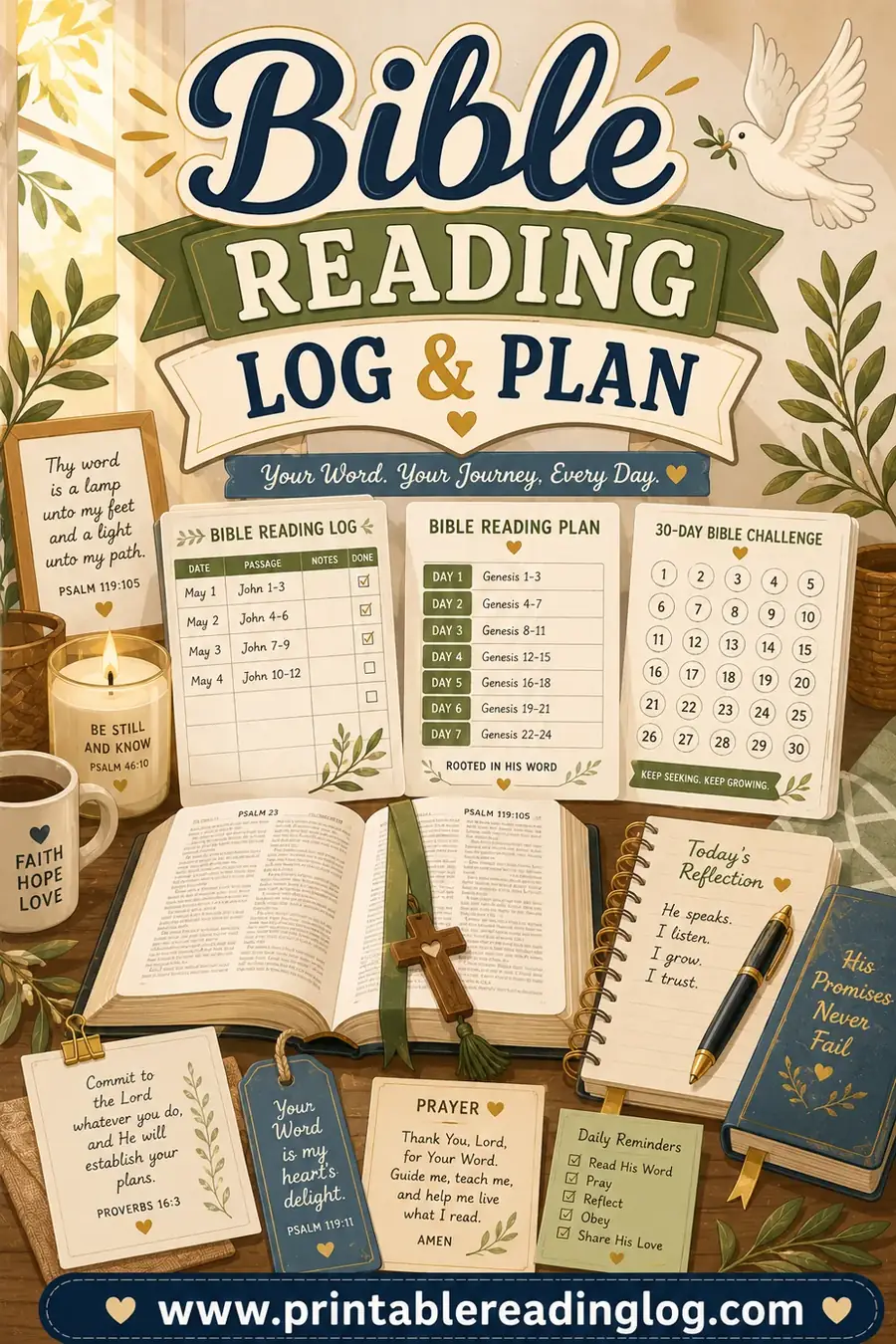
A Bible reading log is a simple sheet where you record what you read each day, the date, and a short note or verse that stood out. Pair it with a reading plan (a schedule that tells you which passage to read next), and you have everything you need to read Scripture steadily without losing your place. The quickest way to set one up is to use a free printable reading log, label the rows for books and chapters of the Bible, and print a fresh page for the month.
Want to start today? Open the free log builder, choose a daily or chapter-based layout, and print a page you can clip to your Bible or tape inside the cover. No app, no sign-up, no fee.
What Is a Bible Reading Log and Plan?
Two pieces work together here, and it helps to keep them straight.
A reading plan is the map. It lays out which passages to read and in what order. That might be "three chapters a day," a chronological walk through Scripture, or a Gospel-a-month schedule. The plan removes the daily question of "where do I even start?"
A reading log is the record. After you read, you jot down the date, the book and chapter, and maybe a verse or thought worth keeping. Over weeks, that log becomes proof you're showing up, plus a little journal of what God's word stirred in you.
You don't need both to get started, but together they're powerful. The plan keeps you moving forward. The log keeps you honest and gives you something to look back on.
Why Keep a Bible Reading Log
Reading the Bible "when you feel like it" usually means long gaps. A log changes that by making your habit visible.
- It builds consistency. A row of checkmarks is a quiet motivator. You'll want to keep the streak alive.
- It slows you down. Writing one line about what you read forces you to actually think about it instead of skimming.
- It records growth. Months later, you can flip back and see how a passage spoke to you in a hard season.
- It keeps your place. No more guessing where you left off when life gets busy for a week.
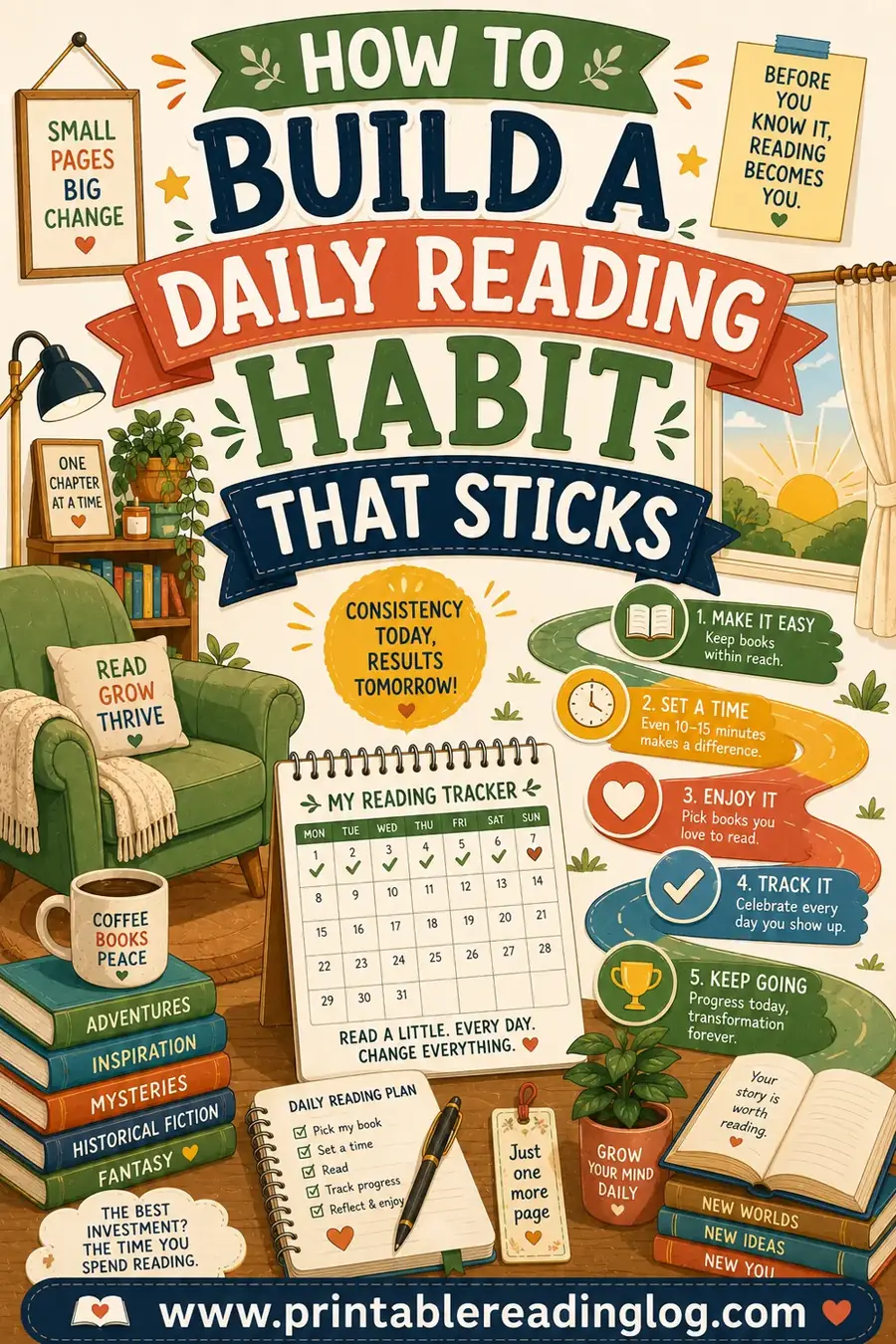
For more on the psychology of showing up daily, see our guide on how to build a daily reading habit.
Popular Bible Reading Plans to Choose From
Pick a plan that matches your pace and goal. There's no "right" one. The best plan is the one you'll actually follow.
| Plan type | Pace | Best for | Roughly how long |
|---|---|---|---|
| Whole Bible in a year | 3–4 chapters/day | A complete, big-picture read | 12 months |
| Chronological | 3–4 chapters/day | Reading events in time order | 12 months |
| New Testament in 90 days | ~3 chapters/day | A focused, shorter goal | 3 months |
| Gospels first | 1 chapter/day | New readers, kids, Sunday school | 3–4 months |
| Proverbs a day | 1 chapter/day | A gentle, repeatable rhythm | 1 month, repeatable |
| Psalm + chapter | 2 short readings/day | Mixing prayer and study | Flexible |
If you're new, start small. A single chapter of a Gospel each morning is far better than a year-long plan you abandon in week two. You can always level up.
Matching the plan to your season
A college student with open mornings can handle four chapters a day. A parent of toddlers might do better with one Proverb at lunch. Be honest about your real schedule, not your ideal one. The log will tell you the truth either way, so set yourself up to win.
How to Set Up Your Bible Reading Log
Here's the whole process, start to finish. It takes about five minutes.
- Pick your plan. Choose one from the table above, or any plan your church hands out.
- Choose a log layout. Use the reading log builder and pick a format: one row per day, or one row per chapter.
- Label the columns. Good columns are Date, Passage (book + chapter), and Notes/Verse. Add a small checkbox column if you like marking days done.
- Print a page per month. Keep it simple. A single sheet on the fridge or inside your Bible cover works great.
- Fill it in right after you read. Make logging part of the ritual so you don't forget.
That's it. Don't overthink the design. A plain, printed sheet you actually use beats a fancy one you don't.
What to Put in Each Column
The columns are where a Bible log earns its keep. Here's a sample of what a filled-in week might look like.
| Date | Passage | Verse or note |
|---|---|---|
| Mon | John 1 | "The Word became flesh" — slow down on v. 14 |
| Tue | John 2 | Water to wine; first miracle |
| Wed | John 3 | John 3:16 in context hits different |
| Thu | John 4 | Woman at the well; living water |
| Fri | John 5 | Healing on the Sabbath |
| Sat | Psalm 23 | A quiet day, just sat with it |
| Sun | Sermon notes | Pastor preached on John 1 |
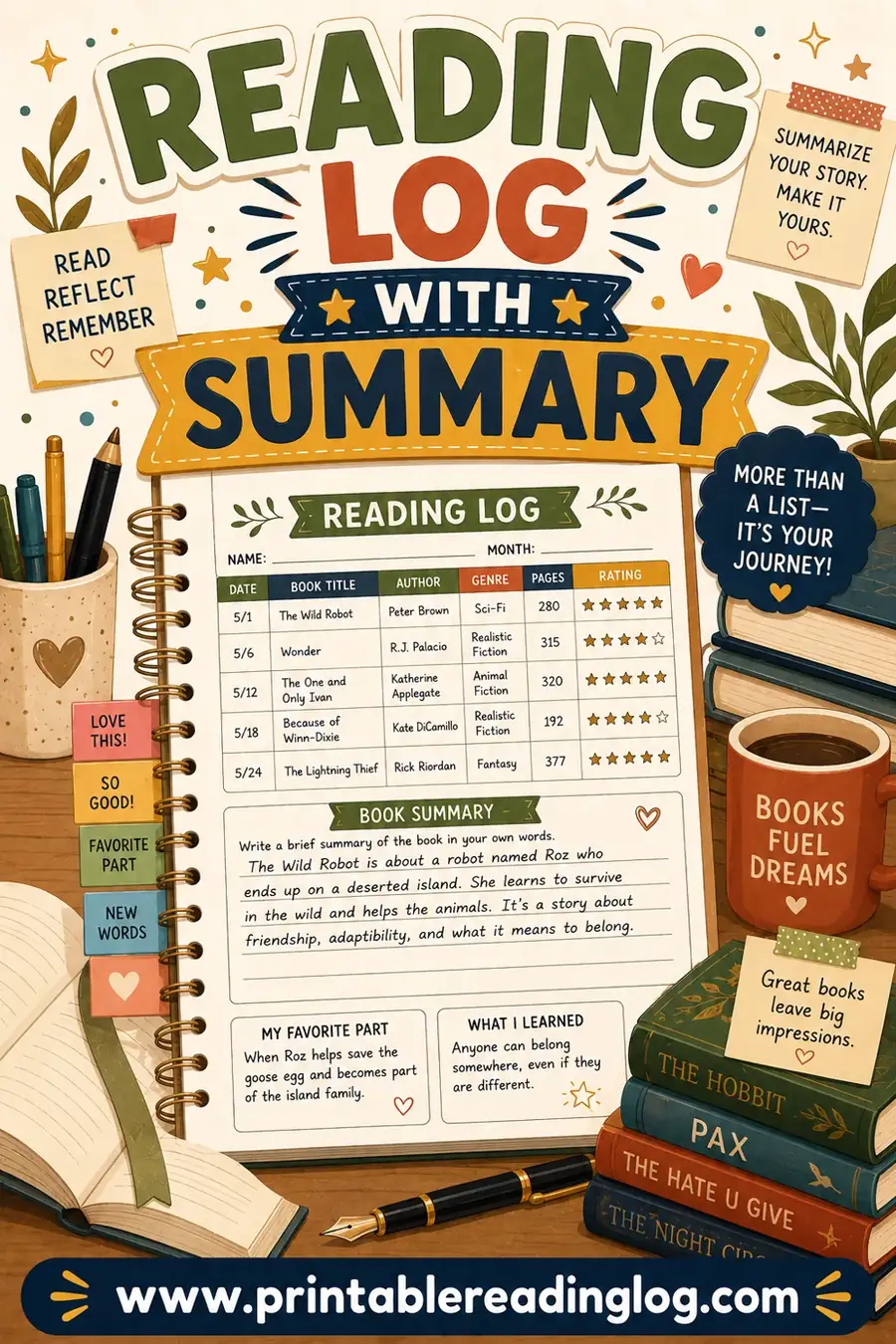
Notice the notes are short. One line is plenty. The goal isn't a polished journal entry, it's a true record you'll glance back on. If you want a richer version, our reading log with summary layout gives you more room to reflect on each reading.
Bible Reading Logs for Kids and Families
A reading log isn't just for adults. Kids love checking boxes, and families thrive on a shared rhythm.
For children
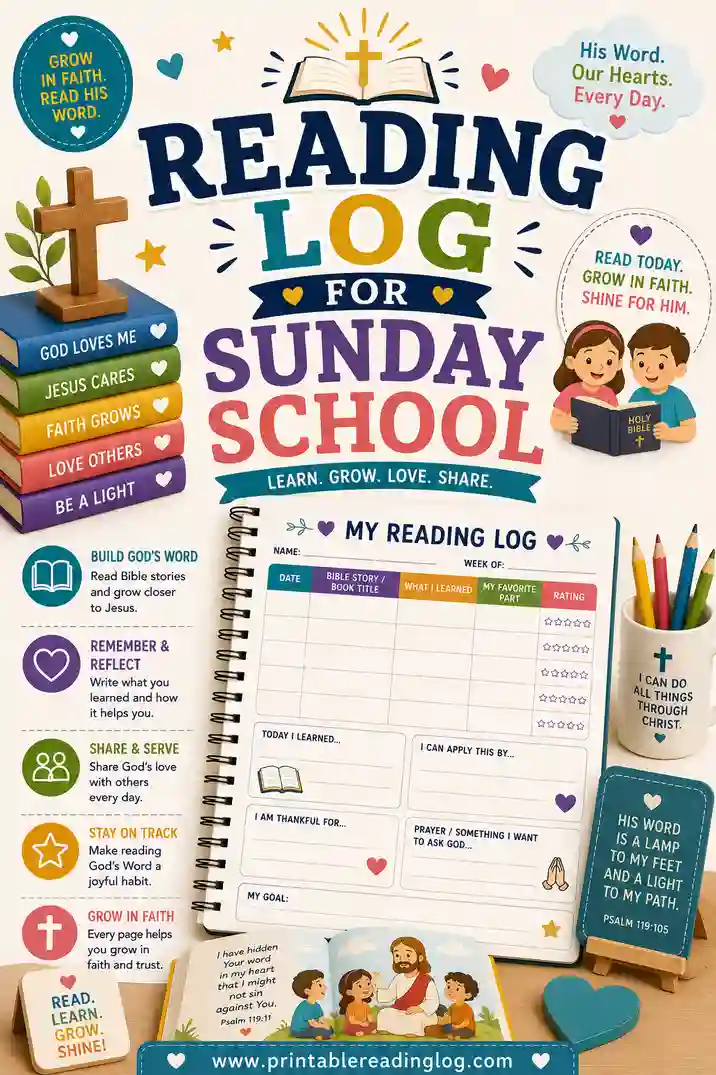
Use a picture-friendly layout with big checkboxes and simple labels like "Bible story" instead of chapter numbers. Let them add a sticker or draw a tiny picture of the story. For Sunday school groups, a printable log keeps the whole class moving through a unit together. See our Sunday school reading log ideas for class-ready setups.
For the whole family
A family Bible plan can be as simple as one short passage at dinner. Keep a single log on the fridge with a row for each family member, and let everyone mark their box. Kids who see parents reading Scripture are far more likely to pick up the habit themselves. A shared daily reading log makes that visible for the whole house.
Tips to Actually Stick With It
Most plans fail for the same handful of reasons. Here's how to dodge them.
- Read at the same time daily. Tie it to an existing habit, like coffee or bedtime. The anchor matters more than the hour.
- Keep the bar low on hard days. A single verse still counts. Mark the box and move on. A short read beats a skipped day.
- Don't quit over a missed day. Gaps happen. Just pick up where the plan says, not where guilt says.
- Catch up gently, or don't. If you fall a week behind, either skim to catch up or simply restart from today. Both are fine.
- Use a bookmark plus the log. The log tracks the big picture; a bookmark holds your exact spot.
A simple weekly rhythm
Try reading six days and using the seventh to review your log, reread a favorite verse, and look ahead at the week's plan. That review day keeps the whole thing from feeling like a treadmill.
Pairing reading with a short prayer
Many readers bookend their reading with a one-line prayer: a quick "open my eyes" before, and a thought to carry into the day after. It only takes a few seconds, but it turns reading from a box to check into something that actually shapes the day. You can add a tiny "prayer" or "takeaway" column to your log if you want a spot to capture it, though even a mental note works fine.
Print, Reuse, and Customize
A printable log is flexible in ways an app isn't.
- Print monthly. A fresh sheet each month feels like a clean start and keeps pages from getting cluttered.
- Slip it in a sleeve. Use a clear sleeve and a dry-erase marker if you want a reusable weekly tracker.
- Match it to your plan. Reading three chapters a day? Give yourself three short rows per day. One Proverb? One row is plenty.
- Make a family version. Add a column per person so the whole household shares one page.
You control every part of the layout in the free builder, so the log fits your plan instead of forcing your plan to fit the log.
Frequently Asked Questions
What should a Bible reading log include?
At minimum: the date, the passage you read (book and chapter), and a short note or verse that stood out. Many people add a checkbox to mark the day done. Keep it simple so you'll actually fill it in.
How do I choose a Bible reading plan?
Match the plan to your real schedule, not your ideal one. New readers do well with one chapter of a Gospel a day. If you have more time, a whole-Bible or chronological plan in a year is a great goal. The best plan is the one you'll finish.
Is the Bible reading log free to print?
Yes. You build and print it yourself at no cost, with no sign-up and no watermark. Print one page or a year's worth, whatever you need.
Can kids use a Bible reading log?
Absolutely. Use big checkboxes, simple labels like "Bible story," and let them add stickers or drawings. A picture-friendly layout works great for Sunday school classes and family devotions.
What if I miss a few days?
Just pick up where your plan says next, or restart from today. Don't try to "make up" everything at once or quit over the gap. Consistency over weeks matters far more than a perfect streak.
How many chapters should I read a day?
Whatever you can keep up with. One chapter a day is a steady, doable pace that finishes the New Testament in a few months. Three to four a day reads the whole Bible in a year. Start lower than you think and raise it once the habit sticks.
Start Your Bible Reading Log Today
Pick a plan, open the free reading log builder, and print a page you can keep with your Bible. Label the rows for your plan, jot a verse a day, and watch the checkmarks add up. It's free, there's no sign-up, and the only thing left to do is open the Word and read. Grace and peace as you start.