Reading Log With Star Rating: Free Printable
A reading log with star rating is a tracker that adds a 1-to-5 star column so readers can score each book right after they finish it. It makes the log more fun and turns a plain list into a record of what you actually loved. The fastest way to make one is the free printable reading log builder — turn on star ratings, pick a style, and print. No app, no cost.
Want to skip ahead? Open the free reading log maker, add a star-rating column, and print a clean template for kids, a book club, or your own shelf. It takes about a minute.
What Is a Reading Log With Star Rating?
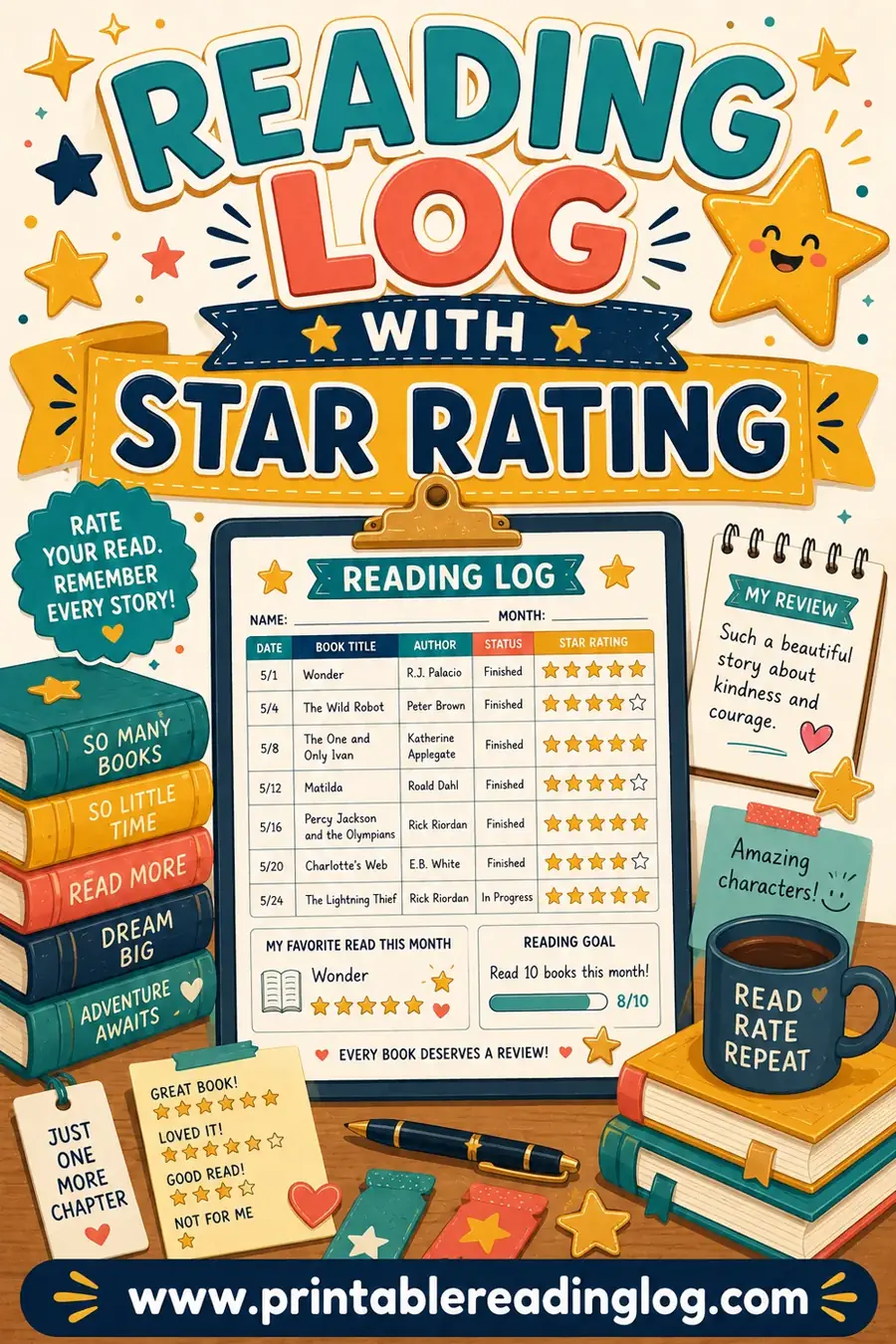
It's a normal reading log with one extra column: a row of five little stars next to each book. When the reader finishes, they fill in stars to show how much they liked it — five for a new favorite, one for a slog they barely got through.
That tiny column does a lot. It gives every book a quick verdict, which is more fun than just crossing off a title. And over time, your filled-in stars become a map of your taste — easy to scan when you're picking what to read next.
Star ratings work for any reader. A six-year-old can color in stars before they can write a summary. An adult can use the same five stars they'd give a movie. It's a universal little language.
Why Add Star Ratings to a Reading Log
A rating turns a passive list into an opinion. And having an opinion is exactly what makes reading stick.
Here's what star ratings give you:
- Engagement. Rating a book makes the reader pause and think, "Did I actually like that?" That reflection deepens the experience.
- A taste map. Scan your log and you instantly see your five-star books — and what they have in common.
- Easy recommendations. "I gave it five stars" is a faster, clearer rec than a paragraph.
- Motivation for kids. Coloring in stars feels like earning something. Kids love it.
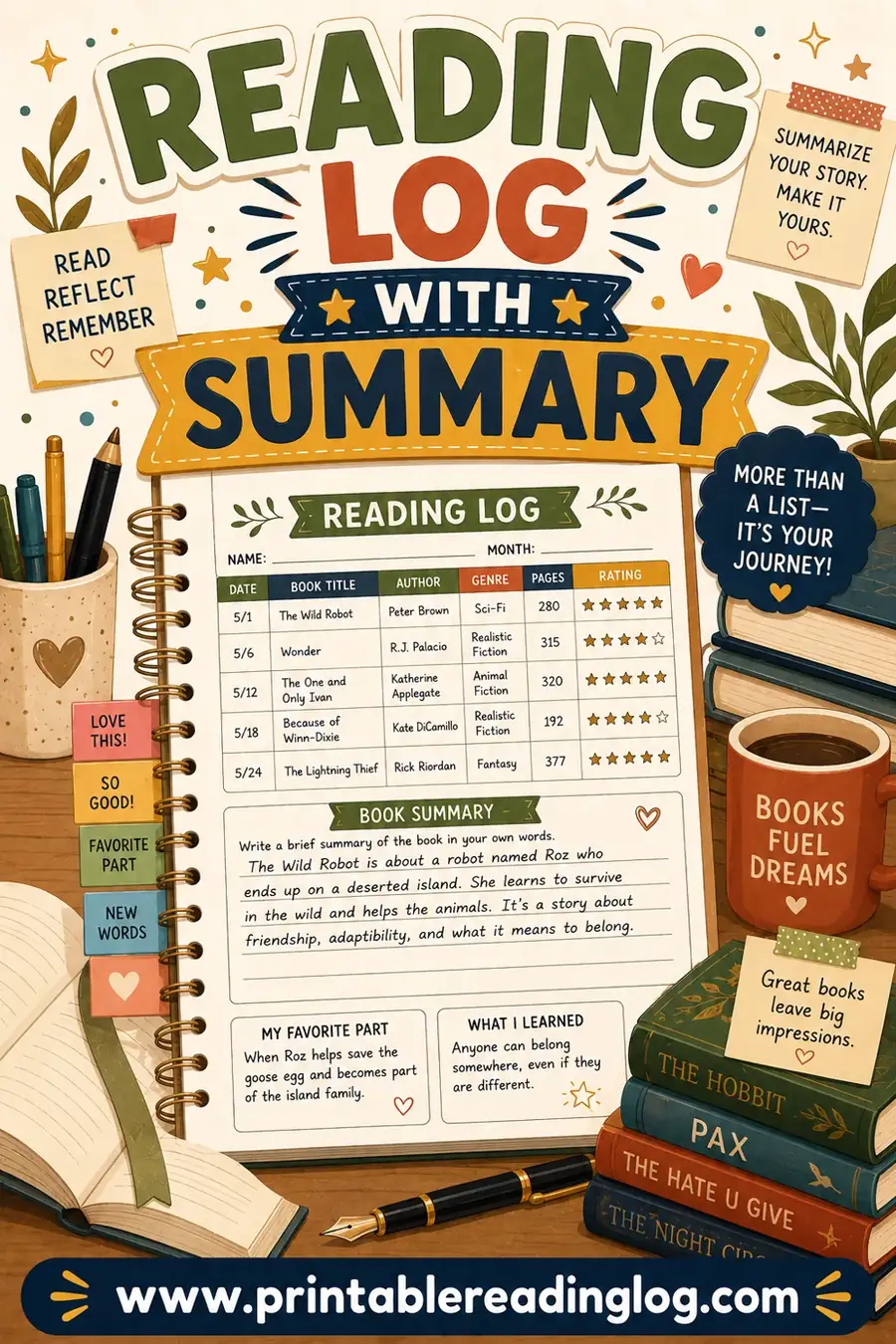
It's also a gentle reflection skill. Asking "why three stars and not four?" pushes a young reader toward real thinking about books — the same muscle a reading log with summary builds, just lighter.
What the Stars Mean: A Simple Rating Guide
The trouble with star ratings is everyone uses them differently. One person's three stars is another's five. A shared guide keeps your log consistent so the stars actually mean something later.
| Stars | What it means | Use it when |
|---|---|---|
| ⭐ | Didn't like it | You pushed through or quit early |
| ⭐⭐ | It was okay | Finished it, but wouldn't reread |
| ⭐⭐⭐ | Good | Enjoyed it, would recommend with a caveat |
| ⭐⭐⭐⭐ | Great | Really liked it, would recommend freely |
| ⭐⭐⭐⭐⭐ | Loved it | A new favorite, would reread |
Print this little key at the top of the log, especially for kids. It takes the guesswork out and makes ratings comparable across the whole year.
A kid-friendly version
For young readers, swap the words for feelings:
- ⭐ — "Not for me"
- ⭐⭐⭐ — "Pretty good"
- ⭐⭐⭐⭐⭐ — "I loved it!"
Three clear options are easier than five fine-grained ones for little kids.
What to Include in a Reading Log With Star Rating
Keep it clean. The stars are the star of the show, so don't crowd them out:
| Column | What goes here |
|---|---|
| Date | When the book was finished |
| Book title & author | What was read |
| Pages / minutes | How much |
| Star rating | 1–5 stars |
| One-line note | "Why" the rating (optional) |
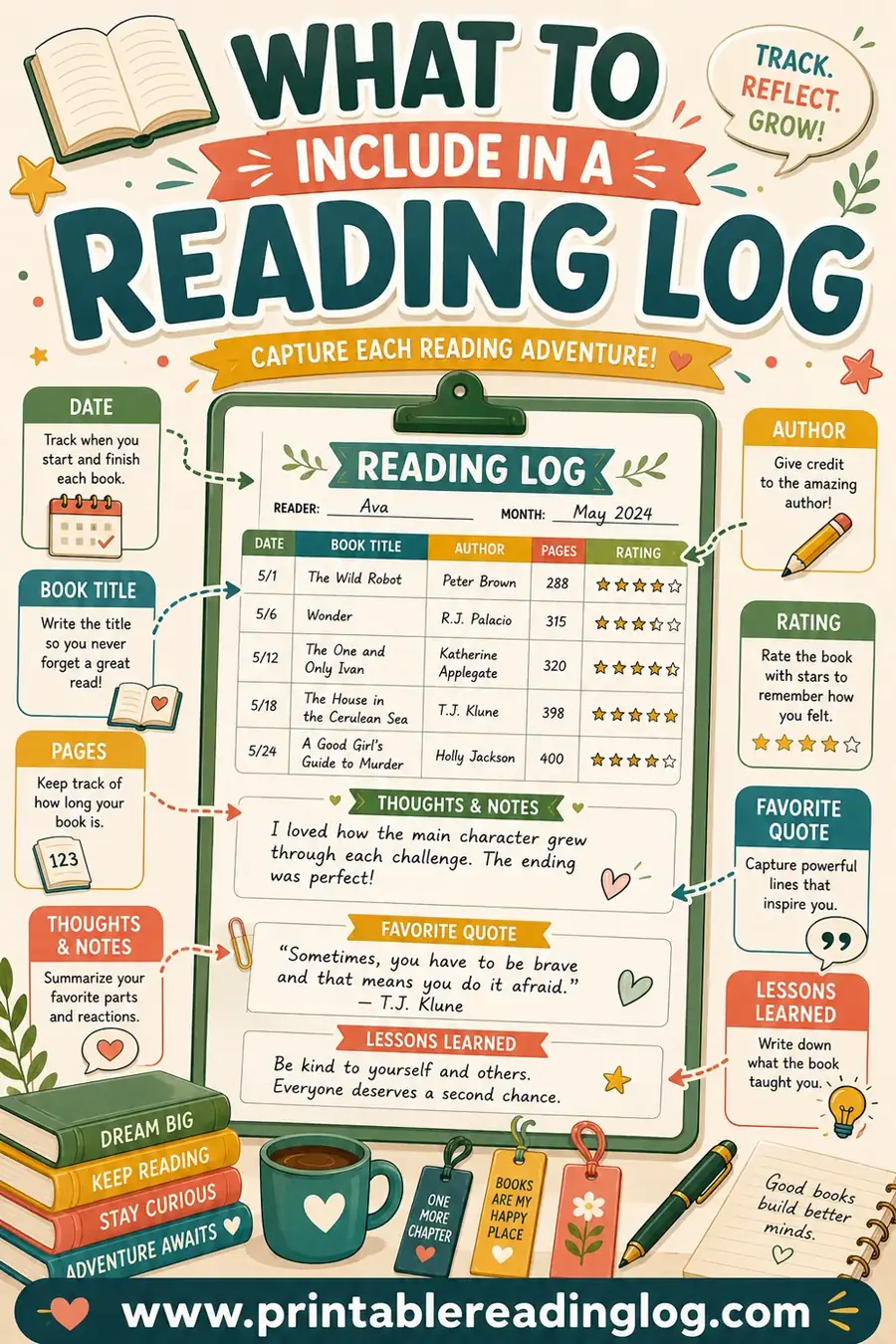
That optional "one-line note" is gold. A star tells you what you thought; a five-word note tells you why. For the full list of fields you might add, see what to include in a reading log.
How to Make a Reading Log With Star Rating in 3 Steps
No design skills needed.
- Choose your columns. At minimum: title, date, and a star column. Add minutes or pages if you track those.
- Pick a style. A playful kid theme, or a clean grown-up layout.
- Print it. Open the generator, turn on the star-rating column, and print as many copies as you need.
Print on regular paper for daily use, or cardstock for a log that lives in a binder all year.
Fun Ways to Use Star Ratings
Once you've got ratings flowing, you can do more than just record them. Try these:
- Find your "five-star type." Look at your top-rated books. Same genre? Same author? That's your next reading list, ready-made.
- Run a yearly best-of. At the end of the year, pull your five-star reads into a "favorites" list. Kids love a personal "best books" award.
- Compare with a friend. Two readers rating the same book sparks great conversation — perfect for a book club.
- Track a slump. A run of two-star ratings might mean you're in a reading rut. Time to switch genres.
Use it as a Goodreads alternative
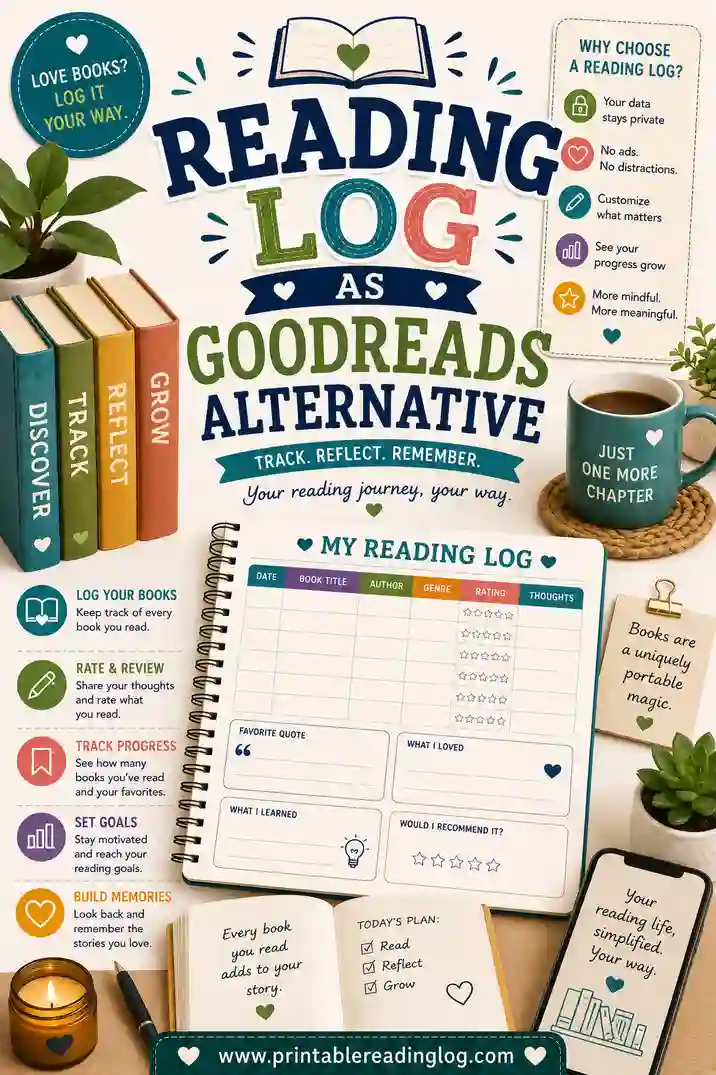
If you've cooled on apps tracking your every read, a printed log with stars does the core job — rating and remembering books — with no account and no algorithm. Our reading log as a Goodreads alternative walks through exactly that.
Who a Star-Rating Reading Log Helps Most
This format works for almost everyone, but it's especially good for:
- Kids who light up at coloring in stars after a book.
- Reluctant readers who'll engage with rating even when they won't write a summary.
- Adult readers who want a quick taste record without an app.
- Book clubs comparing scores on a shared title.
- Teachers spotting which books are landing with their class.
A few quick examples
- A second-grader gives Dog Man five stars and scribbles "so funny."
- A book club member logs three stars: "Loved the setting, hated the ending."
- An adult marks four stars: "Couldn't put it down, lost a star for the slow middle."
Each is fast. Each captures a real verdict in seconds.
Tips for Honest, Useful Ratings
Stars are only helpful if they're honest. A few habits keep them meaningful:
- Rate right after finishing. Wait a week and the feeling fades. Score it while it's fresh.
- Use the whole scale. If everything gets five stars, the ratings stop meaning anything. Save five for true favorites.
- Add a why. A one-line note next to the stars makes them far more useful later.
- Let kids be honest. A two-star rating on a "good" book is fine. The point is their opinion, not the "right" answer.
- Re-rate on reread. Some books grow on you. It's okay to bump the stars next time.
Half-Stars and Other Rating Tweaks
Five whole stars works for most people, but some readers want more nuance. A few common tweaks:
- Half-stars. Add a "½" option for the books that land between two ratings. Just draw a line down the middle of a star. Great for adults who agonize over a four-versus-five call.
- A 10-point scale. If five stars feels too coarse, score out of ten in a small box. More precise, but slower — best for serious trackers.
- A separate "would reread?" check. Sometimes a book is technically great but you'd never read it again, or it's flawed but you love it. A yes/no reread box captures that feeling stars miss.
- A "did not finish" mark. Use an X or "DNF" instead of stars for books you set down. It's honest data about your taste.
Pick whatever you'll actually use. The simplest system you keep up with beats the fancy one you abandon.
A year-end star summary
At the end of the year, your log becomes a personal awards show. Tally it up:
| Category | How to find it |
|---|---|
| Best book of the year | Your top five-star read |
| Biggest surprise | A book you expected to dislike but rated high |
| Most disappointing | A hyped book that earned low stars |
| Comfort favorite | The book you'd reread first |
| Average rating | Add your stars, divide by books read |
That average is a fun stat — a high average might mean you're a generous rater, or that you're great at picking books you'll love. Either way, it's a snapshot of your reading year that no app handed you.
Frequently Asked Questions
What does a star rating mean in a reading log?
A star rating shows how much the reader liked a book, from one star (didn't enjoy it) to five stars (a new favorite). It's a quick verdict written right after finishing. Printing a small key — like "3 stars = good, 5 = loved it" — keeps ratings consistent across the whole log.
Is the reading log with star rating free to print?
Yes. You build and print it yourself at no cost, with no sign-up and no watermark. Print a single page or a full binder, and reprint anytime you need a fresh template.
How do I use a 5-star rating system with kids?
Print a simple key with three or five levels and feeling-words like "not for me," "pretty good," and "I loved it." Let kids color in the stars themselves — it feels like a reward. Don't push them toward a "right" answer; their honest opinion is the whole point.
Can a star rating replace a written summary?
For young or reluctant readers, yes — a star rating captures their reaction without the writing. For older readers who want to remember details, pair stars with a one-line note or a short summary. Many people use both for the best of each.
Can I use a star-rating log instead of Goodreads?
Yes. A printed log with a star column does the core job of an app — rating and remembering books — with no account, no ads, and no algorithm. It's a clean, private alternative for readers who'd rather keep it on paper.
Should I rate books I didn't finish?
You can, and it's useful. Give a low rating with a note like "DNF at page 60 — too slow." It reminds future-you why you set it down and helps you spot patterns in what doesn't work for you.
Ready to Build Your Reading Log With Star Rating?
Pick your columns, open the free reading log maker, turn on the star-rating column, and print a template that makes every book fun to score. It's free, there's no sign-up, and you can reprint whenever you start a new shelf or a new year. Add a row of stars to your reading life today — and watch your favorites come into focus. Happy reading.