Christmas Book Countdown: A Master List for One Wrapped Book a Night
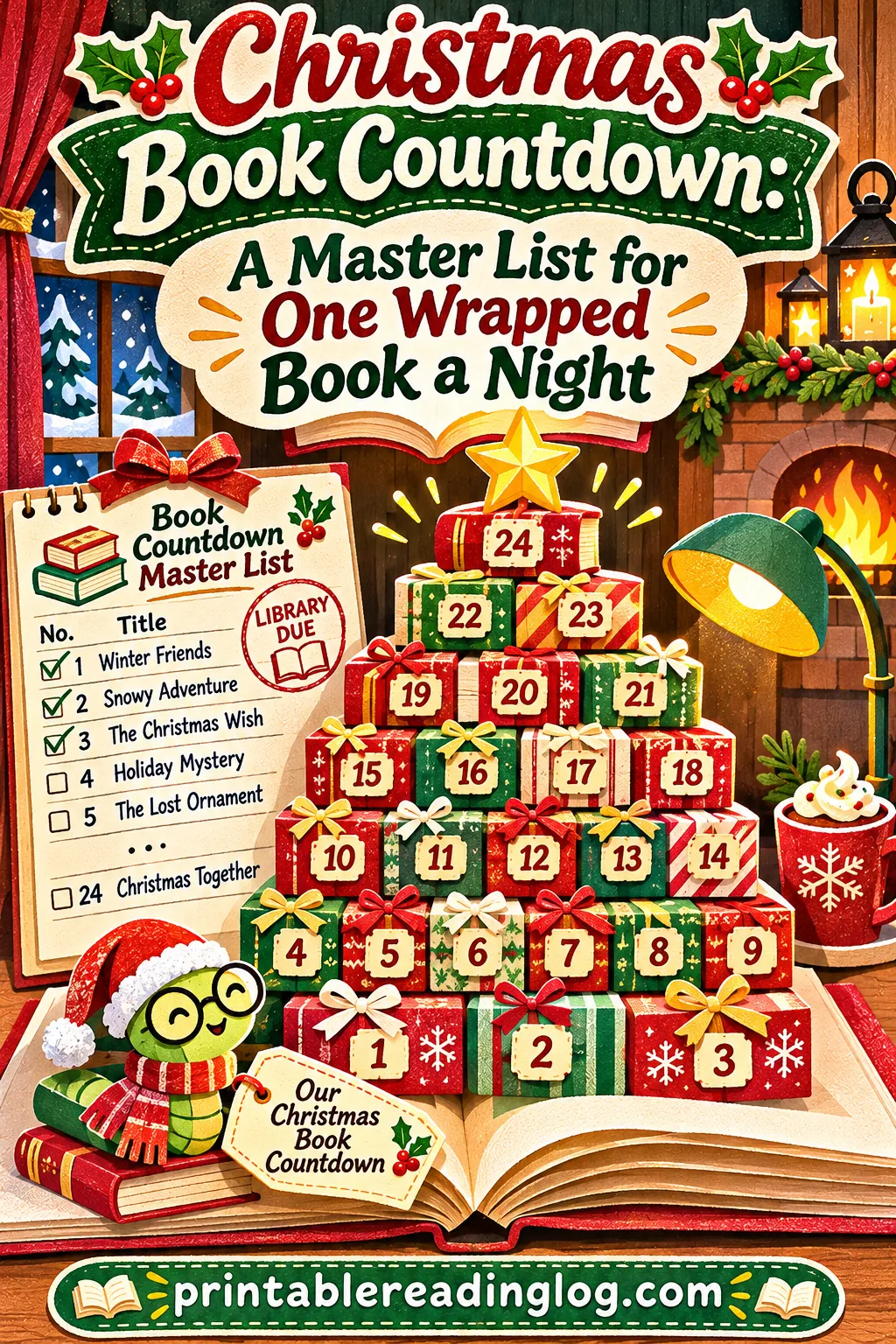
The secret to a Christmas book countdown that doesn't fall apart is a master list you fill in before you wrap a single book: night number, title, short or long, library due date, and who opens it. Tape that list inside a cupboard door, and you'll never have to unwrap five packages to find the library book that's due back on Thursday.
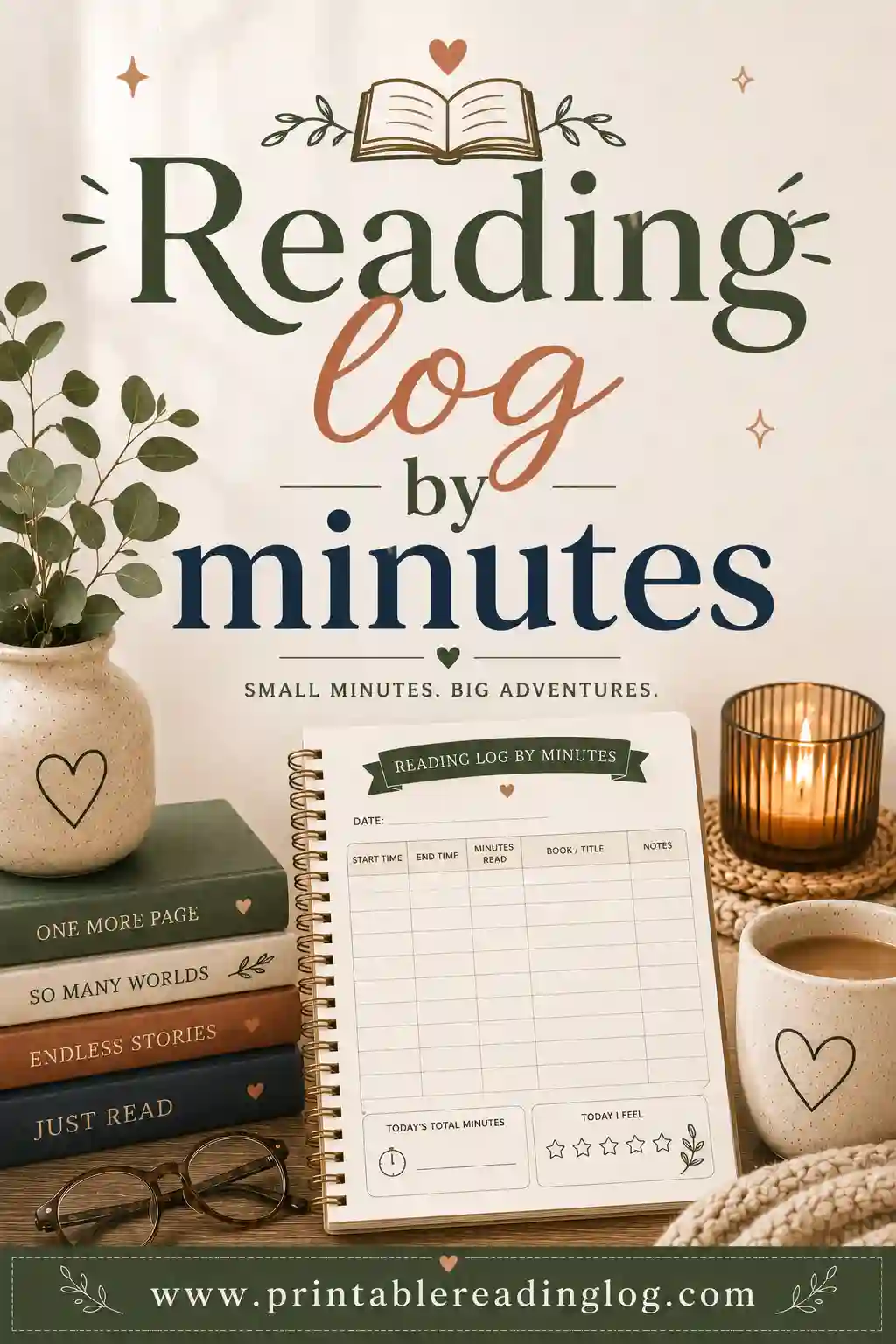
The list itself comes from our reading log builder. With the Monthly log preset set to December, the date column numbers itself 1 to 31, so rows 1 through 24 line up with your 24 wrapped books. Below you'll find how to plan the 24 nights, how to mix short and long books around a real December calendar, how to handle library books without a panic, the exact tool settings, a wrapping-day checklist, and fixes for the problems that come up halfway through the month.
📚 Printable Reading Log: make this log in 10 seconds
Set the name and goal, preview it, then print it free.
Free printables for this page
Ready-made, one-page PDFs from Printable Reading Log. Print as is, or change the columns in the maker above. See all free printable reading logs.
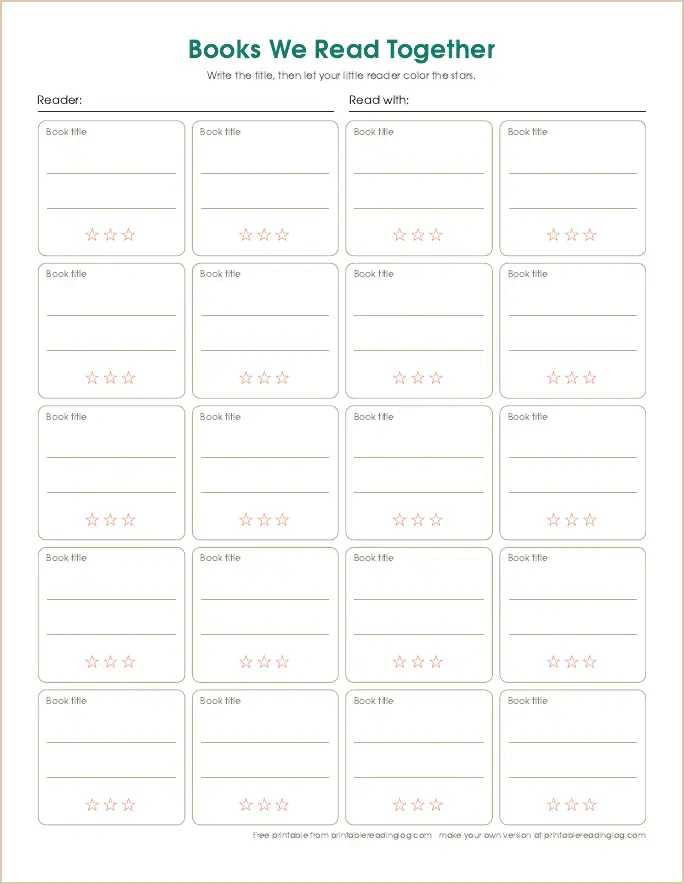
Picture Book Log
Twenty boxes for read-aloud picture books, each with a title line and three stars for little ones to color.
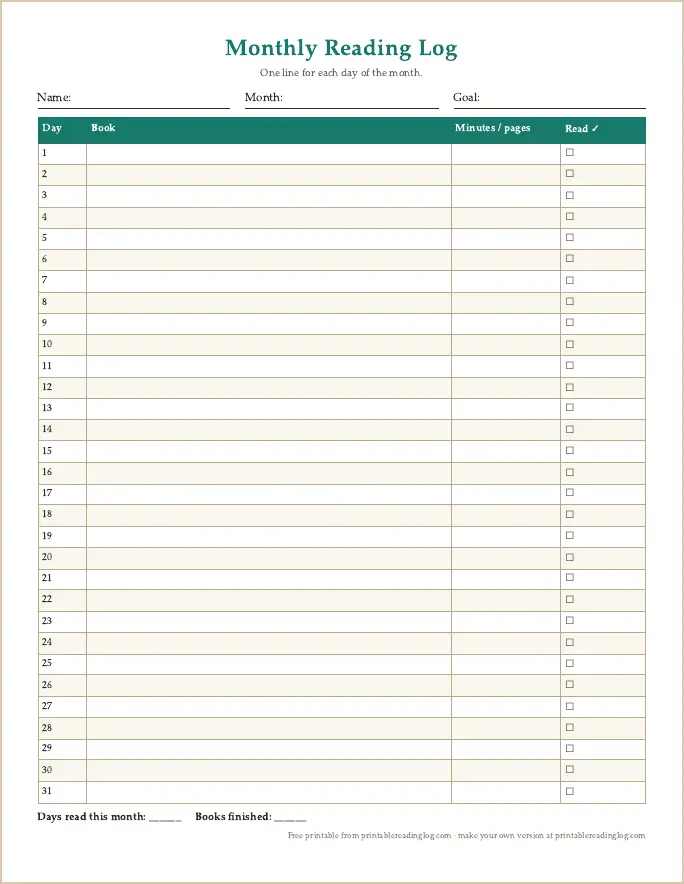
Monthly Reading Log
Rows numbered 1 to 31 for every day of the month, with the book, minutes or pages, and a check for each day you read.
What goes wrong around December 9
A book countdown sounds simple. You wrap 24 books, number them, and open one each night from December 1 to Christmas Eve. Kids love it, and it turns bedtime into the best part of the day.
Then real life shows up, usually in the second week. You can't remember which book is behind which number, because wrapping paper hides everything from you as well as the kids. A library book wrapped as number 19 turns out to be due on the 12th, and it's already the 9th. Number 8 is a 60-page story, and it lands on the night of the school concert. The book you were saving for Christmas Eve got wrapped in the wrong pile and opens on a random Tuesday.
Siblings argue over whose turn it is to unwrap, because nobody kept track and everyone remembers it differently. And next year, nobody can say which books were the favorites, so a flop gets borrowed all over again.
Every one of these problems goes away if you write it down first. A master list is a single sheet that says what's behind every number. It's for the grown-ups, so it can hold the details the kids shouldn't see, like library due dates and which book you're saving for the big night.
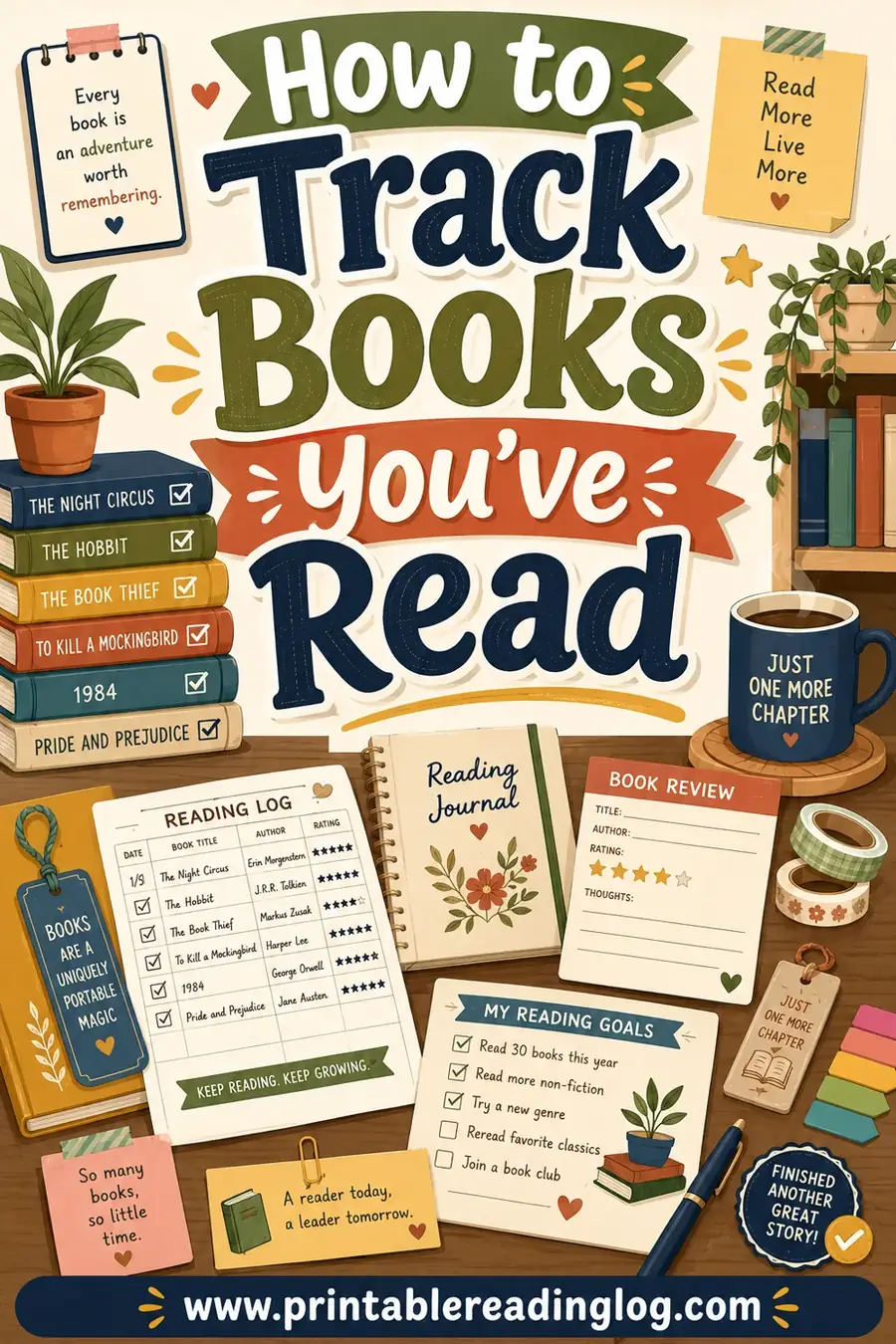
The list also does a second job. Once a book is opened and read, the kids can add a star rating. By the 24th you have a record of every book, how it went, and which ones to bring back next year.
What to write on the master list
Keep the list short enough to fill in quickly, but complete enough that you never have to guess. These are the details that matter, and why each one earns its spot.
| Detail | Why it matters | Where it goes on the printed log |
|---|---|---|
| Night number | Matches the number on the gift tag | Date column (numbered 1 to 31 automatically) |
| Title | So you can find a book without unwrapping | Title column |
| Author | Helps you find it again next year or at the library | Author column |
| Short or long | So long books land on easy nights | Notes column: write S or L |
| Library due date | So borrowed books go back on time | Notes column: write LIB and the date |
| Who unwraps it | Stops sibling turn fights | Initials column |
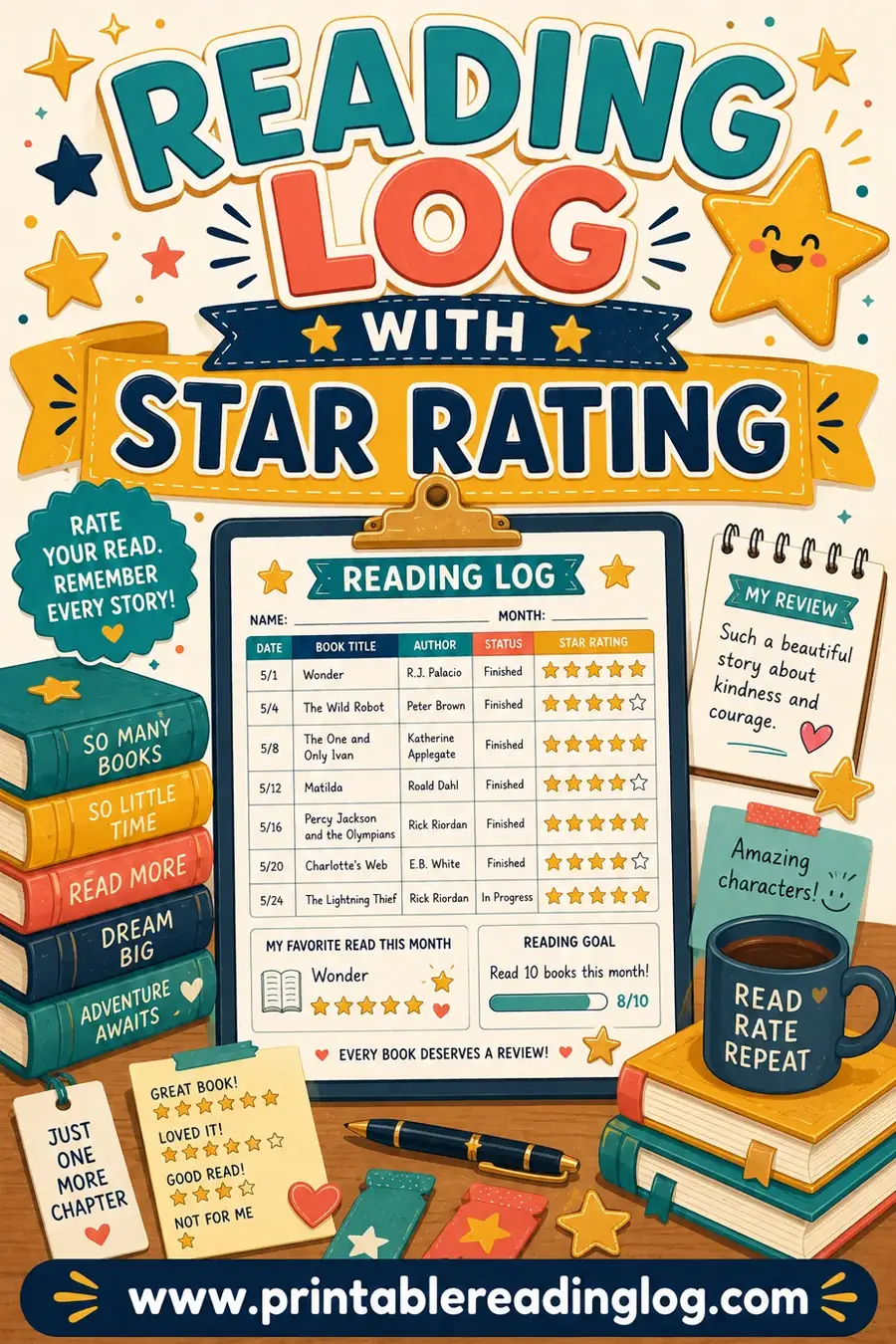
| Star rating | Remembers favorites for next year | Rating column (stars to color) |
There's no column literally called "library due" or "short or long," so the Notes column carries both. A quick shorthand keeps it tidy. For example, a row might read "S, LIB 12/14" for a short library book due back on December 14, or "L, ours" for a long book you own.
A shorthand that fits in one box. Pick your codes and print them in a corner of the sheet, so a grandparent helping with bedtime can read the list too:
- S = short read, about 5 to 10 minutes aloud
- L = long read, 15 minutes or more
- LIB 12/14 = library book, due December 14
- OURS = a book you own
- SWAP = borrowed from a friend or cousin, goes back after Christmas
- ★24 = the special book for Christmas Eve
No more system than that is needed. Each row takes about 10 seconds once the books are stacked in front of you.
Printing a December sheet that numbers itself
The log builder is free, needs no account, and keeps your setup in that browser, so the list is still there if you come back to it the next evening.
Start with the Monthly log preset, which turns the date column into the numbers 1 through 31, and pick December in the month box so the month and year print under the heading. For the reader name, type Christmas Book Countdown; it becomes the big title. The goal line can say One wrapped book a night, December 1 to 24.
Choose the adult style. Its rows are slimmer, so all 31 days fit neatly, and it reads like a planning sheet rather than a kids' worksheet. Blush gives a soft festive look without much ink, and Classic is the plain alternative. For columns, keep the date, title, author, star rating and notes, plus initials if you have more than one child, and switch the pages/minutes column off, since nobody is counting minutes. Finally, add 24 goal squares, one per night, so the kids can color a square each time a package is opened.
Rows 25 to 31 are handy, not wasted. Use them for "bonus" books over the week after Christmas, or for a few backup titles in case a book gets lost, turns out to be too scary, or doesn't arrive in time.
Print two copies, not one
Most families do best with two sheets. The master list is for grown-ups and holds every detail, including the library dates and the Christmas Eve pick, so it stays out of sight inside a cupboard door or a kitchen drawer. The kids' tick-off sheet is the same layout with the titles left blank. Each child writes in the title after unwrapping, adds stars and colors a goal square, so nothing gets spoiled and they own their part of the tradition.
For a more playful kids' sheet, switch the style to the kid version, choose the Sunshine theme, and turn on Add coloring strip (kids). The rows get taller and rounder, and the star rating turns into big gold stars to color.
Choosing 24 Books (Without Buying 24 New Ones)
A book countdown doesn't mean 24 brand-new books. Most families mix four sources, and the master list is what keeps them straight.
| Source | How many to plan | Things to watch |
|---|---|---|
| Books you already own | 8 to 12 | Wrap old favorites, especially holiday ones that only come out in December |
| Library books | 6 to 12 | Due dates, holds that arrive late, renewal limits |
| Swaps with friends or cousins | 2 to 6 | Write whose book it is so it goes back to the right home |
| New books | 1 to 4 | Save one for night 24 if you can |
There's no right number for each. A family that owns a big shelf of holiday books might use 20 of their own and borrow 4. A family starting from zero might borrow most of them. Either way works.
What kinds of books to include
Variety keeps the countdown fun past the first week. Try to spread these across the month:
- Winter and snow stories for the early nights, before it feels like Christmas.
- Holiday picture books about decorating, baking, gift-giving and family visits.
- Stories about giving and kindness, which pair nicely with any service ideas your family has planned.
- Funny books for nights when everyone is tired and cranky.
- Wordless or nearly wordless picture books that a younger child can "read" to you.
- Nonfiction, such as books about how other countries celebrate winter holidays, reindeer and arctic animals, or how snowflakes form.
- Poetry and traditional carols, since an illustrated book of an old public-domain carol is a short, cozy read.
- A chapter book or a longer story split over a weekend, if your kids are older. The Christmas chapter book read-aloud plan shows how to pace one across December.
- A book about the child, such as a homemade photo book or a story with their name in it, for the last night.
Matching books to ages
If your kids are far apart in age, think about who each book is really for. A 3-year-old and a 9-year-old can both enjoy a funny picture book, but a long, wordy story will lose the little one in five minutes. On a master list, you can mark it in the Initials column. If the older child unwraps the longer book, they can read part of it aloud to the younger one, which turns a mismatch into a treat. Our notes on picking books that fit a child's age and interests can help with the mismatched-sibling problem. For kindergartners specifically, there's a list of Christmas read-alouds for kindergarten.
Matching each number to the concert nights and the quiet nights
This is the step most families skip, and it's the one that makes the biggest difference. Before you wrap anything, look at your calendar and decide which nights are short-book nights and which nights have room for something longer.
A good rule of thumb: short books on school nights and busy nights, longer books on weekends and quiet nights, and the most special book on the 24th. That way the countdown never becomes one more thing you're rushing through.
Step 1: Mark your busy nights
Grab your family calendar and circle anything that eats into the evening:
- School concerts, plays and class parties
- Practices, lessons and games
- Work events or late shifts
- Travel days and nights with houseguests
- Baking or decorating nights you've already planned
- The last day of school before break, which tends to end in tired kids
Every circled night gets an S book. Don't fight it. A 5-minute book that actually gets read is better than a 20-minute book that gets skipped.
Step 2: Mark your easy nights
Weekends, the first quiet days of winter break, and any evening with nothing planned can take an L book. If you're splitting a longer story, these are the nights for it.
Step 3: Fill in the special nights
A few nights deserve a hand-picked book:
- Night 1: something exciting that sets the tone, like a winter story with lots to look at.
- The first night of winter break: a long, cozy book for a slow evening.
- Night 23: a story about getting ready, waiting or traveling to family.
- Night 24: the most special book of the month. Many families save a brand-new book, a book about the child, or a beloved family copy that comes out every year.
A sample plan for December 2026
This is how it might look in 2026, when December 1 is a Tuesday and Christmas Eve is a Thursday. School break dates vary, so swap in your own. This example assumes school lets out on Friday, December 18.
| Night | Day | Kind of night | Book length | Example pick |
|---|---|---|---|---|
| 1 | Tue | School night, kickoff | S | A bright winter picture book |
| 2 | Wed | Practice night | S | A short funny story |
| 3 | Thu | School night | S | A snow poem collection (read three poems) |
| 4 | Fri | Family movie night | S | A book about decorating |
| 5 | Sat | Weekend | L | A longer holiday folk tale |
| 6 | Sun | Weekend | L | Nonfiction about arctic animals |
| 7 | Mon | School night | S | A wordless picture book |
| 8 | Tue | School night | S | A short story about baking |
| 9 | Wed | Concert night | S | The shortest book on the list |
| 10 | Thu | School night | S | A kindness story |
| 11 | Fri | Quiet night | L | A longer picture book |
| 12 | Sat | Weekend | L | A story about winter holidays around the world |
| 13 | Sun | Weekend | L | First half of a short chapter book |
| 14 | Mon | School night | S | A rhyming book |
| 15 | Tue | School night | S | A book about giving |
| 16 | Wed | School night | S | A short funny story |
| 17 | Thu | Class party night | S | A book about snow days |
| 18 | Fri | Last day of school | S | An easy favorite |
| 19 | Sat | First day of break | L | Second half of the chapter book |
| 20 | Sun | Weekend | L | An illustrated public-domain carol |
| 21 | Mon | Break | L | A long folk tale |
| 22 | Tue | Break, baking day | L | A cozy bedtime story |
| 23 | Wed | Travel or guests | S | A book about traveling to family |
| 24 | Thu | Christmas Eve | ★ | The special book |
Look at the pattern: 14 short nights, 9 long nights and one special night. That spread is typical when most of December is a school month. If your kids are home all month, you can flip it and use more long books.
Write this plan straight onto the master list before you wrap anything. The night number goes in the numbered date column, the title goes in the Title column, and the S or L goes in Notes.
Library Books in a Book Countdown: How to Avoid the Due-Date Scramble
Library books are a wonderful way to fill a countdown, but they're also where most of the stress comes from. A wrapped library book can't be renewed if you've forgotten it exists, and you don't want to tear open number 17 on the 10th just to find out what's inside.
Borrow in two batches
Libraries set their own loan periods and renewal rules, so check the due-date slip or your account rather than guessing. Whatever your loan period is, borrowing everything on December 1 often means some books are due back before their night comes up. Two batches usually solves it:
- Batch one (late November): library books for nights 1 to about 12.
- Batch two (around December 10 to 12): library books for nights 13 to 24.
That way no library book sits wrapped for weeks. Write each due date on the master list as you check them out, in the Notes column.
Put library books on the earliest nights you can
Inside each batch, put the library book with the earliest due date on the earliest night. If two books are due on the 14th, they belong on nights before the 14th. Owned books are flexible, so they can fill the nights right before a library return.
Wrap library books gently
Library books belong to everyone, so skip tape on the covers. A few easy options:
- Slide the book into a paper gift bag and fold the top over.
- Wrap it in a cloth napkin, tea towel or scarf and tie it with ribbon.
- Use a large envelope and write the number on the front.
- Wrap paper loosely and tape the paper to itself, never to the book.
Many families mark library packages with a small dot or a different color ribbon, so they can see at a glance which ones need to go back.
Holds and late arrivals
If you're waiting on library holds, leave a few gaps in the plan instead of building the whole month around books you don't have yet. Put the hold titles on later nights and keep two backup books from home on standby. If a hold arrives early, great. If it never comes, the backup slides in and nobody knows the difference.
Returns after Christmas
Any library books on nights 20 to 24 will probably be due back during the holidays. Before you wrap them, check your library's holiday hours, since many branches have shorter hours or close for a few days. Write the return date on the master list so it doesn't sneak up on you while the house is full of guests. For a whole-family approach to borrowing, the reading log for libraries page has layouts that track several borrowed books at once, and our guide to keeping library due dates straight covers the year-round version.
Wrapping Day and the Nightly Routine
Wrapping day: a checklist that takes about an hour
Once the master list is filled in, wrapping goes quickly because there's no deciding left to do. Set aside an hour while the kids are asleep or out, with every row of the list completed before you cut any paper.
Stack the books in night order with number 1 on top, then check each one against the list, paying extra attention to library books. Write the number big and clear on the gift tag or straight on the paper; a marker on brown paper works well. A tiny private code, such as a dot for library books, is optional. Wrap in order so the stack never gets mixed up, and put the finished packages in a basket with number 1 on top, or line them up under the tree.
Tuck the master list somewhere hidden but easy to reach, like the inside of a cupboard door, and snap a photo of it on your phone in case the paper goes missing. The kids' tick-off sheet goes on the fridge with a pencil and a few crayons nearby.
Keep a few rows in reserve
Even with a perfect plan, something comes up. A book turns out to be scarier than you expected, a grandparent brings one that's even better, or a library hold shows up late. Rows 25 to 31 on the printed log are your reserve list. Write two or three backup titles there, and you'll never be stuck.
The nightly routine: open, read, rate, color
A countdown works best when every night follows the same small routine. Kids know what to expect, and you're not making decisions when everyone is tired.
Glance at the master list to see whose initials are on tonight's row and whether it's a short or long book. That child finds the number and unwraps it. Then read it together: five minutes on the couch on a short night, or a proper settle-in on a long one. Afterward each child gives it stars on the tick-off sheet, and you can copy the family rating onto the master list. One square gets colored, so by Christmas Eve all 24 are filled. The book goes into a "finished" basket, except library books, which go straight to the bag by the door.
On top of the reading, the whole routine takes a minute or two. Families who want to keep a longer record of December read-alouds, year after year, may like the read-aloud tradition log.
Taking turns with more than one child
Turn fights are one of the most common countdown complaints, and the Initials column fixes them. Write each child's initials in a repeating order before December starts. With two kids, it's simple alternating nights. With three, it's a three-night rotation. Everyone can see the schedule, so there's nothing to argue about.
| Kids | Rotation | Unwraps per child |
|---|---|---|
| 1 | Same child every night | 24 |
| 2 | A, B, A, B... | 12 each |
| 3 | A, B, C, A, B, C... | 8 each |
| 4 | A, B, C, D... | 6 each |
| 5 | A to E rotation, then a shared final night | 4 or 5 each |
If you have five kids, 24 nights doesn't split evenly, so let the whole family unwrap night 24 together. It's a lovely way to end the countdown anyway.
Letting the kids rate each book
Star ratings sound like a small thing, but they're what turns a December tradition into a record you can use. A row that says "4 stars from both kids" tells you to bring that book back next year. A row with one star tells you to skip it. If your kids are too young for stars, switch the tool's Rating style to Smiley for a quick happy, okay or sad face. The reading log with star rating page has more ideas for getting kids to rate books honestly.
Variations by Age and Family Size
The 24-books-in-24-nights version is the classic, but it's not the only way. Pick the version that fits your house this year.
Toddlers and preschoolers
Little kids care more about unwrapping than reading, so lean into it. Choose sturdy board books and very short picture books, mark almost every night as S, and let them tear the paper themselves. On the kids' sheet, use the Smiley rating and big coloring squares. Many families of toddlers print the sheet with the Kid-friendly style and turn on the coloring strip, so there's something to color even on nights when the book only takes three minutes. The picture book log and the toddler reading log have more layouts for this age.
Early elementary (about ages 5 to 8)
This is the age when a book countdown tends to work best. Kids can read a few pages themselves, rate books with stars, and write titles on their own tick-off sheet. Try letting them read one page aloud on short nights. Mix in a couple of easy readers so they can "read the whole thing to the family" at least once during the month.
Older kids (about ages 9 to 12)
Older kids may feel too big for 24 picture books. Give them a mixed list: a few short holiday picture books for the family, plus a short chapter book split across a weekend, a book of winter poems, and some nonfiction. Some families let an older child plan four or five of the nights themselves and wrap those books for the younger siblings. Writing the plan onto the master list with you is a nice job for a 10-year-old.
One child versus a big family
With one child, every package is theirs, so the Initials column isn't needed. You can use it instead to note who read aloud that night, such as Mom, Dad or Grandma.
With three or more kids, you might choose a shared countdown (one book a night for the whole family) rather than separate stacks for each child. Twenty-four books is a lot to gather once, let alone three times. The rotation table above keeps it fair.
A smaller countdown
Not every year has room for 24 books. A few lighter versions still feel special:
- 12 books, every other night. Wrap 12 and fill the in-between nights with an old favorite from the shelf.
- Weekends only. Wrap one book for each Saturday and Sunday in December, plus Christmas Eve. In 2026, that's 6 weekend nights plus the 24th, so 7 books.
- The 12 days before Christmas. Start on December 13 and wrap 12 books.
- One book a week, plus Christmas Eve. Great for very busy families.
The same builder handles all of these. For a 12-book version, skip the Monthly preset, pick Books under "What are you logging?", set Rows per page to 12, and set the goal squares to 12.
Night 17 is missing, and other mid-December snags
Even with a master list, something will go a bit wrong in December. These are the hiccups families mention most.
| Problem | Quick fix |
|---|---|
| You can't find tonight's number | Check the photo of the master list on your phone, then count down from the nearest numbers in the basket |
| A library book is due before its night | Find it on the master list, unwrap just that one, and swap it with an owned book from a later night |
| You missed a night | Open two the next night, or read the missed book over breakfast; it still counts |
| You missed three or more nights | Don't try to catch up all at once. Open one extra each night until you're even, or move the leftovers to rows 25 to 31 |
| A book is too scary or too sad | Swap in a backup title from your reserve rows, and note it on the list so it's not used next year |
| A book is way too long for tonight | Read the first half tonight and finish on the next long night |
| Kids want to open all of them | Keep the basket out of reach and let the goal squares be their way of "counting down" |
| Someone opened the wrong number | Read it anyway, then cross off that row on the list and move tonight's book to the next night |
| A sibling is upset about turns | Point to the Initials column on the list, which was set before December started |
| Travel nights | Pack the next two or three packages in your bag, or bring a short book from the shelf as a stand-in |
Travel and visits
If you're spending a few nights away, pull out those packages before you leave and tuck the master list photo in your phone. Short books travel best. If you'd rather not pack books at all, read the travel nights' books early or late, and let the kids open them when you get home. Nobody minds getting three presents in one night.
If you're starting late
Found this on December 6? Start anyway. Either wrap 19 books and begin from tonight, or wrap fewer books and use the smaller versions above. The master list works just the same; you'll simply leave the first few rows blank or cross them out.
Next December starts with this year's list
Once the 24th is over, don't toss the master list. It's the most useful piece of paper you'll have when next December rolls around.
Sometime in the quiet days after Christmas, sit down with it and a highlighter. Mark the 4-star and 5-star books as keepers, and cross out anything with one or two stars, or that nobody can remember. Put a tick beside the library books that were hits, so you know to place holds early next year. Check that every swap book has gone back to its owner, noting it in the Notes column as each one leaves. Then tuck the list into your holiday decoration box, where you'll find it again with the ornaments.
If you're starting from scratch next year, the whole job still fits in one evening: gather the books and a few backups, print the list, circle the busy nights, assign short books to them, wrap in order and take the photo. And if your family likes a scripture reading alongside the wrapped books, our Advent reading plan runs one passage a day through Christmas Eve.
Over a few years, these lists become a small family archive. Kids love seeing their old ratings and handwriting. If you'd like to keep track of your family's reading all year, not only in December, the reading log for family reading is a good place to start.
Questions families ask before wrapping the first book
Do I need to buy 24 new books?
No. Most families mix books they already own, library books and books swapped with friends or cousins, plus maybe one or two new ones. Rewrapping old favorites is part of the fun, since kids are often just as happy to see a book they love come back.
How do I remember which book is behind each number?
Fill in a master list before you wrap anything, with the night number, title and any notes. Keep it hidden but handy, such as inside a cupboard door, and take a photo of it on your phone. Then you'll never need to unwrap a package to check what's inside.
How do I handle library books in a book advent calendar?
Borrow in two batches, one in late November and one around mid-December, so no book sits wrapped for weeks. Write each due date in the Notes column and put the earliest-due books on the earliest nights. Wrap them in a bag or cloth instead of taping paper to the cover.
Should long or short books go first?
Neither, exactly. Plan by your calendar: short books on school nights and busy nights, longer books on weekends and quiet days of break. Save the most special book for Christmas Eve.
What should the last book be on December 24?
Many families choose a brand-new book, a favorite family copy that comes out every year, or a book about the child, such as a homemade photo book. Anything that feels special to your family works. Mark it with a star on the master list so it doesn't get wrapped in the wrong pile.
What if we miss a night?
Just open two books the next night, or read the missed one in the morning. If you fall a few nights behind, add one extra book each night until you've caught up. The goal is cozy reading, not a perfect record.
Can I print a list with exactly 24 rows?
Yes. Pick Books under "What are you logging?" and slide Rows per page to 24, which is the highest setting. If you'd rather have the numbers printed for you, use the Monthly log preset with December selected, and rows 1 to 24 match your nights.
How do I get my kids to rate the books?
Print a kids' sheet with a star rating column and keep it on the fridge with a pencil. After each night's book, ask each child to color in their stars. For very young kids, switch the rating style to Smiley so they can just circle a face.