Christmas Read-Alouds for Kindergarten to Third Grade (Plus Toddler Picks)
Ask a room of five-year-olds what makes a good December story and you'll hear the same three things: it can't go on too long, it has to be funny, and they want a line they can shout along with you. That's why Gingerbread Baby by Jan Brett, Bear Stays Up for Christmas by Karma Wilson and Pete the Cat Saves Christmas by Eric Litwin keep winning, and why a book like The Polar Express works better on a quiet afternoon. As kids grow, they can follow more plot: Mr. Willowby's Christmas Tree in first grade, The Christmas Miracle of Jonathan Toomey in second, and The Best Christmas Pageant Ever in third. This guide sorts the books by age, from toddler board books up to third grade, and gives you a plan and a simple log for each stage.
Minutes per book, toddler to third grade
- Toddler board books take 2 to 5 minutes; kindergarten picks 5 to 12
- First and second grade picture books run about 10 to 15 minutes
- Third grade books can take 12 to 20 minutes, or a chapter a day
- One book a day for the last 10 to 15 school days is a calm pace
- Christmas Eve 2026 falls on Thursday, December 24
📚 Printable Reading Log: make this log in 10 seconds
Set the name and goal, preview it, then print it free.
Free printables for this page
Ready-made, one-page PDFs from Printable Reading Log. Print as is, or change the columns in the maker above. See all free printable reading logs.
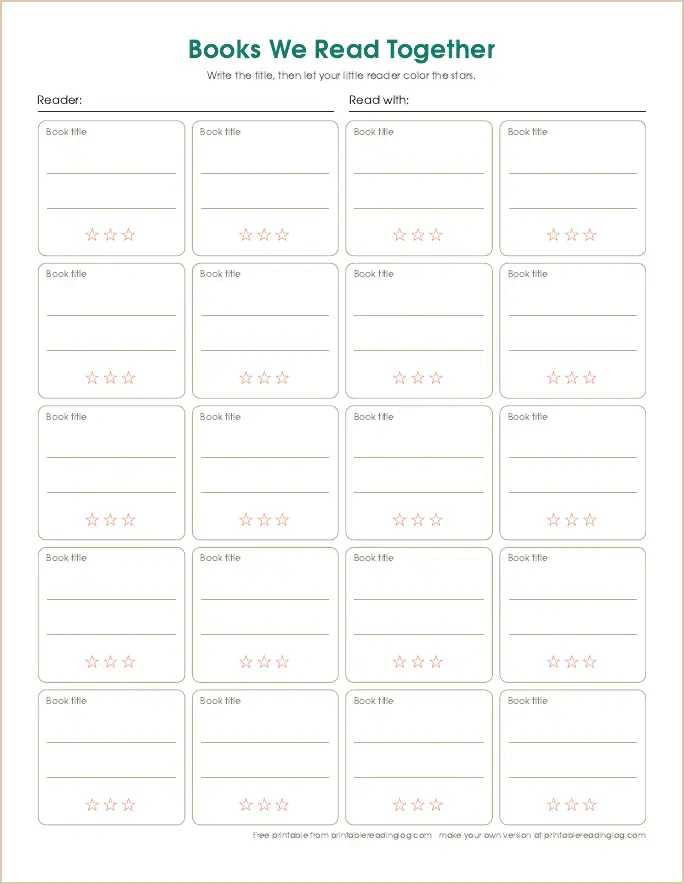
Picture Book Log
Twenty boxes for read-aloud picture books, each with a title line and three stars for little ones to color.
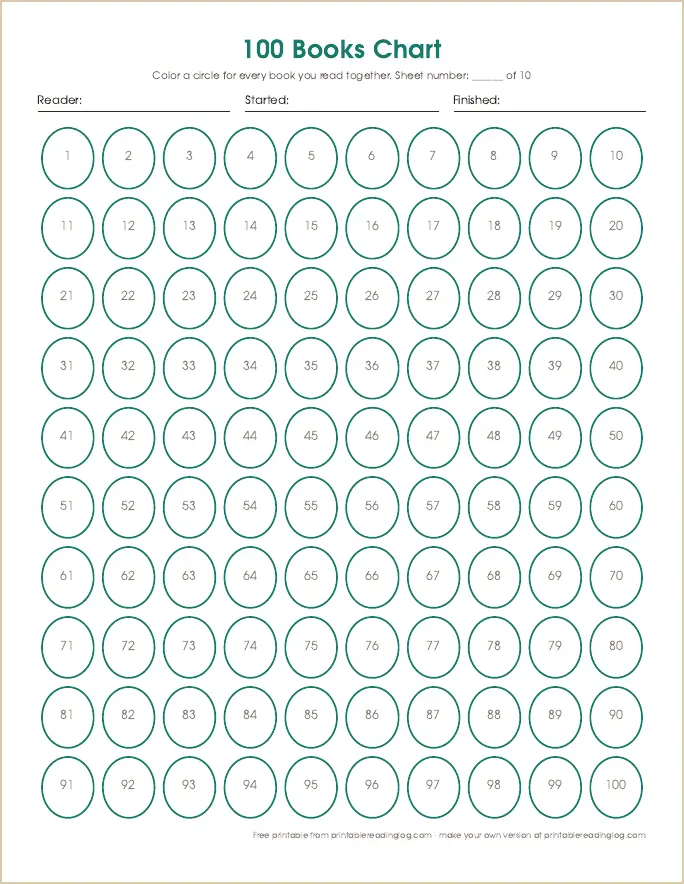
100 Books Chart
One hundred numbered circles to color, one per book; ten sheets make 1,000 books.
A wordy classic can lose five-year-olds by page four
Once your log is set up, the next job is filling it with books that fit the listeners in front of you. The biggest mistake in December is choosing a book because it's a famous Christmas title rather than because it fits the age. A beautiful, wordy classic can lose a room of five-year-olds by page four, and a toddler flap book will bore a third grader in seconds.
A good rule of thumb: little kids need repetition and something to do, like a chant to join, a flap to lift or a picture to hunt. Older kids need a problem to solve and a character who changes. If you're reading to a mixed group at home, pick for the youngest listener and let the older ones take a job, like turning pages or doing the voices.
The lists below come from classroom and family favorites, and every book is easy to find at most public libraries. If your library copy is a different edition or a board book version, use it; the story is the same. The order of the books matters much less than showing up with one most afternoons.
| Age | Read-aloud length | Three books to start with |
|---|---|---|
| Toddlers (1 to 3) | 2 to 5 minutes | That's Not My Reindeer..., Dear Santa, Little Blue Truck's Christmas |
| Kindergarten | 5 to 12 minutes | Gingerbread Baby, Bear Stays Up for Christmas, Santa Bruce |
| First grade | 8 to 15 minutes | Mr. Willowby's Christmas Tree, Stick Man, Red & Lulu |
| Second grade | 10 to 15 minutes | Jonathan Toomey, Too Many Tamales, Olive, the Other Reindeer |
| Third grade | 12 to 20 minutes | Auntie Claus, The Carpenter's Gift, The Best Christmas Pageant Ever |
| Gingerbread week | 5 to 10 minutes | The Gingerbread Boy, The Gingerbread Girl, The Runaway Tortilla |
Christmas board books for toddlers and preschoolers
For 1, 2 and 3 year olds, the best Christmas books are sturdy board books with something on every page to touch, lift or say. Expect to read the same one many nights in a row. It can feel repetitive to you, but repetition is how little ones learn words.
| Book | Author | Best age and why |
|---|---|---|
| That's Not My Reindeer... | Fiona Watt | 12 months and up: a fuzzy, bumpy or shiny patch on every page |
| Where Is Baby's Christmas Present? | Karen Katz | 12 months and up: big flaps to lift |
| Dear Santa | Rod Campbell | 18 months and up: a present behind every flap |
| Spot's First Christmas | Eric Hill | 18 months and up: simple peek-under flaps |
| Little Blue Truck's Christmas | Alice Schertle | 2 and up: beeps, rhyme and counting trees |
| Llama Llama Jingle Bells | Anna Dewdney | 2 and up: short and rhyming |
| Pick a Pine Tree | Patricia Toht | 2 and up: choosing and decorating a tree |
| Max's Christmas | Rosemary Wells | 2 and up: Max wants to see Santa, Ruby says no |
| Mouse's First Christmas | Lauren Thompson | 2 and up: soft, shiny and special things to find |
| Christmas in the Manger | Nola Buck | 2 and up: a short, peaceful nativity |
| Room for a Little One | Martin Waddell | 3 and up: animals make room for each other |
With toddlers, talking about the pictures counts as reading. Point and name things: "Look, a star! Where's the reindeer?" Let them hold the book and turn pages, even if you skip some. Make the sounds, from jingle bells to a truck's beep. If they wander off after three pages, nothing has gone wrong. Stop while it's still fun, and try again tomorrow. One or two books at bedtime is plenty at this age.
Board books also make sweet gifts from grandparents. Write the year and a short note inside the cover, and pair the book with a small matching toy, like a toy truck with Little Blue Truck's Christmas. For year-round tracking, the reading log for toddlers keeps things simple, and families counting toward a big number can add every Christmas book to their 1000 Books Before Kindergarten log.
Kindergarten favorites: short, funny and full of repetition
Five-year-olds love a story they can predict, a rhyme they can finish and a joke they get right away. Most of these read aloud in 5 to 12 minutes, which fits a December attention span nicely.
| Book | Author | Why it works at five |
|---|---|---|
| Gingerbread Baby | Jan Brett | A chant to join and peek-ahead borders |
| Gingerbread Friends | Jan Brett | A sweet follow-up for the next day |
| The Wild Christmas Reindeer | Jan Brett | Kindness works better than bossing |
| Bear Stays Up for Christmas | Karma Wilson | Rhymes kids can finish for you |
| Pete the Cat Saves Christmas | Eric Litwin | Upbeat, rhyming and helpful |
| Llama Llama Holiday Drama | Anna Dewdney | Waiting for Christmas is hard |
| Click, Clack, Ho! Ho! Ho! | Doreen Cronin | Farmer Brown's animals in a Christmas Eve mix-up |
| Santa Bruce | Ryan T. Higgins | A grumpy bear mistaken for Santa |
| Snowmen at Christmas | Caralyn Buehner | Hidden pictures on every page |
| Dream Snow | Eric Carle | See-through pages of falling snow |
| Merry Christmas, Big Hungry Bear! | Don and Audrey Wood | A little mouse learns to share |
| How to Catch an Elf | Adam Wallace | Silly traps, great before a building activity |
| The Jolly Christmas Postman | Janet and Allan Ahlberg | Little letters to pull from envelopes |
Save the longer classics, like How the Grinch Stole Christmas! by Dr. Seuss, The Polar Express by Chris Van Allsburg and an illustrated edition of The Night Before Christmas by Clement C. Moore, for a cozy afternoon when you have extra time. If some of your kids don't celebrate Christmas, mix in winter books everyone can enjoy, like The Snowy Day by Ezra Jack Keats or The Mitten by Jan Brett. For year-round picks at this age, see our list of read-aloud books for kindergarteners.
A 12-day kindergarten countdown you can copy
This order works for the last 12 school days before winter break or the 12 nights before Christmas at home. It starts light and silly and builds to the big classics. Each day has one small follow-up that takes five minutes or less.
| Day | Read-aloud | Quick follow-up |
|---|---|---|
| 1 | Gingerbread Baby | Retell it with a paper gingerbread puppet |
| 2 | Gingerbread Friends | How is it like yesterday's book? |
| 3 | Bear Stays Up for Christmas | Act out the friends keeping Bear awake |
| 4 | Llama Llama Holiday Drama | Draw something that helps you wait |
| 5 | Merry Christmas, Big Hungry Bear! | Predict what the mouse will do |
| 6 | Little Blue Truck's Christmas | Count the trees together |
| 7 | Olive, the Other Reindeer | A misheard-words sound game |
| 8 | Snowmen at Christmas | Hunt for the hidden pictures |
| 9 | How to Catch an Elf | Design an elf trap with blocks |
| 10 | Pete the Cat Saves Christmas | Share a time you helped someone |
| 11 | The Polar Express | Ring a bell: can you hear it? |
| 12 | How the Grinch Stole Christmas! | Draw a heart three sizes bigger |
Start in early December so you're not squeezing 12 books into five days. If a day gets eaten by a concert or a class party, just skip ahead. Nobody needs to make up a missed book. And if your group loves one, read it again. Kindergarteners adore a repeat, and the second time they notice things they missed.
First grade: stories with a problem to solve
First graders can handle longer stories, and they love spotting how a problem gets fixed. Most of these take 8 to 15 minutes. Mr. Willowby's Christmas Tree by Robert Barry is a standout: the top of a too-tall tree gets passed from the maid to the gardener to a bear, a fox and finally a family of mice, which makes it perfect for retelling in order.
Other first grade favorites include Stick Man by Julia Donaldson, where a surprise helper on Christmas Eve gets Stick Man home to his family tree, and Red & Lulu by Matt Tavares, about a cardinal who flies all the way to New York City to find his mate. For giggles, try How Do Dinosaurs Say Merry Christmas? by Jane Yolen, Merry Christmas, Splat by Rob Scotton, Mooseltoe by Margie Palatini and Fancy Nancy: Splendiferous Christmas by Jane O'Connor. For quieter days, Night Tree by Eve Bunting shows a family decorating a forest tree as a gift for the animals, and Mortimer's Christmas Manger by Karma Wilson follows a mouse who makes room for someone special. The Twelve Days of Christmas by Jan Brett and Madeline's Christmas by Ludwig Bemelmans round out a cozy classics day.
First graders can manage a written sentence or two after a book. Give them a starter: "If I rode the Polar Express, I would ask Santa for..." or "Dear Grinch, I'm glad you..." After Mr. Willowby's Christmas Tree, have them retell the tree top's trip using First, Next, Then and Last. Night Tree and Red & Lulu make a lovely pair, since both are about trees and animals. Many teachers save The Polar Express for the last day before break, with pajamas, cocoa and a bell rung at the very end.
Second grade: characters who change
Second graders are ready for real feelings and bigger story arcs. This is the year to talk about how and why a character changes from the first page to the last. Most picture books here take 10 to 15 minutes, and a few chapter books stretch across several days.
| Book | Author | Talk about |
|---|---|---|
| The Christmas Miracle of Jonathan Toomey | Susan Wojciechowski | How a grumpy woodcarver softens (preview it; it mentions his lost family) |
| Great Joy | Kate DiCamillo | Including someone who's alone |
| Christmas Day in the Morning | Pearl S. Buck | A gift that costs nothing |
| Silver Packages | Cynthia Rylant | Growing up and giving back |
| The Legend of the Poinsettia | Tomie dePaola | What makes a gift special |
| Olive, the Other Reindeer | J.otto Seibold and Vivian Walsh | Misheard words |
| How Santa Got His Job | Stephen Krensky | How each job taught a skill |
| Santa Calls | William Joyce | What a little sister really wished for |
| Too Many Tamales | Gary Soto | Telling the truth |
| Henry and Mudge in the Sparkle Days | Cynthia Rylant | An easy chapter book for one or two sittings |
| Nate the Great and the Crunchy Christmas | Marjorie Weinman Sharmat and Craig Sharmat | Following clues in a short mystery |
A simple character change chart works with almost any of these. Fold a page in half and label the sides "At the beginning" and "At the end." Jonathan Toomey, Teeka from The Wild Christmas Reindeer and the farm boy in Christmas Day in the Morning all fill it in beautifully. Second grade is also a great time for a tiny author study, since Tomie dePaola, Jan Brett and Cynthia Rylant each have more than one holiday book. Read two by the same author and ask what feels alike.
Third grade: longer stories and a December chapter book
Eight- and nine-year-olds are ready for more words on the page, a bit of history and stories that stay with them. The picture books here run 12 to 20 minutes. The Carpenter's Gift by David Rubel follows a boy and his dad selling Christmas trees in New York City during the Great Depression. An Orange for Frankie by Patricia Polacco is about a big farm family waiting for Pa to bring home oranges. The Christmas Coat by Virginia Driving Hawk Sneve is a true story of growing up on the Rosebud Reservation, and Christmas in the Big Woods by Laura Ingalls Wilder is ideal for a "then and now" chart.
For fun and a dash of the fantastic, third graders love Auntie Claus by Elise Primavera, Red Ranger Came Calling by Berkeley Breathed, Harvey Slumfenburger's Christmas Present by John Burningham, The Gingerbread Pirates by Kristin Kladstrup and Turkey Claus by Wendi Silvano. Christmas Tapestry by Patricia Polacco touches on World War II, so preview it first.
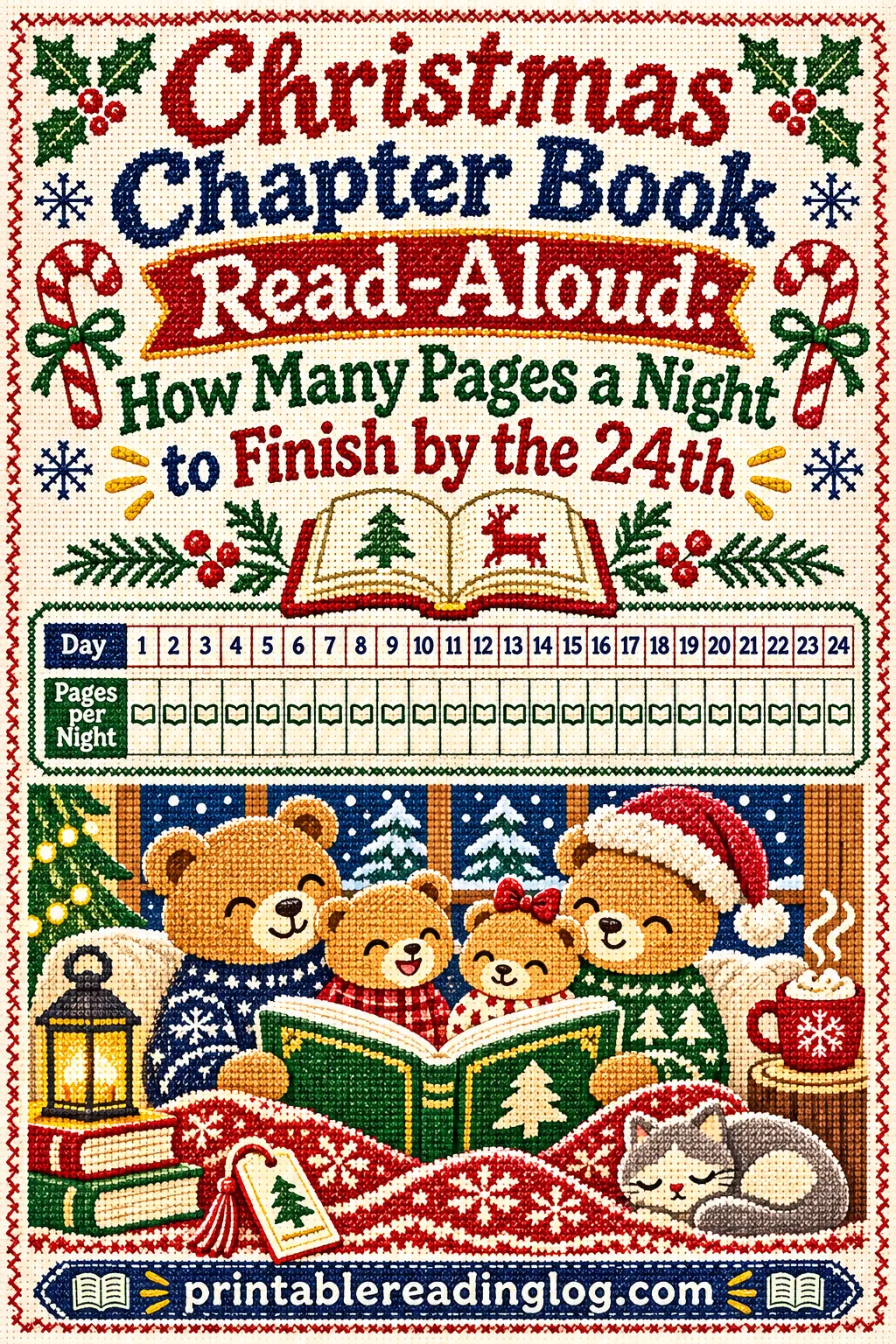
This is also the age for a December chapter book read a little each day. The Best Christmas Pageant Ever by Barbara Robinson is the classic pick: the six badly behaved Herdman kids take over the church pageant, and it's laugh-out-loud funny and surprisingly moving. It runs about 80 pages, so most classes finish it in one to two weeks at 10 to 15 minutes a day. Other good choices are Christmas in Camelot by Mary Pope Osborne, The Twenty-Four Days Before Christmas by Madeleine L'Engle and Junie B. Jones: Jingle Bells, Batman Smells! by Barbara Park. If you want to work out pages per day so you finish by the 24th, the Christmas chapter book read-aloud plan does the math.
A three-week rhythm works well for third grade. In week one, read Turkey Claus, Auntie Claus and The Gingerbread Pirates and start the pageant book. In week two, add Christmas in the Big Woods, The Carpenter's Gift and The Christmas Coat. In week three, finish with Red Ranger Came Calling, An Orange for Frankie and Harvey Slumfenburger's Christmas Present, and read the last pageant chapters together. Slide the weeks to fit your school's break dates.
Gingerbread week: compare the versions
Gingerbread stories work from preschool through second grade, and they're perfect for comparing versions. Read a classic first, because kids need to know the original before the twists are funny. The Gingerbread Boy by Paul Galdone and The Gingerbread Man by Jim Aylesworth both tell the traditional tale with a chant kids pick up by page two.
Then add the twists. The Gingerbread Girl by Lisa Campbell Ernst has a clever plan for the fox. The Gingerbread Cowboy by Janet Squires runs across ranch country. The Gingerbread Man Loose in the School by Laura Murray is a classroom favorite for the first day of a unit, and The Library Gingerbread Man by Dotti Enderle sneaks in how books are shelved. Gingerbread Mouse by Katy Bratun is a gentle, quieter choice. Runaway food stories are told in many places, too: The Runaway Tortilla by Eric A. Kimmel, The Musubi Man by Sandi Takayama, The Runaway Rice Cake by Ying Chang Compestine and Matzo Ball Boy by Lisa Shulman.
After each book, ask the same five questions and write the answers on chart paper: Who runs away? Where does it happen? Who chases it? What's the repeating line? How does it end? By the fourth book, kids are comparing story elements without noticing it's a lesson. On a reading log, the notes column becomes a one-line version of that chart. Pre-K kids can draw the ending, and second graders can write one "Same:" sentence and one "Different:" sentence. If you decorate cookies afterward, check for food allergies first, or use paper cookies and buttons instead.
Christmas around the world for older listeners
Second and third graders love a passport-style unit where each book "visits" a new country. The Legend of Old Befana by Tomie dePaola comes from Italy, Baboushka and the Three Kings by Ruth Robbins from Russia, and Who's That Knocking on Christmas Eve? by Jan Brett from far northern Norway. The Tomten by Astrid Lindgren visits a Swedish farm, The Yule Lads by Brian Pilkington introduces Iceland's 13 mischievous visitors, and Wombat Divine by Mem Fox is a reminder that Christmas in Australia comes in summer. Add Father Christmas by Raymond Briggs for England, The Baker's Dozen by Aaron Shepard for a Dutch St. Nicholas tale, and A Piñata in a Pine Tree by Pat Mora or The Night of Las Posadas by Tomie dePaola for Latino traditions.
Turn the log into a passport by writing the country in the notes column like a stamp after each book. Kids love comparing gift-bringers, too: Santa Claus and Father Christmas on the night of December 24, Sinterklaas on December 5, La Befana on the night of January 5 and the Three Kings on January 6. Keep it about curiosity, not "how other people do it." If some families don't celebrate Christmas, frame the unit as learning about the world and give those kids an equal part in every activity.
Keeping a wiggly room listening the week before break
December is a hard month to sit still. A few small habits keep kids listening at every age. Start with a 30-second picture walk: show the cover and ask, "What do you think will happen?" Pause for the repeated lines and let kids chime in. Ask one question, not ten. "How do you think Bear feels?" is plenty for a five-year-old, while a third grader can handle "What clues tell you when this story takes place?"
Use voices. A gruff Grinch and a squeaky mouse go a long way, and older kids can take a character each. Mix in snow, gingerbread and kindness stories so the whole month isn't Santa. And watch the room. If they're done, they're done. Close the book with a smile and finish tomorrow. Stopping early keeps read-aloud time something kids look forward to, which matters more than finishing a page count.
For any age, a few talk questions work with almost every book: What was the problem, and how was it solved? Who was your favorite character, and why? What happened first, next and last? What would you do if you were in this story? The reading log with questions has many more prompts if you'd like a new one each day.
Turning the December stack into a countdown page
A log turns your stack of December books into a countdown kids can see. In the reading log maker, start from whichever preset matches your listeners: the toddler setup for little ones, Picture books for kindergarten, or Kids or Classroom for first through third grade. Name it something like "12 Days of Christmas Read-Alouds" or "Room 4 December Books."
For toddlers and kindergarten, keep the columns to Date, Title and a smiley rating, set 12 rows, and turn on the coloring strip so kids have something to color after every book. For first and second grade, add the author and switch the rating to stars. Third graders can handle Date, Title, Author, a star rating and the Notes column for a one-line answer to a talk question. The goal tracker with 20 squares fits a two- or three-week classroom plan, with one square colored per book.
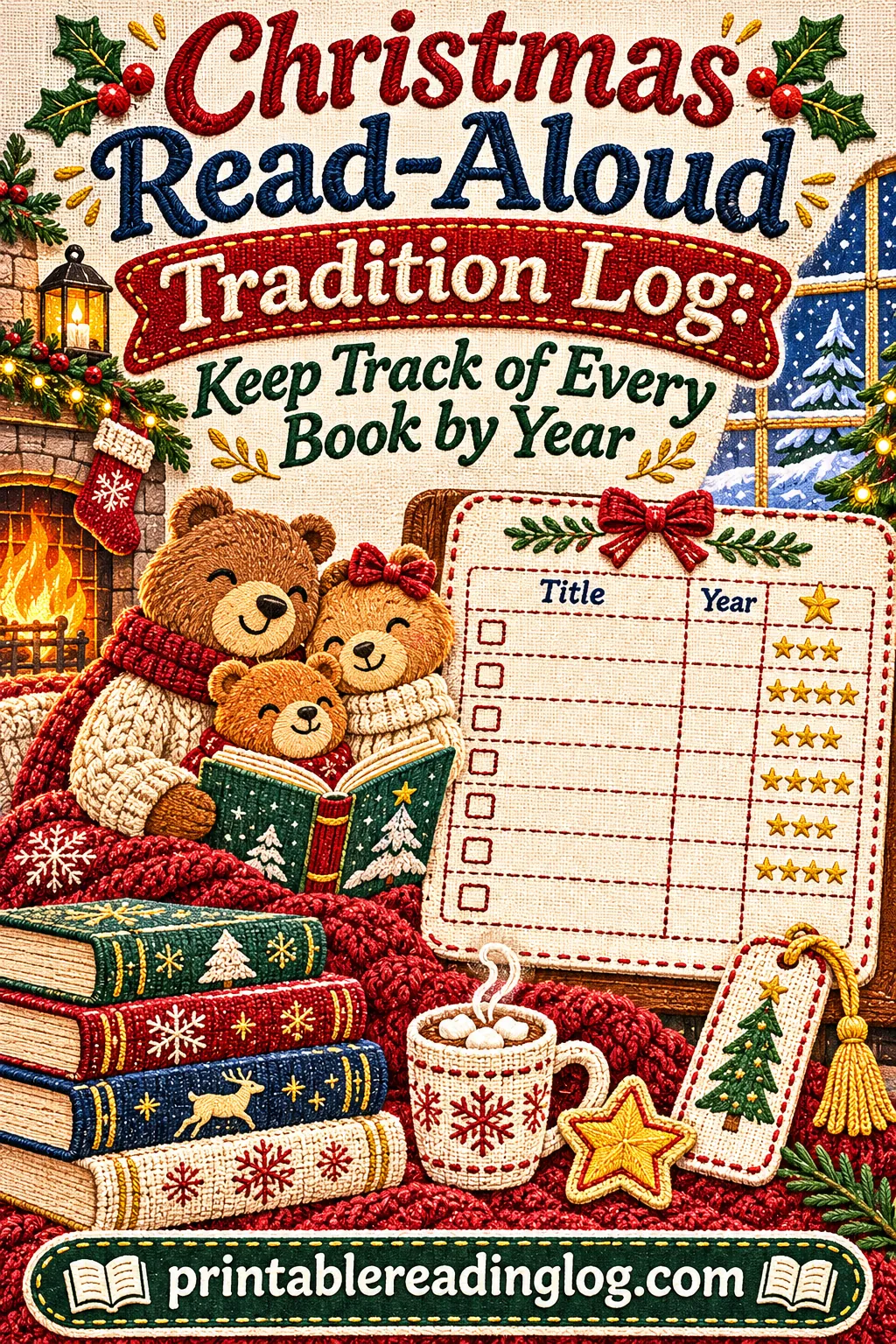
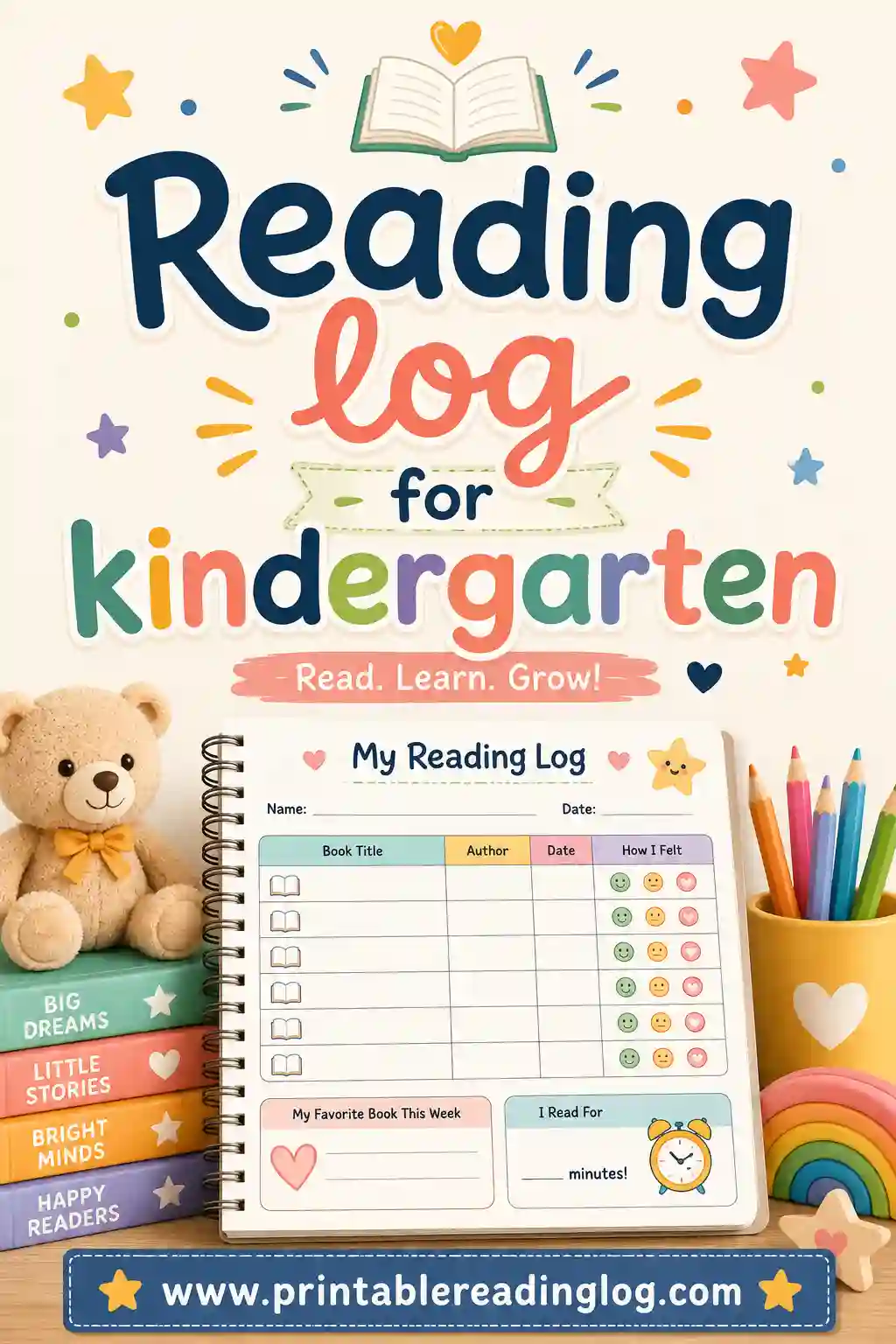
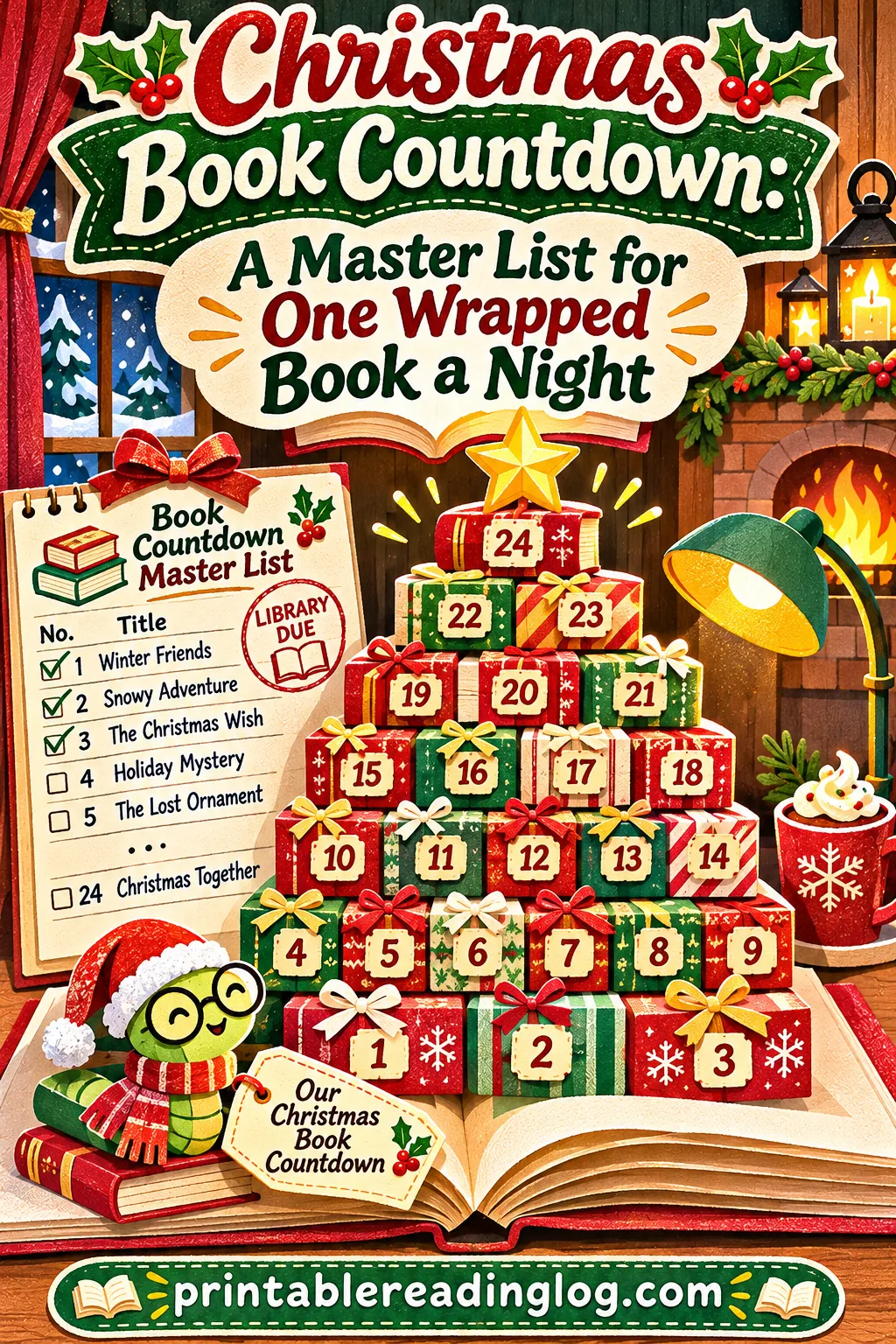
Pick a color theme like Classic or Sunshine, choose Letter or A4, and print one large copy for the reading rug or one per child to take home. At home, the finished page makes a sweet keepsake. The Christmas read-aloud tradition log keeps the same list year after year, the Christmas book countdown helps if you wrap a book for every night, and the picture book log works well for the rest of the year. If your kindergartener brings home a log over break, the reading log for kindergarten has simple setups.
Once school lets out, keep the reading going. The winter break reading challenge adds a little fun for the days off, and a first- and second-grade log or the sheet built for grades 3 through 5 can take over in January. Grown-ups who want their own cozy stack can browse Christmas books for adults. Then pull the first book off the pile, tape the page somewhere the kids can reach with a crayon, and let the countdown begin.
When December story time goes sideways
Even a good plan hits a few bumps in the last weeks before break. These are the ones that come up most often, with what tends to help.
A sad moment upsets a child
The Christmas Miracle of Jonathan Toomey and Christmas Tapestry both touch on loss, and a child who has had a hard year may react more strongly than you expect. Preview these the night before, and if a child gets upset, pause and say something simple: "That part is sad. Jonathan feels lonely, and the story is about how that changes." Finish later if you need to, and save these books for a day when the group feels settled rather than the afternoon of a class party.
Siblings at home want different books
A five-year-old wants Pete the Cat Saves Christmas and a third grader wants another chapter of The Best Christmas Pageant Ever. Read the short one first while everyone is fresh, then let the younger child color the log while the older one hears the chapter. Both books get a row, and nobody has to sit through something that doesn't fit them.
A concert, a party and a snow day land in one week
Drop the follow-up activities that week and keep only the story. Five minutes of Snowmen at Christmas in the hallway before dismissal still counts. If you lose three days, choose the books you most want to keep and quietly move the others to next December's list.
A child already knows the book by heart
Give them a job instead of a spoiler warning. They can lead the repeated line in Gingerbread Baby, hold up the book for the picture hunt in Snowmen at Christmas or watch for the moment the Grinch's heart grows. Kids who know a story often enjoy it more the second time, especially with a role to play.
The chapter book falls behind
If the pageant book is only halfway through with a week to go, lengthen two of the sessions rather than rushing every day, and drop one picture book from the plan. Finishing the last pages together before break matters more than keeping every title on the list.
What teachers and parents ask about December story time
What are the best Christmas read-alouds for kindergarten?
Great picks include Gingerbread Baby by Jan Brett, Bear Stays Up for Christmas by Karma Wilson, Pete the Cat Saves Christmas by Eric Litwin, Santa Bruce by Ryan T. Higgins and Llama Llama Holiday Drama by Anna Dewdney. They're short, funny and full of lines kids can say with you.
What are good Christmas books for toddlers?
Look for sturdy board books with touch patches, flaps or rhyme. That's Not My Reindeer... by Fiona Watt, Dear Santa by Rod Campbell, Where Is Baby's Christmas Present? by Karen Katz and Little Blue Truck's Christmas by Alice Schertle are all toddler favorites.
What Christmas books work for first and second grade?
First graders love Mr. Willowby's Christmas Tree, Stick Man and Red & Lulu. Second graders are ready for The Christmas Miracle of Jonathan Toomey, Great Joy, Too Many Tamales and How Santa Got His Job, which give you more to talk about.
What is a good Christmas chapter book for third grade?
The Best Christmas Pageant Ever by Barbara Robinson is the classic choice. It's about 80 pages, so a class can finish it in one to two weeks reading 10 to 15 minutes a day.
Is The Polar Express good for kindergarten?
Yes. It's a calm, dreamlike read that kindergarteners love, though it's a bit longer than most picture books on the list. Save it for a day with extra time and pair it with a jingle bell.
How do I run a gingerbread read-aloud week?
Read a classic version first, then add twists like The Gingerbread Girl and The Gingerbread Cowboy. After each book, fill in who runs away, where, who chases it, the repeating line and the ending, then compare.
What if some kids don't celebrate Christmas?
Mix in winter books like The Snowy Day and The Mitten, and frame around-the-world books as learning about traditions. Give every child an equal part in the activities, whatever their family celebrates.
How many Christmas books should I read before winter break?
One a day for the last two or three weeks of school is a calm rhythm, about 10 to 15 books. Track them on a simple log and celebrate when it's full.