Picture Book Log: Free Printable for Little Readers
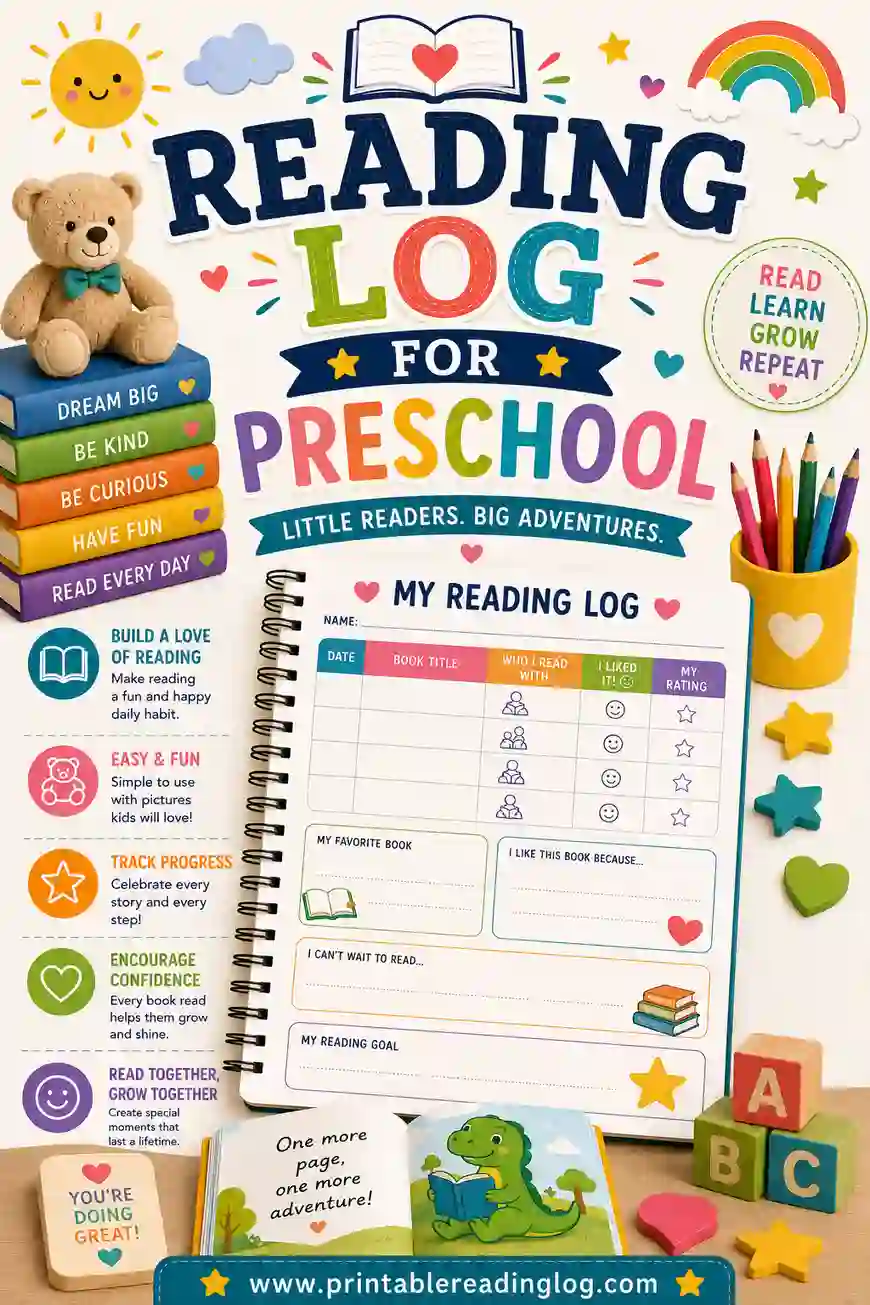
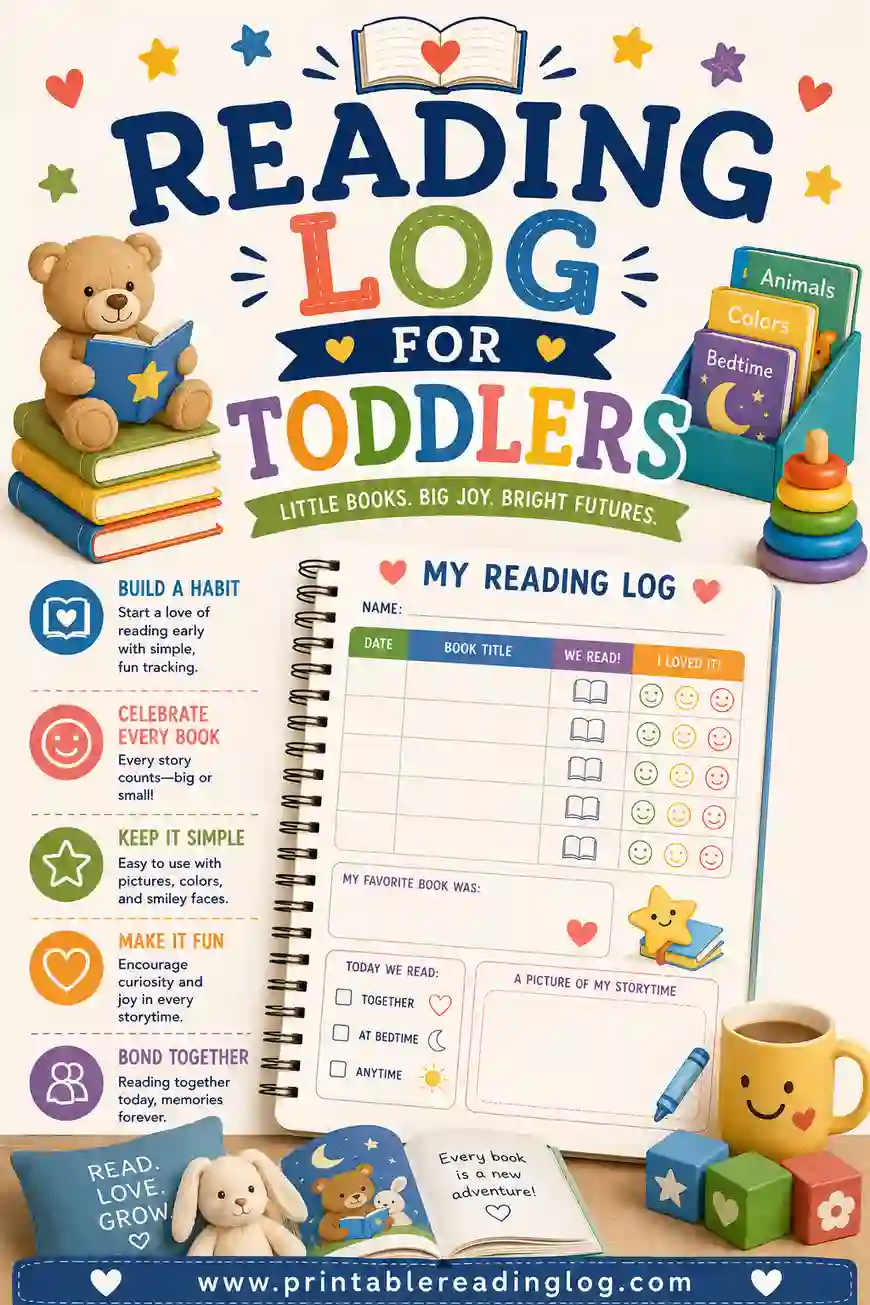
A picture book log is a simple printable where you track the picture books a young child reads or hears, usually with the title, the date, and a smiley-face rating instead of words. It's made for babies, toddlers, and early readers who aren't reading on their own yet, so it leans on pictures and one-tap marks rather than writing. The quickest way to make one is a free reading log generator that prints a clean, kid-friendly grid.
Want to get started? Open the free tool, pick the little-kid style, and print a log your child can help fill in with stickers or smiley faces. No sign-up, no fee, nothing to install.
What Is a Picture Book Log?
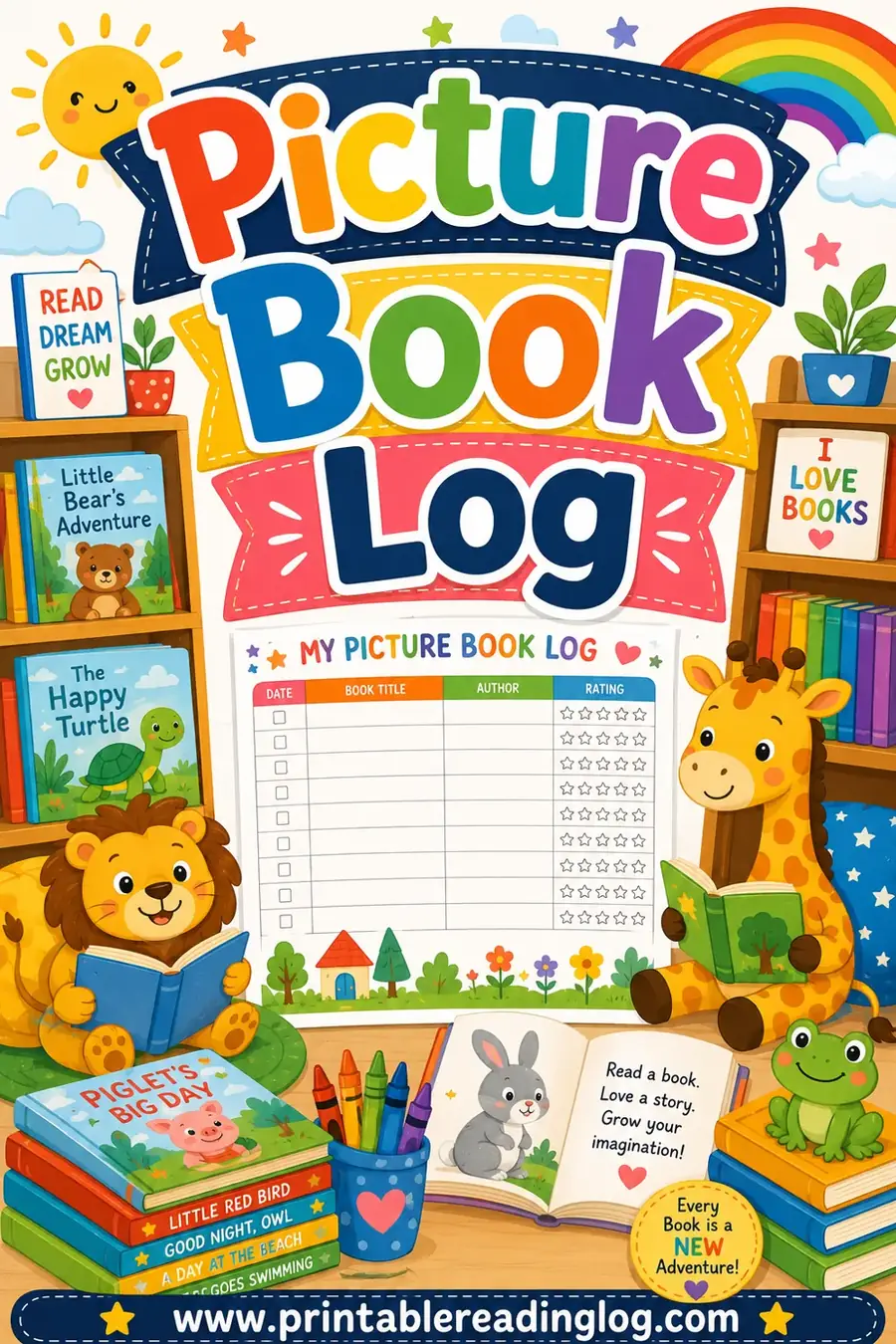
It's a reading log built for the youngest readers. Picture books get read fast — often in one sitting, often again and again — and many of the readers aren't writing yet. So a picture book log strips things down to what a small child can actually do.
Instead of summaries and page counts, you get:
- A row per book, with room for the title.
- A box to color, a sticker to add, or a smiley to circle.
- Maybe a spot for the date, filled in by a grown-up.
The point isn't data. It's the ritual. A toddler placing a sticker after storytime builds a positive link between books and "I did it!" That feeling is the foundation of a lifelong reading habit.
Why Even Log Picture Books?
It can feel silly to log a book you finished in four minutes. But there are real reasons to do it, especially for the read-aloud years.
- It builds the habit early. Logging becomes a happy part of storytime, so by the time real reading starts, the routine is already there.
- It celebrates repeats. Little kids love rereading. A log lets that favorite book earn a mark every single time, which kids adore.
- It tracks read-aloud minutes. Many libraries and "1,000 Books Before Kindergarten" programs ask you to count books read aloud. A log makes that easy.
- It's a keepsake. Years later, a filled-in picture book log is a sweet record of the stories you shared.
What to Put on a Picture Book Log
Less is more here. A cluttered sheet overwhelms both the child and the grown-up doing storytime at 8 p.m. Stick to the basics:
- Title — short is fine; "Brown Bear" beats the full title.
- Date — a grown-up fills this in, or skip it entirely.
- A mark — a sticker spot, a smiley to circle, or a star to color.
- Who read it (optional) — Mom, Dad, Grandma, the kid "reading" the pictures.
A sample picture book log
Here's what a few days of storytime might look like. Notice the same book showing up twice — that's normal and worth celebrating.
| Date | Book | Rating |
|---|---|---|
| Mon | Brown Bear, Brown Bear | 😍 |
| Mon | The Very Hungry Caterpillar | 🙂 |
| Tue | Goodnight Moon | 😍 |
| Wed | Brown Bear, Brown Bear | 😍 |
Four rows, three days, one very loved bear. A young child can "read" this log themselves just by looking at the faces.
Great Picture Books to Start Your Log
Stuck on what to read? These classics are read-aloud favorites for a reason — bold pictures, gentle rhythm, and endings little ones ask for again and again.
| Book | Best for | Why it works |
|---|---|---|
| Goodnight Moon | Babies & toddlers | Soft, sleepy, perfect for bedtime |
| Brown Bear, Brown Bear | Toddlers | Repetition kids can chant along to |
| The Very Hungry Caterpillar | Toddlers & preschool | Counting, colors, a happy ending |
| Press Here | Preschool | Interactive, giggly, no screens needed |
| Where the Wild Things Are | Preschool & up | Big feelings, gorgeous art |
Mix old favorites with new finds from the library. Every book you read together is a row worth filling in.
How to Make a Picture Book Log in Four Steps
It takes just a few minutes, and you'll have a log ready for tonight's storytime.
- Open the reading log generator. Choose the little-kid style.
- Pick a "by books" layout. This counts whole picture books, which is what you want at this age.
- Set your range. A page that holds 20 to 100 books is great for library programs; a weekly page suits a simple home routine.
- Print. Tape it to the fridge or slip it in a folder near the reading nook.
Hand your child a sheet of stickers and let them be in charge of marking each book. That little bit of ownership turns logging into a treat they look forward to.
Using a Picture Book Log for the "1,000 Books" Challenge
Lots of libraries run a "1,000 Books Before Kindergarten" program, and a picture book log is the perfect companion. The idea is simple: read 1,000 books aloud to your child before they start school. It sounds huge, but it's just a couple of books a day over a few years.
A few tips for the challenge:
- Count repeats. Reading the same book ten times counts as ten books. That's the rule, and it's a relief.
- Mark milestones. Color in a special box at 100, 250, 500, and so on.
- Spread the love. Let grandparents, siblings, and babysitters add to the count.
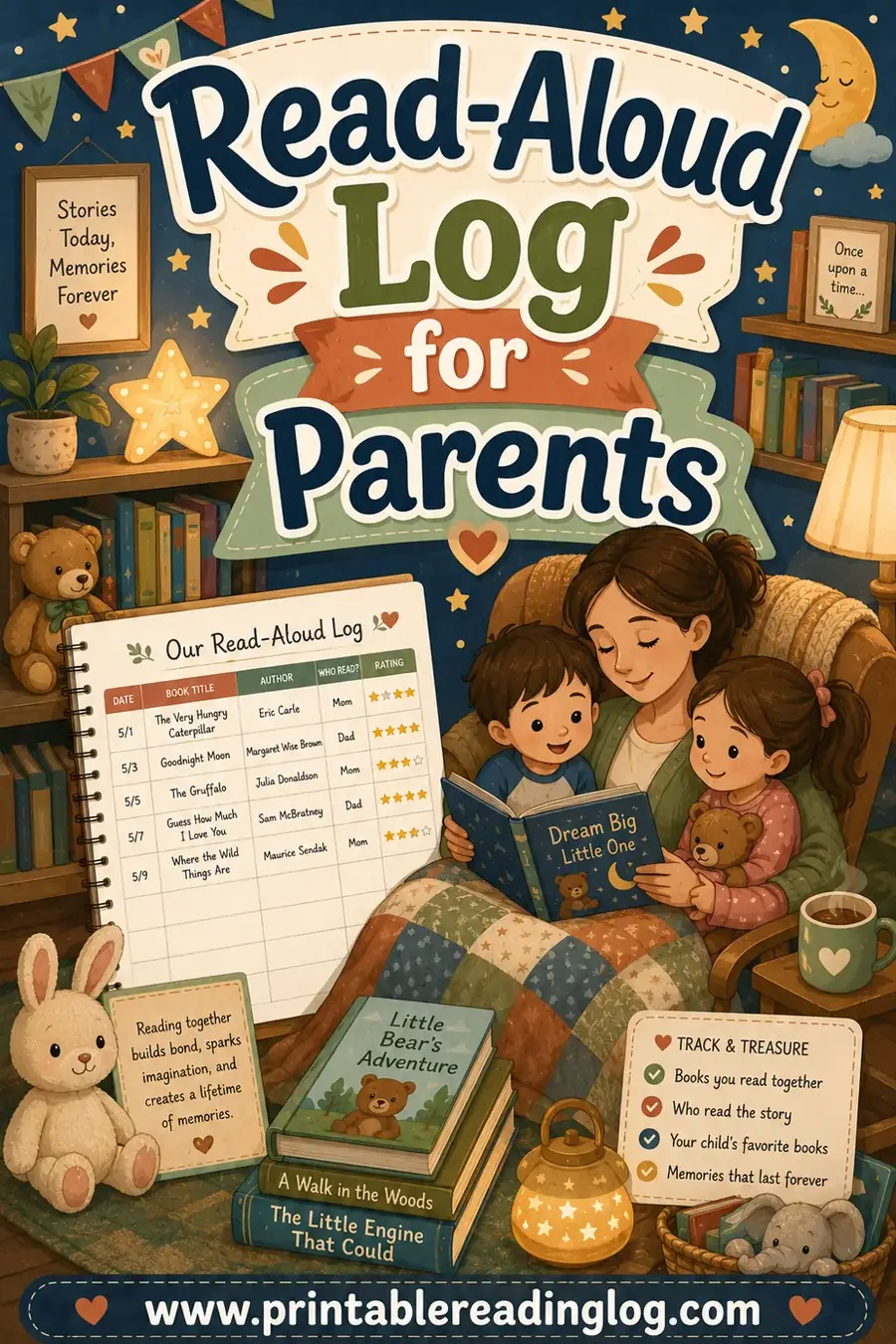
If you read aloud a lot, you'll fly through it. Pair the log with a read-aloud log for parents to track who's reading and how often.
Tips to Make Logging Fun for Little Ones
Keep it joyful and it'll stick. A few ideas:
- Use stickers, not pens. Toddlers love stickers more than almost anything. Make that the reward.
- Let them "read" to you. A child narrating the pictures counts as reading. Log it proudly.
- Reread without guilt. If they want the same book five nights running, that's great for their brain. Log every read.
- Keep it by the bed. A log you have to hunt for is a log that goes unused. Keep it where storytime happens.
- Celebrate full pages. When a sheet fills up, make a small fuss. Then start a fresh one together.
Moving On From Picture Books
At some point your reader will start sounding out words and reaching for early chapter books. That's the moment to graduate to a different log.
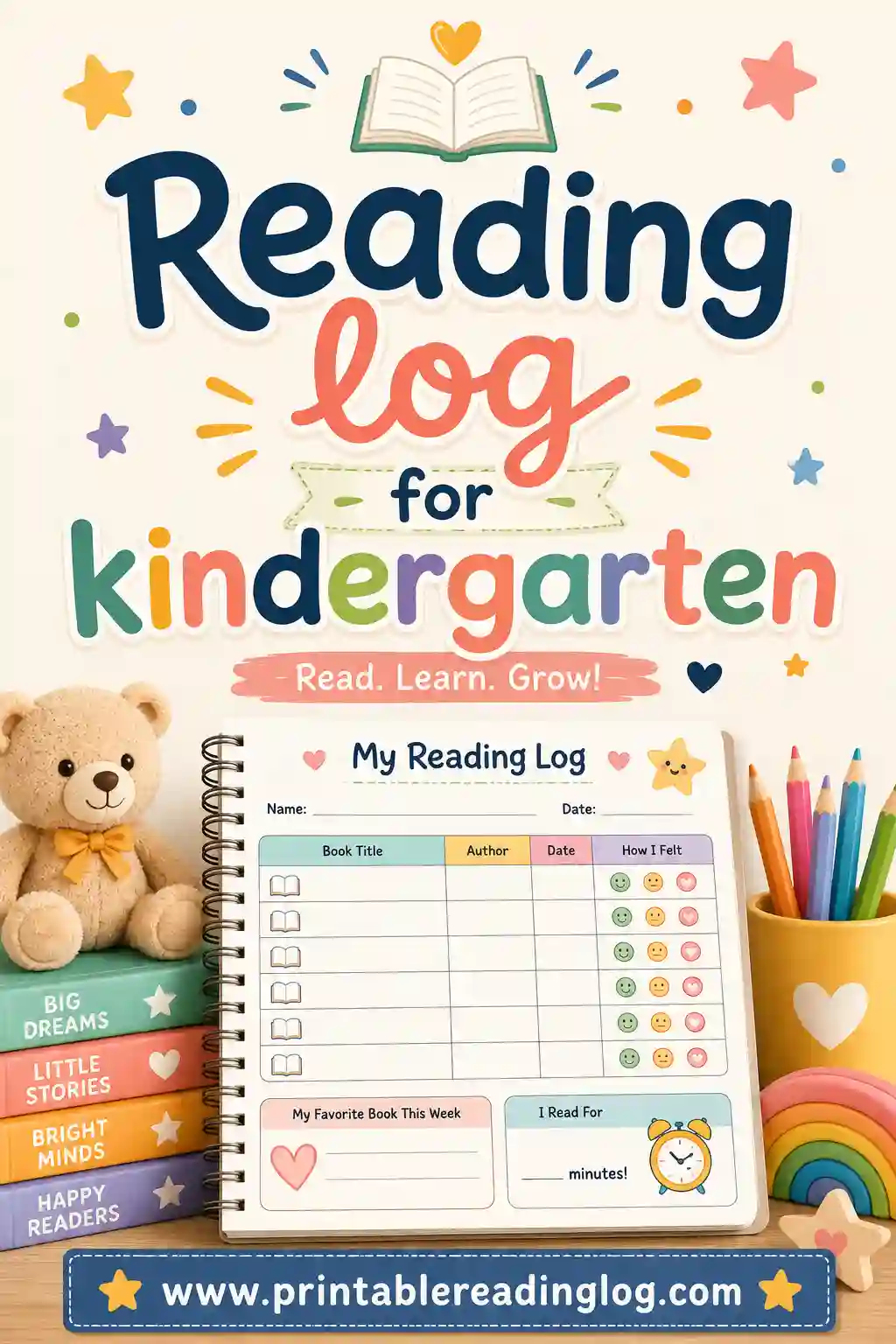
Watch for the signs: longer attention spans, a wish to read "by myself," and books with more text per page. When you spot them, switch to a chapter book log or a grade-level log so the sheet matches the reading. For now, though, the picture book log is exactly right — and there's no rush to leave it behind.
Building a Storytime Routine Around the Log
A picture book log works best when it's tied to a routine, not floating on its own. Little kids thrive on predictable patterns, and reading is the perfect one to build.
The classic spot is bedtime. Bath, pajamas, two or three picture books, then a sticker on the log before lights-out. The log becomes the satisfying little finish line of the day. But bedtime isn't the only option:
- Morning snuggle. A book or two with breakfast or before getting dressed sets a calm tone for the day.
- After-nap wind-up. A story helps a groggy toddler ease back into the afternoon.
- Library day. Make a weekly trip and log the new finds the same evening. The fresh stack keeps things exciting.
Whatever rhythm you pick, the magic is consistency. A child who knows "we always read before bed, and then I get my sticker" will start asking for it. That request — for books — is the whole goal, and the log gently reinforces it night after night.
How a Picture Book Log Builds Early Literacy
It might look like just stickers and smiley faces, but a picture book log quietly supports real reading skills. The act of returning to books day after day does a lot of heavy lifting.
Reading aloud builds vocabulary far beyond everyday conversation — picture books use richer, more varied words than we tend to speak. Pointing at the title as you write it on the log shows a child that those squiggles carry meaning, an early step toward reading itself. And the repetition that the log so happily tracks? That's how toddlers learn story structure, anticipate what comes next, and eventually "read" a beloved book back to you from memory.
None of this feels like teaching, which is the point. Your child just thinks you're sharing fun stories and collecting stickers. The literacy growth comes along for the ride.
Common Mistakes to Avoid
A picture book log is hard to get wrong, but a few habits can drain the fun.
- Adding too many columns. Summaries and ratings out of ten don't fit this age. Keep it to a title and a mark.
- Not counting rereads. Refusing to log a repeat book frustrates kids and undersells real reading practice.
- Making it the grown-up's job alone. Let the child place the sticker. Ownership keeps them invested.
- Forgetting it exists. A log in a drawer does nothing. Keep it visible and use it nightly.
Frequently Asked Questions
What goes on a picture book log for a child who can't write?
Just the book title, written by a grown-up, plus a sticker spot or a smiley face the child can circle. Skip summaries and page counts entirely. The whole point is a quick, fun mark your little one can make themselves.
Should I count rereads on a picture book log?
Yes, absolutely. Rereading is how young children build vocabulary and comprehension, and most library challenges like "1,000 Books Before Kindergarten" count every read. Log a favorite book every single time it's read.
Is a picture book log different from a reading log?
It's a simpler version aimed at pre-readers. Instead of minutes, pages, and summaries, it uses titles and stickers or smiley faces. The reading log tool has a little-kid style that strips things down for exactly this age.
What age is a picture book log for?
Roughly from babyhood through kindergarten — any child who's mainly hearing picture books read aloud rather than reading chapter books alone. Once they start independent reading, you can move to a chapter book log instead.
How many books should I aim to read each day?
Even one or two picture books a day adds up fast and supports early literacy. If you're doing a "1,000 Books" challenge, three or four a day will get you there comfortably before kindergarten. Quality time matters more than hitting a number.
Can I print a picture book log for free?
Yes. You make and print it yourself at no cost, with no sign-up and no watermark. Print a weekly sheet or a big 100-book challenge page in one go.
Ready to Start a Picture Book Log?
A picture book log turns storytime into a little celebration your child can see and touch — one sticker, one smiley, one beloved book at a time. Open the free reading log generator, pick the little-kid style, and print your log in minutes. It's free, there's no sign-up, and you'll end up with a sweet record of every story you shared. Happy reading, and enjoy these picture-book years while they last.