Reading Log for Family Reading: A Free Printable Tracker
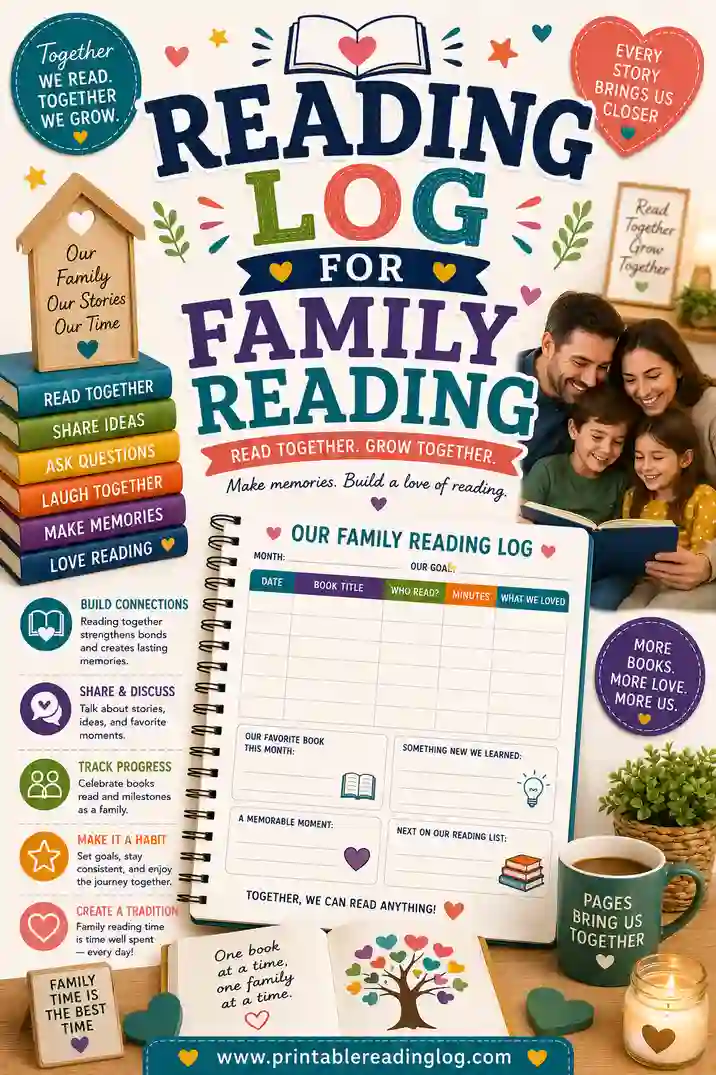
A reading log for family reading is one shared sheet where everyone in the house records what they read, from the toddler's picture books to the grown-ups' novels. It turns reading into something you do together instead of a chore each person tracks alone. The easiest way to make one is to use a free reading log maker that builds a printable family log you can stick on the fridge.
Want to jump right in? Open the free tool, add a row or column for each family member, choose whether you're tracking books or minutes, and print. No sign-up, no cost, nothing to download.
What Makes a Family Reading Log Different
A family log isn't five separate logs stapled together. The magic is that everyone's reading sits side by side on one sheet, so reading becomes a shared family thing you can see and celebrate.
That changes the design. Instead of one person and a long list of books, you've got several readers and a way to compare nights, weeks, or totals. The best family logs do a few things well:
- One sheet, everyone on it. Each family member gets a row or a column.
- A flexible unit. A four-year-old and a forty-year-old can't track the same way, so the log usually counts nights read or minutes, not pages.
- A shared goal. Something the whole family is working toward together, like "read every night this week."
- Room to celebrate. A spot for stars, stickers, or a check when the family hits its goal.
When reading is visible and shared, kids stop seeing it as homework and start seeing it as part of how their family spends time. That's the whole reason to keep a log at all.
Why Keep a Family Reading Log
Tracking family reading might sound like extra work, but a simple log pays you back fast. Here's what it actually does.
- It builds a nightly habit. A blank box waiting to be checked is a gentle nudge. Families read more when there's a sheet on the fridge.
- It pulls everyone in. When the toddler sees a parent logging their own book, reading stops being a "kid thing." Everyone's a reader.
- It creates small celebrations. Hitting a weekly goal becomes a moment: a movie night, a special dessert, a sticker for everyone.
- It keeps a keepsake. Years later, a stack of these logs is a sweet record of the books your family grew up on.
You don't need to track every page. The point isn't data. It's the habit and the togetherness.
Pick a Format That Fits Your Family
Families come in all shapes, so the log should bend to fit yours. Here are the common formats and who they suit.
| Format | Best for | How it works |
|---|---|---|
| Nights read | Young families, daily habit | Check a box for each night you read together |
| Minutes | Mixed ages, stamina goals | Log minutes per person or per night |
| Books finished | Older kids and adults | Each person lists titles they complete |
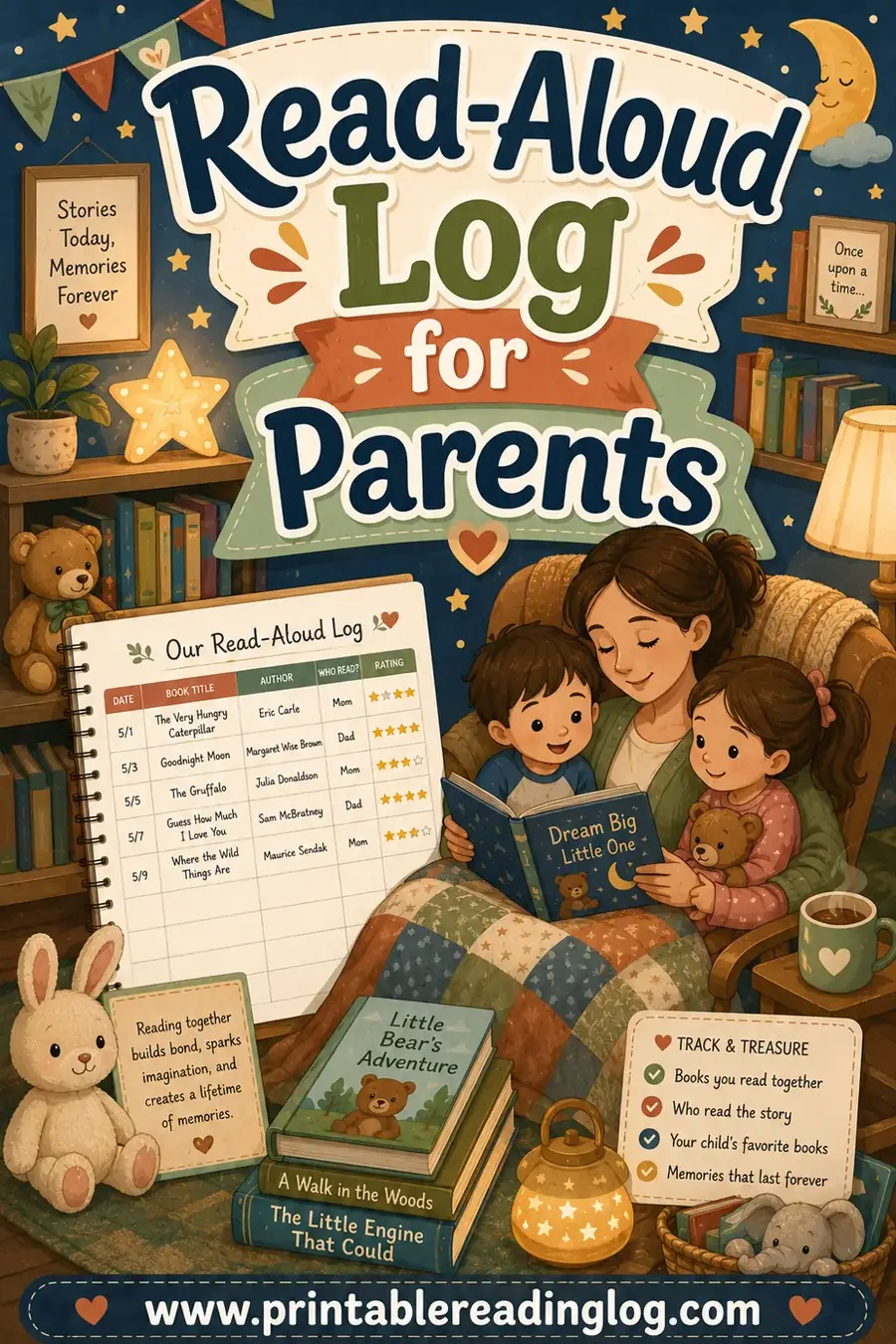
| Read-aloud log | Parents reading to little ones | Track the book and who read it |
| Shared challenge | Whole-family goals | Everyone works toward one total |
If most of your reading is a grown-up reading to little ones, a dedicated read-aloud log for parents might fit better. For families with independent readers of different ages, a minutes or books log keeps everyone on the same page.
A sample family reading log
Here's what a week might look like once it's filled in, so you can picture the finished sheet:
| Reader | Mon | Tue | Wed | Thu | Fri | Book this week |
|---|---|---|---|---|---|---|
| Mia (4) | ✔ | ✔ | ✔ | ✔ | ✔ | The Gruffalo |
| Jack (8) | ✔ | ✔ | ✔ | ✔ | Dog Man | |
| Mom | ✔ | ✔ | ✔ | ✔ | A mystery novel | |
| Dad | ✔ | ✔ | ✔ | ✔ | A history book |
One glance tells the whole story: almost everyone read most nights, and the family is close to its goal. That visible progress is what keeps kids excited to fill in tomorrow's box.
How to Make a Family Reading Log in 4 Steps
It takes about five minutes to set up, and then you're done for the month.
- List your readers. Add a row or column for each family member, including the grown-ups. Everyone counts.
- Pick your unit. Nights read is the simplest for mixed ages. Minutes or books work if your kids are older.
- Set your goal. Decide on something to aim for, like "everyone reads five nights this week," and leave a spot to mark it.
- Print and post it. Stick it on the fridge or a family bulletin board where everyone walks past it daily.
Print a few weeks at once so the habit doesn't stall when one sheet fills up.
Making Family Reading Time Stick
The log is the easy part. Keeping the habit alive is where families win or fizzle. A few small moves make all the difference.
Read at the same time every day
Habits love a trigger. Tie reading to something you already do, like right after dinner or just before bed. When reading time is automatic, nobody has to nag.
Let everyone pick their own book
Choice is fuel. A picky reader who hates the assigned book will happily read one they chose. The log doesn't care what anyone reads, only that they read, so let preferences run wild.
Make the grown-ups visible
Kids copy what they see. When a parent fills in their own row with a real grown-up book, it sends a quiet message: reading isn't something you outgrow. Keep an adult reading log going right alongside the kids'.
Tie the goal to a reward
When the family hits its weekly goal, do something small together. A pizza night, an extra story, picking the weekend movie. The reward doesn't need to be big. It just needs to mark the win.
Ideas for Family Reading Challenges
Once the basic log is humming, a challenge keeps things fresh. Try one of these.
- Read-every-night week. The whole family aims for seven nights straight. Mark each one and celebrate Sunday.
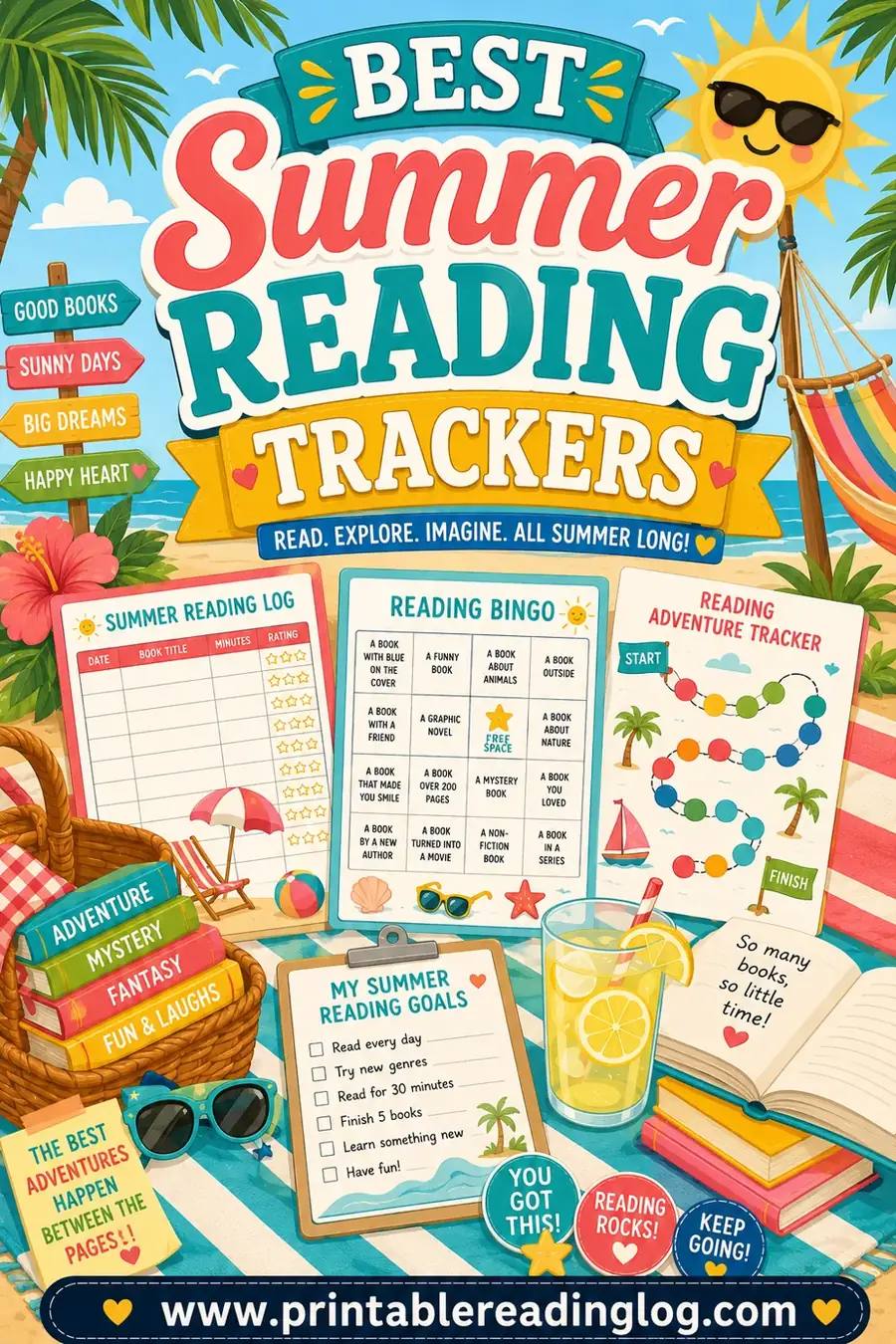
- Book bingo. Fill squares with categories like "a funny book," "a book about animals," "a book older than you." Great for summer reading.
- Family read-aloud. Pick one chapter book and read a bit together each night. Everyone logs the same book.
- Beat last month. Add up this month's nights or books and try to top it next month. A friendly family-wide goal.
Keep challenges short and low-stakes. The aim is more reading and more laughing, not pressure.
Handling Different Schedules and Ages
Real families are messy. Kids have practice, parents work late, and bedtimes drift. A family reading log has to survive all of that, or it ends up abandoned in a drawer. The fix is to build flexibility right into how you use it.
First, don't demand the whole family read at the exact same moment. That's a nice ideal, but it rarely survives a real week. Instead, agree on a daily reading window, say between dinner and bedtime, and let each person fit their reading in somewhere inside it. The log tracks that everyone read that day, not that they read shoulder to shoulder.
Second, separate the "together" reading from the "solo" reading. A read-aloud with a four-year-old is one kind of reading. A teen quietly finishing a novel in their room is another. Both count. Give them both a spot on the sheet so nobody feels like their reading doesn't matter.
Third, build in catch-up grace. Miss a night? No guilt, no makeups, no broken streak drama. The log is a record of a habit, not a court of law. A family that treats a missed box as no big deal keeps going for months. A family that treats it as failure quits by week two.
When one kid resists
There's almost always one reader who drags their feet. Don't fight it on the log. Instead, lower the bar for that kid, maybe comics count, maybe ten minutes is a full win, and celebrate their small boxes just as loudly as everyone else's. Seeing their row fill up next to their siblings' is often the nudge that flips a reluctant reader into a willing one.
Frequently Asked Questions
What should a family reading log include?
A spot for each family member, a simple way to mark reading (nights, minutes, or books), and a shared goal with room to celebrate. Keep it visual and easy so even the youngest reader can see their progress and want to add to it.
How do you track reading for kids of different ages?
Use a unit that works for everyone, like nights read or minutes, instead of pages. A toddler and a teen can both "read tonight" and check the same kind of box, which keeps the whole family on one comparable sheet.
How do I get my whole family to read more?
Set a daily reading time tied to a routine, let everyone choose their own books, and make sure the grown-ups read visibly too. Then track it on a shared log on the fridge and reward the family when you hit a weekly goal.
Should adults be on the family reading log?
Yes. When kids see parents logging their own books, reading stops feeling like a kid-only task. It models the habit and turns the log into a true family project rather than a homework chart.
Is the family reading log free to print?
It is. You build and print it yourself at no cost, with no sign-up and no watermark. Print a fresh sheet whenever the old one fills up, all completely free.
How long should family reading time be?
Start small, around 15 to 20 minutes a night, and let it grow naturally. Consistency beats length. Reading a little every day builds a stronger habit than one long session a week.
Ready to Build Your Family Reading Log?
Add your readers, pick your goal, open the free reading log maker, and you'll have a printable family log ready for the fridge in minutes. It's free, there's no sign-up, and you can shape it to fit every reader in your house, from picture books to novels. Print it, post it, and start checking off those boxes together tonight.