Newbery and Caldecott Challenge Checklist (Printable)
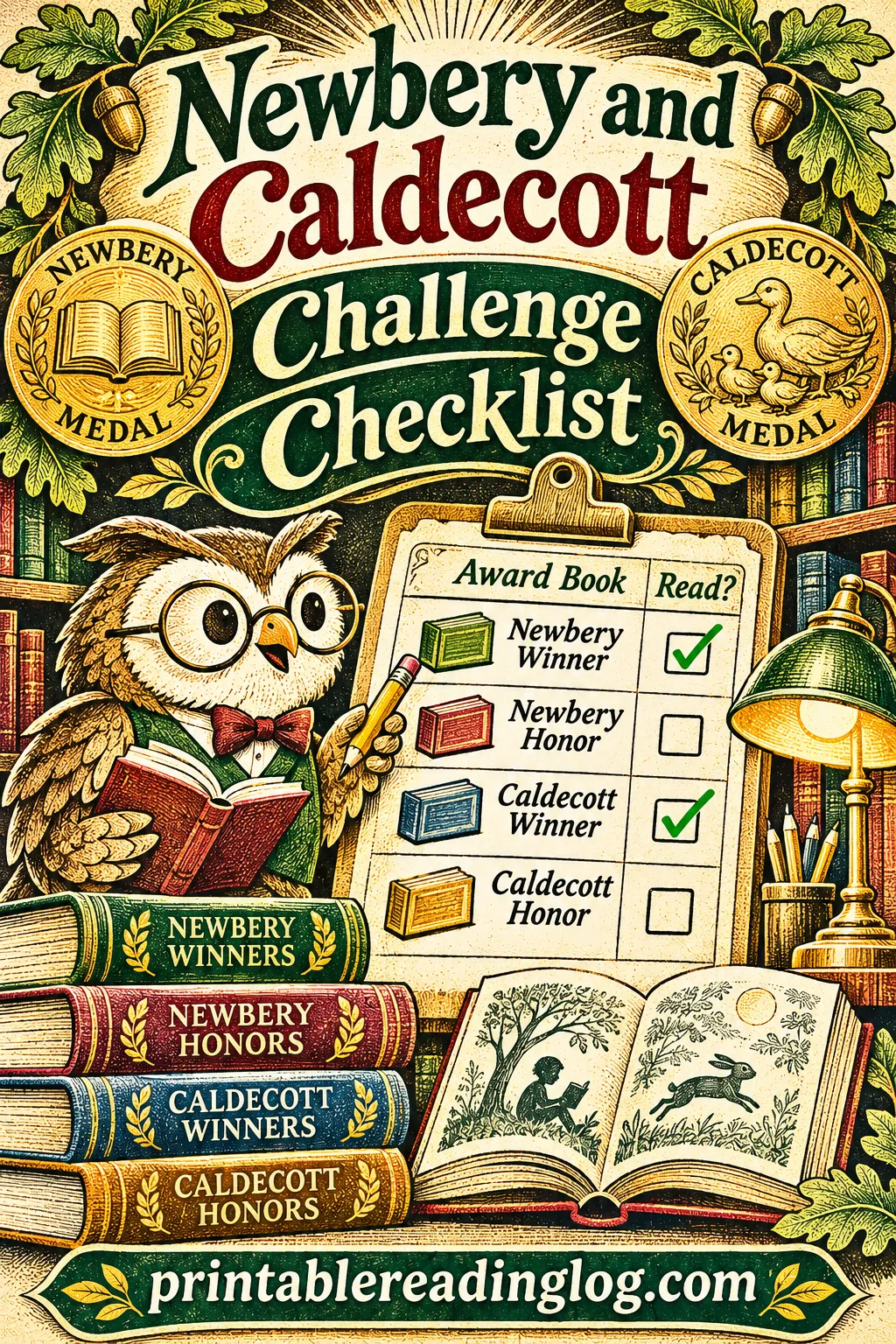
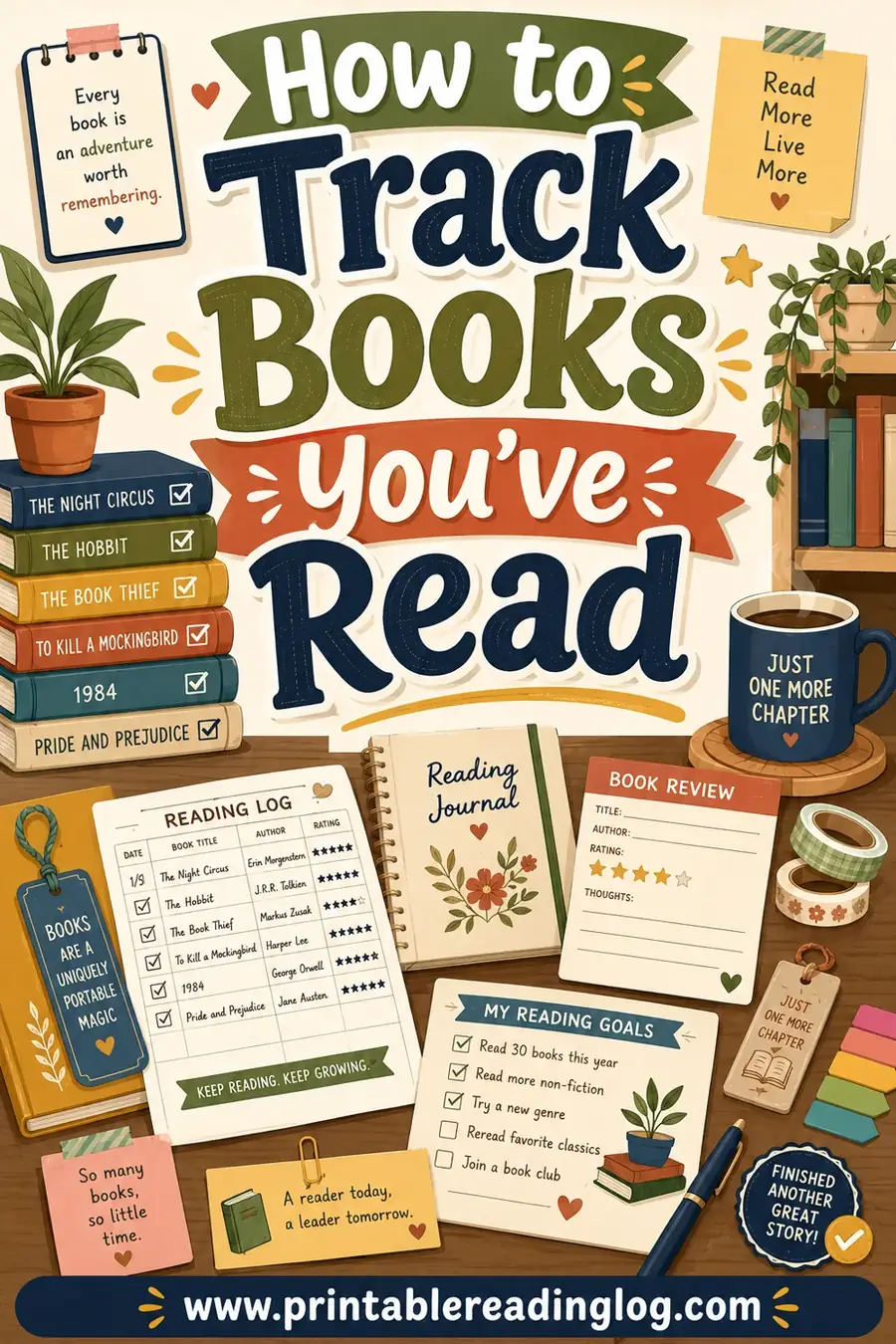
Every Newbery or Caldecott challenge needs two sheets of paper: a year-by-year checklist you fill in from the official award list, and a book log where each finished title gets a row, a rating and a few words. The checklist shows the gaps; the log remembers what you actually thought of The Trumpeter of Krakow three months later.
The log side takes a few minutes in the reading log maker: one row per book, a column for the award year, a star rating and a goal bar that fills as you go. Below you will find what the two medals are, six sizes of challenge, a decade-by-decade checklist to copy, reading plans by age, and what to do when a family stalls halfway through the 1930s.
📚 Printable Reading Log: make this log in 10 seconds
Set the name and goal, preview it, then print it free.
Free printables for this page
Ready-made, one-page PDFs from Printable Reading Log. Print as is, or change the columns in the maker above. See all free printable reading logs.
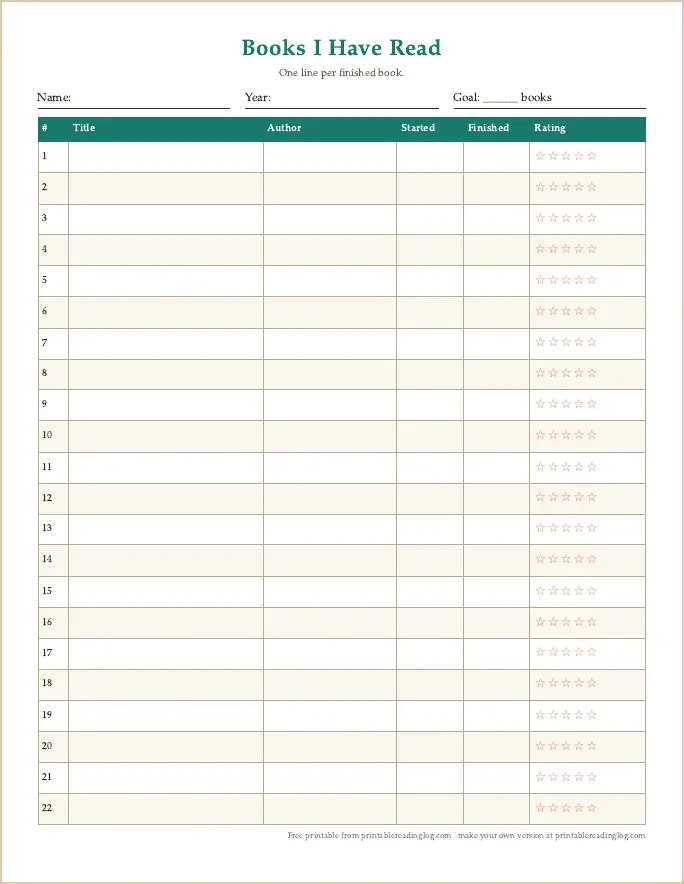
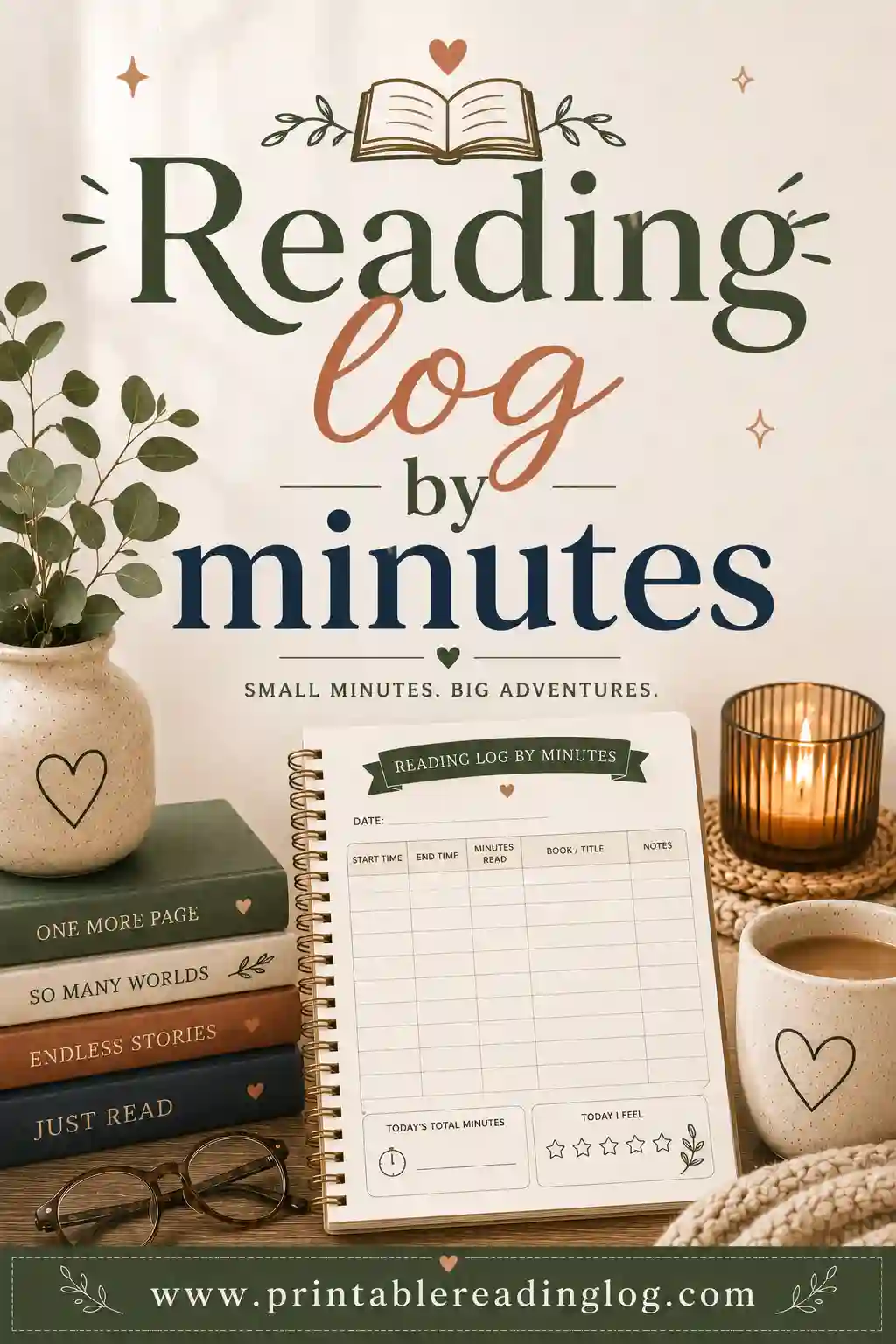
Book Log (books read)
A clean list of every book you finish: title, author, dates started and finished, and a five-star rating.
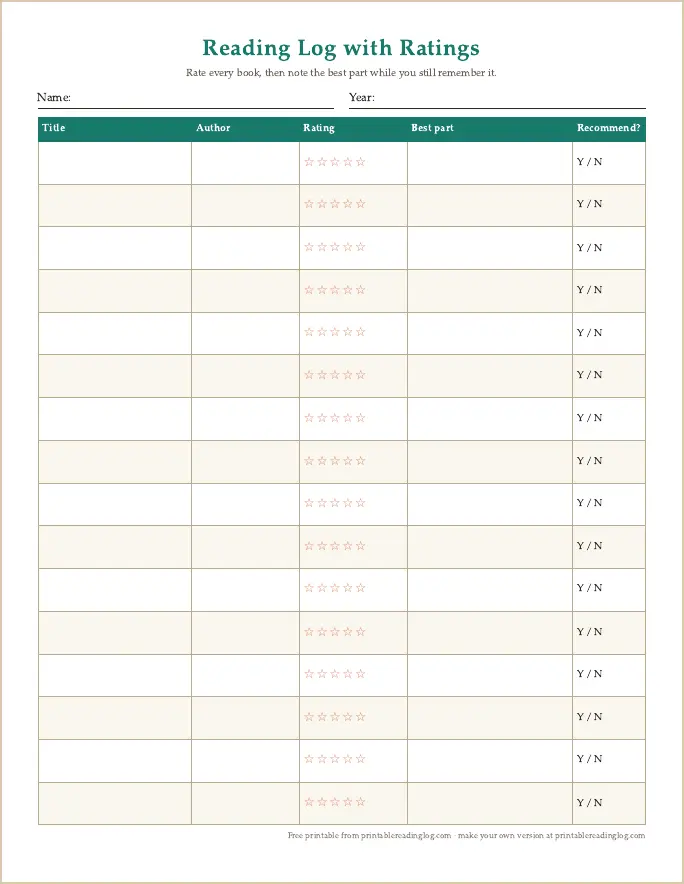
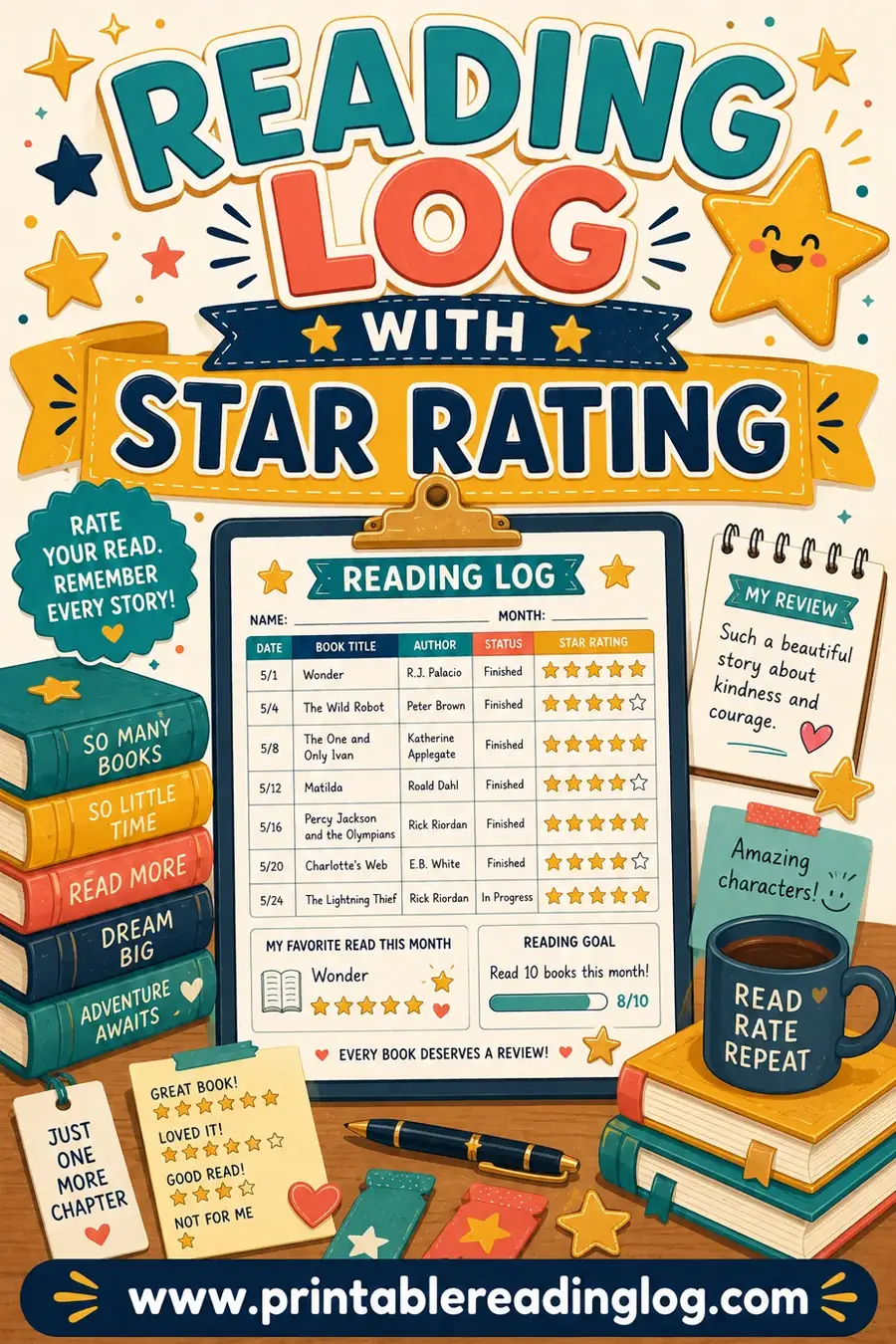
Reading Log with Star Ratings
Title, author, a five-star rating, the best part in a few words, and a would-you-recommend box.
Two gold seals, two very different kinds of book
Both awards are given each year by the Association for Library Service to Children, a division of the American Library Association. The winners are announced every winter, usually in January, at the association's Youth Media Awards. Each year there's one medal winner for each award, plus a handful of "Honor" books the committee also wanted to recognize.
The Newbery Medal goes to the author of the most distinguished contribution to American literature for children. It was first given in 1922, which makes it one of the oldest children's book awards around. Winners are mostly novels, but the list also includes poetry, nonfiction, short story collections and, in recent years, a wider range of formats.
The Caldecott Medal goes to the illustrator of the most distinguished American picture book for children. It was first given in 1938. Because these are picture books, most can be read in one sitting, which makes the Caldecott list a friendly starting point for families with young kids.
| Newbery Medal | Caldecott Medal | |
|---|---|---|
| First awarded | 1922 | 1938 |
| Honors | The author | The illustrator |
| Typical format | Novels, poetry, nonfiction | Picture books |
| Typical reading time | Several days to a few weeks | 5 to 20 minutes |
| Best starting age | Upper elementary and up, or as a read-aloud | Toddlers and up |
| Medal winners so far | More than 100 | Close to 90 |
| Honor books | Usually several each year | Usually several each year |
| How to spot them on a shelf | Gold seal (winner) or silver seal (Honor) | Gold seal (winner) or silver seal (Honor) |
Since new winners are added every year, the challenge never quite ends. That's part of the fun: once you've caught up, you get a new book or two every January.
Where to get the official list
The most reliable list of winners and Honor books is the one published by the American Library Association on its website, organized by year. Your public library will usually have the same list at the children's desk, and many libraries post it near their award-book shelves. Use one of those sources to fill in the checklist below, so your titles and years are exactly right.
This guide doesn't reprint the full list. Award lists change every year, and copying titles from the official source means your checklist will always match what the library has.
Six sizes of challenge, from one month to many years
"Read every Newbery winner" is a big goal. It's doable, but it can take years. Most families and readers do better picking a version that fits their kids' ages and the time they actually have. Below are six versions, from a quick win to a long project.
| Challenge | What you read | Rough size | Good for | Time it might take |
|---|---|---|---|---|
| Caldecott sprint | Caldecott Medal winners only | Close to 90 picture books | Families with kids under 8 | A few months of bedtime reading |
| One-decade Newbery | The 10 Newbery winners from one decade | 10 novels | Kids 9 to 12, busy adults | A school year |
| Birth-year challenge | Newbery and Caldecott winners from each family member's birth year | 2 books per person, plus Honors if you like | Whole families | A month or two |
| Gold and silver | One winner and one Honor book from the same year | 2 books per year you choose | Kids who like comparing | Ongoing |
| Read all Newbery | Every Newbery Medal winner since 1922 | More than 100 novels | Teens, adults, teachers | Several years |
| The full shelf | Every winner and Honor book for both awards | Several hundred books | Dedicated adults, classrooms, libraries | Many years |
Which version should you start with?
With kids under 8, start with the Caldecott sprint. Picture books are short, and watching the goal bar fill quickly keeps everyone interested. A 9- to 12-year-old usually does well with a one-decade Newbery challenge, because ten novels feels like a real accomplishment without swallowing the whole year. Families with mixed ages tend to love the birth-year version: everyone gets "their" two books, and dinner turns into a conversation about how different 1984 was from 2015.
Teens and adults who enjoy lists can go straight for every Newbery winner, either in order or by jumping around by decade. Teachers often find the gold-and-silver version works as a class project, with each small group taking one year and reporting back on which book they would have picked.
You can always grow the challenge later. Finishing a small one first makes the big one feel possible.
Copying the decade-by-decade checklist
Below is the checklist structure, decade by decade. Copy it into a notebook or onto the back of your printed log, then fill in each year's winners from the official list. Leave space for Honor books if you plan to read them.
For each year, you'll write:
- ☐ Year
- N: Newbery Medal winner (title and author)
- C: Caldecott Medal winner (title and illustrator), from 1938 on
- A small box for the date you finished each one
The breakdown below shows the size of each chunk before you commit to it.
| Decade | Newbery years | Caldecott years | Newbery books | Caldecott books | Your count |
|---|---|---|---|---|---|
| 1920s | 1922 to 1929 | none | 8 | 0 | ___ / 8 |
| 1930s | 1930 to 1939 | 1938 to 1939 | 10 | 2 | ___ / 12 |
| 1940s | 1940 to 1949 | 1940 to 1949 | 10 | 10 | ___ / 20 |
| 1950s | 1950 to 1959 | 1950 to 1959 | 10 | 10 | ___ / 20 |
| 1960s | 1960 to 1969 | 1960 to 1969 | 10 | 10 | ___ / 20 |
| 1970s | 1970 to 1979 | 1970 to 1979 | 10 | 10 | ___ / 20 |
| 1980s | 1980 to 1989 | 1980 to 1989 | 10 | 10 | ___ / 20 |
| 1990s | 1990 to 1999 | 1990 to 1999 | 10 | 10 | ___ / 20 |
| 2000s | 2000 to 2009 | 2000 to 2009 | 10 | 10 | ___ / 20 |
| 2010s | 2010 to 2019 | 2010 to 2019 | 10 | 10 | ___ / 20 |
| 2020s | 2020 to now | 2020 to now | Add each year | Add each year | ___ / ___ |
These counts assume one medal winner per award per year, which is the usual pattern. Check the official list for each decade as you fill it in, and adjust your totals if the list shows anything unusual for a given year.
A fill-in page for one decade
Written out, a single decade looks like the sample below. Copy this layout for each decade you plan to read.
| ✓ | Year | Award | Title | Author or illustrator | Date finished | Rating |
|---|---|---|---|---|---|---|
| ☐ | 19__0 | Newbery | ||||
| ☐ | 19__0 | Caldecott | ||||
| ☐ | 19__1 | Newbery | ||||
| ☐ | 19__1 | Caldecott | ||||
| ☐ | 19__2 | Newbery | ||||
| ☐ | 19__2 | Caldecott | ||||
| ☐ | 19__3 | Newbery | ||||
| ☐ | 19__3 | Caldecott | ||||
| ☐ | 19__4 | Newbery | ||||
| ☐ | 19__4 | Caldecott |
Keep going through the ninth year of the decade. For an Honor-book version, add one more row per year marked "Honor" and pick one Honor book from that year's list.
A starter set: the 1920s Newbery winners
The earliest Newbery winners are now old enough to be in the public domain in the United States, so they're often easy to find at the library or as free digital editions. If you want to begin at the very start of the list, here are the first eight medal winners:
- ☐ 1922: The Story of Mankind by Hendrik Willem van Loon
- ☐ 1923: The Voyages of Doctor Dolittle by Hugh Lofting
- ☐ 1924: The Dark Frigate by Charles Boardman Hawes
- ☐ 1925: Tales from Silver Lands by Charles J. Finger
- ☐ 1926: Shen of the Sea by Arthur Bowie Chrisman
- ☐ 1927: Smoky, the Cowhorse by Will James
- ☐ 1928: Gay-Neck, the Story of a Pigeon by Dhan Gopal Mukerji
- ☐ 1929: The Trumpeter of Krakow by Eric P. Kelly
A word of care: books from the 1920s were written with the attitudes and language of their time, and some early winners include portrayals of people and cultures that many readers today find hurtful or simply wrong. Preview them before handing them to a child, read them together if you can, and talk openly about what has changed. Skipping a book is allowed as well. It's your challenge, and you set the rules.
Building the medal log to sit beside the checklist
The checklist tells you what to read; the log records what you read and what you thought. For a family or kids' version, start from the Picture books preset for a Caldecott sprint or the Kids preset for a family Newbery challenge, choose the kid-friendly style and log by books. Put a name at the top that makes it feel like an event, such as "The Garcia Family Medal Hunt," and write a specific goal, like "All 1950s Caldecott winners" or "10 Newbery books this school year." Useful columns are title, author, genre, date finished, a star rating and initials, so you can see who did the reading. Twenty rows suits picture books; ten suits novels.
The Sunshine color theme suits the gold-medal idea, and Classic prints cleanly in black and white. Set the goal squares to 10 for a one-decade challenge, 25 for a family year or 100 for a long Caldecott run, turn on the challenge bar with a name like "Caldecott Challenge," and list the next three to five titles from your checklist in the books-to-read-next box. Smiley ratings work better than stars for preschoolers.
Teens and adults usually prefer the Adult Yearly or High school preset with the clean adult style. Add date started, notes and a recommend column, switch the rating to numbers so books can be ranked on a 1-to-10 scale, and print in landscape so the notes column has room. Twelve to fifteen rows and a 50- or 100-square goal bar fit a long list. Keep the printed sheet with your checklist.
Using the Genre column for the award code
There is no separate "award" column, and you do not need one. Use the Genre column for a short code that shows the year and the award. That way, you can scan down the log and see your progress by decade.
| Code | Meaning |
|---|---|
| N 1956 | Newbery Medal winner, 1956 |
| NH 1956 | Newbery Honor book, 1956 |
| C 1956 | Caldecott Medal winner, 1956 |
| CH 1956 | Caldecott Honor book, 1956 |
| N+C 1956 | You read both medal winners from 1956 |
If you'd rather keep Genre for real genres, put the code at the start of the Notes column instead. For more on logging one book per row (rather than one reading session per row), see the reading log by books page.
Keeping the checklist and log clipped together
Keep both sheets in one folder or clipped to the fridge. Think of the checklist as the map that shows every year you plan to read and where the gaps are, the log as the journal of when you read each book and how you rated it, and the goal bar as the scoreboard with one colored square per finished book. The books-to-read-next box is the queue, refilled after each library trip.
When a book is finished, check it off, add a row to the log and color a square. It takes under a minute, and a child gets a small, satisfying moment of "done." If you want star ratings to mean something across a long list, the reading log with star rating explains a simple scale kids can stick to.
Matching the medal list to a toddler, a fourth grader or a teen
Award books cover a huge range of reading levels and themes. A Caldecott winner from the 1940s and a Newbery winner from the 2010s can feel like they belong to different worlds. These plans help you match the challenge to your reader.
Ages 2 to 5: Caldecott only
Stick with Caldecott winners and Honor books. Read them aloud, then let your child look at the pictures again on their own. Many little ones will want the same book three nights in a row, and every rereading can go on the log.
A reasonable goal is one Caldecott book a week, or all the winners from a single decade, logged on the Picture books preset with smiley ratings and a 25-square goal bar. Let your child choose the next book by flipping through covers at the library. A picture book log keeps the rows short, and a read-aloud log for parents works if you want to track the shared reading separately.
Ages 6 to 8: Caldecott plus Newbery read-alouds
Keep going with Caldecott books for independent or shared reading, and add one Newbery book as a family read-aloud, a chapter or two a night. Choose read-alouds with care: some Newbery books deal with hard themes that suit older readers better.
Two Caldecott books a week plus one Newbery read-aloud a month is a comfortable pace. Use the Kids preset with star ratings and an initials column so you can mark who read. After each picture book, ask why the committee might have chosen it: was it the colors, the way the pictures carry part of the story, or something else?
Ages 9 to 12: the one-decade Newbery
This is the age Newbery books are mostly written for. Let your child pick a decade and read its ten medal winners over a school year. Some will become favorites and some will be tough going, and a mix of both is what a decade usually looks like.
Aim for ten Newbery books from one decade, on the Kids or Monthly preset with star ratings, a recommend column and a 10-square goal bar. Allow one skip per decade: if a book is not working after a few chapters, your child can swap in an Honor book from the same year. The chapter book log has layouts that suit longer books, and the 3rd to 5th grade reading log fits a child who also has a school log to keep.
Teens: read all Newbery, at their pace
Teens can take on the whole Newbery list. Many enjoy reading in order, which shows how children's books have changed across a century. Others like picking at random.
A decade per semester, or the full list across high school, is realistic. The High school preset with the clean style, number ratings and a notes column suits this age. At the end of each decade, ask them to name their own personal medal winner and defend it.
Adults and teachers
Adults often run the challenge for themselves, to rediscover childhood favorites or to know what to recommend to kids. Teachers and librarians may read the full shelf, Honors included.
Go for every Newbery winner, the full Caldecott list or both, on the Adult Yearly preset in landscape with number ratings, notes and a recommend column. In the notes, jot the age you would suggest each book for. Over a year or two you end up with a recommendation list of your own. Adults who enjoy big classic lists may also like the 100 books to read before you die checklist.
Tracking down a 1920s winner and everything after it
Award books are among the easiest to find at a public library, but a long challenge still needs a small system. Teach kids to look for the seals: gold on the cover for a medal winner, silver for an Honor book. Many children treat the shelves like a treasure hunt once they know. Ask whether your library keeps an award shelf, since many group Newbery and Caldecott books near the children's desk.
Place holds in batches of three to five from your checklist, so that when one book arrives the next is already on its way. For older titles that are out of print or not held locally, ask about interlibrary loan. Your library's e-book and audiobook apps often carry award winners too, and the earliest public-domain winners may be available as free digital editions.
A small "found" mark beside each title on the checklist, such as L for library, H for home or D for digital, saves time when you plan the next batch. With a dozen library books in the house at once, a system for due dates matters; tracking library books and due dates covers one. Relatives can help as well, by giving award books for birthdays and holidays.
Previewing before you read
Medal books are chosen for literary and artistic quality, not for a particular age or comfort level. Some Newbery books handle grief, war, illness, injustice and other heavy subjects. Those subjects are often what makes them powerful, but it also means they won't suit every child at every moment.
Before starting a Newbery book with a younger reader, skim the first chapters, read the library's summary, or ask a children's librarian. Our advice on picking books that fit your child right now includes quick ways to check a book before you start it.
Mock awards, committee ratings and other ways to talk about the books
A checklist is satisfying, but the best part of an award challenge is the talking. These ideas turn reading the winners into something a family or class looks forward to.
Hold a mock award in January
Many libraries and schools run "mock Newbery" and "mock Caldecott" clubs in the months before the real awards are announced. You can do a small version at home. In the fall, gather a few new picture books or middle grade novels published that year, read them together, and vote on your winner. Then watch for the real announcement and see how your pick did. Log the books you considered with a small "M" in the Notes column.
Rate like a committee
Instead of just "liked it" or "didn't," ask a few questions after each book:
- What made this book stand out?
- For a picture book: how do the pictures add to the story? What would be lost without them?
- For a novel: which character felt most real? Which scene would you remember a year from now?
- Would you have given it the medal? Why or why not?
Write a one-line answer in the Notes column. After a decade of books, read your notes back. Kids are often surprised how much their opinions grew.
Compare gold and silver
Pick one year and read the medal winner alongside an Honor book from the same year. Which would your family have chosen? It makes a lively dinner-table debate, and nobody can be wrong.
Study the art
For Caldecott books, look at how the pictures were made. Many picture books list the art technique on the copyright page, such as watercolor, collage, woodcut or digital art. Try making a picture in the same style, then add a sticker to the log row when you do.
Keep a "medal shelf" of favorites
Ask each family member to choose one favorite per decade. Write the titles on a small card taped to the checklist. By the end, you'll have a family "best of" list that's all your own. For more ways to shape a reading year around a theme, browse the reading challenge ideas page.
One family's first semester with the 1920s list
A worked example shows how the checklist, the log and the skip rule fit together over a few months. Picture a family with an eleven-year-old, Maya, who chose the 1920s as her decade because the eight winners were the shortest list on the chart and several were free as digital editions. Her parents agreed to read one book aloud and let her read the rest on her own.
She began in September with The Voyages of Doctor Dolittle, which her father read aloud over about three weeks, previewing ahead and stopping to talk through passages that reflected attitudes of the 1920s. On the log it went in as "N 1923," four stars, with a note: "Liked the animals, some parts felt unfair, we talked about it." Smoky, the Cowhorse came next, read alone, and took her most of October. She gave it three stars and wrote "slow start, good ending."
November was the test. The Story of Mankind is long and reads more like a history book than a novel, and after two weeks she was still in the early chapters. The family used the skip rule rather than letting the whole challenge stall: she marked it with a small "later" on the checklist and moved to The Trumpeter of Krakow, which she finished in ten days and rated five stars. Her note said only "best one so far."
By the end of the semester the goal bar showed three of eight squares colored, and the checklist showed one book set aside. Looking at the log together, the family noticed that the books Maya rated highest were the ones with a single main character and a clear adventure. That gave them an easy plan for spring: save the longer nonfiction winner for summer, as a shared read-aloud, and read the remaining story-driven titles first. The challenge stayed on track because the record made the pattern visible.
When the medal hunt stalls in an old decade
Long reading challenges hit bumps, and most of them look like one of the rows below.
| Problem | Why it happens | Try this |
|---|---|---|
| Your child stalls on an older Newbery book | Slow openings and old-fashioned language | Read it aloud together, switch to the audiobook, or swap in an Honor book from the same year |
| The challenge feels endless | The full list is very long | Shrink it to one decade or one award; restart the goal bar for each chunk |
| You've lost track of what you've read | Books read before the challenge, or a missing log | Mark earlier reads with an "R" (remembered) and decide whether to reread or count them |
| A book has content you're unsure about | Medal books often cover serious topics | Preview it, ask a librarian, read together, or skip it |
| You can't find an older title | Out of print or not held locally | Try interlibrary loan or digital collections, or move on and come back later |
| Siblings are at different levels | One list doesn't fit everyone | Give the younger child the Caldecott list and the older child the Newbery list, with one shared goal bar |
| Reading feels like homework | The checklist became the point | Drop the order rule, let kids choose any year, and add a mock award or art activity |
| A new year's winners just came out | The list grows every January | Add a new row to your 2020s decade and put the new books on hold early |
Remember that a challenge is something you chose for fun. If it stops being fun, change the rules. You can pause it, shrink it or let each family member make their own version.
What families ask before starting the medal challenge
What is the Newbery challenge?
The Newbery challenge is a personal reading goal to read Newbery Medal winners, either all of them since 1922 or a chosen set, like one decade. Many readers add Honor books or the Caldecott winners too. There's no official version, so you can shape it to fit your family.
How many Newbery Medal winners are there?
There is one medal winner each year, starting in 1922, so there are more than 100 in total and the number grows every January. Each year also has several Honor books. Check the American Library Association's official list for the current, complete count.
What's the difference between the Newbery and the Caldecott?
The Newbery Medal honors the author of the most distinguished American children's book, usually a novel. The Caldecott Medal honors the illustrator of the most distinguished American picture book. Both are given by the same division of the American Library Association.
What age is the Newbery challenge for?
Newbery books are mostly aimed at upper elementary and middle grade readers, though some suit teens and adults better. Younger kids can join through read-alouds, and the Caldecott list works well from toddlers up. Preview books before reading them with younger children.
Do Honor books count?
They count if you want them to. Some readers stick to medal winners only, while others add one Honor book per year or read them all. Decide at the start and note your rule at the top of your checklist.
Should we read the winners in order?
Reading in order shows how children's books changed over time, which many teens and adults enjoy. For younger kids, choosing by interest usually works better. Any order still counts toward the challenge.
How do I track a Newbery challenge on a reading log?
Use a book log with one row per title and put an award code, like "N 1956" or "C 1956," in the Genre column. Turn on a goal tracker and color one square per book. Keep the log clipped to your year-by-year checklist so you can see both progress and gaps.
Where can I find the full list of winners?
The American Library Association publishes the full list of Newbery and Caldecott winners and Honor books by year on its website. Your public library's children's desk can usually print a copy for you too. Use that official list to fill in your checklist so every title and year is correct.