Reading Challenge Ideas to Read More This Year
A reading challenge is a simple set of goals or prompts that nudges you to read more and read wider, like "a book published the year you were born" or "12 books in 12 months." The best reading challenge ideas mix easy wins with fun stretches so you stay motivated all year. To keep your streak going, track every book on a free printable reading log and watch your progress add up.
Want to start right now? Open the free reading log maker, pick a challenge layout, and print a sheet to check off as you go. No sign-up, no fee, works on any home printer.
What Makes a Good Reading Challenge
A reading challenge works because it gives you a target and a little structure. Left to chance, most of us reach for the same few authors. A challenge gently pushes you toward books you'd never pick otherwise, and that's where the fun lives.
The best challenges share three things. They're specific enough to guide your choices, flexible enough that no single book traps you, and visible so you can watch progress build. That last part matters most. Tracking your books on a reading log turns a vague goal into a satisfying climb you can actually see.
Keep your challenge realistic. A challenge you finish at 80 percent and enjoy beats one you abandon in February because the bar was too high. Aim for "fun stretch," not "punishing quota."
How to Set Up Your Challenge
You don't need an app or a fancy planner. A printed sheet and a pen do the job. Here's the whole setup.
- Pick a type. A number goal (like 24 books), a prompt list (a book per theme), or a streak (read every day).
- Pick a length. A year is classic, but a month or a single summer works great too.
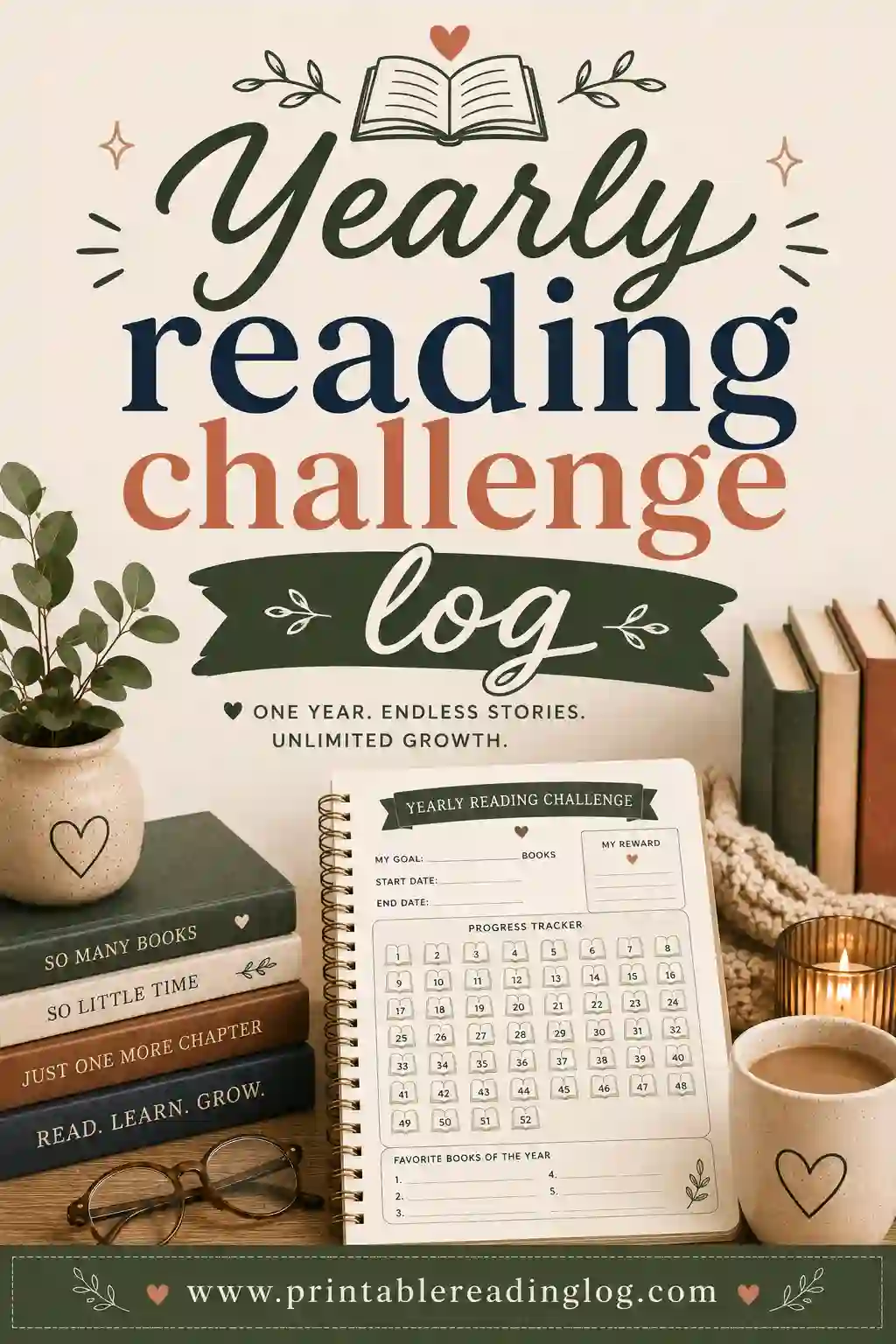
- Print a tracker. Use a reading log or a yearly challenge log so each finished book has a home.
- Display it. Tape it to the fridge or tuck it in your current book. Out of sight, out of mind.
That's it. The act of writing down the goal and checking off boxes does most of the motivational work for you.
Number-Based Reading Challenge Ideas
If you like a clear finish line, a number goal is the simplest place to start. Pick a count, divide it across the year, and chip away.
- 12 in 12. One book a month. Gentle and very doable for busy people.
- 24 in a year. Two a month. A solid stretch for steady readers.
- 52-book challenge. A book a week. Ambitious, but thrilling if you have the time.
- Page goal. Aim for, say, 10,000 pages instead of book count, so long books get fair credit.
- Minute goal. Track reading time, not titles. Great for logging by minutes and for kids.
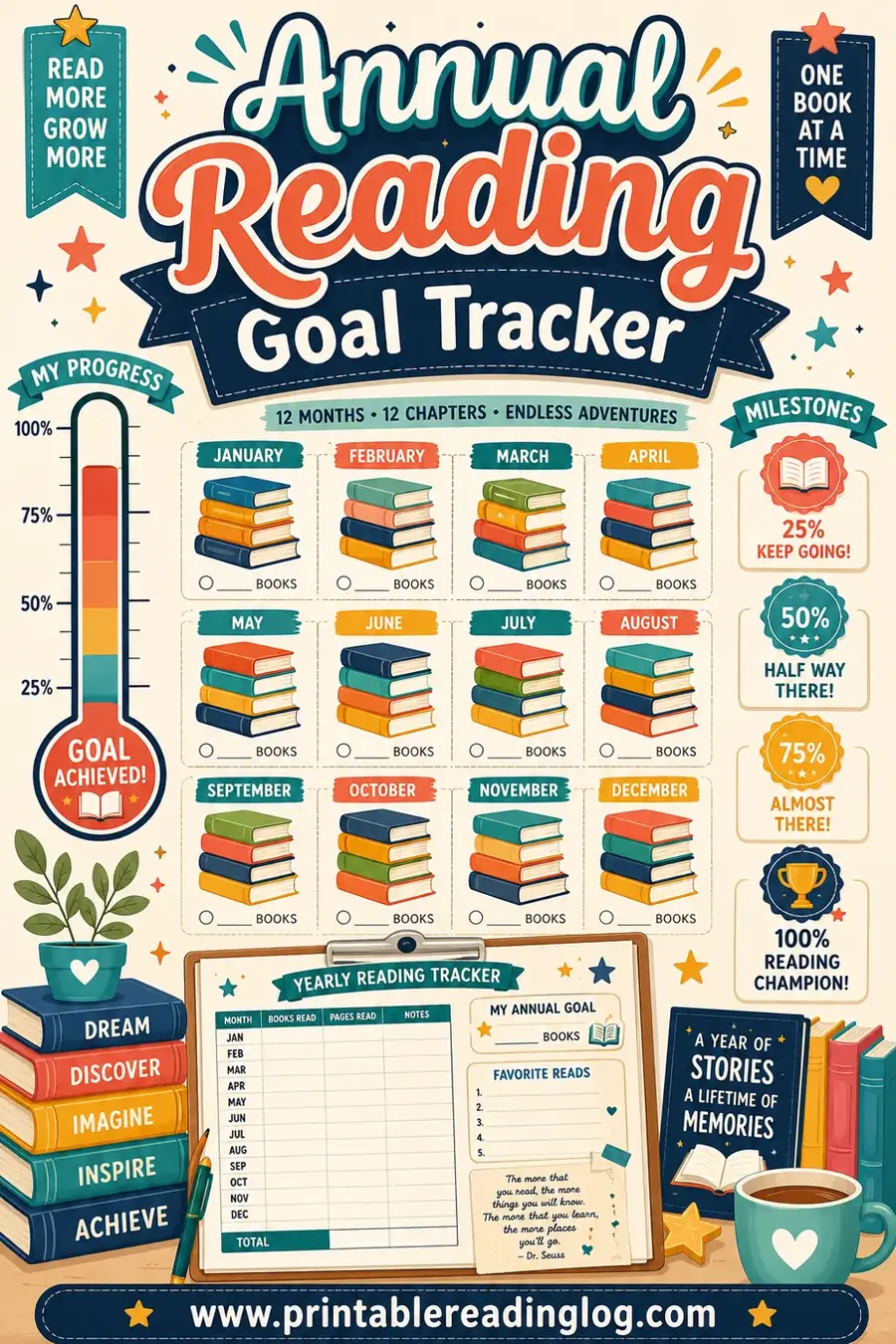
An annual reading goal tracker makes number challenges easy. You see "14 of 24 read" at a glance, and that little progress bar is shockingly motivating in the slow months.
Prompt-Based Reading Challenge Ideas
Prompt challenges are the most fun because they push you out of your comfort zone. Instead of "read 24 books," you fill specific buckets. Here's a ready-to-use list of 24 prompts you can copy straight onto a sheet.
| # | Prompt | # | Prompt |
|---|---|---|---|
| 1 | A book set in another country | 13 | A book with a one-word title |
| 2 | A book published the year you were born | 14 | A book turned into a movie |
| 3 | A book a friend recommended | 15 | A book over 500 pages |
| 4 | A book by a new-to-you author | 16 | A book you can finish in a day |
| 5 | A book with a color in the title | 17 | A nonfiction book |
| 6 | A book from a genre you avoid | 18 | A book set in the future |
| 7 | A graphic novel or comic | 19 | A classic you never read |
| 8 | A book with a number in the title | 20 | A book about a hobby |
| 9 | A book recommended by a librarian | 21 | A book with a sequel |
| 10 | A book about a real person | 22 | A book under 200 pages |
| 11 | A book with an animal on the cover | 23 | A re-read of an old favorite |
| 12 | A book that won an award | 24 | A book you pick at random |
Mix and match these to fit your taste. Swap any prompt you don't love. The point is a little nudge toward variety, not a strict rule book.
Bingo and Visual Reading Challenges
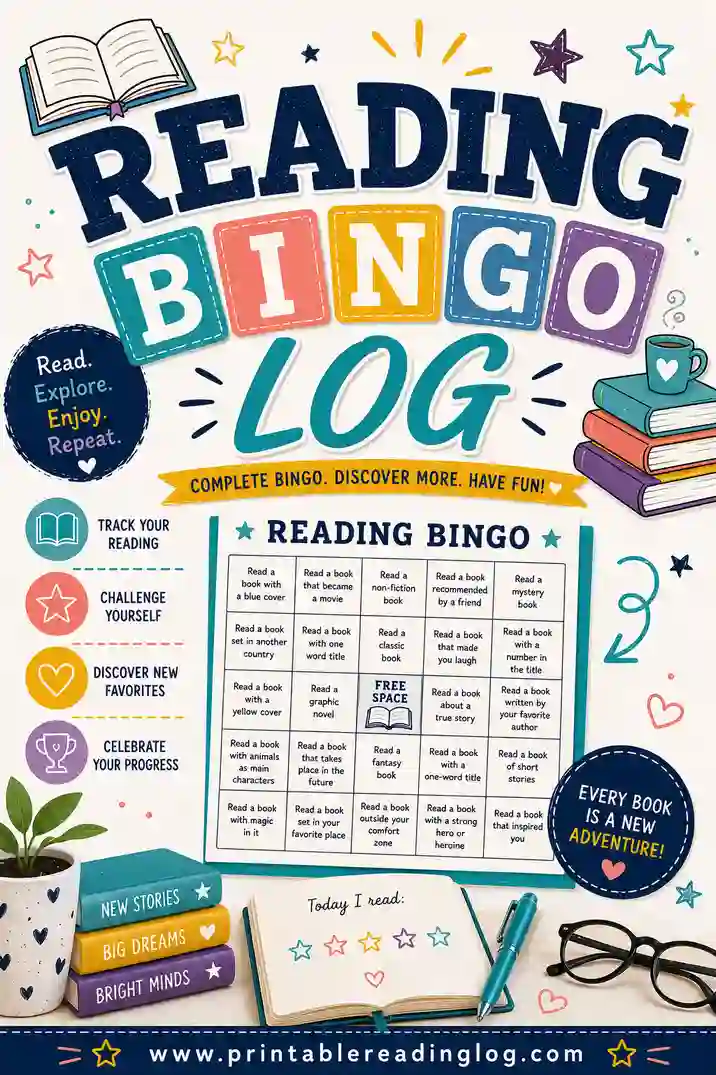
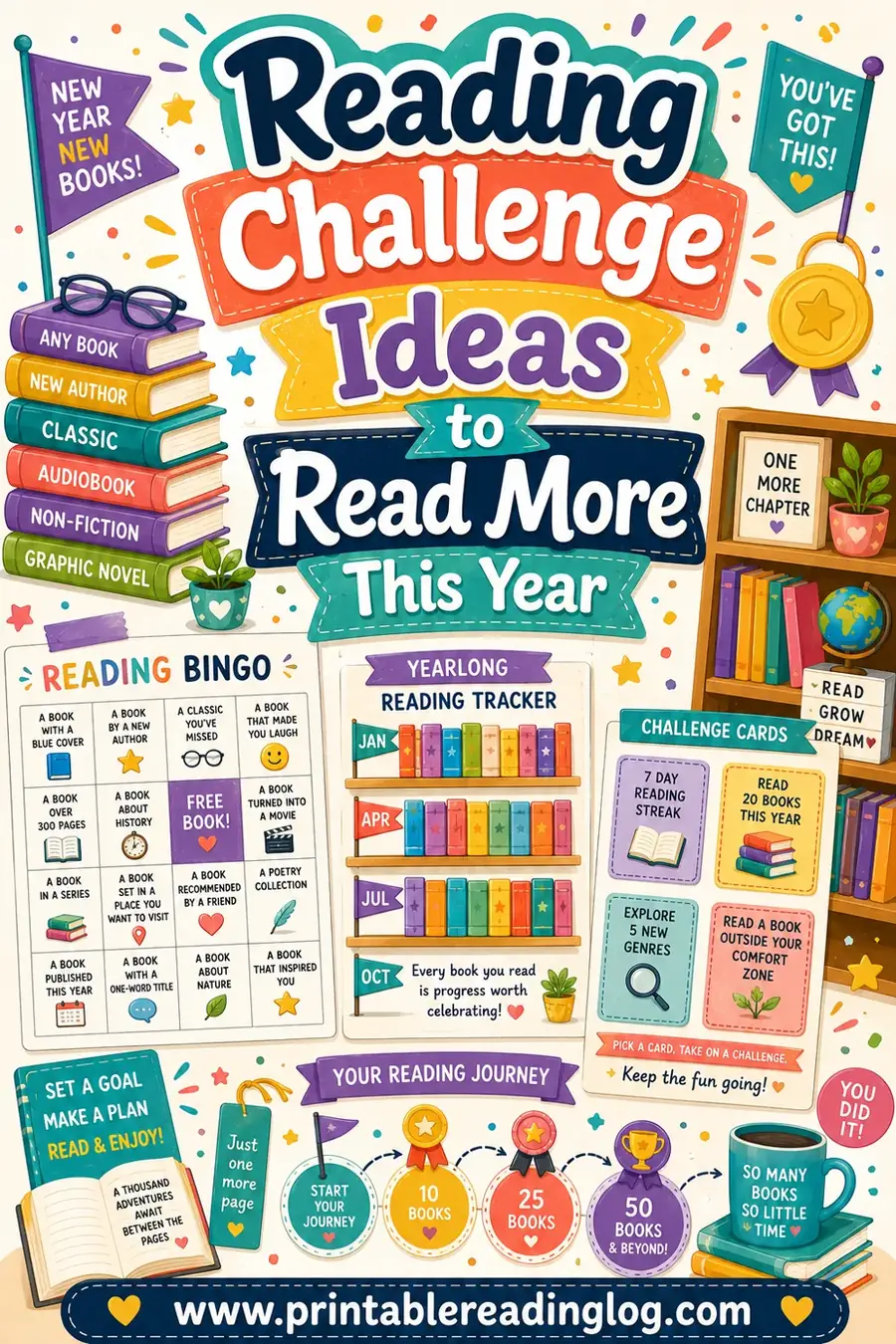
For kids and visual people, a bingo board beats a plain list. You fill a grid of prompts and try to complete rows, columns, or the whole card.
It works because crossing off a square feels great, and "one row to go" is a powerful pull. Classrooms love it because the whole class can chase a blackout together. A reading bingo log gives you a printable grid you can fill with any prompts you like, from "read in a blanket fort" to "read a book about space."
Fun bingo squares to try
- Read outside
- Read to someone younger than you
- Read a book your parent loved as a kid
- Read with a flashlight
- Read a whole book in one sitting
- Read a poem out loud
These playful squares turn a challenge into a game, which is exactly what hooks younger readers.
Themed and Seasonal Challenges
Tying a challenge to a season gives it a natural start and finish, which boosts follow-through. Summer is the classic, but any season works.
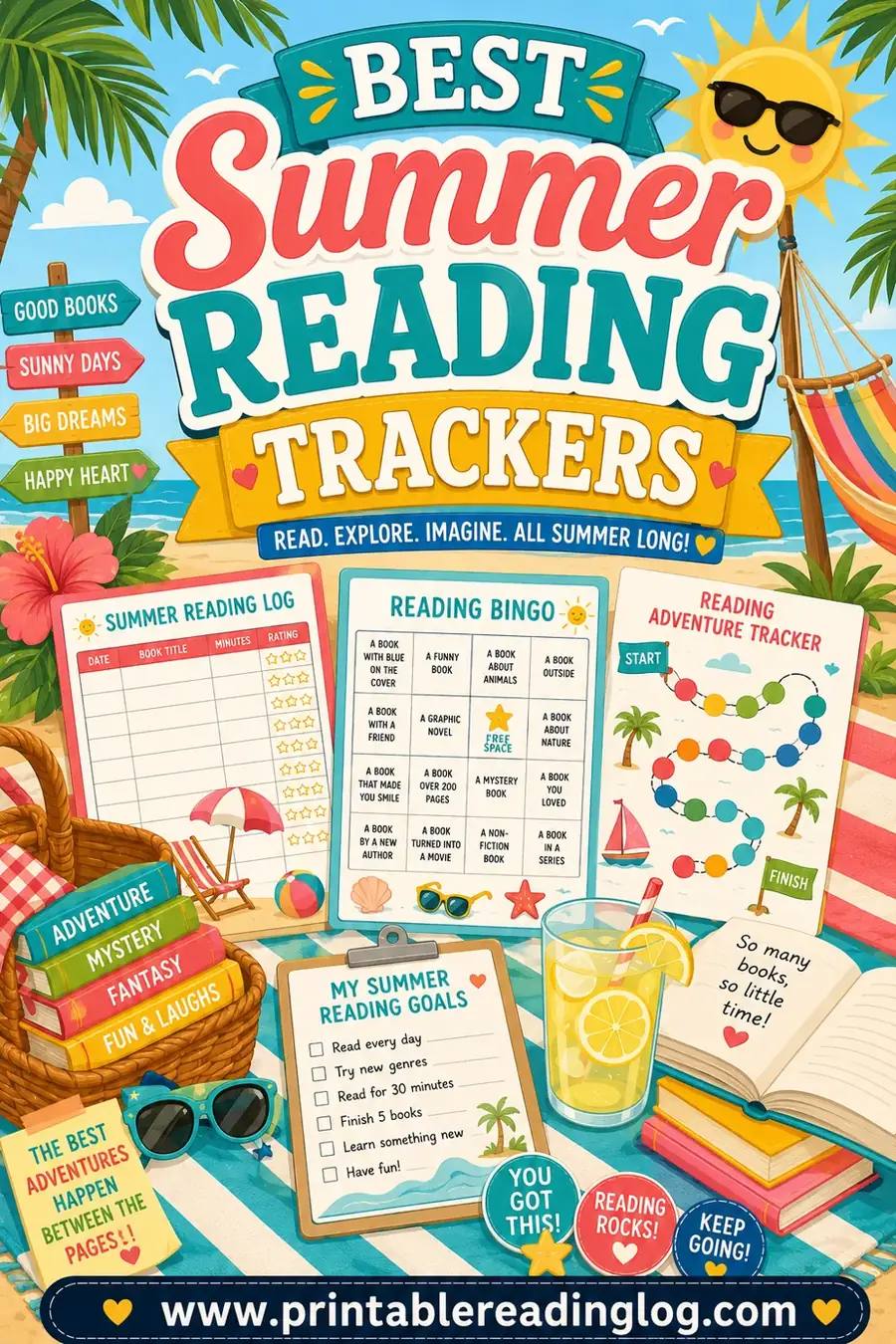
- Summer reading challenge. Beat the summer slide with a book-a-week sprint. A summer reading log with sunny squares keeps kids reading through the break.
- Winter cozy challenge. Slow, comforting reads by the fire. Quality over quantity.
- Spooky October. A month of mysteries and ghost stories.
- New Year reset. Kick off January with a stack you've been meaning to read.
Seasonal challenges feel fresh because they end before they get stale. When one wraps, you start a new one with new energy.
Reading Challenges for Different Ages
The same challenge framework flexes from little kids to grandparents. You just adjust the scale and the prompts.
| Group | Good challenge | Track it with |
|---|---|---|
| Toddlers & preschool | 100 books read aloud | A simple checkmark log |
| Early readers (5–8) | A bingo board of prompts | A reading bingo log |
| Tweens & teens | 12 books in 12 months | A yearly challenge log |
| Adults | 24 books, mixed prompts | An annual goal tracker |
| Families | A shared 100-book goal | One big family chart |
The "100 books" goal is a favorite for little kids because every short picture book counts, so the number climbs fast and feels huge.
How to Actually Finish Your Challenge
Starting a challenge is easy. Finishing one takes a few smart habits. Here's what separates the people who hit their goal from the ones who fizzle out.
- Track every book. The single most important habit. A visible reading log keeps the goal alive and shows you how close you are.
- Always have a next book ready. The gap between finishing one book and starting the next is where momentum dies. Line up the next one before you finish.
- Allow DNFs. "Did not finish" is fine. Drop a book you're not enjoying and grab another. Slogging through a bad book kills the whole habit.
- Count audiobooks. Listening is reading. Audiobooks fill commute and chore time and keep your count moving.
- Find a buddy. Share your tracker with a friend or join a group. A little accountability works wonders.
Common challenge mistakes
- Setting the bar too high. A 52-book goal sounds great until life happens. Start lower; you can always add more.
- Only counting "serious" books. Comics, re-reads, and short books all count. Let yourself have easy wins.
- Tracking nothing. Without a log, the goal blurs and you lose steam. Print a sheet and check it off.
Frequently Asked Questions
What is a good reading challenge for beginners?
Start with a gentle number goal like 12 books in 12 months, or a small bingo board of fun prompts. Keep the bar low enough to win, then raise it next time. Track each book on a reading log so progress stays visible and motivating.
How many books should be in a yearly reading challenge?
It depends on your pace and free time. Twelve books a year (one a month) is a relaxed, beginner-friendly target, while 24 to 52 suits steady or fast readers. Pick a number you'll actually hit and enjoy, not one that pressures you.
Do audiobooks count in a reading challenge?
Yes. Listening builds the same vocabulary and comprehension, and it fits into commutes, chores, and walks. Counting audiobooks keeps your challenge moving and is perfectly fair. Log them right alongside your print books.
What are good reading challenge prompts for kids?
Playful, doable ones work best, like "read outside," "read to a younger sibling," or "read a book about animals." A reading bingo log full of these turns the challenge into a game. Keep the goals small so every square feels like a win.
How do I keep a reading challenge going all year?
Track every book, always have your next read lined up, and allow yourself to drop books you don't enjoy. A visible reading log on the fridge keeps the goal front of mind. A reading buddy or group adds friendly accountability.
Can I make my own reading challenge prompts?
Absolutely. Swap any prompt for one that fits your taste, hobbies, or family. The list above is a starting point, not a rule book. Build a custom sheet with the reading log maker and fill it with the prompts you love.
Ready to Start Your Reading Challenge?
Pick a challenge that excites you, then open the free reading log maker and print a tracker to check off as you read. Watching the boxes fill up is the secret that turns a goal into a finished challenge. It's free, there's no sign-up, and you can print a fresh sheet for every new challenge. Happy reading, and may your stack only grow.