Chapter Book Log: Free Printable for Young Readers
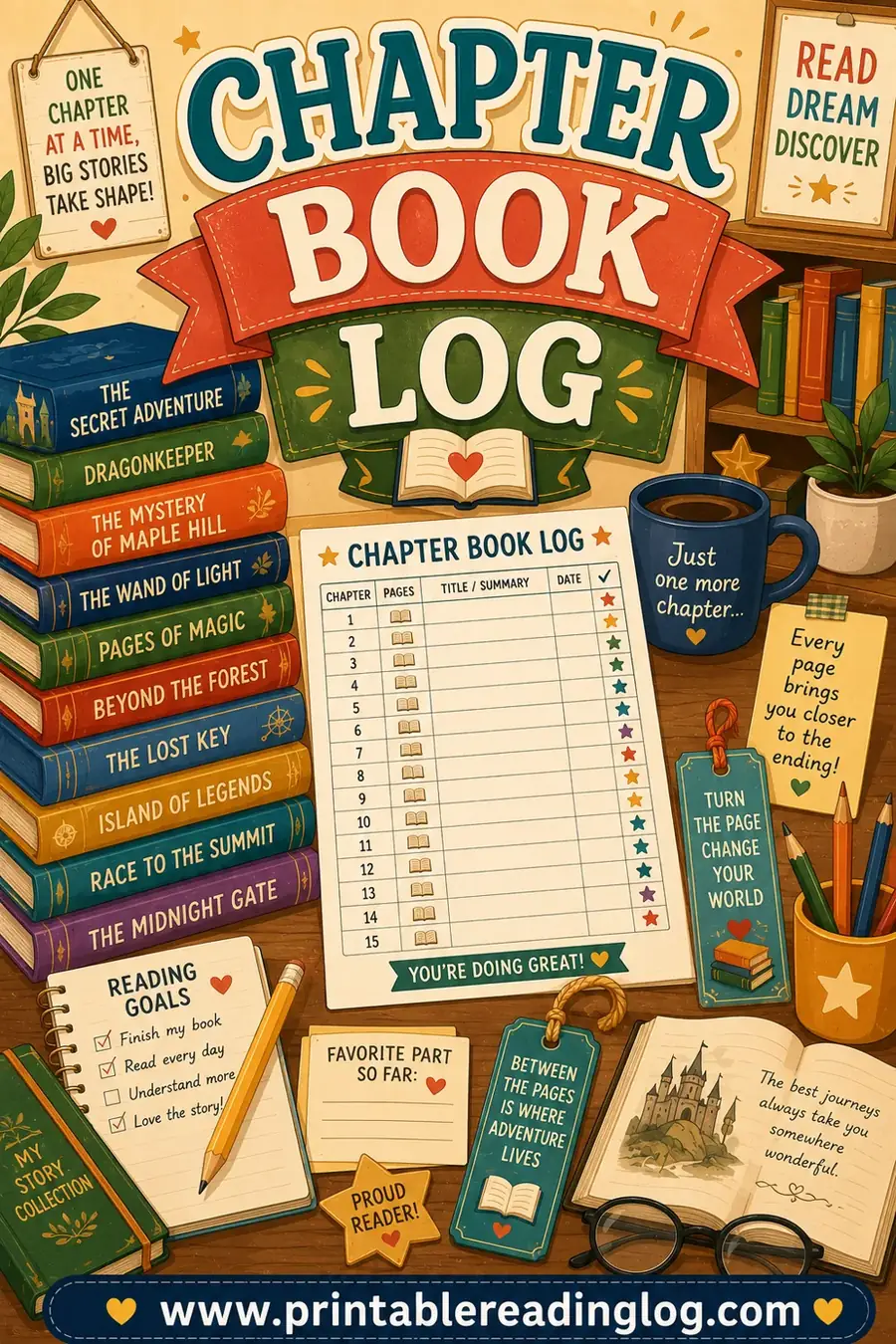
A chapter book log is a printable sheet where a child tracks the longer books they read, often chapter by chapter, with space for the title, the pages or chapters finished, and a quick rating. It's built for the stage when a young reader moves past picture books into stories that take days or weeks to finish. The easiest way to make one is a free reading log generator that prints a clean grid sized for chapter books.
Want to dive in? Open the free tool, choose the kid style, and print a log your reader can fill in after each chapter. No sign-up, no fee, nothing to download.
What Makes a Chapter Book Log Different
A chapter book log isn't just a regular reading log with a new name. The reading itself is different, so the log needs to match.
With picture books, a child finishes a whole book in one sitting, so one row per book works fine. Chapter books take longer. A single book might stretch across two weeks of bedtime reading. If you only log it when it's done, your reader goes ten days without writing anything, and the habit fizzles.
A good chapter book log fixes that by giving credit along the way. It has space to note the chapter or page you stopped on, so every reading session earns a mark. That steady drip of progress is exactly what keeps a kid coming back.
When Is a Child Ready for One?
Most kids hit this stage somewhere between first and third grade, though it varies a lot. You'll know your reader is ready for a chapter book log when:
- They can read a few sentences in a row without sounding out every word.
- They're starting on early chapter books like Magic Tree House, Mercy Watson, or Frog and Toad.
- They can pick up a story again after a break and remember roughly where they were.
- They're proud to be reading "big kid books" and want to show it off.
If your reader is still on shorter stories, a picture book log is the better fit for now. You can always switch over when chapter books take hold.
What to Track on a Chapter Book Log
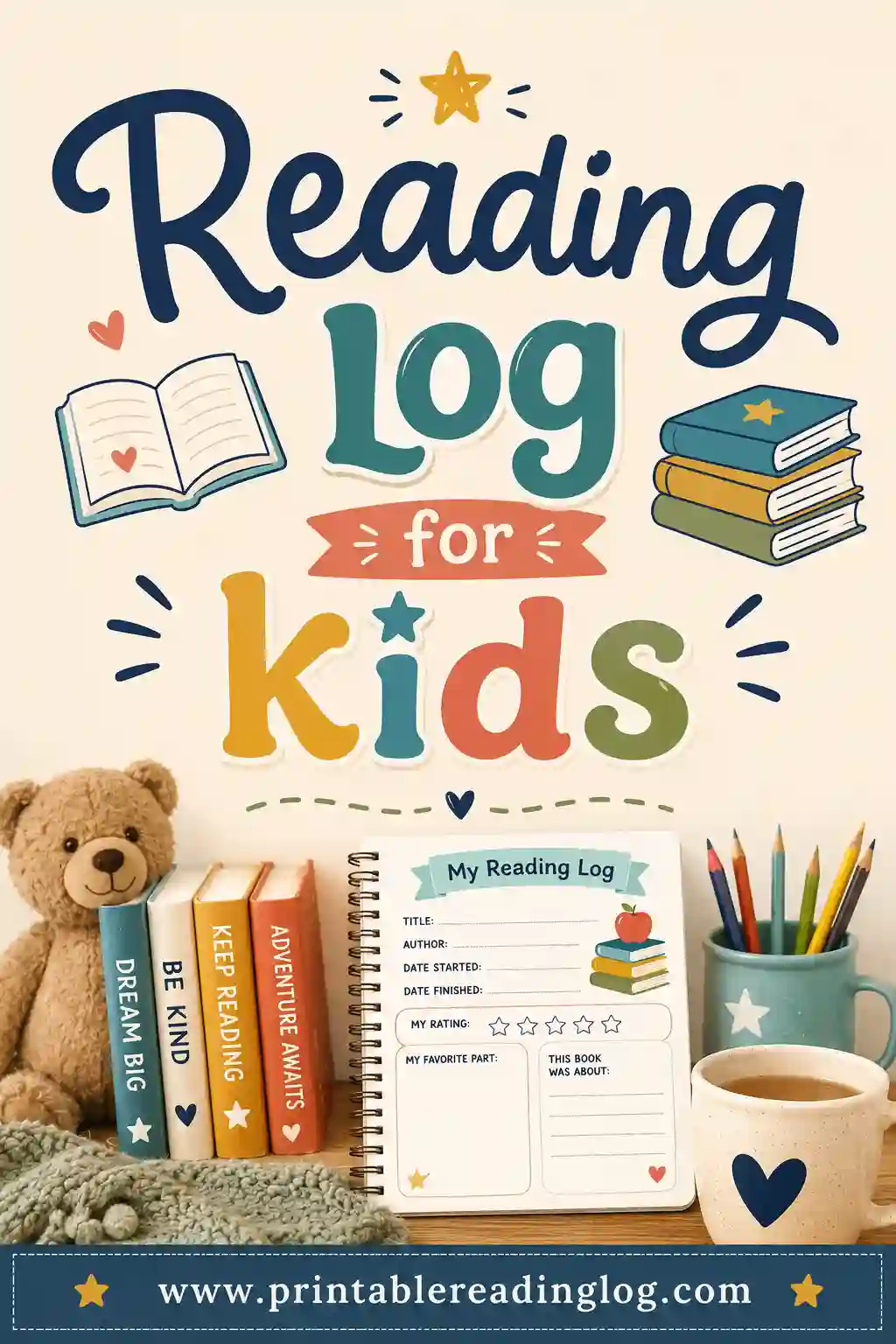
Keep it simple enough that a seven-year-old will actually use it. These columns cover the essentials:
- Date — each day they read.
- Title — the book they're working through.
- Chapter or page — where they stopped today.
- Minutes (optional) — handy for programs with a time goal.
- Rating — stars or a smiley when they finish the whole book.
A sample chapter book log
Here's what a week looks like for a child reading their way through one longer book. Notice how every day gets a row, even though the book isn't done until the end.
| Date | Title | Stopped at | Minutes |
|---|---|---|---|
| Mon | The Princess in Black | Ch. 2, p. 24 | 15 |
| Tue | The Princess in Black | Ch. 4, p. 41 | 20 |
| Wed | The Princess in Black | Ch. 6, p. 58 | 15 |
| Thu | The Princess in Black | Finished! ⭐⭐⭐⭐⭐ | 18 |
Four rows, one book, four little wins. That's the magic of logging by chapter instead of by book.
Recommended Early Chapter Books to Log
If your reader is just starting out, it helps to have a few "just right" series on hand. These are gentle on-ramps that most early readers enjoy. Treat the levels as rough guides — kids vary.
| Series | Roughly for | Why kids love it |
|---|---|---|
| Frog and Toad | 1st grade | Short, sweet, funny friendship stories |
| Mercy Watson | 1st–2nd grade | Big text, a butter-loving pig, silly fun |
| The Princess in Black | 2nd grade | Action, humor, short chapters |
| Magic Tree House | 2nd–3rd grade | Adventure, history, easy to binge |
| The Bad Guys | 2nd–4th grade | Comic-style, hilarious, reluctant-reader gold |
Logging a whole series is a great motivator. Kids love watching the titles stack up, and a series gives them an easy next pick every time they finish.
How to Make a Chapter Book Log in Four Steps
No special supplies required. Here's the whole thing.
- Open the reading log generator. Pick the kid-friendly style.
- Choose a "by chapter" or "by pages" layout. This adds the column for where they stopped.
- Set your range. A week per page suits most early readers; a month per page works for steadier ones.
- Print. Run off a stack, clip it in a folder, and keep it near the bedtime reading spot.
Want a keepsake? Print several pages and staple them into a little reading journal your child decorates. By the end of the year it's a record of every book they conquered.
Tips to Keep Young Readers Logging
The log only works if it gets used. These small moves keep it going.
- Log right after reading. Make writing the chapter the last step before lights-out, every single time.
- Celebrate the finish line. When a chapter book is done, that's a big deal at this age. Add stars, a sticker, or a high-five.
- Let re-reads count. If your child wants to read Magic Tree House #1 again, log it. Re-reading builds fluency.
- Keep a "next book" list. Jot down the next title in a series so there's never a gap between books.
- Read together sometimes. Take turns reading a page each. Shared reading still counts on the log.
Adding Summaries and Ratings
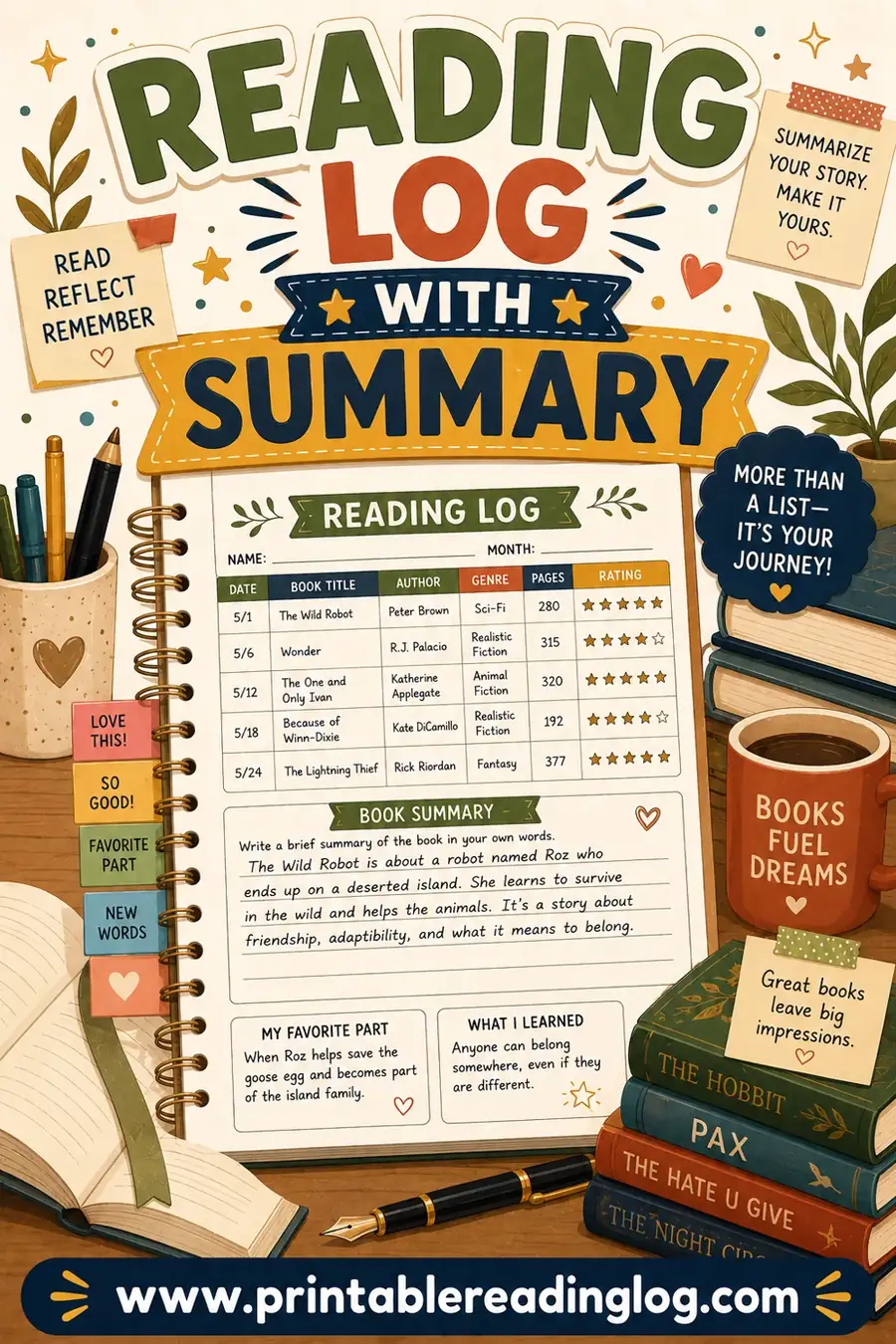
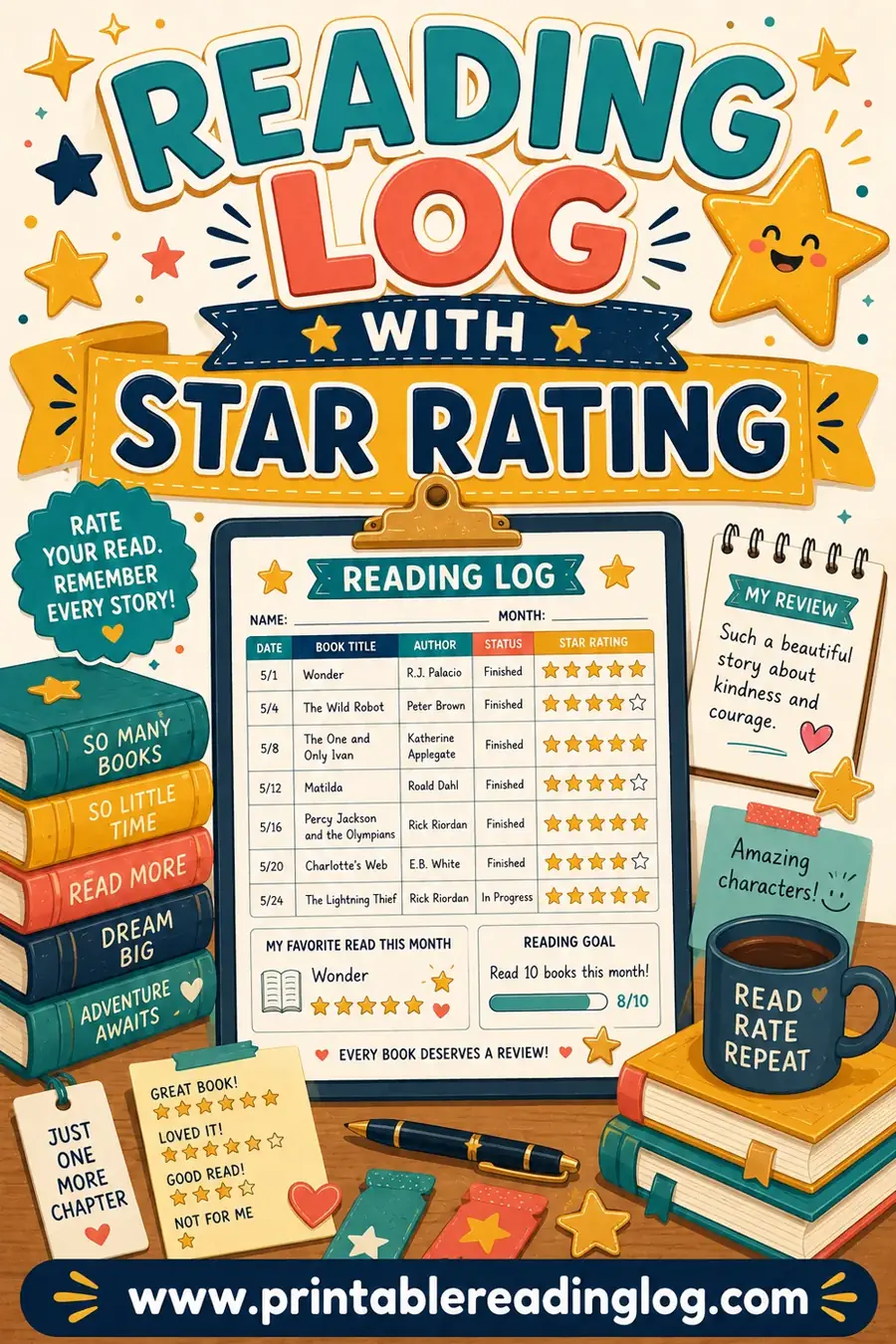
Once your reader is comfortable, a chapter book log can grow with them. A short summary or favorite-part column nudges kids to think about the story, not just race through it.
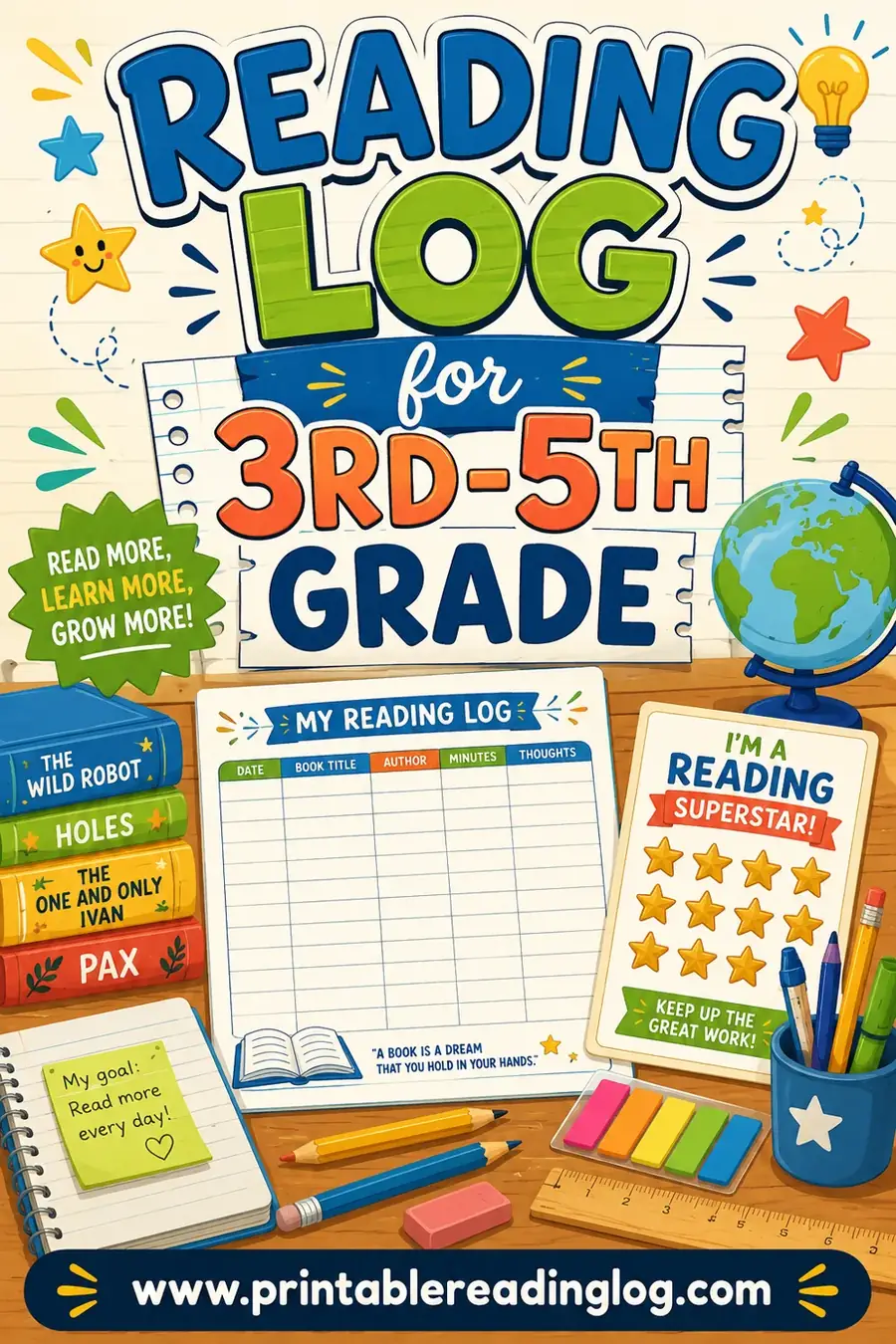
You don't need much. A single line like "My favorite part was when the dragon showed up" does the job. It builds comprehension without feeling like homework. If you want that built in, try a reading log with summary or a reading log with star rating layout. For older kids tackling thicker books, a 3rd–5th grade reading log gives a little more room per entry.
Helping a Slow or Stuck Chapter Reader
The leap from picture books to chapter books is a big one, and plenty of kids stall partway. That's not a problem, it's a normal bump. The log can actually help you spot it and work through it.
If a chapter book is dragging on for weeks with little progress, the book might simply be too hard or too long. Look at the "stopped at" column — if it's barely moving, that's your clue. A few gentle fixes:
- Drop the level a notch. Hand them an easier, funnier series for a while to rebuild momentum. Confidence matters more than difficulty right now.
- Read it together. Take turns, a page each. Shared reading keeps a tough book moving and still earns a log entry.
- Try a graphic novel. Comic-style chapter books like The Bad Guys or Dog Man are real reading, and they're catnip for stuck readers.
- Shorten the sessions. Ten focused minutes beats a forced half hour. The log will still fill in, one short row at a time.
The worst thing you can do is force a slog. A kid who associates chapter books with misery will avoid them. Keep the wins coming, even small ones, and the log will start moving again.
Turning the Log Into a Year-End Keepsake
One quietly lovely thing about a chapter book log is what it becomes after twelve months. A child who logs steadily ends the year holding a list of every book they read on their own — often their very first such list ever. That's worth saving.
At year's end, sit down together and count the titles. Circle the favorites. Maybe pick a "book of the year." Kids are genuinely amazed to see how many books they got through, and it's a confidence boost heading into the next grade. Tuck the finished pages into a folder or scrapbook, and you've got a snapshot of the exact year your child became a real reader.
Common Mistakes to Avoid
A few easy traps can stall a chapter book log. Sidestep them and the habit sticks.
- Only logging finished books. With chapter books, that's a long dry spell. Log every session instead.
- Too many columns. A young child won't fill in eight fields. Stick to date, title, and where they stopped.
- Treating it like a chore. If logging feels like work, reading starts to feel like work too. Keep it quick and cheerful.
- Skipping the celebration. Finishing a chapter book is a milestone at this age. Mark it big.
Frequently Asked Questions
What's the difference between a chapter book log and a regular reading log?
A chapter book log gives space to record the chapter or page you stopped on, so each reading session counts even when a book takes weeks to finish. A regular log usually has one row per finished book, which leaves long gaps for slower chapter readers. The tool lets you pick either layout.
At what age should a kid start a chapter book log?
Usually somewhere between first and third grade, when a child starts reading early chapter books on their own. The real signal is the books, not the age: once they're picking up titles like Mercy Watson or Magic Tree House, a chapter book log fits.
Should my child log every chapter or just the finished book?
Logging by chapter or page works best at this age. It gives a young reader something to write down after every session, which keeps the habit alive across the days or weeks a chapter book takes to finish.
Can I track minutes and chapters on the same log?
Yes. Many programs want minutes while parents want to see chapters, and you can keep both columns side by side. The reading log generator lets you turn on the columns you actually need and leave off the ones you don't.
How do I keep my reluctant reader logging?
Keep it short, celebrate every finish, and let easy or re-read books count. Series help too, since there's always an obvious next book. The goal is a happy habit, not a perfect record, so don't sweat a missed day.
Can I print a chapter book log for free?
Yes. You make and print it yourself at no cost, with no sign-up and no watermark. Print a single week or a whole term's worth in one go.
Ready to Start a Chapter Book Log?
A chapter book log meets young readers right where they are — in the middle of a longer story, proud of every chapter they finish. Open the free reading log generator, pick a by-chapter layout, and print your child's log in minutes. It's free, there's no sign-up, and you'll have a record of every "big kid book" they conquer this year. Happy reading, and enjoy watching those chapters add up.