Read-Aloud Log for Parents: Free Printable Tracker
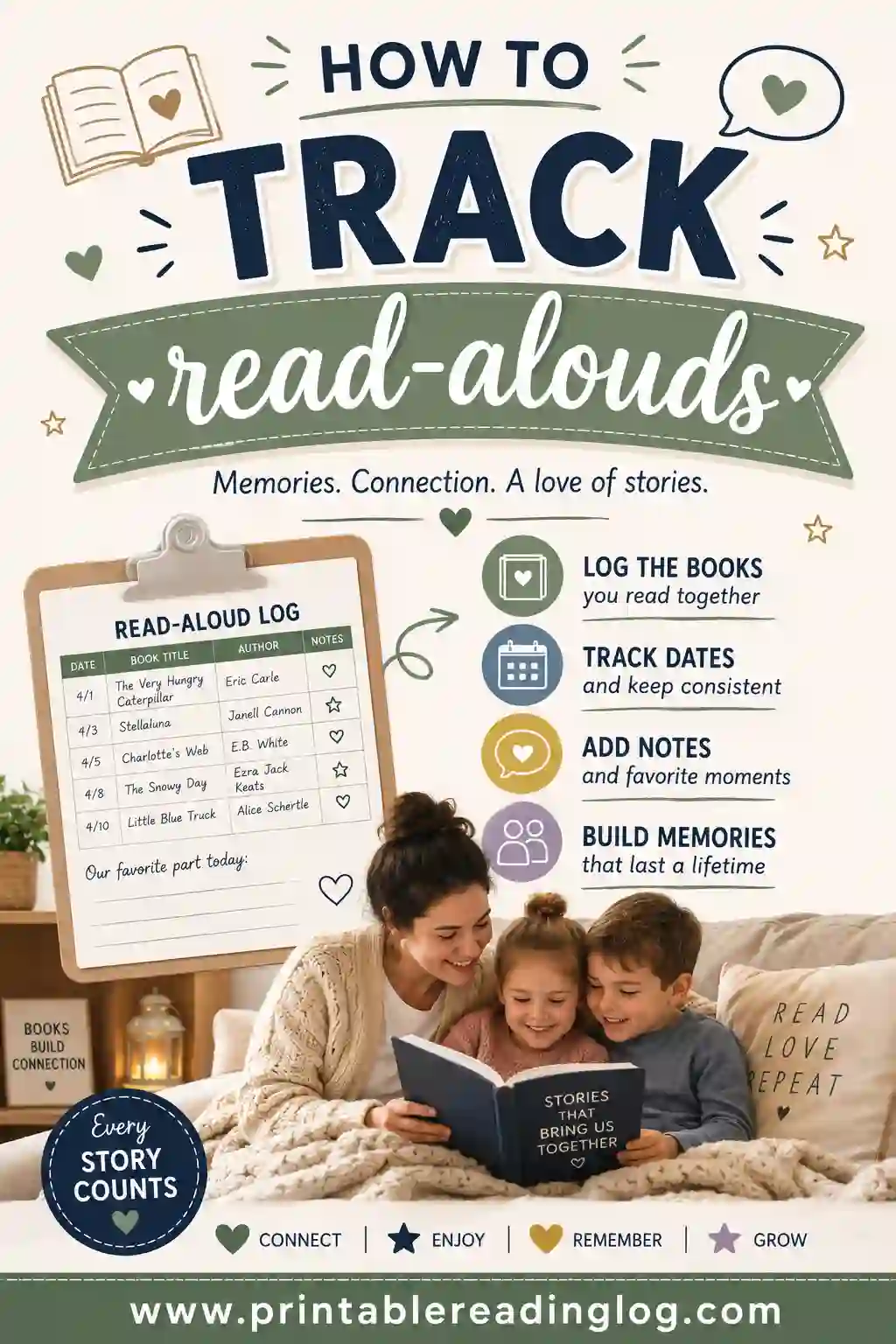
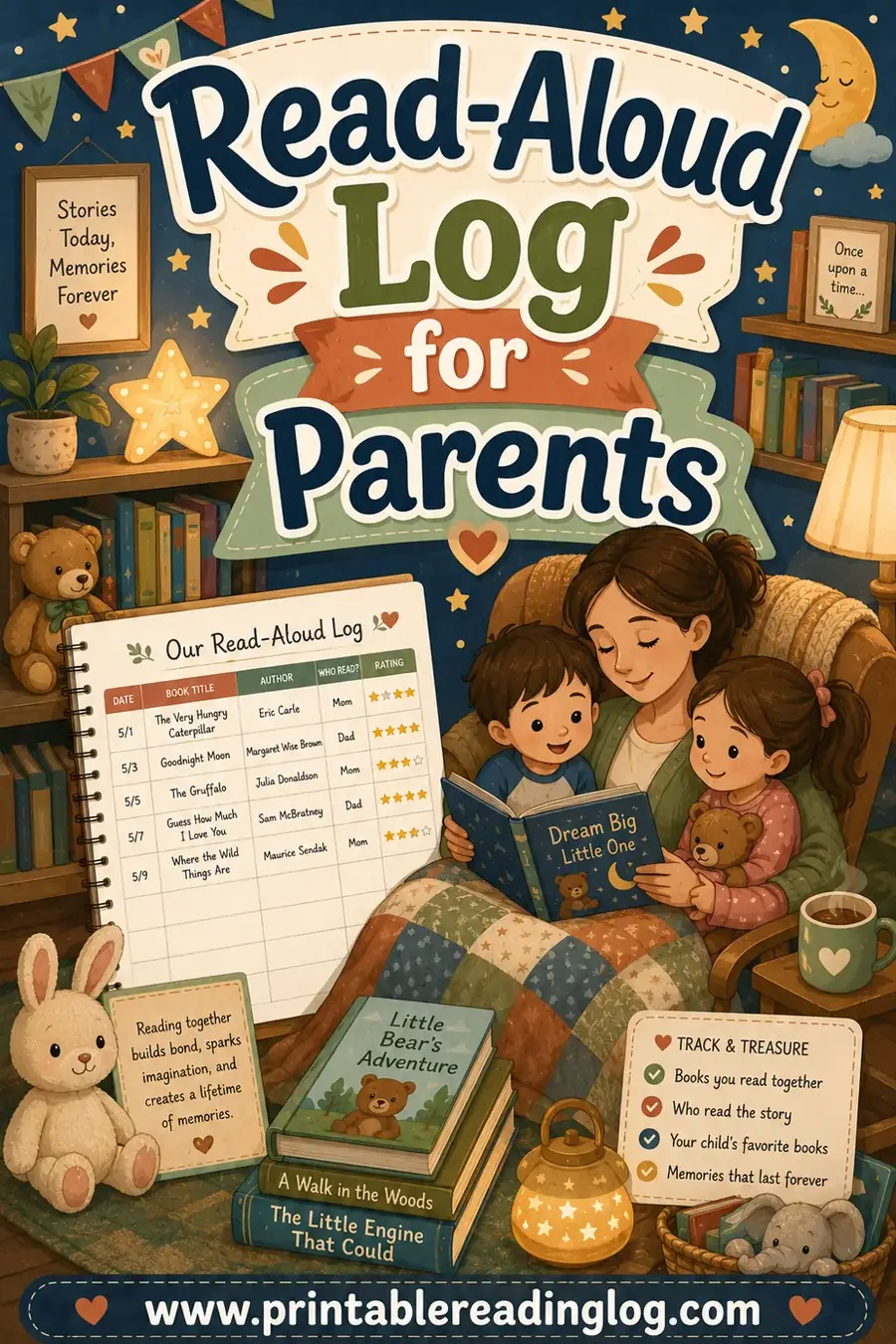
A read-aloud log for parents is a simple sheet where you record the books you read out loud to your child: the title, the date, and often the minutes you spent or your child's reaction. It turns all those bedtime stories into a record you can actually see, which is great for school reading requirements and even better as a keepsake. The easiest way to make one is to use a free printable reading log, label it for read-aloud titles, and print a page for the week or month.
Want to start tonight? Open the free log builder, pick a kid-friendly layout, and print a read-aloud log you can keep by the bookshelf or in the diaper bag. No app, no sign-up, no cost.
Why Keep a Read-Aloud Log?
Reading aloud is one of the highest-impact things you can do for a young child, and a log helps you do it more often and remember the journey. Here's why parents keep one.
- It builds the daily habit. Checking a box each night is a gentle nudge to keep the streak going.
- It meets school requirements. Many teachers ask families to log read-aloud minutes. One sheet covers it.
- It becomes a keepsake. Years later, that list of titles is a sweet snapshot of your child's early years.
- It reveals favorites. You'll quickly see which books get the "again, again!" treatment.
The research backing is strong: reading aloud builds vocabulary, attention, and a lifelong love of books, even before kids can read on their own. A log is just the tool that keeps you consistent. For more, see our guide on how to track read-alouds.
What to Put in a Read-Aloud Log
A read-aloud log has a few columns tuned for the parent-and-child experience. Here's what's worth tracking.
| Column | Why it helps |
|---|---|
| Book title | The story you read together. |
| Date | Builds your nightly streak and a timeline. |
| Minutes | Covers school logging requirements. |
| Who read | Mom, Dad, grandparent, sibling. |
| Child's reaction | A smiley, a star, or one word like "loved it." |
| Read again? | Mark the keepers your kid asks for nightly. |
You won't need all six. Pick the three or four that fit your family. A simple log is one you'll actually keep up with on a tired Tuesday night.
A sample week
Here's what a filled-in stretch might look like, just to picture it.
| Date | Book | Min | Reaction |
|---|---|---|---|
| Mon | Goodnight Moon | 8 | 😊 calm |
| Tue | The Gruffalo | 12 | 😍 again! |
| Wed | Where the Wild Things Are | 10 | 🦁 roared along |
| Thu | The Gruffalo | 12 | 😍 again! |
| Fri | Dragons Love Tacos | 11 | 😂 giggles |
See how The Gruffalo shows up twice? That "read again" pattern is gold. It tells you exactly which books your child connects with, which makes choosing the next library haul a breeze.
How to Set Up Your Read-Aloud Log
The whole thing takes about five minutes. No design skills required.
- Open the builder. Go to the free reading log builder.
- Pick a kid-friendly layout. Big rows, big checkboxes, room for a smiley.
- Choose your columns. Title, Date, Minutes, and a Reaction column cover most families.
- Print a page. One sheet usually holds a couple of weeks of nightly stories.
- Fill it in at bedtime. Make logging part of the wind-down ritual, right after the last page.
Keep it by the bookshelf or tucked in the bedside table. A log you can reach without leaving the room is a log you'll actually use.
Read-Aloud Logs by Age
What you read and how you log it shifts as your child grows. Here's a quick guide.
| Age | What to read | Log focus |
|---|---|---|
| Babies (0–1) | Board books, rhymes | Just check the box; minutes don't matter |
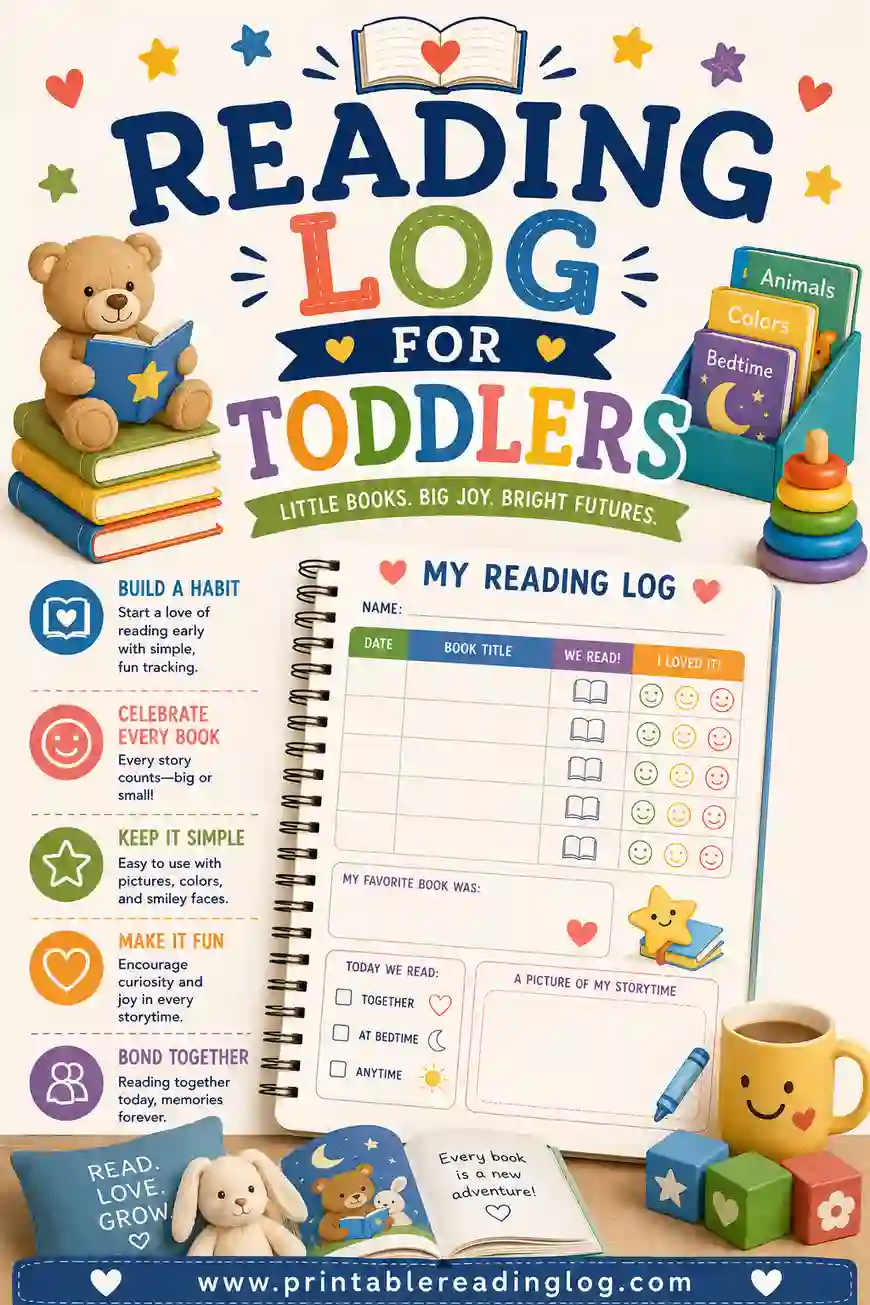
| Toddlers (1–3) | Picture books, repetition | Title + a smiley reaction |
| Preschool (3–5) | Story picture books | Title, minutes, "read again?" |
| Early grades (5–8) | Early chapter books | Title, minutes, chapter reached |
| Older kids (8+) | Longer chapter books | Title, date, where you stopped |
For the youngest crowd, don't stress about minutes or even finishing the book. Babies and toddlers thrive on repetition and your voice. Our reading log for toddlers is built for exactly this stage.
Making Read-Aloud Time Stick
The hardest part isn't logging, it's reading aloud every single day when you're exhausted. A few tricks help.
- Anchor it to bedtime. Stories right before lights-out become an automatic ritual nobody questions.
- Keep the bar low. One short board book counts. A tired night still earns a checkmark.
- Let your kid pick. Choice fuels buy-in. If they grab the same book ten nights running, that's fine.
- Trade off readers. Let a partner, grandparent, or older sibling take some nights. Log who read for variety.
- Make it cozy. A blanket, a lamp, a lap. The ritual matters as much as the words.
When you miss a night
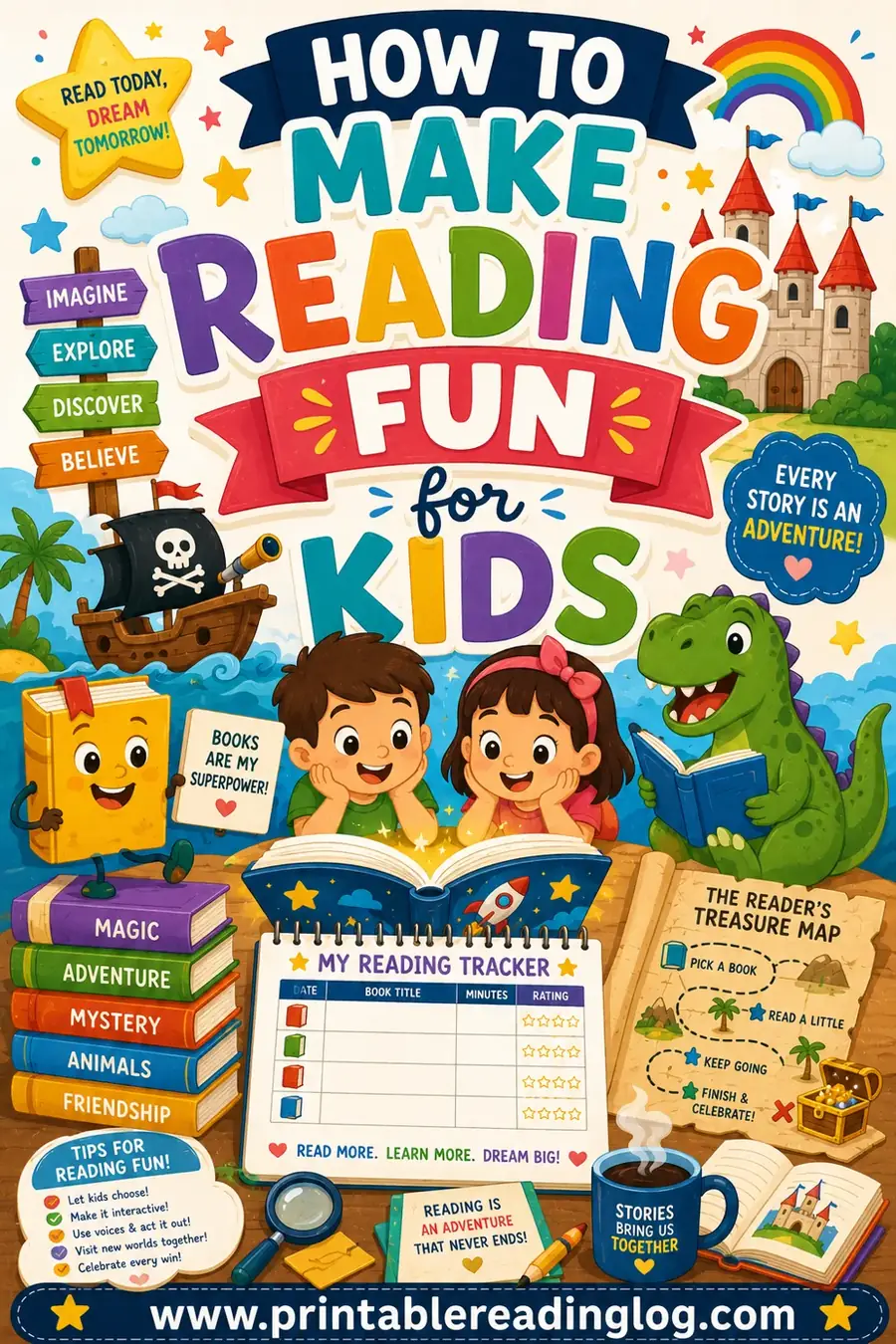
You will miss nights. Everyone does. Don't let a gap turn into a guilt spiral that ends the habit. Just read tomorrow and check the next box. A log that's 80% full is a wonderful, realistic record, not a failure. For more ideas on keeping it joyful, see how to make reading fun for kids.
Read-Aloud Logs for the Whole Family
Read-aloud time doesn't have to be one parent and one child. It can be a whole-family event.
Family reading night
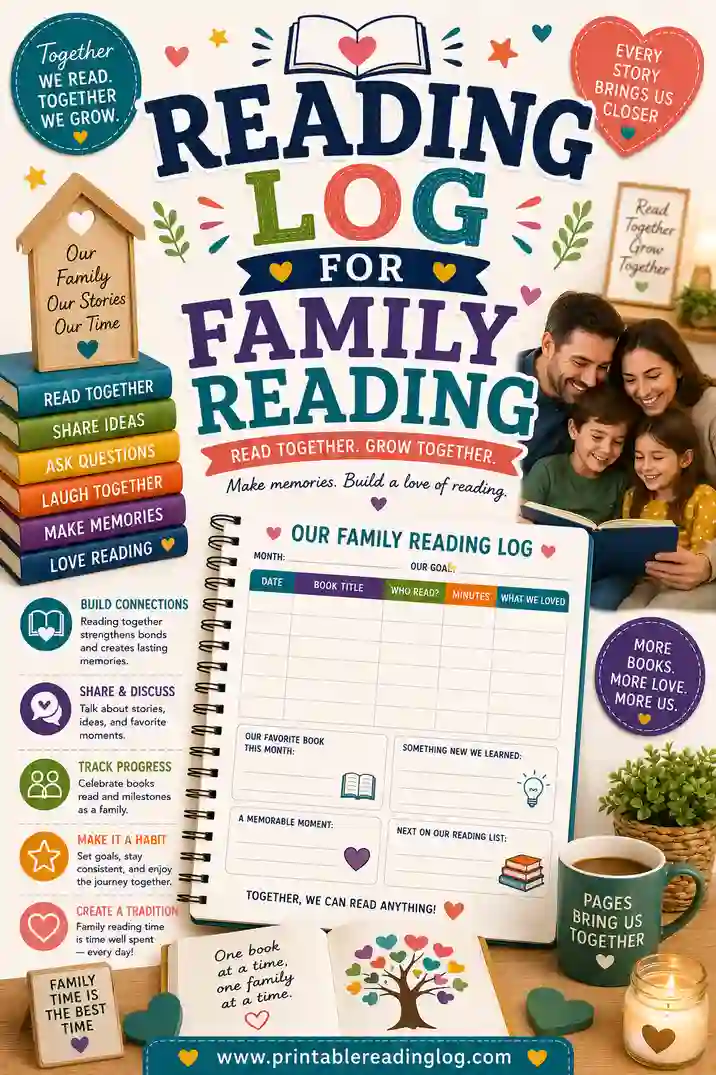
Pick one night a week where everyone gathers and one person reads aloud to the group, kids and adults alike. Log the book and let each kid add their reaction. It's a screen-free tradition that sticks. Our family reading log has a layout built for this.
Siblings reading to each other
Older kids reading aloud to younger ones is a win for both. The big kid practices fluency; the little one gets a story and a hero to look up to. Add a "who read" column and let them log their own turns. It builds responsibility and pride.
Choosing Great Read-Aloud Books
Half the battle of a daily read-aloud habit is having books your child wants to hear again. A log helps you spot those favorites, but it helps to know what to reach for in the first place. Here are categories that read aloud especially well, with a few classic examples to get you started.
| Category | Why it reads aloud well | Examples to try |
|---|---|---|
| Rhyming books | The bounce and rhythm hold little ears | The Gruffalo, Dragons Love Tacos |
| Repetitive text | Kids chime in and "read" along | Brown Bear Brown Bear, The Very Hungry Caterpillar |
| Big emotions | Sparks conversation about feelings | Where the Wild Things Are, The Rabbit Listened |
| Silly humor | Giggles keep them coming back | The Book With No Pictures, Don't Let the Pigeon Drive the Bus |
| Early chapter books | Bridges to longer attention spans | Mercy Watson, Frog and Toad |
| Wordless or picture-heavy | Great for talking and predicting | Journey, Good Night Gorilla |
Don't worry about reading "the right books." The best read-aloud is the one your child reaches for. Rereads count fully, and that repetition is actually how young kids learn language. If your child wants The Gruffalo for the tenth night running, log it again and enjoy the show.
Following your child's interests
A child obsessed with dinosaurs, trucks, or space will sit through far longer read-alouds on that topic. Use your log to notice what holds their attention, then stock up on more of it from the library. Tracking reactions turns the log into a quiet guide for your next book haul, and it keeps reading time feeling like a treat rather than a task.
Print and Customize Your Read-Aloud Log
Since the log is yours, shape it to fit your family's rhythm.
- One sheet per week or month. Weekly sheets feel quick; monthly sheets show the bigger picture.
- Big boxes for little hands. If your child wants to mark their own box, make the squares roomy.
- Add a reactions key. A small legend of smileys (loved it, just okay, again!) makes logging fast and fun.
- Leave a keepsake column. A "best line" or "funniest moment" column turns the log into a memory book.
Every part is adjustable in the free builder, so your read-aloud log matches your bedtime routine instead of fighting it.
Frequently Asked Questions
What should a read-aloud log include?
At minimum: the book title, the date, and the minutes you read (if your school requires it). Most parents add a "reaction" column, like a smiley or one word, and a "read again?" mark for the favorites. Keep it simple enough to fill in at bedtime.
Why should parents read aloud to kids?
Reading aloud builds vocabulary, attention span, and a love of books long before children can read themselves. It's one of the highest-impact, lowest-effort things you can do for early literacy, and it's wonderful bonding time too.
Is the read-aloud log free to print?
Yes. You build and print it yourself at no cost, with no sign-up and no watermark. Print one weekly sheet or a whole year's worth.
How many minutes should I read aloud each day?
Even 10 to 15 minutes a day makes a real difference for young children. Don't stress about hitting a number, though. One short book counts. Consistency beats length every time.
What if we miss some nights?
That's completely normal. Just read the next night and keep going. A log that's mostly full is a great, realistic record. Don't let a missed night or two derail the whole habit.
Can my child help fill in the log?
Yes, and it's a great idea. Let them add the smiley reaction, color the checkbox, or "sign" the row. Giving them a job makes read-aloud time feel like a shared project they're proud of.
Start Your Read-Aloud Log Tonight
Pick your columns, open the free reading log builder, and print a read-aloud log you can keep right by the bookshelf. Track titles, minutes, and those priceless "again, again!" moments, and you'll build both a daily habit and a keepsake you'll treasure. It's free, there's no sign-up, and the only thing left is to grab a book and a cozy spot. Happy reading.