Reading Log for 1st-2nd Grade: Free Printable
A reading log for 1st-2nd grade is a sheet where a six- to eight-year-old writes down what they read each day, usually the book title, the date, how many minutes they read, and a quick rating. It's the bridge between the color-the-box logs of kindergarten and the longer reading journals of older grades. The easiest way to make one is with a free printable reading log maker where you choose the columns, add a minutes or pages tracker, and print a clean sheet at home.
Want to make one right now? Open the free tool, pick the layout that fits your reader, and print as many copies as you need. No sign-up, no fee, nothing to install.
What Goes on a 1st-2nd Grade Reading Log?
By first and second grade, your child can write a little, so the log can do a little more. But don't overload it. The sweet spot is enough columns to feel "grown up" without feeling like a worksheet.
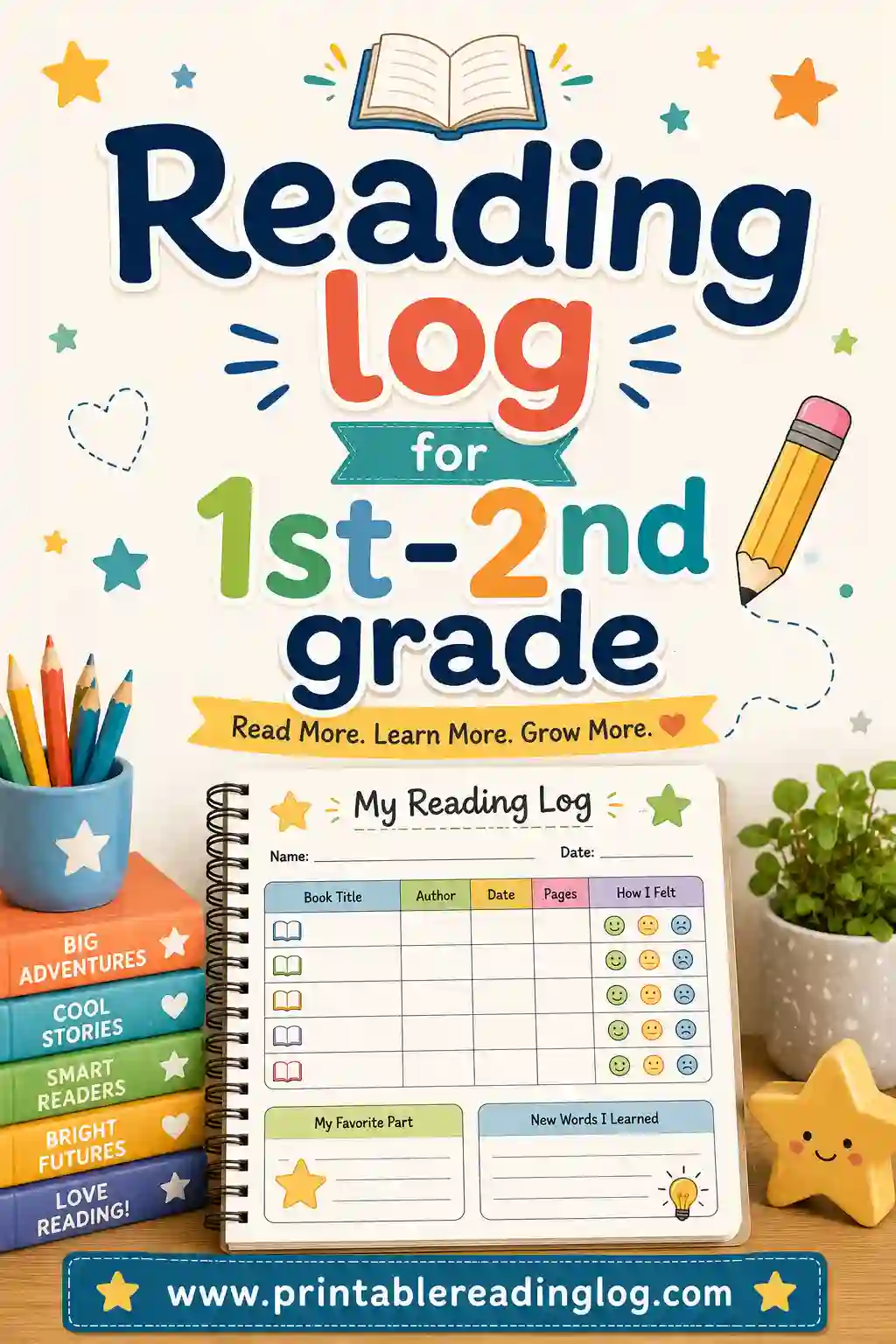
A solid log for this age usually has:
- Book title. The child writes it themselves now, even if the spelling is creative.
- Date. Builds the habit of logging every day.
- Minutes or pages read. This age is perfect for starting to track time or pages.
- A star rating. Still a kid favorite. One to five stars on how much they liked it.
- An optional "who I read with" box. Some kids still read with a parent, and that's great.
That's the core. You can add a tiny "favorite part" line if your reader is ready, but it's optional. The main goal is still building a daily reading habit.
Why a Reading Log Helps at This Age
First and second grade is where reading clicks for a lot of kids. They go from sounding out words to actually reading sentences smoothly. A log makes that growth visible and keeps the momentum going.
A reading log for 1st-2nd grade does a few important things:
- It builds independence. Kids fill it in themselves now, which feels like a big-kid job.
- It tracks real progress. Minutes and pages start to mean something. Seeing "20 minutes" add up is motivating.
- It supports homework. Many teachers assign nightly reading and want a signed log back.
- It keeps reading a daily thing. During the leap from "learning to read" to "reading to learn," consistency matters most.
The numbers don't need to be big. A first grader reading 15 minutes a night, every night, is doing exactly what they should.
A Sample 1st-2nd Grade Reading Log
Here's a filled-in week so you can see how it works. The child writes most of it; a parent signs off at the end.
| Date | Book | Minutes | Stars | With |
|---|---|---|---|---|
| Mon | Frog and Toad Are Friends | 15 | ⭐⭐⭐⭐ | Me |
| Tue | Pete the Cat: Rocking in My School Shoes | 15 | ⭐⭐⭐ | Me |
| Wed | Henry and Mudge | 20 | ⭐⭐⭐⭐⭐ | Dad |
| Thu | Elephant & Piggie: There Is a Bird on Your Head | 15 | ⭐⭐⭐⭐⭐ | Me |
| Fri | Magic Tree House #1 | 20 | ⭐⭐⭐⭐ | Mom |
Five days, around 85 minutes of reading, and a happy reader. A parent signs the bottom and it's ready to turn in.
Great Books for a 1st-2nd Grade Reading Log
You want books that match a new reader's skill but still feel fun. Early chapter books and beginner readers are perfect. Here's a list organized by reading level so you can match the book to your child.
| Book / Series | Level | Why it works |
|---|---|---|
| Elephant & Piggie | Beginner | Funny, lots of dialogue, super easy to read |
| Frog and Toad | Beginner | Gentle stories, short chapters |
| Pete the Cat (chapter books) | Early | Familiar character, builds confidence |
| Henry and Mudge | Early | Short, warm, great for newly independent readers |
| Mercy Watson | Early chapter | Bigger text, silly plots kids love |
| Magic Tree House | Chapter | A real step up for strong 2nd graders |
Let your child pick from the list when they can. Choice is a huge motivator. If a book is too hard, drop down a level. If it's too easy, bump up. The log should track reading they enjoy, not reading they dread.
How to Make a Reading Log in 4 Steps
The free reading log maker handles the layout so you don't have to fuss with spacing in a word processor. Here's all it takes.
- Pick the right columns. For this age, title, date, minutes (or pages), and a star rating is the magic combo.
- Set your tracking goal. Minutes read works well for first and second graders. Pages also work if your child is into chapter books.
- Add a signature line. Most teachers want a parent to sign the weekly log, so leave a spot for it.
- Print. One sheet covers a week or a month, depending on the layout. Print extras and keep them in a folder.
Print a few weeks at once so you're never scrambling on a Monday night.
Minutes or Pages: Which Should You Track?
Both work. The right choice depends on what your child is reading.
Track minutes when…
Your child is still reading mostly picture books and beginner readers, or when they bounce between books. "Read for 15 minutes" is a clear, fair goal that doesn't punish a slower reader. Most 1st-2nd grade teachers ask for minutes, often 15 to 20 a night.
Track pages when…
Your child has moved into early chapter books like Magic Tree House or Mercy Watson. Counting pages or chapters gives a satisfying sense of progress through a real story. Some kids love watching the page number climb.
You can also track both. A column for minutes and a column for "where I stopped" covers all the bases. The free tool lets you set either or both.
Reading Goals for 1st and 2nd Grade
Set goals your reader can actually hit. Steady beats heroic.
- 15 to 20 minutes a night. This is the standard teachers recommend, and it's very doable.
- One early chapter book a week. A nice target for a confident second grader.
- A 5-day streak. Reading Monday through Friday is a great weekly win. Celebrate the full row.
- A monthly book count. Some kids love a "books I finished this month" tally. Aim for a number they can beat.
Tie a small reward to hitting the goal, like picking the weekend movie or a trip to the library. Keep it about the habit, not pressure.
Tips to Keep the Log Going
A reading log only helps if it gets used. These small habits keep it alive.
- Same time every night. After dinner or before bed. Routine carries the habit.
- Let your child fill it in. Messy handwriting and all. It's theirs.
- Keep books and the log together. A folder or a basket by the couch removes the "where's the log?" excuse.
- Sign it together. Make the parent signature a little end-of-week ritual.
- Praise effort and streaks. "You read every day this week!" beats nitpicking the page count.
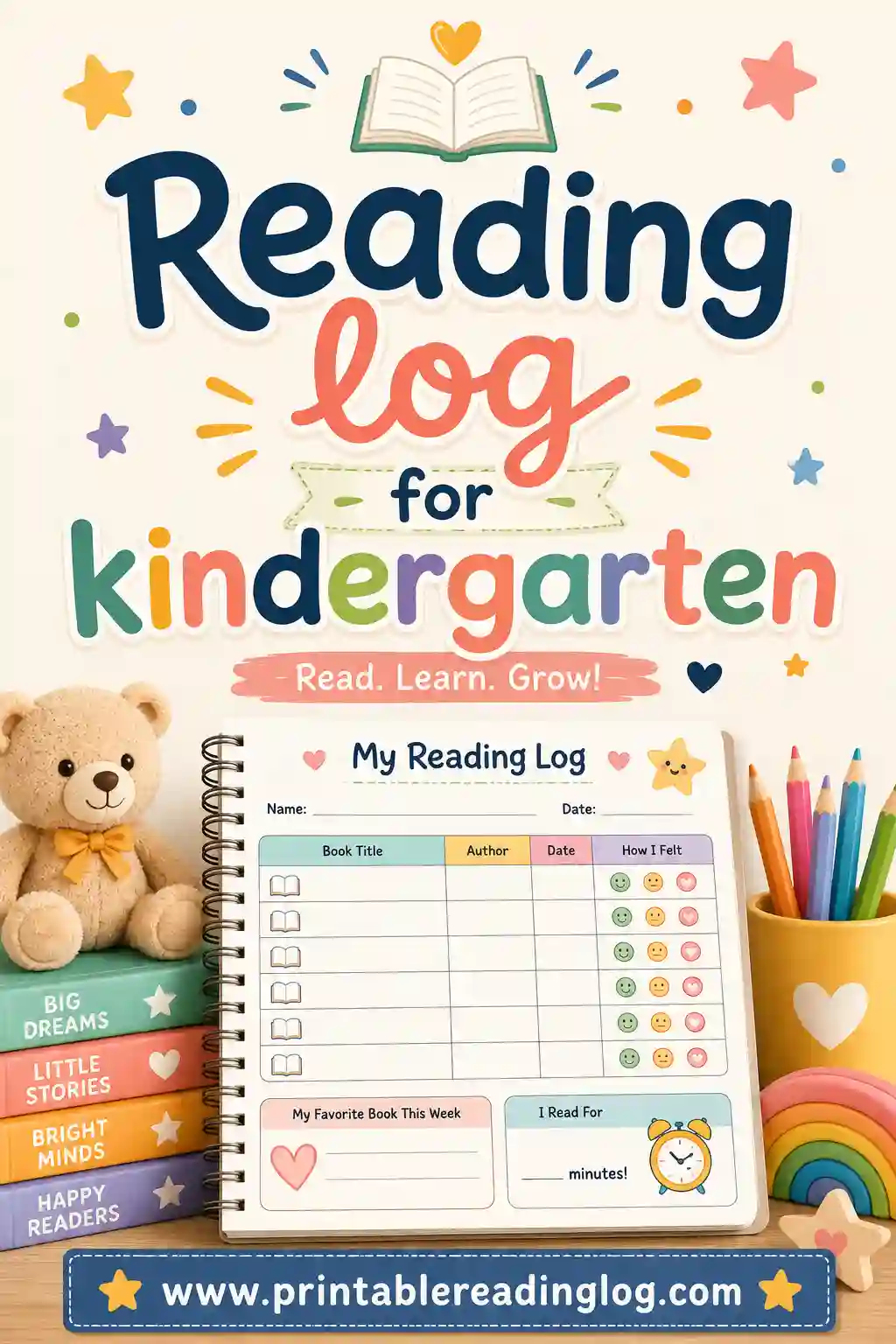
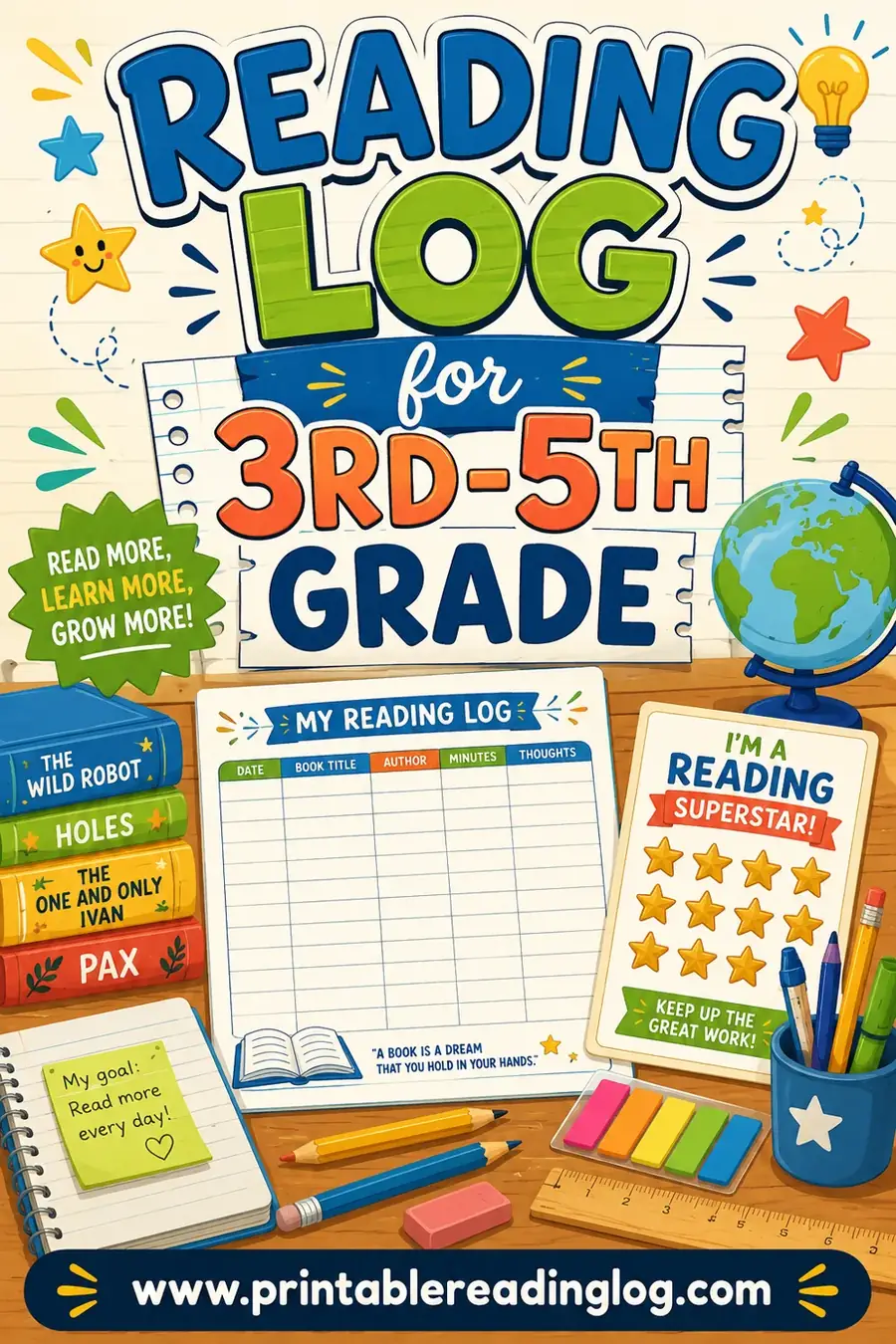
Your reader will grow fast. When they're ready for longer responses and book summaries, check out our reading log for 3rd-5th grade. Got a younger sibling? The reading log for kindergarten uses big color-in boxes. And for older kids, there's a reading log for middle school.
Common Reading Log Mistakes to Avoid
A reading log should make reading easier, not harder. Watch out for these common slip-ups at this age.
- Overloading the log. A first grader doesn't need a summary line and a vocabulary box. Too many columns and the log becomes a chore. Keep it to title, date, minutes, and a star.
- Filling it out for your child. Let them write it, messy spelling and all. The point is ownership. If you do it, it stops being theirs.
- Quizzing instead of enjoying. Don't grill your child on every book to "prove" they read it. Talk about the story like a friend would. Pressure kills the habit.
- Picking books that are too hard. If your child stumbles over every word, the book is too tough. Drop a level. Reading should feel doable, not frustrating.
- Skipping the celebration. A full week of reading deserves a little fanfare. Praise the streak so your child wants to keep it going.
Avoid these and the log becomes a quiet, daily win instead of a battle. The goal is a confident reader who actually enjoys book time.
Making the Reading Log a Habit That Sticks
The real magic of a reading log isn't the tracking. It's the routine it builds. A few intentional moves help reading become automatic.
Anchor it to something you already do
Habits stick when they piggyback on an existing routine. Read right after dinner, or always before brushing teeth. Your child's brain links "after dinner" with "read a book," and soon you won't have to remind them.
Keep a "books we love" list
On the back of the log, jot down favorites your child wants to read again. Re-reading is great at this age. Having a go-to list removes the "I don't know what to read" stall and makes book time effortless.
Read together sometimes
Even confident first and second graders love being read to. Trade off pages, or read a chapter to them at bedtime. Shared reading keeps the routine cozy and shows your child that reading is something the whole family does, not a solo assignment.
Frequently Asked Questions
How many minutes should a 1st or 2nd grader read each day?
Most teachers recommend 15 to 20 minutes of reading per night. That can be one early reader or a couple of short books. Independent reading and reading with a parent both count. Just mark the minutes on the log and aim for a daily streak.
Should the child or the parent fill out the log?
By first and second grade, the child should fill in most of it. They write the title, date, and minutes, even with imperfect spelling. A parent usually signs the bottom each week. Doing it themselves builds ownership and makes the habit stick.
Should I track minutes or pages for this age?
Either works. Track minutes for beginner readers and picture books, since "read for 15 minutes" is a fair, simple goal. Track pages once your child is into chapter books and enjoys watching the story progress. The free tool lets you pick either or both.
What books are best for a 1st-2nd grade reading log?
Beginner readers and early chapter books are ideal: Elephant & Piggie, Frog and Toad, Henry and Mudge, Mercy Watson, and Magic Tree House. Match the level to your child, and let them choose from a few options so reading stays fun.
Can I print the reading log for free?
Yes. The reading log maker is free with no sign-up and no watermark. Pick the columns you want, add a minutes or pages tracker and a signature line, and print as many sheets as you need at home.
How do I keep my child motivated to fill it in?
Make it a daily routine at the same time, let your child write it themselves, and praise the streak rather than the numbers. A small reward for a full week, like choosing a library book or the weekend movie, keeps motivation high without adding pressure.
Ready to Print Your 1st-2nd Grade Reading Log?
Grab a couple of early readers, open the free reading log maker, and choose the layout with a title, date, minutes, and a star rating. In a minute or two you'll have a printable reading log for 1st-2nd grade your child can fill in on their own, building a reading habit one night at a time. It's free, there's no sign-up, and you can print a fresh sheet whenever you need one. Happy reading.