What to Include in a Reading Log
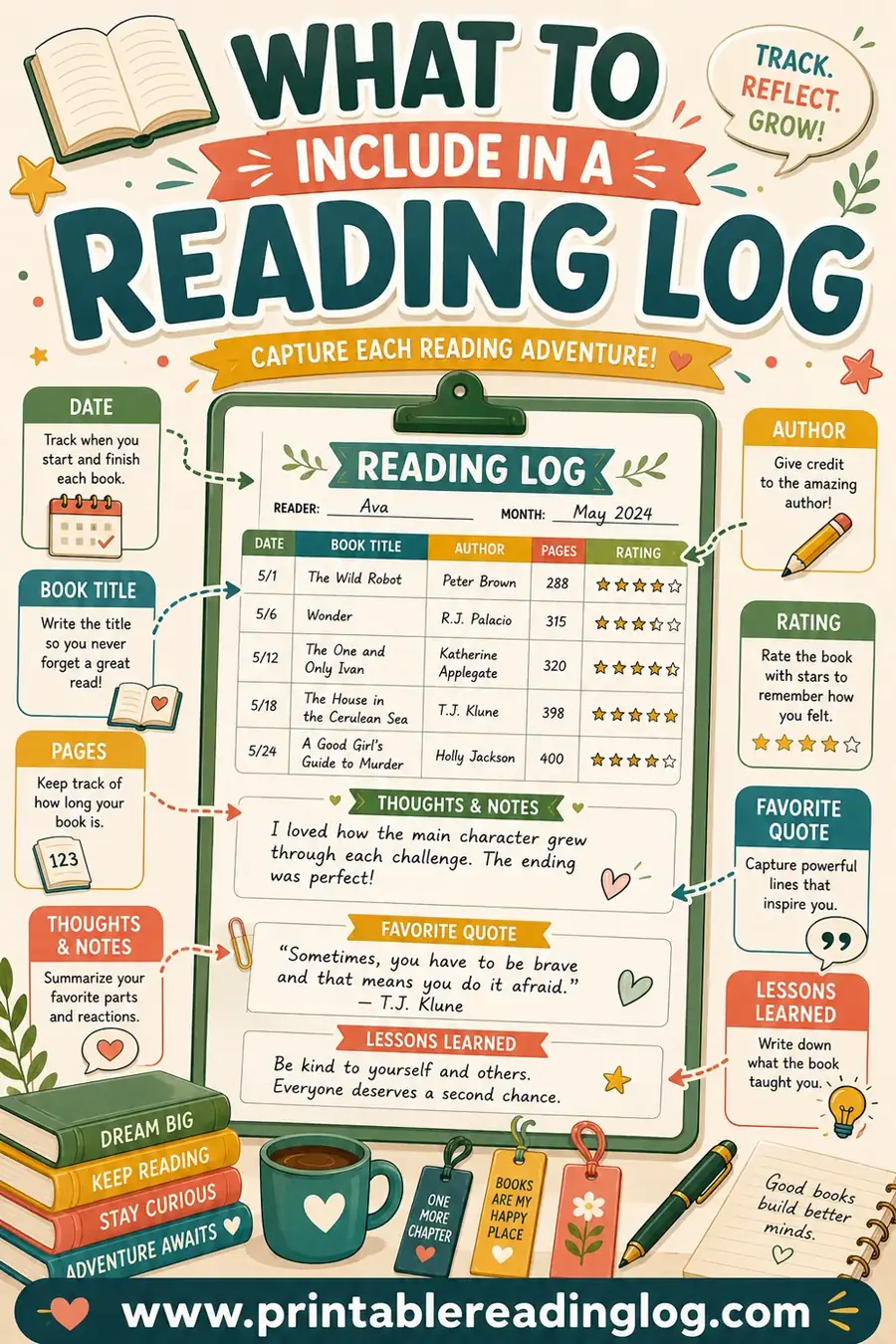
A good reading log includes a handful of core fields, the book's title, author, the date you finished, and a rating, plus a few optional ones like genre, format, page count, and a short note. The essentials let you track what and when you read; the extras turn your log into a rich picture of your whole reading life. Keep it simple enough that you'll actually use it.
Want to skip the setup? Open the free reading log maker, choose the fields you want, and print a clean log in seconds. No sign-up, no app, just a ready-to-fill page for your bookshelf or journal.
The Core Fields Every Reading Log Needs
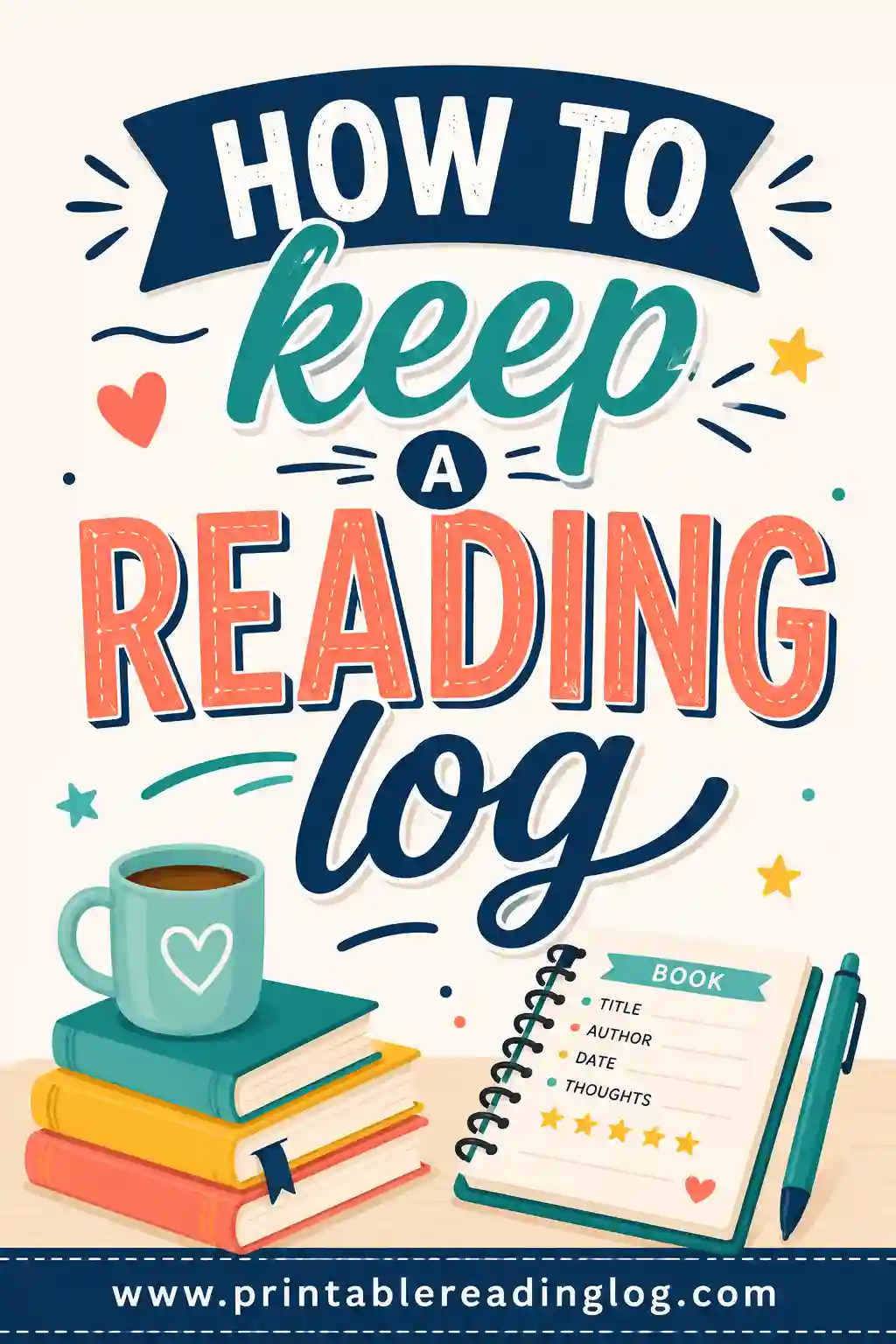
A reading log can be as simple or detailed as you like, but a few fields do the heavy lifting. Start with these four and you've got a log that works for any reader, kid or adult.
- Title. The book itself, obviously. The anchor of every entry.
- Author. Helps you spot favorite writers and notice whose voices you read most.
- Date finished. The key field for tracking. It tells you your pace and your total over time.
- Rating. A quick star or score that captures your gut reaction before you forget it.
With just these, you can answer the big questions: What did I read? When? Did I like it? Everything else is a bonus.
Why "date finished" matters most
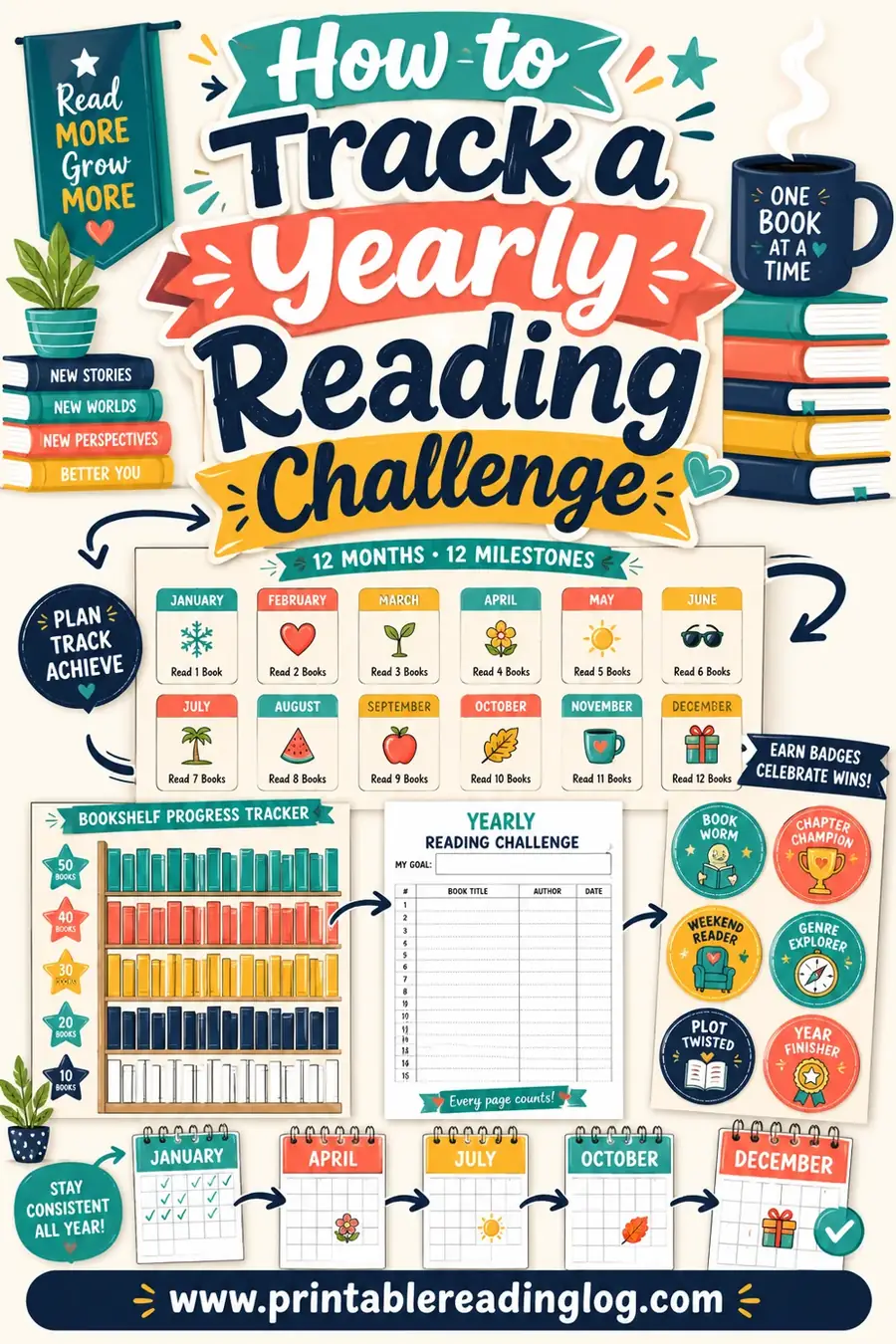
If you only add one date, make it the finish date. It's what lets you count books per month, track a yearly reading challenge, and see your reading speed up or slow down across the year. A start date is nice, but the finish date does the real work.
Helpful Optional Fields
Once you've got the core four, a few extra columns make your log far more useful and fun to look back on. Add the ones that interest you and skip the rest.
| Optional field | Why include it |
|---|---|
| Genre | See if you're stuck in one lane or reading widely |
| Format | Print, ebook, or audiobook, spot what fits your life |
| Page count | Tally your total pages for the year |
| Date started | Measure how long books take you |
| Source | Library, bought, borrowed, gift |
| One-line takeaway | The single thing you want to remember |
| Recommend? | Yes/no, so you remember what to push on friends |
You don't need all of these. Pick three or four that match what you're curious about. A log you'll keep up beats a perfect log you abandon by March.
Fields for Kids and Students
Reading logs for children often need different fields than an adult's. The goal shifts from "what did I read" to "did I practice today," so the structure changes a bit.
For young readers, consider these:
- Minutes read. Many school logs track time rather than whole books.
- Pages read. A good alternative for chapter-book readers.
- Parent or teacher initials. A signature box for accountability.
- Date. A daily row instead of a per-book row.
- A smiley or sticker spot. Little wins that keep kids coming back.
A kid's log is really a daily habit tracker with a reading theme. Simple, visual, and rewarding works best. If you keep a family log, a printable page per child is easy to manage.
Fields That Turn a Log Into a Journal
If you want more than a tally, a couple of reflective fields turn your log into something closer to a reading journal. These capture the why, not just the what.
- Favorite quote. One line worth keeping from each book.
- In three words. A fast way to sum up how a book felt.
- Reflection. A sentence or two on what you thought or learned.
- Mood. "Cozy," "challenging," "couldn't put it down."
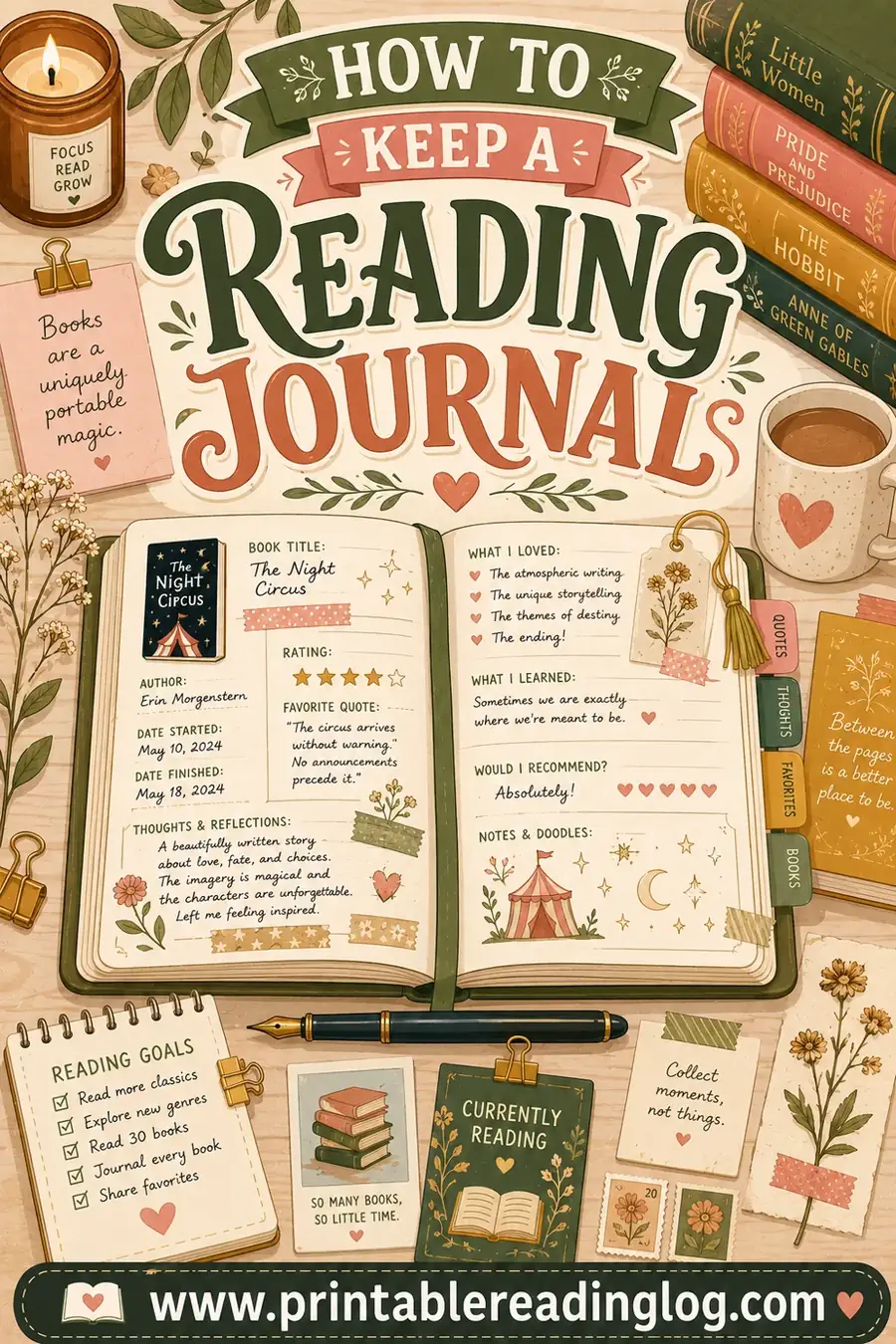
Even one of these adds a lot. Months later, "the only way to learn is to live" will bring a whole book rushing back. For the full approach, see our guide on how to keep a reading journal.
A Ready-to-Use Reading Log Template
Here's a clean template you can copy or recreate. It includes the core fields plus a few popular extras, the sweet spot for most readers.
| # | Title | Author | Started | Finished | Rating | Genre | Format | Notes |
|---|---|---|---|---|---|---|---|---|
| 1 | The Hobbit | J.R.R. Tolkien | Jan 2 | Jan 16 | 5/5 | Fantasy | Cozy reread | |
| 2 | Atomic Habits | James Clear | Jan 18 | Feb 1 | 4/5 | Nonfiction | Audio | Useful, a bit repetitive |
| 3 | Circe | Madeline Miller | Feb 3 | Feb 20 | 5/5 | Myth | Ebook | Gorgeous writing |
That's the whole engine of a reading log. A row per book, a handful of columns, and you're set. You can build this exact layout with the free reading log maker and print as many pages as your year needs.
Build vs. fill: how detailed should you go?
A quick rule of thumb on how many columns to use:
| Reader type | Suggested fields |
|---|---|
| Casual reader | Title, author, date finished, rating |
| Challenge tracker | Add genre, format, page count |
| Journaling reader | Add quote, reflection, recommend? |
| Kid or student | Date, minutes/pages, initials, sticker |
Match the log to your goal. A casual reader who adds ten columns will quietly stop logging. A journaling reader who only logs titles will wish they'd written more. Pick your lane.
How to Lay Out Your Log
Fields are one thing; layout is another. A few choices make a log easier to live with.
- One row per book. The standard. Clean and scannable.
- A page per month. Helps you see your monthly pace at a glance.
- A progress tracker up top. A "12 / 24" tally or a fill-in bar for motivation.
- Plenty of rows. Run out of space and momentum stalls, so print extra pages.
Where you keep it matters too. A log on the fridge or in a planner gets updated; a log buried in a drawer doesn't. Visibility is half the battle.
A Field Checklist by Reading Goal
Different goals call for different fields. Rather than guess, match your reason for logging to the columns that actually serve it. Here's a quick checklist you can use when you build your page.
| Your goal | Fields to include | Fields to skip |
|---|---|---|
| Just remember what I read | Title, author, date finished, rating | Page count, source |
| Hit a yearly book count | Number, title, date finished, running tally | Quote, reflection |
| Track reading minutes (kids) | Date, minutes, initials, sticker | Genre, format |
| Reflect like a journal | Title, rating, quote, three words, reflection | Page count, source |
| Spot my reading patterns | Genre, format, page count, date | Quote, recommend? |
The lesson here is simple: there's no universal "right" set of fields, only the right set for your goal. A casual reader and a data-loving challenge tracker should end up with very different pages, and both are correct.
What to Actually Do With Your Log
Filling in a log is only half the value, the other half is looking back at it. A page you never revisit is just a chore. Here's how to turn those rows into something useful and fun.
- Run a year-end review. Tally your total, find your highest-rated reads, and notice which months you read most. It takes ten minutes and tells you a lot about your reading life.
- Build your "next read" list from it. Spot a five-star author you loved? Their other books belong on your to-read page. Your own log is the best recommendation engine you'll ever have.
- Catch your patterns. If every book you rated five stars is the same genre, lean in, or deliberately branch out. Either way, the data shows you something you'd never notice by memory.
- Share the good ones. Your one-line notes make recommending books to friends effortless. "Loved it, twist I never saw coming" beats "um, it was good?"
A log that gets reviewed is a log that keeps earning its place. Make the year-end look-back a small ritual and you'll never want to skip a year of tracking again.
Mistakes to Avoid
A few small missteps can sink an otherwise good log:
- Too many fields. Ambition fades. Start lean, add later if you miss something.
- Logging late. Update the moment you finish, or you'll forget dates and details.
- No place for ratings or notes. The fun of a log is the looking back; leave room for it.
- One giant page. Cramped rows discourage entries. Give each book breathing room.
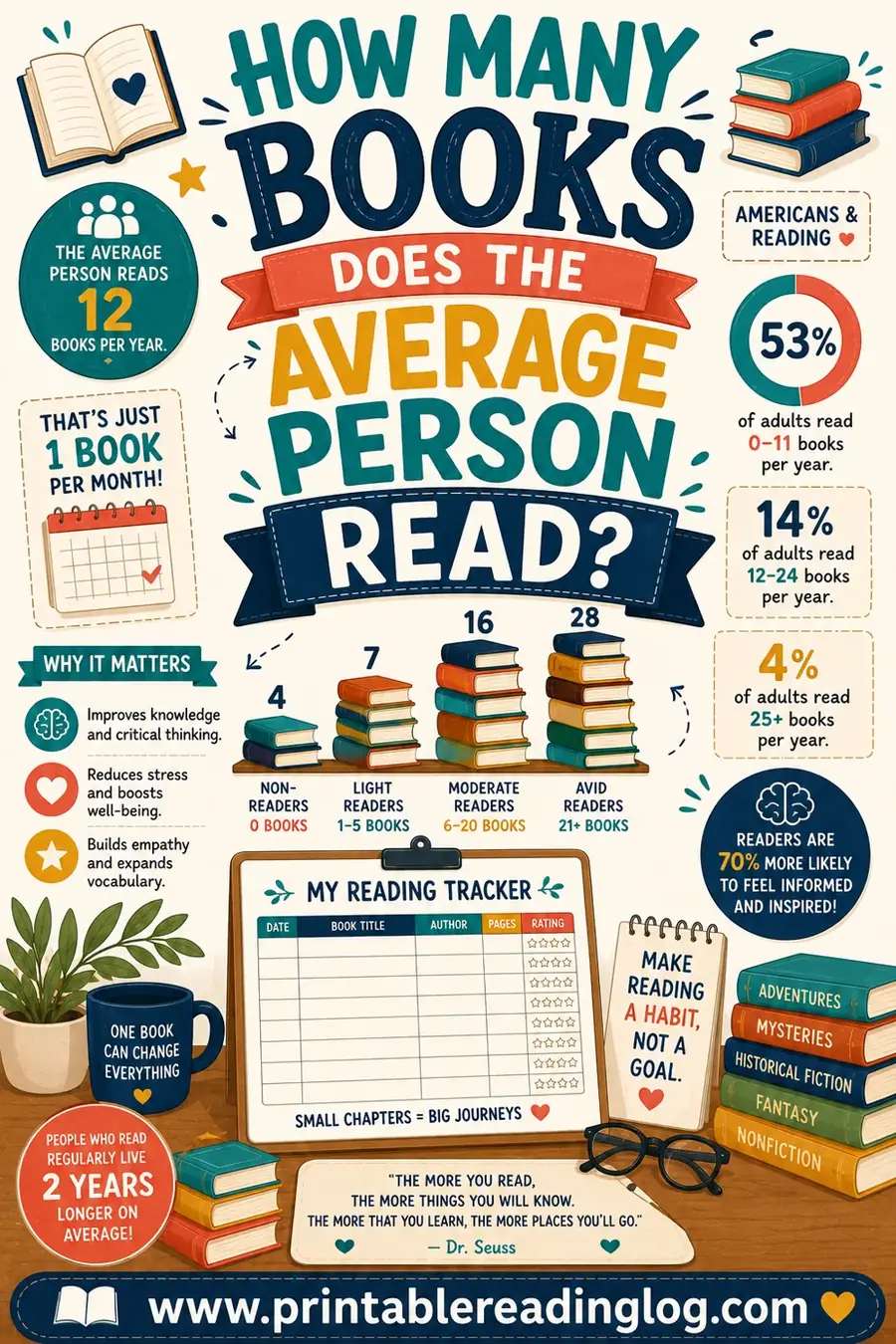
Dodge those and your log will keep itself going. Curious how your numbers compare once you start tracking? See how many books the average person reads.
Frequently Asked Questions
What are the must-have fields in a reading log?
Four fields cover the essentials: title, author, date finished, and a rating. With just these you can track what you read, when, and whether you liked it. Everything else, genre, format, notes, is a helpful bonus you can add if you want.
What should a kids' reading log include?
For children, track daily reading rather than whole books: a date row, minutes or pages read, a spot for a parent or teacher to initial, and a sticker or smiley for motivation. It works more like a daily habit tracker with a reading theme.
Should I track page count and genre?
If you enjoy numbers and patterns, yes. Page count lets you tally your total for the year, and genre shows whether you're reading widely or stuck in one lane. They're optional, though, only add them if you'll actually use them.
How do I turn a reading log into a reading journal?
Add a few reflective fields: a favorite quote, a three-word summary, and a sentence or two on what you thought. Those small notes capture the why behind each book and make your log far richer to look back on.
How many fields is too many?
It depends on your goal, but most readers do best with four to eight columns. Casual readers can stick to the core four; challenge trackers and journalers add a few more. Too many columns and you'll quietly stop logging, so start lean.
Where should I keep my reading log?
Somewhere you'll see it daily, the fridge, a planner, or a binder by your reading chair. Visibility is what keeps a log alive. A log buried in a drawer gets forgotten; one in plain sight gets updated.
Should I add a "did not finish" column?
It's a small addition that earns its keep. A quick DNF mark, plus a few words on why ("dragged after chapter three"), saves future-you from picking up the same disappointment twice. You don't need a whole column, just a note in your existing one. Tracking the books you set down is quietly as useful as tracking the ones you finished.
How do I set up a reading log for a whole family?
Give each person their own page or section with fields that fit their age, minutes and stickers for the little ones, titles and ratings for older kids and adults. Keep all the pages together in one binder or on one fridge so everyone sees the shared progress. A printable maker is handy here because you can print a different layout for each family member from the same tool.
Ready to Build Your Reading Log?
Now that you know what to include, the rest is easy. Pick your core fields, add a few extras that fit your goals, and open the free reading log maker to print a clean, ready-to-fill log. It's free, there's no sign-up, and you'll have the perfect page to start tracking every book you read. Happy reading.