How to Prevent the Summer Slide (A Parent's Guide)
To prevent the summer slide, keep your child reading a little every day, weave learning into everyday fun, and track their progress so it feels like a game instead of homework. Just 20 minutes of reading a day over the break is enough to hold skills steady, and a printable reading log makes that progress visible and rewarding. The summer slide isn't inevitable. A few easy habits stop it cold.
Want to start now? Open the free reading log maker, print a summer tracker, and let your child check off their first book today. No sign-up, no fee, works on any home printer.
What Is the Summer Slide?
The summer slide is the learning loss that happens when kids take a long break from school. Without daily practice, reading and math skills slip backward, and many students return in the fall behind where they ended in spring.
It's a real, measured effect. Studies have tracked it for decades, and reading is one of the areas hit hardest. The loss adds up too. A little ground lost each summer can stack into a meaningful gap by middle school.
Here's the reassuring part: the slide is preventable. It happens because skills go unused, so the fix is simple. Keep them used, even just a little, and the slide flattens out. You don't need a summer of worksheets, just a steady trickle of practice woven into the fun.
Why Reading Is the Best Defense
If you only do one thing this summer, make it reading. Reading touches vocabulary, comprehension, focus, and background knowledge all at once, which makes it the highest-value habit you can keep.
The dose is small. Research points to just a handful of books, or about 20 minutes a day, being enough to hold reading skills steady over the break. That's less than one TV episode's worth of time.
Best of all, reading is easy to make fun. With no grades and no homework pressure, summer is the perfect time for kids to read what they love and rediscover that books are enjoyable. A summer reading log turns those daily minutes into a game with a visible finish line.
Keep a Daily Reading Habit
Consistency beats intensity. A few pages every day does far more than a single long session once a week. Daily reading keeps skills warm and builds a habit that survives the whole break.
The trick is to make it small and predictable. Tie reading to a moment that already exists, like after lunch or before screen time. Twenty minutes is plenty. Keep it short, keep it daily, and keep it pressure-free.
A simple daily reading routine
- Pick a calm slot. After lunch or before bed works for most families.
- Set a tiny goal. Twenty minutes, or one chapter. Small enough to always win.
- Let them choose. A book your child picked beats one you assigned, every time.
- Track it. Check off each day on a reading log so progress is visible.
The log is the engine here. Watching a row of checkmarks grow gives kids a reason to read even on lazy days, thanks to the simple "don't break the chain" pull.
Track Progress to Keep Kids Motivated
Kids love visible progress, and tracking is the quiet hero of summer learning. A log turns invisible effort into something a child can point at and feel proud of.
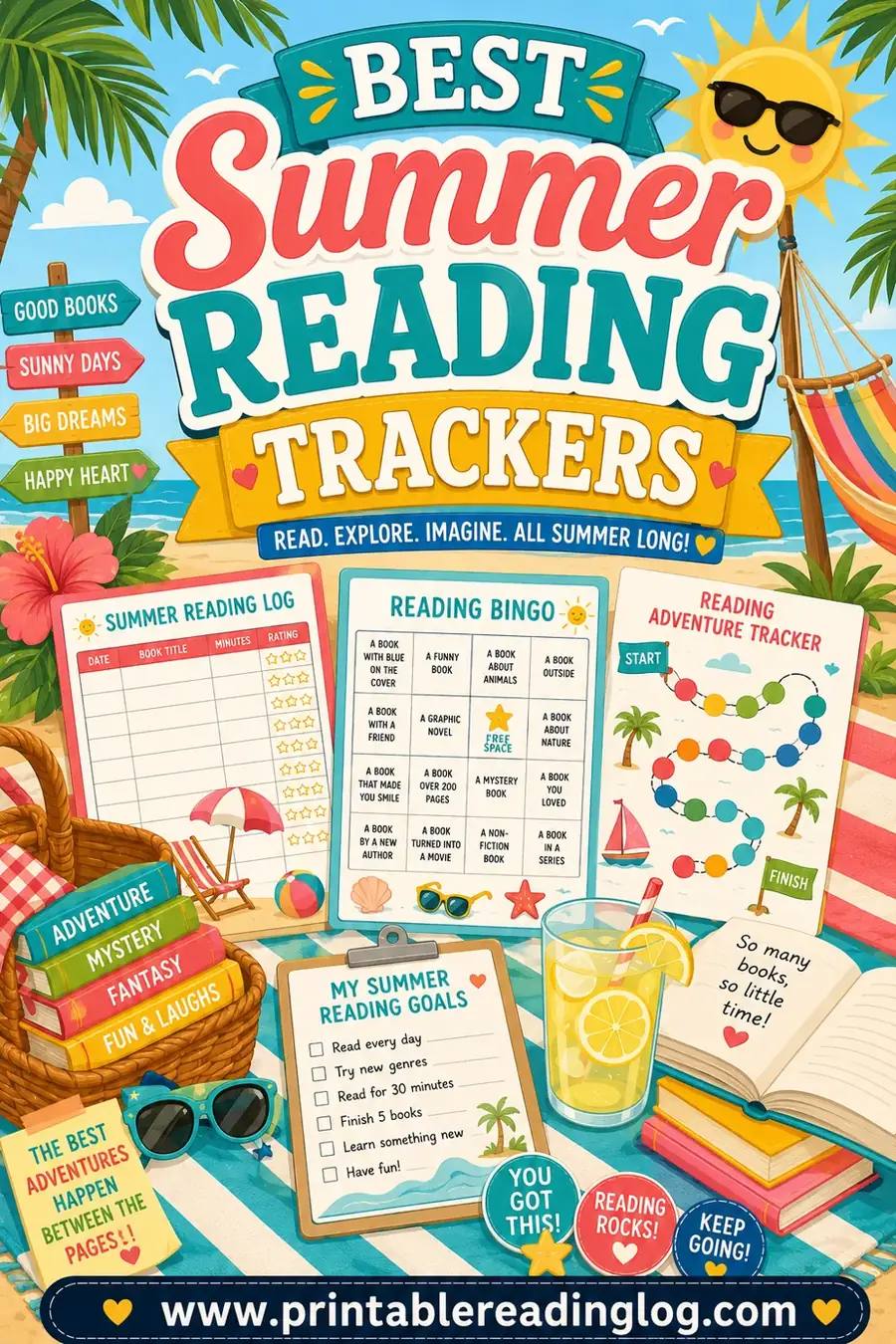
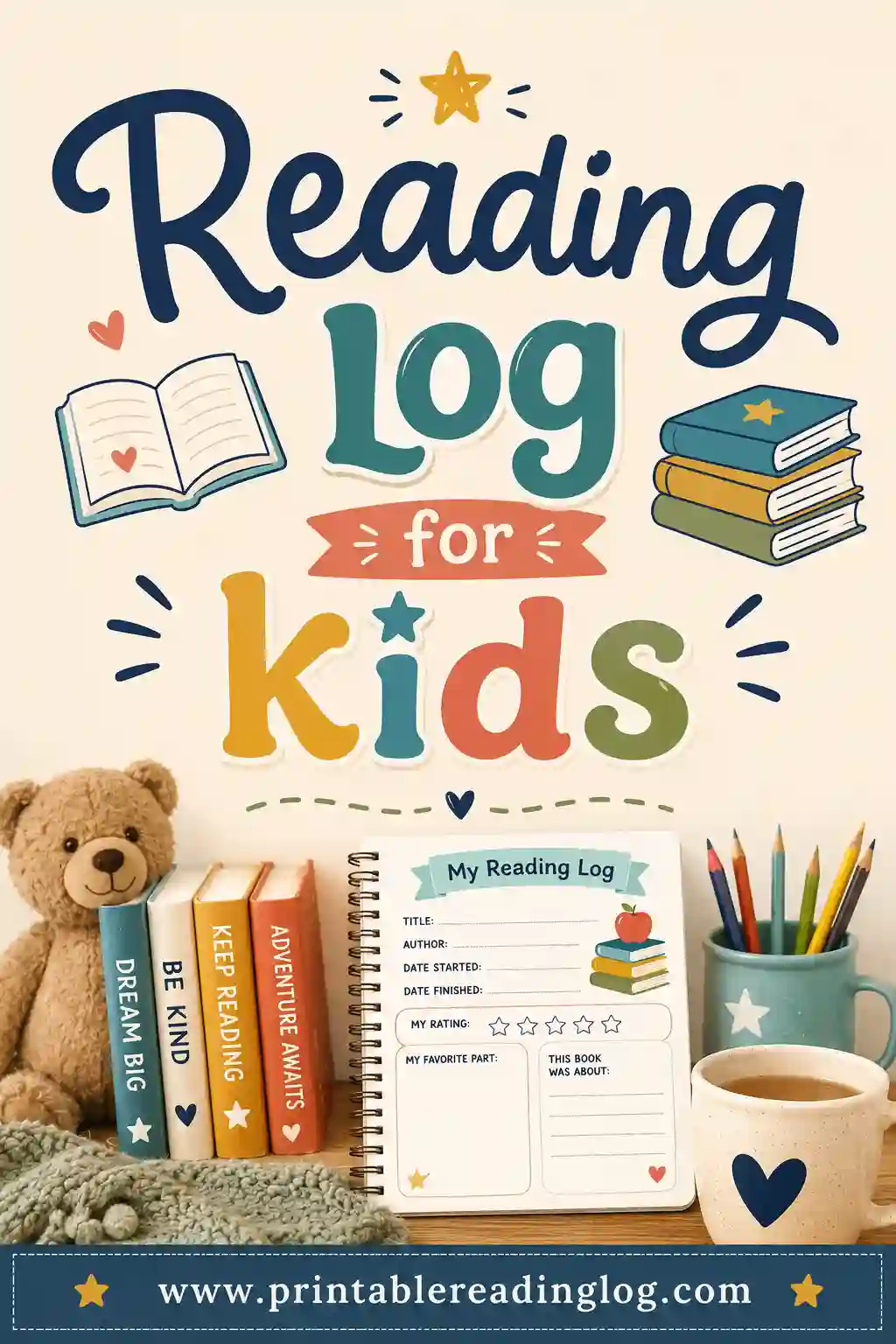
Keep it playful with stickers, colored-in squares, and a goal to chase. A kids' reading log with space to draw the cover, or a summer reading log with beachy squares, makes reading feel like a game instead of make-up homework.
Pair the log with small rewards tied to effort, not perfection. Finish five books, earn a movie night. Read every day for a week, pick the dinner. A reading rewards log makes the finish line clear and gives kids something to race toward.
| Goal | Fun reward | Skill it protects |
|---|---|---|
| Read 20 min daily for a week | Pick the family movie | Daily reading habit |
| Finish 5 books | New bookmark or stickers | Comprehension, vocabulary |
| Solve a daily math puzzle for a week | Extra screen time | Math fluency |
| Write in a summer journal 5 days | A small treat | Writing, spelling |
Don't Forget Math (the Other Slide)
Reading gets the spotlight, but math slides too, and often faster, because kids rarely practice it outside school. A little casual math keeps those skills sharp without a single worksheet.
Weave it into daily life. Math is everywhere once you look:
- Cooking. Doubling a recipe is fractions in disguise.
- Shopping. Let kids add up the cart or figure out the change.
- Travel. Calculate distances, times, and how long until you arrive.
- Games. Card games, dominoes, and board games build math fluency through play.
Ten minutes of "real life math" a day keeps the gears turning. Track it on a chart right next to reading, and kids get the same satisfying progress for both.
Make Learning Part of Everyday Fun
The best summer learning doesn't feel like learning. It hides inside the fun stuff you'd do anyway, which means zero resistance from kids.
Connect books and learning to real experiences. Read about the ocean, then visit an aquarium. Read a recipe, then bake it. Visit a museum, a zoo, or a nature trail and talk about what you see. These outings build vocabulary and knowledge far better than any drill.
Other easy, sneaky-learning ideas:
- Library programs. Most run free summer reading challenges with prizes and events.
- Audiobooks on trips. The whole family follows one story as the miles roll by.
- Journaling. A few lines a day about the summer keeps writing and spelling sharp.
- Documentaries and educational shows. Screen time that actually teaches something.
A Sample Summer Anti-Slide Plan
You don't need to fill the day. A loose 30-to-40-minute total of light learning, spread out and woven into fun, is plenty. Here's what a balanced week can look like.
| Day | Reading | Math / writing | Bonus |
|---|---|---|---|
| Mon | 20 min, kid's choice | Help cook dinner | — |
| Tue | 20 min + log it | Count change at the store | Library trip |
| Wed | Audiobook on a drive | Journal a few lines | — |
| Thu | 20 min, read aloud | Board game math | Museum or zoo |
| Fri | 20 min + reward check | Bake (fractions!) | Movie reward night |
Notice how light it is. Most of this is just normal summer fun with a learning twist. Adjust to your family, and let weekends be free.
Tips for Reluctant Kids
Some kids dig in their heels, and pushing harder backfires. The fix is to lower the stakes and lean all the way into fun.
- Shrink the goal. One page counts. One math puzzle counts. Tiny wins rebuild confidence.
- Let them pick easy stuff. Comics, graphic novels, and re-reads all build skills and keep reading joyful.
- Read to them. Even older kids love being read to. It keeps the love of stories alive.
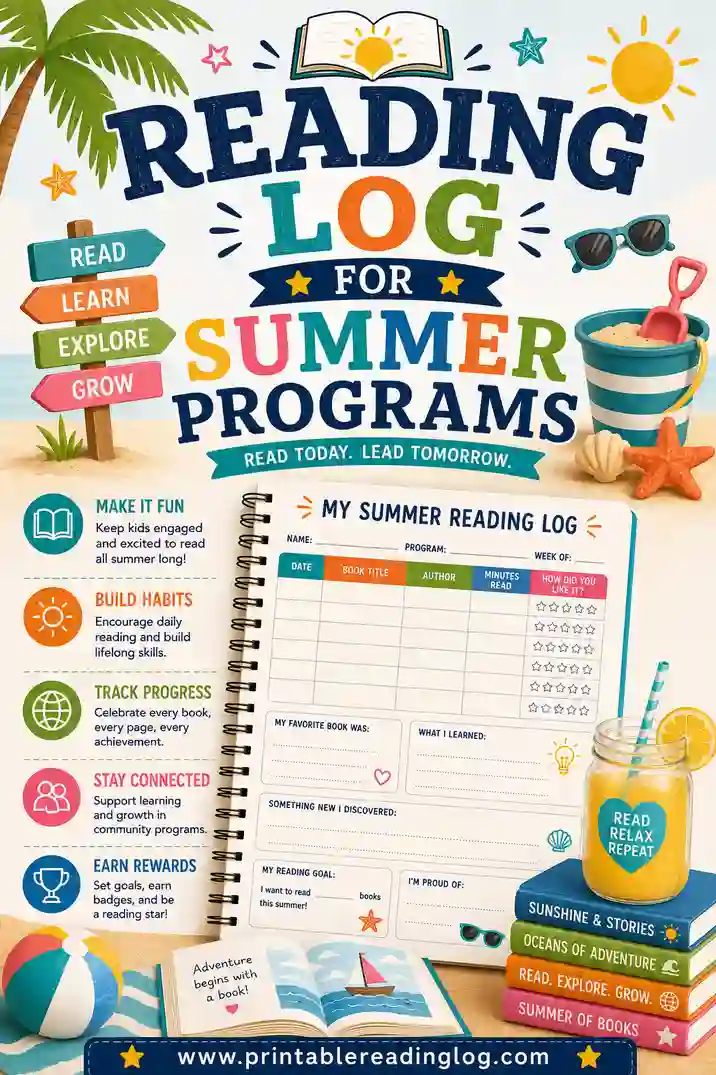
- Use a summer program. A reading log for summer programs adds structure, group goals, and built-in motivation.
Celebrate every checked box like it's a big deal. For a reluctant kid, the win isn't a perfect log. It's keeping reading alive and pleasant until fall.
Frequently Asked Questions
How much reading prevents the summer slide?
About 20 minutes of reading a day, or a handful of books across the break, is enough to hold most kids' reading skills steady. Consistency matters more than volume. A summer reading log keeps those daily minutes visible and motivating.
Is the summer slide really a big deal?
Yes. Decades of research show kids lose reading and math ground over long breaks, and small losses can stack up over the years. The good news is it's easy to prevent with a little daily practice woven into summer fun, so a few simple habits make a real difference.
How do I prevent the summer slide without it feeling like school?
Hide the learning inside fun. Let kids pick books they love, do math while cooking and shopping, and tie it all to outings like the zoo or aquarium. A reading log with small rewards turns progress into a game, so it never feels like homework.
Does math really slide over the summer too?
It does, often faster than reading, because kids rarely practice math outside school. The fix is casual, real-life math: cooking, shopping, travel, and games. Ten minutes a day of playful math keeps those skills from slipping.
What if my child refuses to read all summer?
Lower the stakes. Let them read comics, graphic novels, or re-reads, shrink the daily goal to one page, and read aloud to them. Pair tiny wins with a reading rewards log and celebrate every checkmark. The goal is keeping reading alive, not stretching them.
When should I start preventing the summer slide?
Start right at the beginning of the break before any ground is lost. Setting up a daily reading routine and a reading log in the first week makes the habit stick for the whole summer. Starting early is far easier than catching up in August.
Ready to Beat the Summer Slide?
Pick a few easy habits, then open the free reading log maker and print a summer tracker your child can fill in every day. Twenty minutes of reading and a little real-life math, made visible on a log, is all it takes to walk into fall ahead instead of behind. It's free, there's no sign-up, and you can print a fresh sheet anytime. Here's to a summer of growth, not slide.