Reading Bingo Log: Free Printable Challenge
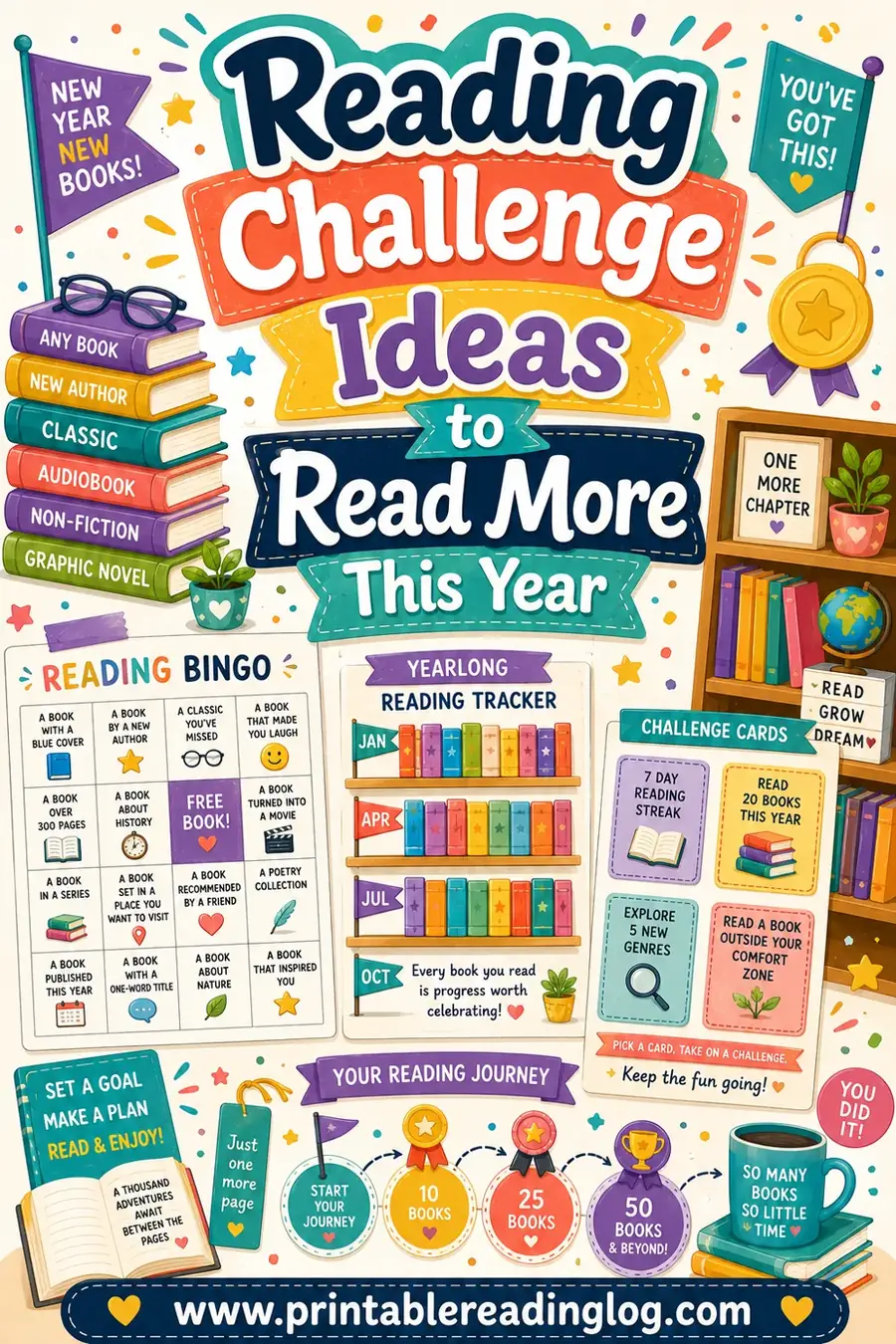
A reading bingo log is a tracker shaped like a bingo card, where each square is a reading challenge — like "read a book with a blue cover" or "read for 30 minutes outside." Readers mark squares as they complete them, racing for a line or a full blackout. The fastest way to make one is the free printable reading log builder: pick a bingo style, add your challenges, and print. No app, no cost.
Want to jump straight in? Open the free reading log maker, choose the bingo layout, and print a card for each reader. It's a fun way to turn reading goals into a game in about a minute.
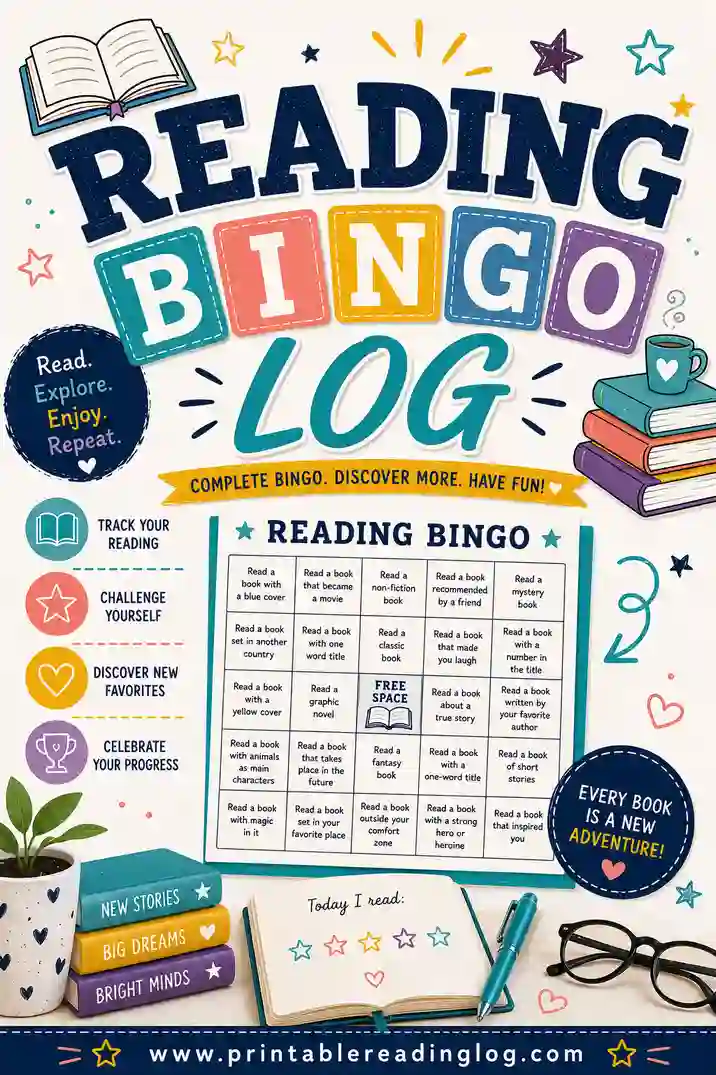
What Is a Reading Bingo Log?
Take a normal bingo card, then swap the numbers for reading challenges. Each square is a little mission — a genre to try, a place to read, a goal to hit. As readers finish each one, they mark the square. Complete a row, column, diagonal, or the whole card, and they've got "bingo."
It's a reading log in disguise. Instead of recording books in a list, readers are nudged toward variety and adventure. The square "read a book that became a movie" pushes them somewhere new. The square "read for 30 minutes" builds the daily habit. The game does the motivating for you.
A reading bingo log works for almost any age and setting — a summer at home, a classroom challenge, a library program, or a book club kickoff.
Why a Reading Bingo Log Works So Well
Plain logs ask, "Did you read?" A bingo log asks, "Can you complete this card?" That small shift — from chore to challenge — changes how readers feel about it.
Here's why it clicks:
- It's a game. Marking squares and chasing a "bingo" is genuinely fun. Reading stops feeling like an assignment.
- It builds variety. Squares push readers toward genres and styles they'd never pick on their own.
- It's visible progress. A filling-in card is satisfying. You can see how close you are.
- It rewards naturally. A completed line or blackout is a built-in milestone — perfect for a prize.
It's especially powerful for reluctant readers, who'll engage with a game when a plain log feels like work. For more on the motivation angle, see how to motivate kids to read.
Ready-Made Reading Bingo Challenges (Copy & Paste)
Here's a stack of challenges sorted by theme. Pick any 9 for a quick 3x3 card or 24 for a classic 5x5 (the center square is a free space). Mix across columns for variety.
| Variety & Genre | Where & When | Habit & Goal |
|---|---|---|
| Read a mystery | Read outside | Read 30 minutes straight |
| Read a graphic novel | Read before bed | Read 3 days in a row |
| Read a true story | Read in a blanket fort | Finish a whole book |
| Read a funny book | Read on a car ride | Read to someone younger |
| Read a poetry book | Read at the library | Read instead of screen time |
| Read about an animal | Read with a snack | Read a book in one sitting |
| Read a book set long ago | Read in the morning | Beat your fastest reading day |
| Read a book that became a movie | Read in a new spot | Recommend a book to a friend |
Want even more ideas to fill a card? Our reading challenge ideas page has dozens more squares ready to go.
Tailor the squares to your reader
- For little kids: lean on simple, picture-friendly squares — "read about a dog," "read a bedtime story."
- For older kids and teens: add genre challenges and "read a 300-page book."
- For adults: try "read a book from your TBR shelf," "reread an old favorite," "read a debut author."
How to Make a Reading Bingo Log in 4 Steps
No design skills needed. Here's the whole process.
- Pick your grid size. 3x3 for young kids and quick games, 4x4 for a faster round, 5x5 for a real challenge.
- Add your challenges. Use the lists above, or write your own. Aim for a good mix of genre, place, and goal squares.
- Choose how many cards. One per reader. If you want every card to be different, a generator shuffles the squares so no two match.
- Print and play. Print your cards, grab a pen or some markers, and start completing squares.
For a classroom or library set, print on cardstock and let kids cross squares off with stickers. It holds up better through a long challenge.
Fun Ways to Play Reading Bingo
The basic version is great, but a few twists keep it fresh:
- One line wins. First to complete any row, column, or diagonal earns a small prize. Quick and motivating.
- Blackout challenge. Fill the entire card over a month or a summer. Bigger goal, bigger reward.
- Four corners. Mark the four corner squares — a nice short-term goal for younger readers.
- Team bingo. A class or family shares a giant card and fills it together. Great for group motivation.
Pair it with rewards
A bingo log and a reward system are made for each other. Tie a small treat to each completed line, and a bigger one to a blackout. Our reading incentive ideas has prize suggestions that don't cost much — extra reading time, picking the next read-aloud, a "no chores" pass.
Who a Reading Bingo Log Is Great For
This game flexes to almost any group:
- Parents turning summer reading into a fun family challenge.
- Teachers running a class-wide reading month with a shared goal.
- Librarians powering a summer reading program with stamp-as-you-go cards.
- Homeschool families adding variety to a reading routine.
- Book clubs kicking off the year with a genre challenge.
A few real examples
- A second-grade class fills a 4x4 card over March; the first to "blackout" picks the Friday read-aloud.
- A family runs a summer 5x5; everyone who completes a line gets a trip for ice cream.
- An adult book club uses a "read outside your comfort zone" 3x3 to shake up their picks.
Tips for a Reading Bingo Challenge That Sticks
A bingo log only works if people keep playing. A few habits help:
- Keep it visible. Tape the card where reading happens — the fridge, a desk, the classroom wall.
- Make squares achievable. A card full of impossible challenges gets abandoned. Mix easy wins with stretch goals.
- Celebrate every line. Don't save all the fuss for a blackout. A completed row deserves a high-five.
- Let readers choose the order. Freedom to pick which square to tackle next keeps it fun.
- Run it for a set time. A month or a summer gives the challenge a clear finish line. Open-ended challenges fizzle.
A Sample Reading Bingo Card
Here's what a finished 5x5 reading bingo card might look like, so you can picture the mix. The center is a free space, and the squares blend genre, place, and habit challenges.
| Read a mystery | Read outside | Finish a whole book | Read a funny book | Read before bed |
| Read a graphic novel | Read 3 days in a row | Read to someone younger | Read a true story | Read in a new spot |
| Read about an animal | Read with a snack | ⭐ FREE | Read a poetry book | Read 30 min straight |
| Read a book set long ago | Recommend a book | Read at the library | Read a book in one sitting | Read instead of a screen |
| Read a book that became a movie | Beat your fastest day | Read in the morning | Read a 200-page book | Reread a favorite |
Notice the spread: no two squares feel the same, and there's a path to "bingo" no matter what kind of reader you are. That balance is what keeps a card engaging from the first square to the last.
Reading Bingo for Different Settings
The same card flexes to fit wherever you're using it. A few quick adjustments:
- At home: make it a family card on the fridge. Everyone shares it, and a completed line earns a family treat.
- In the classroom: print a class set and post a giant version on the wall. Celebrate the first blackout with a class reward.
- At the library: use a stamp-as-you-go card kids carry to the desk. Each completed square earns a sticker or small prize.
- In a book club: turn it into a "read outside your comfort zone" challenge for the whole group over a season.
Match the squares to the setting — simpler for young kids at home, more genre-driven for a teen class or an adult club — and the same little card does very different jobs.
Frequently Asked Questions
What is a reading bingo log?
It's a reading tracker shaped like a bingo card, where each square is a reading challenge — a genre to try, a place to read, or a goal to hit. Readers mark squares as they complete them and race for a line or a full blackout. It turns reading into a game.
Is the reading bingo log free to print?
Yes. You build and print it yourself at no cost, with no sign-up and no watermark. Print one card or a whole class set, and reprint anytime you start a new challenge.
What challenges should go on a reading bingo card?
Mix three kinds of squares: genre challenges ("read a mystery"), place-and-time squares ("read outside"), and habit goals ("read 30 minutes straight"). The variety is the point — it nudges readers somewhere new. The lists above give you plenty to copy.
What grid size is best for reading bingo?
Use 3x3 for young kids and quick games, 4x4 for a faster medium challenge, and 5x5 for a real month-or-summer-long goal. Younger readers do better with fewer, simpler squares; older kids and adults can handle a full 5x5.
How does reading bingo help reluctant readers?
It reframes reading as a game with achievable missions instead of an open-ended chore. Marking squares and chasing a "bingo" feels like winning, not work. The variety also helps reluctant readers find a genre they actually enjoy, which can spark a real reading habit.
How long should a reading bingo challenge run?
Give it a clear window — a month, a school term, or a summer. A set finish line keeps the momentum up and makes the final "blackout" feel earned. Open-ended challenges tend to fizzle because there's no deadline pulling readers along.
Ready to Build Your Reading Bingo Log?
Pick your squares, open the free reading log maker, choose the bingo layout, and print a card for every reader. It's free, there's no sign-up, and you can reprint a fresh challenge whenever you want. Turn your reading goals into a game, hand out the cards, and let the race to "bingo" begin. Happy reading.