How Many Minutes Should Kids Read Per Day?
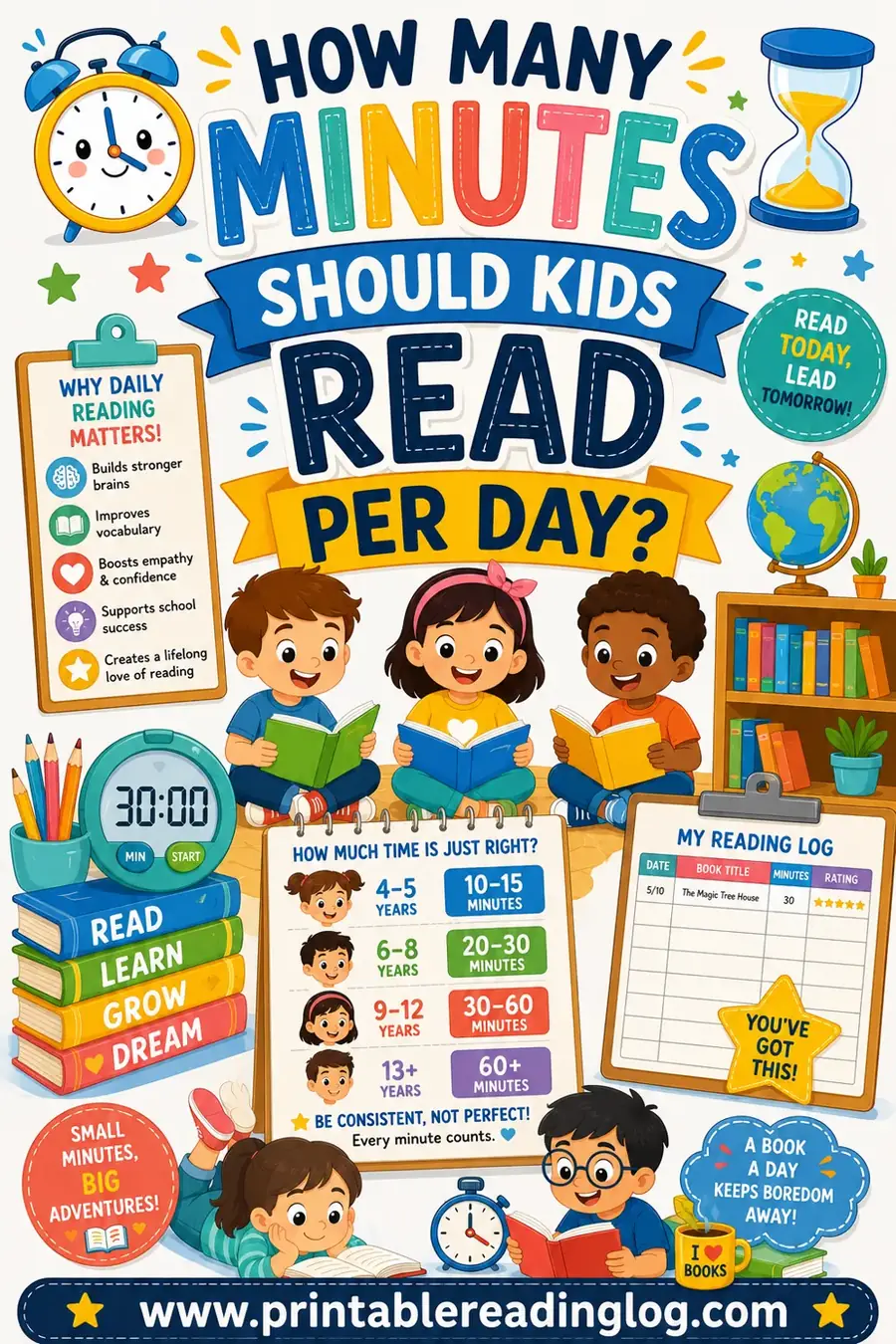
Most kids should read about 20 minutes per day, though the right amount shifts with age: roughly 10 minutes for early readers, 20 for grade-schoolers, and 30 for tweens and teens. What matters most is doing it every day, not hitting an exact number. The simplest way to keep that habit on track is a reading log where a child marks each day's minutes and watches the streak grow.
Want to start tracking today? Open the free tool, set a daily minutes goal, and print a clean sheet. There's no sign-up and no cost, so you can have one ready before bedtime.
The Short Answer: About 20 Minutes a Day
For most school-age kids, 20 minutes of daily reading is the widely used target. It's the number most teachers ask for on reading homework, and it strikes a good balance: long enough to make real progress, short enough that a child can do it every single night without a fight.
But 20 minutes isn't a magic threshold. A five-year-old doesn't need the same as an eleven-year-old. The right amount grows with the reader. Below is a clear guide by age, plus why daily consistency beats chasing a bigger number.
How Many Minutes by Age
Match the goal to the reader and it'll actually get done. Here's a simple guide by age.
| Age group | Daily reading goal | What it usually looks like |
|---|---|---|
| Toddlers (2–3) | 5–10 minutes (read-aloud) | A picture book or two at bedtime |
| Pre-readers (4–5) | 10 minutes | Read-aloud plus pointing at words |
| Early readers (6–7) | 10–15 minutes | Short books, some read-aloud |
| Grade-schoolers (8–10) | 20 minutes | Chapter books, reading solo |
| Tweens (11–13) | 20–30 minutes | Longer novels, independent |
| Teens (14+) | 30+ minutes | Whatever they enjoy, on their own |
A few notes on reading this table. For the youngest kids, "reading" means being read to — that read-aloud time counts and is hugely valuable. As kids gain skill, they shift from listening to reading on their own, and the minutes climb naturally.
Don't treat these as hard rules. A grade-schooler deep in a great book might read for an hour, and that's wonderful. The goal is a floor for daily reading, not a ceiling.
Why Daily Consistency Beats Big Numbers
Here's the part that surprises parents: reading 20 minutes every day does far more than reading two hours once a week. Consistency is where the real gains live.
Daily reading builds the habit, keeps skills sharp, and exposes kids to thousands more words over a year. A child who reads 20 minutes a night sees roughly 1.8 million words a year. One who reads just a couple of minutes a night sees a tiny fraction of that. The gap compounds over time.
The math is striking:
- 20 minutes a day = about 3,600 minutes a school year of reading practice.
- 5 minutes a day = about 900 minutes — a quarter as much.
- Skipping most days = barely any practice at all, no matter how long the rare sessions run.
So if you have to choose, pick the small daily goal that actually happens over the big one that gets skipped. A short streak you keep beats a long session you dread.
What Counts as Reading Time?
Good news: more counts than you might think. Don't limit "reading minutes" to a child silently reading a chapter book.
- Read-alouds where you read to your child.
- Shared reading where you take turns on pages.
- Audiobooks followed along with the text (great for building comprehension).
- Re-reading favorites — repetition builds fluency, even if it's the same book again.
- Reading anything — comics, recipes, signs, game instructions. It all builds skill.
The goal is time spent with words, not a narrow definition of "real" reading. Counting these keeps the goal reachable and keeps reading from feeling like a punishment.
How to Track Daily Reading Minutes
A goal you can't see is a goal that slips. Tracking the minutes makes the habit visible and gives kids a streak to protect.
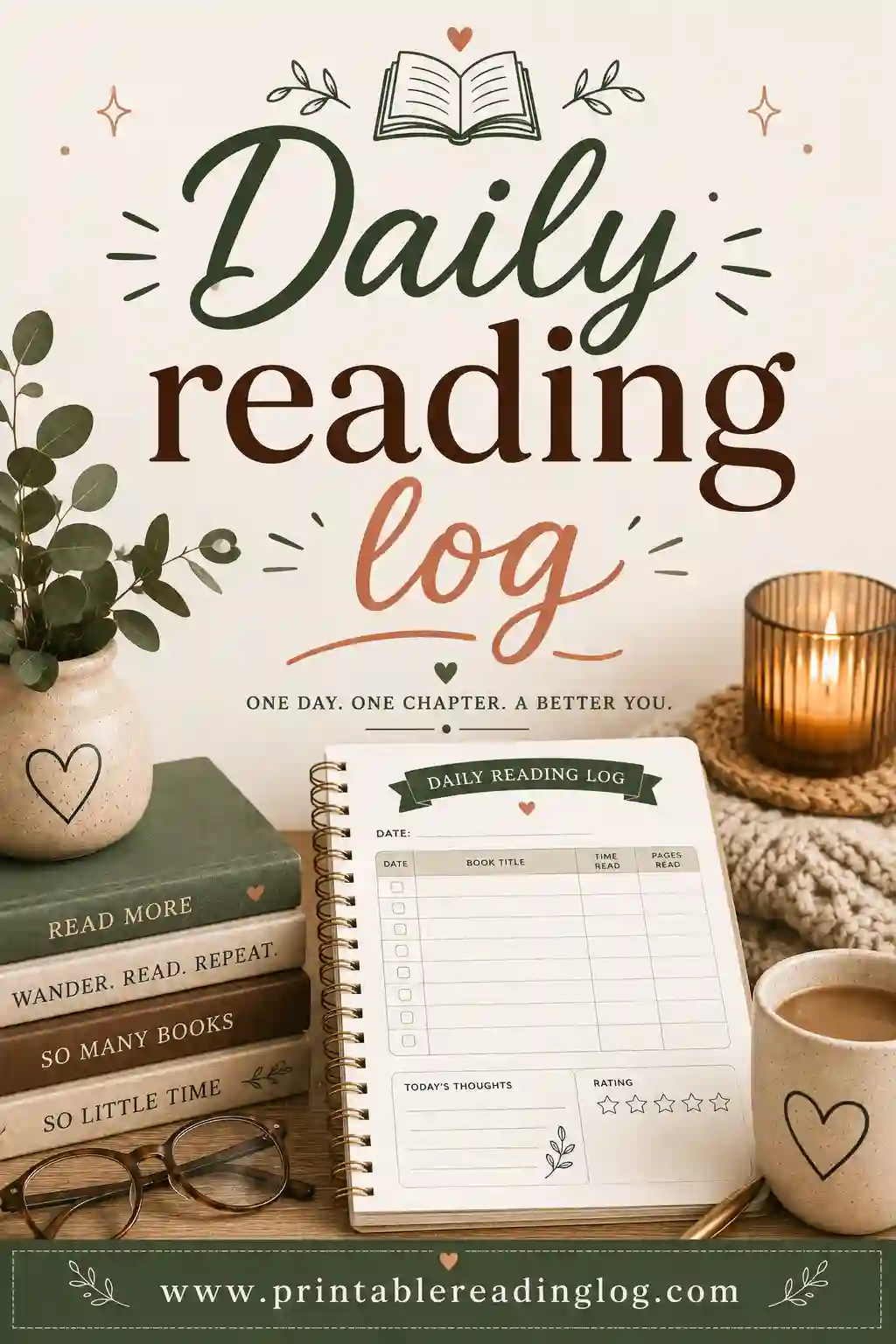
The easiest tool is a reading log. Each day, your child writes the date and the minutes they read, and maybe colors a box. Over a week, the rows fill in, and that visible progress becomes its own motivator.
Here's what a tracked week looks like with a 20-minute goal:
| Day | Book | Minutes | Goal hit? |
|---|---|---|---|
| Mon | Dog Man | 20 | ✅ |
| Tue | Dog Man | 25 | ✅ |
| Wed | Magic Tree House | 15 | Almost |
| Thu | Magic Tree House | 20 | ✅ |
| Fri | Magic Tree House | 30 | ✅ |
| Sat | The BFG | 20 | ✅ |
| Sun | The BFG | 20 | ✅ |
Notice the "almost" day. Logging a near-miss honestly keeps kids motivated without making them feel like they failed. Print a minutes-based reading log and let your child mark it themselves — owning the log is half the motivation.
Tips to Hit the Daily Reading Goal
Knowing the number is easy. Hitting it every day takes a few small habits.
- Pick a fixed reading time. Right before bed works for most families. Same time daily beats willpower.
- Start small if needed. If 20 minutes feels like a fight, begin at 10 and build up once it's easy.
- Use a timer kids can see. A visible countdown turns "how long do I have to read?" into a clear, fair finish line.
- Let them pick the book. A book they chose is a book they'll read. Choice is the strongest motivator there is.
- Track it together. Fill in the log right after reading, while it's fresh, and celebrate the streak out loud.
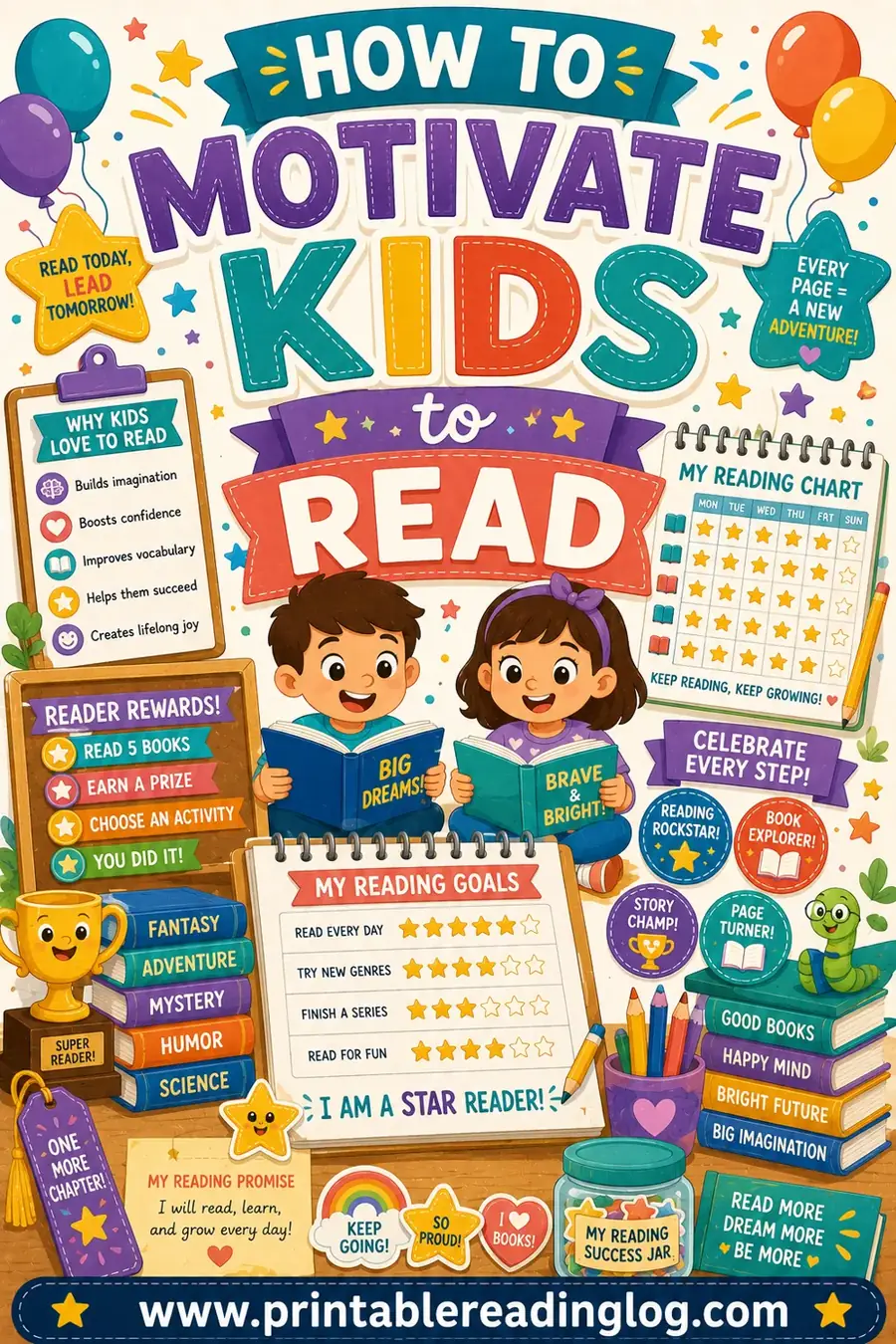
For more on building the habit and keeping a tough reader engaged, see our how to motivate kids to read guide.
Build the minutes into an existing routine
The easiest way to never skip a day is to bolt reading onto something that already happens. Kids brush their teeth every night without a battle because it's just part of the bedtime sequence. Reading can earn the same spot.
Try a simple chain: bath, pajamas, brush teeth, then read for 20 minutes, then lights out. Once the order is fixed, nobody negotiates it. The reading isn't a separate event you have to remember and enforce; it's just the next step before sleep. After a couple of weeks, the routine carries the habit for you, and the daily minutes take care of themselves.
What If My Child Reads More or Less?
Plenty of kids land off the average, and that's completely fine. Here's how to think about it.
Reading more than the goal? Wonderful. Don't cap it. A kid lost in a book is exactly what you're hoping for. Just protect sleep and balance with other activities.
Struggling to hit the goal? Lower the bar without guilt. Drop to 10 minutes, count read-alouds and audiobooks, and pick shorter, high-interest books. The aim is a daily win, even a small one. A kid who reads five minutes every night is building a stronger habit than one who reads twenty minutes twice a week.
The number is a guide, not a verdict on your child. Consistency and a positive feeling about reading matter far more than any exact count.
Frequently Asked Questions
How many minutes should a child read each day?
About 20 minutes a day is the common target for school-age kids. The right amount shifts by age: roughly 10 minutes for early readers, 20 for grade-schoolers, and 30 for tweens and teens. Daily consistency matters more than the exact number.
How many minutes should a kindergartner read?
Around 10 minutes a day, and that usually means being read to. For pre-readers and kindergartners, read-aloud time counts fully and is one of the most valuable things you can do. Keep it short, warm, and daily rather than long and occasional.
Does reading aloud count toward daily reading time?
Yes. Read-alouds, shared reading where you take turns, and audiobooks followed with the text all count. For young kids, being read to is the main way they hit their daily minutes, and it builds vocabulary and a love of stories.
Is 20 minutes a day really enough?
For most kids, yes — done daily. Twenty minutes a night adds up to roughly 1.8 million words a year and steady skill growth. The power is in the consistency, not the length of any single session. A small daily habit beats rare long ones.
What if my child can't sit still for 20 minutes?
Break it up or start smaller. Two 10-minute sessions count just as well as one 20-minute block. Begin at a length they can manage, use a visible timer, and let them pick books they actually like. Build up only once the current goal feels easy.
How can I track my child's daily reading minutes?
Use a reading log where your child writes the date and minutes after each session and colors in a box. The visible streak keeps them motivated. Print a free minutes-based reading log and let your child mark it themselves.
Ready to Track Your Child's Reading Minutes?
Aim for about 20 minutes a day, adjust for your child's age, and focus on doing it every day rather than chasing a big number. The easiest way to keep the habit on track is a free printable reading log where your child marks each day's minutes and watches the streak grow. It's free, there's no sign-up, and you can print one tonight. For more, see our reading log by minutes and daily reading log guides.