Reading Log With Summary: Free Printable Template
A reading log with summary is a tracker that adds a few lines for writing down what each book was about, not just the title and date. It turns a plain list into a record you'll actually remember. The quickest way to make one is to use a free printable reading log builder — turn on the summary field, pick a style, and print it in seconds. No app, no fee.
Want to jump straight in? Open the free reading log maker, add a summary column, and print a clean template for school, a book club, or your own shelf. It takes about a minute.
What Is a Reading Log With Summary?
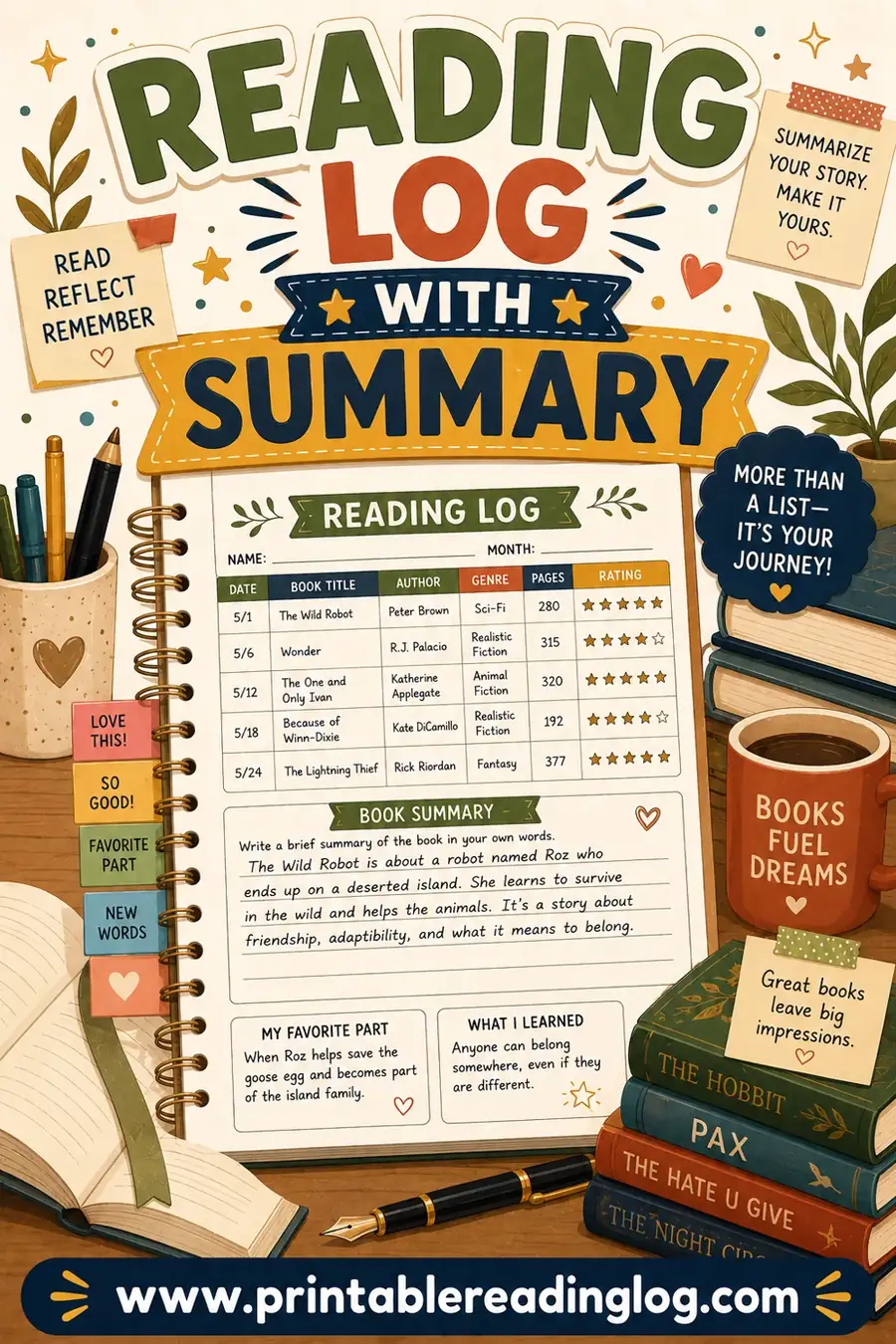
A standard reading log answers what and when: the title, the date, maybe the minutes. A reading log with summary adds the what was it about part. After finishing a book or chapter, the reader jots a few sentences — the main idea, a favorite moment, or what they learned.
That small addition changes everything. A list of titles fades from memory fast. A list with summaries becomes something you can flip through years later and actually recall. It's the difference between a receipt and a journal.
The summary doesn't need to be long. Two or three sentences is plenty. For kids, even one good sentence — "It was about a dog who got lost and found his way home" — does the job.
Why Add a Summary to Your Reading Log
Writing a summary forces the brain to do something useful: pull the big idea out of all the details. That's a real skill, and it sticks.
Here's what a summary section gives you:
- Better comprehension. Summarizing is how you check that a reader actually understood what they read.
- Stronger memory. Writing it down once helps you remember a book far longer.
- A personal record. Future-you gets a searchable history of every book and why it mattered.
- Proof of reading. Teachers and tutors can see real engagement, not just a checked box.
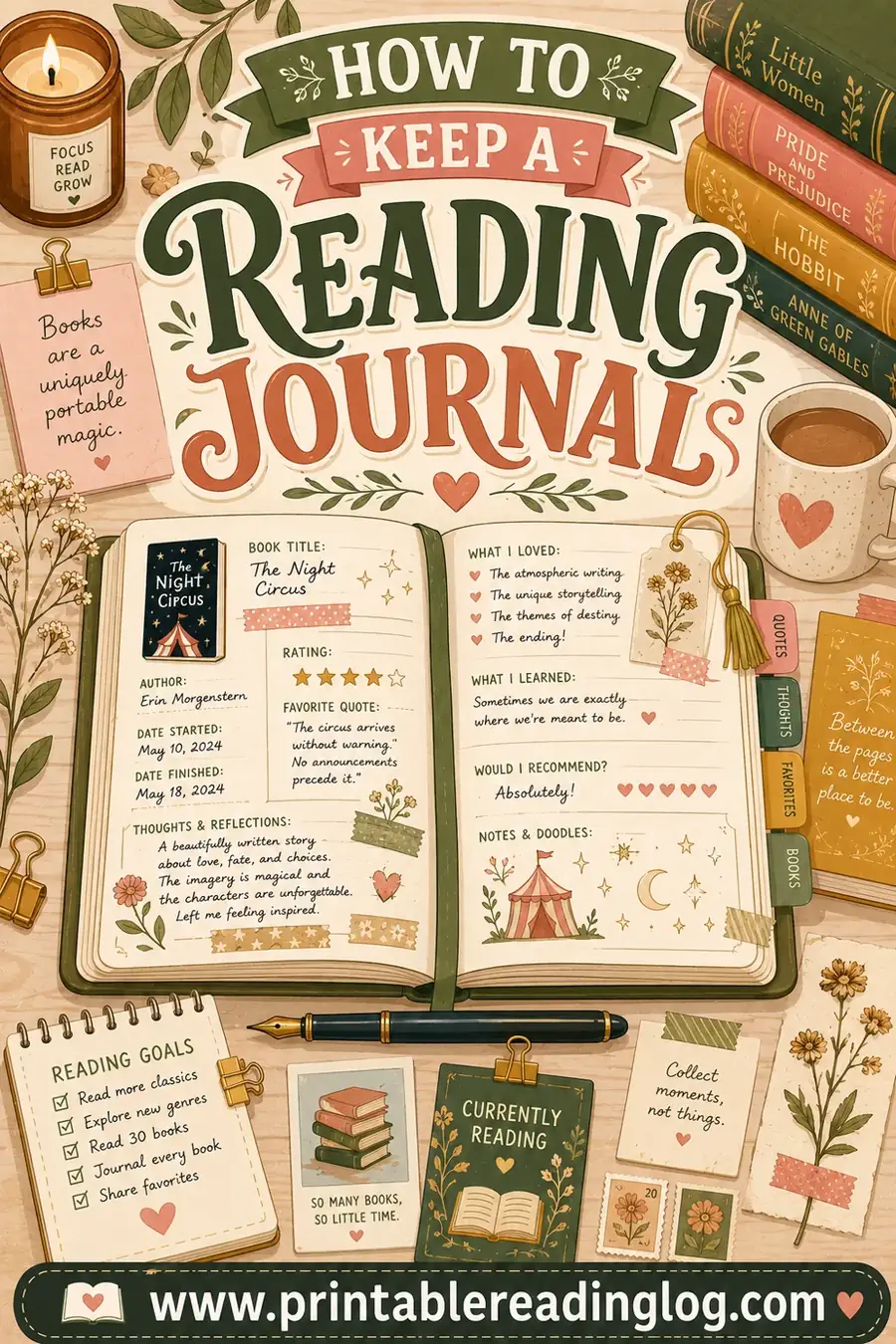
For kids especially, a summary line quietly builds writing and reflection skills — without anyone calling it homework. If you want the bigger picture on reflective reading, our piece on how to keep a reading journal goes further.
Reading Log vs. Reading Journal: Where Summaries Fit
People mix these up. Here's a simple way to tell them apart, and why a "log with summary" sits neatly between the two.
| Feature | Plain reading log | Log with summary | Reading journal |
|---|---|---|---|
| Title & date | Yes | Yes | Yes |
| Minutes / pages | Yes | Yes | Sometimes |
| Short summary | No | Yes | Yes |
| Long reflections | No | No | Yes |
| Quotes, drawings | No | Rarely | Yes |
| Best for | Quick tracking | Tracking + recall | Deep reflection |
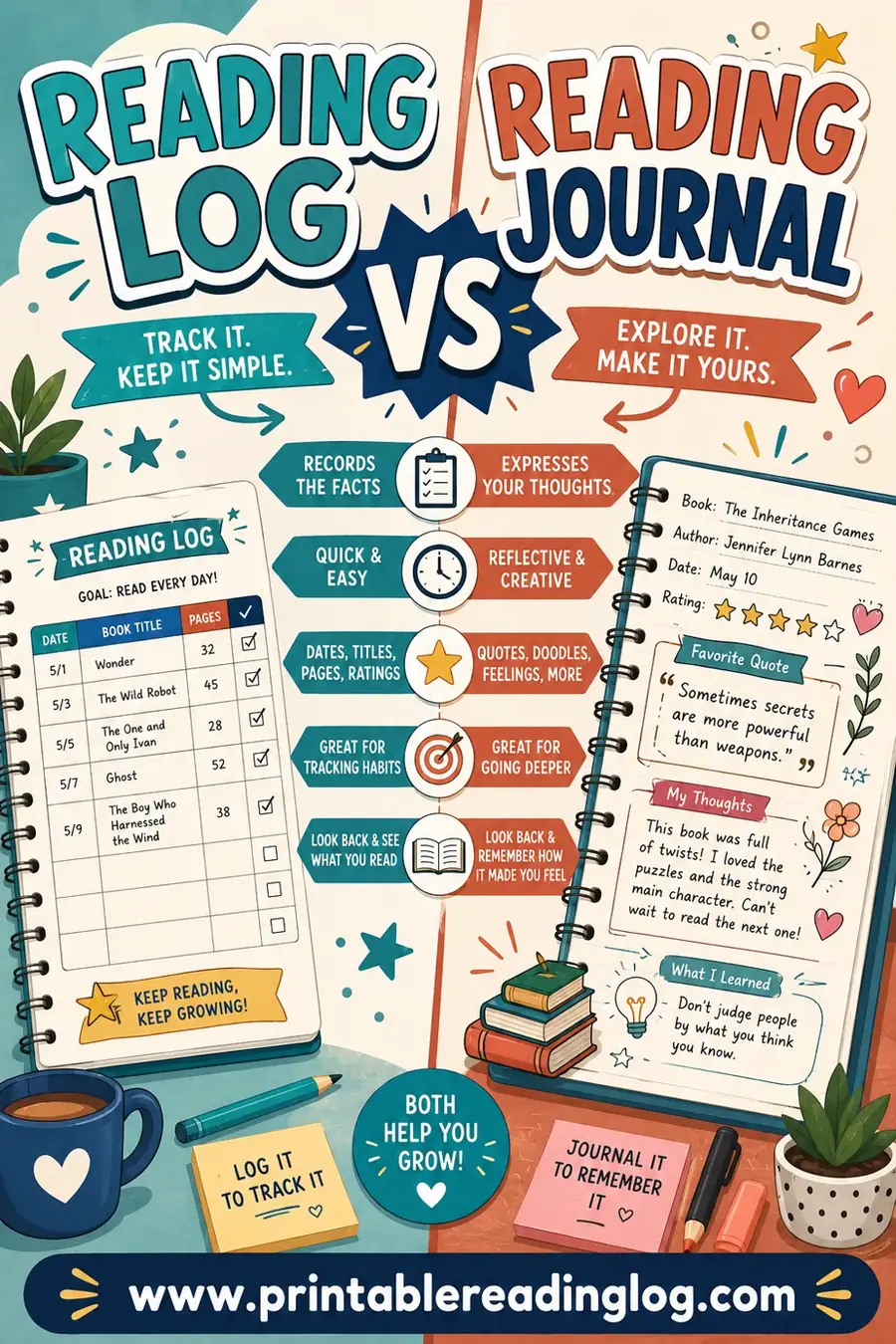
A log with summary is the sweet spot for most people — light enough to keep up with, rich enough to remember. If you want to go deeper, see reading log vs. reading journal.
What to Include in a Reading Log With Summary
Keep the structure simple so the summary doesn't feel like a chore. Here's a clean template that works for kids and adults:
| Column | What goes here |
|---|---|
| Date | When the book was finished |
| Book title & author | What was read |
| Pages / minutes | How much |
| Rating | A quick 1–5 stars |
| Summary | 2–3 sentences on what it was about |
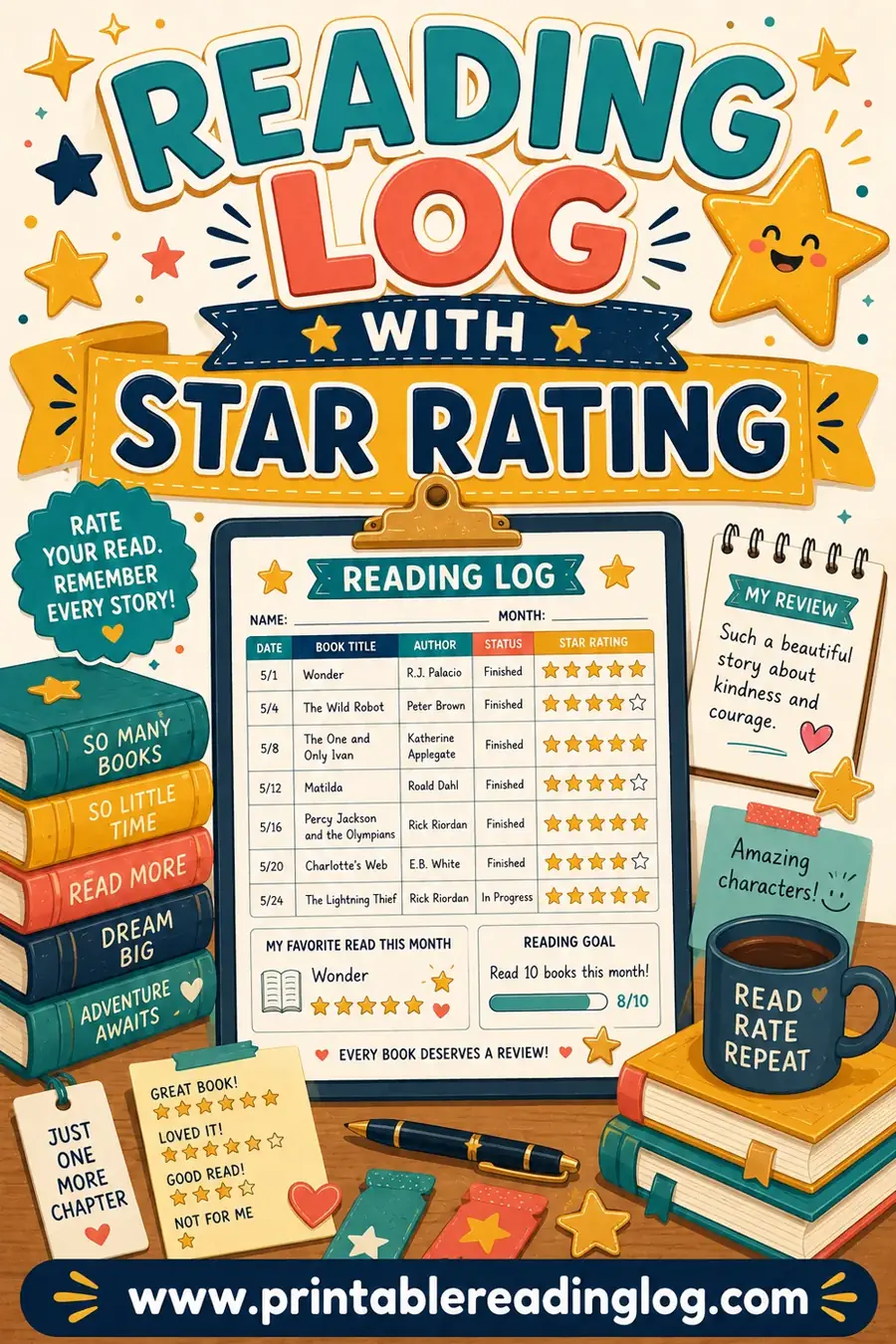
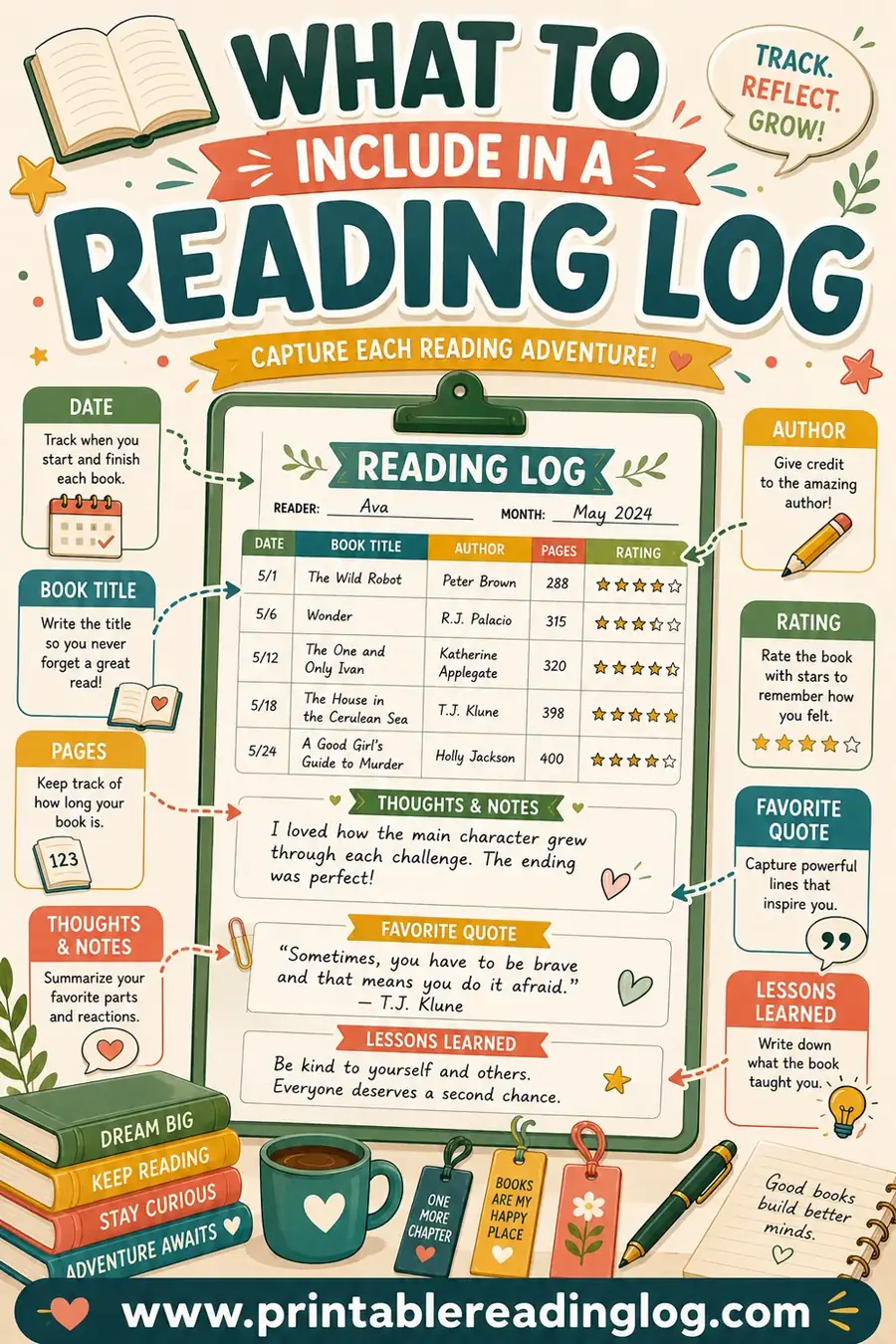
That's all you need. For a full rundown of optional fields, check what to include in a reading log. And if you want quick ratings front and center, our reading log with star rating pairs perfectly with summaries.
Keep the summary box the right size
Match the writing space to the reader:
- Young kids: one or two lines. Maybe just a "favorite part."
- Older kids: three or four lines for a real summary.
- Adults: a small box, or the back of the page if you tend to ramble.
Summary Prompts to Make Writing Easy
Staring at a blank line is the hardest part. Give your reader a prompt and the words come faster. Print a few of these on the log, or keep them nearby:
- What was this book mostly about?
- Who was the main character, and what did they want?
- What was your favorite part, and why?
- What surprised you?
- What did you learn?
- Would you recommend it? To whom?
- If you had to describe it in one sentence, what would you say?
Prompts for nonfiction
For nonfiction or study reading, swap in summary prompts that pull out the takeaway:
- What's the one big idea I want to remember?
- What's something I'll do differently after reading this?
- What was the most surprising fact?
These keep the summary useful instead of just a plot recap.
How to Make a Reading Log With Summary in 3 Steps
You don't need to design anything from scratch.
- Choose your fields. At minimum: title, date, rating, and a summary box. Add minutes or pages if you track those.
- Pick a style. A kid theme for young readers, a clean grown-up layout for adults.
- Print it. Open the generator, turn on the summary field, and print as many copies as you need.
Print on regular paper for everyday use, or on cardstock if you want it to last in a binder all year.
Who a Reading Log With Summary Helps Most
This format shines for anyone who wants to remember their reading, not just count it:
- Students writing book reports — the summaries become a head start on the assignment.
- Homeschool families documenting comprehension for records.
- Book clubs keeping notes to bring to the next meeting.
- Adult readers who finish a book and forget it a month later.
- Teachers checking that reading is actually happening.
A few real examples
- A fourth-grader logs Charlotte's Web with: "A pig named Wilbur is saved by a clever spider. It made me cry at the end."
- A book club member notes: "Slow start, strong finish. The ending twist is worth discussing — bring questions about the narrator."
- An adult reader writes: "Solid productivity book. Main idea: tiny habits beat big goals. I want to try the two-minute rule."
Each one is short. Each one is enough to bring the whole book back later.
Tips for Sticking With It
A summary section only works if people actually fill it in. A few habits help:
- Write it right after finishing. The book is freshest then. Don't let it sit.
- Keep prompts handy. A blank line is intimidating; a question is easy to answer.
- Allow short. One honest sentence beats three forced ones. Don't make it precious.
- Read your old summaries. Flipping back is the reward that keeps the habit going.
How to Teach Kids to Write a Good Summary
Summarizing is a skill, and most kids need a little scaffolding at first. The good news: a reading log is the perfect low-stakes place to practice. Here's a simple progression.
- Start with "somebody-wanted-but-so." This classic frame fits almost any story: Somebody (the character) wanted (a goal) but (a problem) so (how it resolved). One sentence each, and you've got a summary.
- Ask for the "big idea," not every detail. Kids tend to retell the whole plot. Gently steer them: "If your friend had two seconds, what would you tell them?"
- Model it once. Write a summary together for a book you both know. Seeing it done removes the fear of the blank line.
- Praise effort over polish. A messy, honest summary is a win. Correct gently, celebrate loudly.
After a few weeks of this, most kids stop dreading the summary box — and start having opinions worth reading.
Summary length by grade, roughly
| Grade level | Aim for | Example |
|---|---|---|
| K–1 | 1 sentence or a drawing | "It was about a lost dog." |
| 2–3 | 2 sentences | "A dog got lost. He found his way home." |
| 4–5 | 3–4 sentences | A who/what/problem/ending recap |
| Middle school+ | A short paragraph | Main idea plus a personal reaction |
Treat these as gentle targets, not rules. A kid who writes more is great; a kid who writes one honest sentence is still building the skill.
Frequently Asked Questions
What should a reading log summary include?
A good summary covers the main idea, the key character or topic, and one personal reaction — what you liked, learned, or felt. Two or three sentences is plenty. For kids, even a single clear sentence about what the book was about does the job.
Is the reading log with summary free to print?
Yes. You build and print it yourself at no cost, with no sign-up and no watermark. Print one page or a whole binder's worth, and reprint anytime you need a fresh template.
How long should a book summary be in a reading log?
Short. Two to three sentences for most readers, one to two lines for young kids. The goal is to capture the big idea and a reaction, not to rewrite the book. A small summary box keeps it from feeling like a chore.
Is a reading log with summary the same as a reading journal?
Not quite. A log with summary tracks books and adds a few summary lines. A reading journal goes further with long reflections, quotes, and drawings. The log-with-summary sits in between — easy to keep, but still memorable.
Can I use summary prompts to help kids write?
Yes, and you should. Prompts like "What was your favorite part?" or "What was the book about?" make the blank line far less scary. Print a couple of prompts on the log so kids always have a starting point.
How does a summary help with book reports?
A reading log summary is basically a mini book report written while the book is fresh. When the assignment comes, the student already has the main idea, characters, and their opinion on paper — they just expand it. It turns one big task into a series of tiny ones.
Ready to Build Your Reading Log With Summary?
Pick your fields, open the free reading log maker, turn on the summary section, and print a template that helps you actually remember what you read. It's free, there's no sign-up, and you can reprint whenever you start a new book or a new term. Add a summary line today, and thank yourself for it a year from now. Happy reading.