Reading Milestones by Grade Level: What to Expect Each Year
Reading milestones by grade level move from learning letter sounds in kindergarten, to reading simple books in first grade, to fluent reading of longer chapter books by third grade, and on to reading-to-learn across subjects by fifth grade. Every child moves at their own pace, so these milestones are a guide, not a deadline. The clearest way to see your child's progress is to track their reading over time. The fastest way to start is to print a simple log and watch the growth add up.
Want to track progress now? Open the free reading log maker, pick a layout for your child's grade, and print it. No sign-up, no fee, no software to install.
A Quick Word Before the Milestones
Kids learn to read on wildly different timelines, and that's completely normal. One child reads chapter books at five; another clicks into place at seven and races ahead. Both are fine.
So treat the milestones below as a friendly map, not a scorecard. They tell you the general direction and rough timing. If your child is a little ahead or behind on a particular skill, that alone is rarely cause for worry. What matters most is steady growth over time, which is exactly what a reading log helps you see. Use these to understand and support, not to compare.
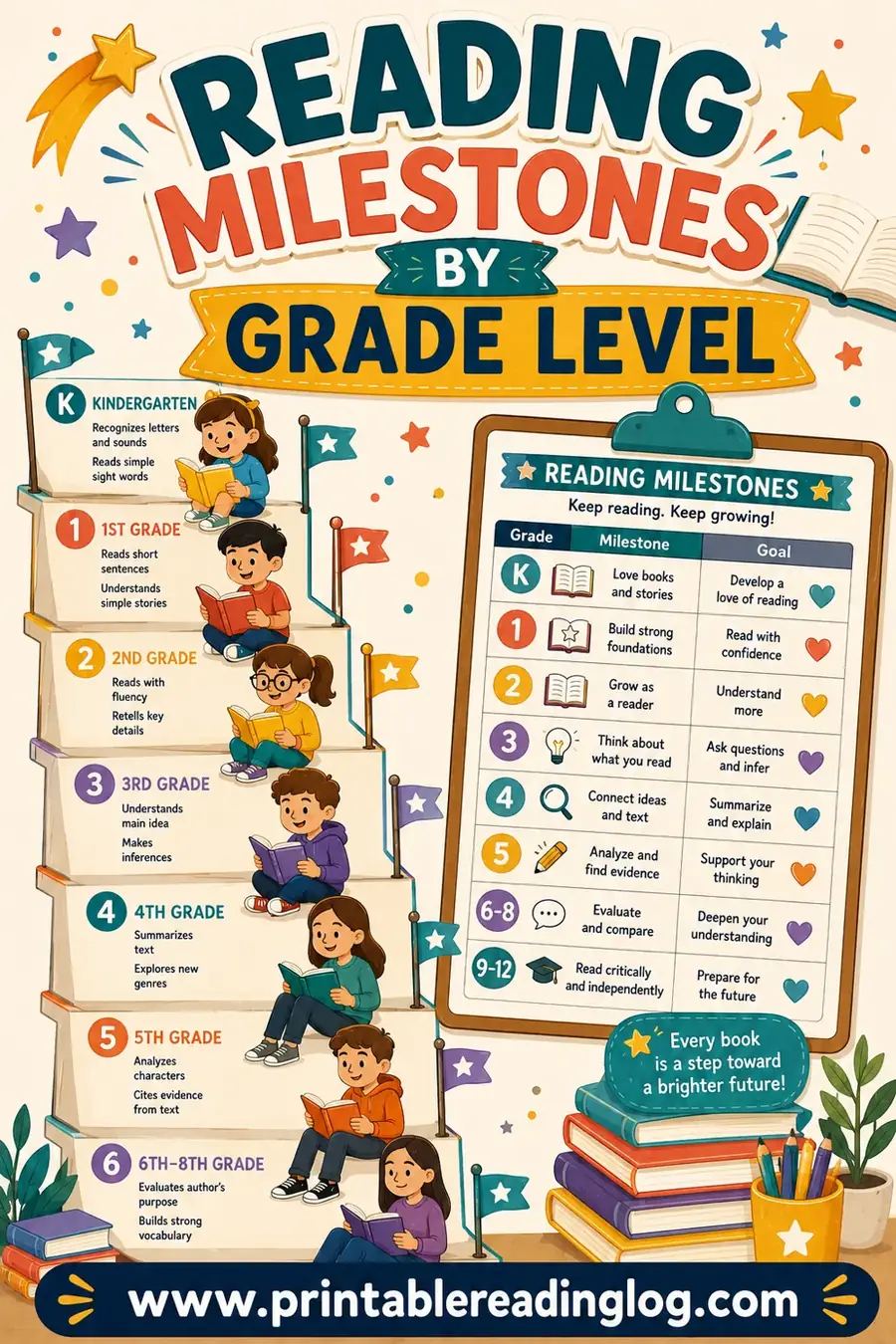
Kindergarten Reading Milestones
Kindergarten is about the building blocks of reading. Kids aren't expected to read fluently yet, they're learning how reading works.
By the end of kindergarten, most children can:
- Recognize and name all upper- and lowercase letters.
- Know the sounds most letters make.
- Hear and play with sounds in words (rhyming, first sounds).
- Read some common sight words like "the," "and," and "is."
- Sound out simple three-letter words like "cat" and "sun."
- Understand that we read left to right and top to bottom.
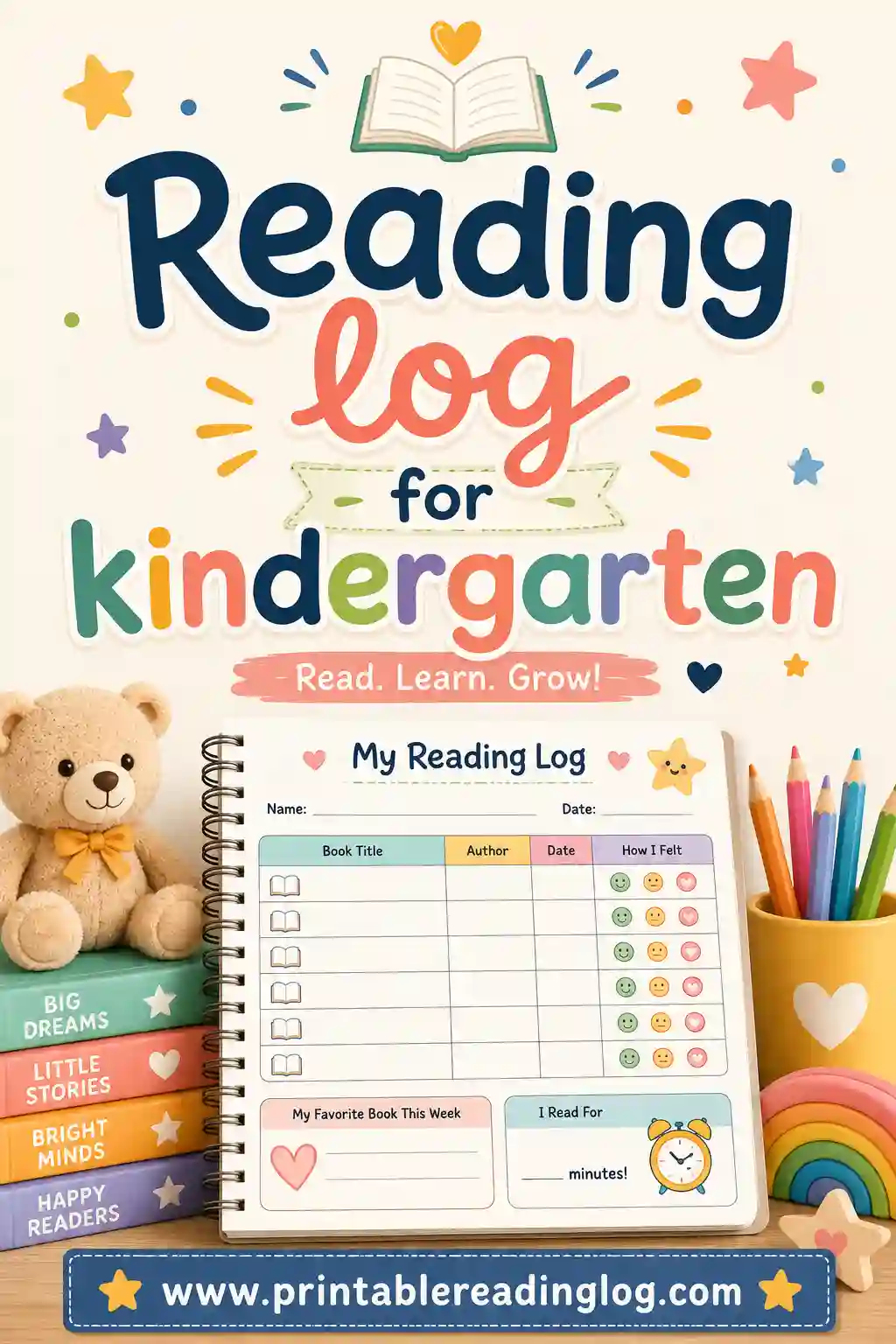
At this stage, daily read-alouds matter more than independent reading. A simple reading log for kindergarten that just tracks "we read today" with stickers builds the habit without any pressure. The goal is to make books feel like fun, not work.
First Grade Reading Milestones
First grade is where it clicks for many kids: they start truly reading. The pieces from kindergarten come together into real reading.
By the end of first grade, most children can:
- Read simple books with short sentences on their own.
- Sound out longer, unfamiliar words.
- Know many more sight words by heart.
- Read with growing accuracy and a little expression.
- Retell what happened in a story.
- Understand basic punctuation, like stopping at periods.
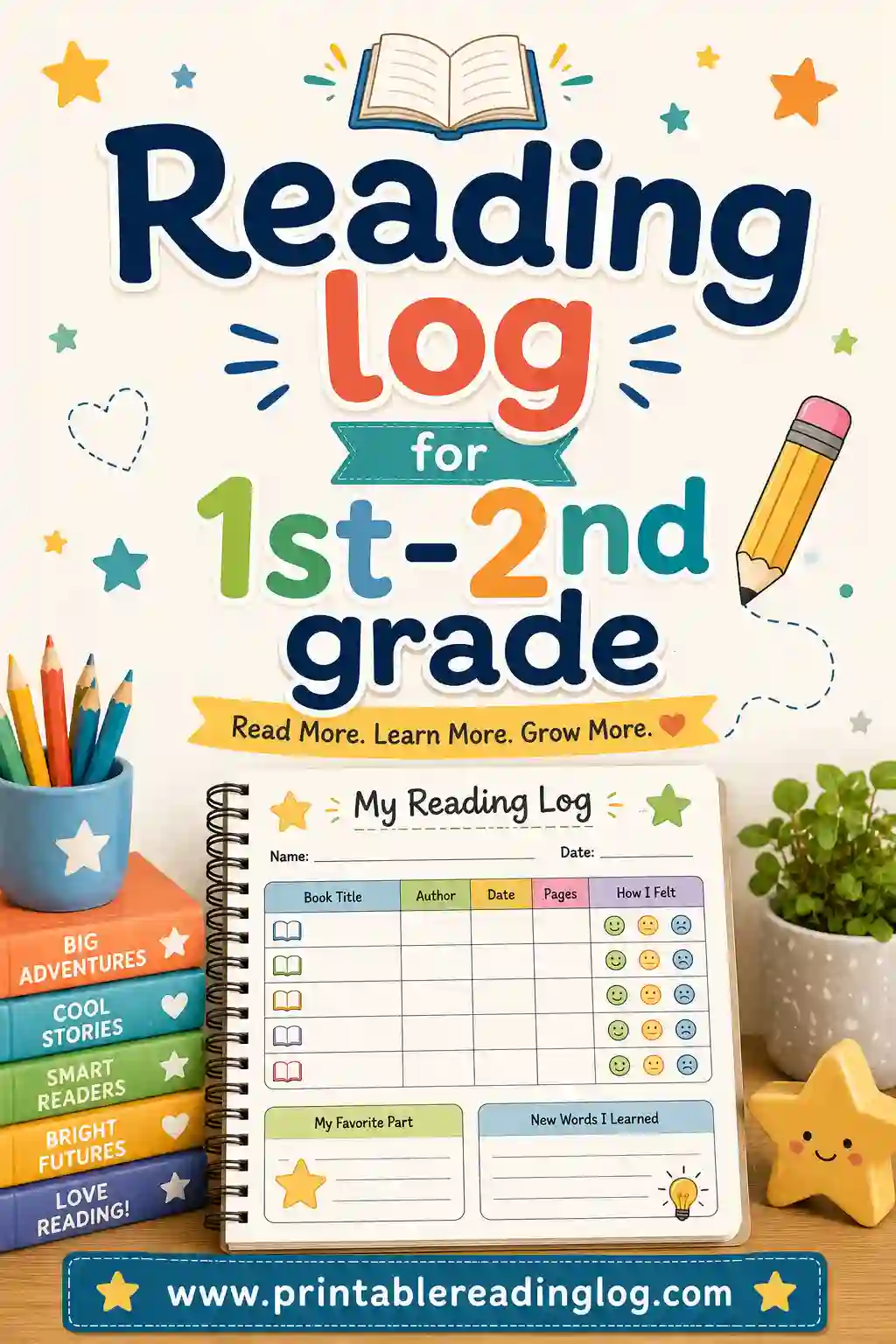
This is a great age to start a title-based log. Let your child write (or copy) the names of books they read and add a star rating. Seeing the list grow is hugely motivating at six and seven.
Second Grade Reading Milestones
In second grade, reading gets smoother and faster. Kids shift from sounding out most words to recognizing them instantly, which frees up brainpower for understanding the story.
By the end of second grade, most children can:
- Read longer books with more complex sentences.
- Read aloud smoothly, with expression.
- Self-correct when something doesn't make sense.
- Understand and retell stories in detail.
- Start reading simple chapter books.
- Use context to figure out new words.
Fluency is the headline skill here. A reading log for 1st and 2nd grade that tracks minutes and titles helps you see reading stamina building week by week.
Third Grade Reading Milestones
Third grade is a pivotal year. Around here, kids shift from "learning to read" to "reading to learn." Reading becomes a tool for everything else.
By the end of third grade, most children can:
- Read fluently and independently for longer stretches.
- Read and understand chapter books.
- Use reading to learn facts in science and social studies.
- Understand the main idea and supporting details.
- Make predictions and inferences about a story.
- Look up and understand new vocabulary.
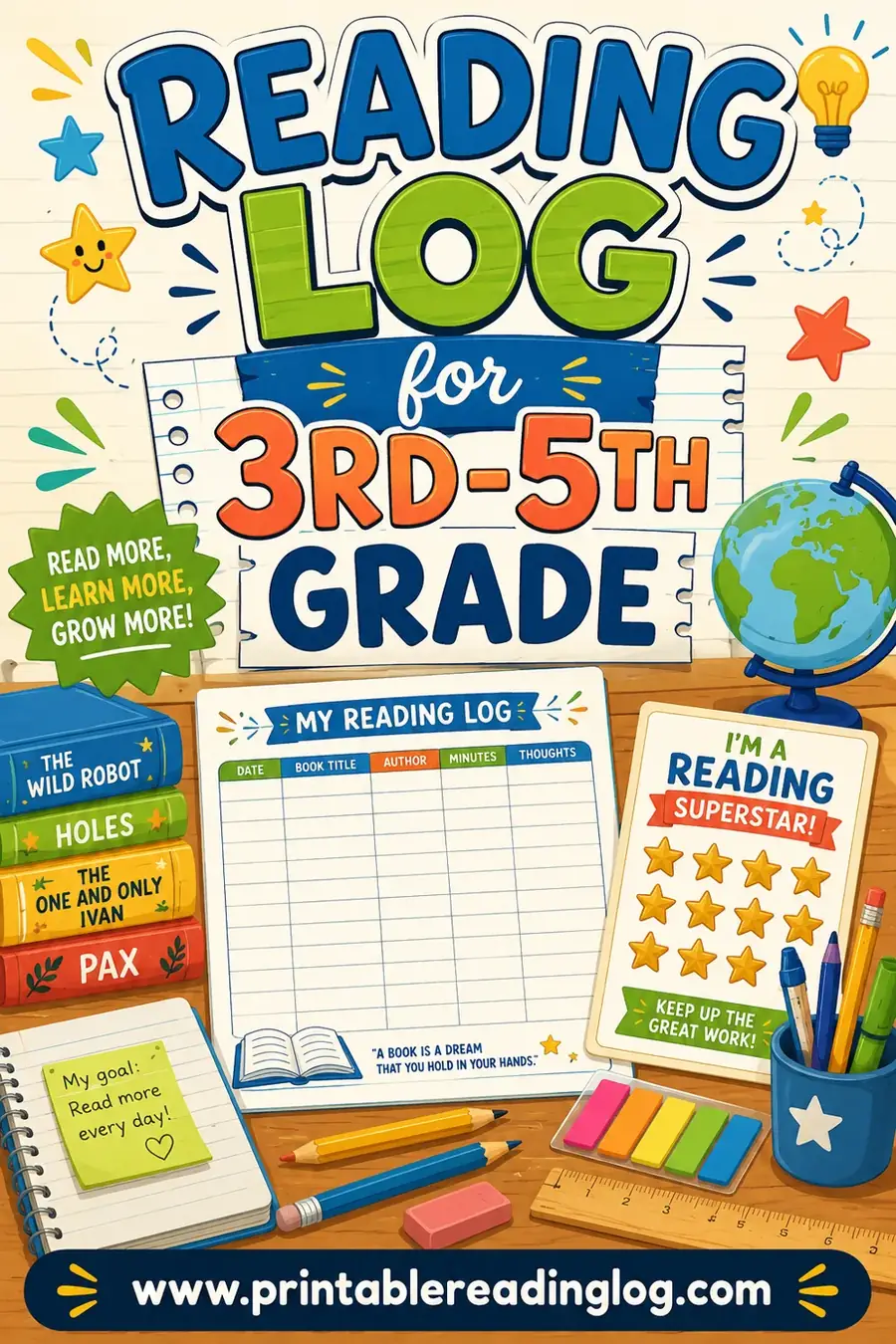
Because reading now spans every subject, variety matters. Encourage fiction, non-fiction, and books tied to your child's interests. A reading log for 3rd to 5th grade with a genre column nudges kids to branch out.
Fourth and Fifth Grade Reading Milestones
By fourth and fifth grade, reading is a fully developed tool. Kids tackle longer, harder texts and think more deeply about what they read.
By the end of fifth grade, most children can:
- Read and understand complex chapter books and novels.
- Summarize longer texts and identify themes.
- Compare characters, ideas, and points of view.
- Read non-fiction to research and learn independently.
- Understand figurative language, like metaphors and idioms.
- Build vocabulary from context across subjects.
At this age, the goal shifts toward reading habits that last: choosing books freely, finishing series, and reading for pleasure. A yearly book-count or page-count goal works beautifully now. Let your child own it.
Reading Milestones at a Glance
Here's the whole journey in one place. Remember, these are typical ranges, not hard deadlines.
| Grade | Key reading milestone | What to track |
|---|---|---|
| Kindergarten | Letter sounds, first sight words, sounding out simple words | "Read today?" + read-aloud minutes |
| 1st grade | Reading simple books independently | Titles + star ratings |
| 2nd grade | Fluent, expressive reading; early chapter books | Minutes + titles |
| 3rd grade | Reading to learn; full chapter books | Titles + genre |
| 4th grade | Longer novels; summarizing and inferring | Books + pages |
| 5th grade | Complex texts; reading for research and pleasure | Yearly book/page goal |
Print this next to a reading log so you can match what you're seeing to what's typical, and celebrate each step as it happens.
How to Support Reading at Every Grade
The single best thing you can do, at any grade, is read with and around your child. Beyond that, a few habits help no matter the age.
Read aloud, even to older kids
Read-alouds build vocabulary and a love of story well past the age kids can read alone. Keep doing it, even with confident fourth-graders.
Let them choose
Kids read more when they pick their own books. A "bad" book they love beats a "good" book they're forced through. Choice is fuel.
Track progress, gently
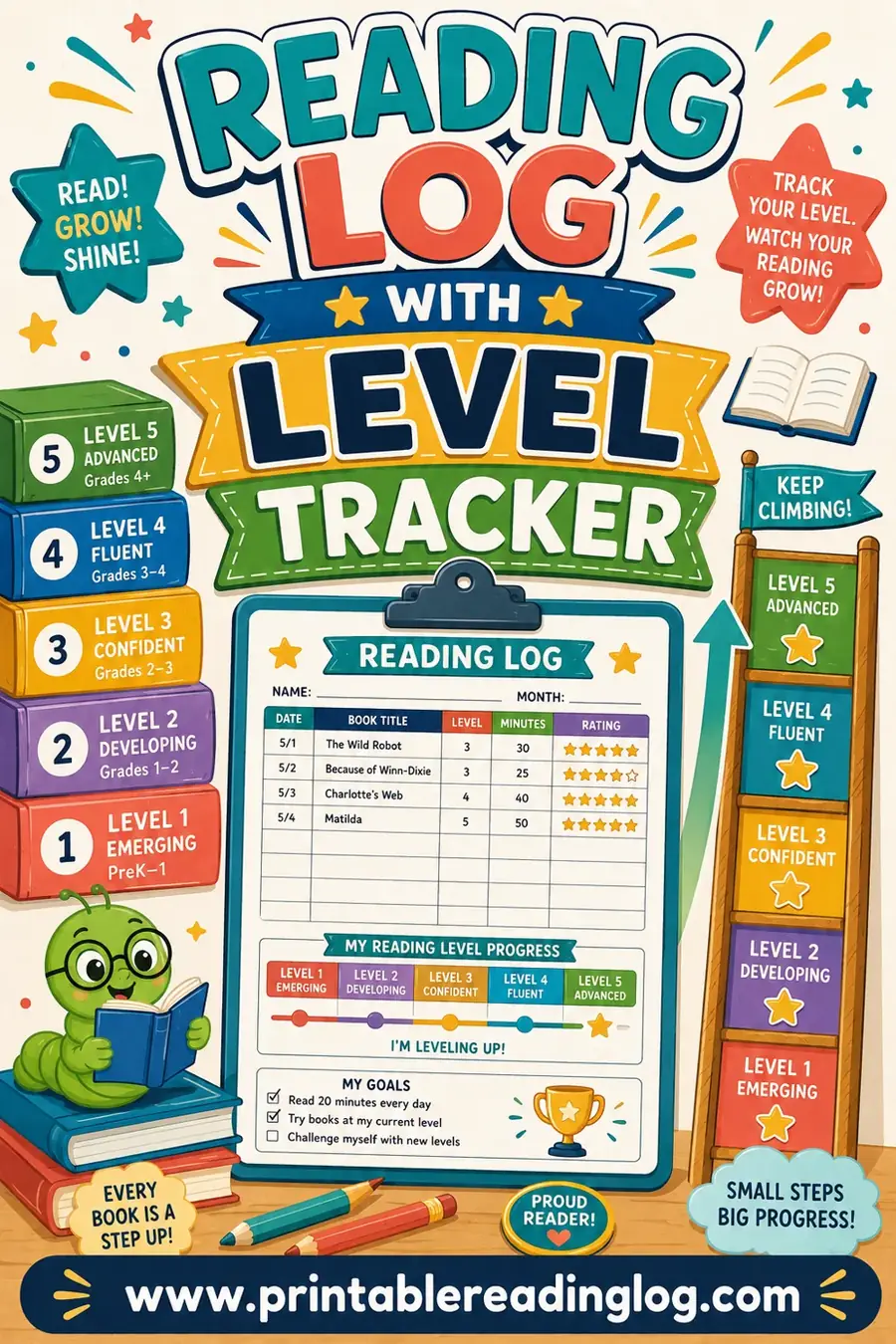
A log shows growth you might otherwise miss. Watching minutes, titles, and book counts climb is motivating for kids and reassuring for you. A reading log with a level tracker lets you see reading level rising over the year.
Keep it positive
Never use reading as a punishment, and don't turn every book into a quiz. The goal is a child who wants to read, not just one who can.
When to Reach Out for Help
Milestones vary, but some signs are worth a conversation with your child's teacher. Trust your gut, and don't wait if something feels off.
Consider checking in if, well past the typical age, your child:
- Still struggles to connect letters and sounds.
- Reads far below grade level for a long stretch.
- Avoids reading and gets frustrated quickly and consistently.
- Can read words but rarely understands what they read.
- Loses ground instead of gaining it over time.
Early support makes a big difference, and reading challenges are common and very treatable. A reading log can actually help here: it gives the teacher or specialist a clear record of what your child has been reading and where they're struggling. Bring it to the conversation.
Frequently Asked Questions
What reading level should my child be at by grade?
Roughly: kindergartners learn letter sounds and a few sight words; first graders read simple books; second graders read fluently and start chapter books; third graders read full chapter books to learn; and fourth and fifth graders handle complex novels and non-fiction. These are typical ranges, not strict deadlines, and a range of a year either way is common and normal.
Is it normal for kids to read at different levels?
Yes, completely. Children learn to read on very different timelines, and a child who is ahead or behind on one skill is usually still developing perfectly well. Steady progress over time matters far more than hitting an exact milestone on an exact date.
How can I tell if my child is on track with reading?
Compare what they can do to the typical milestones for their grade, but focus on growth over time rather than a single snapshot. A reading log helps here, watching minutes, titles, and reading level climb over months shows real progress even if your child is a little ahead or behind the average.
What should I do if my child is behind in reading?
First, keep reading positive, read aloud, let them choose books, and avoid pressure. Then talk with their teacher, who can assess where the gaps are and suggest support. Reading challenges are common and very treatable, and early help makes a big difference. A reading log gives the teacher useful information to work with.
How much should my child read each day?
For most elementary kids, 15 to 20 minutes a day is the widely recommended target, growing toward 20 to 30 minutes by upper elementary. At the youngest ages, shared read-alouds count fully toward this time. Consistency matters more than the exact number.
Do reading milestones include audiobooks and being read to?
Absolutely, especially in the early grades. Listening to stories builds vocabulary, comprehension, and a love of books, all foundations for reading. Being read to and listening to audiobooks support nearly every milestone, even as your child also practices reading on their own.
Track Your Child's Reading Journey
Reading milestones give you a map, but your child's own log shows you the real journey, one book and one day at a time. Match the layout to their grade, celebrate each step, and watch the progress add up. Open the free reading log maker, build a log for your child's grade level, and print it in seconds. It's free, there's no sign-up, and a growing list of finished books is the kind of proof that makes both of you proud. Happy reading.