How to Build a Daily Reading Habit That Sticks
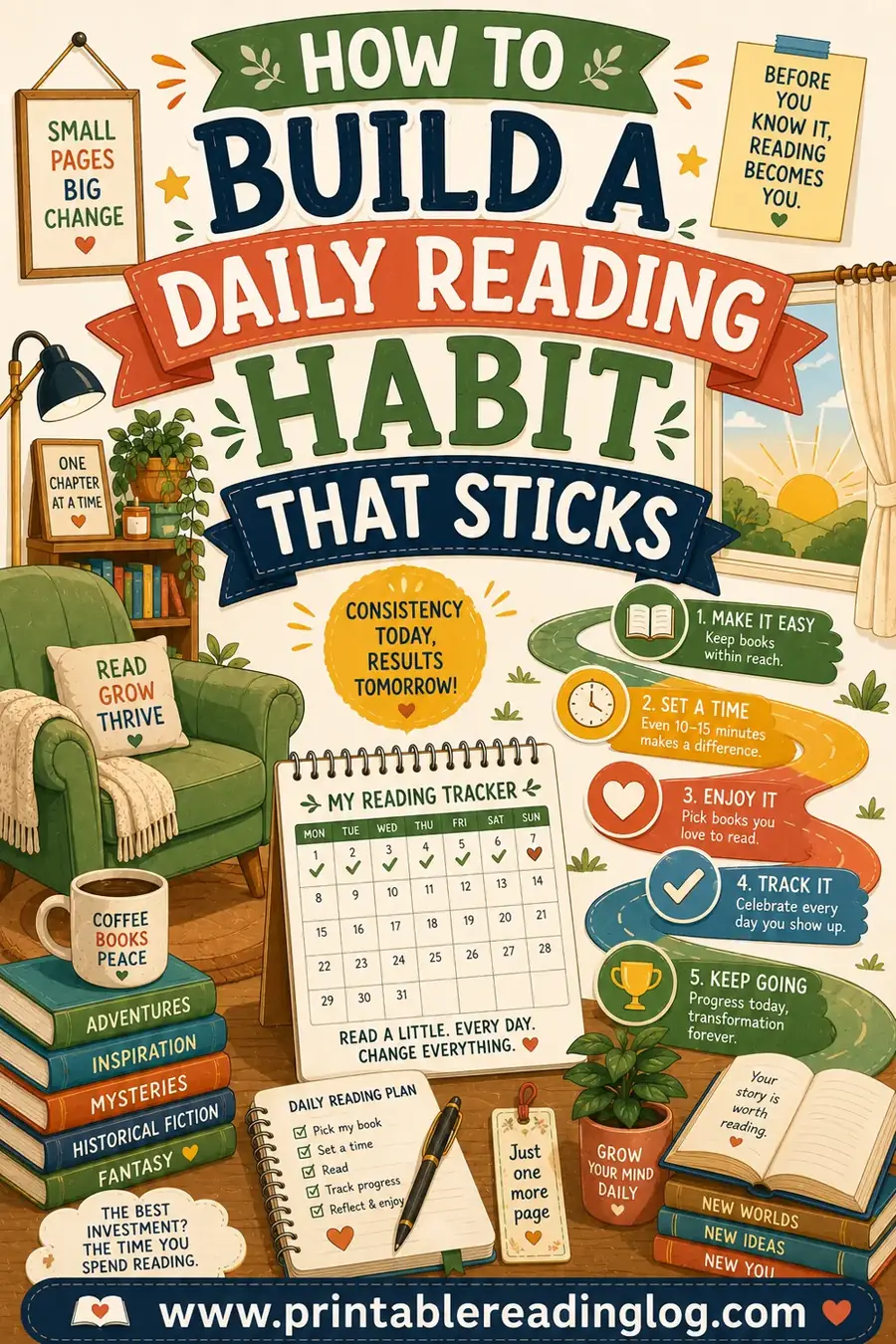
To build a daily reading habit, start tiny, attach reading to something you already do, and track your streak so the progress keeps you going. Read just a few pages a day at the same time every day, like right after coffee or before bed, and check off each day on a printable reading log. The visible streak is what turns "I should read more" into a habit you barely have to think about.
Want to start today? Open the free reading log maker, print a daily tracker, and check off your first box tonight. No sign-up, no fee, and it works on any home printer.
Why Daily Beats Binge
A reading habit isn't built on marathon weekends. It's built on small, steady days. Ten minutes every day adds up to more than a five-hour binge once a month, and it sticks far better.
The reason is repetition. Each day you read, you wire the behavior a little deeper, until reading becomes automatic, like reaching for your phone. Skipping days breaks that wiring and makes restarting feel hard. Consistency, not intensity, is the whole game.
Daily reading also reshapes your downtime. Once the habit forms, the spare ten minutes you'd usually scroll away start going to a book instead. That swap, repeated daily, is how casual readers become lifelong ones.
Start Ridiculously Small
The biggest mistake people make is starting too big. "I'll read an hour a day" sounds great and collapses by day three. Aim smaller than feels worthwhile.
Start with one page. Or five minutes. Or a single chapter. The goal at first isn't volume, it's showing up. A habit you keep at one page a day beats a habit you quit at fifty.
Here's the secret: most days, once you start, you'll keep going past your tiny goal. But on the hard days, the tiny goal is what saves the streak. One page still counts. You still showed up.
Tiny starting goals that work
- One page a day
- Five minutes a day
- One chapter a day
- Two pages before bed
Pick one and protect it. You can always read more, but never let the bar feel heavy.
Attach Reading to an Existing Habit
The fastest way to make a new habit stick is to bolt it onto an old one. This is called habit stacking, and it works because the old habit becomes your reminder.
The formula is simple: "After I [thing I already do], I will read." Your existing routine triggers the new behavior, so you don't have to rely on memory or willpower.
| After this habit… | Read here |
|---|---|
| Pour your morning coffee | Read a page while it cools |
| Sit down for lunch | Read a few pages before scrolling |
| Brush your teeth at night | Read in bed before lights out |
| Get on the bus or train | Read instead of refreshing your feed |
| Finish dinner | Read one chapter before TV |
Pick the slot that already feels calm and reliable. Bedtime works for most people because it's quiet and consistent. A daily reading log parked next to your pillow makes checking off the day effortless.
Track Your Streak (This Is the Magic)
Tracking is the single most powerful trick for building any daily habit, and reading is no exception. A visible streak gives your brain a reason to keep going.
It works because of a quirk called "don't break the chain." Once you have five days checked off in a row, you don't want to be the person who ruins it on day six. That small reluctance is enough to get you to read on the days you don't feel like it.
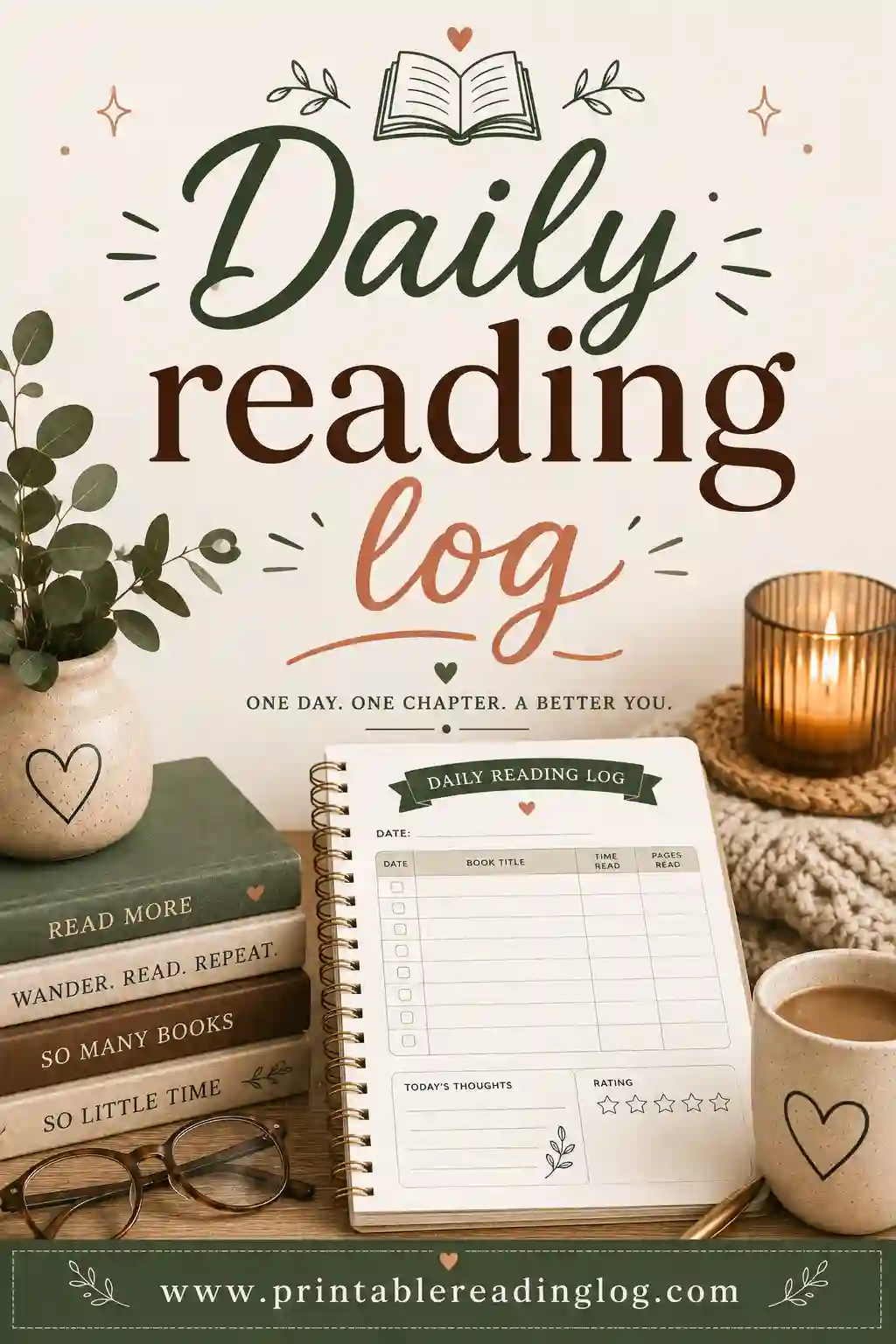
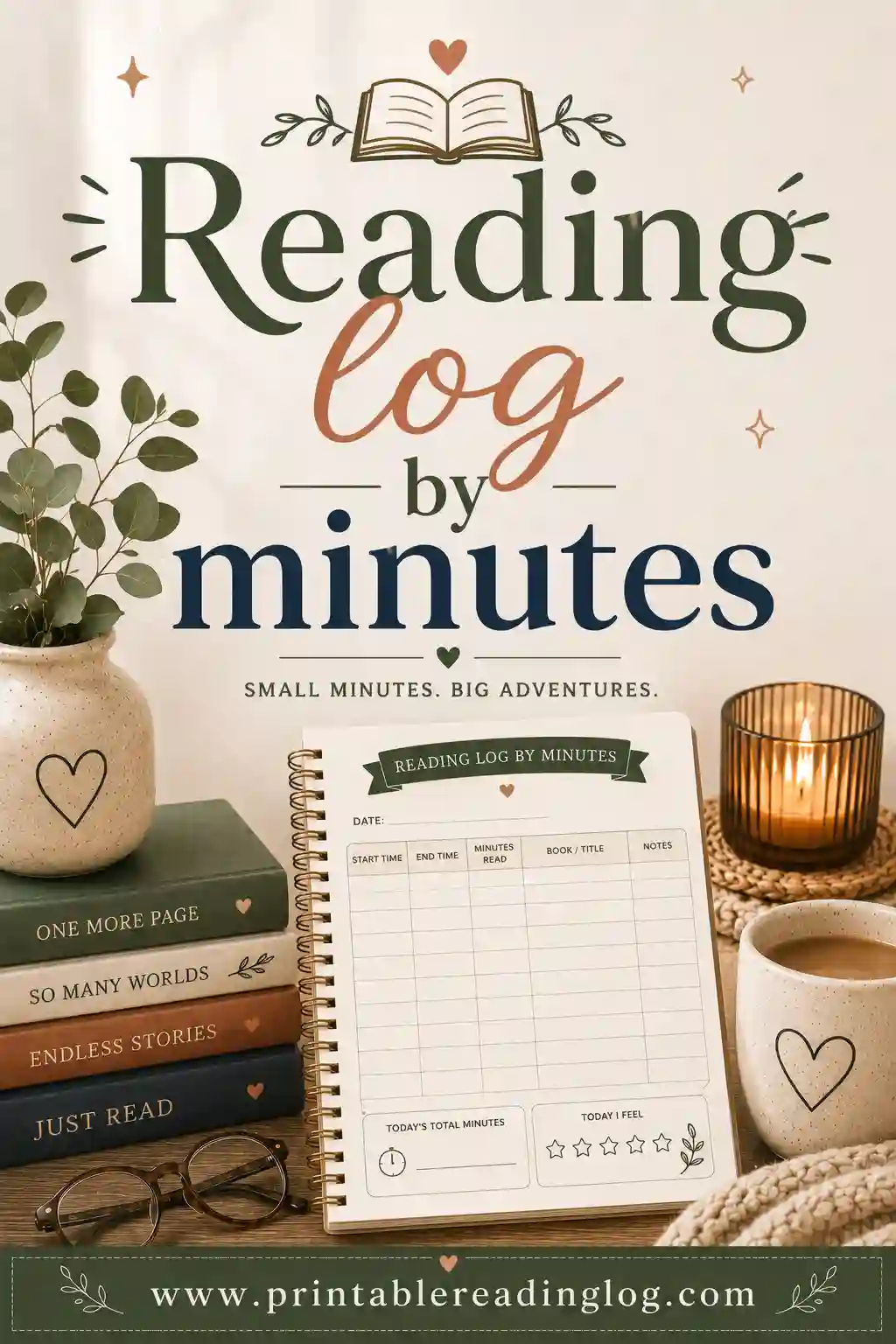
Print a daily reading log with a row of boxes and check one off every day. If you prefer to track time, a log by minutes lets you mark how long you read. Either way, the goal is the same: make your consistency something you can see and feel proud of.
What to track
- Days read. The simplest and most motivating. One checkmark per day.
- Minutes read. Good if your goal is time-based. Tally the minutes daily.
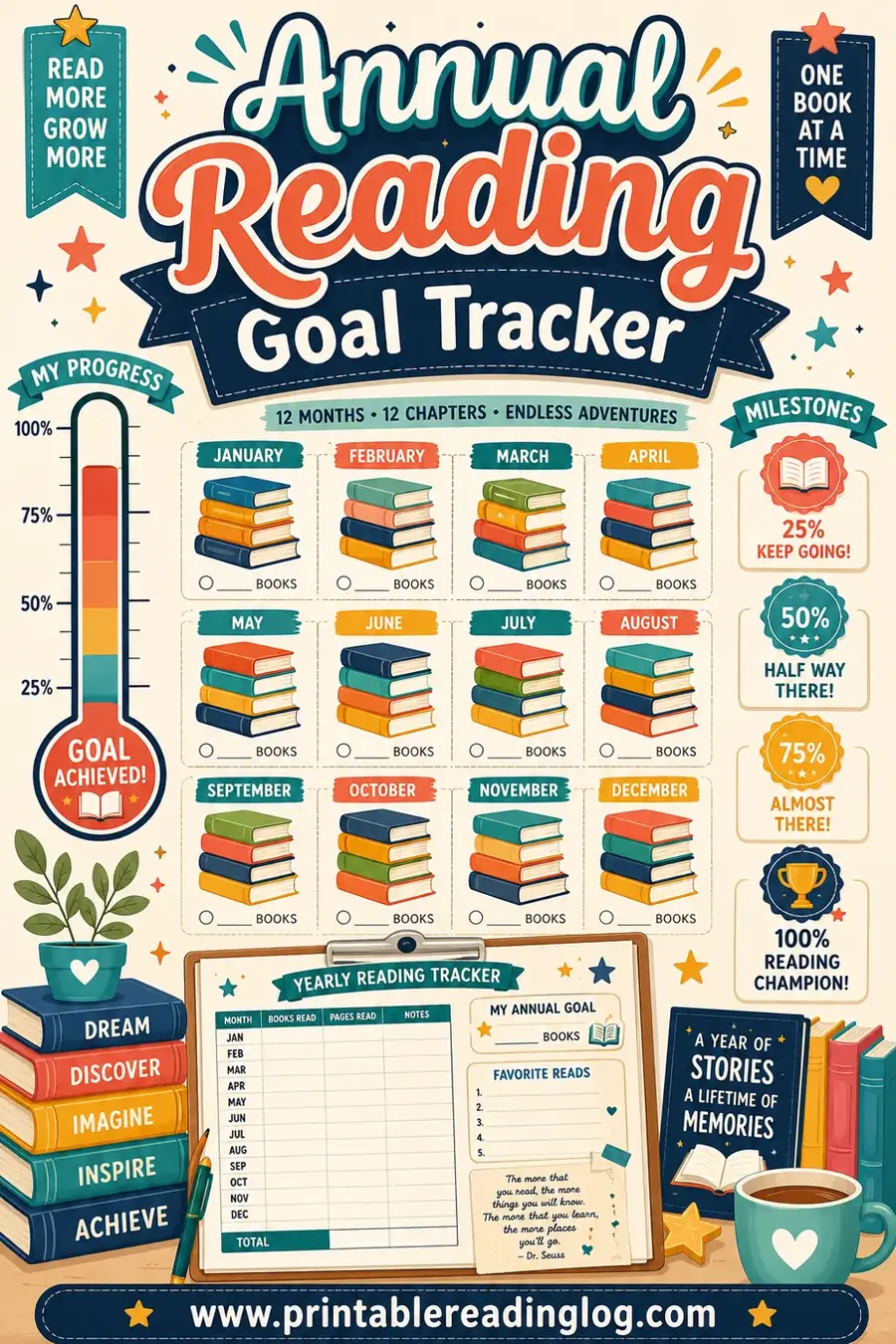
- Pages or books. Great for chasing a yearly number with an annual goal tracker.
Don't overcomplicate it. A single column of checkboxes does more for your habit than any fancy app.
Make the Habit Easy to Do
Habits stick when they're easy and die when they're hard. So remove every bit of friction between you and your book.
Keep a book where you'll read it. On your nightstand, in your bag, on the kitchen counter. If you have to hunt for it, you'll skip. Seeing the book is half the battle.
Cut the competition too. Charge your phone in another room at night so the book is the easiest thing to reach for in bed. Tiny changes to your environment do more than any amount of motivation.
A few easy wins:
- Leave your current book on your pillow each morning
- Keep a backup book in your bag for waiting rooms and lines
- Use a bookmark so you never lose your place
- Pick your next book before you finish the current one
Read What You Actually Enjoy
A daily habit dies fast if you're forcing yourself through a book you hate. Permission to quit boring books is one of the most freeing reading rules there is.
If a book isn't pulling you back each day, drop it and grab another. Life's too short, and a habit built on dread won't last. The right book makes the habit pull you, instead of you pushing it.
Mix in easy wins. Re-reads, page-turners, comics, and short books all keep the streak alive on low-energy days. You don't need to read "important" books every day. You need to keep reading, and that means reading what you love.
Plan for the Days You'll Slip
You will miss a day. Everyone does. The people who keep the habit aren't the ones who never slip; they're the ones who restart fast.
Adopt one rule: never miss twice. Missing one day is an accident. Missing two starts a new, worse habit. So if you skip today, the only job tomorrow is to read one page and get the streak going again.
Don't let a broken streak become a reason to quit. A reading log with a long history of checkmarks reminds you how far you've come, which makes restarting feel worth it. One missed box doesn't erase the month behind it.
When life gets busy
- Shrink the goal, don't drop it. On chaos days, read one page. The streak survives.
- Use audiobooks. Listen while you commute, cook, or fold laundry. It counts.
- Read in micro-moments. A page in line, a paragraph while the kettle boils. It adds up.
A Sample Two-Week Plan
Here's a realistic ramp from zero to a steady habit. Notice how small it starts.
| Days | Daily goal | Focus |
|---|---|---|
| 1–3 | 1 page | Just show up. Check the box. |
| 4–7 | 5 minutes | Same time each day. Build the trigger. |
| 8–11 | 10 minutes | Reading should start to feel automatic. |
| 12–14 | 10+ minutes | Keep the streak. Enjoy the momentum. |
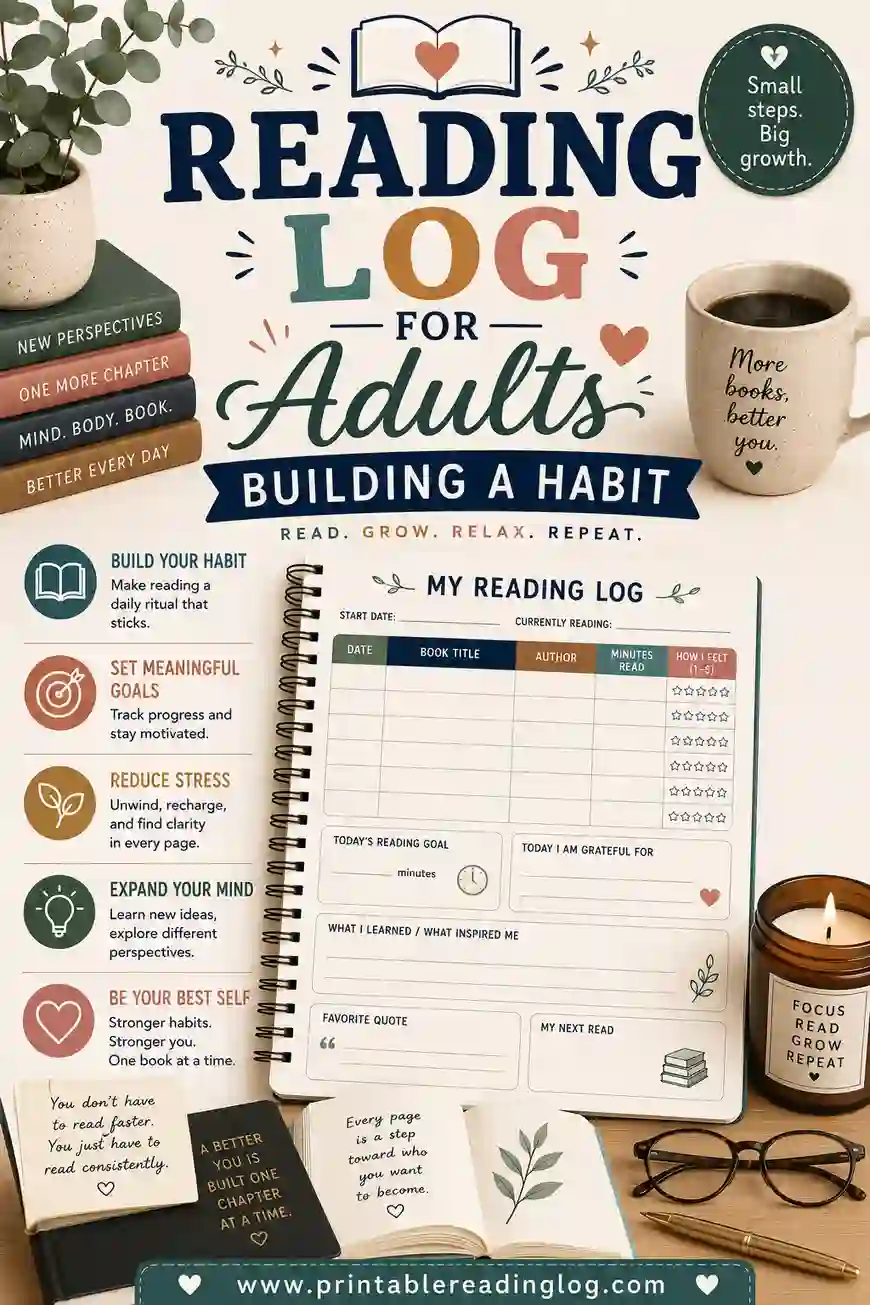
By day 14, the habit starts running on its own. An adult habit-building reading log is perfect for this ramp, with space to track both your streak and the books you finish along the way.
Frequently Asked Questions
How long does it take to build a daily reading habit?
Most people feel a habit forming in two to four weeks of consistent daily reading, though it varies. The key is showing up every day, even for one page. Tracking your streak on a reading log speeds things up by keeping the goal visible and rewarding.
How many minutes a day should I read to build a habit?
Start with just five to ten minutes. The exact number matters less than the consistency. A short daily read beats long, rare sessions for building a lasting habit. Once it's automatic, the time naturally grows on its own.
What's the best time of day to read?
The best time is whatever you'll do reliably. For most people that's bedtime, because it's quiet and consistent, but morning coffee or a lunch break work just as well. Attach it to a habit you already have so it triggers automatically.
How do I stay motivated to read every day?
Track your streak. A visible row of checkmarks on a daily reading log creates a "don't break the chain" pull that gets you reading even on tired days. Reading books you genuinely enjoy keeps the motivation natural rather than forced.
What if I miss a day?
Don't panic, just follow one rule: never miss twice. A single missed day is fine. Getting right back to one page the next day keeps the habit alive. Your log's history of checkmarks reminds you the streak is worth restarting.
Do audiobooks count toward a daily reading habit?
Yes. Audiobooks build the same comprehension and keep your habit going during commutes, chores, and walks. They're especially useful on busy days when sitting down with a print book isn't possible. Log them right alongside your other reading.
Ready to Start Your Reading Streak?
Pick a tiny daily goal, attach it to a habit you already have, and open the free reading log maker to print a tracker you'll check off every day. That little row of boxes is the engine that turns reading from a wish into a habit. It's free, there's no sign-up, and you can print a fresh streak sheet whenever you want. Start tonight, and check that first box.