Reading Log for AR Points: Track Accelerated Reader
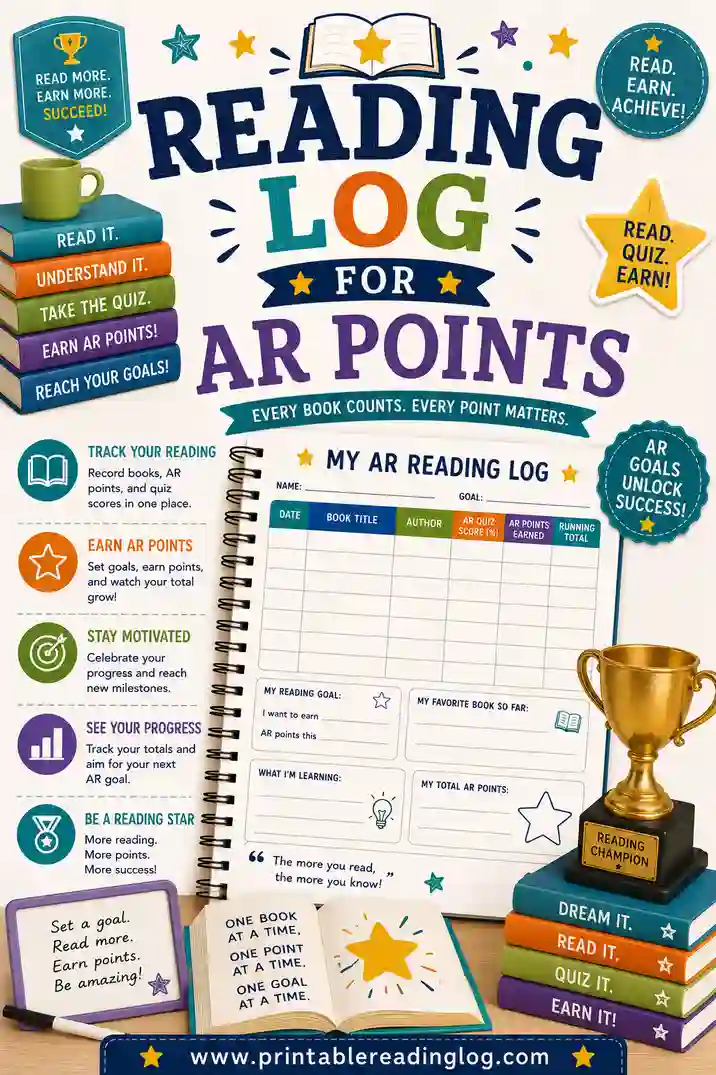
A reading log for AR points is a sheet students use to track the books they read for Accelerated Reader, the quizzes they take, and the points they earn toward a goal. Each row holds the book title, its AR level and point value, the quiz score, and the points banked. The simplest way to make one that fits your classroom or your child is to use a free reading log generator, pick a kid-friendly style, and print copies for the whole year.
Want to jump straight to it? Open the free tool, choose a book-style log with room for levels and points, and print. No sign-up, no fee, nothing to install.
What Is Accelerated Reader and How Do Points Work?
Accelerated Reader, or AR, is a reading program used in lots of schools. Students read books at their level, take a short comprehension quiz on a computer, and earn points based on how well they do. The harder and longer the book, the more points it's worth.
Here's the quick version of how points are figured:
- Every AR book has a point value based on its length and difficulty. A short picture book might be 0.5 points; a thick novel might be 15 or more.
- Each book also has an ATOS level, a number that tells you the reading difficulty (like 4.2 for a book aimed at early fourth grade).
- When a student takes the quiz, their percentage score decides how many of the book's points they actually earn. Pass with 100% and you get the full value; pass at 80% and you get 80% of the points.
A reading log keeps all of that in one place so a student (or a teacher, or a parent) can see exactly how the points are stacking up toward a goal.
Why Keep a Paper Log When AR Tracks It Online?
Good question. AR already records scores in its system. So why bother with a printed sheet? Because the software shows the school's view, not the student's. A personal log does things the screen doesn't:
- It makes the goal feel real. A kid who writes "goal: 20 points" at the top and fills in rows sees the finish line getting closer. That's far more motivating than a number behind a login.
- It works away from the computer. Students read at home, in the car, before bed. A paper log goes anywhere and gets filled in the moment a book is done.
- It builds ownership. When a child tracks their own points, the goal becomes theirs, not just something the school assigned.
- It gives parents a window in. A sheet on the fridge tells you at a glance how your reader is doing without you needing the school's portal.
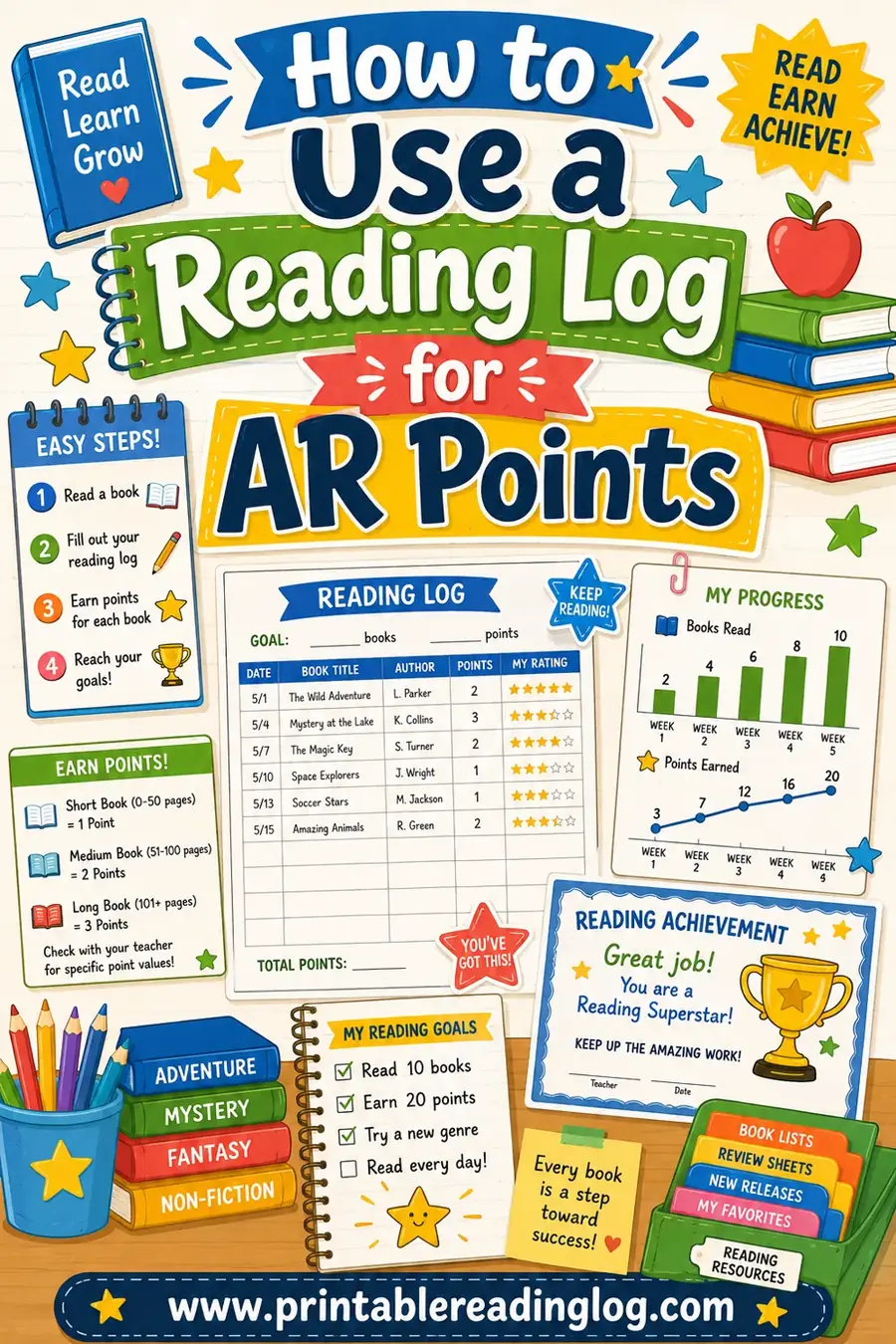
For more on weaving the log into the AR routine, see our guide on how to use a reading log for AR points.
What to Put on an AR Points Log
An AR log needs a few more columns than a basic reading log, because you're tracking points, not just titles. Here's a clean setup:
- Book title — what was read.
- AR / ATOS level — the book's difficulty number.
- Points possible — the book's full point value.
- Quiz score (%) — how the student did on the comprehension quiz.
- Points earned — the points actually banked after the score.
- Running total — the sum so far, toward the goal.
That last column is the motivator. Watching the total climb is what keeps a student picking up the next book.
A sample AR points log
| Book | Level | Points possible | Score | Points earned |
|---|---|---|---|---|
| Charlotte's Web | 4.4 | 5.0 | 100% | 5.0 |
| The One and Only Ivan | 3.6 | 4.0 | 90% | 3.6 |
| Because of Winn-Dixie | 3.9 | 3.0 | 100% | 3.0 |
| Frindle | 5.4 | 2.0 | 80% | 1.6 |
| Tales of a Fourth Grade Nothing | 3.3 | 3.0 | 100% | 3.0 |
Running total: 16.2 points. A student aiming for 20 can see they're nearly there, and that they just need one more solid book.
Setting an AR Points Goal That Fits the Reader
Points goals usually come from the teacher, and they're built around the student's reading level and how much time the marking period allows. But it helps to understand the idea so a goal feels fair instead of random.
A common rule of thumb teachers use is roughly 0.5 points per day of reading time, adjusted up or down for the grade and the reader. A six-week marking period might land somewhere around 10 to 20 points for many elementary students. Your child's teacher will set the real number; the log just keeps it visible.
Rough points goals by grade
| Grade band | Typical book points | Sample 6-week goal |
|---|---|---|
| 1st–2nd | 0.5–2 per book | 5–10 points |
| 3rd–5th | 2–8 per book | 10–20 points |
| Middle school | 5–15 per book | 15–30 points |
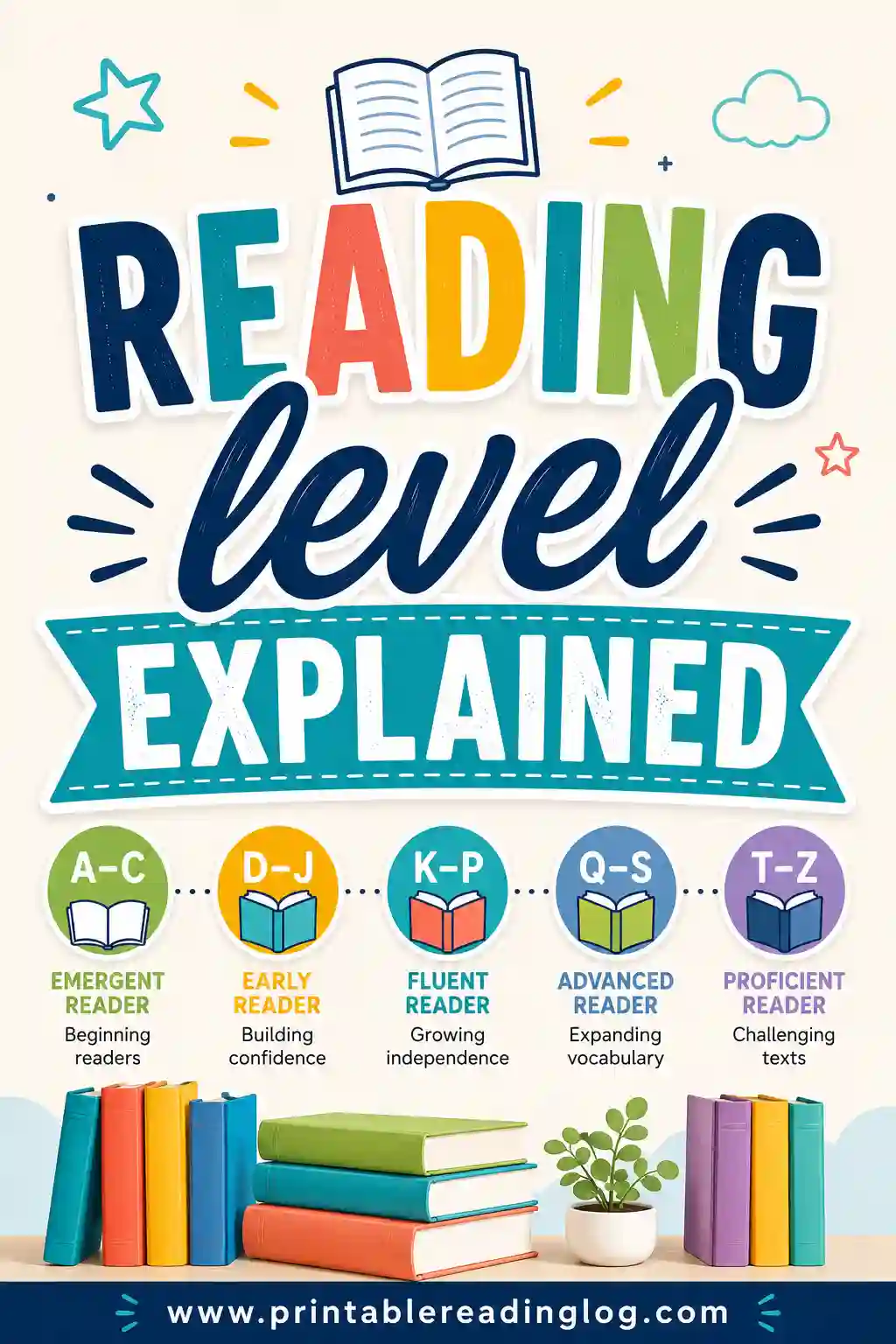
These are ballpark figures, not rules. The right goal is one that stretches the reader a little without crushing them. If you want help reading those level numbers, our reading level explained guide breaks down what ATOS and similar scores actually mean.
Tips for Earning AR Points (Without Gaming the System)
The goal of AR isn't really points. It's reading and understanding. But a few honest strategies help students bank points while genuinely getting better.
Read in the sweet spot. Books that are too easy are worth almost nothing; books that are too hard tank the quiz score. Aim for books at or just above the student's level so the points are worth it and the quizzes go well.
Pass the quiz the first time. Points come from the score, so comprehension matters more than speed. Reading carefully beats racing through and guessing.
Pick a few longer books. One 8-point novel can equal four short books. Mixing in a chapter book or two is an efficient way to climb the total, as long as it's the right level.
Read a little every day. Steady daily reading fills the log faster than weekend marathons. Our classroom reading log ideas work just as well at home for building that daily rhythm.
Mistakes that cost points
- Choosing books that are too hard. A 60% quiz means lost points and a frustrated reader. Match the level.
- Skimming for the quiz. AR quizzes test comprehension. Skimming shows up as a low score every time.
- Letting the log go stale. A log only motivates if it's current. Fill in each book right after the quiz.
Helping a discouraged reader
Some kids stall out on AR, usually because the points feel slow or the quizzes keep going poorly. The log can help here, too. Drop back to a slightly easier level for a few books so the student banks some quick, confident wins, then nudge back up. Seeing the total jump after a string of easy, well-understood books rebuilds momentum fast. The point is to protect the reader's confidence, because a kid who feels successful keeps reading, and a kid who keeps reading earns points naturally.
Print vs. Digital for AR Tracking
You don't have to choose. The school's AR software is the official record; your printed log is the student's personal scoreboard.
| Printable AR log | AR software | |
|---|---|---|
| Who it's for | The student | The school |
| Works away from a computer | Yes | No |
| Always visible | On the fridge or desk | Behind a login |
| Motivating for kids | Very | Less so |
| Official quiz record | No | Yes |
The printed sheet doesn't replace the system. It just turns an abstract number into something a kid can see, color in, and feel proud of.
Making Your AR Log Print-Ready
A few quick touches make the log easier for kids to use all year.
- Use a kid-style layout. Bigger rows and simpler columns suit younger readers. The free tool has kid-friendly styles built in.
- Write the goal at the top. A visible target ("My goal: 15 points") turns the sheet into a quest.
- Print extra rows. Give students plenty of lines so they never run out mid-period.
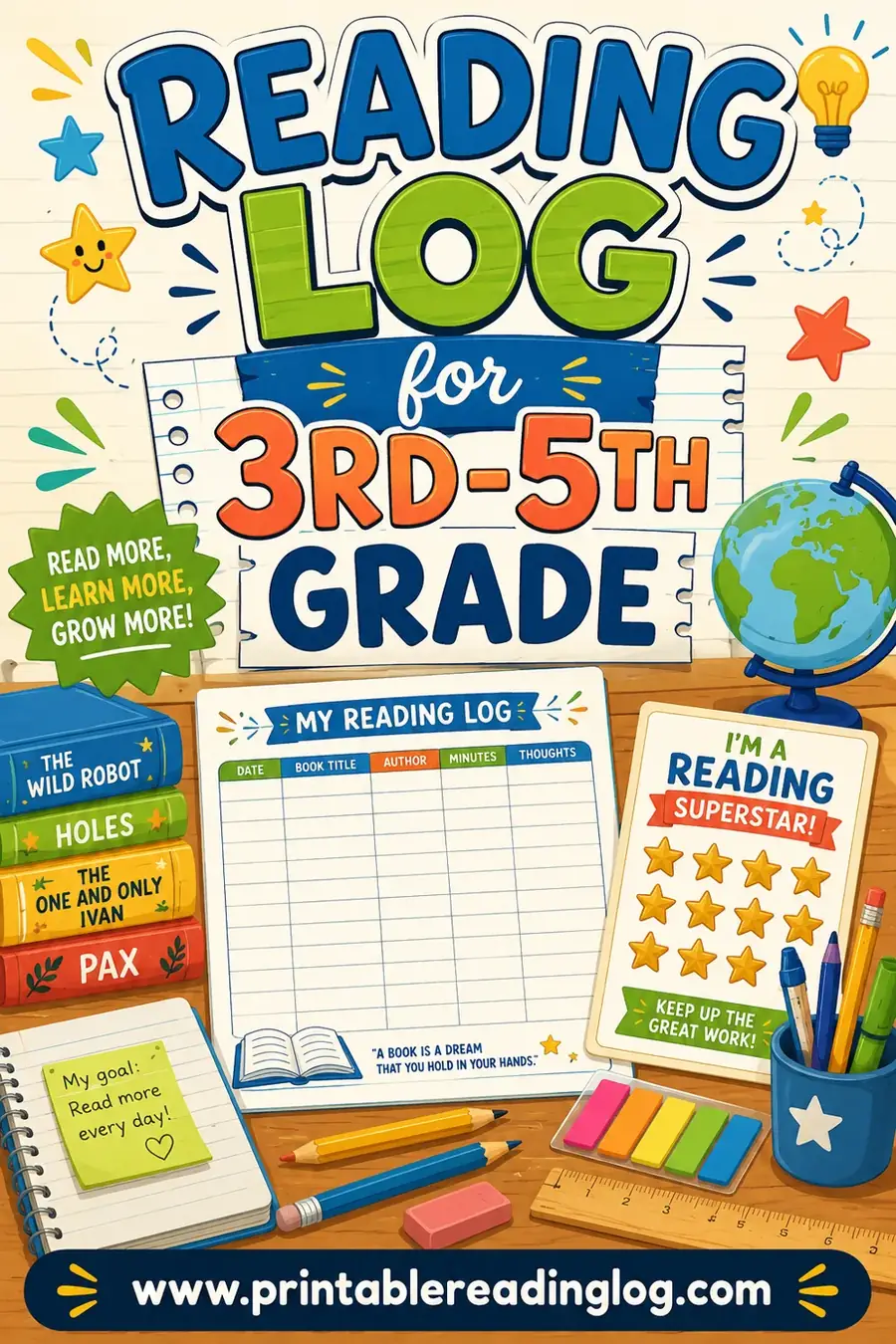
- Add a coloring element. A small star or bar to color in for each book earned makes the log fun for younger kids. For more on this age range, see our reading log for 3rd–5th grade guide.
Using the log at home
If you're a parent rather than a teacher, the AR log is one of the easiest ways to stay involved without nagging. Keep the sheet on the fridge or by your child's homework spot, and make a small ritual of filling in a row together each time a quiz is passed. Ask one quick question about the book, "Who was your favorite character?", to reinforce comprehension and show you care about the story, not just the number. When the running total nears the goal, point it out with a little excitement. Kids feed off that, and the finish line suddenly feels worth a sprint. By the end of the marking period you'll have a clear, shared record of exactly what your reader accomplished.
Frequently Asked Questions
How do AR points get calculated?
Each book has a point value based on its length and difficulty. The student earns a share of that value equal to their quiz score percentage. Pass at 100% and you get the full points; pass at 85% and you get 85% of them. Your log's "points earned" column tracks the real total.
Can I make a reading log specifically for AR points?
Yes. Use the free reading log generator, pick a book-style layout, and you'll have rows for the title, level, points, and score. Print as many copies as your class or your reader needs, with no sign-up.
What's a good AR points goal?
It depends on grade and reading time, and the teacher usually sets it. As a rough guide, many elementary students aim for 10 to 20 points in a six-week period. The log keeps whatever number you're given front and center.
Does a paper log replace the AR software?
No. The school's software is the official record of quizzes and scores. A printed log is the student's personal tracker, great for motivation and for reading away from a computer. They work best together.
How can my child earn more AR points?
Read books at the right level (not too easy, not too hard), read carefully so the quiz score is high, and mix in a few longer books worth more points. Steady daily reading beats cramming. Honest comprehension is what earns the points.
Is the printable AR log free?
Yes, completely. You build and print it yourself with no fee, no account, and no watermark. Print a fresh one each marking period.
Ready to Track Your AR Points?
Set the goal, grab a book at the right level, and open the free reading log generator to print a clean AR points sheet. It's free, there's no sign-up, and a visible scoreboard is often exactly what turns "I have to read" into "how many points can I get?" Happy reading, and may your quiz scores be high.