Reading Log Tips for Teachers: Make Logs Kids Actually Use
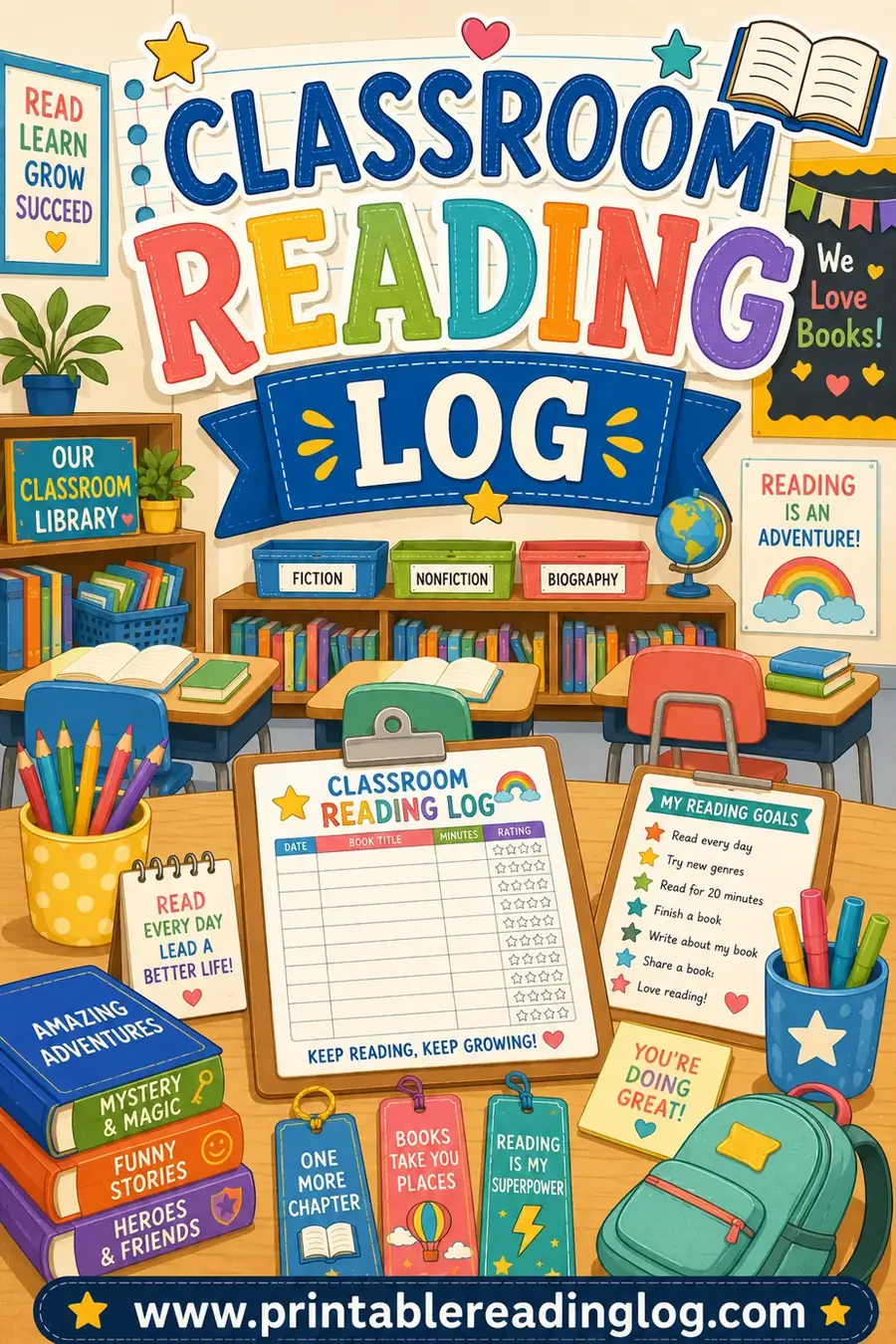
The best reading log tips for teachers come down to one idea: keep it simple, make it honest, and connect it to something kids care about. Use a short log with just date, title, and minutes; sign or stamp it instead of demanding a parent signature every night; and talk about the books, not just the numbers. A clean, printable reading log that you control beats a generic worksheet every time. The fastest way to get one is to build your own and print a class set.
Need a log today? Open the free reading log maker, pick a classroom-friendly layout, and print one per student. No sign-up, no fee, no software to install.
Why Reading Logs Get a Bad Reputation
Let's be honest: a lot of reading logs end up as busywork. Kids fake the minutes, parents sign without checking, and you spend Sunday night stamping a stack of half-filled sheets. If that's your experience, the log isn't the problem, the design is.
A reading log works when it feels like a tool for the reader, not a chore for the adults. The tips below all push in that direction: less paperwork, more reading, and data you can actually trust. Get the design right and logs stop being a battle.
Tip 1: Keep the Log Short and Simple
The single biggest fix is cutting columns. A log with ten fields per night is a log nobody fills in honestly.
Stick to three essentials:
- Date — so you can see consistency.
- Title — so reading is tied to real books, not just numbers.
- Minutes or pages — pick one and use it all year.
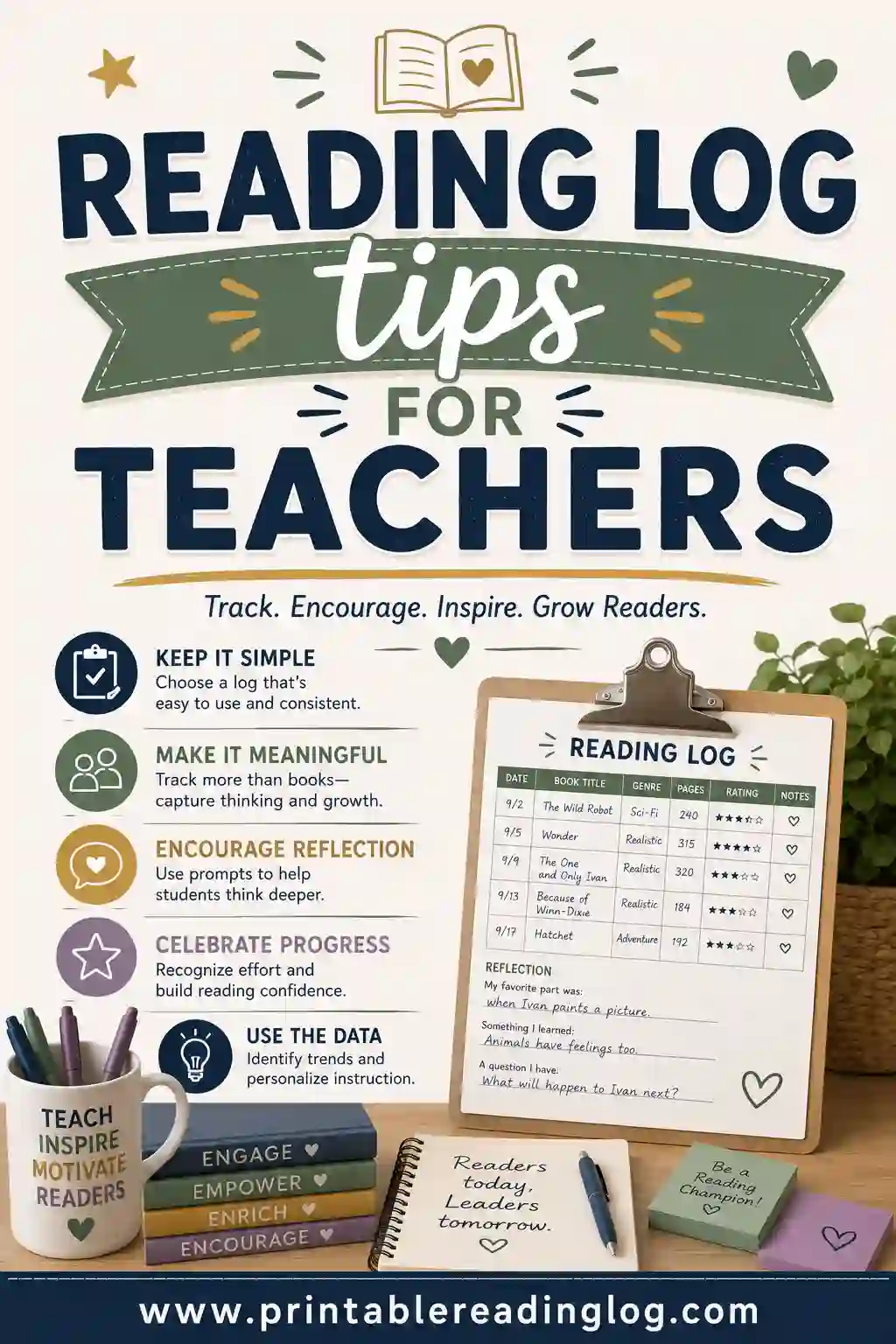
Everything else is optional. A short, clean log gets completed; a busy one gets faked. A purpose-built classroom reading log with just these columns takes seconds a night and gives you cleaner data.
Tip 2: Make It Easy to Be Honest
Inflated minutes are the classic reading-log problem. You can design a lot of that dishonesty away.
- Lower the nightly target. A realistic 15 to 20 minutes invites truth. An unrealistic 45 invites fiction.
- Count a range of reading. Let graphic novels, magazines, audiobooks, and rereads count. Kids fake numbers when "real reading" feels too narrow.
- Talk about the books, not the math. Ask "what happened in your book?" in the morning. Kids who know you'll chat about the story read the story.
- Drop the parent signature requirement, or soften it. A nightly signature turns reading into a compliance task for the whole family. A weekly check-in is plenty.
When honesty is the easy path, you get data you can actually use to help each reader.
Tip 3: Connect the Log to Something Kids Care About
A log that just disappears into a folder feels pointless. Tie it to a visible payoff.
Ideas that work:
- A class reading thermometer that fills up as the whole class logs minutes toward a goal.
- A book-count display, like a paper-leaf tree or a "books we've read" wall.
- Small, low-cost rewards for streaks: extra read-aloud time, choosing the class book, a homework pass.
- Choice as the reward. Often the best motivator is simply letting kids pick their own books freely.
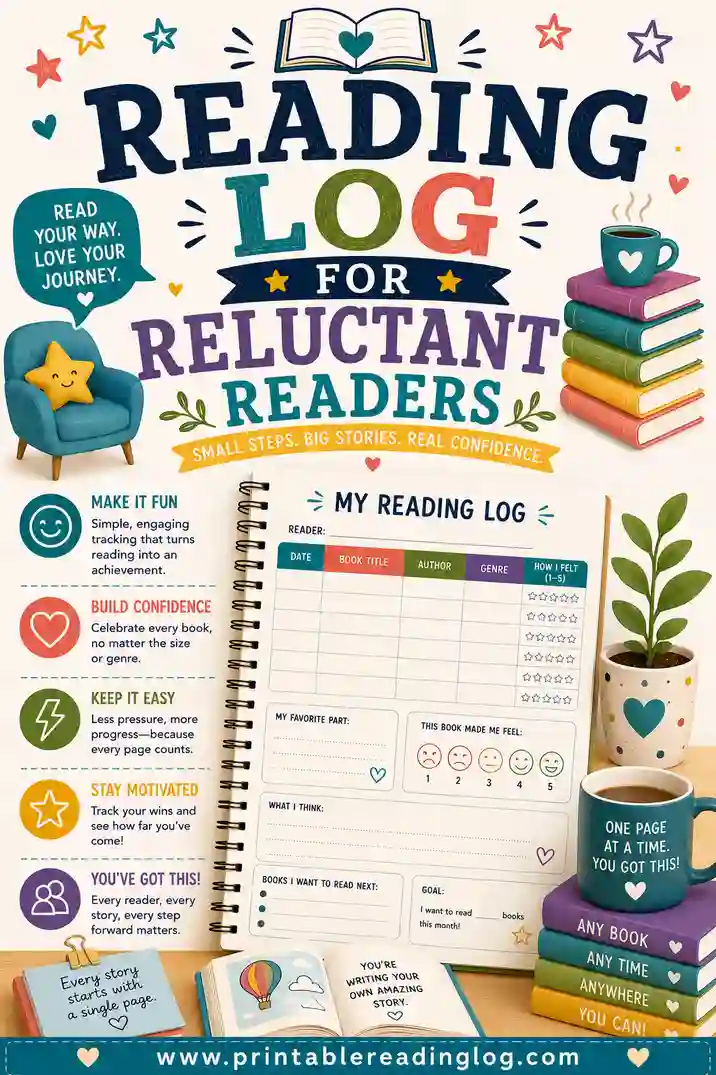
The goal is for kids to see that logging leads somewhere. For students who resist, our reading log for reluctant readers leans hard on tiny wins and choice, which is exactly what hesitant readers need.
Tip 4: Match the Log to the Grade Level
A kindergarten log and a fifth-grade log should not look the same. Match the format to your readers.
| Grade level | Best log format | What to track | Signature? |
|---|---|---|---|
| K–1 | Picture + checkbox row | Did we read? (minutes optional) | Weekly, light |
| 2–3 | Title + minutes log | Minutes per night | Weekly |
| 4–5 | Title + minutes + short response | Minutes or pages | Self-signed |
| 6+ | Book log with brief notes | Books and pages | Self-managed |
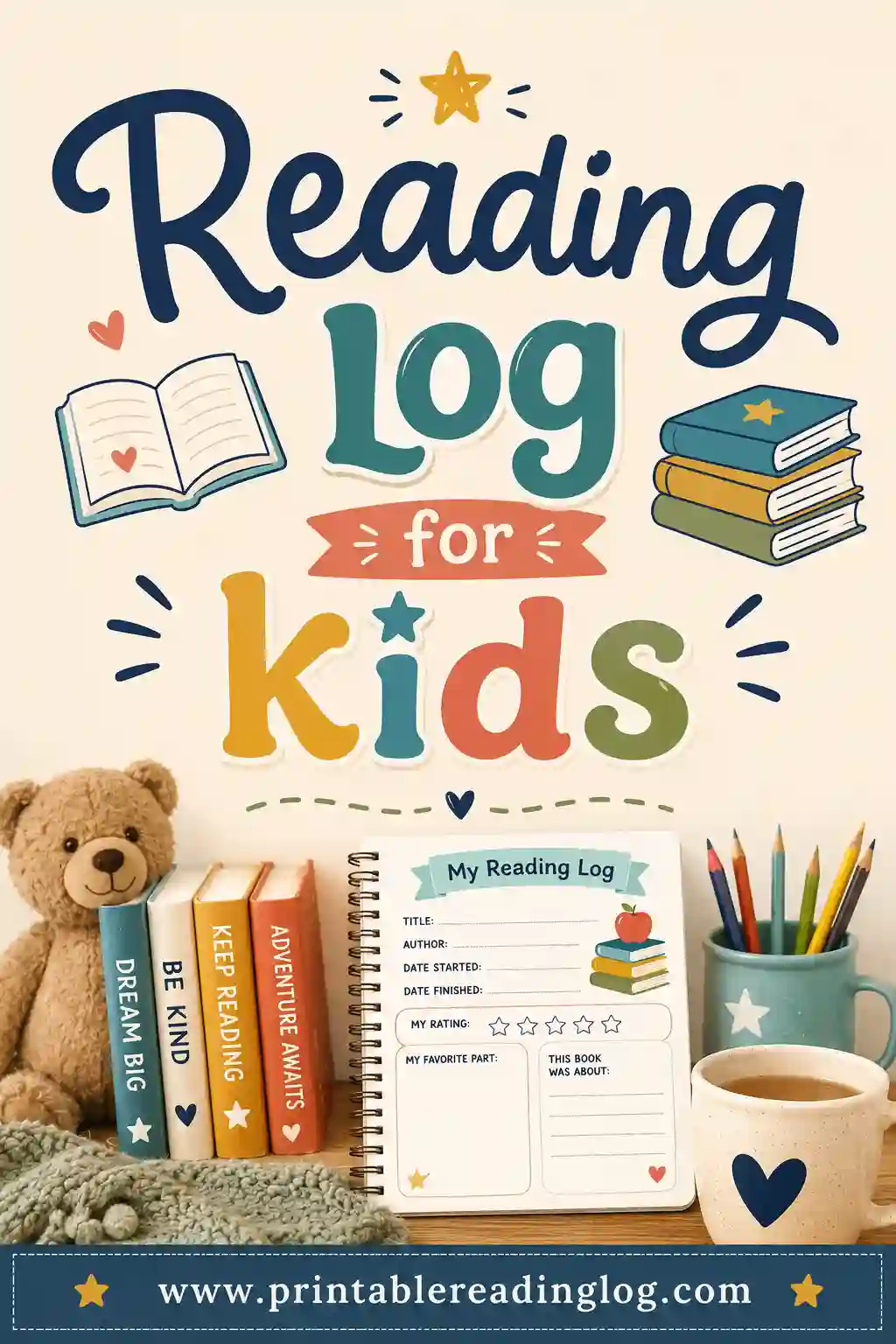
Younger kids need a job they can do (color a box, add a sticker). Older kids can own the whole process, which builds the independence you want anyway. A reading log for kids scales nicely across these grades.
Tip 5: Streamline Your Own Workload
Reading logs shouldn't cost you your weekend. A few systems keep your part fast.
- Stamp, don't sign. A date stamp or a quick initial during morning work beats taking sheets home.
- Check in small groups. Glance at logs during independent reading time, a few kids a day, instead of all 28 at once.
- Build a running weekly total into the log so you and the student can see progress at a glance with no adding.
- Print a term's worth at once. Make one good log, print a class set for the whole quarter, and you're done deciding for months.
The less time the log costs you, the more consistently you'll actually use it, which is what makes it work.
A Sample Classroom Reading Log Layout
Here's a clean, grade-2-to-5 layout you can copy. It captures what matters and nothing extra.
| Date | Book title | Minutes | Quick note / response |
|---|---|---|---|
| Mon | Charlotte's Web | 20 | Wilbur met Charlotte |
| Tue | Charlotte's Web | 18 | The barn at night |
| Wed | (school library) Frog and Toad | 15 | Funny garden story |
| Thu | Charlotte's Web | 22 | Fern is worried |
| Fri | Magazine: Ranger Rick | 15 | Article on owls |
Notice the variety: a chapter book, a library pick, and a magazine all count. That mix keeps reluctant readers logging honestly instead of inventing numbers.
Tip 6: Use the Log as a Conversation Starter
The highest-value thing a reading log does isn't tracking minutes, it's giving you a window into each reader. Use it that way.
When you check logs, look for patterns:
- Always the same book? They may be stuck or need a recommendation.
- Minutes dropping off? Something at home or in the book may have changed.
- A new genre showing up? Celebrate it and feed it more of the same.
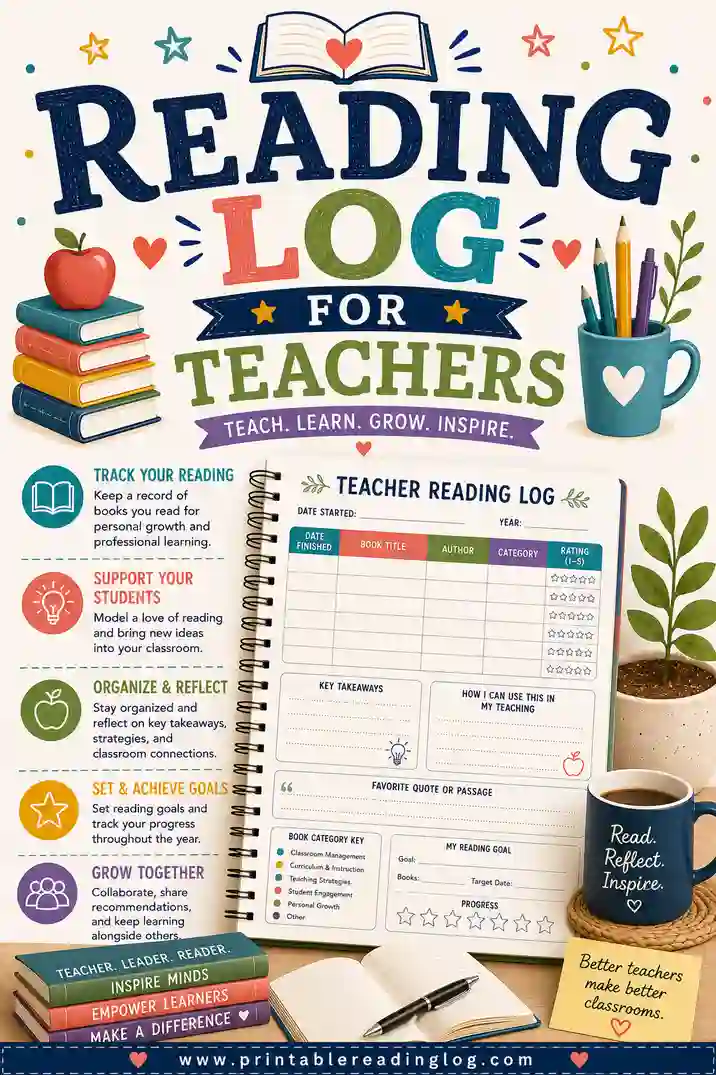
A quick one-on-one ("I saw you started a mystery, how is it?") tells a child the log is real and that you're paying attention. That attention does more for reading habits than any number ever will. This is where a reading log for teachers pays off: it's a record of who's reading what, ready for those small, powerful chats.
Common Reading Log Mistakes Teachers Make
A few well-meaning habits quietly sink reading logs. Steer around these.
- Too many columns. Thorough on paper, abandoned in practice. Cut to the essentials.
- Punishing missed nights. Penalties turn reading into a source of stress and make kids hide gaps. Encourage instead.
- Treating all minutes as equal proof. Use the log to start conversations, not to police kids. Trust grows reading; suspicion kills it.
- Never looking at them. If logs go straight into a folder unread, kids learn they don't matter. Check them, even briefly.
- One log for everyone. A single rigid format fails your youngest and bores your oldest. Match the log to the grade.
Avoid these and your reading logs become a genuinely useful classroom tool instead of a weekly headache.
Frequently Asked Questions
What should a classroom reading log include?
Keep it to three essentials: the date, the book title, and the minutes or pages read. You can add a short response column for older students. Avoid long, multi-column logs, simple sheets get filled in honestly and consistently, while busy ones get faked.
How do I stop students from faking their reading minutes?
Set a realistic nightly target, let many kinds of reading count (graphic novels, magazines, rereads), and talk with kids about their actual books each morning. When honesty is easy and the conversation is about the story rather than the number, inflated minutes drop sharply.
Should I require a parent signature on reading logs?
A nightly signature often turns reading into a compliance chore for the whole family and doesn't guarantee honesty anyway. A lighter touch, a weekly check-in or no signature for older students, usually works better. If your school requires signatures, keep them weekly and the log otherwise short.
How long should kids read each night?
For most elementary students, 15 to 20 minutes a night is the widely recommended target, increasing toward 20 to 30 minutes by upper elementary. A realistic target invites honest logging; an unrealistic one invites made-up numbers.
How can I make reading logs less work for me?
Stamp or initial logs during morning work instead of taking them home, check a few students a day during independent reading, build a running weekly total into the log, and print a full quarter's worth at once. Small systems keep your part to minutes.
How do I motivate reluctant readers to keep a log?
Give them choice over what they read, let unconventional reading count, and tie logging to a visible class goal or small reward. Above all, keep the target small so early wins pile up. A log built around tiny, celebrated successes works far better than one focused on big minute counts.
Build a Reading Log Your Class Will Actually Use
The best reading log is the one that gets filled in honestly, day after day, without eating your evenings. Keep it short, make honesty easy, tie it to something kids care about, and use it to start conversations. Open the free reading log maker, build a layout that fits your grade, and print a class set in minutes. It's free, there's no sign-up, and a log designed for your students beats any generic worksheet. Happy teaching, and happy reading.