Reading Log for Teachers: Free Printable & Easy to Use
A reading log for teachers is a simple printable sheet your students use to record what they read, for how long, and on which days. It keeps the whole class accountable, gives you a quick snapshot of who's reading at home, and saves you from chasing scraps of paper. The fastest way to get one is to use a free reading log builder that lets you set the columns, the date range, and the grade level, then print a class set in seconds.
Want to skip ahead and just make one? Open the free tool, pick a log that tracks minutes, books, or pages, and print enough copies for your room. No login, no fee, no software to install.
What a Teacher's Reading Log Actually Needs
Not every reading log fits a classroom. The ones you find online are often built for a single kid at home, with cute graphics and not much room to write. A teacher's version has to work for 25 or 30 students at once, survive backpacks, and give you data you can actually use.
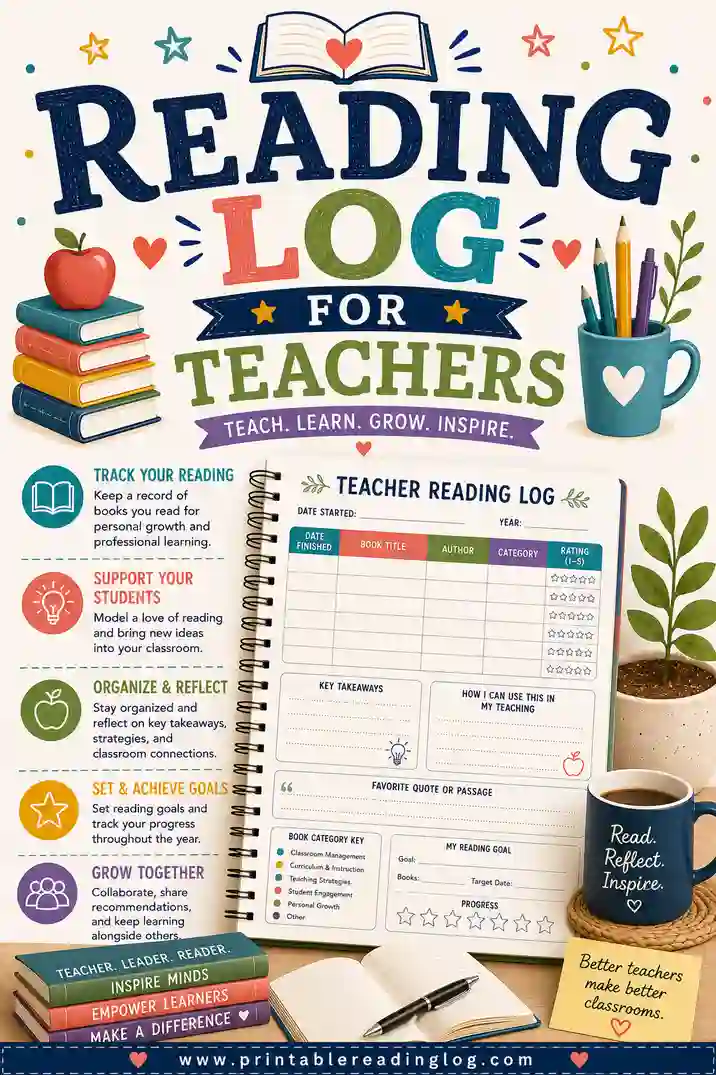
At minimum, a good classroom log has:
- A spot for the student's name (so you're not guessing whose sheet you're holding).
- A date column.
- The book title or what they read.
- Minutes read, pages read, or both.
- A parent signature line for accountability at home.
That's the skeleton. Everything else is optional polish. The trick is matching the log to your goal, not cramming in every field you can think of.
Match the log to your goal
Before you print anything, decide what you're measuring. A log built for the wrong goal just creates busywork.
- Building a daily habit? Track minutes per day. Twenty minutes a night is the classic target.
- Pushing for variety? Track titles and genres so you can nudge kids out of one series.
- Tracking comprehension? Add a short "what happened" or rating column.
- Running a reading challenge? Count books finished toward a class goal.
If you'd rather not build separate sheets for each, a flexible reading log by minutes or reading log by books covers most classrooms with one format.
Free Printable Reading Log Formats for Teachers
Here are the formats teachers reach for most, with the grade level each one suits best. Pick the row that matches your class and build that version with the tool.
| Format | Best for | Tracks | Why teachers like it |
|---|---|---|---|
| Daily minutes log | K–3 | Minutes per day | Easy to grade, builds the nightly habit |
| Weekly summary log | Grades 3–5 | Minutes + book title | One sheet per week, less paper |
| Books-finished log | Grades 4–8 | Titles, dates, rating | Great for reading challenges |
| Pages-read log | Middle school | Pages + book | Good for longer chapter books |
| Read-aloud log | PreK–1 | Book + who read it | Captures family read-alouds |
Each format prints clean in black and white, so you're not burning color ink on a class set. Start with the weekly summary log if you're not sure. It's the best balance of accountability and paper saved.
A simple weekly sample
Here's what a finished week looks like for one student, so you can see the shape of it before you print.
| Day | Book | Minutes | Parent initials |
|---|---|---|---|
| Mon | Charlotte's Web | 20 | A.R. |
| Tue | Charlotte's Web | 25 | A.R. |
| Wed | Charlotte's Web | 15 | A.R. |
| Thu | The BFG | 20 | A.R. |
| Fri | The BFG | 30 | A.R. |
At a glance you can see this student read every weekday, stuck with a book, and a parent saw it. That's the whole point: fast information, no decoding required.
How to Make a Class Set in Under Five Minutes
You don't need to design anything. Here's the whole process from blank screen to a printed stack.
- Open the reading log tool. It loads instantly in your browser.
- Pick your format. Minutes, books, or pages, plus kid or adult styling.
- Set the date range. A week or a month, depending on how often you collect logs.
- Add a name and signature line. These two fields save you the most headaches later.
- Print your class set. One per student, plus five spares for new kids and lost sheets.
Print on regular paper for weekly logs you'll collect and recycle. For a monthly log that has to last, run it on slightly heavier paper or slip it into a folder.
Save yourself the reprint
A few small choices prevent the most common classroom log headaches:
- Print extras. New students and lost sheets are a guarantee, not a maybe.
- Add the month to the header. It stops September and October logs from blending together.
- Use a half-sheet for little kids. Less space to fill feels less daunting for early readers.
- Keep a master copy. Save the settings so next month's set takes 30 seconds.
Grading and Tracking Without the Headache
The fear with reading logs is that they become a grading swamp. They don't have to. Most teachers grade them on completion, not content. Did the student read close to the goal and get it signed? Full credit.
A few systems that keep it light:
- Completion checkmarks. Glance, check, hand back. Two seconds per log.
- Points toward a class goal. Each kid's minutes add to a class total marching toward a pizza party or extra recess.
- Self-tracking. Older students color in a bar or sticker chart as they go, and you just verify.
The goal is information and motivation, not a second pile of essays to mark. If a log is taking you more than a few seconds per student, simplify it.
Cut down on the paper chase
Logs go missing. It's a fact of classroom life. To lose fewer:
- Collect on the same day every week so it becomes routine.
- Keep a class folder with a labeled slot per student.
- Let kids log in class for the first week so they learn the habit.
- Send a spare home in the take-home folder, not loose in a backpack.
Getting Parents on Board
A reading log only works if it makes it home and back. That depends on parents, so make their part painless. Send a short note explaining the goal: 20 minutes a night, a quick signature, that's it. When parents understand it takes 30 seconds, you get far better return rates.
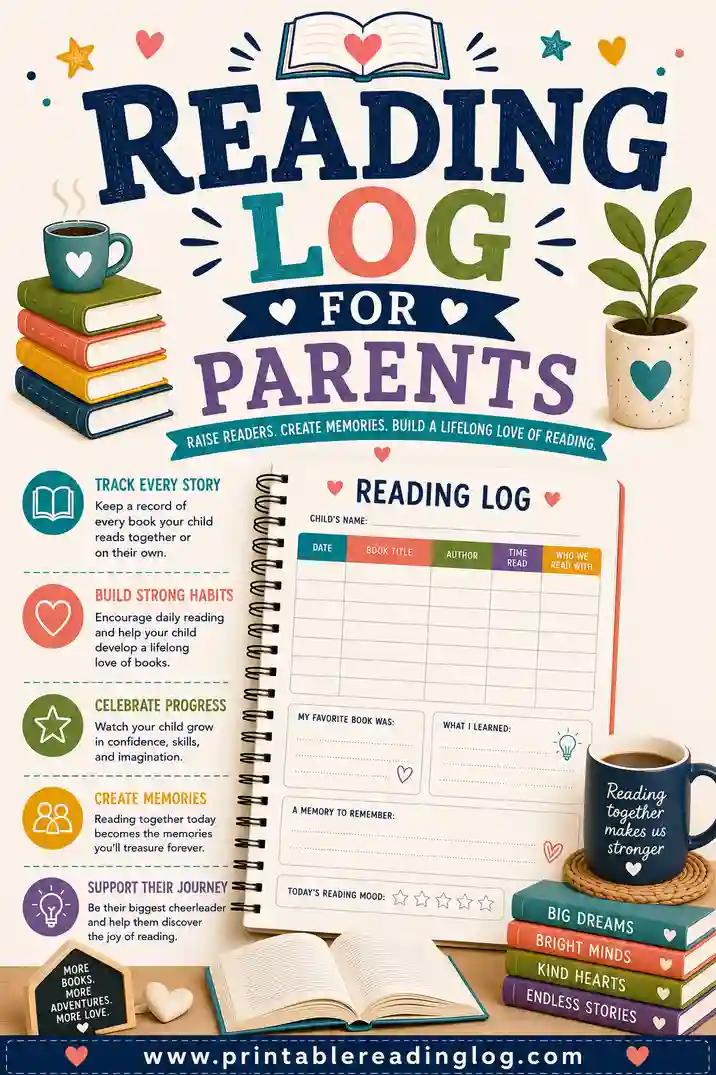
It also helps to give families their own copy. Point them to a simple reading log for parents they can print at home for weekends and breaks, so the habit doesn't stop when school does.
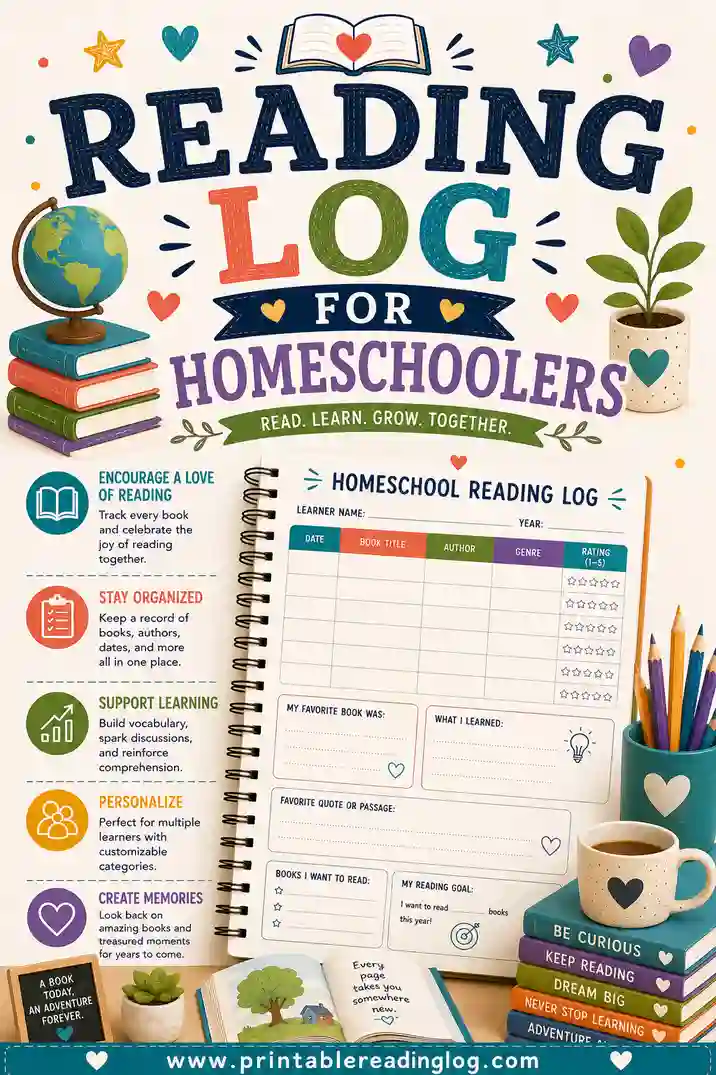
For students who learn at home or split time, the same tool builds a reading log for homeschoolers with the exact fields you'd want for independent work.
Ideas to Keep the Logs Working All Year
Logs get stale by November if nothing changes. Keep them fresh with small twists:
- Genre bingo. Reward filling a row with different genres, not just minutes.
- Mystery reader minutes. Add a bonus column when a guest reads aloud.
- Reading streaks. Celebrate a student who reads every weekday for a month.
- Class-wide goals. Pool everyone's minutes toward a shared reward.
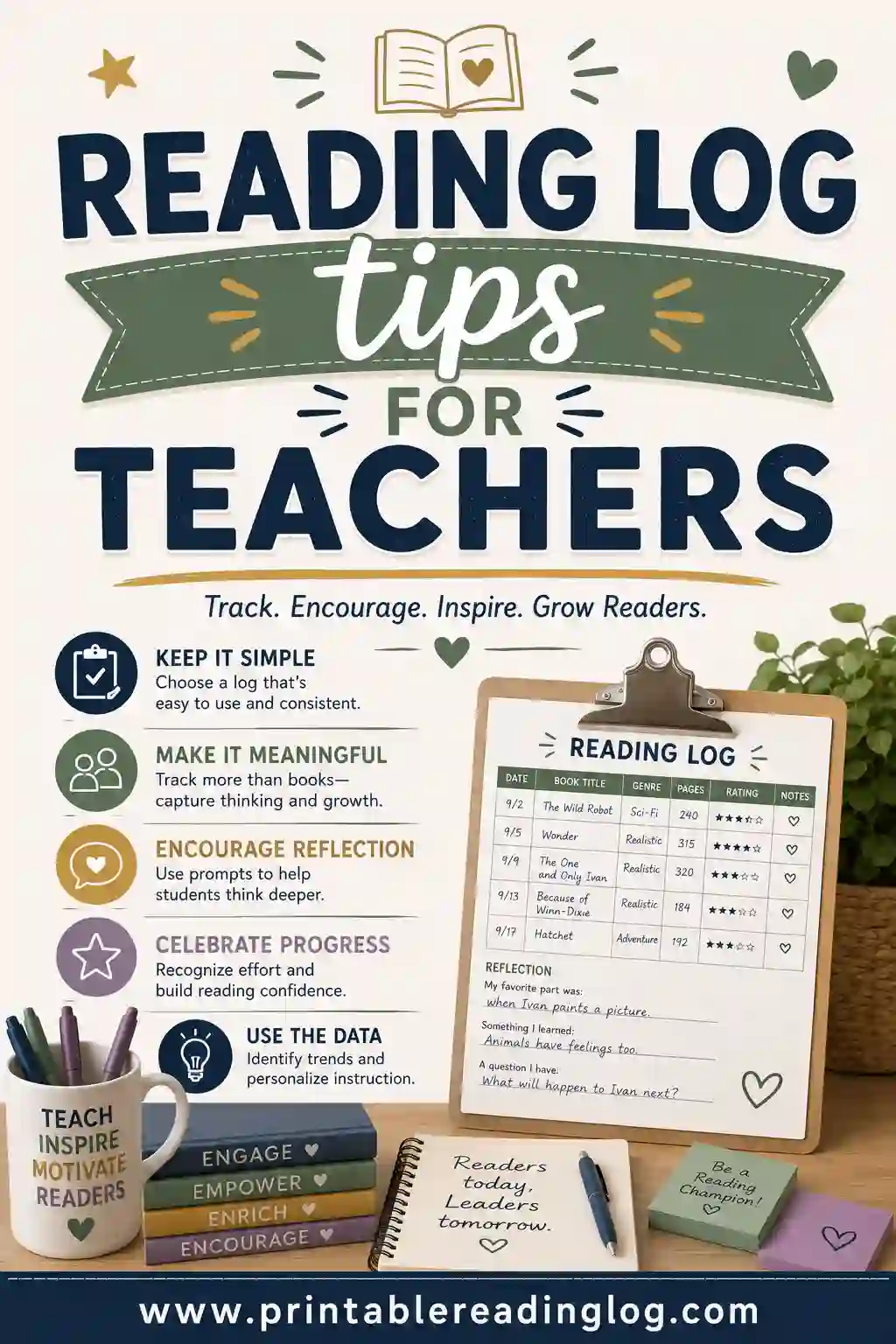
For more low-effort ways to keep momentum, the reading log tips for teachers article has a stack of classroom-tested ideas.
Differentiating Logs for Your Whole Class
No class reads at one level, and your logs shouldn't pretend otherwise. The same template can flex so every student gets a goal that fits, which keeps strong readers challenged and struggling readers from feeling defeated.
- Strong readers. Bump the goal, add a genre-variety challenge, or have them log a short summary or rating to push comprehension.
- On-level readers. The standard minutes-and-title log works as is.
- Struggling readers. Lower the minutes, count audiobooks and read-alouds, and celebrate the streak over the total.
- English learners. Pair the log with a simple "new words I learned" line, or use a reading log for ESL students built for language growth.
You don't need five different sheets. Often you just change the printed goal and which columns you grade. The point is that every kid opens their log feeling like the target is reachable, because a reachable goal is the one that gets met.
Building a Class Reading Culture
A log is a tool, but the real win is a class that genuinely wants to read. The log feeds that culture when you connect it to something bigger than a grade.
- A class goal. Pool everyone's minutes toward a shared total and a celebration when you hit it.
- Book talks. Let students recommend what they logged. Peer recommendations move books faster than yours.
- A visible tracker. A wall chart or thermometer that climbs as logs come in makes progress feel collective.
- Reading role models. Share what you're reading too. Kids notice when the teacher is a reader.
When the log is part of a culture rather than a compliance check, students stop seeing it as homework and start seeing it as proof they're part of a class that reads. That shift is worth far more than any single graded sheet.
Frequently Asked Questions
What should a reading log for teachers include?
At a minimum: student name, date, book title, minutes or pages read, and a parent signature line. Add a rating or short summary column only if you're tracking comprehension. Keep it simple so kids actually fill it in and you can grade it fast.
How long should students read each day?
A common target is 20 minutes of independent reading per night, which works out to roughly 15 to 20 books a year. Younger students may do 10 minutes; middle schoolers often do 30 or more. Set the goal that fits your grade level and stick with it.
Are these reading logs really free to print?
Yes. You build and print them yourself at no cost. There's no sign-up and no watermark, so you can print a full class set, plus spares, on a single free template.
How do I stop students from losing their logs?
Collect on the same day each week, keep a labeled class folder, and let kids log in class for the first week to build the routine. Always print a few spares for the students who lose theirs anyway.
Can I grade reading logs without it taking forever?
Grade on completion, not content. A quick checkmark for "read close to the goal and got it signed" keeps it to a couple of seconds per student. Save detailed feedback for reading conferences instead.
Can I make different logs for different grade levels?
Yes. The tool lets you switch between minutes, books, and pages, and between kid and adult styling, so you can build a daily minutes log for first graders and a pages log for your middle schoolers from the same place.
Ready to Build Your Classroom Reading Log?
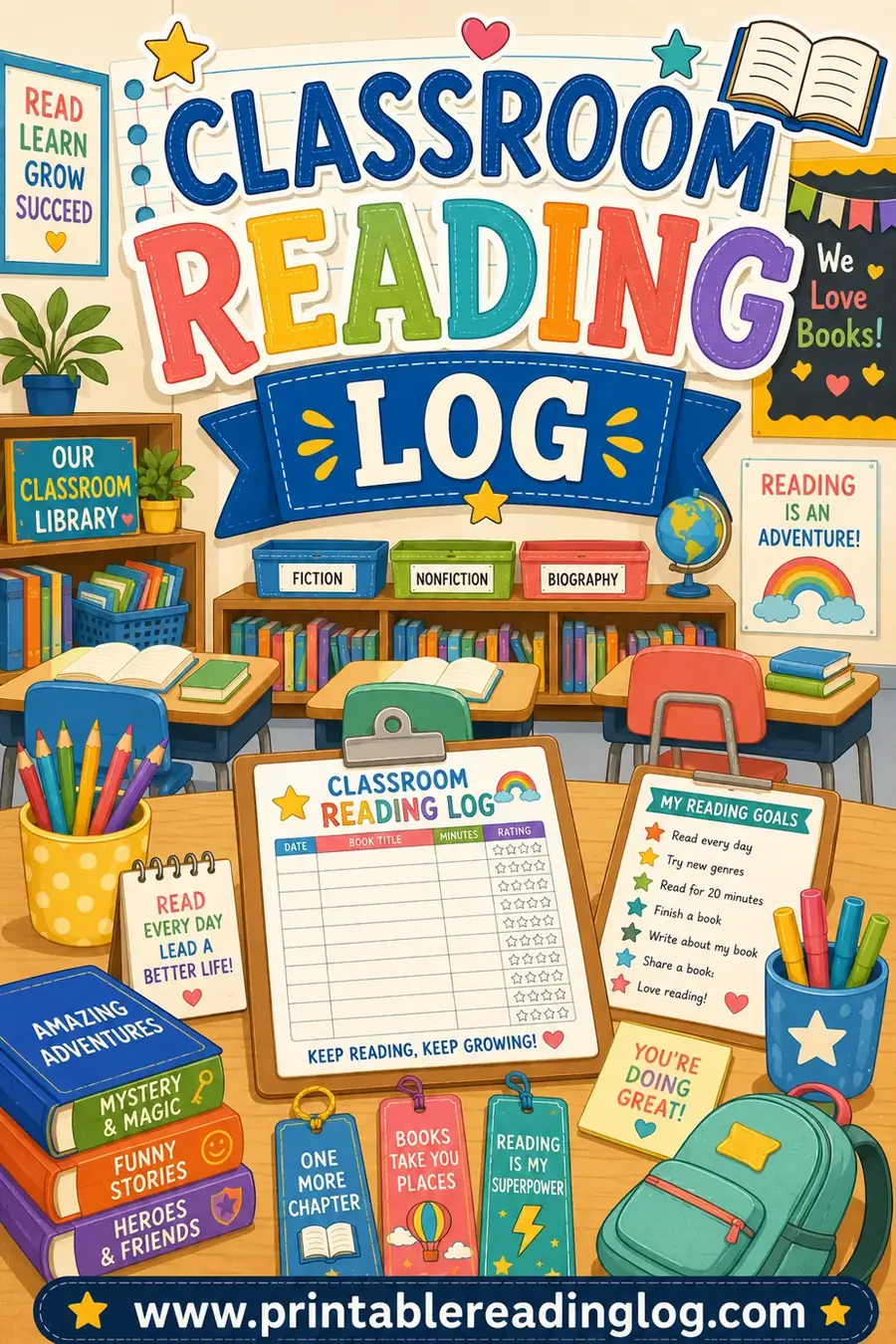
Pick the format that fits your students, open the free reading log tool, and you'll have a printable class set ready in a few minutes. It's free, there's no sign-up, and you can tweak the columns to match exactly how you grade. Print a stack, hand them out, and let the reading habit build itself. For more classroom-ready options, browse our classroom reading log and reading log tips for teachers.