Homeschool Reading Log: Free Printable Tracker
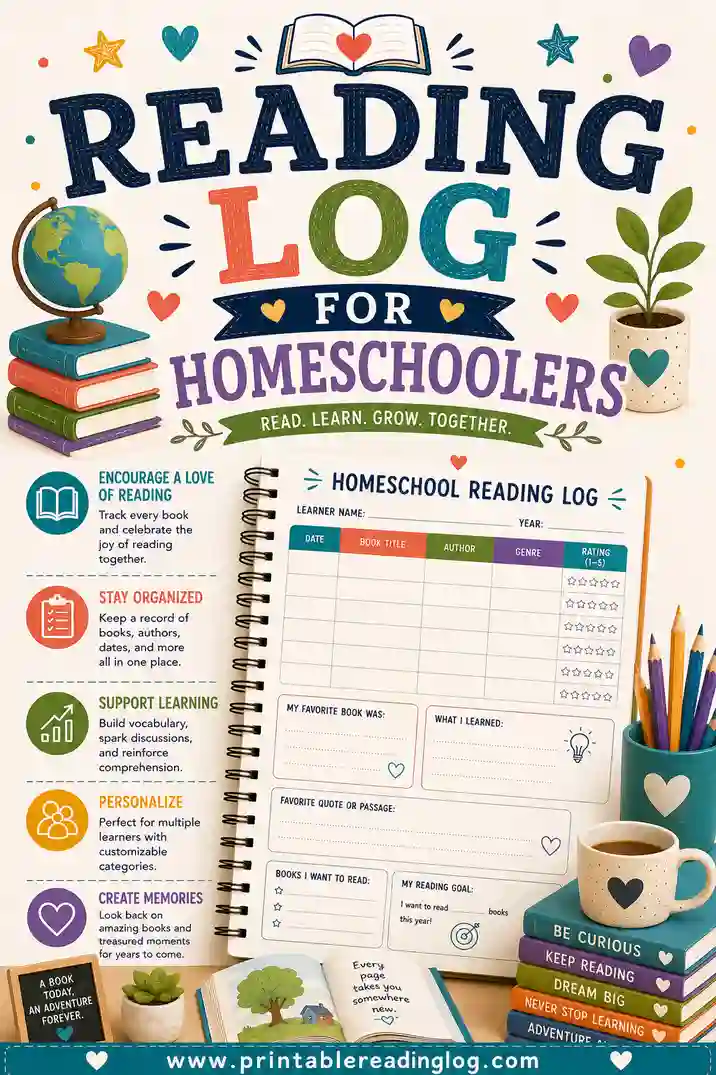
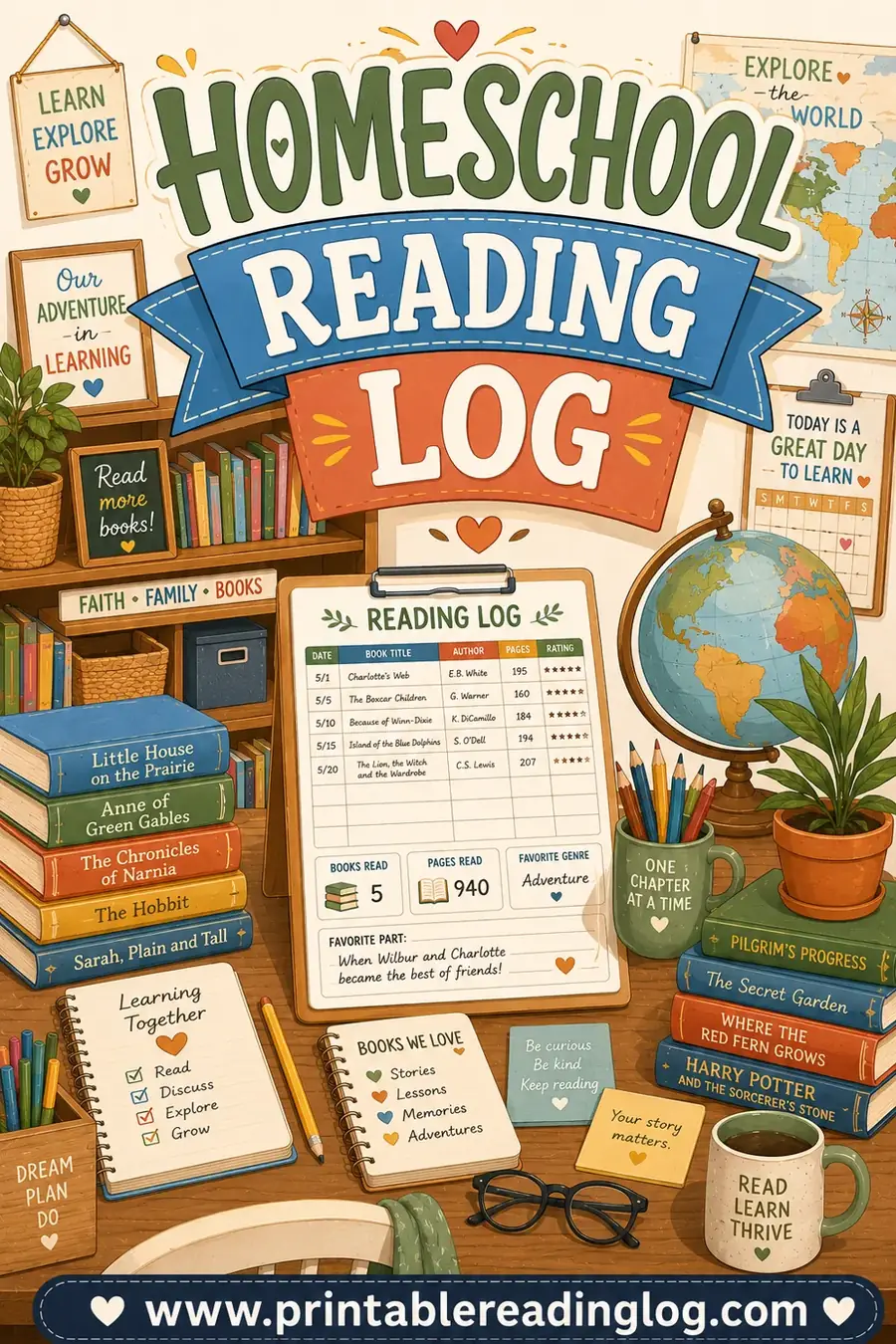
A homeschool reading log is a sheet where you record your child's reading: the book title, the date, minutes or pages, and often the reading level or a short note. It gives your homeschool a clean, portfolio-ready record of reading without locking you into a rigid curriculum or an app. The fastest way to make one is to use a free printable reading log, pick a layout that fits your child's age, and print pages for the week, month, or year.
Want to start now? Open the free log builder, choose a books, minutes, or pages layout, and print a homeschool reading log you can keep in a binder or on the fridge. No sign-up, no software, no cost.
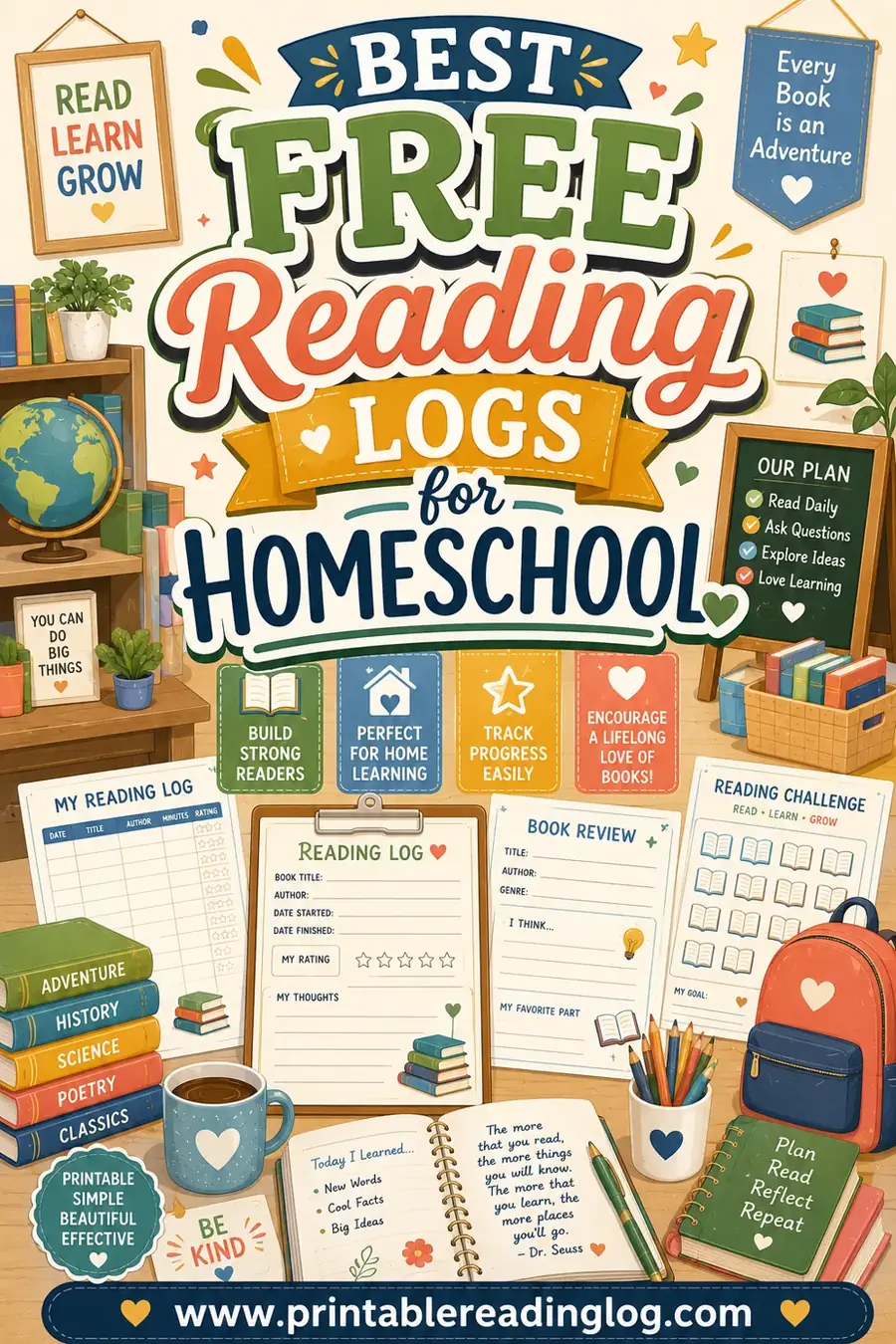
Why Keep a Homeschool Reading Log?
Homeschooling gives you freedom, but it also puts you in charge of record-keeping. A reading log is one of the easiest, most useful records to keep.
- It's portfolio and compliance proof. Many states ask for evidence of progress. A reading log is simple, clear documentation.
- It builds the daily habit. A visible log makes reading a non-negotiable part of your school day.
- It tracks growth across levels. You can watch a child move from picture books to chapter books to novels right on the page.
- It frees you from an app. No subscriptions, no logins, no syncing. Just a sheet you control.
The flexibility is the real win. You decide what to track and how, which suits the personalized nature of homeschooling perfectly. For the bigger picture, see our guide on how to keep a reading log.
What to Include in a Homeschool Reading Log
Because you're the teacher, you choose the columns. Here are the ones most homeschool families find useful.
| Column | Why it helps |
|---|---|
| Date | Tracks the daily habit and builds your record. |
| Book title & author | The core of your reading record. |
| Pages or minutes | Your tracking unit (pick one per child). |
| Reading level | Optional: documents growth for your portfolio. |
| Genre/subject | Shows a balanced reading diet across subjects. |
| Notes/narration | A line on what your child took from the book. |
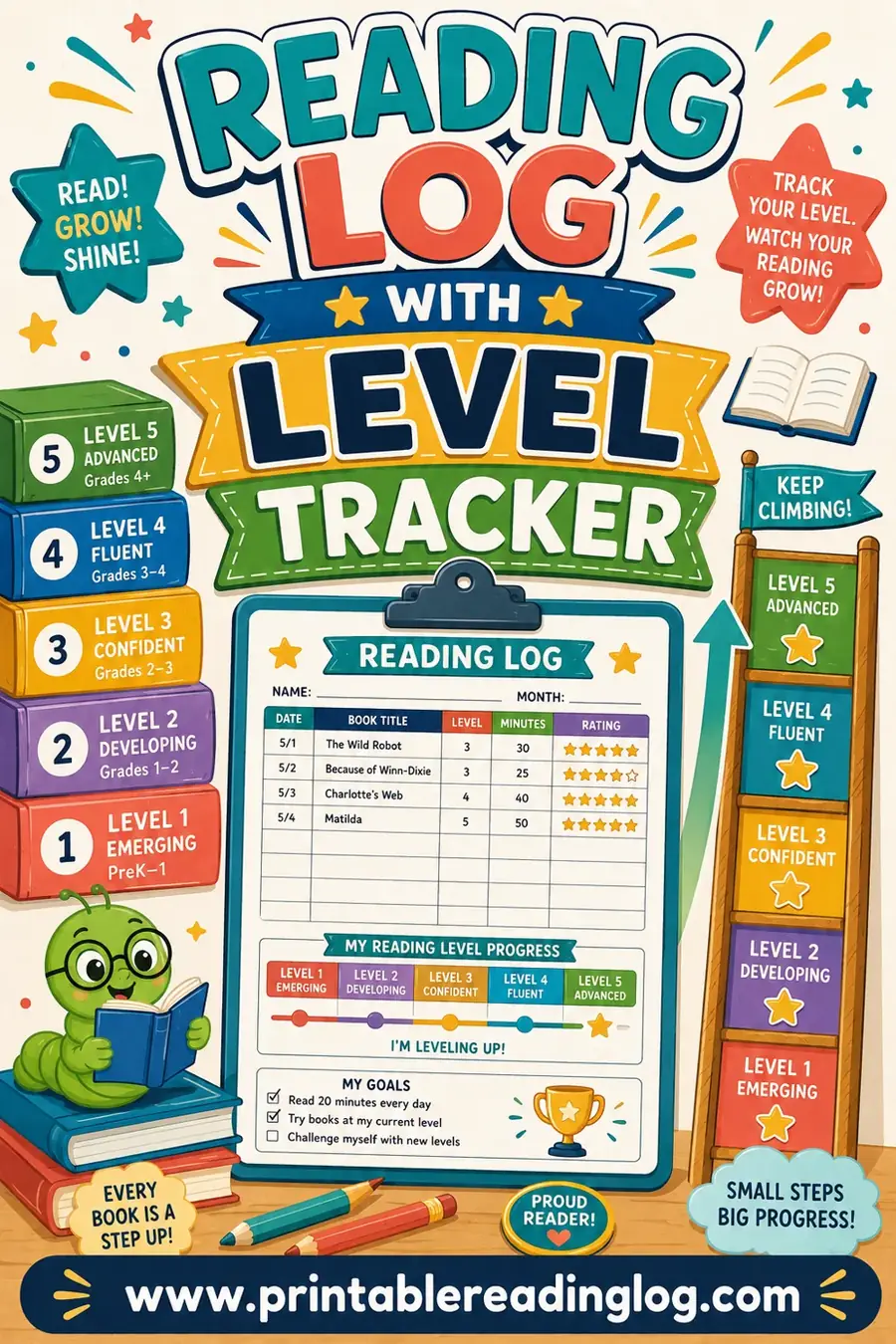
You don't need all six. A young child's log might be just date, title, and a smiley. An older student's might add level and a narration line. Match the depth to the age. Our reading log with level tracker is built for documenting growth across reading levels.
A sample homeschool week
Here's what a filled-in stretch might look like for an early reader.
| Date | Book | Pages | Level | Note |
|---|---|---|---|---|
| Mon | Henry and Mudge | 12 | J | Read mostly solo |
| Tue | Henry and Mudge | 14 | J | Sounding out new words |
| Wed | National Geographic Kids: Sharks | 8 | K | Loved the photos |
| Thu | Frog and Toad | 16 | K | Read aloud to sibling |
| Fri | Poetry: Shel Silverstein | 6 | — | Read for fun |
Notice the mix: fiction, nonfiction, poetry, even some reading aloud to a sibling. That variety is exactly what a homeschool log can capture and a rigid program often can't.
How to Set Up Your Homeschool Reading Log
The whole setup takes about five minutes, and you can tailor it per child.
- Open the builder. Head to the free reading log builder.
- Pick a layout per child. Minutes for little ones, pages or books for older readers.
- Add your columns. Date, title, your unit, and any extras like level or genre.
- Print pages. A monthly sheet per child keeps things tidy for your binder.
- Log as part of school. Make filling it in the last step of reading time each day.
Keep each child's log in their section of your homeschool binder, or use a shared family clipboard. A log that lives where you do school gets used.
Homeschool Reading Logs by Age
A flexible log adjusts as your children grow. Here's a quick guide across the ages you'll homeschool.
| Age/stage | Unit | Layout focus |
|---|---|---|
| Pre-reader (3–5) | Books read aloud | Title + smiley; you do the writing |
| Early reader (5–7) | Minutes | Title, minutes, big checkbox |
| Developing (7–10) | Pages | Add level and a one-line note |
| Independent (10–13) | Pages or books | Add genre, short narration |
| High school (14+) | Books | Title, author, dates, brief review |
For pre-readers, the log is really a read-aloud record you keep. As kids gain independence, hand them the pen and let them log their own reading. By high school, a reading log doubles as a literature record for transcripts. Our reading log for homeschoolers has layouts for every stage.
Using the Log for Records and Portfolios
This is where a homeschool reading log really shines compared to a regular one.
State and umbrella requirements
If your state or umbrella school asks for evidence of progress, a dated reading log with titles and levels is clean, credible documentation. Keep the monthly sheets in a binder and you've got a year's record with almost no extra effort.
Building a high school transcript
For older students, a reading log becomes a literature list. Titles, authors, and dates read translate directly into "Books Studied" for an English credit. Add a short note or rating per book and you've got the raw material for course descriptions too.
Tracking reading level over time
Logging a reading level (or grade equivalent) next to each book lets you see growth at a glance. It's reassuring for you and great evidence for anyone reviewing your homeschool. For a deeper look, see our best free reading logs for homeschool roundup.
Keeping the Habit Alive Year-Round
Homeschooling runs all year for many families, and reading can too. A few tips to keep it from going stale.
- Tie it to a daily anchor. Reading right after lunch or before screen time becomes automatic.
- Let kids choose books. Choice fuels motivation. A log of self-chosen books gets filled in eagerly.
- Mix in read-alouds. Logging books you read together counts and builds connection.
- Don't over-track. If logging starts to feel like busywork, simplify the columns. The habit matters more than the data.
- Review together monthly. Flip through the month's log with your child. Celebrating a full page is its own reward.
Avoiding burnout
The number-one mistake homeschool families make with logs is making them too detailed. A six-column log you abandon in October is worse than a three-column log you keep all year. Start simple. You can always add a column later if you genuinely miss the data.
Building a Balanced Reading Diet at Home
One of the quiet superpowers of a homeschool reading log is that it shows you, at a glance, whether your child's reading is well-rounded. Kids gravitate to one type of book, and a log gently nudges you to widen the menu. Aim for a mix across the week rather than perfection on any single day.
| Reading type | What it builds | How to fit it in |
|---|---|---|
| Fiction (chapter books) | Vocabulary, empathy, stamina | The bulk of daily reading |
| Nonfiction | Knowledge, content vocabulary | Tie to a science or history unit |
| Poetry | Rhythm, wordplay, fluency | A short poem to start the day |
| Read-alouds | Connection, above-level exposure | One shared book the whole family hears |
| Free reading | Joy, intrinsic motivation | Let the child pick anything |
You don't need to hit every row daily. Over a week, though, a glance at your log's genre column tells you if your young reader has been living entirely in graphic novels or never touches nonfiction. That's useful information no app gives you as plainly as a one-page log does.
Reading goals by age for homeschoolers
It helps to have a rough target so the daily habit has a shape. These are gentle guidelines, not rules, and a flexible log lets you adjust them to your child.
| Age | Gentle daily target |
|---|---|
| 4–6 | 10–15 min, mostly read-aloud |
| 7–9 | 15–20 min independent + a read-aloud |
| 10–12 | 20–30 min independent |
| 13+ | 30+ min, plus assigned literature |
Treat these as a floor to build on, not a ceiling. A child deep in a beloved series will blow past them happily, and the log captures those big reading days as proudly as the small ones. The point is steady daily practice, logged simply enough that it lasts all year.
Print, Customize, and Reuse
Since you build the log, it bends to your homeschool, not the other way around.
- One sheet per child per month. Keeps binders organized and pages clean.
- Match the unit to each kid. Different children can use different layouts on the same family clipboard.
- Add a subject column. Great for tracking that reading spans history, science, and literature.
- Leave a narration line. A spot for "what I learned" turns the log into a light comprehension record.
Everything adjusts in the free builder, so your homeschool reading log fits your family's exact rhythm and record-keeping needs.
Frequently Asked Questions
What should a homeschool reading log include?
At minimum: the date, the book title and author, and your tracking unit (minutes or pages). Many homeschool families add a reading level and a short note for portfolio and record-keeping purposes. Match the columns to your child's age, keeping young kids' logs simple.
Does a reading log count as a homeschool record?
Yes. A dated log with titles, levels, and notes is clear evidence of reading progress, which many states and umbrella schools accept as documentation. Keep your monthly sheets in a binder and you'll have a solid year-long record.
Is the homeschool reading log free to print?
Yes. You build and print it yourself at no cost, with no sign-up and no watermark. Print pages for one child or your whole family, as many as you need.
How do I track reading level in a homeschool log?
Add a "level" column and record each book's reading level or grade equivalent next to the title. Over time this shows growth at a glance and makes great portfolio evidence. Many leveling systems (like Guided Reading levels) are printed right in or on the book.
Can older homeschoolers use the same log?
Yes, with a slightly different layout. For high schoolers, track books, authors, and dates so the log doubles as a literature list for transcripts. Add a short review per book and you've got course-description material too.
How detailed should the log be?
Less detailed than you think. The most common mistake is making the log so complex that nobody keeps it up. Start with three or four columns. You can always add more later if you find you miss the data. A simple log you actually keep beats a perfect one you abandon.
Start Your Homeschool Reading Log Today
Pick a layout for each child, open the free reading log builder, and print pages you can slot right into your homeschool binder. Track minutes, pages, and levels, build the daily reading habit, and keep portfolio-ready records all in one place. It's free, there's no sign-up, and your homeschool can start logging by this afternoon. Happy homeschooling.