Reading Log vs Reading Journal: Which One Do You Need?
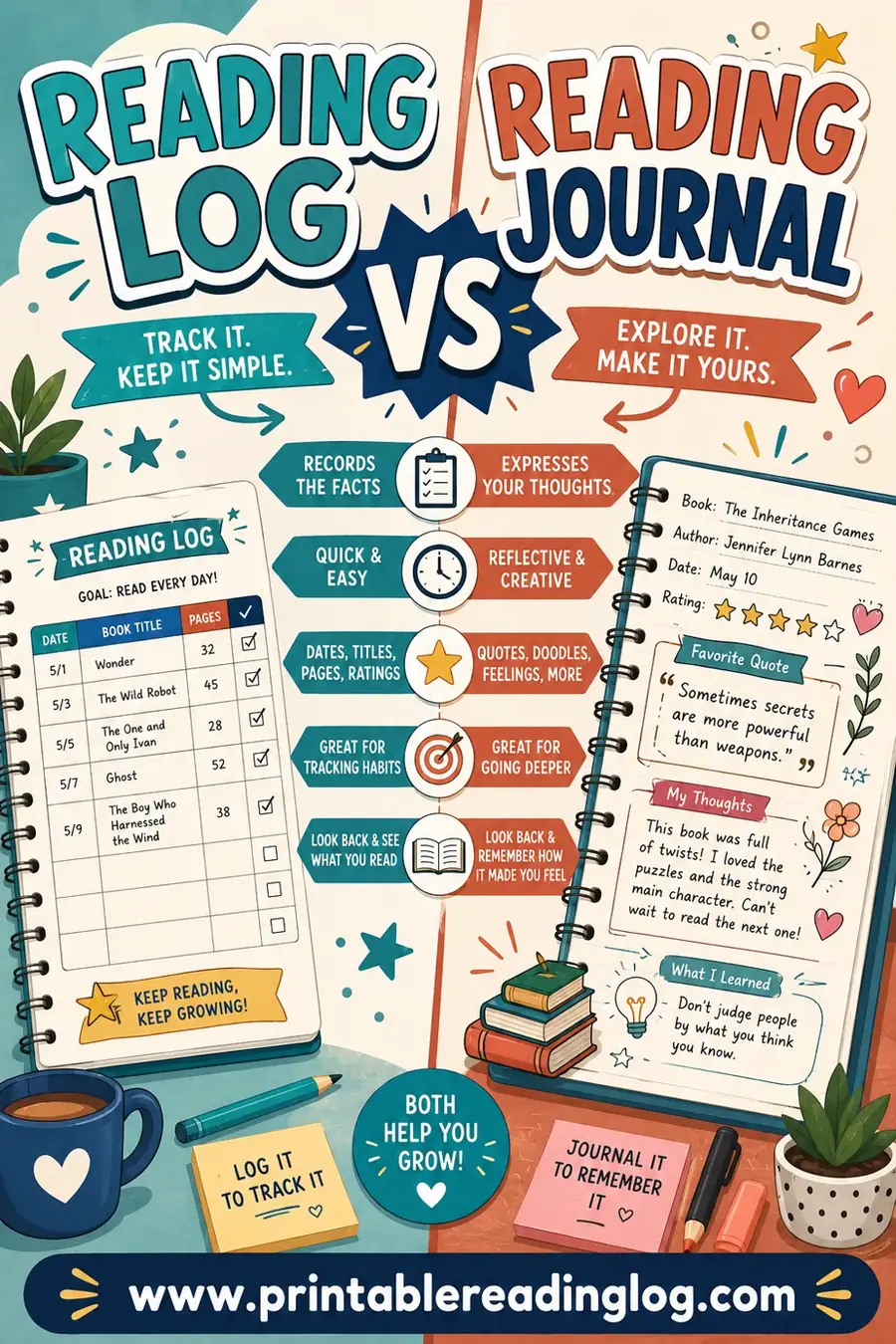
A reading log is a simple record of what you read: the title, the date, and maybe the pages or minutes. A reading journal goes deeper, adding your thoughts, favorite quotes, ratings, and reflections on each book. In short, a log answers "what did I read?" while a journal answers "what did I think about it?" Most readers want the log first, because it's faster and easier to keep up.
Want to start tracking today? Open the free reading log maker, pick a layout, and print a clean sheet in under a minute. There's no sign-up, and you can swap to a journal-style page with reflection space whenever you're ready for more.
What Is a Reading Log?
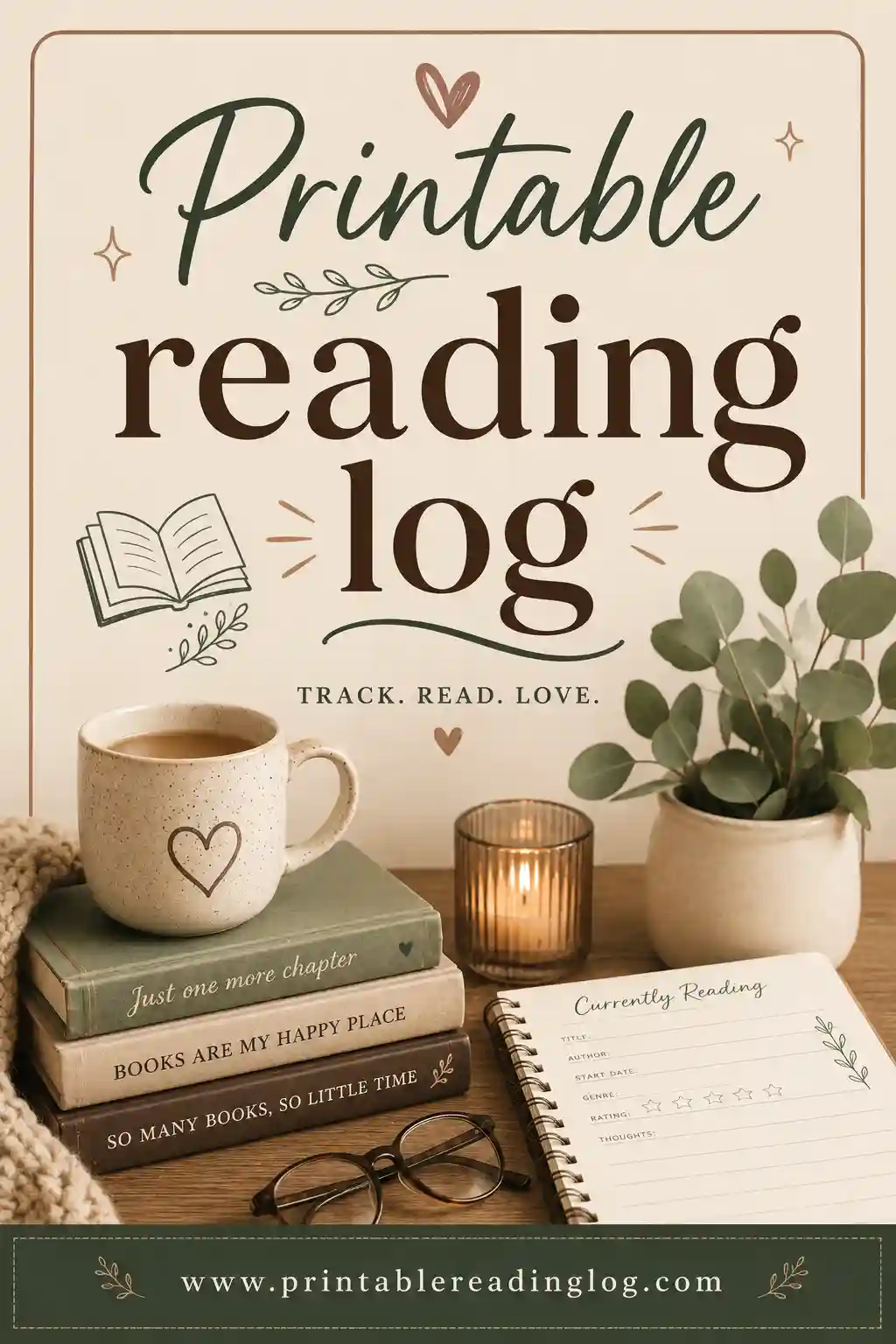
A reading log is the no-fuss option. It's a list, usually in a grid, where each row is one book or one reading session. You jot down a few facts and move on. The whole point is to make tracking so easy that you actually keep doing it.
A basic log usually has columns like these:
- Title of the book
- Author
- Date started and finished
- Pages or minutes read
- A small box for a star rating or a checkmark
That's it. You can fill a row in ten seconds. Because it's quick, a log is the format that survives busy weeks, school years, and reading slumps. If you've ever abandoned a fancy notebook because keeping it felt like homework, a plain log is your friend.
Logs shine when your goal is about quantity or consistency: reading every day, finishing a set number of books, hitting a minutes target for school, or building a habit you can see growing on paper.
What Is a Reading Journal?
A reading journal is the reflective cousin. It still records what you read, but it gives each book real estate to think out loud. Instead of one row, a book might get a half-page or a full page.
A journal page often includes:
- A spot for favorite quotes or passages
- What you liked and didn't like
- A short summary in your own words
- The emotions the book stirred up
- A rating with a sentence explaining why
- Who you'd recommend it to
Journals are slower to fill, and that's the point. They turn reading into a conversation with yourself. People keep them to remember books long after the plot fades, to write better book reviews, or simply because the act of reflecting deepens what they get from a story.
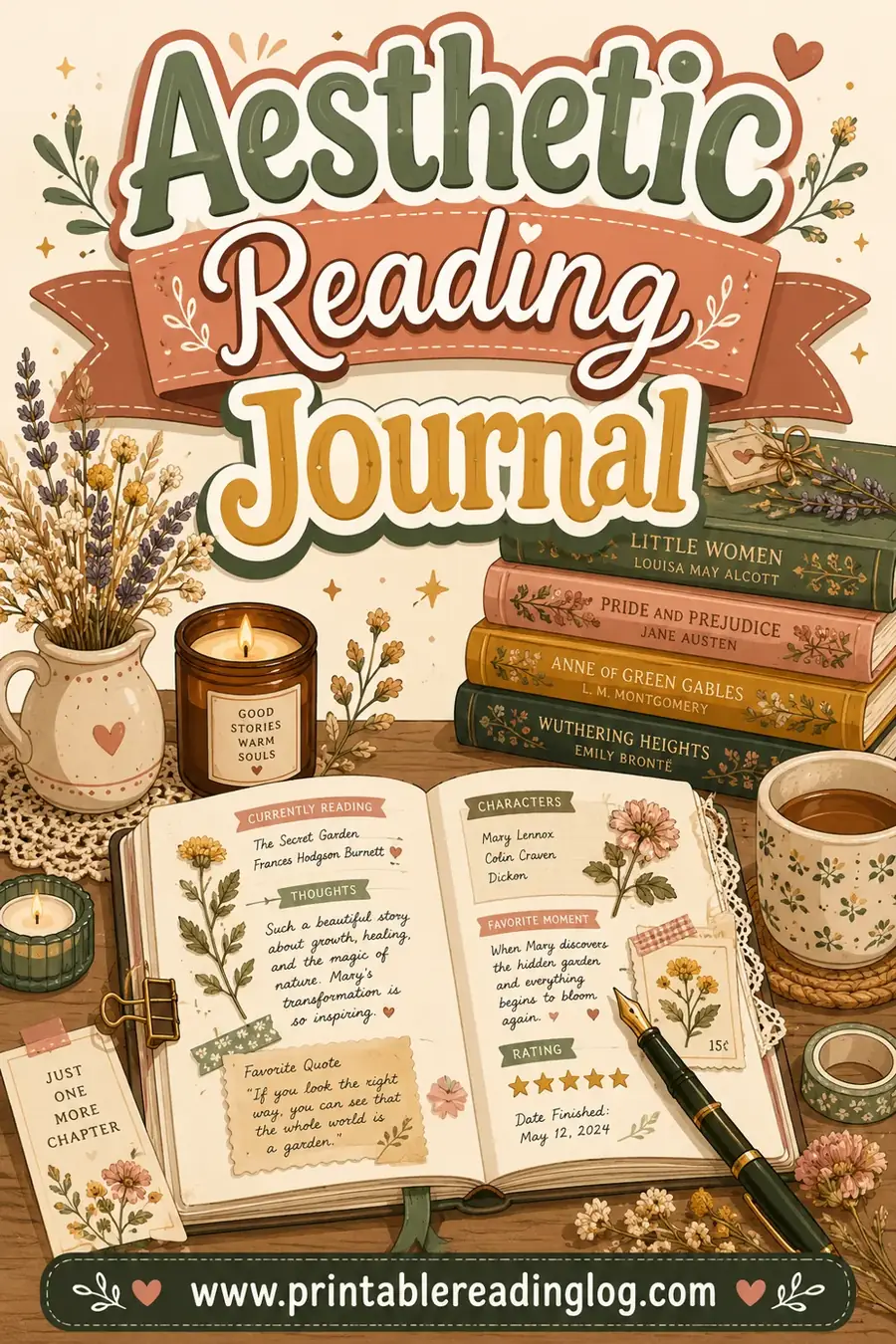
If you love rereading your own notes a year later and thinking "oh right, that's why I loved this one," a journal is for you. Many readers keep a pretty, aesthetic reading journal specifically because the look makes them want to write in it.
Reading Log vs Reading Journal: Side-by-Side
Here's the quick comparison most people are after. Use it to decide in about thirty seconds.
| Feature | Reading Log | Reading Journal |
|---|---|---|
| Main question | What did I read? | What did I think? |
| Time per book | 10–30 seconds | 5–20 minutes |
| Best for | Habits, goals, counts | Reflection, reviews, memory |
| Space per book | One row | Half to full page |
| Includes quotes | Rarely | Usually |
| Includes summary | No | Yes |
| Easy to keep up | Very | Takes commitment |
| Great for kids | Yes | Older kids and teens |
| Print volume | A few pages | A notebook's worth |
Neither one is "better." They solve different problems. The trick is matching the format to why you're tracking in the first place.
When to Choose a Reading Log
Pick a log when speed and consistency matter more than depth. It's the right call if you're:
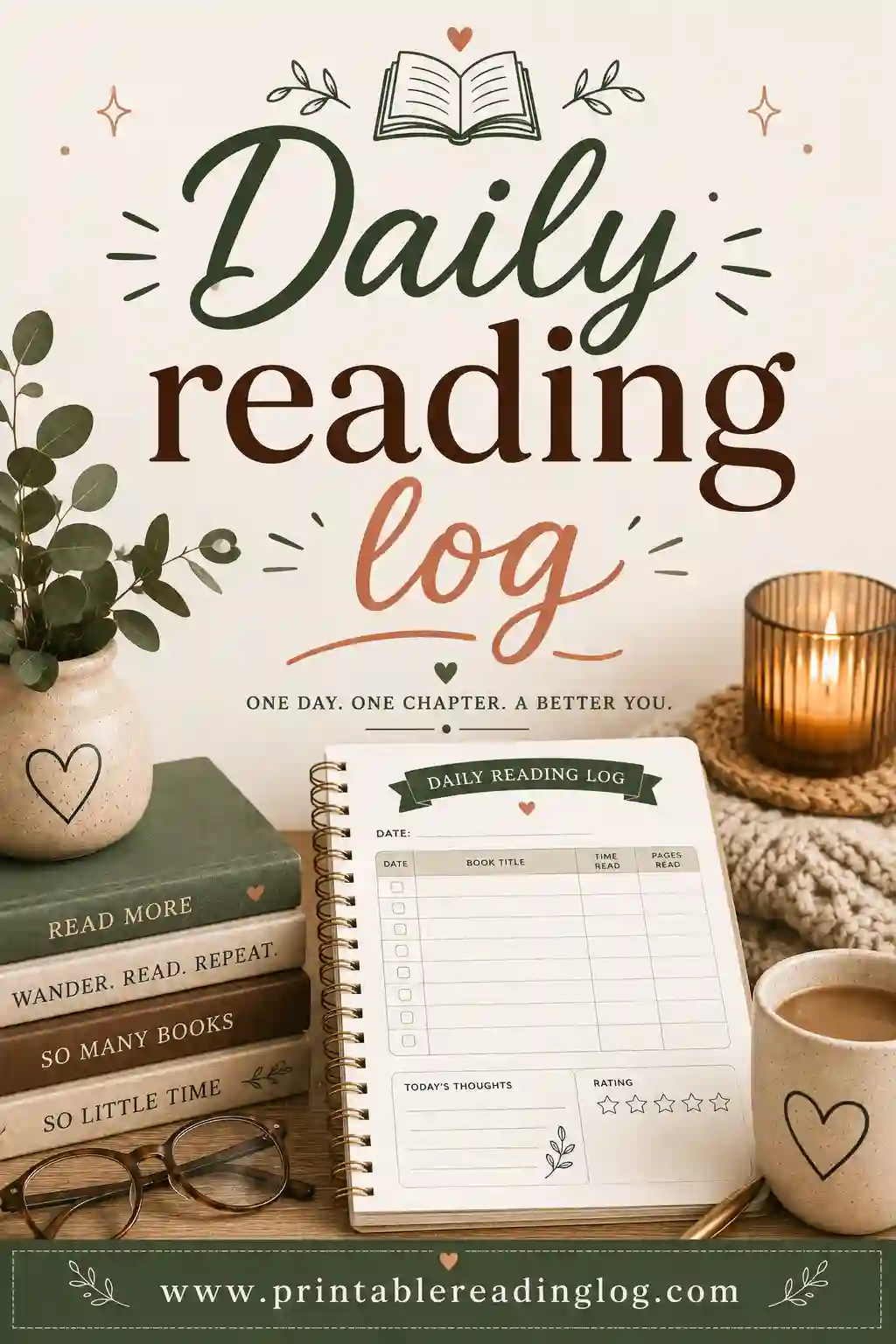
- Building a daily reading habit and want a streak you can see. A daily reading log makes the streak visible, which is half the battle.
- Tracking kids' reading minutes for school. Teachers want totals, not essays.
- Chasing a yearly book goal like "read 30 books this year." A running list does the counting for you.
- Logging minutes or pages for a reading challenge or program.
- Returning from a reading slump and need the lowest-effort tool possible.
A log keeps the barrier to entry near zero. When tracking feels easy, you keep tracking, and the data adds up on its own.
When to Choose a Reading Journal
Reach for a journal when the thinking is the point. It fits if you:
- Write reviews for a blog, Goodreads, or a book club and want notes to pull from.
- Want to remember books in detail, not just that you read them.
- Enjoy the process of reflecting, doodling, and collecting quotes.
- Read fewer, deeper books rather than racing through a big stack.
- Are in a book club and need talking points ready for the meeting.
A journal rewards slowness. If you finish a book and feel like you have things to say, a journal gives you somewhere to say them.
You Don't Have to Pick Just One
Here's the part most "log vs journal" articles miss: plenty of readers use both, and it works beautifully.
The simplest combo is a log as your master list plus a journal for standouts. Every book gets a quick log entry. Then, when a book really moves you, you give it a full journal page. You get the complete record without the pressure to write paragraphs about every paperback you skim.
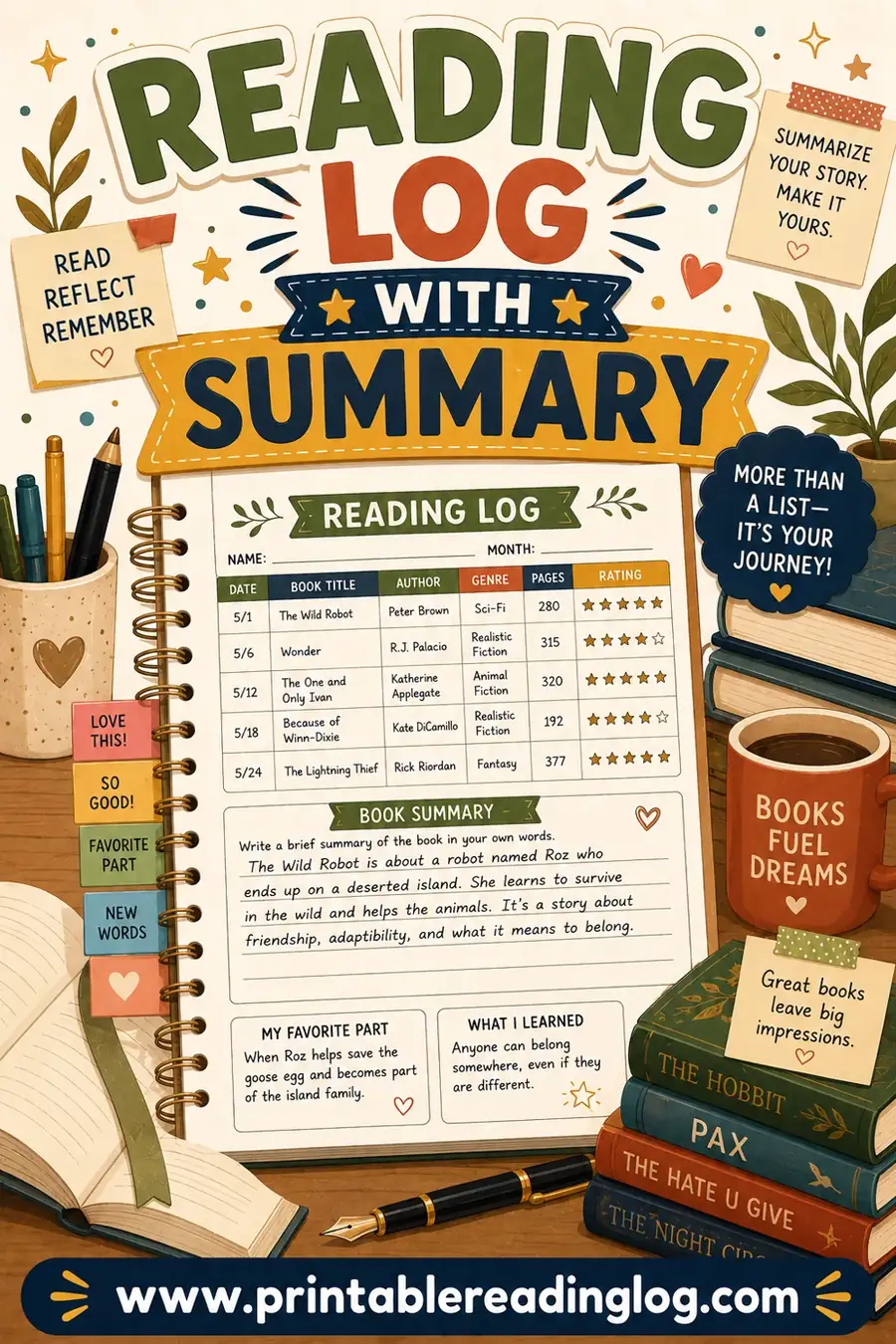
Another approach is a hybrid page. This is a log layout with a little extra room, maybe a two-line "thoughts" column or a small notes box under each row. It's heavier than a pure log but lighter than a full journal. A reading log with a summary space is a good middle ground if you want a touch of reflection without committing to a whole notebook.
The beauty of a printable maker is that you can mix formats in the same binder. Print a stack of log pages for the front and a few journal pages for the back, and let each book land where it belongs.
How to Build Either One in Minutes
You don't need design skills or a single dollar. Here's the whole process with a free printable maker.
- Choose your format. Decide if you want a quick log, a reflective journal page, or a hybrid with a notes column.
- Pick the columns or sections that match your goal. Counting books? Keep it lean. Reflecting? Add quote and summary space.
- Set who it's for. A kid's log can use bigger rows and a star rating; an adult's can be denser.
- Print what you need. Run a few log pages, a few journal pages, or both, and slip them into a binder or folder.
That's the entire setup. The free reading log maker handles the layout so you can focus on the reading.
A sample log layout to copy
Here's a clean log you can recreate in seconds. It's the format most people start with.
| Date | Title | Author | Pages | Rating |
|---|---|---|---|---|
| Mar 3 | The Hobbit | J.R.R. Tolkien | 310 | ★★★★★ |
| Mar 9 | Holes | Louis Sachar | 233 | ★★★★☆ |
| Mar 14 | Wonder | R.J. Palacio | 315 | ★★★★★ |
| Mar 20 | Matilda | Roald Dahl | 240 | ★★★★☆ |
Swap in your own books and you've got a working log. To turn it into a journal, add a "favorite quote" line and a few blank lines for thoughts under each title.
Common Mistakes to Avoid
A few easy traps trip people up when they're choosing between the two.
- Starting with a journal you won't keep up. If you're not sure you'll write reflections, begin with a log. You can always upgrade later.
- Making the log too detailed. A log with fifteen columns isn't a log anymore. Keep it to the few facts you'll actually fill in.
- Forgetting the date. Both formats are far more useful when you record when you read. Future-you wants that context.
- One format for the whole family. Little kids need a picture-friendly log; teens might want journal space. Print different pages for different readers.
Match the tool to the habit you can realistically sustain, and you'll keep using it long enough to see the payoff.
Frequently Asked Questions
Is a reading log the same as a reading journal?
No. A reading log is a quick record of what and when you read, usually in a grid with a row per book. A reading journal adds reflection, quotes, summaries, and ratings, with much more space per book. The log tracks; the journal thinks.
Which is better for kids?
A reading log is usually better for kids, especially young ones. It's fast, low-pressure, and easy to fill after each session. Older kids and teens can enjoy a journal once they're ready to write a few sentences about what they read.
Can I use both a log and a journal together?
Yes, and many readers do. Use a log as your master list of everything you read, then give standout books a full journal page. A hybrid page with a small notes column is another easy way to get a bit of both.
Do I need to buy a special notebook?
No. You can print a free reading log or journal page at home with the reading log maker, then slip the pages into any binder or folder. There's no sign-up and no cost, so you can experiment with both formats.
How detailed should my reading log be?
Just detailed enough that you'll actually fill it in. Most people are happy with title, author, date, pages or minutes, and a star rating. If you find yourself wanting to add thoughts, that's your cue to try a journal page.
What should I track if I have a yearly book goal?
A simple log is perfect for a yearly goal. Track the title, the finish date, and a running count. Seeing the list grow keeps you motivated, and you can total your books at year's end without any extra math.
Ready to Start Tracking?
Whether you want a quick log, a reflective journal, or a little of both, you can have a printable page ready in a minute. Open the free reading log maker, choose your layout, and print as many pages as you need. It's free, there's no sign-up, and you can always switch formats as your reading habit grows. Happy reading.