How to Keep a Reading Journal
To keep a reading journal, set aside one notebook or printed page where you jot down each book you read along with a few thoughts about it. After every book (or even every reading session), record the title, a favorite quote, and what you felt or learned. Keep it short and honest, and you'll build a record of your reading life you'll treasure for years. A printable reading log gives you a ready-made structure to start today.
Want a template instead of a blank page? Open the free reading log maker, print a journal-style layout, and start your first entry tonight. No sign-up, no app, just space to think on paper.
What a Reading Journal Is (and Isn't)
A reading journal is a personal record of the books you read and what you thought about them. It sits somewhere between a simple list and a diary. A plain reading log just tracks titles and dates. A reading journal adds the good stuff: your reactions, favorite lines, questions, and takeaways.
It isn't a book report. There's no teacher, no grade, no right answer. You're writing for one reader, future you, who'll love flipping back through years of books and remembering exactly how each one felt.
That's the magic of it. We forget most of what we read. A reading journal catches the parts worth keeping before they slip away.
Why Bother Keeping One
If you've never journaled your reading, the payoff might surprise you. Writing a few lines about a book does more than create a record.
- You remember more. Putting thoughts into words cements them. You'll actually recall books you journaled.
- You read more deeply. Knowing you'll write something makes you read with a little more attention.
- You spot your patterns. Over time you see the themes, genres, and ideas you keep returning to.
- You build a keepsake. Years from now, your journal is a map of who you were and what moved you.
- You get better recommendations. Your own notes become the best "what should I read next" guide you'll ever have.
None of this takes long. A few honest sentences per book is plenty.
Step 1: Choose Your Format
First decide where your journal lives. There's no wrong choice, only the one you'll actually keep up with.
| Format | Best for |
|---|---|
| Printable pages | Structure without buying anything; pin or bind as you like |
| Blank notebook | Total freedom; doodles, quotes, and mess welcome |
| Bullet journal spread | Readers who already keep a planner |
| Index cards | One card per book; easy to sort and shuffle |
| App or spreadsheet | Searchable, but easy to forget about |
Paper has a quiet advantage: it's slow, tactile, and free of notifications. Many readers find they reflect more honestly with a pen than a keyboard. If you want a structured starting point, the free reading log maker prints journal-style pages with room to write.
Step 2: Set Up a Simple Page Template
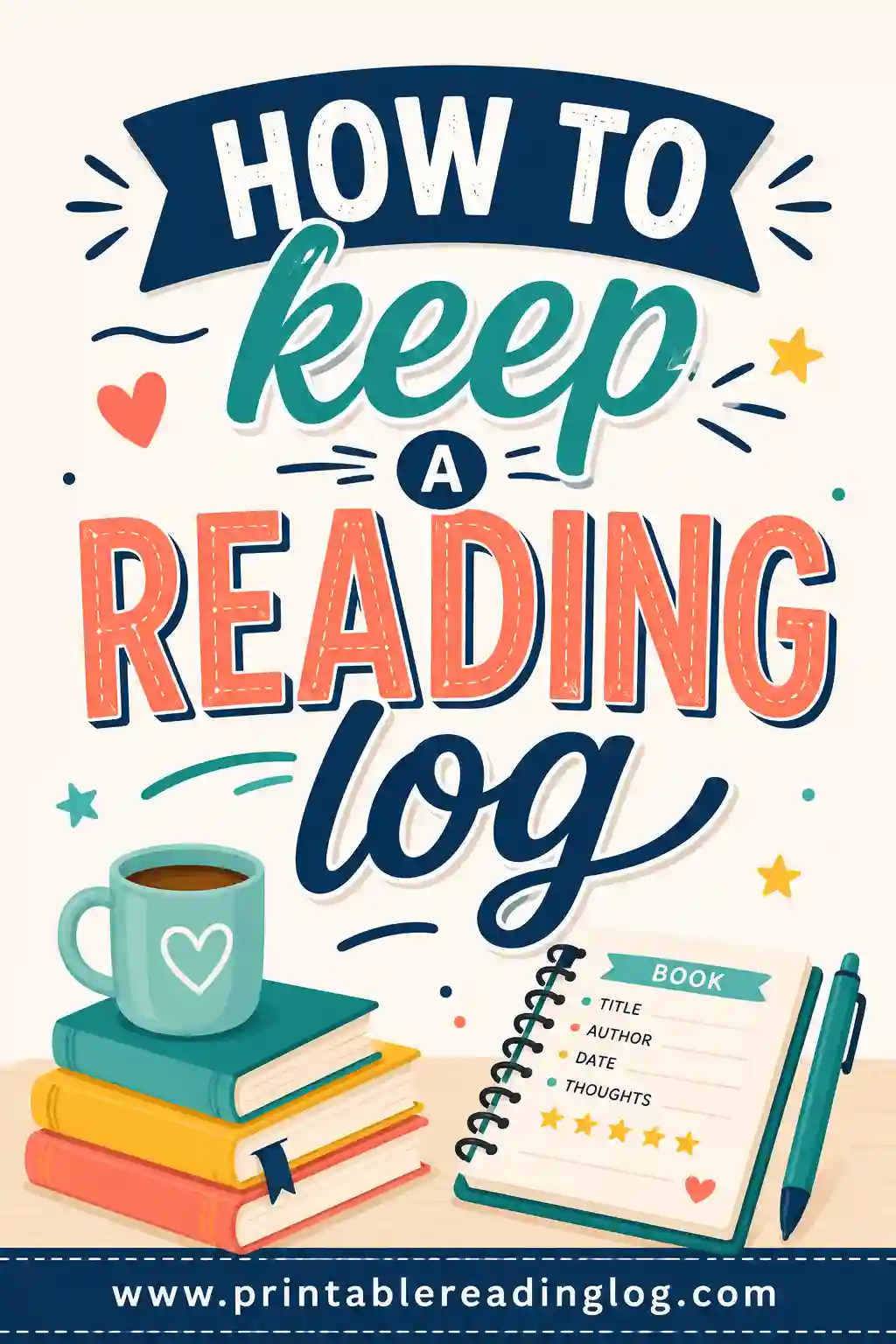
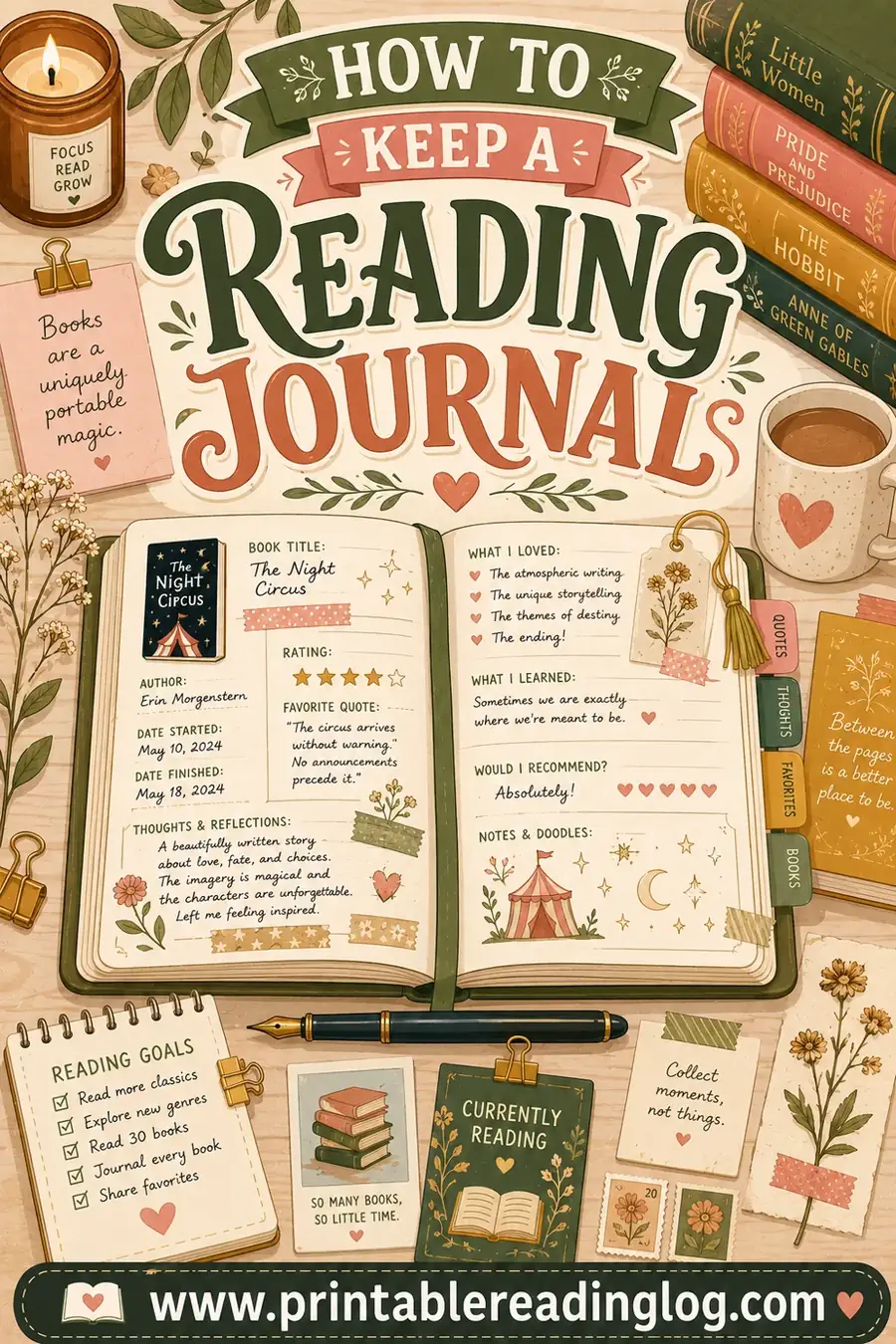
A little structure beats a blank page, which can feel intimidating. Use the same handful of fields for each book and the writing gets easy. Here's a template that works for almost anyone:
| Field | What to write |
|---|---|
| Title & author | The basics |
| Dates | Started and finished |
| Rating | Stars, or a quick gut score |
| Favorite quote | One line that stuck with you |
| In three words | Sum up the book fast |
| Reflection | A few sentences: what you felt or learned |
| Would I recommend it? | To whom, and why |
You don't have to fill every field every time. On a busy day, a title and one sentence is a complete entry. The point is to make starting easy.
A sample journal entry
Here's what a finished entry might look like, so you can picture it:
Title: The Midnight Library — Matt Haig Finished: March 12 · Rating: 4/5 Favorite quote: "The only way to learn is to live." In three words: Hopeful, gentle, thought-provoking. Reflection: Made me think about the small choices that shape a life. A little repetitive in the middle, but the ending landed. I closed it feeling lighter. Recommend to: Anyone in a reflective mood or a reading slump.
Notice how short that is. Five minutes, tops, and now that book is preserved.
Step 3: Pick Prompts That Get You Writing
Some books leave you with plenty to say. Others leave you blank. Keep a few prompts on hand for the quiet ones, and you'll never stare at an empty page.
Good reflection prompts to choose from:
- What's one idea from this book I want to remember?
- Which character felt the most real, and why?
- How did this book make me feel as I read it?
- What surprised me?
- Did it change my mind about anything?
- What would I tell a friend about this book in one sentence?
- What did the author do that I'd love to do in my own writing or life?
Pick one or two per book. You don't owe the journal an essay, just an honest thought.
Step 4: Build the Habit
A reading journal only works if you keep it up, and the trick is to make journaling part of finishing a book. Close the back cover, then write your entry before you start the next one. Tie it to the moment of finishing and you won't forget.
A few ways to stay consistent:
- Keep the journal with your books. If it's right there, you'll use it.
- Write while it's fresh. The day you finish, your thoughts are sharpest.
- Lower the bar. One sentence counts. A short entry beats a skipped one.
- Jot mid-book notes. Tuck a favorite quote or a quick reaction in as you read, so the final entry half-writes itself.
If journaling every book feels like too much at first, start with just your favorites. Build from there.
Step 5: Make It Yours
Once the basic habit sticks, let your journal grow into something personal. This is the fun part, and there are no rules.
- Add a yearly favorites page. Your top books of the year, all in one spot.
- Track stats if you like numbers. Total books, pages, genres, formats.
- Tape in mementos. A bookmark, a ticket from the trip where you read it, a sketch.
- Rate by mood, not just stars. "Cozy," "challenging," "couldn't put it down."
- Leave a to-read page. Capture recommendations as they come, so you're never out of ideas.
Your journal can be as plain or as creative as you want. The only goal is that it stays yours and you keep coming back to it.
Reading Journal vs. Reading Log
These two terms get mixed up, so here's the quick difference. A reading log is the tracker, dates, titles, ratings, the data. A reading journal is the reflection, your thoughts and reactions. Many readers keep one page that does both: a log row up top, a few journal lines below.
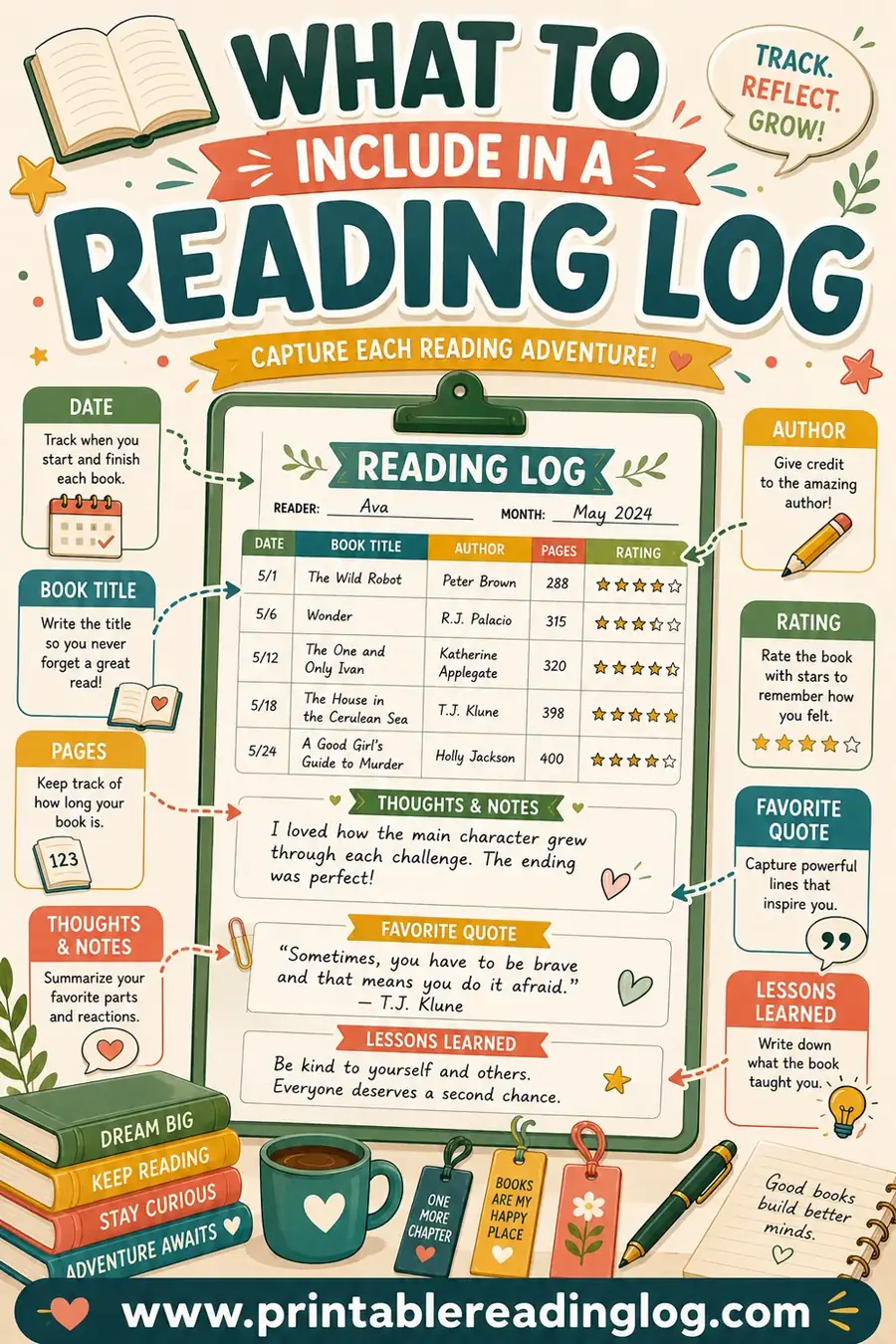
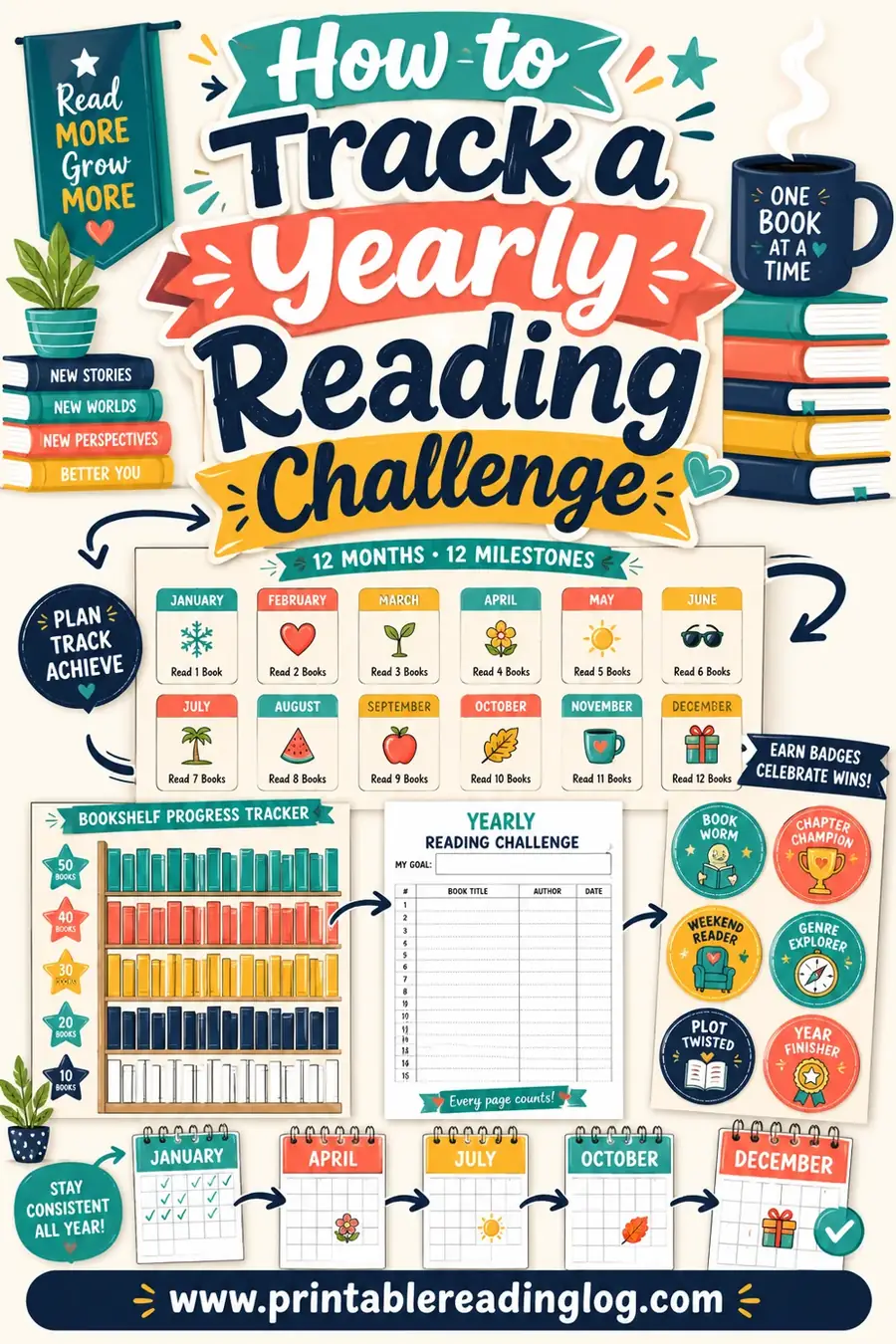
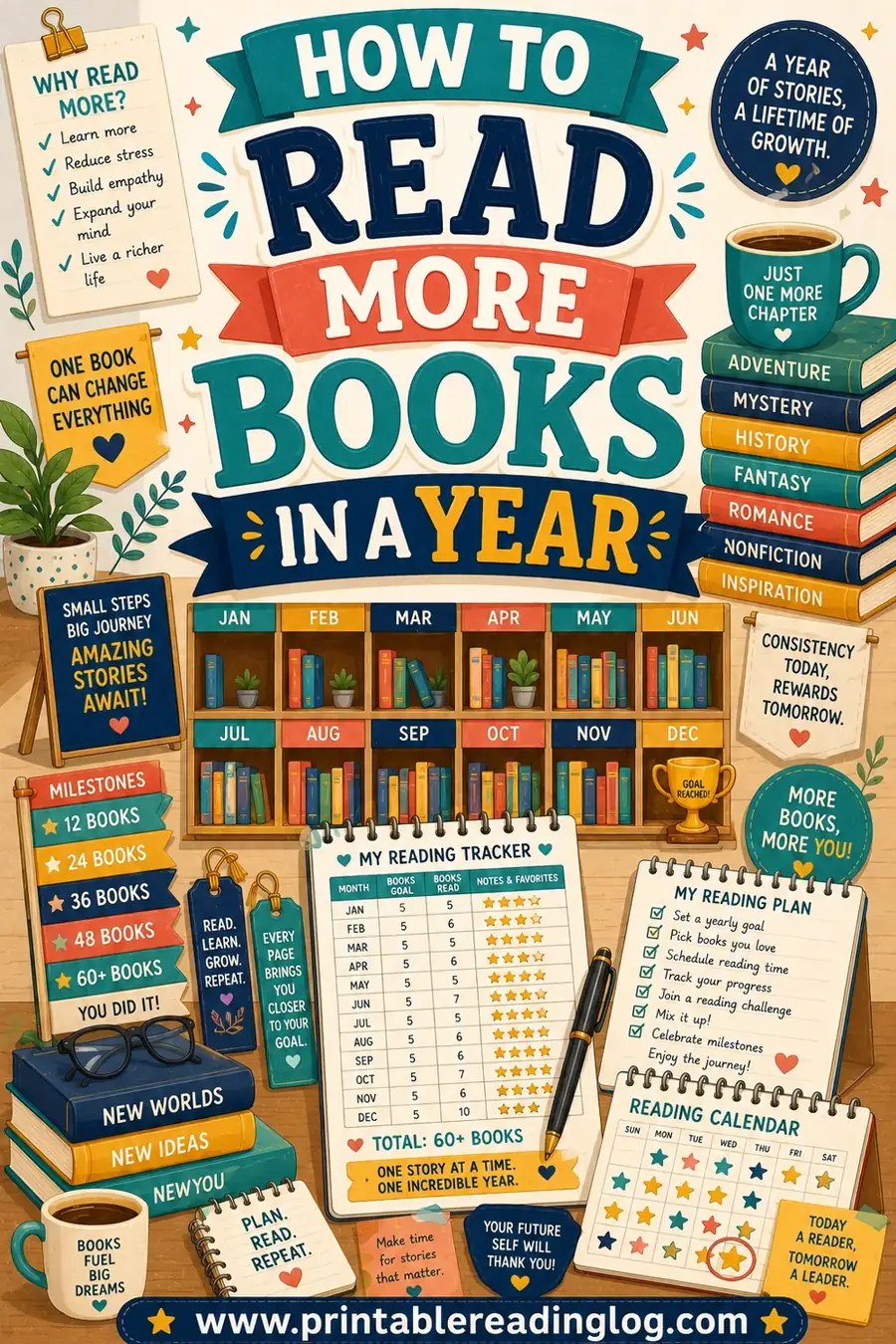
If you're not sure which you want, start with a reading log and add reflection lines as you go. For the full breakdown, see what to include in a reading log. And if you're aiming for a book count, pair your journal with a yearly reading challenge.
Journaling Different Kinds of Books
Not every book asks for the same kind of entry. A thriller and a textbook leave you with very different things to say, so it helps to tweak your approach by genre. Here's how to journal a few common types without forcing the same template onto all of them.
| Book type | What's worth capturing |
|---|---|
| Novels & fiction | A favorite character, the moment it hooked you, how it ended for you |
| Nonfiction & self-help | One idea you'll actually use, a fact that surprised you, an action to try |
| Memoir & biography | A scene that stuck, what you admired, what you'd have done differently |
| Poetry | A single line worth keeping, the mood it left, the poem you'd reread |
| Re-reads | What's different this time, what you missed before |
The pattern underneath all of these is the same: capture the one thing you'd be sad to forget. For a thriller that might be the twist; for a self-help book, the single habit you want to keep. You're not summarizing the whole book, you're saving the part that mattered to you.
Journaling without spoiling it for yourself
One small worry stops some people: "If I write down the ending, won't I spoil my own re-read someday?" Easy fix. Keep your plot notes vague and your feeling notes specific. "The ending wrecked me in the best way" tells future-you everything without giving the twist away. Save the detailed reactions for the why-it-moved-you part, not the what-happened part.
When the Habit Slips (and How to Restart)
Almost everyone abandons a reading journal at some point, then feels guilty and never goes back. Don't. A journal with a three-month gap is still a treasure. Here's how to get unstuck.
- Skip the catch-up guilt. You don't owe the journal entries for books you read during the gap. Pick up with the next book you finish and move on.
- Shrink the entry. If full entries feel like the reason you stopped, drop to one line: title plus a single honest reaction. A tiny entry beats a perfect one you never write.
- Move the journal closer. Friction is usually the real culprit. If it's sitting across the house, bring it back to wherever you actually read.
- Backfill only your favorites. If a few standout books slipped through, jot quick entries for those from memory. Skip the rest, no one's grading completeness.
The goal was never a flawless, unbroken record. It was to remember the books that moved you. A journal you return to after a lapse still does that perfectly.
Frequently Asked Questions
What should I write in a reading journal?
Start with the basics, title, author, and dates, then add a rating, a favorite quote, and a few sentences about what you felt or learned. You don't need to fill every field. Even one honest sentence per book makes a worthwhile entry.
How is a reading journal different from a reading log?
A reading log tracks the facts: titles, dates, and ratings. A reading journal adds your reflections, thoughts, quotes, and reactions. Many readers combine both on one page, with a log row up top and a few journal lines below.
Do I have to write something for every book?
No. If journaling every book feels like too much, start with just your favorites. A short entry is always better than a skipped one, so lower the bar to a single sentence on busy days.
When's the best time to write an entry?
Right after you finish a book, while your thoughts are freshest. Make it part of the finishing ritual, close the cover, then write your entry before starting the next book. Jotting quotes mid-read helps, too.
Do I need a special notebook?
Not at all. Use a blank notebook, a bullet journal, index cards, or free printable pages, whatever you'll actually keep up with. A structured printable template makes starting easier if a blank page feels intimidating.
How do I keep the habit going?
Tie journaling to finishing a book, keep the journal with your books, and lower the bar to one sentence when you're busy. Consistency beats length, a few quick lines per book, kept up over time, builds a journal you'll treasure.
Can kids keep a reading journal too?
Absolutely, and it builds a wonderful lifelong habit. Just simplify the fields: a title, a star rating, a "best part," and a smiley or a one-line "what I thought." Let younger kids draw a favorite scene instead of writing if that's easier. A printable journal-style page with big boxes makes it feel like an activity rather than homework, which is exactly what keeps them coming back.
How long should each journal entry be?
As long or as short as you like, there's no minimum. On a busy day, a title and one honest sentence is a complete entry. On a book that really stirred something, you might write half a page. Both are perfectly valid. The trick is to never let "I don't have time for a long entry" become a reason to write nothing; one line always beats a blank.
Ready to Start Your Reading Journal?
Pick your format, set up a simple template, and write your first entry tonight. Open the free reading log maker, print a journal-style page, and start capturing the books that move you. It's free, there's no sign-up, and a year from now you'll have a personal record of every story you've read, in your own words. Happy reading, and happy writing.