Annual Reading Goal Tracker: Free Printable
An annual reading goal tracker is a printable where you set a target number of books for the year, then log each one you finish so you can see how close you are. It turns a vague wish like "I should read more" into a clear, visible goal you actually hit. The fastest way to make one is a free reading log generator that prints a clean tracker with room for your whole year's books.
Ready to start? Open the free tool, set your number, and print a tracker you can pin up and fill in all year. No sign-up, no fee, nothing to install.
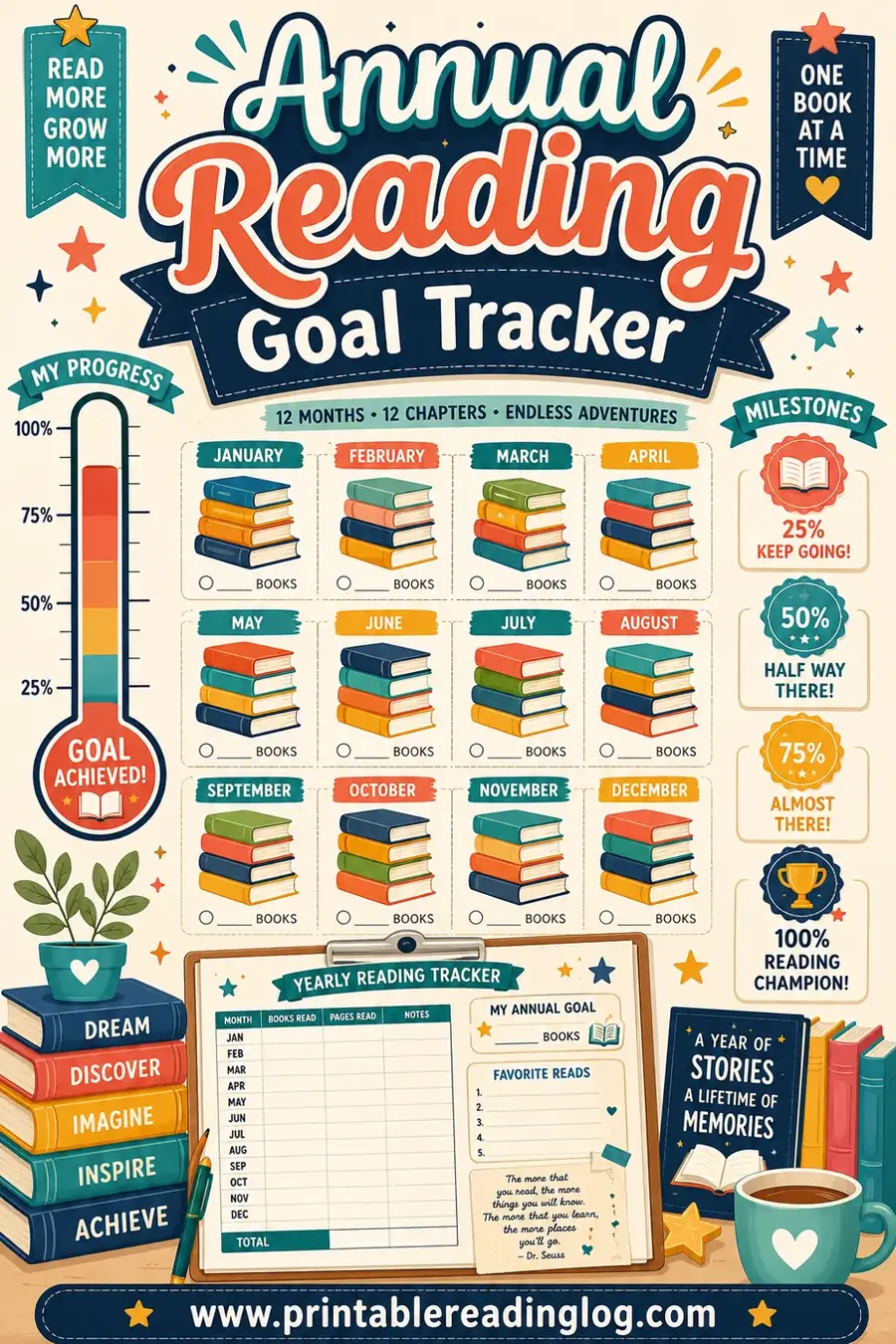
What Is an Annual Reading Goal Tracker?
It's a single sheet that holds your whole reading year. At the top you write your goal — say, 24 books. Below that you've got numbered slots, one per book, and you fill each one in as you finish. Many trackers add a progress bar or a row of circles to color, so you can see your year filling up at a glance.
That visual is the secret. A number in your head is easy to forget. A half-colored progress bar on your wall is a gentle, daily nudge that says "keep going." It works the same way a habit tracker does, just stretched across twelve months.
You can track it a few ways depending on what motivates you:
- By book count — the classic. Hit a target number of titles.
- By pages — better if you read long, dense books.
- By minutes — great if you mostly listen to audiobooks or read in small chunks.
Why a Tracker Beats a Mental Goal
Plenty of people set a reading goal in January and forget it by March. A tracker is what closes that gap. Here's why it works:
- It makes progress visible. You see exactly how many books you've read and how many to go. No guessing.
- It creates gentle pressure. An empty slot is a friendly tug to pick up a book tonight instead of scrolling.
- It builds momentum. Each filled-in line feels good, and that little hit of done-ness pulls you toward the next book.
- It keeps you honest. Logging the truth — even a slow month — helps you adjust instead of quietly giving up.
A goal you can see is a goal you're far more likely to reach. That's the whole pitch.
How Many Books Should You Aim For?
There's no magic number. The best goal is one that stretches you a little without feeling like a punishment. Here's a rough guide to help you pick.
| Goal | Books/year | Pace | Good for |
|---|---|---|---|
| Gentle | 12 | 1 a month | Busy people getting back into reading |
| Steady | 24 | 1 every 2 weeks | Most regular readers |
| Ambitious | 52 | 1 a week | Avid readers with reading time |
| Big | 100+ | 2 a week | Speed readers and audiobook fans |
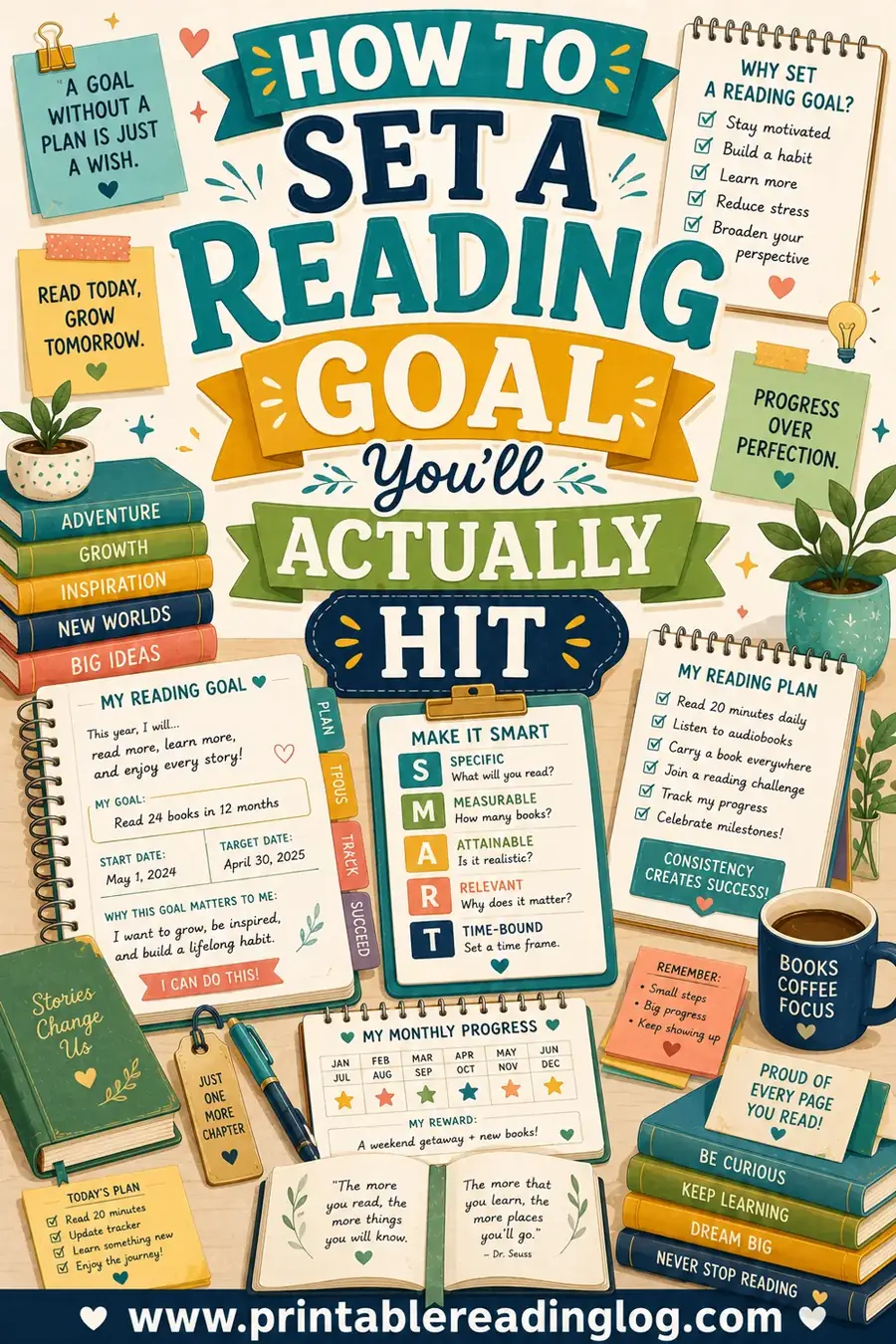
If you're not sure, start lower than you think. Hitting 12 and feeling great beats missing 50 and feeling like a failure. You can always raise the bar next year. For help picking, see how to set a reading goal.
What to Put on Your Annual Tracker
A good annual tracker is simple but motivating. The core pieces:
- Your goal — the number, written big at the top.
- Numbered book slots — one line per book, 1 to your goal.
- Title and author — for each book as you finish it.
- A progress visual — a bar to fill or circles to color.
- A rating (optional) — stars, so you remember your favorites.
A sample tracker in progress
Here's what the first stretch of a 24-book year might look like by spring.
| # | Title | Finished | Stars |
|---|---|---|---|
| 1 | Project Hail Mary | Jan 14 | ⭐⭐⭐⭐⭐ |
| 2 | The Midnight Library | Feb 2 | ⭐⭐⭐⭐ |
| 3 | Educated | Feb 28 | ⭐⭐⭐⭐⭐ |
| 4 | Klara and the Sun | Mar 20 | ⭐⭐⭐ |
Four down, twenty to go, and a progress bar that's one-sixth full. That visible chunk of progress is what keeps you reaching for the next book.
How to Make Your Tracker in Four Steps
You'll have a tracker ready to pin up in just a few minutes.
- Open the reading log generator. Choose the adult style.
- Set your goal. Pick a number — 12, 24, 52, whatever fits your year.
- Pick your view. A by-books layout with numbered slots, or by-pages if you prefer.
- Print. Pin it above your desk, tape it inside a journal, or stick it on the fridge.
Keep it somewhere you'll see it daily. A tracker tucked in a drawer is a tracker that gets ignored. On the wall, it does its job every time you walk by.
Tips to Actually Hit Your Goal
Setting the goal is the easy part. These habits help you reach it.
- Always have a next book. The biggest momentum killer is finishing a book and not knowing what's next. Keep a short list ready.
- Read a little daily. Even ten pages a night adds up to a dozen-plus books a year. Consistency beats marathons.
- Count audiobooks. Listening is reading. Audiobooks turn commutes and chores into progress.
- Don't force bad books. If a book isn't working, set it down. Slogging through one dud can stall your whole year.
- Mix it up. Pair a heavy book with a light, fast one so you always have an easy win in reach.
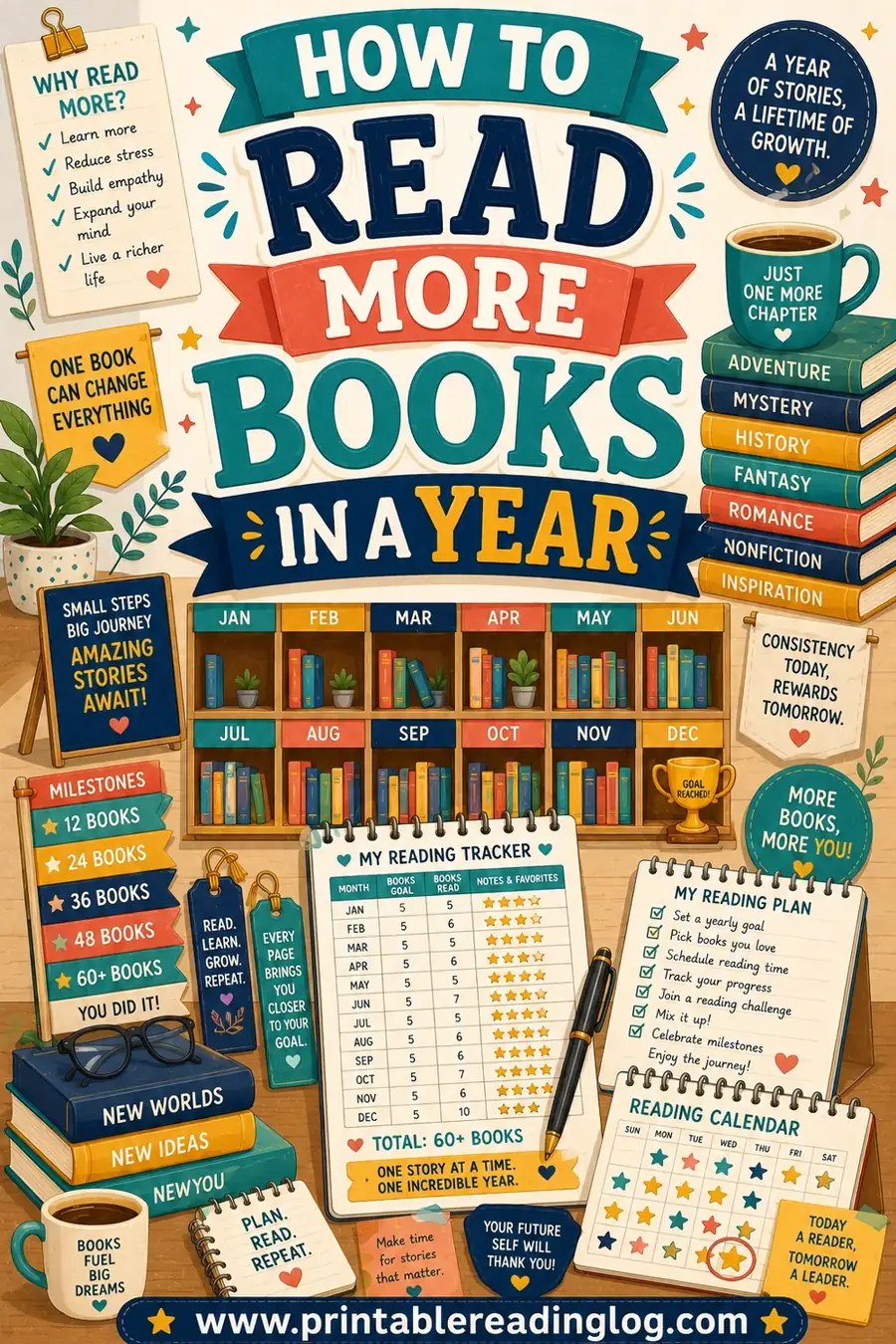
For more strategies, read how to read more books in a year.
What to Do When You Fall Behind
You will fall behind at some point. A busy stretch, a long book, a reading slump — it happens to everyone. The goal is to recover, not quit.
When you're behind, try this:
- Reach for shorter books. A few quick reads or novellas can rebuild your count and your confidence fast.
- Lean on audiobooks. They let you "read" during chores, walks, and commutes you'd otherwise lose.
- Adjust the goal if needed. There's no shame in dropping from 52 to 30. A reached goal beats a missed one.
- Skip the guilt. Reading is supposed to be a joy. If the number stops being fun, change the number.
A tracker shows you the gap early, while there's still time to close it. That's a feature, not a source of stress.
Making Your Goal Stick All Year
The hardest part of a yearly goal isn't January, when motivation is high. It's the long middle stretch when the novelty fades. A few habits keep your tracker alive past the first few months.
Build reading into a time you already protect. Ten pages with your morning coffee, a chapter at lunch, twenty minutes before sleep — anchoring reading to an existing habit makes it automatic instead of something you have to remember. The tracker then just records what's already happening.
Give yourself a reading season check-in. Four times a year, sit down with your tracker and ask three quick questions: Am I on pace? What's the best book I've read so far? What do I want to read next? That tiny ritual keeps the goal fresh and helps you spot a slump before it swallows a whole quarter.
And reward yourself at milestones. Hit the halfway mark and treat yourself to a new release, a fancy bookmark, or a bookstore trip. The tracker shows you exactly when you've earned it, and a small celebration makes the next stretch feel worth it.
Tracking More Than Just Numbers
A reading goal doesn't have to be only about quantity. The same annual sheet can capture the texture of your reading year if you add a column or two — and that often makes it more meaningful to look back on.
Consider tracking a few extras alongside the count:
- Genre. A quick tag (mystery, memoir, sci-fi) reveals your patterns. You might find you've read ten thrillers and zero non-fiction, which can nudge you toward more variety.
- Format. Note whether each book was print, ebook, or audio. It's interesting to see the mix, and it reminds you that audiobooks count.
- Where you got it. Library, bought, borrowed, gifted. Some readers love seeing how much their library saved them over a year.
- A one-line takeaway. A single sentence per book — what stuck with you — turns your tracker into a mini reading journal you'll actually reread.
You don't need all of these. Even one extra column makes your year-end review richer than a bare number ever could. For a deeper version, look at how to keep a reading journal.
Reading Goal Tracker vs. Reading Challenge Log
These two get confused, so here's the difference at a glance.
| Format | Focus | Best for |
|---|---|---|
| Annual goal tracker | A number of books | "Read 24 books this year" |
| Reading challenge log | Themed prompts | "Read a book set in another country" |
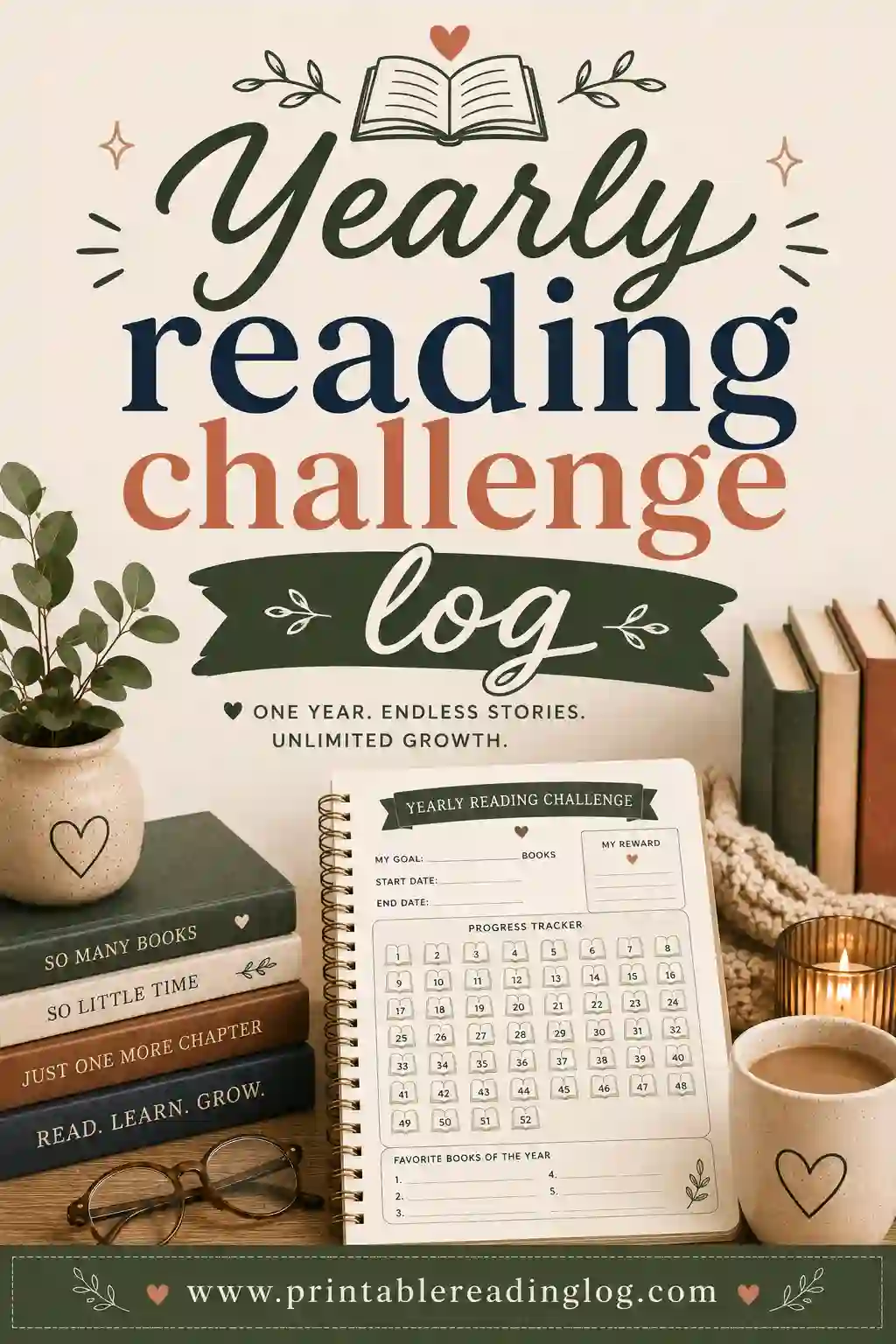
A goal tracker is about quantity; a challenge log is about variety. Plenty of readers run both at once. If themed prompts sound fun, check out a yearly reading challenge log alongside your goal tracker.
Frequently Asked Questions
How many books should I read in a year?
Pick a number that stretches you without stressing you. Twelve books (one a month) is a great, doable goal for most people, while 24 or 52 suits more avid readers. Start lower than you think and raise it next year if it felt easy.
Do audiobooks count toward my reading goal?
Yes. Listening to a book is still experiencing the book, and audiobooks let you make progress during commutes, chores, and walks. Many readers hit their annual goal largely through audiobooks, so count them with a clear conscience.
What if I fall behind on my reading goal?
Reach for shorter books, lean on audiobooks, and adjust the number down if you need to. A tracker shows the gap early so you can course-correct while there's still time. Falling behind is normal — quitting is the only real miss.
Should I track books or pages?
Track whatever motivates you most. Book count is simple and satisfying for most readers, while pages or minutes suit people who read long, dense titles or mostly listen to audiobooks. The reading log tool supports all three.
When should I start an annual reading tracker?
January 1st is the classic start, but any day works — a tracker started in July just runs to next July. Don't wait for a perfect date. Set your number, print the sheet, and start logging the next book you read.
Can I print an annual reading goal tracker for free?
Yes. You make and print it yourself at no cost, with no sign-up and no watermark. Print a single full-year sheet or a few backups in one go.
Ready to Set Your Reading Goal?
An annual reading goal tracker turns "I want to read more" into a finished stack of books and a progress bar you filled all the way up. Open the free reading log generator, set your number, and print your tracker in minutes. It's free, there's no sign-up, and a year from now you'll have a complete record of everything you read. Happy reading, and here's to hitting your goal.