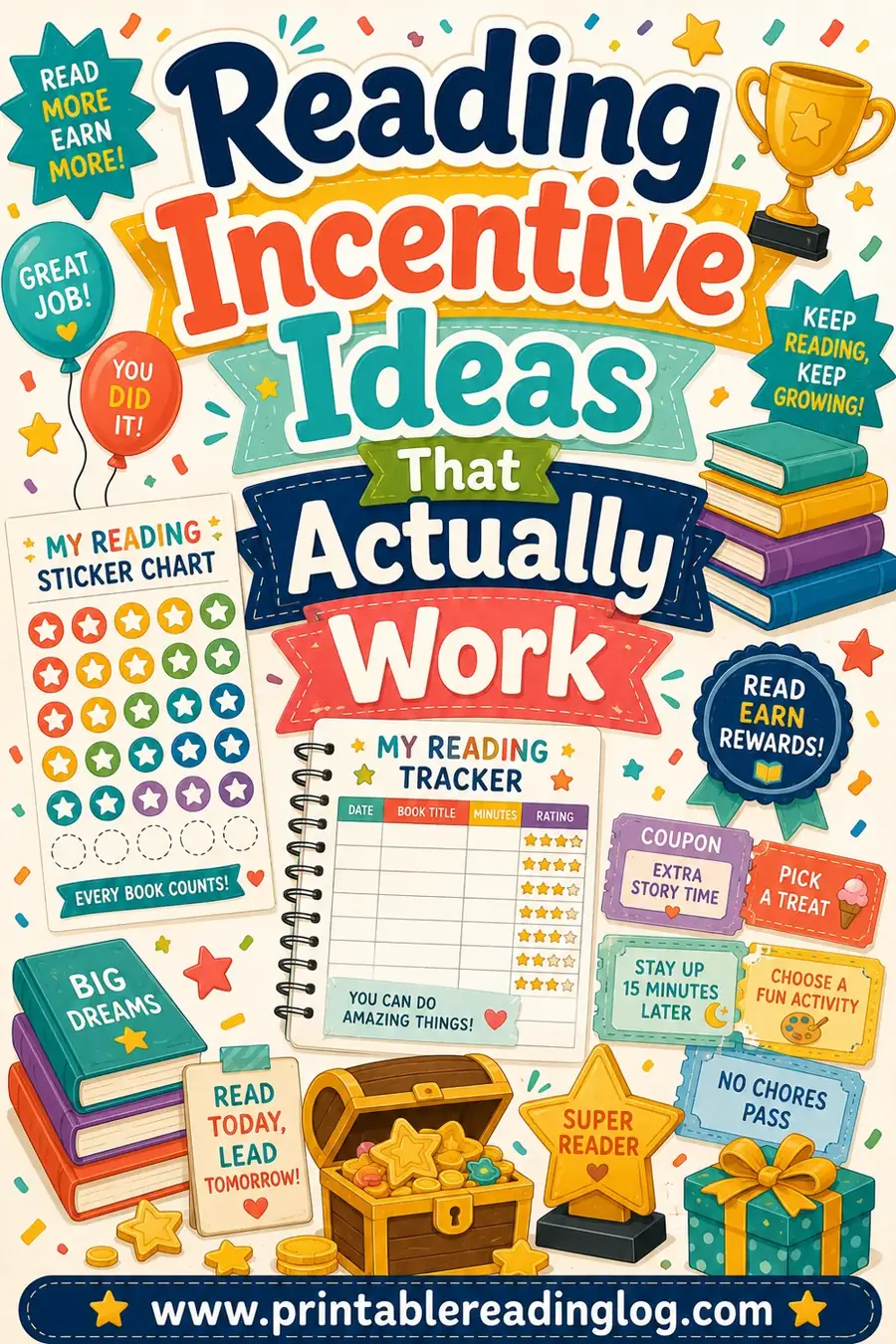
Reading Incentive Ideas That Actually Work
The best reading incentives reward effort and consistency, not just finishing, and they fade out as reading becomes its own reward. Think small, frequent prizes tied to a clear goal, like a sticker for every 20 minutes or a special outing after 10 books. Pair the rewards with a visible tracker so kids can see their progress build, and a free printable reading log is the easiest way to make that progress impossible to ignore.
Want a simple chart kids can fill in and feel proud of? Open the free log builder, print a page, and let your reader mark off each book or minute as they go. No app, no account, no cost.
What Makes a Reading Incentive Work?
Not all rewards are created equal. Some build lifelong readers; others teach kids to read only when there's a prize. The difference comes down to a few principles.
A good reading incentive does these things:
- Rewards effort, not just outcomes. Praise the 15 minutes of reading, not only the finished book. Effort is what you want more of.
- Stays small and frequent. Tiny, regular wins beat one giant prize at the far-off end. Momentum needs feeding.
- Connects to a clear goal. "Read 10 books" beats "read more." Kids need a target they can see and reach.
- Fades over time. The endgame is a kid who reads because they want to. Rewards are training wheels, not the bike.
Keep those four in mind and almost any reward works. Ignore them and even a big prize can backfire by making reading feel like a transaction.
Free and Almost-Free Reading Incentives
You don't need to spend money to motivate a reader. Some of the most effective incentives cost nothing at all, because kids often crave attention and special privileges more than stuff.
- Pick the family movie. Earn it after a reading goal. Choice is a powerful prize.
- Stay up 15 minutes later. As long as it's spent reading, everybody wins.
- Choose the dinner menu. A small say in the day feels big to a kid.
- A "no chores" pass. Skip dish duty or one task as a reward.
- Extra one-on-one time. A bike ride, a board game, a baking session with you.
- Be the boss for an hour. Pick the music, the game, the activity.
Free vs. low-cost incentive ideas
| Free incentives | Low-cost incentives ($1–$5) |
|---|---|
| Pick the movie or show | New bookmark or sticker pack |
| Stay up 15 minutes later | Small candy or treat |
| Choose dinner | A book from a used-book sale |
| Skip a chore | Hot cocoa and a reading night |
| Extra screen-free playtime | A new pencil or notebook |
| Read in a fort you build together | A trip to the dollar store |
Notice how many of the free options are about choice and time with you. Those often beat anything you can buy, and they keep the focus on reading rather than on the prize.
Reward Charts and Trackers
A visible tracker is the single most powerful incentive tool, because it turns invisible progress into something kids can see and feel. Marking off a box gives a small hit of satisfaction every single day.
A few tracker styles that work well:
- Sticker chart. One sticker per reading session or book. Simple, visual, and addictive in the best way.
- Reading thermometer. Color in a thermometer toward a goal, like 1,000 minutes. Great for a class or a summer challenge.
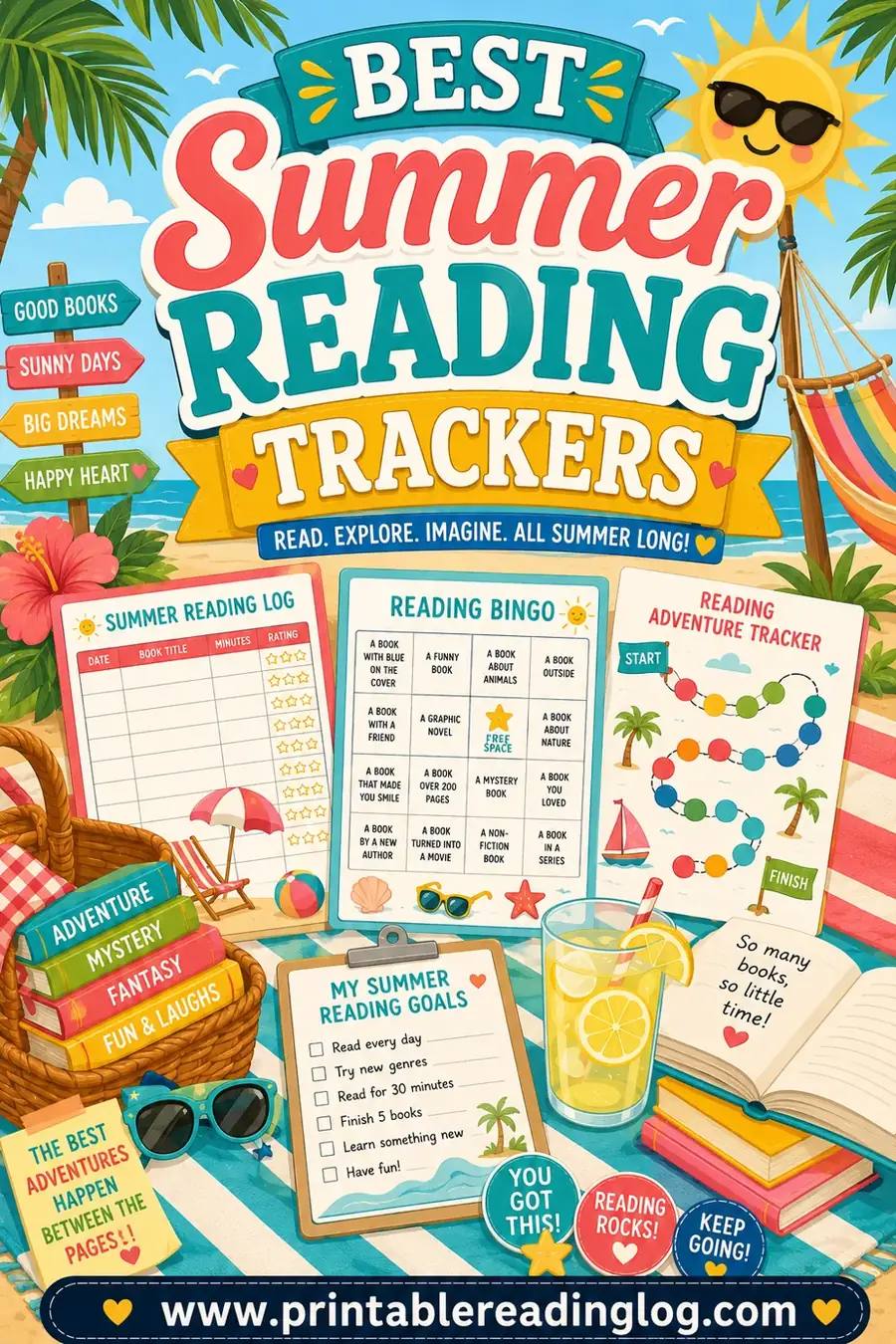
- Bingo board. Squares like "read in a fort" or "read a nonfiction book." Fills in toward a blackout prize.
- Punch card. Punch or stamp a card for each book, with a reward at the end like a coffee-shop loyalty card.
The magic is visibility. Put the tracker somewhere the child passes all the time, like the fridge or their bedroom door, so progress stays front of mind. A free reading log for reading rewards gives you a ready-made tracker you can print and start using today.
Milestone Rewards That Build Momentum
Layer bigger rewards onto longer goals so kids always have something to reach for. The trick is spacing them so a prize is never too far away.
| Milestone | Reward idea |
|---|---|
| 5 books or 100 minutes | A new bookmark or sticker |
| 10 books or 250 minutes | Pick the family movie night |
| 20 books or 500 minutes | A trip for ice cream |
| 30 books or 1,000 minutes | A new book of their choice |
| 50 books or a full challenge | A special outing or a "reader of the year" certificate |
Notice the rhythm: small rewards close together, with a bigger payoff at each major milestone. That spacing keeps a kid motivated through the long middle stretch where enthusiasm usually dips.
You can run the same ladder for a class or a summer reading log, just scale the milestones to the timeframe. A summer might top out at 20 books; a school year could climb to 100.
Incentives for Reluctant Readers
Some kids need a gentler on-ramp. If reading feels like a battle, big goals will only add pressure. Shrink everything and focus on building a positive association first.
For a reluctant reader, try these:
- Reward minutes, not books. "Read for 10 minutes" is far less scary than "finish a book."
- Count everything. Comics, audiobooks, magazines, recipe cards, the back of the cereal box. It all builds the habit.
- Make the reward immediate. A sticker right after reading beats a prize a week away.
- Lower the bar, then raise it slowly. Start with five minutes a day and creep up as confidence grows.
- Celebrate loudly. Genuine excitement from you is its own powerful reward.
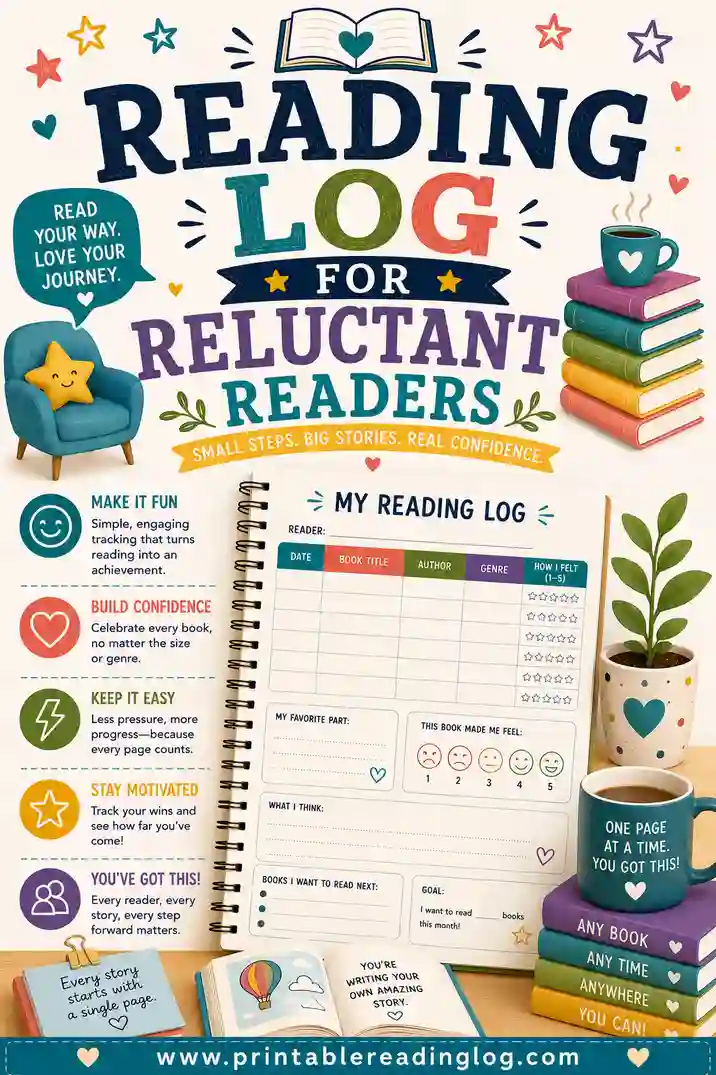
The goal here isn't to hit a big number. It's to change how your child feels about reading, one tiny positive moment at a time. Our reading log for reluctant readers is built around exactly this gentle approach.
How to Use Incentives Without Bribery
There's a real worry behind rewards: are you bribing your kid to read? You can avoid that trap by being thoughtful about how you use incentives.
Keep these guardrails in mind:
- Set the reward up front. A planned reward is an incentive. A reward you dangle mid-meltdown is a bribe. Decide the goal and prize before you start.
- Praise the reading, not the prize. Talk about what they read and how proud you are, more than about the reward itself.
- Reward the habit, then the love. Use prizes to build the routine, and shift your praise toward the joy of the story as it grows.
- Fade the rewards. As reading becomes automatic, stretch the goals and let the rewards taper off naturally.
- Mix in non-reward wins. Cozy reading nights and shared books remind kids that reading is good even with no prize attached.
Done this way, incentives are scaffolding. They hold the habit up until your child can stand on their own, then you quietly take them away.
Track It All on a Reading Log
Whatever incentive you choose, a reading log ties it together. The log is where the goal lives, where progress shows, and where the reward gets unlocked. Without a tracker, even great incentives lose steam because nobody can see the finish line.
Use the log to:
- Show progress. Each logged book or minute is a visible step toward the prize.
- Mark milestones. Note when a reward is earned so the win feels official.
- Spot what motivates. See which rewards drove the most reading and lean into those.
- Keep it going. A finished log is proof of a habit, and a fresh one starts the next round.
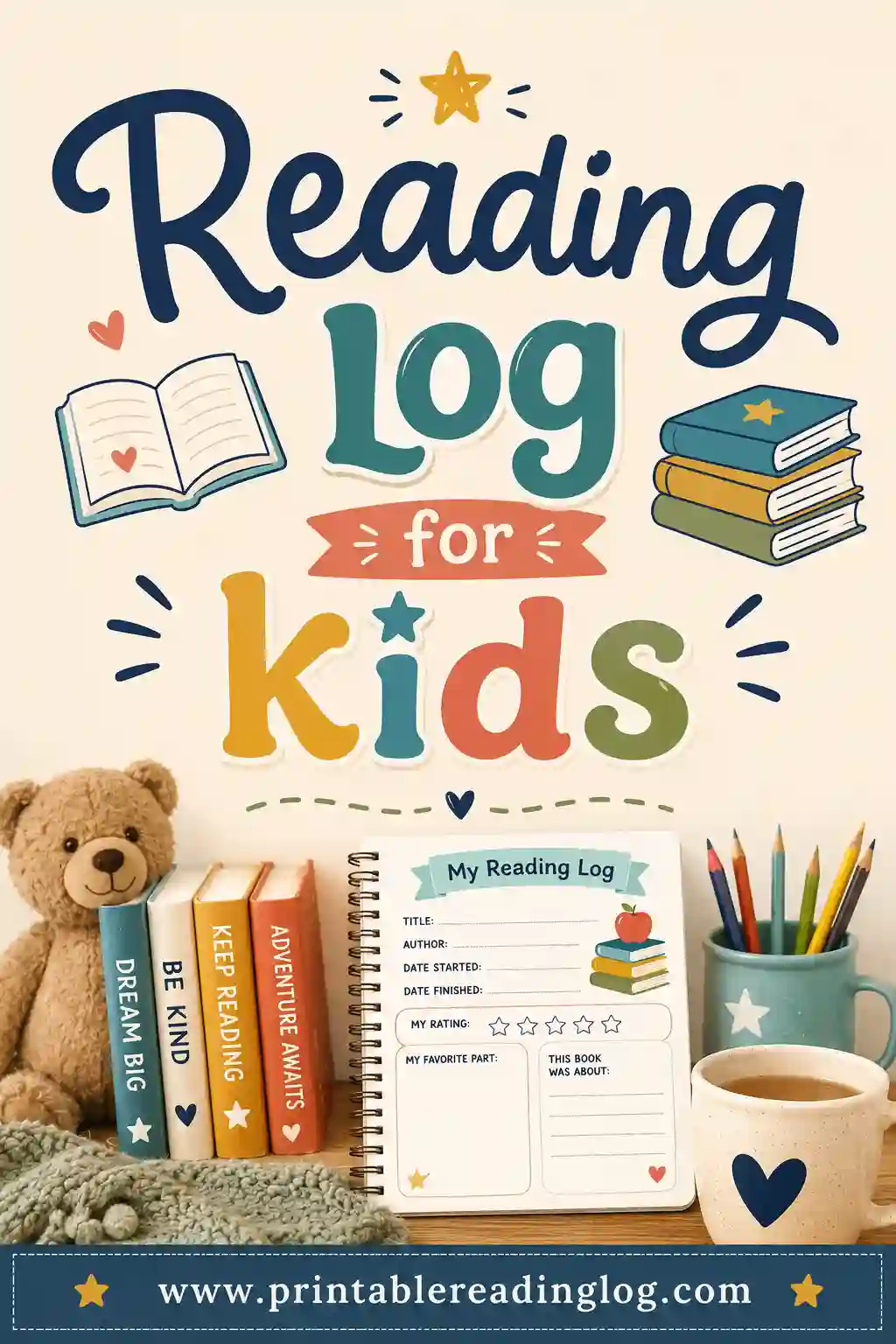
Print a reading log for kids with a goal at the top, and your incentive plan basically runs itself. Kids fill it in, watch it grow, and reach for the reward without much nagging from you.
Frequently Asked Questions
Do reading incentives actually work?
Yes, when used well. Incentives that reward effort and consistency, stay small and frequent, and fade over time build strong reading habits. The key is to use them as temporary scaffolding, not a permanent payment for reading.
What's a good reward for reading a book?
For one book, keep it small: a sticker, a bookmark, or staying up 15 minutes later to read. Save bigger rewards like an outing or a new book for milestones such as finishing 10 or 20 books. Small and frequent beats big and rare.
Are reading rewards just bribery?
Not if you set them up front and praise the reading itself. A planned reward tied to a clear goal is an incentive. A prize you dangle to stop a meltdown is a bribe. Plan ahead, praise the effort, and fade the rewards over time.
How do I motivate a reluctant reader?
Reward minutes instead of books, count every format including comics and audiobooks, and keep rewards immediate. Lower the bar to something easy like five minutes a day, celebrate loudly, and raise the goal slowly as confidence grows.
What's the best way to track reading rewards?
A visible tracker like a sticker chart, reading thermometer, or printable reading log works best. Put it somewhere the child sees daily so progress stays front of mind. Marking off each session gives a small, satisfying win every day.
When should I stop using reading incentives?
Start fading them once reading becomes a regular habit and your child reaches for books on their own. Stretch the goals, taper the prizes, and shift your praise toward enjoying the stories. The aim is a reader who reads for the love of it.
Start Your Reading Reward Plan Today
Pick a goal, choose a few rewards your child will love, and give them a place to watch their progress grow. Open the free reading log builder, print a chart, and let the boxes fill up toward the next reward. It's free, there's no sign-up, and you'll have a motivated reader marking off pages in no time. Happy reading.