Read the Book Before the Movie: An Oscars-Season Reading Tracker
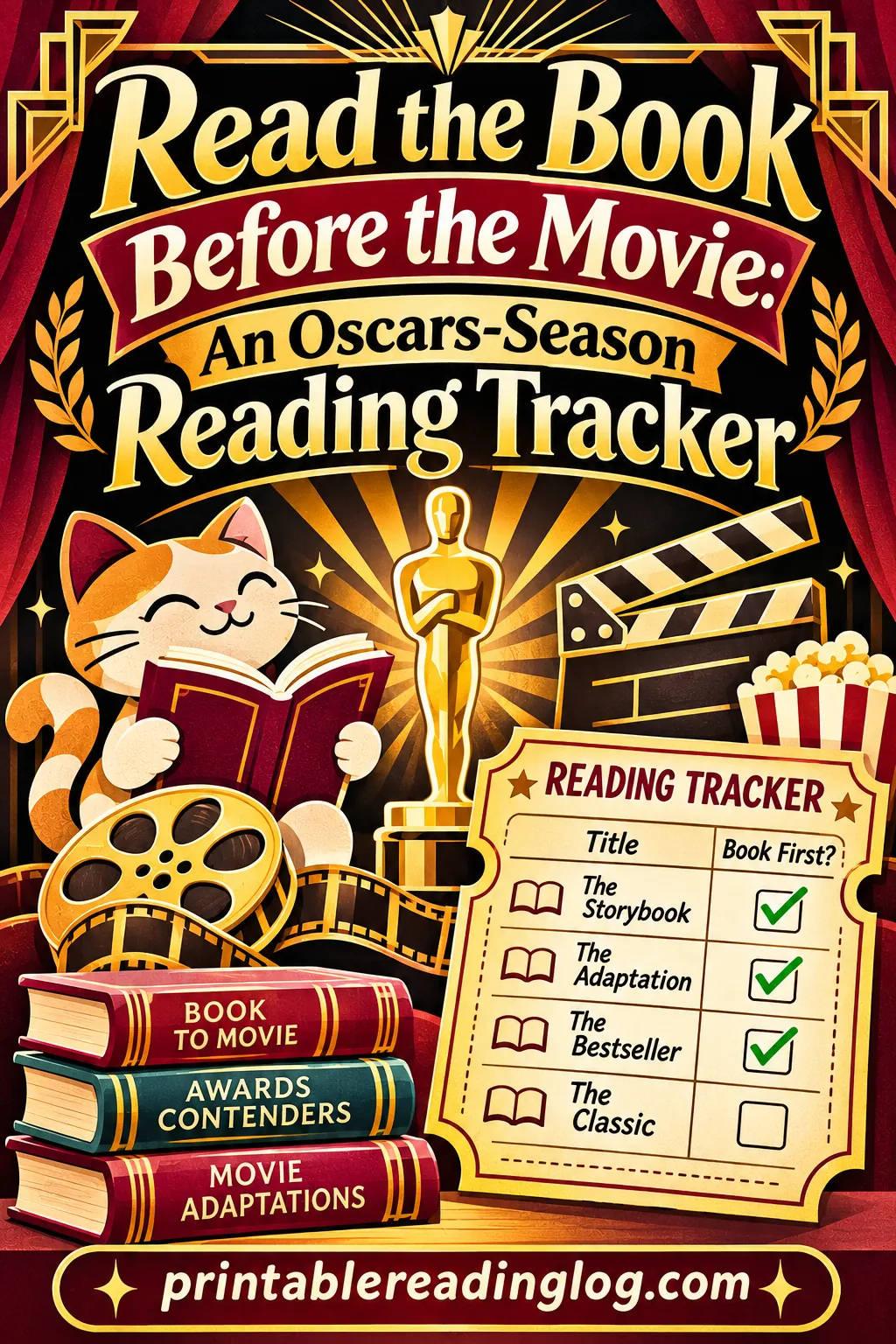
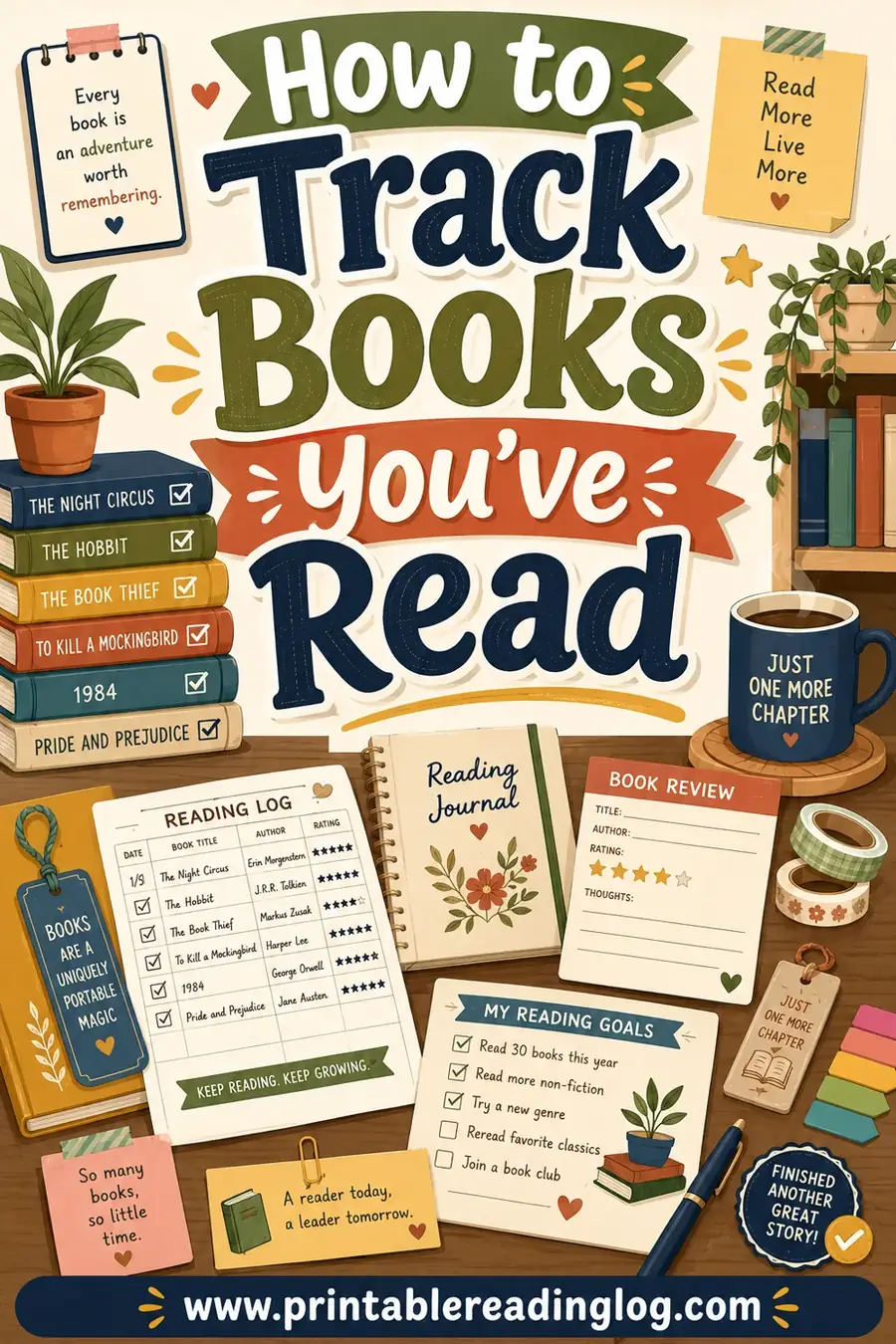
To read the book before the movie this awards season, make a short list of nominated films based on books, pick the ones you'll realistically finish, and track each one on a single page: book read, film watched, and which was better. Start the week nominations come out, read the longest book first, and you can get through three to six adaptations before the ceremony.
The free printable reading log maker on this site makes that tracker in a few minutes. Below you'll find how to find the source books, a pacing plan for the weeks between nominations and the awards show, exact tool settings, a book-vs-film scorecard, classic adaptations to practice on, and ideas for running it with friends or a book club.
▶ Open this reading log ready to print
Why Read the Book Before the Movie?
Plenty of people watch first and read later, and that's fine. But reading first during awards season has some real perks.
You get the story in your own head first. Characters look and sound the way you imagine them before a casting choice fills in the blanks. When you watch the film afterward, you get to compare your version with the director's.
You notice what the film changed. Adaptations cut subplots, merge characters, shift endings and move timelines. Spotting those changes is half the fun, and it gives you plenty to talk about.
Awards chatter makes more sense. When people argue about whether a screenplay deserved its nomination, you'll know what the screenwriters had to work with. Adapted screenplay categories exist precisely because turning a book into a film is its own craft.
It's a reading challenge with a built-in deadline. Many readers struggle with open-ended goals. "Finish these four books before the ceremony" is clear, short and exciting. It's a good way to restart reading in the dark middle of winter.
It gives a book club or family a shared theme. Everyone can pick a different adaptation, or the whole group can read the same one and watch together.
How to Find the Books Behind This Year's Nominees
Each year, a good share of nominated films are based on novels, memoirs, short stories, nonfiction books or plays. The list changes every year, so you'll need to build your own. Here's how to do it quickly and accurately.
Step 1: Start from the official nominations list
Nominations are usually announced in January, and the ceremony usually follows in early spring. Dates change from year to year, so check the official announcement for this year's schedule. Go through the list of nominated films, especially Best Picture and the adapted screenplay category, since the adapted screenplay nominees are by definition based on existing material.
Step 2: Check the source for each film
For each film you're curious about, look for "based on the novel by," "based on the book by" or "based on the memoir by" in the credits or official film information. Write down the book title and author exactly. A few things to watch for:
- Some films are based on short stories or articles, which you can read in an evening.
- Some are based on plays. Plays count too, and they're quick reads.
- Some are "inspired by" true events rather than adapted from one book. Those may not have a single source to read.
- Some books share a title with a different film. Double-check the author so you read the right one.
Step 3: Ask your library
Many public libraries put together lists or displays of books behind award-nominated films every winter, and librarians are happy to help you find them. Holds on these books can build up quickly once nominations are announced, so place yours early. If the print copy has a long wait, ask about the e-book or audiobook, which sometimes has a shorter line.
Step 4: Check bookstores and book review sites
Bookstores and book review sites often publish "books behind the nominees" roundups right after the announcement. Use them as a cross-check against your own list, and always confirm the source book in the film's own credits.
Step 5: Pick your shortlist
You probably can't read every source book before the ceremony, and you don't need to. Choose based on:
- Length. A 150-page novella and a 700-page epic take very different amounts of time.
- Interest. Pick films you actually want to see.
- Availability. A book you can get this week beats one with a long hold list.
- Where the film is showing. Some nominated films are in theaters, some are streaming, and some are hard to find until later. Check before you commit.
How Many Books Can You Read Before the Ceremony?
The window between nominations and the awards show is usually somewhere around six to eight weeks. Check this year's dates and count the weeks. Then pick a level that fits your schedule.
| Level | Adaptations | Rough weekly pace | Good for |
|---|---|---|---|
| Matinee | 2 | One book every three to four weeks | Busy schedules, long books |
| Double Feature | 3 to 4 | About one book every two weeks | Most readers |
| Film Festival | 5 to 6 | About one book a week | Regular readers with evenings free |
| Red Carpet | 7 or more | More than one book a week | Fast readers, short source books |
Remember, you're also watching the films. A two-hour movie per adaptation takes time out of your week too, so be realistic. If in doubt, pick the lower level and add more if you're flying.
Quick pacing math
To work out how many pages a day you need, take the total page count of your shortlist and divide it by the number of days until the ceremony. For example, three books of 300, 250 and 400 pages is 950 pages. Over 45 days, that's about 21 pages a day. If that number feels high, swap a long book for a shorter one or drop a title.
Leave yourself a buffer. Plan to finish the last book about a week before the ceremony so you have time to watch the final film.
Which order to read in
Longest book first. Big books take the most time, so start them while your energy and calendar are fresh.
Hardest-to-find film last. If a film isn't easily available yet, read its book later so you're not waiting around.
Mix tone. Many nominated films are heavy. Alternating a serious book with a lighter one keeps you going.
Short source material as filler. If a nominee is based on a short story or a play, save it for a busy week. You can read it in an evening and still check a box.
A sample eight-week plan
Here's how a Double Feature reader might lay out four adaptations between nominations and the ceremony. Swap in your own titles and adjust for this year's dates.
| Week | Read | Watch | Notes |
|---|---|---|---|
| 1 | Make shortlist, place library holds; start the longest book | Count weeks to the ceremony; set your level | |
| 2 | Keep going on the long book | About 30 to 40 pages a day for a 400-page book | |
| 3 | Finish book 1; start book 2 | Film 1 | Fill in Notes: film date, score, verdict |
| 4 | Book 2 | A shorter book here gives you breathing room | |
| 5 | Finish book 2; start book 3 | Film 2 | Check where film 4 is showing |
| 6 | Finish book 3 (short story or novella) | Film 3 | Quick win for a busy week |
| 7 | Book 4 | Plan a watch party for the last film if you like | |
| 8 | Finish book 4 | Film 4 | Tally your scorecard before the ceremony |
If you fall behind, drop the fourth book and watch that film without reading first. You can always read it afterward and still log it.
How to Make the Tracker in the Free Tool (Exact Settings)
The homepage tool doesn't open pre-filled from a link, so here's exactly what to pick once you open the reading log maker. The goal is a one-page tracker where each row is one adaptation.
- Start with a preset: Adult Yearly. It gives you a clean, grown-up layout built for a set of books. If you're doing this with a group, the Book club preset is a good alternative.
- Reader name. Your name, or a fun header like "Awards Season Reads."
- Reading goal. Type your level and number, such as "4 adaptations before the ceremony."
- Log style: Adult-clean. Keeps the page simple, with room to write.
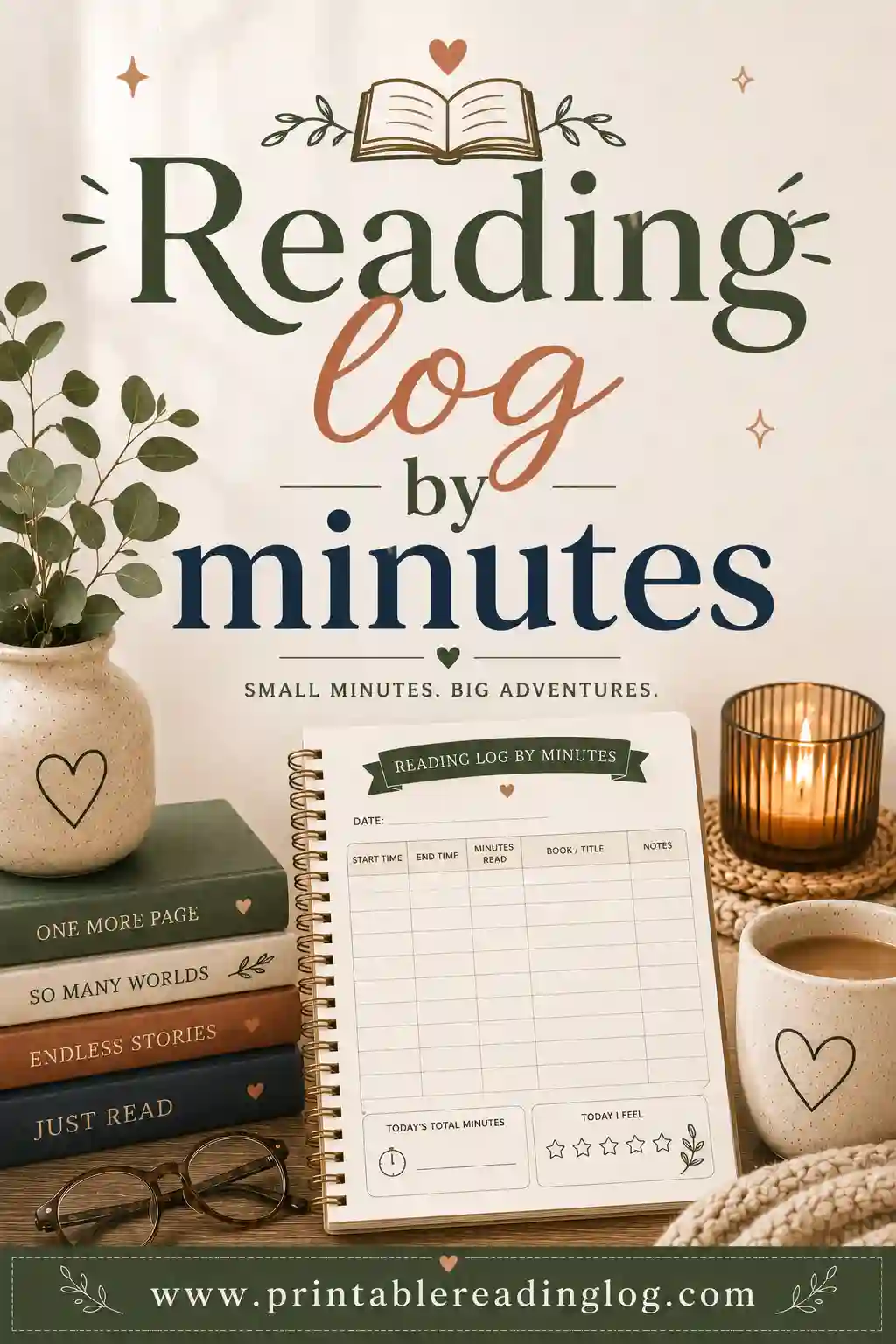
- What are you logging? Books. You're counting finished titles, not minutes.
- Color theme. Classic prints crisply in black and white. Sunshine or Blush feels a little more festive if you're printing in color.
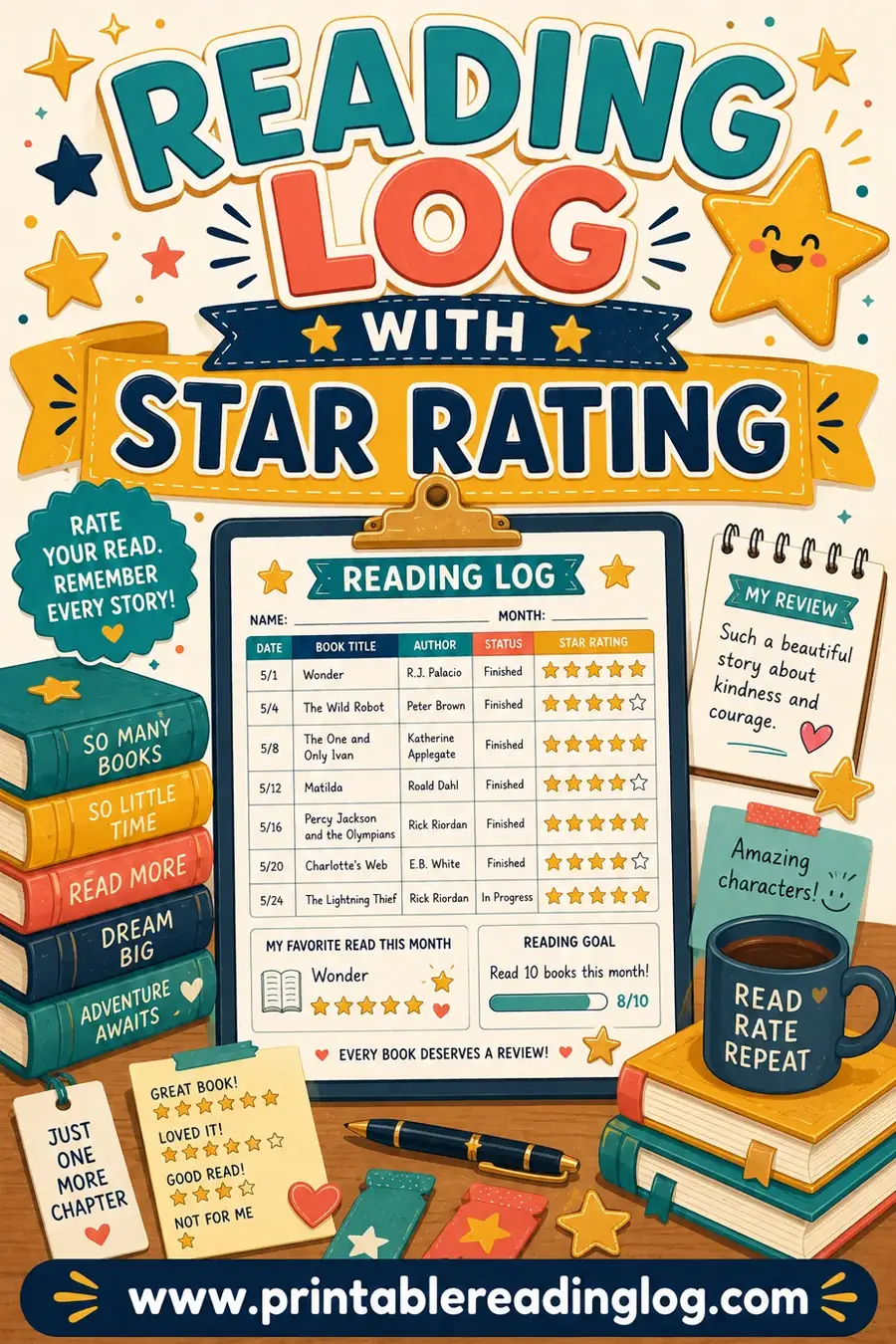
- Columns. Turn on Title, Author, Date started, Date finished, Star rating, Notes and Recommend? (Y/N). Turn off Pages/Minutes, Genre and Initials (P/T) to give the Notes column more space.
- Rating style: Number. A score out of 5 or 10 makes it easy to compare the book with the film later. Stars work too if you prefer.
- Paper. Letter or A4 to match your printer. Choose Landscape so Notes is wide enough for your book-vs-film verdict.
- Rows per page. Set it to your shortlist plus two or three spare rows for books you add later.
- Goal-tracker bar. Turn it on with 10 squares. Shade one square for each book finished and one for each film watched, or use five pairs.
- Challenge bar. Turn it on and name your level, such as "Double Feature."
- Books I want to read next. Use this for adaptations you'd like to read after the ceremony, or films you haven't been able to find yet.
- Month. Set it to the month you're starting.
- Click 🖨️ Print / Save PDF.
How to fill in each row
Here's the system that turns a regular reading log into a book-vs-film tracker:
- Title and Author: the book, exactly as printed.
- Date started and Date finished: your reading dates.
- Star rating: your score for the book.
- Notes: start with "Film:" then the date you watched it, your film score, and a short verdict, for example "Film: 3/14, 4/5. Book better. Ending changed."
- Recommend? (Y/N): would you tell a friend to read the book first? Y or N.
Here are a few sample Notes entries to show how much fits in a small space:
- "Film: 2/8, 3/5. Book better. Film dropped the whole middle section."
- "Film: 2/20, 5/5. Film better! Tighter pacing, same ending."
- "Film: 3/1, 4/5. Tie. Book richer, film more fun."
- "Film first by mistake. Book: 4/5. Glad I read it anyway."
- "Play, read in one evening. Film: 3/6, 4/5. Very faithful."
- "Not showing near me yet. Moved to read-next list."
If a row needs more room, write a small asterisk and continue on the back of the page. Some readers like to keep the front tidy and use the back for longer reactions, favorite lines from the book, or a quick sketch of how they pictured a key scene.
It's quick to fill in and tells you everything at a glance once the season is done. If you'd like more ideas for laying out a seasonal challenge on paper, the page on the yearly reading challenge log shows how challenge rows and goal bars work together.
The Book vs. Film Scorecard
"Which was better?" is the question everyone asks. A short scorecard makes your answer more interesting than a gut call. Score each area from 1 to 5 for the book and for the film, then compare.
| Area | Questions to ask | Book score | Film score |
|---|---|---|---|
| Story | Did it hold your attention? Were the stakes clear? | ||
| Characters | Did you understand why people acted the way they did? | ||
| Setting and atmosphere | Could you picture the place? Did it feel real? | ||
| Pacing | Did it drag or rush anywhere? | ||
| Ending | Did it land? Was it changed for the film? | ||
| Faithfulness (film only) | Did it keep the heart of the book? | n/a | |
| Overall | Your honest gut feeling |
You can copy this into the Notes column in short form, like "Story 5/4, Char 5/3, End 4/5. Book." Or print a blank version of the table to keep beside your log.
Questions to jot down after each pair
After you finish both the book and the film, answer two or three of these. They make great book club prompts too.
- What was the biggest change from book to film, and why do you think the filmmakers made it?
- Which character was most different on screen from how you pictured them?
- Was anything in the film better than the book?
- What scene from the book did you miss most?
- Did knowing the ending spoil the film, or make it richer?
- Would the film make sense to someone who hadn't read the book?
- If you could cast one role differently, which would it be?
- Which would you recommend to a friend first: the book or the film?
Practice Run: Classic Books With Famous Film Adaptations
If the season hasn't started yet, or you want to warm up, try a classic first. These are public-domain books that have been adapted for the screen many times, so you can pick almost any version to compare. Several of them keep getting new adaptations, so one may even turn up among this year's nominees.
| Classic book | Author | Why it's fun to compare |
|---|---|---|
| Frankenstein | Mary Shelley | The novel's creature is articulate and thoughtful, which surprises many first-time readers |
| Dracula | Bram Stoker | Told through letters and diaries, which films handle in very different ways |
| Pride and Prejudice | Jane Austen | Compare how each version handles the narrator's sharp humor |
| Emma | Jane Austen | A comedy of mistakes that's tricky to pace on screen |
| Persuasion | Jane Austen | Quieter and more inward; see how films show what characters don't say |
| Little Women | Louisa May Alcott | Adaptations often rearrange the timeline and change emphasis |
| Great Expectations | Charles Dickens | Lots of characters and subplots to trim |
| A Christmas Carol | Charles Dickens | Short enough to read in one evening; endlessly adapted |
| Oliver Twist | Charles Dickens | Watch how musicals and dramas treat the darker parts |
| Jane Eyre | Charlotte Brontë | Compare how the first-person voice translates to film |
| Wuthering Heights | Emily Brontë | Many films skip the second half of the novel entirely |
| The Great Gatsby | F. Scott Fitzgerald | A short novel with famously visual parties and a quiet narrator |
| The Picture of Dorian Gray | Oscar Wilde | How do films show the portrait changing? |
| The Wonderful Wizard of Oz | L. Frank Baum | Many details differ from the famous screen version |
| Treasure Island | Robert Louis Stevenson | A quick adventure with many family-friendly versions |
| The Secret Garden | Frances Hodgson Burnett | Good for reading with kids, then watching together |
| Anne of Green Gables | L. M. Montgomery | Long, episodic book; see which moments films choose |
| The Count of Monte Cristo | Alexandre Dumas | A huge book that films compress heavily |
| Les Misérables | Victor Hugo | A big read; compare with stage-musical style adaptations |
| The Age of Innocence | Edith Wharton | A quiet, detailed society novel with a memorable ending |
Classics are often free as e-books, since they're in the public domain, and almost every library has print copies. Pick one or two for a January warm-up before nominations are announced, or do a whole "classics on screen" challenge of your own later in the year.
Public-domain status can differ between countries. These titles are long out of copyright in the US, but if you're reading somewhere else and downloading a free copy, check your local rules.
Mini themes for a classics warm-up
If twenty titles feels like too many choices, pick one of these small themes and read two or three books from it. Each one gives you a built-in comparison.
- The Austen trio: Pride and Prejudice, Emma and Persuasion. Watch how different films handle the same author's wit, and decide which novel translates best.
- Gothic nights: Frankenstein, Dracula and The Picture of Dorian Gray. All three have been adapted many times, from faithful period dramas to loose modern retellings. Great for long winter evenings.
- Dickens on screen: A Christmas Carol, Oliver Twist and Great Expectations. Start with the short one to warm up, then tackle a long one.
- Sisters and families: Little Women, Jane Eyre and Anne of Green Gables. Look at how films choose which years of a character's life to show.
- Family adventure: Treasure Island, The Wonderful Wizard of Oz and The Secret Garden. Read aloud with kids, then hold a family movie night for each one.
- Big books, big screens: The Count of Monte Cristo and Les Misérables. These are long, so give yourself a couple of months, and pay attention to what each film cuts.
Two versions, one book
Because classics have been filmed again and again, you can try a fun twist: read the book once, then watch two different film versions. Score both on the scorecard below. You'll quickly see that "the movie" is really many movies, and that some directors stay close to the page while others take the story somewhere new. Write both film dates in the Notes column, for example "Film A: 2/3, 3/5. Film B: 2/10, 5/5. Film B closer to book."
Doing It With Friends, Family or a Book Club
Reading the book before the movie is even better when you can argue about it with someone. Here are a few easy formats.
The shared shortlist. Everyone reads the same three or four books and watches the films on their own. Meet once a month to compare scorecards. This works well for a book club that wants a winter theme. The reading log for book clubs page has more ideas for keeping a group on the same page.
The split list. Each person picks a different adaptation and gives a two-minute "book or film?" verdict at a get-together just before the ceremony. You hear about five or six books without having to read them all.
The watch party. Pick one adaptation everyone has read. Watch the film together, pause at the big changes, and vote at the end. Snacks optional, opinions required.
The family version. Choose one adaptation that suits everyone at home, often a classic like The Secret Garden or Treasure Island. Read it aloud over a few weeks, then watch a family-friendly film version together. Kids often love spotting what the movie left out.
The friendly prediction game. Before the ceremony, everyone predicts which adaptations will win and whether the book or film was better. Keep your guesses in the Notes column and check them on the big night.
A one-hour discussion night
If your group meets before the ceremony, this simple agenda keeps things moving:
- Ten minutes of catch-up. Everyone shares which books they finished and which films they've seen.
- Twenty minutes on one shared adaptation. Go through the biggest changes from book to film. Use two or three of the questions above.
- Fifteen minutes of quick verdicts. Each person gives a one-sentence "book or film?" ruling on every pair they've done.
- Ten minutes of predictions. Guess the winners, and write the guesses down.
- Five minutes to plan. Pick next year's warm-up classic, or the next book club title.
Simple group scoring
If a group wants a final tally, use this:
| Result | Points |
|---|---|
| Finished the book before watching | 2 |
| Watched the film | 1 |
| Filled in the scorecard | 1 |
| Brought a discussion question to the group | 1 |
| Read a book that wasn't on anyone else's list | 1 bonus |
The person with the most points chooses the first book for next year, or the snacks for the next meeting. Keep it light. The fun is in the conversations, not the scores.
Tips for Reading Fast Without Rushing
Awards season comes with a deadline, but you still want to enjoy the books. These habits help you finish in time.
Read a little every day. Twenty to thirty minutes a day adds up faster than one long weekend session that may not happen.
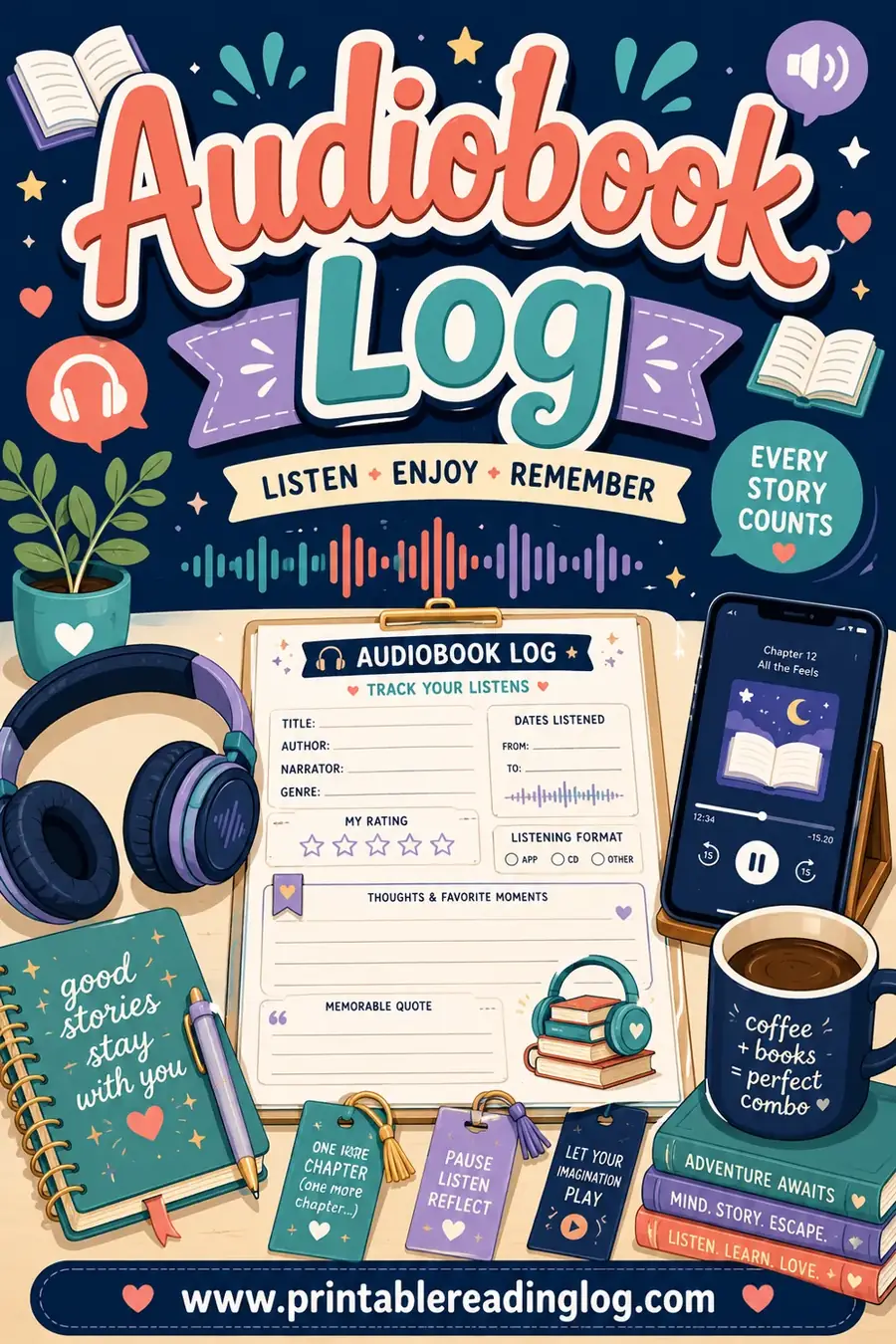
Use audio for the long ones. An audiobook during commutes, chores or walks can carry you through a big book. Switch between print and audio at the same spot if your library has both. If you're new to tracking listening, see how to log audiobooks for a simple method.
Don't look at film trailers mid-book. Trailers can spoil scenes or lock in a casting image before you've formed your own. Save them for after the book.
Skim the intro, not the story. Classic editions often have long introductions that reveal the plot. Read them after you finish.
Track your pace weekly, not daily. Count where you are each Sunday. A slow Tuesday doesn't matter if the week adds up.
Give yourself permission to drop a book. If one of your choices isn't working after 50 pages, swap it for another nominee. The goal is enjoyment, not punishment.
Keep your log in the book. Fold your printed tracker and use it as a bookmark. You'll fill it in the moment you finish a book, and you'll never lose your place.
Common problems and fixes
| Problem | Fix |
|---|---|
| Long hold list at the library | Ask for the e-book or audiobook version; place holds the day nominations come out |
| Film isn't showing anywhere near you yet | Read that book last, or move it to "Books I want to read next" and catch the film later |
| Book is much longer than you expected | Switch to audio for part of it, or drop it to a lower level |
| Source is a play or short story | Great: count it as a full adaptation and enjoy a quick win |
| Film is "inspired by" events, not a book | Pick a different nominee, or read a nonfiction book on the same subject as a bonus |
| You watched the film first by accident | Read the book anyway and log it; note "Film first" in Notes |
| You hated the book | Log it honestly and see if the film fixed it. Sometimes it does |
| You're behind with two weeks to go | Pick your favorite remaining book and drop the rest; finishing one well beats rushing two |
After the Ceremony: Keep the Habit Going
Once the awards are handed out, you'll have a few finished books and a page full of opinions. Don't let the momentum fade.
Read the ones you missed. Move any unread nominees into "Books I want to read next" and keep going at a slower pace.
Start a year-round book-to-film list. Adaptations come out all year. Keep a running list and watch for new releases based on books you've loved, or books you've meant to read.
Turn it into a bigger challenge. "Read the book before the movie" makes a great monthly prompt in a yearly challenge. The page on how to track a yearly reading challenge explains how to fit a theme like this into a full year of reading.
Look for more themes. If you liked having a seasonal focus, browse the list of reading challenge ideas for spring and summer options.
Save your scorecards. Next awards season, look back at last year's verdicts. You may find you nearly always prefer the book, or that one kind of story works better on screen.
Ready to start your book vs. film tracker
Reading the book before the movie turns awards season into a short, focused reading challenge with a finish line and plenty to talk about. Find the source books, pick a realistic level, read the longest one first, and score each pair as you go.
Open the free reading log maker, choose the Adult Yearly preset, log Books, turn on Title, Author, Date finished, Star rating, Notes and Recommend? (Y/N), add a 10-square goal bar and a Challenge bar, and print in Landscape. Your tracker will be ready before the first library hold comes in.
▶ Open this reading log ready to print
Frequently Asked Questions
How do I find out which nominated films are based on books?
Start with the official nominations list, especially Best Picture and the adapted screenplay category. Then look for "based on the novel by" or similar in each film's credits or official information. Libraries, bookstores and book review sites usually publish roundups shortly after nominations are announced, which make a handy cross-check.
How many books should I try to read before the ceremony?
Most readers can manage three or four adaptations in the weeks between nominations and the awards show. Count the weeks, add up the page counts, and divide by the days left. If the daily number feels too high, drop one book or pick shorter titles.
Is it really better to read the book before watching the movie?
It's a personal choice, but reading first lets you picture the story your own way and makes the changes in the film easier to spot. Some people prefer to watch first and read later for the extra depth. Either way, you can log both on the same row.
What if the film is based on a short story or a play?
It still counts as an adaptation. Short stories and plays are great choices for busy weeks because you can read them in an evening. Log them the same way as a novel.
Do audiobooks count for this challenge?
Yes. Listening is a great way to get through a long book before a deadline. Log the title as usual and add "audio" to the Notes column if you want to remember which format you used.
How do I set up the tracker in the free tool?
Choose the Adult Yearly preset, set Log style to Adult-clean, log Books, and turn on Title, Author, Date started, Date finished, Star rating, Notes and Recommend? (Y/N). Print in Landscape, and use the Notes column for the film date, film score and your verdict.
What can I read if the nominees don't interest me?
Pick public-domain classics with famous film versions, such as Frankenstein, Pride and Prejudice, Little Women or Great Expectations. They're easy to find at any library, often free as e-books, and have several screen versions to compare.
Can kids do a read the book before the movie challenge?
Yes. Pick a family-friendly classic like The Secret Garden, Treasure Island or The Wonderful Wizard of Oz, read it aloud together, then watch a family film version. Kids enjoy spotting what changed, and you can use the Kids preset in the tool for a more playful page.