How to Track a Yearly Reading Challenge
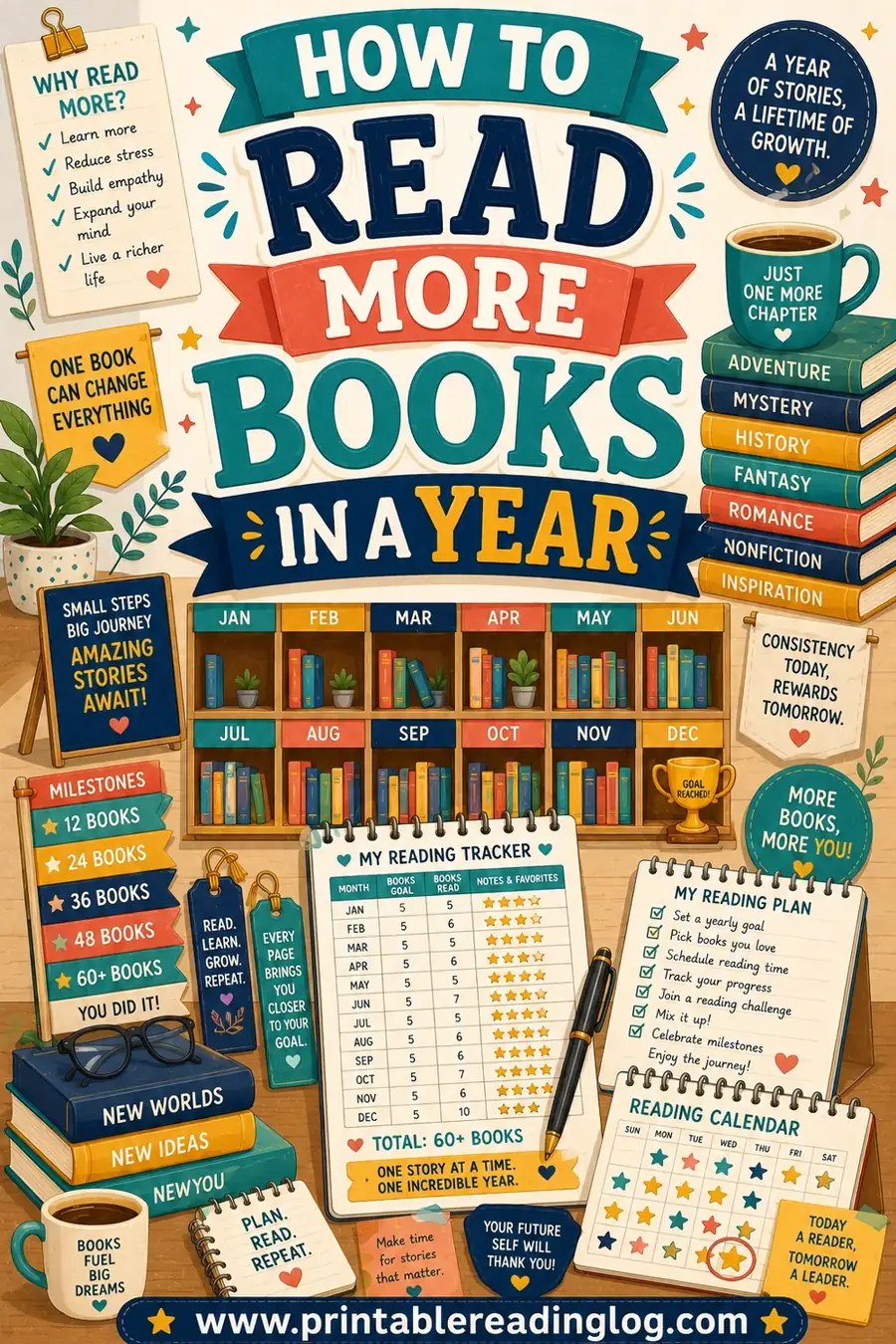
The simplest way to track a yearly reading challenge is to set one clear number, then log every book you finish in one spot you'll actually look at. Write down the title, the date you finished, and a quick rating, and watch the list grow. A printable reading log does this in seconds, so you can see your progress at a glance and stay motivated all year.
Want to set yours up right now? Open the free reading log maker, pick a layout, and print a page that holds your whole year. No sign-up, no app to download, and you can pin it to the fridge or tuck it into a journal.
What a Yearly Reading Challenge Actually Is
A yearly reading challenge is a personal goal to read a set number of books in one calendar year. You pick the target, you pick the books, and you check them off as you go. There's no committee and no prize beyond the one you give yourself. The whole point is to nudge you toward reading a little more often.
People run these challenges in lots of places. Goodreads has a popular version, libraries print bingo-style sheets, and plenty of readers just keep a list in a notebook. The format barely matters. What matters is having one trusted place where every finished book gets recorded.
That's where a reading log earns its keep. Instead of scattered notes and a vague memory of "I think I read six books this spring," you get a clean running tally. You always know exactly where you stand.
Step 1: Pick a Number You'll Hit
Start with a realistic goal. If you set the bar too high, you'll feel behind by March and quit. Too low, and the challenge won't push you at all. Aim for a number that's a small stretch beyond what you read last year.
A few common targets, and who they tend to fit:
- 12 books (one a month). Great for busy readers or anyone restarting a reading habit.
- 24 books (two a month). A solid, popular middle ground.
- 52 books (one a week). Ambitious, but doable for fast or frequent readers.
- 100 books. For dedicated readers, audiobook lovers, or people with long commutes.
Not sure where to land? Count what you read in the last 12 months, then add a few. If you read 15, try 20. Small jumps stick better than giant leaps.
Turn the number into a monthly pace
Big goals feel less scary when you break them down. Divide your target by 12 and you've got a monthly pace to aim for.
| Yearly goal | Books per month | Roughly one book every… |
|---|---|---|
| 12 | 1 | 30 days |
| 24 | 2 | 15 days |
| 36 | 3 | 10 days |
| 52 | ~4.3 | 7 days |
| 100 | ~8.3 | 3–4 days |
Use this as a checkpoint, not a cage. Some months you'll race ahead, others you'll fall behind. The pace just tells you whether you're roughly on track.
Step 2: Set Up Your Reading Log
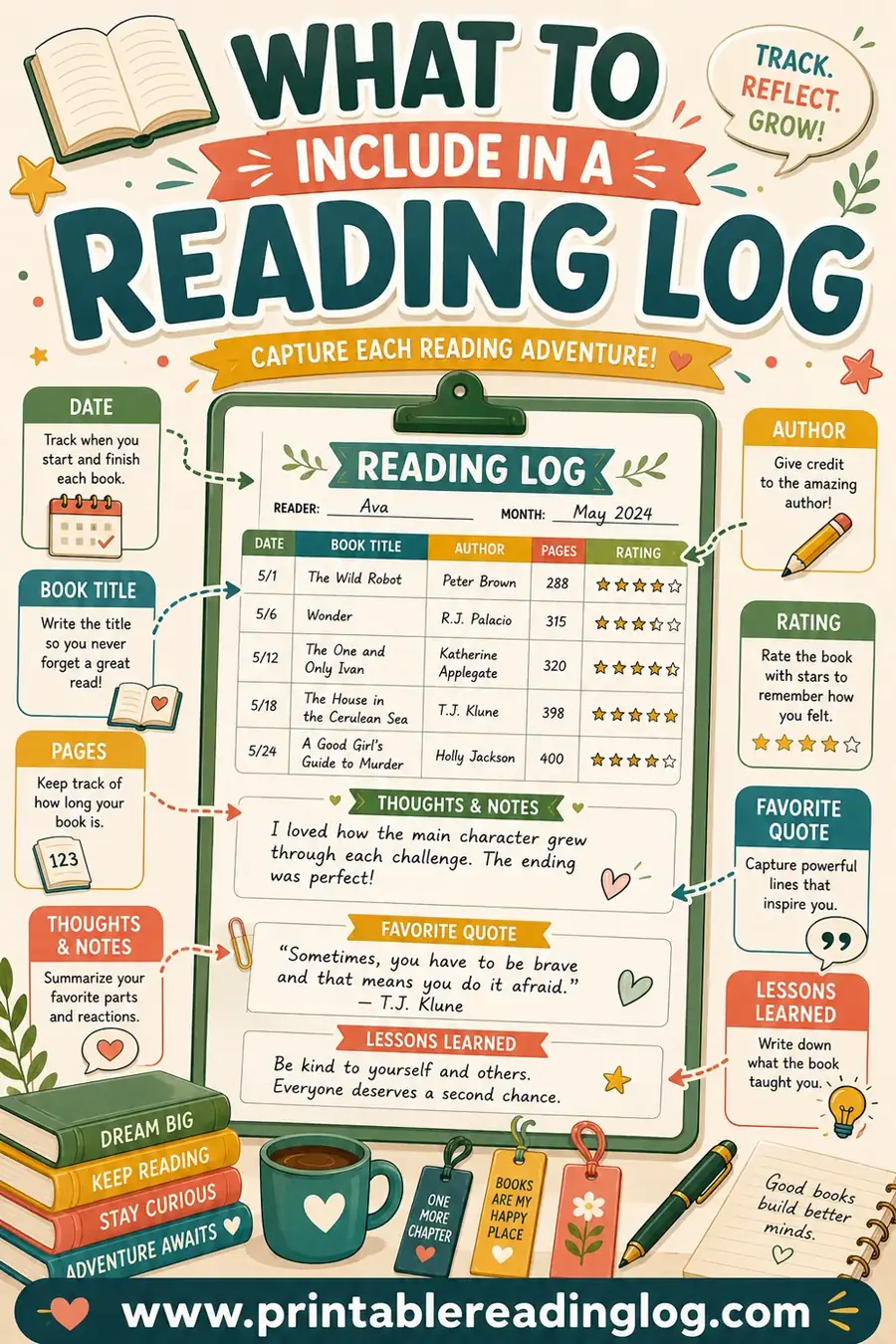
Now build the place where you'll track everything. A good log has a row for each book and a few key columns. You don't need anything fancy, but a handful of fields make the year much easier to review later.
Here's a simple layout that works for almost any challenge:
| # | Title | Author | Date finished | Rating | Format |
|---|---|---|---|---|---|
| 1 | Project Hail Mary | Andy Weir | Jan 14 | 5/5 | Audiobook |
| 2 | The Midnight Library | Matt Haig | Feb 2 | 4/5 | Paperback |
| 3 | Educated | Tara Westover | Feb 27 | 5/5 | Ebook |
The number column doubles as your progress counter. When you finish book 18, you're 18 toward your goal. No math required.
You can build this exact table with the free reading log maker, then print as many pages as your year needs. Keep one on the fridge, slip one in your planner, or hole-punch a few into a binder.
Step 3: Log Every Book the Moment You Finish
The single biggest mistake people make is waiting to update their log. They finish three books, mean to write them down "later," and then forget the titles or the dates. Log it the moment you close the back cover.
It takes 20 seconds. Title, author, date, a quick star rating, done. Make it a tiny ritual, like a victory lap for finishing.
A few fields worth adding while it's fresh in your mind:
- A one-line takeaway. What stuck with you? Future-you will love this.
- Where you got it. Library, bought, borrowed, gift. Handy for spotting patterns.
- A re-read flag. Mark books you'd happily read again.
Step 4: Make Your Progress Visible
Tracking works best when you can see it. A list buried in an app you never open won't motivate anyone. A printed log on the wall, with rows steadily filling in, absolutely will.
Try one of these visual nudges:
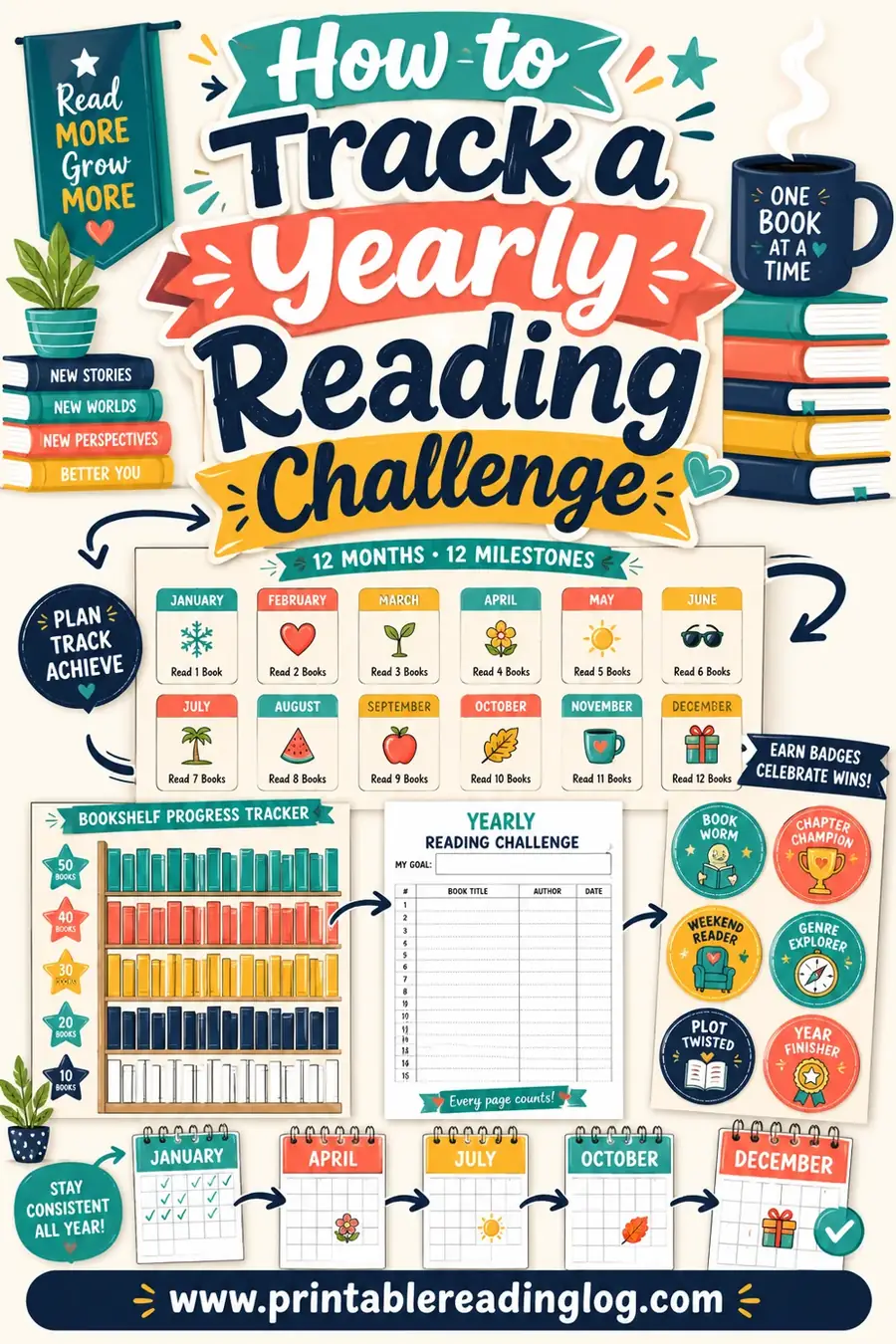
- A progress bar. Draw a long bar with a tick for each book, and color it in as you go.
- A book-spine chart. Sketch a shelf and add a spine for every finished title.
- A simple tally. "14 / 24" written big at the top of the page, updated weekly.
Seeing the gap shrink is oddly addictive. It turns reading from a vague intention into a game you're winning.
Quarterly check-ins keep you honest
Every three months, glance at your pace table from Step 1. Are you on track? If you're ahead, enjoy it. If you're behind, you've got time to adjust, maybe with a few shorter books or an audiobook for your commute. A quick check-in beats a panicked December.
Step 5: Adjust Without Guilt
Life happens. A busy stretch at work, a new baby, a reading slump, any of these can throw off your pace. That's fine. The challenge is supposed to serve you, not stress you out.
If you're consistently behind, you have options. You can lower the goal, mix in shorter books or novellas, or lean on audiobooks during chores and drives. Audiobooks count. So do graphic novels, poetry collections, and that picture book you read fourteen times to your kid. Your challenge, your rules.
And if you blow past your goal in September? Set a new stretch number and keep going. There's no penalty for winning early.
What to Track Beyond the Count
Once the basic challenge is humming along, your log can do more than count books. A few extra columns turn it into a snapshot of your whole reading year.
| Extra to track | Why it's fun |
|---|---|
| Genre | Spot whether you're stuck in one lane |
| Page count | Add up your total pages for the year |
| Author diversity | Notice if you're reading the same voices |
| Did-not-finish (DNF) | It's okay to quit a book; track those too |
| Mood when you read it | Tie books to memories and seasons |
At year's end, this data tells a little story: your most-read genre, your highest-rated book, your total pages. It's the best part of keeping a log all year.
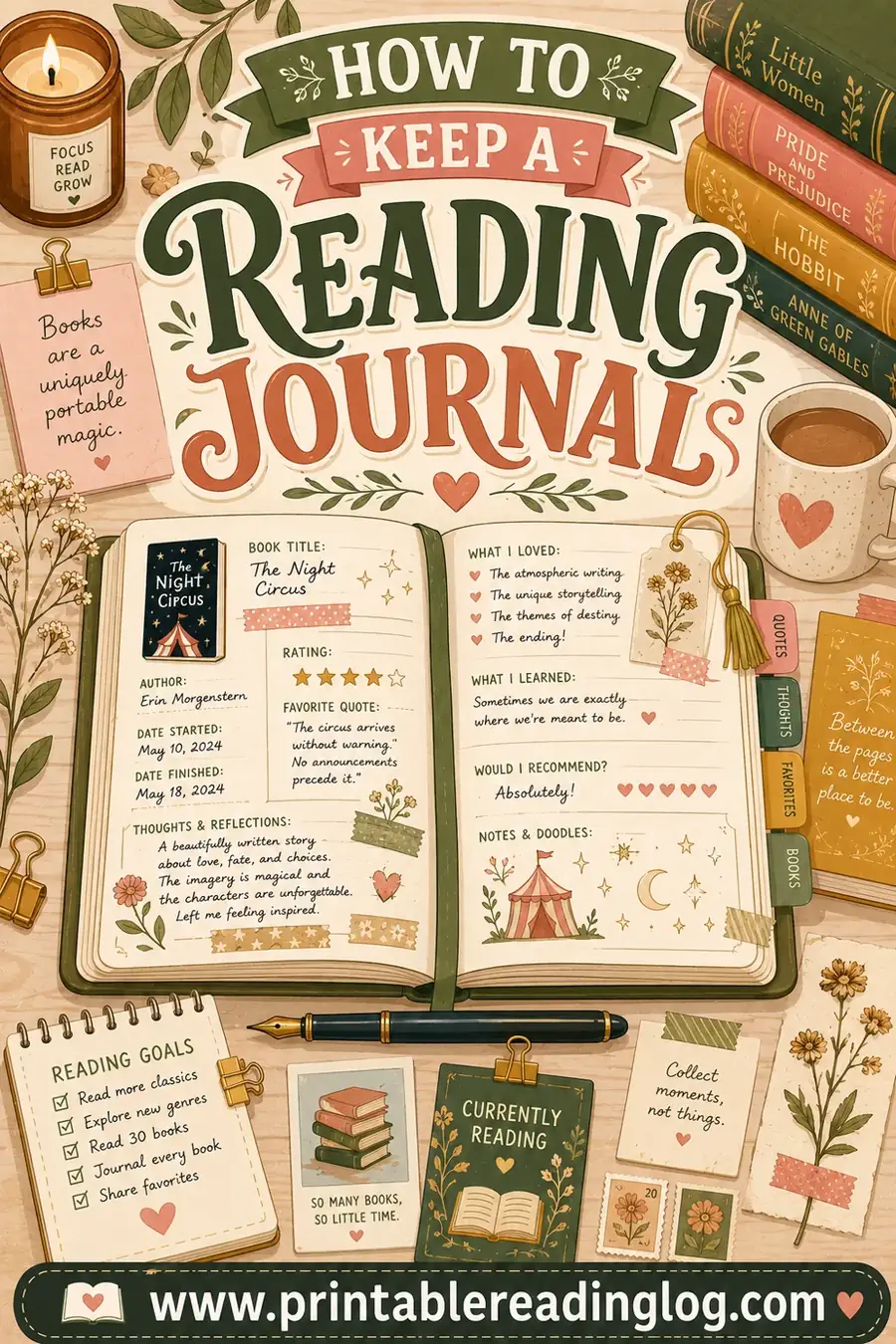
If you want to go deeper on the journaling side, see our guide on how to keep a reading journal, or check what to include in a reading log for a full field list.
Common Tracking Mistakes to Avoid
A few small habits keep a challenge from falling apart:
- Tracking in too many places. One log. Pick paper or an app, not both, or you'll trust neither.
- Only logging "important" books. Count everything you finish. The fun stuff counts.
- Ignoring the log for weeks. A cold log is a dead log. Quick, frequent updates win.
- Setting a goal out of ego. Pick the number you'll actually enjoy hitting, not one to impress strangers online.
Avoid those four and your tracking will basically run itself.
Frequently Asked Questions
How do I start tracking a yearly reading challenge?
Pick a target number of books, then set up one reading log with a row for each book. Record the title, author, finish date, and a rating every time you finish one. The fastest way is to print a free reading log and start filling it in today.
What's a good number of books for a yearly challenge?
It depends on how much you already read. A common first goal is 12 (one a month) or 24 (two a month). Count what you read last year and add a few, so the goal is a small stretch rather than an impossible leap.
Do audiobooks count toward a reading challenge?
Yes, if you want them to. It's your challenge. Most readers count audiobooks, ebooks, graphic novels, and re-reads. The goal is to enjoy more stories, not to follow someone else's rules.
How do I stay motivated all year?
Make your progress visible. A printed log on the wall with a filling progress bar or a simple "14 / 24" tally keeps the goal front of mind. Quarterly check-ins help you catch a slow patch before it becomes a quit.
What if I fall behind on my reading goal?
Don't quit, adjust. Mix in shorter books, lean on audiobooks during chores or drives, or simply lower the number. Falling behind is normal, and a slightly smaller goal you actually hit beats a big one you abandon.
Can I track more than just the number of books?
Absolutely. Add columns for genre, page count, format, and a one-line takeaway. At year's end you'll have a fun snapshot: your top genre, highest-rated book, and total pages read.
Ready to Track Your Reading Challenge?
Pick your number, set up your log, and start checking off books today. Open the free reading log maker, choose a layout, and print a page that holds your whole year. It's free, there's no sign-up, and you'll have a clear, motivating record of every book you read in the year ahead. Happy reading, and here's to hitting your goal.