How to Keep a Reading Log: A Simple Guide That Sticks
To keep a reading log, write down each book you read, the date, and how long or how far you got, then add a quick rating or note while it's fresh. Do it right after you finish reading so it becomes a habit, not a chore. The easiest way to start is to print a clean sheet from a free reading log maker, keep it where you read, and fill in one line a day.
Want to skip the setup? Open the free tool, pick a layout you like, and print a ready-to-use sheet. No sign-up, no fee, and you can have it in your hands in under a minute.
What Does It Mean to Keep a Reading Log?
Keeping a reading log just means tracking your reading over time in one place. Every time you read, you add a short entry: what you read, when, and a detail or two like minutes, pages, or a star rating. Over weeks, those entries pile up into a record you can look back on.
A log can be a printed sheet, a notebook, a spreadsheet, or an app. The format matters less than the habit. The point is to make your reading visible so you can see your progress, remember what you read, and keep the streak going.
People keep reading logs for all sorts of reasons:
- Kids log nightly reading for school, usually with a signature line.
- Students track minutes or pages toward a class goal.
- Adults keep a record of books finished so they remember them later.
- Goal-chasers count toward a yearly challenge like "30 books this year."
Whatever your reason, the basics are the same. Let's walk through them.
Step 1: Pick a Format You'll Actually Use
The best reading log is the one you keep filling in. Before anything else, choose a format that fits how you read.
- Printable sheet. Fast, no screen, and easy to hang by your reading spot. Best for kids, families, and anyone who likes pen and paper.
- Notebook or journal. Flexible and personal, great if you like to write longer notes about each book.
- Spreadsheet. Good for sorting and totals, but only if you're already comfortable in one.
- App. Handy on the go, though it's easy to forget to open it.
For most people, a printable sheet wins because it sits in plain sight. A log you can see gets used. A log buried in an app gets forgotten. If you're not sure, start with a printed sheet from the free maker and switch later if you outgrow it.
Match the format to your reading goal
A quick check before you commit:
- Reading a few minutes a night? Use a minutes log with a daily row.
- Working through long books? Use a pages or chapters log.
- Chasing a book count? Use a simple books-finished list.
Step 2: Decide What to Track
A reading log works best when it captures just enough, not everything. Too many columns and you'll quit by Thursday. Here's the core set that covers almost everyone.
| Field | What it captures | Skip it if… |
|---|---|---|
| Date | The day you read | Never skip — it's the backbone |
| Book title | What you read | You're tracking one book all month |
| Minutes or pages | How much you read | You only care about books finished |
| Rating | A 1–5 star score | You don't review books |
| Notes | A line or two of thoughts | You want speed over reflection |
| Signature | A parent or teacher initial | It's a personal log, not for school |
Start with date, title, and minutes. Add a rating or notes column only if you'll actually use it. You can always print a richer sheet later once the habit sticks.
Step 3: Log Right After You Read
This is the single most important habit. Fill in your entry the moment you close the book, while the details are fresh and the pen is already nearby.
If you wait until "later," later rarely comes. You forget the page number, the title blurs, and a few skipped days turn into a blank week. Logging on the spot takes ten seconds and keeps the chain unbroken.
A few tricks that make it automatic:
- Keep the log with the book. Tuck the sheet inside the cover or leave it on your nightstand.
- Clip a pen to it. No hunting for something to write with.
- Make it the last step of reading. Read, then log, every single time. The two become one routine.
Step 4: Build a Daily Reading Habit
A log only shines when there's reading to record. The trick is to anchor reading to something you already do every day.
- Pick a fixed time. Right before bed, with morning coffee, or on the commute. Same time daily beats willpower.
- Start small. Ten or twenty minutes is plenty. A tiny goal you hit every day beats a big one you skip.
- Stack it on a habit. "After I brush my teeth, I read for 15 minutes." Linking it to an existing routine makes it automatic.
- Protect the streak. Even two minutes on a busy night keeps the chain alive. Don't break the streak over a hard day.
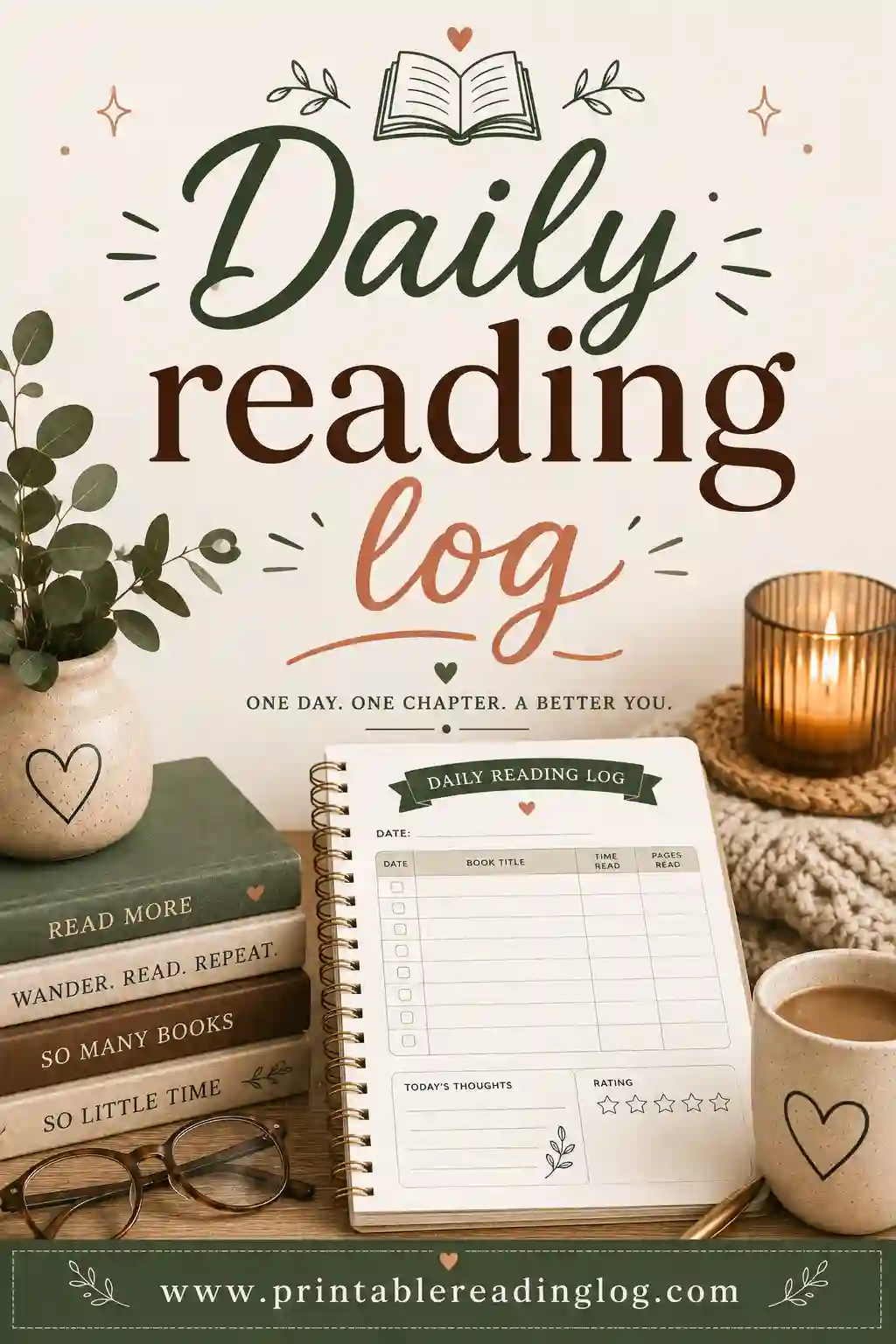
Once reading is locked into your day, the log practically fills itself. For more on setting a daily target, see our guide to the daily reading log.
Sample Reading Log: One Week Filled In
Here's what a clean, kept-up log looks like after a week. Notice how short each entry is. That's by design, so a tired reader can finish a row in seconds.
| Date | Book | Minutes | Rating | Notes |
|---|---|---|---|---|
| Mon | The Hobbit | 25 | ⭐⭐⭐⭐ | Riddles in the dark |
| Tue | The Hobbit | 20 | ⭐⭐⭐⭐ | Met Smaug |
| Wed | The Hobbit | 15 | ⭐⭐⭐⭐⭐ | Couldn't stop |
| Thu | Atomic Habits | 30 | ⭐⭐⭐⭐ | Habit stacking |
| Fri | Atomic Habits | 20 | ⭐⭐⭐⭐ | Two-minute rule |
| Sat | Atomic Habits | 35 | ⭐⭐⭐⭐⭐ | Finished it! |
| Sun | Rest day | — | — | — |
A rest row is fine. Logging the day you didn't read keeps the calendar honest and stops a single gap from feeling like failure.
Tips to Keep Your Reading Log Going Long-Term
The first week is easy. Month three is where logs die. These habits keep yours alive.
- Keep it visible. A log on the nightstand or fridge gets filled in. One in a drawer gets forgotten.
- Don't aim for perfect. A missed day is just a missed day. Pick it back up tomorrow without guilt.
- Review it monthly. Flipping back over a full month of titles is the reward. It reminds you how much you actually read.
- Print ahead. Have the next sheet ready so a finished page is instantly replaced and the habit never stalls.
- Adjust as you go. If a column never gets used, drop it. If you crave more detail, add it. The log should serve you.
Make the review the payoff
The looking-back part is what hooks most readers for good. At the end of each month, total your minutes, count your books, and pick a favorite. That small ritual turns a list of rows into a story about your reading life, and it's exactly what keeps people logging year after year.
Frequently Asked Questions
How do I start keeping a reading log?
Pick a simple format, decide on three or four fields like date, title, and minutes, and log your reading right after each session. The easiest start is to print a ready-made sheet from the free reading log maker and keep it where you read so you never forget a day.
What should I write in a reading log?
At minimum, write the date, the book title, and how much you read (minutes or pages). Add a star rating and a short note if you like to remember your thoughts. Keep it brief so a single entry takes ten seconds.
How often should I update my reading log?
Update it every time you read, right after you finish your session. Logging on the spot keeps the details accurate and turns the log into a habit. Waiting until later is the most common reason logs get abandoned.
Should a reading log track minutes or books?
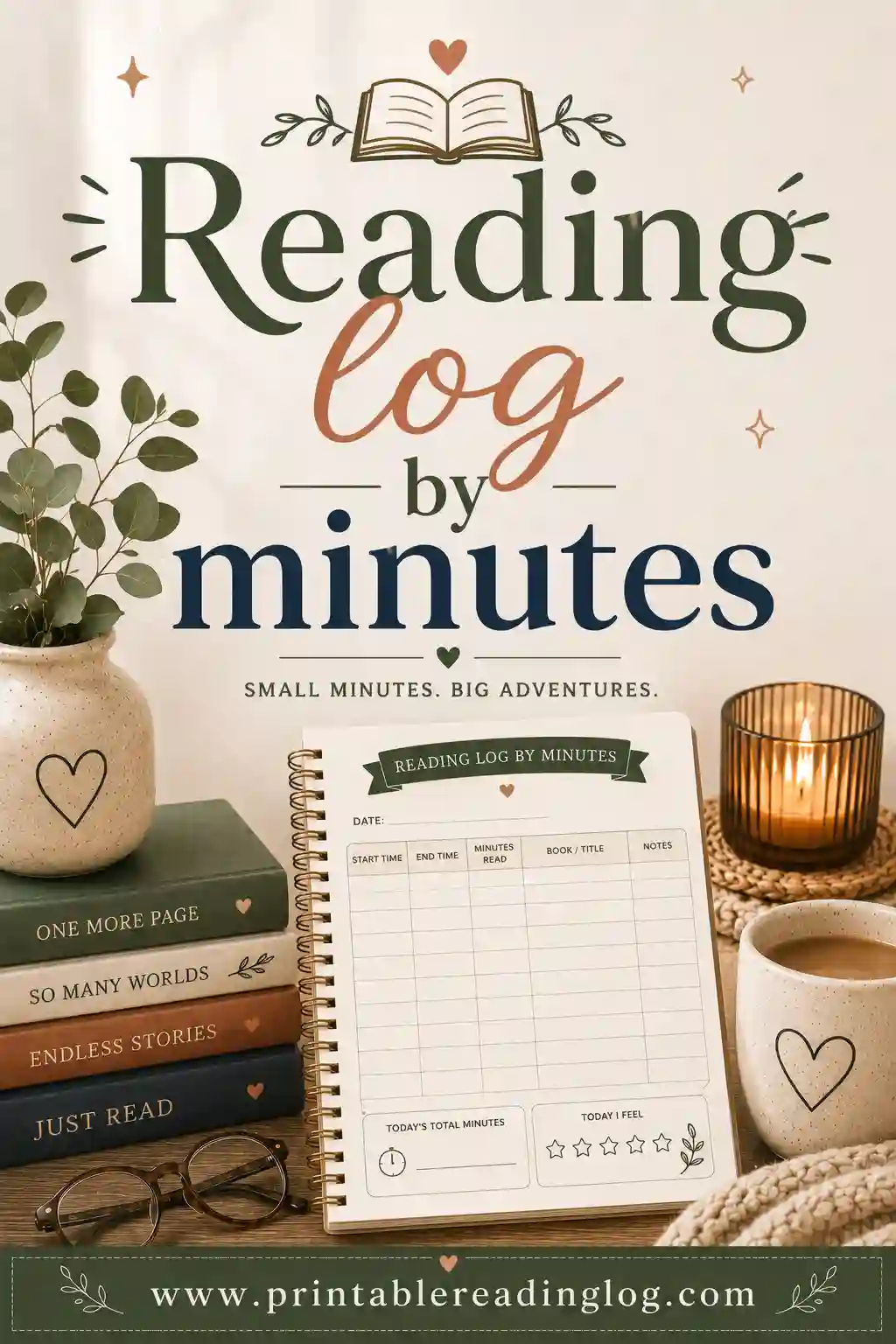
It depends on your goal. Track minutes for a daily habit, especially for kids and students, since it's fair across any book length. Track books finished if you're chasing a yearly count. See our guides on the reading log by minutes for a deeper look.
Do I need an app to keep a reading log?
No. A printed sheet or a notebook works just as well, and many people stick with them better because they're always in sight. An app is fine if you'll remember to open it, but paper is the simplest place to start.
How do I keep myself from quitting after a few weeks?
Keep the log visible, start with a small daily goal, and review your progress at the end of each month. Don't let one missed day spiral — just log again tomorrow. The monthly look-back is what keeps most readers going long term.
Ready to Start Your Reading Log?
Pick a format, choose a few simple fields, and log every session while it's fresh. The fastest way to begin is to open the free reading log maker, print a clean sheet, and keep it by your favorite reading spot. It's free, there's no sign-up, and you can have your first entry written tonight. For more setups, see our printable reading log guide and the reading log for adults.