How Many Books Does the Average Person Read?
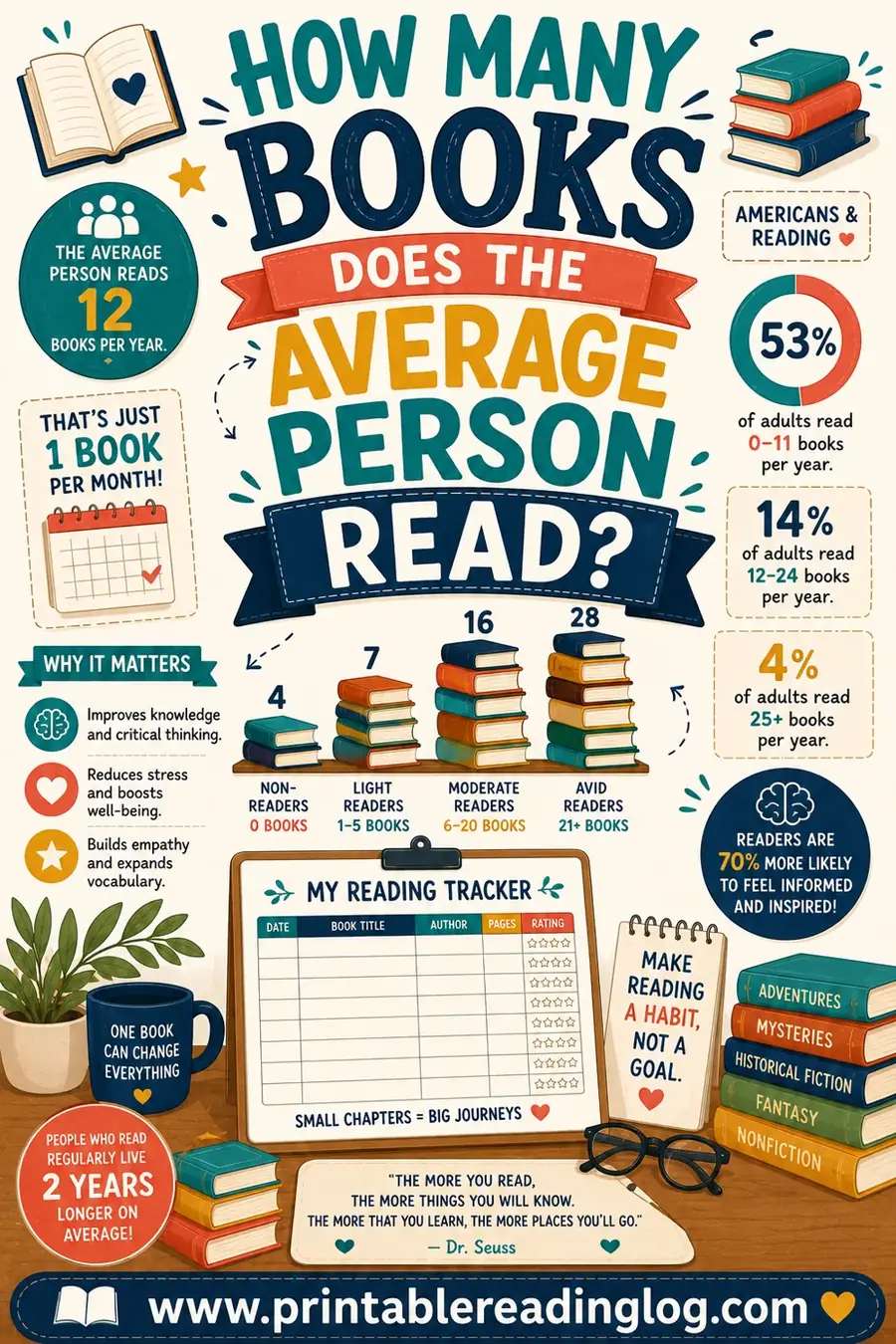
The average person reads about 12 books a year, but that number is misleading. The median is much lower, around 4 to 5 books, because a small group of heavy readers pulls the average way up. In plain terms: most people read only a handful of books a year, while a few read dozens. Wherever you land, a simple reading log makes it easy to see your own number and grow it.
Curious where you stack up? Open the free reading log maker, print a page, and start counting your books today. No sign-up, no app, and by year's end you'll know your real total instead of a guess.
The Short Answer, With the Important Caveat
If you've seen the stat "the average American reads 12 books a year," you've seen the number that gets quoted most. It comes from long-running surveys that ask people how many books they read in the past 12 months. Twelve is the mean, the everyday meaning of "average."
But here's the catch. A handful of voracious readers, the folks finishing 50 or 100 books a year, drag that mean upward. When you look at the median instead, the person right in the middle of the pack, the number drops to roughly 4 or 5 books a year. That's a more honest picture of "typical."
So both numbers are true:
- Mean (average): ~12 books/year. Inflated by heavy readers.
- Median (typical): ~4–5 books/year. What the middle-of-the-road reader actually reads.
Keep that gap in mind whenever you see a reading stat. Averages and "typical" aren't the same thing.
Why the Average Is So Skewed
Reading habits aren't evenly spread. Surveys consistently find that a large share of adults read zero books in a given year, while a small, dedicated slice reads dozens. When you average those two extremes together, the result sits higher than what most people experience.
Picture ten readers. Eight of them read 2 books each, one reads 10, and one reads 60. That's 86 books across 10 people, an average of 8.6. But eight of those ten read just 2. The average describes almost none of them.
This is exactly why your own log beats any statistic. The "average" is a blurry composite of millions of people. Your reading log is the only number that's actually about you.
How Reading Varies by Group
The headline number hides big differences between groups. Reading tends to rise with education and income, and it shifts with age and life stage. The table below shows rough, commonly cited ranges, useful for context, not gospel.
| Group | Typical books per year (rough) |
|---|---|
| Adults overall (median) | 4–5 |
| Adults overall (mean) | ~12 |
| College graduates | Higher than average |
| Adults who read daily | 20+ |
| People who read zero books/year | A significant share of adults |
| Dedicated "book a week" readers | ~52 |
| Retirees with free time | Often above average |
| Parents of young kids | Often dips during the busy years |
| Book-club members | Higher; the group keeps them honest |
A few patterns show up again and again: people with more formal education tend to read more, and folks who build a daily reading habit pull far ahead of the pack. The single biggest predictor isn't speed, it's consistency.
Kids and students read differently
For children and students, "books per year" gets fuzzy fast. A first-grader might read hundreds of short picture books, while a high-schooler tackles a dozen longer novels for class plus whatever they choose for fun. That's why schools often track reading by minutes or pages rather than book count. A reading log built around minutes or pages can be a better fit for younger readers.
How Format Changes the Count
The way you read shapes how many books you finish. Audiobooks and ebooks have nudged the numbers up for a lot of people, because they fit into moments that used to be reading dead zones, commutes, dishes, dog walks.
| Format | How it affects your count |
|---|---|
| The classic. No multitasking, but easy to log and display. | |
| Ebook | Always in your pocket; easy to squeeze in extra pages. |
| Audiobook | Read while driving, cleaning, or walking; big boost for busy people. |
If you've ever felt "behind" the average, format might be your secret weapon. Counting audiobooks is completely fair, and they make a real dent in a busy schedule. For more on this, see our guide to reading more books in a year.
Why Tracking Beats Comparing
It's natural to wonder how you compare. But comparing to an average is a bit of a trap. The number is skewed, it varies wildly by group, and honestly, it doesn't change anything about your own reading life.
A reading log flips the focus to something useful: your own trend over time. Are you reading more this year than last? Did a new habit, like a bedtime chapter or a commute audiobook, move your number? That's the comparison that actually helps.
Here's what a year of self-tracking can tell you:
- Your real total, not a fuzzy guess.
- Your best and worst months, so you can spot what helps you read.
- Your favorite genres and formats, revealed by patterns in the data.
- Your trend line, the only number that's truly yours.
When you track, "the average" becomes a fun bit of trivia instead of a standard you're anxiously measuring yourself against.
How to Start Counting Your Own Books
Setting up a personal count takes about two minutes. Here's the whole process:
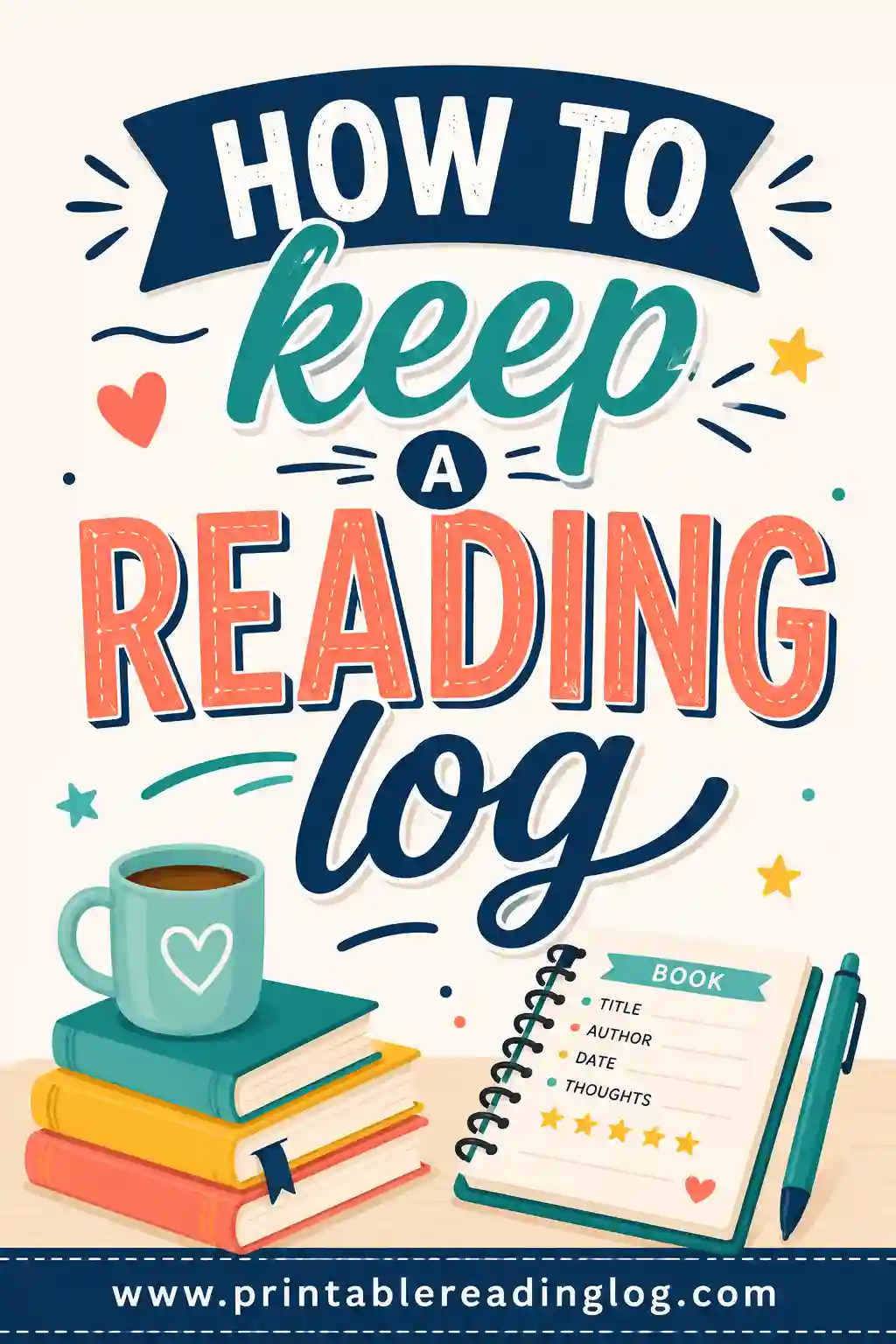
- Print a reading log. Use the free reading log maker and pick a layout you like.
- Add a row per finished book. Title, author, date, and a quick rating.
- Update it the moment you finish. Don't trust your memory; log it on the spot.
- Tally it up monthly. A running count keeps the goal visible.
- Review at year's end. Add up your total and compare it to last year, not to strangers.
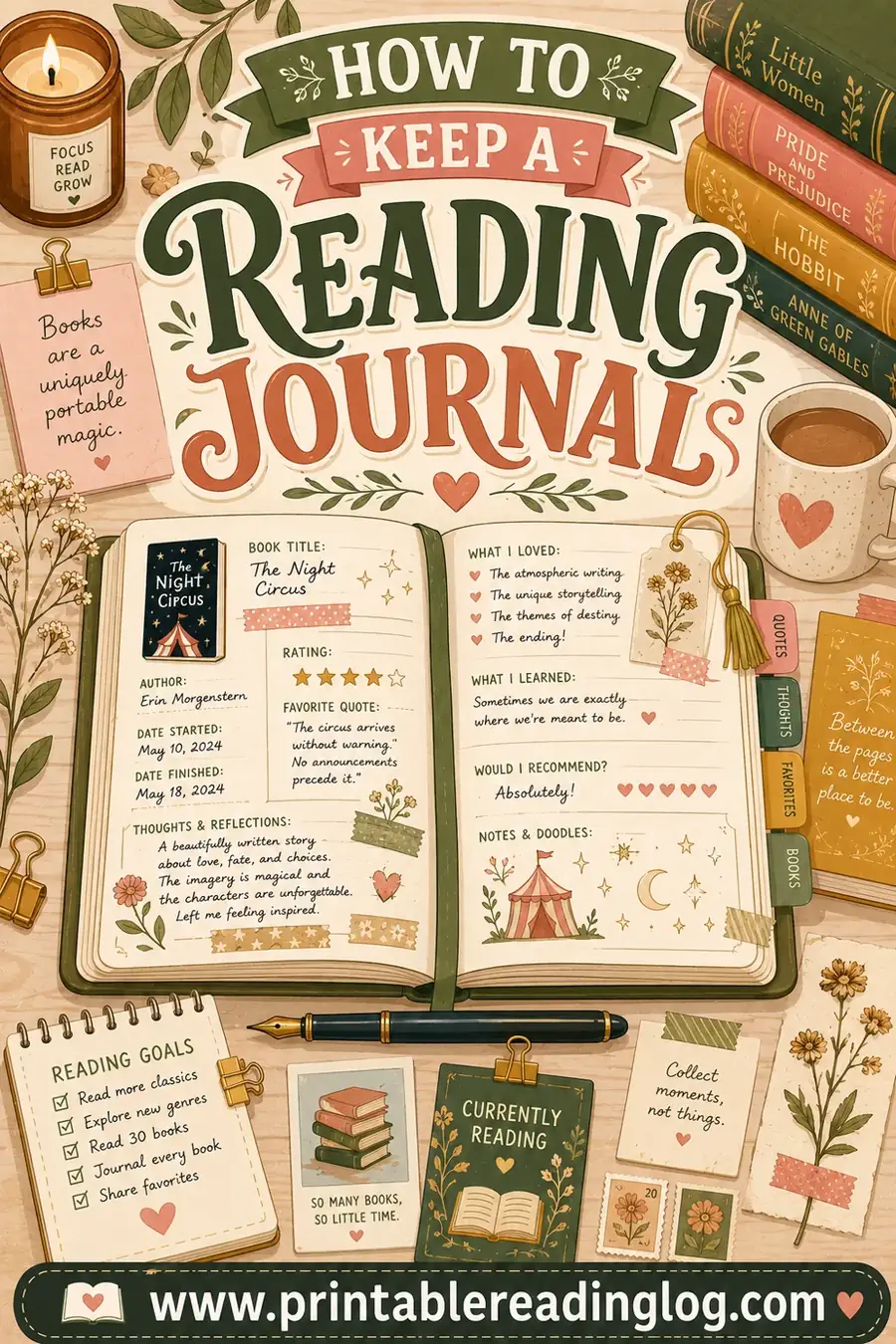
Do that for twelve months and you'll have something far more valuable than the average: a true, personal record of your reading year. To make the most of it, check what to include in a reading log.
Want to read more than the average?
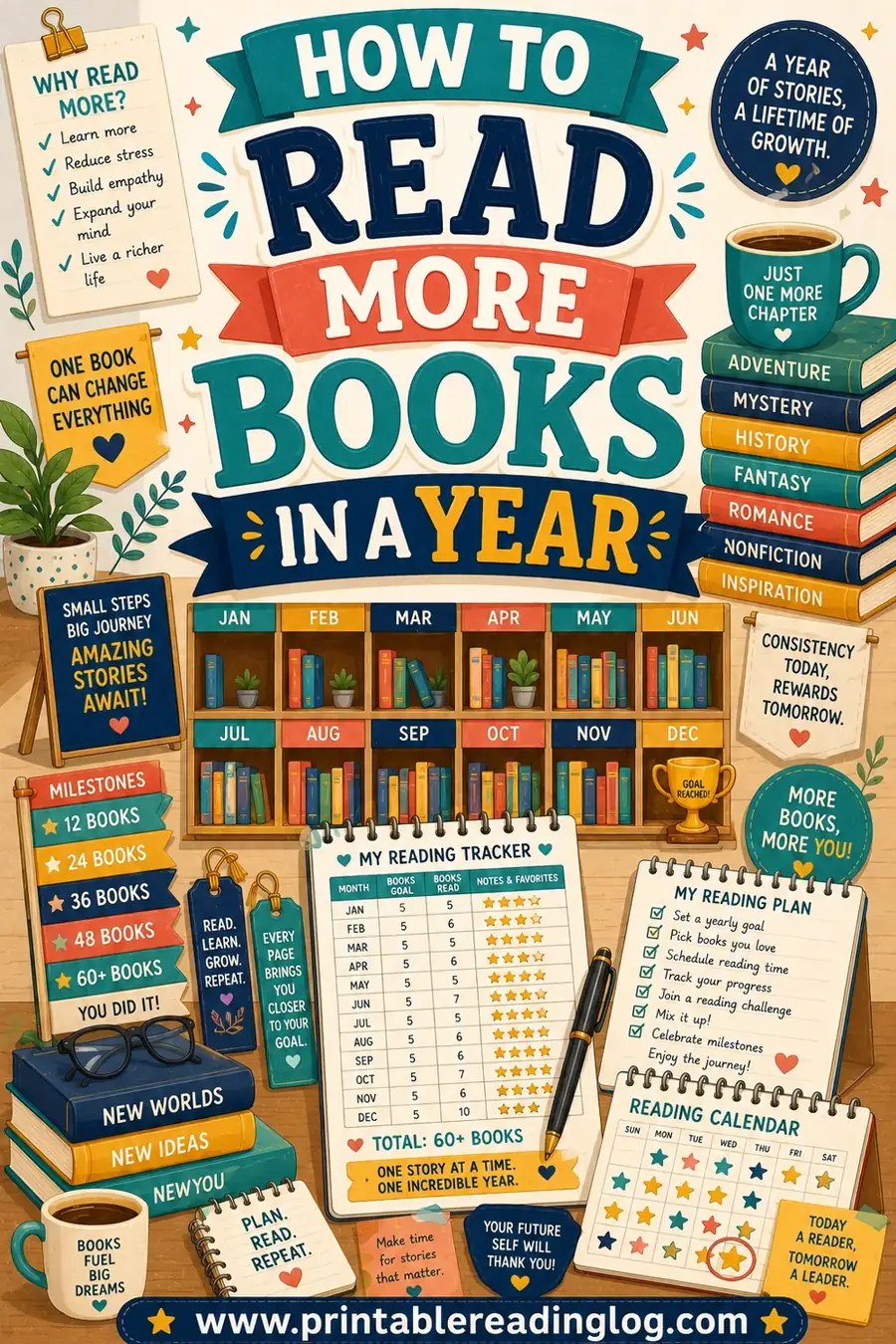
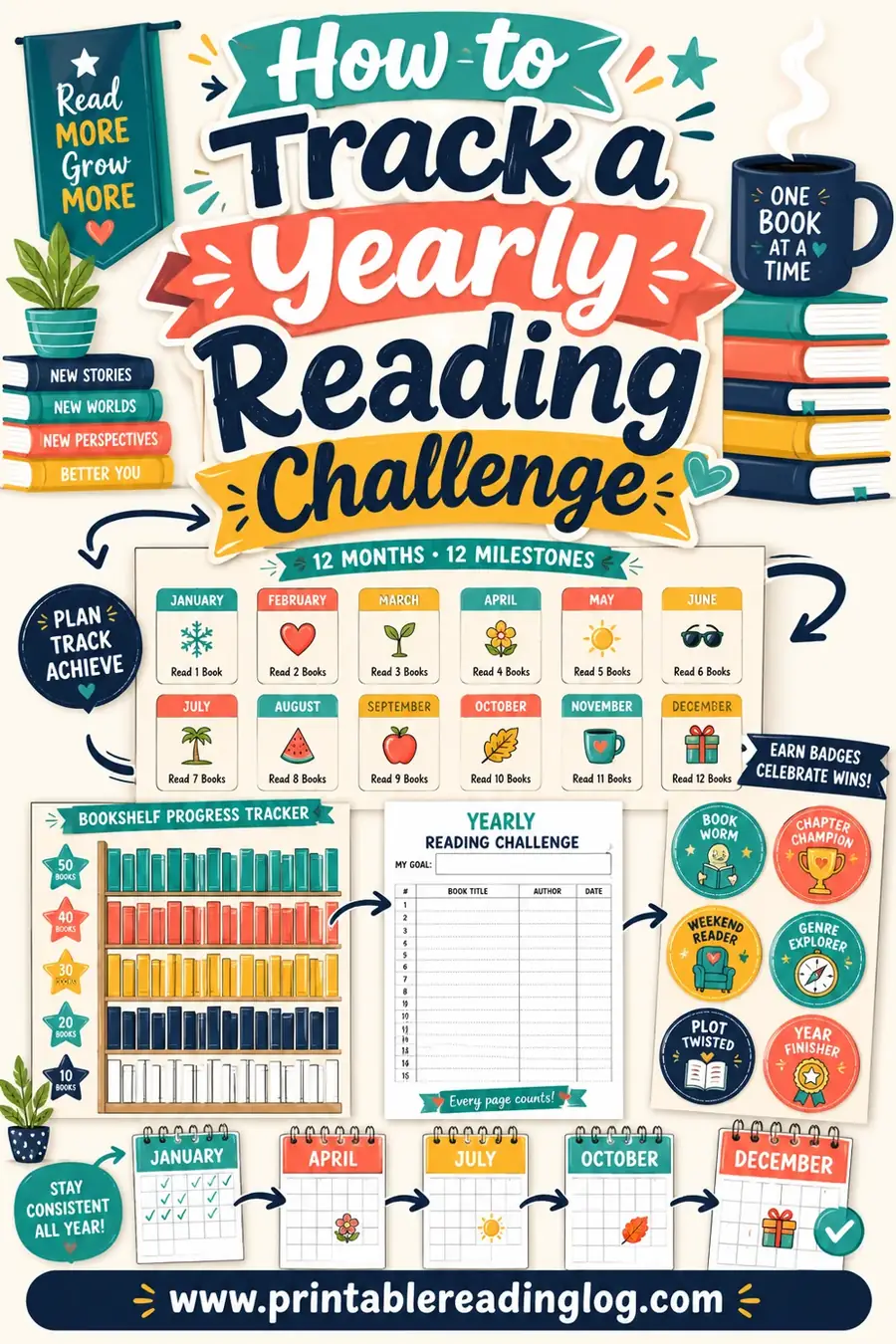
If your goal is to beat 12 books a year, the trick is consistency, not speed. Twenty minutes of reading a day adds up to roughly 15 to 20 books a year for most people. Pair that with a yearly reading challenge and a visible log, and you'll clear the average without much effort.
What Even Counts as "a Book"?
Part of why these averages feel slippery is that "a book" isn't one thing. A survey lumps a 90-page novella in with a 900-page epic, a board book in with a textbook. So before you measure yourself against any number, it helps to decide what you'll count, and to be generous with yourself.
Here's a reasonable rule of thumb: if you finished it cover to cover and it told a complete story or covered a full topic, it counts. That means:
- Audiobooks count. You absorbed the whole story; the delivery method doesn't matter.
- Re-reads count. A book you loved enough to read twice is still a book you read this year.
- Graphic novels and short story collections count. They take real time and attention.
- Long-form nonfiction counts even if you skim a chapter. Few people read every footnote.
What you don't have to count is the stack of books you started and set down. Those belong on a "did not finish" list, useful for remembering what didn't click, but not part of your total. The point of defining this for yourself is simple: once you know your own rule, your personal count means something, and it's no longer at the mercy of how a survey happened to phrase the question.
How to Read Above the Average This Year
Beating the average isn't about reading faster or being some kind of book machine. It comes down to a few small, repeatable moves. Here's what actually moves the number.
- Read a little every day. Consistency crushes intensity. Twenty minutes daily beats a frantic weekend binge every few months, and it's far easier to sustain.
- Always have the next book ready. The gap between finishing one book and choosing the next is where readers stall for weeks. Line up your next read before you finish the current one.
- Use the dead time. Audiobooks turn commutes, chores, and dog walks into reading time. For many people, this single shift adds five to ten books a year.
- Quit books you're not enjoying. A book you're slogging through quietly kills your momentum. Set it down, pick up something you're excited about, and your pace recovers.
- Keep a visible log. Watching your list grow is its own motivation. A tracker on the fridge or by your reading chair turns a vague intention into a steady habit.
Do a few of these and you'll glide past 12 books without it ever feeling like work. The readers who finish 30 or 40 books a year almost never read fast, they just read often and rarely let the streak break.
Frequently Asked Questions
How many books does the average person read in a year?
The average (mean) is around 12 books a year, but that's pulled up by heavy readers. The median, or typical, person reads closer to 4 or 5 books a year. Both numbers are accurate; they just measure different things.
Why is the median lower than the average?
Because a small group of very dedicated readers finishes dozens of books a year, which drags the mean upward. The median, the middle person in the pack, gives a truer sense of what most people actually read.
Do audiobooks count as reading?
Yes. Audiobooks deliver the same story and ideas, and most readers happily count them. They're especially useful for busy people, since you can "read" while commuting, cleaning, or walking. Count them in your log if you'd like.
How many books should I aim to read?
There's no should. A good target is a small stretch beyond what you read last year. If you read 5, try 8. If you read 15, try 20. Reading 20 minutes a day lands most people around 15 to 20 books a year.
How can I find out how many books I actually read?
Keep a reading log. Record each book the moment you finish it, then tally the list at year's end. A printable log gives you an exact, personal number instead of a guess, and it's the only count that's really about you.
Is reading fewer books than average a problem?
Not at all. Book count is a fun stat, not a grade. What matters is that you enjoy what you read and, if you want to, nudge your habit upward over time. Tracking your own trend is far more useful than chasing an average.
Does reading speed affect how many books I finish?
Less than you'd think. Most people who read a lot aren't unusually fast, they just read more often. A modest reader who reads twenty minutes every day will finish far more books than a quick reader who only opens a book once two weeks. Consistency, not speed, is what fills a reading log. So don't worry about pace; worry about showing up.
How many books a year is considered "a lot"?
Roughly anything above 20 puts you well ahead of the typical reader, and a book a week (about 52) lands you among the most dedicated readers out there. But "a lot" is relative, doubling your own number from last year is a bigger win than hitting someone else's benchmark. Track your personal trend and let that be your measure.
Ready to Count Your Own Books?
Forget the average for a second, the only number that matters is yours. Open the free reading log maker, print a page, and start logging every book you finish. It's free, there's no sign-up, and by next year you'll know exactly how many books you read, and you'll have a record to be proud of. Happy reading.