Reading Log With Level Tracker: Free Printable
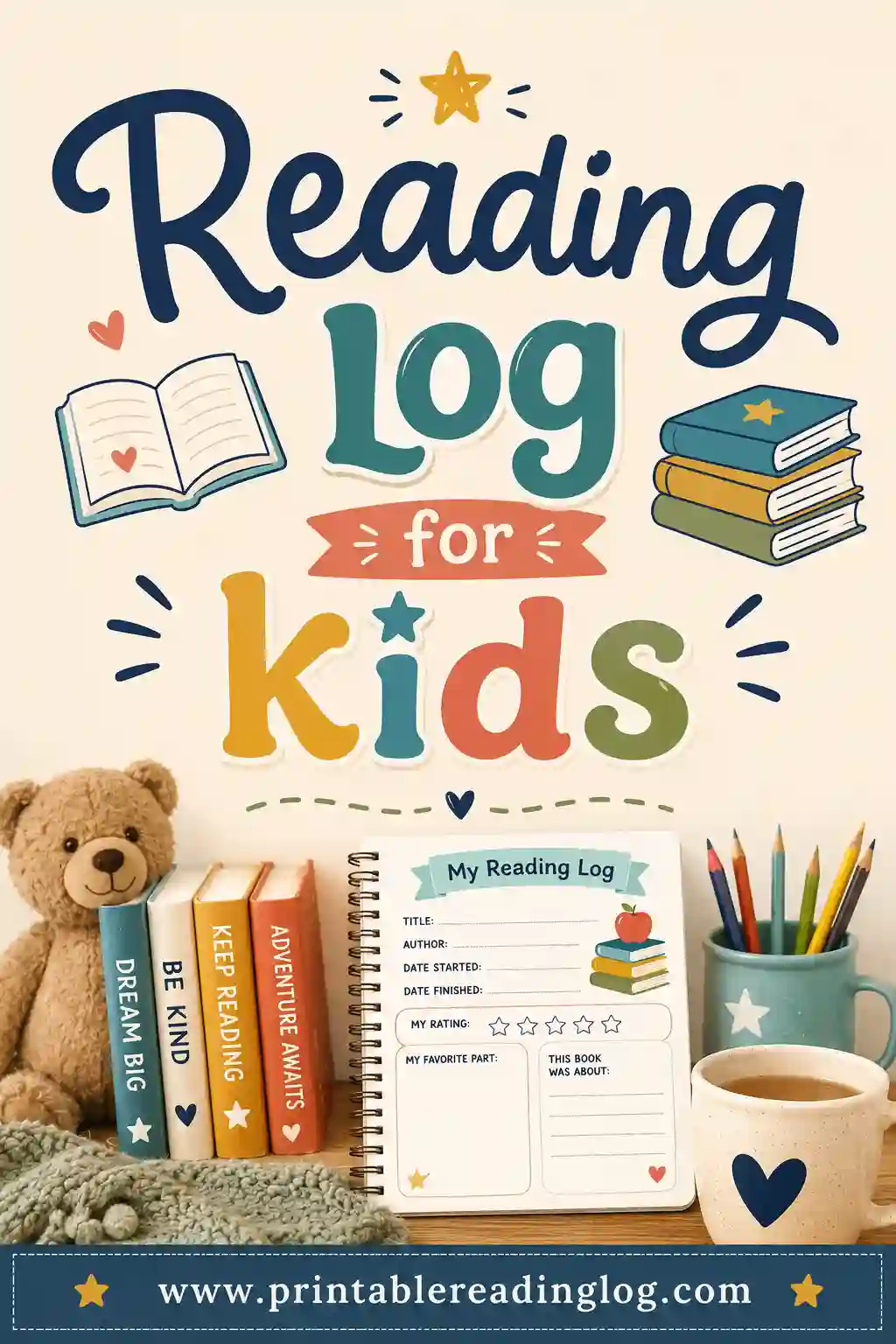
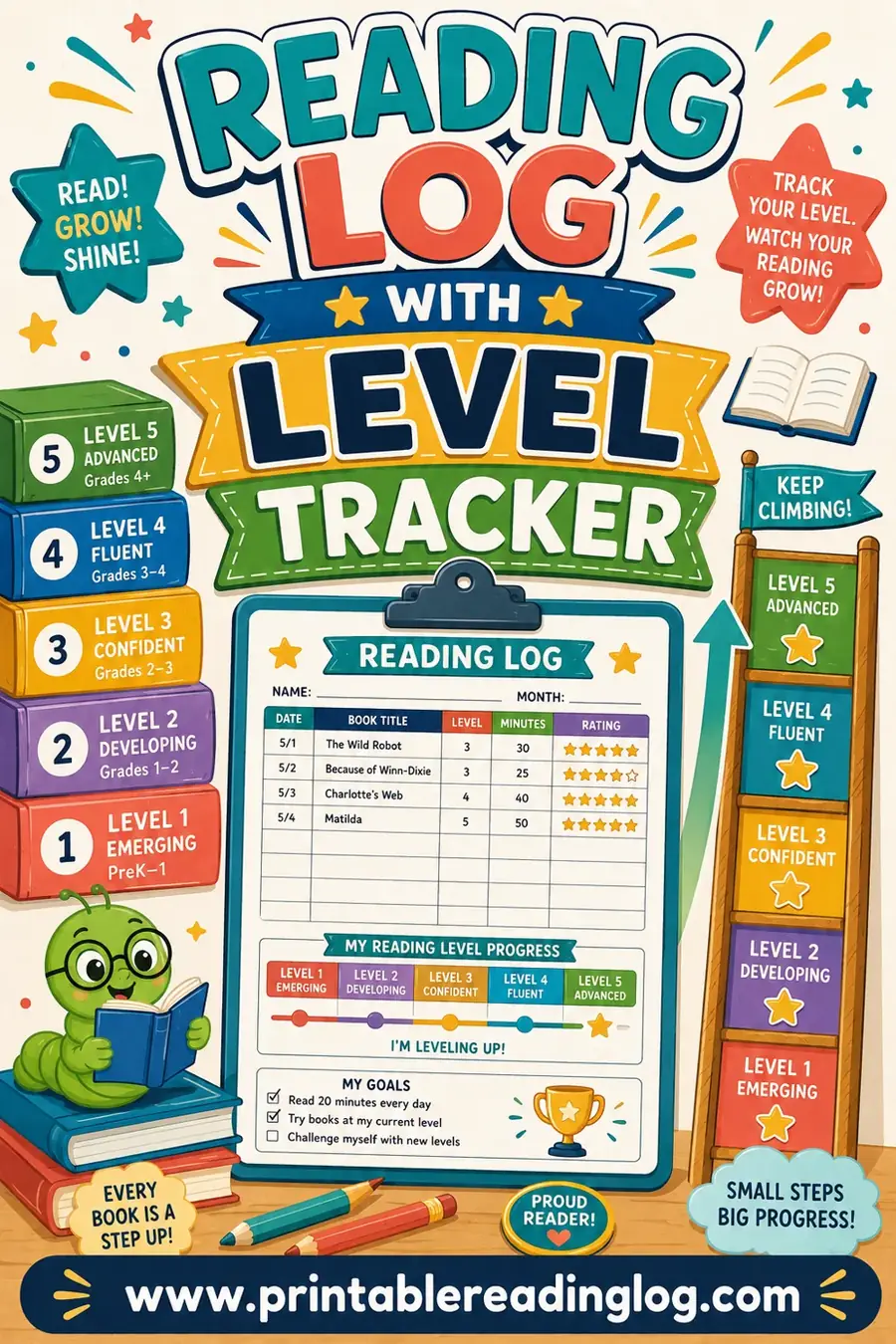
A reading log with level tracker is a simple printable where a reader writes down each book they finish along with its reading level, so you can watch that level climb over time. Instead of just counting books, you get a clear picture of which books a child is reading and whether they're moving up. The fastest way to make one is a free reading log generator that prints a clean grid with a column for the book's level built right in.
Want to skip ahead? Open the free tool, add a "Level" column, and print a stack for the week, the month, or the whole school year. No sign-up, no fee, nothing to install.
What Is a Reading Log With a Level Tracker?
It's a regular reading log with one extra column. Alongside the book title, the date, and maybe a quick rating, you add a spot to write the book's reading level. That tiny addition changes what the log tells you.
A plain log answers "how much is my child reading?" A level tracker answers "is my child reading harder books than they were a month ago?" Both matter. The second one is the one teachers, tutors, and homeschool parents care about most, because it shows real growth, not just volume.
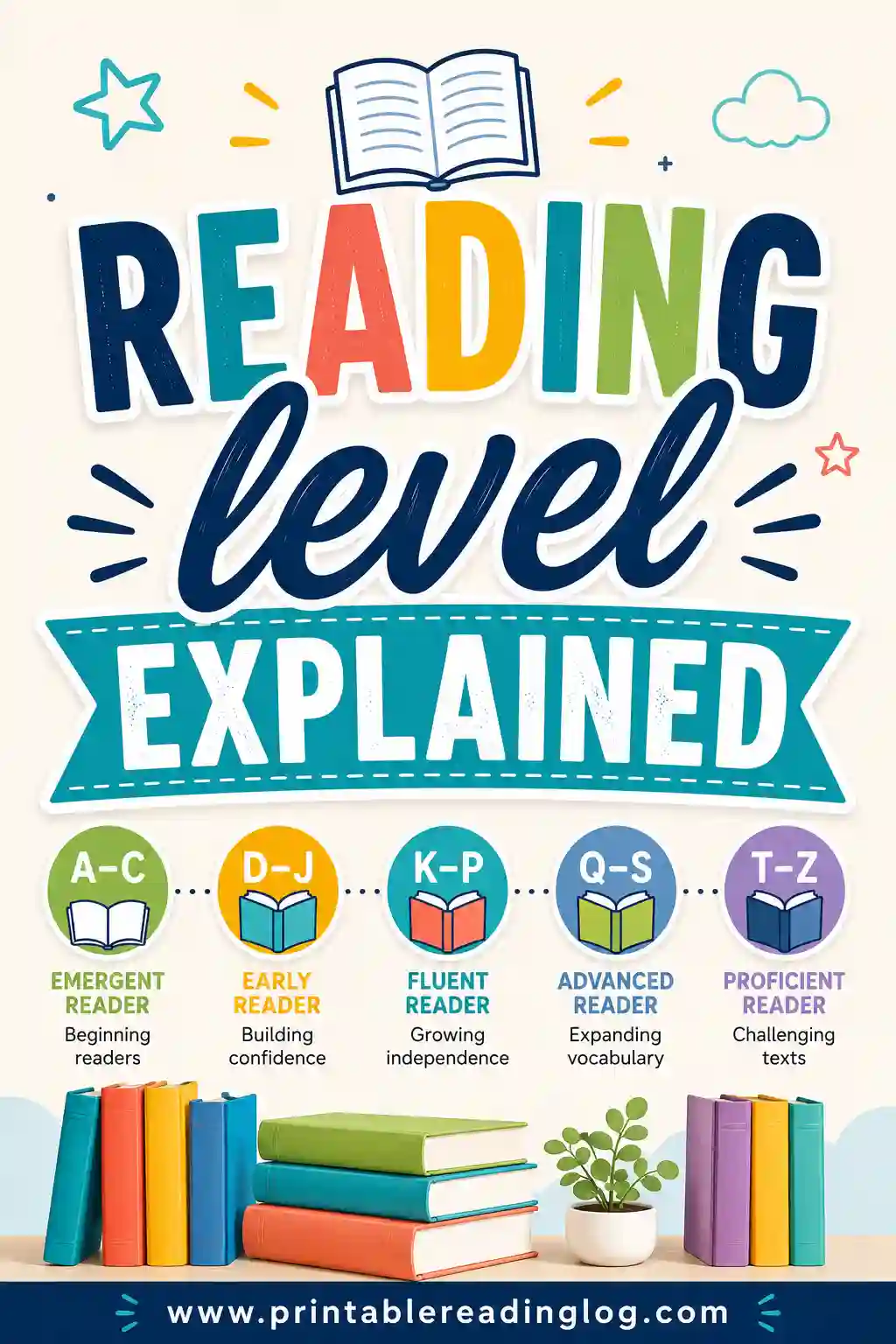
Reading levels come in a few flavors, and your log can use whichever one your school or library uses:
- Guided Reading levels (A–Z), common in elementary classrooms.
- Lexile measures (like 450L or 700L), used by many reading programs.
- DRA numbers (Developmental Reading Assessment).
- Grade-equivalent levels, like 2.5 for mid-second-grade.
You don't need to understand the science behind every system to use one. You just write down whatever the book or app already tells you, and the log does the tracking.
Why Track Reading Level, Not Just Book Count
Counting books is fun and motivating, but it can hide a problem. A child who reads twenty easy books hasn't necessarily grown. A child who reads ten slightly harder books each month is climbing. A level column makes that climb visible.
Here's what a level tracker gives you that a basic log can't:
- Proof of progress. When a kid sees their level go from G to J over a term, that's a confidence boost no sticker can match.
- An early warning. If the level stalls or drops, you catch it fast and can offer easier wins or a little extra help.
- Better book picks. Knowing the current level makes it easy to grab "just right" books — not so easy they're boring, not so hard they're frustrating.
- Something concrete for conferences. Teachers and parents can look at one page and talk about real numbers instead of vague impressions.
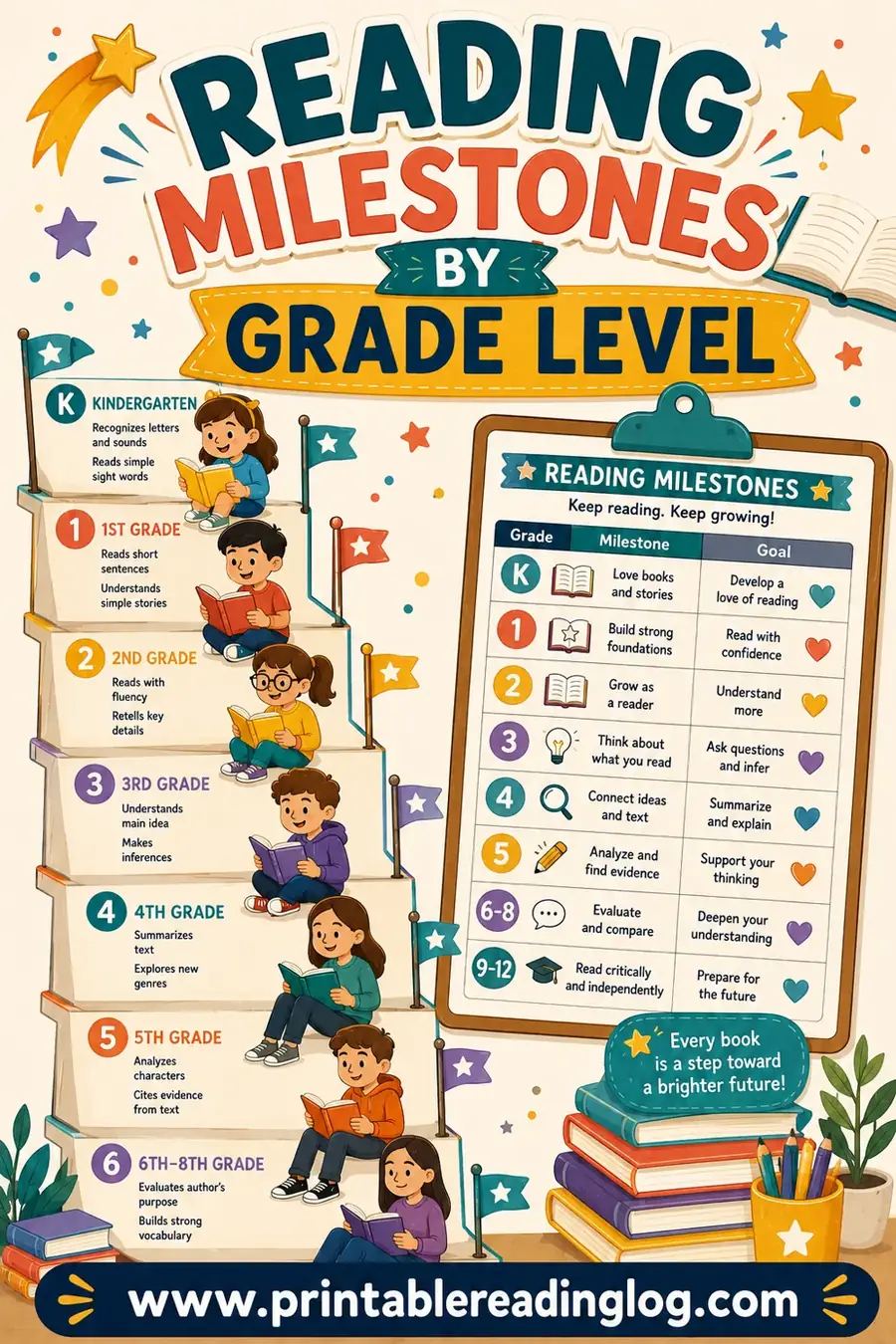
How Reading Levels Map to Grades
Levels can feel like alphabet soup until you see them lined up. This rough guide helps you read your own log at a glance. Levels vary by child and by system, so treat this as a friendly map, not a rulebook.
| Grade | Guided Reading | Approx. Lexile | What books look like |
|---|---|---|---|
| Kindergarten | A–C | BR–200L | A few words per page, big pictures |
| 1st grade | D–I | 200–400L | Short sentences, repeating patterns |
| 2nd grade | J–M | 400–600L | Early chapter books |
| 3rd grade | N–P | 600–700L | Longer chapter books |
| 4th–5th grade | Q–T | 700–900L | Full novels, more vocabulary |
When you fill in your log, you don't have to memorize any of this. Write the level the book or your reading app gives you, and use the table only when you want to sanity-check where a reader sits.
What to Put on a Reading Log With Level Tracker
A good level log stays simple. Too many columns and nobody fills it in. Here's the core set that works for almost everyone:
- Date — when the book was finished (or read aloud).
- Title — the book's name. Authors are optional for young kids.
- Level — the star of the show. One quick code or number.
- Rating — a 1-to-5 or a simple smiley, so the reader has a voice.
- Minutes or pages (optional) — handy if a program also tracks time.
A sample filled-in row
It helps to see what a finished log looks like. Here's a short stretch from a second-grader's log over a few weeks.
| Date | Title | Level | Stars |
|---|---|---|---|
| Sep 3 | Frog and Toad Are Friends | J | ⭐⭐⭐⭐ |
| Sep 9 | Henry and Mudge | J | ⭐⭐⭐ |
| Sep 17 | Mercy Watson | K | ⭐⭐⭐⭐⭐ |
| Sep 28 | The Princess in Black | L | ⭐⭐⭐⭐ |
Look at the Level column going down the page: J, J, K, L. That little upward staircase is the whole point. It's the kind of thing a kid loves to see and a teacher loves to celebrate.
How to Make One in Four Steps
You don't need design skills or a printer full of fancy templates. The whole thing takes a few minutes.
- Open the reading log generator. Pick the kid-friendly style.
- Turn on a Level column. Add it next to the title, and keep a rating column if you like.
- Choose your range. A week per page works for younger kids; a month per page suits steady readers.
- Print. Run off enough copies for the term, clip them into a folder, and you're set.
If your reader fills a page fast, print a small stack and staple it into a mini reading journal. Some families keep one page taped inside a closet door so logging a book becomes part of the bedtime routine.
Using the Level Tracker at Home, in Class, and in Homeschool
The same printable flexes to fit very different setups.
At home
Keep it light. The goal is a happy reading habit, not a spreadsheet. Let your child write the level themselves — copying it off the back of the book teaches them to notice it. Celebrate every jump, no matter how small.
In the classroom
A level log doubles as quick assessment data. Have students log independently, then glance through the stack to spot who's climbing and who's stuck. It pairs well with a classroom reading log routine and makes parent conferences a breeze.
In homeschool
For homeschoolers, a level tracker is gold for end-of-year portfolios and reviews. It shows progress in black and white. Combine it with notes on read-alouds and you've got a tidy record of the whole year's growth.
Tips to Keep the Habit Going
A log only works if it actually gets used. A few small choices make it stick.
- Log right after reading. A book finished but not logged usually never gets logged. Make it the last step of reading time.
- Make levels feel like a game. Frame it as "leveling up," like a video game. Kids get it instantly.
- Don't punish a plateau. Some weeks the level holds steady. That's normal. Re-reading favorites is fine and even helpful.
- Mix easy and stretchy books. A reader needs comfortable wins alongside the harder climbs. The log can hold both.
- Review it monthly together. Sit down once a month, look at the staircase, and pick a fun goal for the next stretch.
Common Mistakes With Level Tracking
A level column is powerful, but it's easy to lean on it the wrong way. Watch for these traps so the tracker stays a help, not a headache.
- Treating the level as a grade. A reading level is a tool for picking books, not a report card. Don't tie it to praise or punishment, or kids start dreading the log.
- Chasing harder books too fast. A reader who's always one level above comfort gets frustrated and slows down. Plenty of time at a level builds the fluency that makes the next jump possible.
- Ignoring comprehension. A child can technically decode a level-M book and understand almost none of it. Now and then, ask what happened in the story, not just whether they "finished" it.
- Switching systems mid-year. If the school uses Guided Reading and you suddenly log Lexile, the staircase stops making sense. Pick one system and stick with it.
Avoid those four and the level tracker does exactly what it should: shows honest, encouraging growth over time.
How Often to Reassess the Level
You don't need to formally test reading level often. For most kids at home, a light check every six to eight weeks is plenty. Watch how easily they read their current books — if they're breezing through with full understanding, it's probably time to nudge the level up.
In a classroom, teachers usually run a quick running record or benchmark assessment a few times a year, and those numbers feed straight into the log. At home, you can keep it casual: notice when books feel too easy or too hard, and adjust your picks. The log itself becomes your evidence, because a flat staircase over many weeks is a gentle sign to try slightly harder books, while a too-steep climb with lots of frustration says ease back a notch.
The healthiest pattern isn't a constant climb — it's steady reading with occasional jumps. If your log shows that, you're doing it right.
Reading Log vs. Level Tracker vs. Reading Journal
People mix these up. Here's the quick difference so you grab the right tool.
| Format | Best for | Tracks level? |
|---|---|---|
| Plain reading log | Counting books or minutes | No |
| Level tracker log | Watching reading growth | Yes |
| Reading journal | Reflections, summaries, ratings | Sometimes |
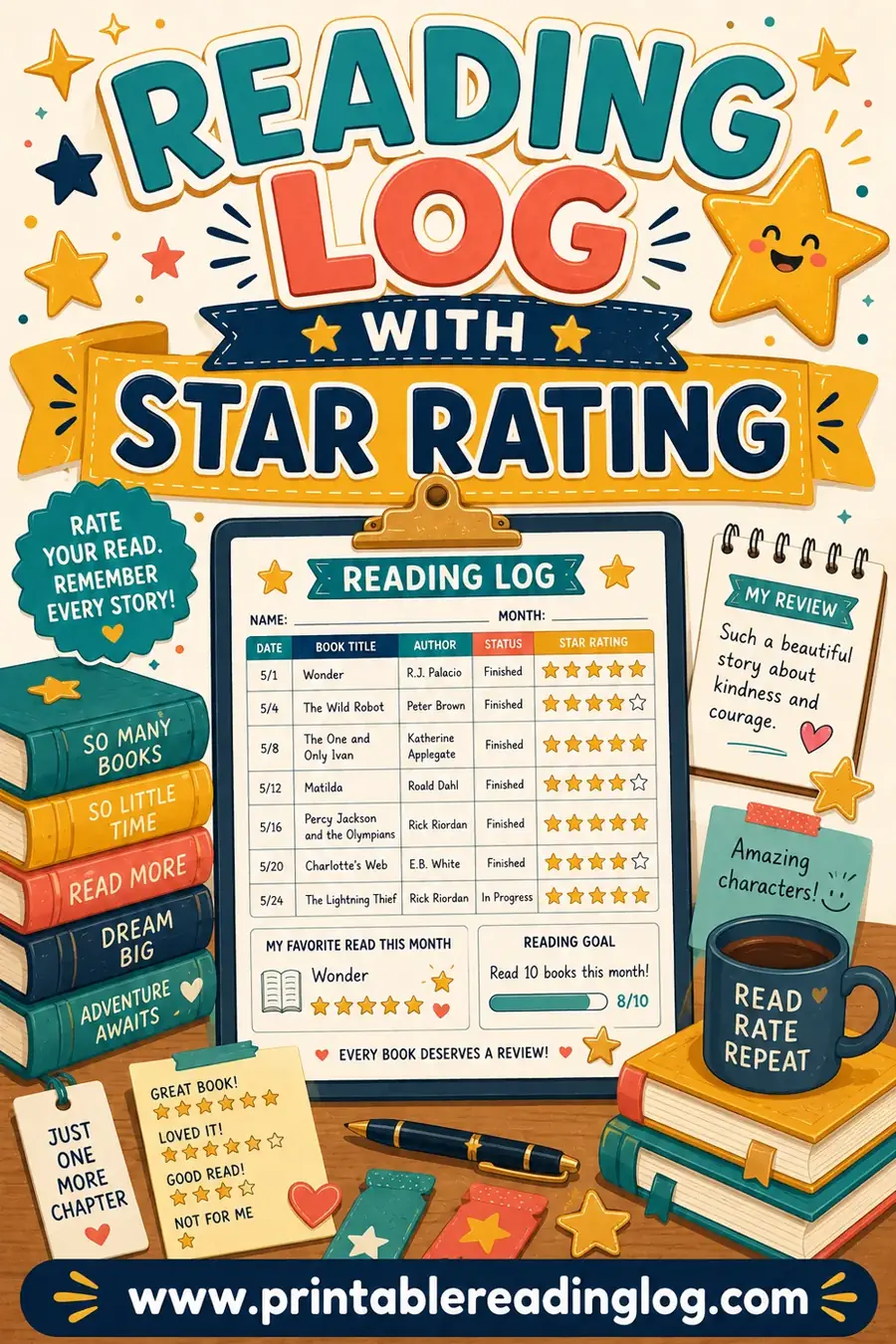
Many families end up using a blend, and that's fine. If you want reflection alongside levels, look at a reading log with star rating or one with a summary column. The generator lets you mix and match the columns you actually want.
Frequently Asked Questions
How do I find a book's reading level?
Check the back cover or the inside front page — many publishers print the Guided Reading level or Lexile there. Your library catalog, your child's reading app, or a quick search of the title plus "reading level" will also tell you. Write down whatever number your school uses.
What reading level system should my log use?
Use the one your child's school or program already uses, so the numbers line up at conferences. If you're on your own, Guided Reading letters (A–Z) are the easiest to read at a glance. The reading log tool lets you label the column however you like.
Is a level tracker too much pressure for young kids?
It doesn't have to be. Frame it as "leveling up" rather than testing, celebrate small jumps, and never scold a plateau. Kept playful, the level column actually boosts motivation because progress becomes visible and fun.
Can I track reading level for an adult reader?
You can, though adults usually care more about genre, page count, or a yearly goal than a formal level. If you're an adult building a reading habit, an annual reading goal tracker or a simple log by minutes tends to fit better than a level column.
How often should the level go up?
There's no fixed schedule, and it varies a lot by child. A jump every few weeks to a couple of months is common during a steady stretch, but plenty of healthy readers hold a level for a while as they build fluency. Watch the overall trend, not week to week.
Can I print one log for the whole year?
Yes. Print a monthly page and clip twelve into a folder, or run a week-per-page version and staple a term's worth together. The free generator makes as many copies as you need, all matching, in one go.
Ready to Track Reading Levels?
A reading log with a level tracker turns "my kid reads a lot" into "my kid went from level G to level L this term" — and that's the kind of progress everyone can see and celebrate. Open the free reading log generator, switch on a Level column, and print your first sheet in minutes. It's free, there's no sign-up, and you'll have a record worth framing by the end of the year. Happy reading, and enjoy watching that staircase climb.