Reading Log for Yearly Goals: Track Your Whole Year
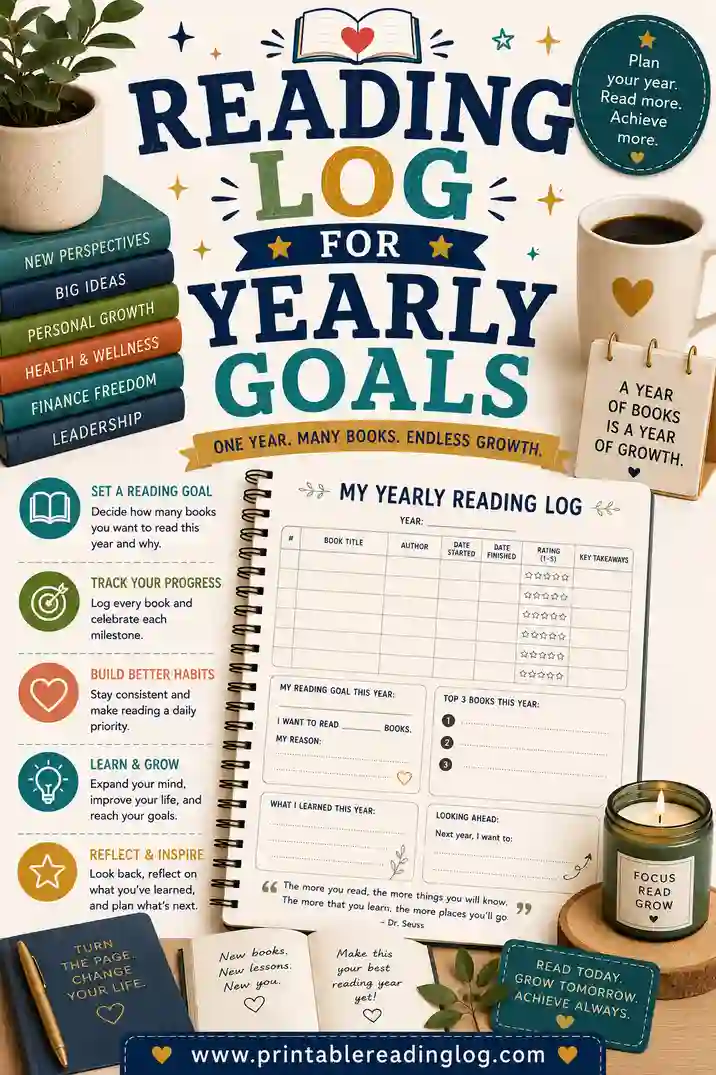
A reading log for yearly goals is a sheet that turns a big number, like "read 30 books this year," into something you can actually see and check off. You set your target, write down each book or session as you finish it, and watch the rows fill up month by month. The easiest way to make one that matches your goal is to use a free reading log generator, pick whether you count books, minutes, or pages, and print a clean sheet you can pin up and fill in all year.
Want to skip ahead and just build one? Open the free tool, choose your tracking style, and print a fresh log for the year. No sign-up, no fee, nothing to install.
What Is a Reading Log for Yearly Goals?
It's a tracking sheet built around one number you want to hit by December. Most people set a goal in books ("read 24 books this year"), but you can just as easily aim for minutes or pages. The log gives you a row for each entry and a spot to watch your running total, so you always know if you're ahead, on pace, or falling behind.
The magic isn't the goal itself. It's seeing it. A number in your head is easy to forget. A printed sheet on the fridge or stuck inside your planner is a small, daily nudge that says, "Hey, where are you on this?" That visible progress is what keeps a yearly goal alive past February.
A good yearly log has three things:
- Your target, written at the top so you never lose sight of it.
- A row per book or session, with the title, date, and how much you read.
- A running tally or progress bar, so one glance tells you where you stand.
Why a Yearly Reading Goal Is Worth Setting
A vague "I should read more" rarely turns into actual reading. A number does. When you commit to a specific target, you start treating reading like the small, repeatable habit it is instead of something you'll get to "someday."
Here's what a yearly goal actually does for you:
- It makes time, instead of finding it. When you're chasing a number, you start carrying a book to the doctor's office and reading ten pages before bed.
- It gives you permission to quit bad books. Every book you slog through is one fewer toward your goal. A target makes it easier to drop a dud and move on.
- It builds a record you'll love. By December, your log is a little time capsule of your year. You'll be surprised how much you forget without it.
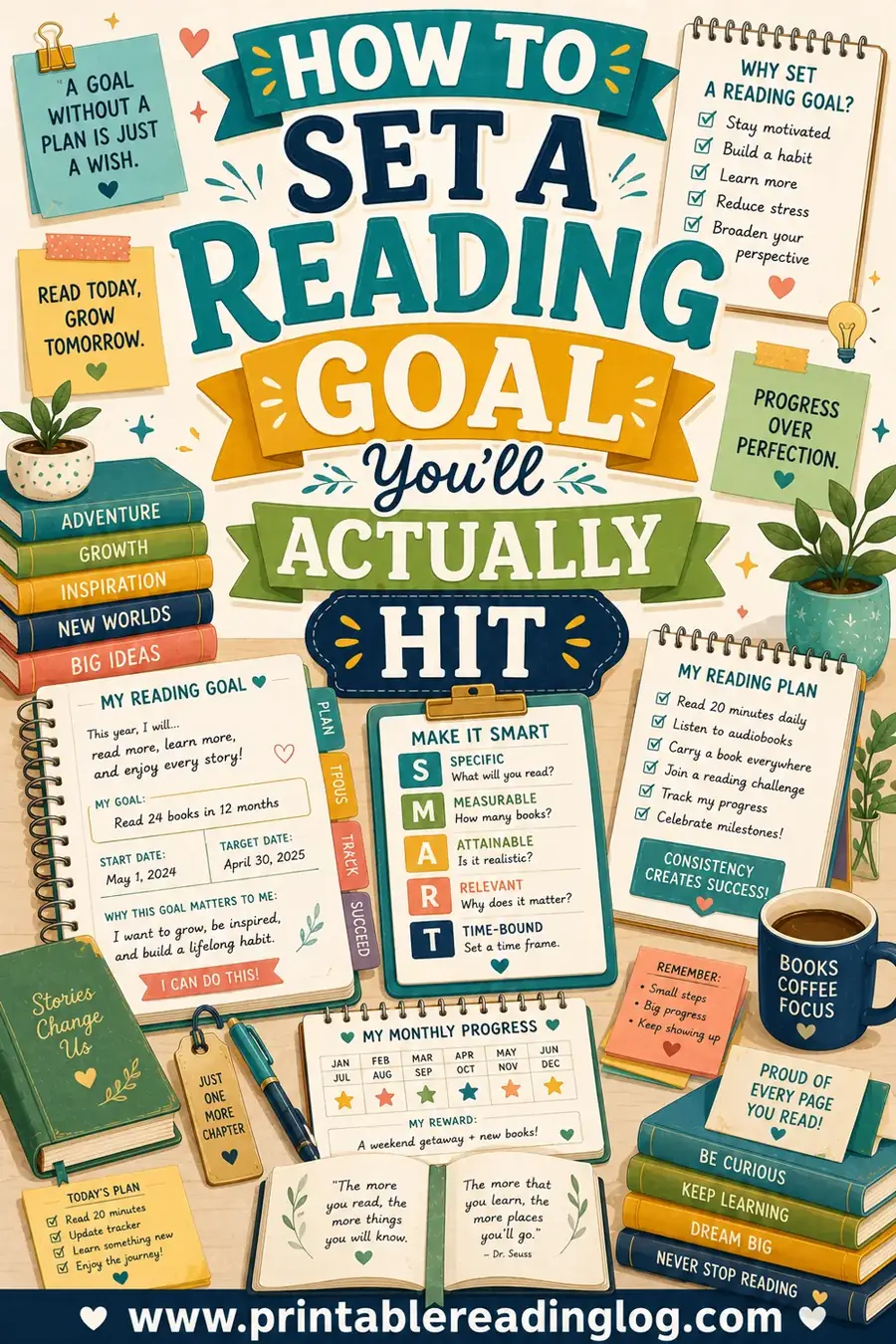
If you're still deciding on a number, our guide on how to set a reading goal walks through picking a target you'll actually hit.
How to Pick a Yearly Reading Goal You'll Actually Hit
The most common mistake is going too big. Someone reads four books one year, sets a goal of 52 the next, burns out in March, and feels like a failure. Don't do that. Pick a number that stretches you a little, not one that needs a personality transplant.
A simple way to choose: take how many books you read last year and add about 25%. Read 12? Aim for 15. Read 30? Try 36 or 38. That's a real stretch you can feel without it being absurd.
Goal ideas by reader type
| Reader type | Suggested yearly goal | Roughly per week |
|---|---|---|
| Just getting back into reading | 12 books | One every 4 weeks |
| Casual reader | 24 books | About 1 every 2 weeks |
| Steady habit reader | 36 books | A little under 1 a week |
| Avid reader | 52 books | One a week |
| Minutes-based goal | 7,300 minutes | 20 minutes a day |
If books feel like the wrong unit, switch to minutes. A goal of 20 minutes a day adds up to over 120 hours of reading across the year, and it's far more forgiving when life gets busy. You can build either kind of sheet with the reading log generator.
What to Track on a Yearly Goal Log
Keep it light. The fastest way to abandon a log is to make filling it in feel like homework. For most people, four columns is plenty:
- Title — the book or what you read.
- Date finished — so you can see your pace over the months.
- Amount — pages, minutes, or just a checkmark for "done."
- A quick rating — stars or a one-word note, totally optional but fun to look back on.
If you're chasing a minutes or pages goal rather than a book count, swap the "date finished" column for a daily date and log each session instead of each book. The tool lets you set this up either way.
A sample filled-in yearly log
| # | Title | Date | Rating |
|---|---|---|---|
| 1 | The Midnight Library | Jan 9 | ⭐⭐⭐⭐ |
| 2 | Atomic Habits | Jan 28 | ⭐⭐⭐⭐⭐ |
| 3 | Project Hail Mary | Feb 14 | ⭐⭐⭐⭐⭐ |
| 4 | Educated | Mar 3 | ⭐⭐⭐⭐ |
| 5 | The Thursday Murder Club | Mar 22 | ⭐⭐⭐ |
Five books by late March puts this reader comfortably on pace for a 20-book year. That's the whole point: at any moment, you can count rows and know exactly where you stand.
How to Stay on Pace All Year
A yearly goal lives or dies in the boring middle months. Here's how to keep momentum when the new-year energy fades.
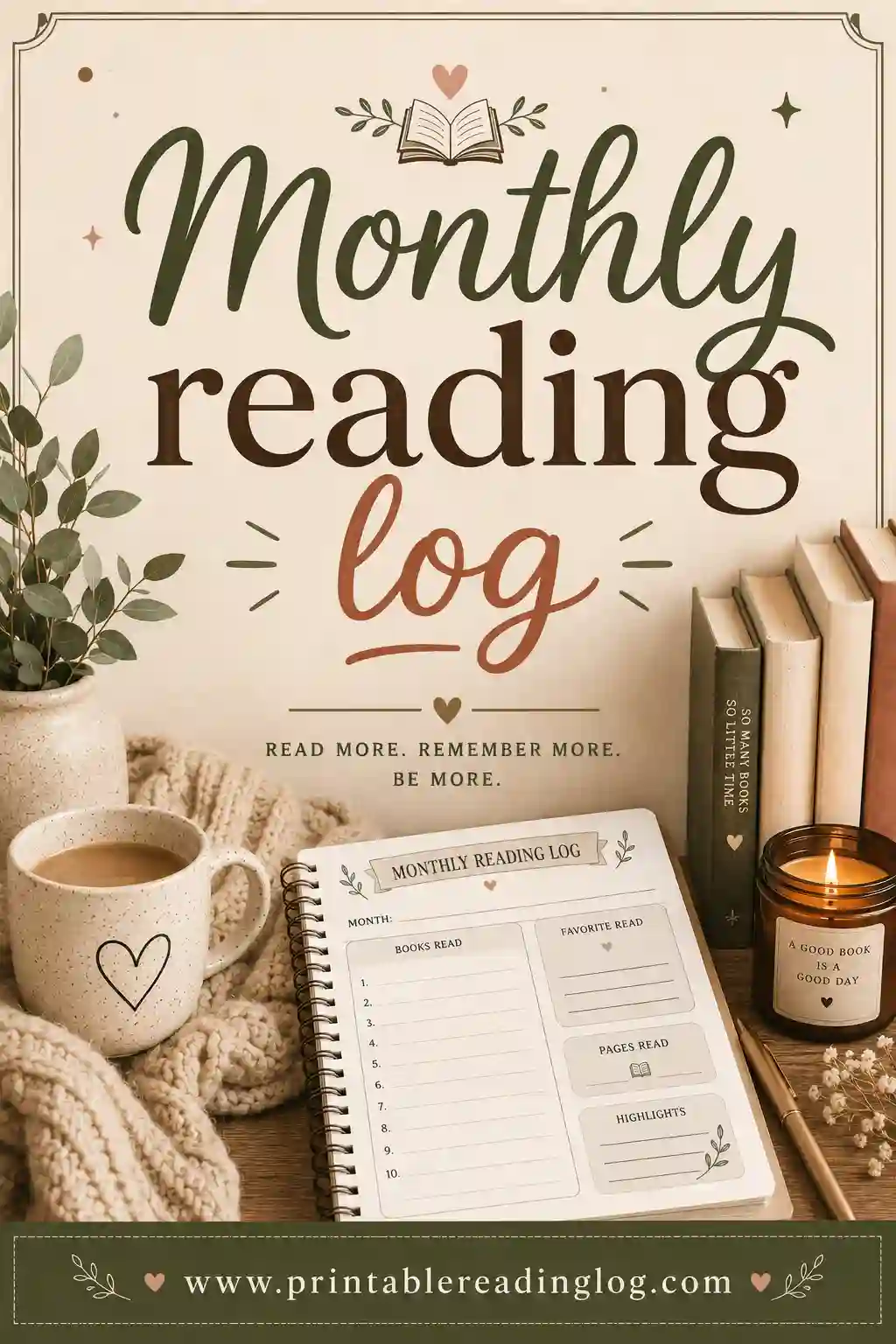
Break the year into smaller checkpoints. A 24-book goal is 2 books a month. That's a number you can actually feel. Pair your yearly sheet with a monthly reading log and check in on the first of each month.
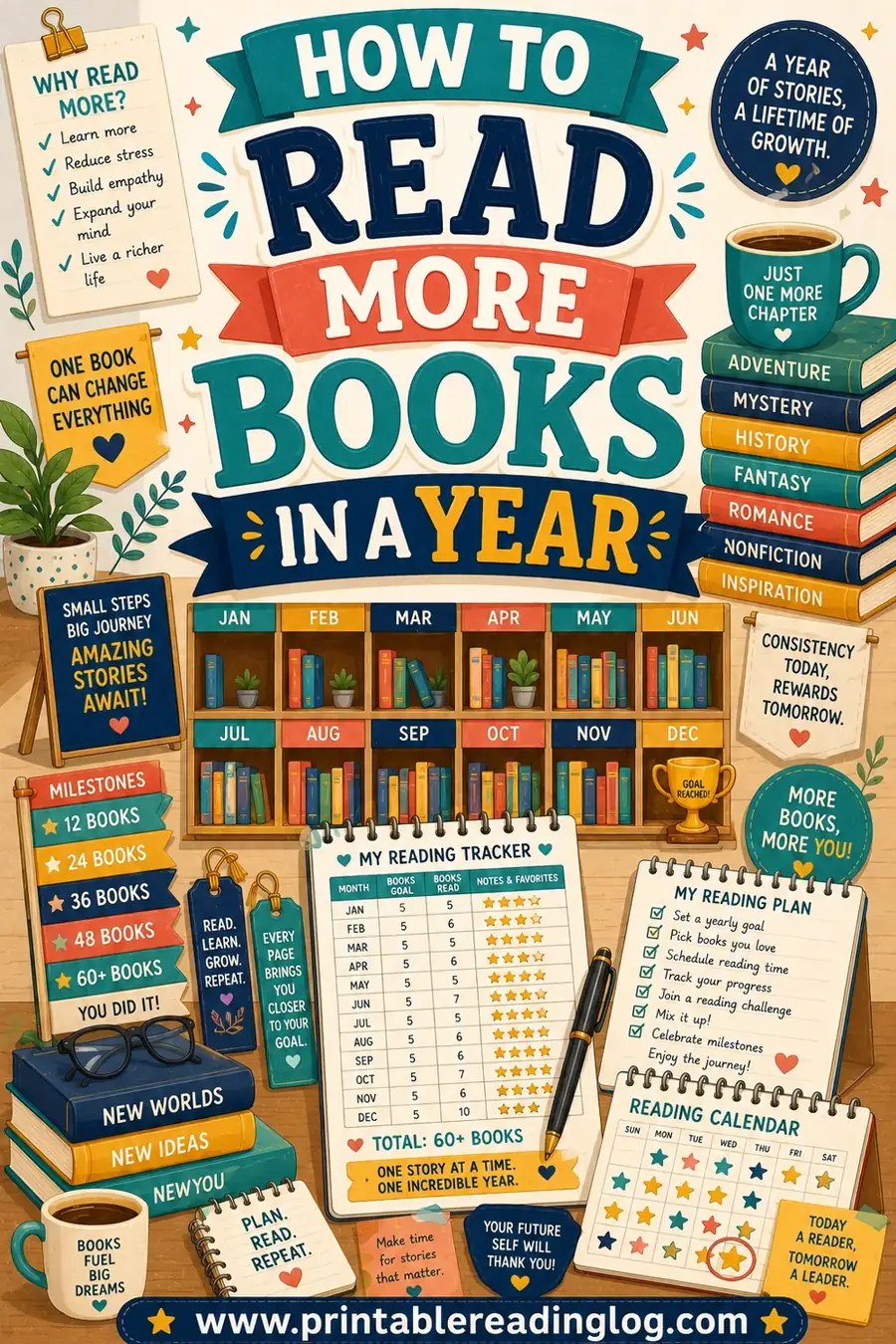
Read a little every day. Twenty minutes a night beats a single weekend cram session almost every time. Small and steady is what fills the rows. If daily reading is the part you struggle with, our piece on how to read more books in a year has more nudges that work.
Keep the log where you'll see it. A sheet in a drawer is a sheet you'll forget. Pin it to a corkboard, slip it into the front of your planner, or tape it inside a cabinet you open every day.
Stack reading onto something you already do. Read with your morning coffee. Read on the train. Read for ten minutes before you let yourself open your phone at night.
When you fall behind
You will, at some point, fall behind. That's normal, not a reason to quit. A few easy resets:
- Line up a few short books. A 150-page novel still counts as one book. Knock out two or three to catch up fast.
- Lean into audiobooks. If your goal counts books, a listened book counts. Log it the same way.
- Adjust the target, don't trash it. Set 40 and life happened? Quietly change it to 30 and keep going. A finished 30 beats an abandoned 40 every time.
Print vs. App for Yearly Goal Tracking
Apps like Goodreads or StoryGraph are great, and there's nothing wrong with using one. But a printed log has real advantages for a yearly goal, especially if you want something always-visible and screen-free.
| Printable log | App | |
|---|---|---|
| Always visible | On your wall or desk | Buried behind a home screen |
| Distraction-free | Just the log | One tap from notifications |
| Setup time | Print and go | Account, profile, scanning |
| Cost | Free | Free, but ads or upsells |
| Shareable on the fridge | Yes | Not really |
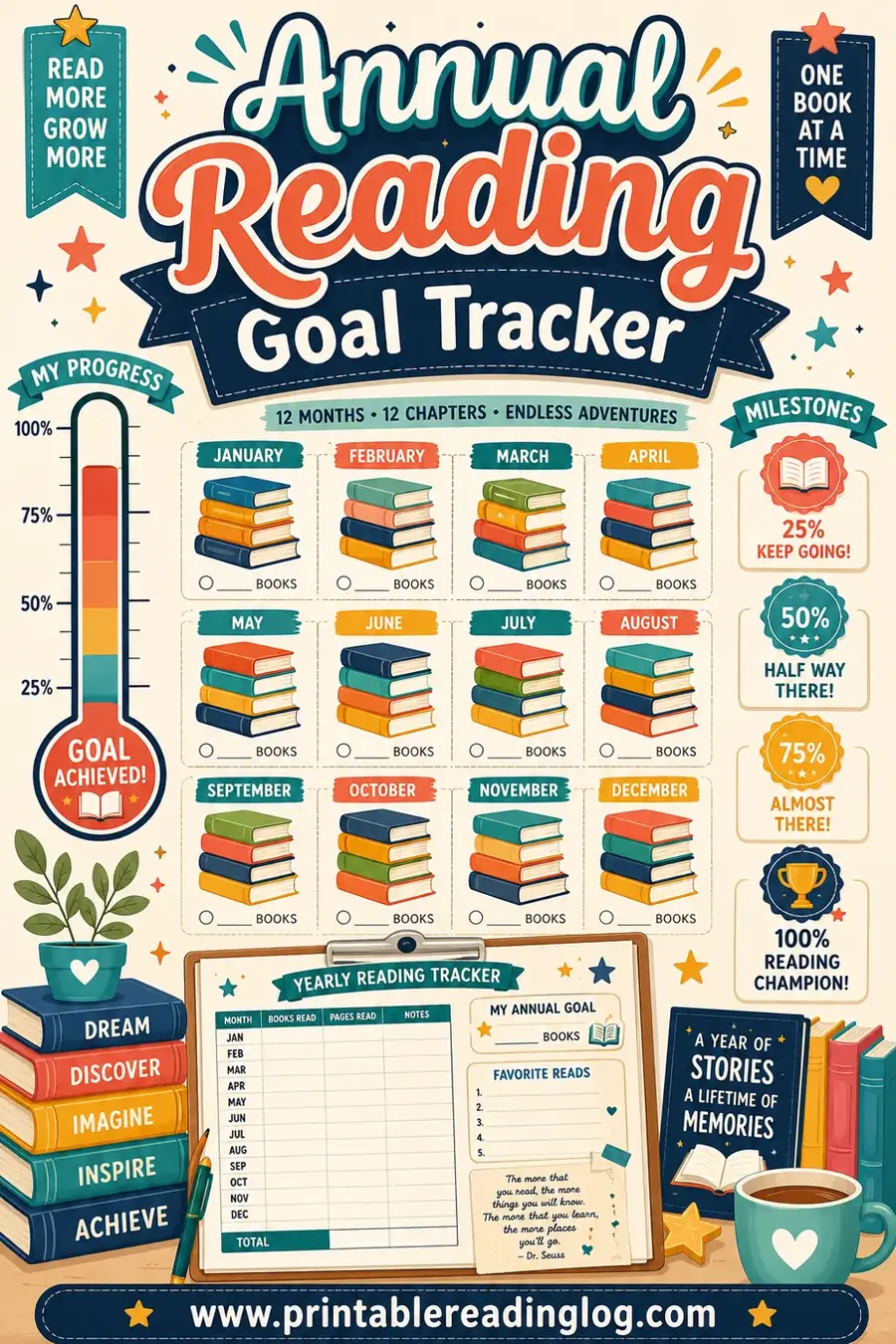
Plenty of readers do both: log books in an app for the social side, and keep a printed yearly sheet up where they'll actually look at it. If you want a deeper comparison, see our annual reading goal tracker guide.
Making Your Yearly Reading Log Print-Ready
A few small choices make your log nicer to live with for twelve months.
- Give yourself enough rows. Match the row count to your goal, plus a handful of spares. Nothing kills momentum like running out of lines in October.
- Print on something sturdy. If it's going on a wall all year, cardstock holds up better than thin paper.
- Pick a style that fits your goal. Counting books? Use the book-row layout. Counting minutes? Use the daily-minutes style. The reading log tool handles both.
- Print a fresh sheet for next year. When December comes, save the filled-in one as a keepsake and start a clean one.
Frequently Asked Questions
How many books should my yearly goal be?
Start from how many you read last year and add about a quarter. If you read 12, aim for 15. If you have no idea, 24 books (two a month) is a friendly, doable target for most adults. You can always adjust the number on your log as the year goes.
Can I set a yearly goal in minutes instead of books?
Yes. Plenty of readers track minutes because it's more forgiving and easier to do daily. Twenty minutes a day comes out to over 7,000 minutes a year. The free tool lets you build a minutes-based log just as easily as a book count.
What if I fall behind on my goal?
Catch up with a few short books or audiobooks, or simply lower the target and keep reading. The goal is a guide, not a grade. A finished smaller goal beats an abandoned big one every single time.
Should I track books I didn't finish?
That's up to you. Some readers note DNFs ("did not finish") with a quick mark so they remember they tried it. Others only log completed books. Neither is wrong. Pick whatever keeps you motivated to read more.
Is a printable yearly reading log really free?
Yes. You build it and print it yourself at no cost, with no sign-up and no watermark. Print one fresh sheet for the whole year, or a new one each season.
How do I keep my goal from fizzling out by spring?
Break it into monthly checkpoints, read a little every day, and keep the log somewhere you can't miss it. Visible progress is the single best defense against a goal quietly dying in February.
Ready to Build Your Yearly Reading Log?
Pick your number, choose books or minutes, and open the free reading log generator to print a clean sheet for the whole year. It's free, there's no sign-up, and a single page on your wall is often all it takes to actually hit the goal this time. Here's to a year of more pages turned.