How to Set a Reading Goal You'll Actually Hit
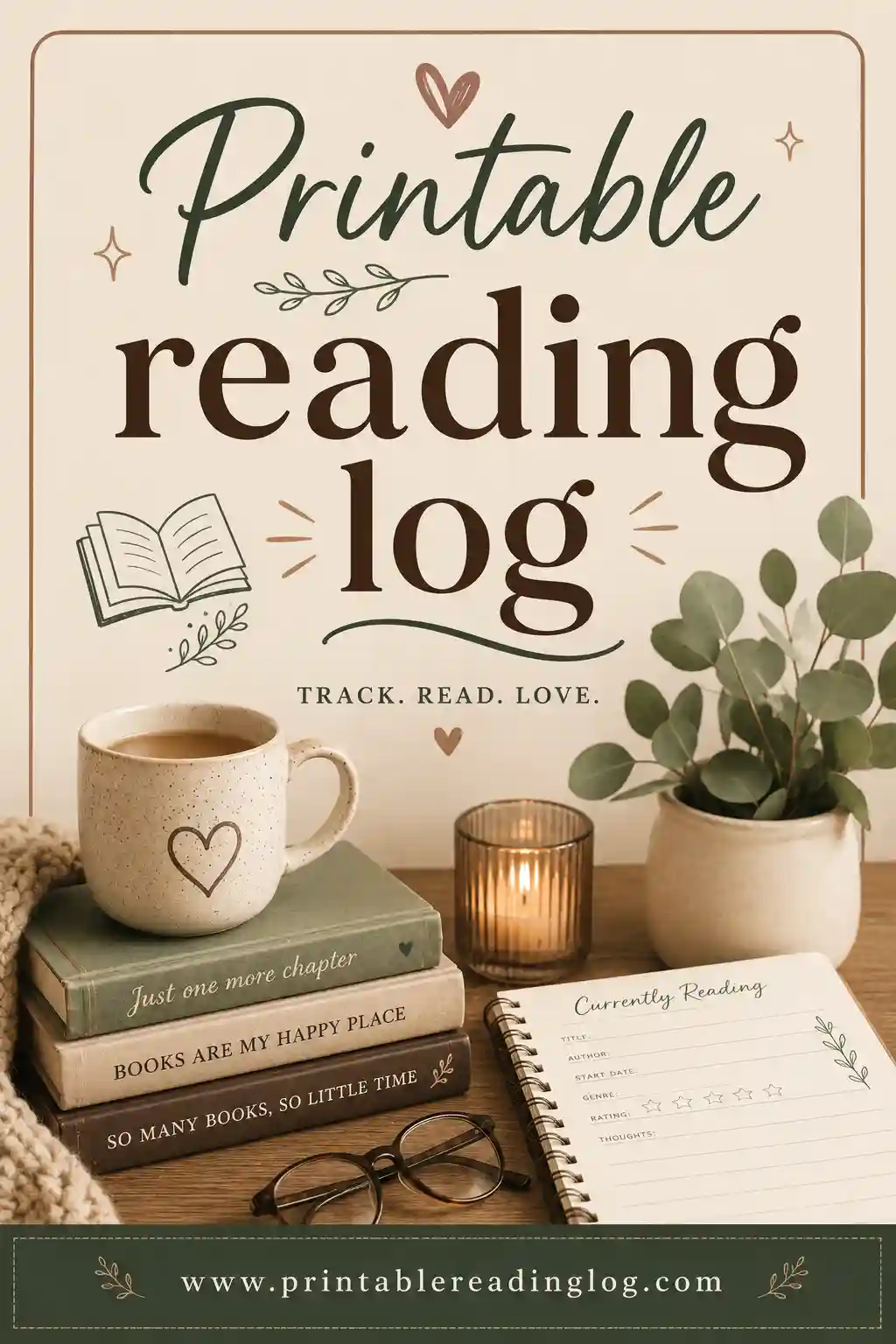
To set a reading goal that sticks, pick one clear, measurable target, books per year, pages per week, or minutes per day, then track it somewhere you'll see often. A goal like "read 24 books this year" or "read 20 minutes a day" beats a vague "read more" because you can check your progress against it. The easiest way to stay on track is to print a free reading log and fill in each session as you go.
Ready to start? Open the free reading log maker, choose a layout that matches your goal, and print a tracker in under a minute. No sign-up, no app, no cost.
Why "Read More" Isn't a Goal
"I want to read more" feels like a goal, but it isn't one. There's no finish line, no way to know if you're winning, and nothing to check against on a slow week. That's why those resolutions fade by February.
A real goal answers three questions: how much, by when, and how you'll measure it. "Read more" answers none of them. "Finish two books a month" answers all three. The difference is everything, because a measurable goal gives you something to track, and tracking is what keeps you going.
So before you pick a number, decide what you'll count. That single choice shapes the whole plan.
Pick the Right Unit: Books, Pages, or Minutes
There are three common ways to measure reading. None is "best," they just fit different readers and lives.
Goal by books
Counting finished books is the most popular method. It's simple, satisfying, and easy to share ("I read 30 books this year"). The downside: a 600-page novel counts the same as a 90-page novella, so long books can stall your count.
Best for: adults, steady readers, anyone who likes a clear yearly number.
Goal by pages
Counting pages rewards effort more fairly, since a long book gives you more credit. It's a good middle ground for chapter-book readers and people working through dense nonfiction.
Best for: kids reading chapter books, nonfiction readers, anyone tackling thick titles.
Goal by minutes
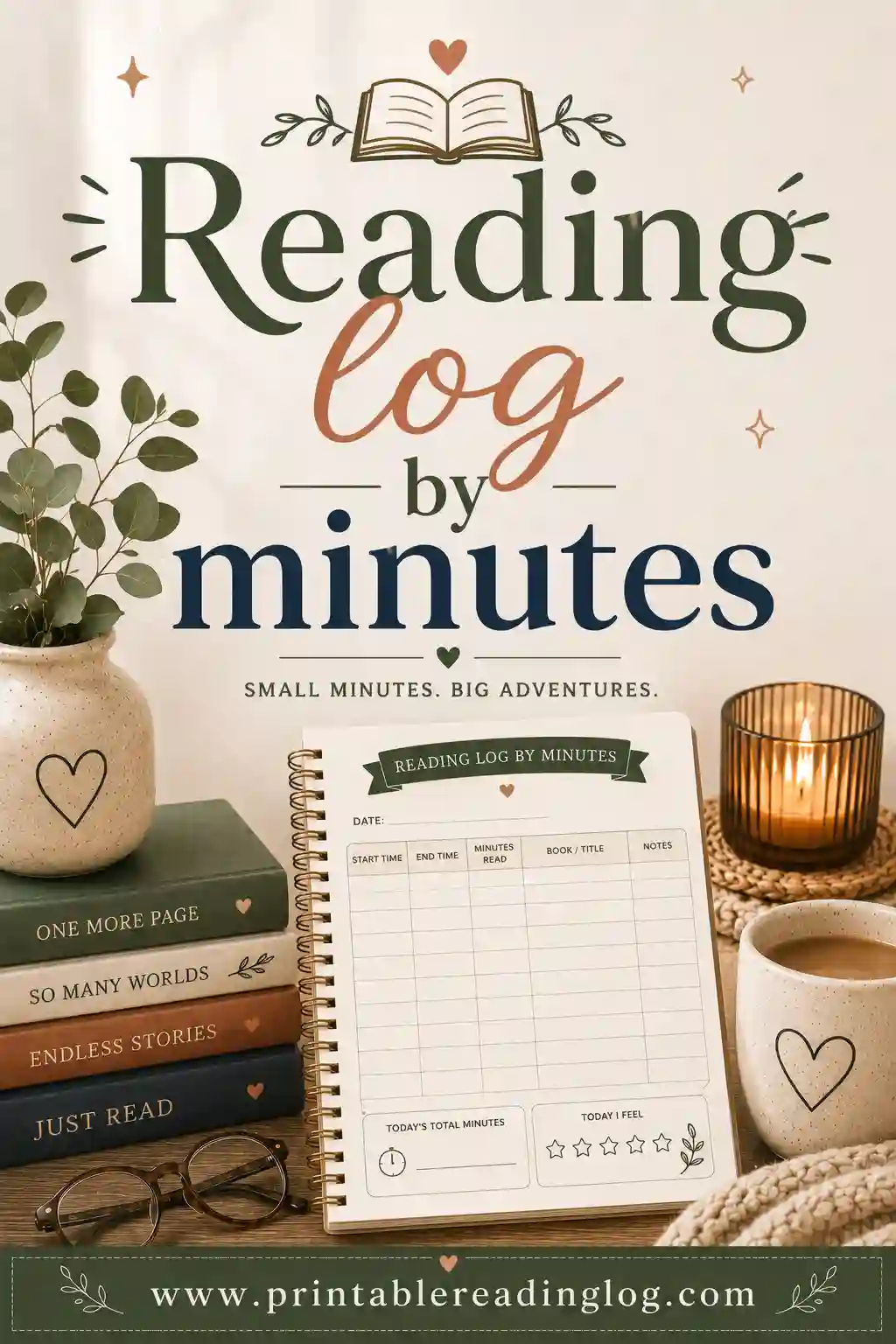
Counting time is the friendliest option for young or slower readers, because it rewards showing up rather than speed. Twenty minutes is twenty minutes whether you read fast or slow. A reading log by minutes makes this easy to track.
Best for: young kids, reluctant readers, busy adults building a daily habit.
| Unit | Example goal | Best for | Watch out for |
|---|---|---|---|
| Books | 24 books/year | Adults, steady readers | Long books slow your count |
| Pages | 30 pages/day | Chapter & nonfiction readers | Page counts vary by font size |
| Minutes | 20 minutes/day | Kids, busy adults | Easy to "zone out" and not absorb |
| Series | Finish one series/quarter | Genre fans, fantasy readers | Uneven book lengths within a series |
| Mixed | 2 books + 100 pages/month | Readers juggling formats | Needs a log with two columns |
You can also blend units. A reader who listens to audiobooks on the commute and reads paperbacks at night might track both minutes and books on the same printed page. The point isn't to pick the "correct" unit, it's to pick the one that matches how your reading day actually looks, then write it where you'll see it.
How to Pick a Realistic Number
The most common mistake is aiming too high. A goal you miss in week two does more harm than good. Here's how to land on a number you'll actually hit.
- Start from where you are. Honestly estimate how much you read now. If it's near zero, don't jump to a book a week.
- Add a small stretch. A good goal is a little harder than your current pace, not triple it. If you read 12 books last year, try 18, not 50.
- Do the math backward. Want 24 books a year? That's two a month, or roughly 35 pages a day. Break the big number into a daily or weekly chunk you can picture.
- Build in slack. Life happens. Aim to read most days, not every day, so one busy week doesn't sink the whole goal.
- Make it specific. Write the exact number and deadline down. "24 books by December 31" is a goal you can track.
A goal that's a touch too easy and gets finished beats an ambitious one you quit. You can always raise it next year.
Set a SMART-ish Reading Goal
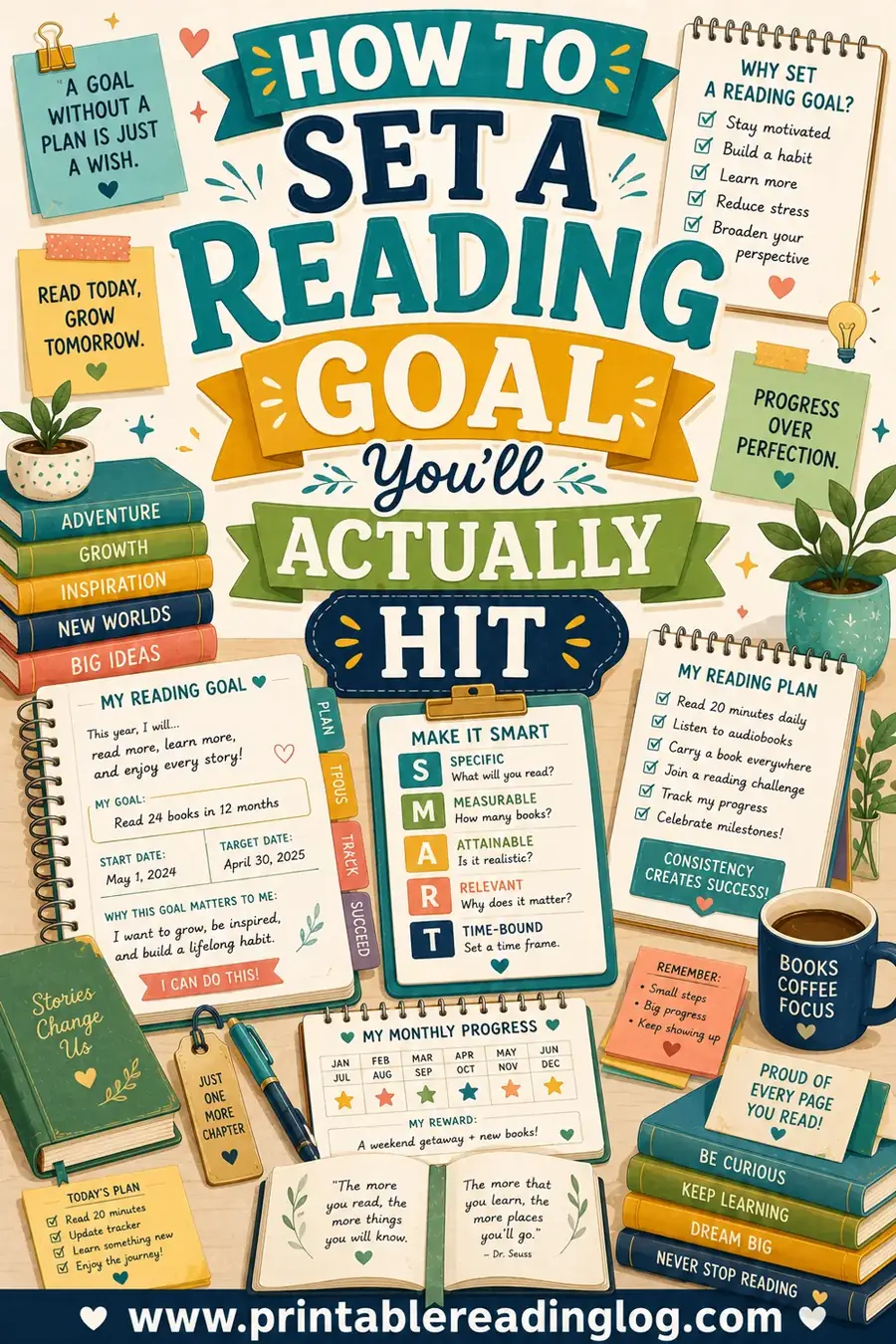
You don't need a formula, but the SMART idea is a handy gut-check. A strong reading goal is:
- Specific — "20 minutes a day," not "more reading."
- Measurable — you can count it and check it off.
- Achievable — a realistic stretch from your current pace.
- Relevant — it fits your actual reasons (relax, learn, model reading for your kids).
- Time-bound — daily, weekly, monthly, or by year-end.
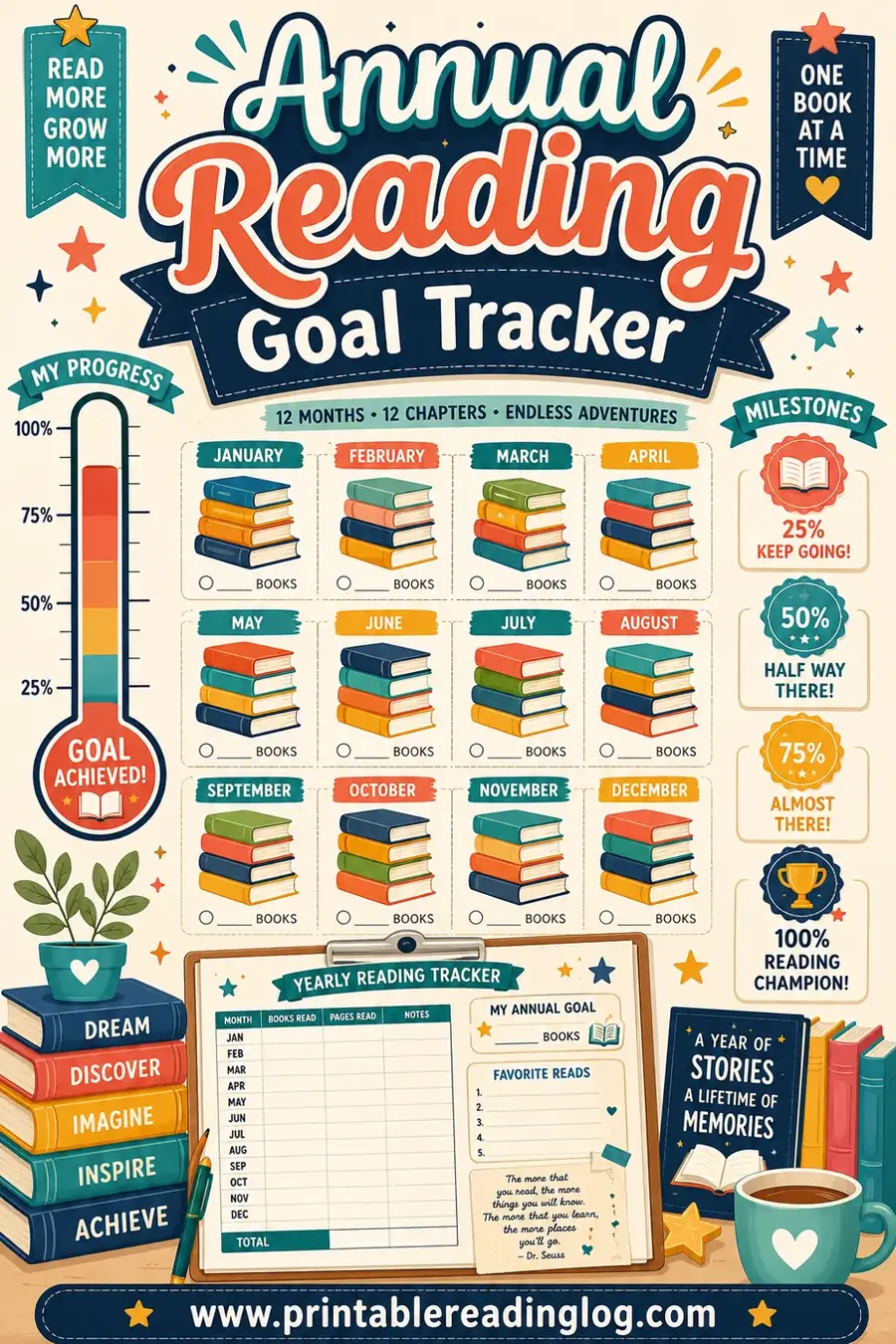
Run your goal through those five. If it passes, you've got a target worth tracking. For a year-long target with the whole calendar laid out, our annual reading goal tracker is built for it.
A Sample 12-Month Reading Plan
Here's how a "24 books this year" goal can look spread across the year, with a little breathing room built in.
| Months | Target | Mix of books | Note |
|---|---|---|---|
| Jan–Mar | 6 books | Easy, fun reads | Build momentum early |
| Apr–Jun | 6 books | Mix genres | Add one challenging title |
| Jul–Sep | 7 books | Lighter summer reads | Vacation = more reading time |
| Oct–Dec | 5 books | Finish strong | Buffer for the busy holidays |
Notice the last quarter is lighter on purpose, that's your safety margin for a hectic December. Front-loading a little keeps you ahead if winter gets busy. You don't have to follow this exactly; it's just proof that a big number becomes manageable once you break it down.
Track Your Goal So It Sticks
A goal without tracking is a wish. This is where a log earns its keep. Tracking does three things for you:
- Shows progress. Seeing 14 of 24 books filled in pushes you to reach the rest.
- Catches you early. If you're behind by spring, you'll notice in time to adjust.
- Keeps you honest. A blank week on the page is a gentle nudge to pick up a book.
A few tips for tracking that actually works:
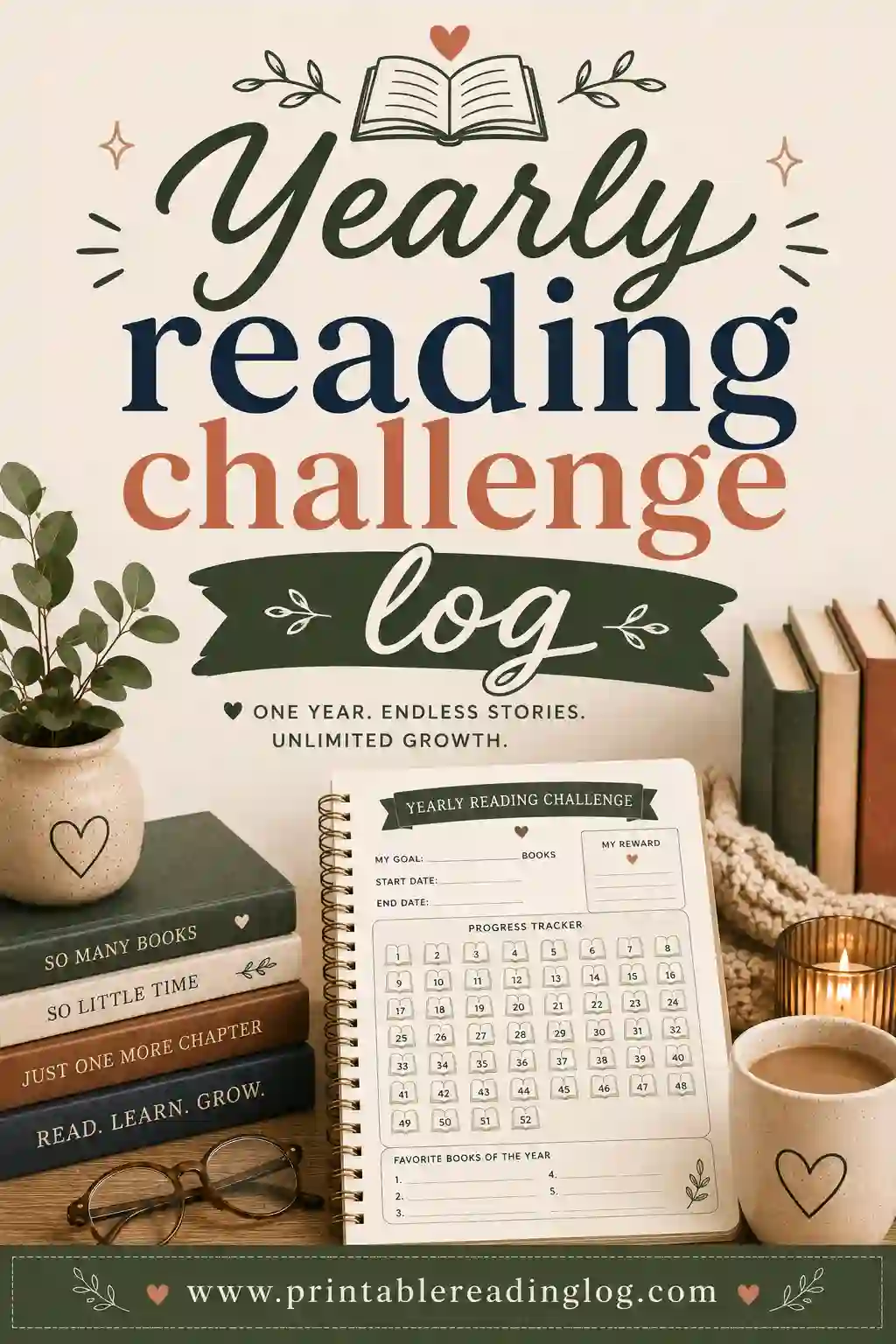
- Keep the tracker visible. Pin it where you read or by your desk. A yearly reading challenge log works great taped to the fridge.
- Update it right after reading, while it's fresh.
- Mark milestones. Halfway, three-quarters, done, celebrate each one.
- Review monthly. A quick check-in tells you to speed up, slow down, or coast.
What to Do When You Fall Behind
You will fall behind at some point. Everyone does. The goal is to recover, not to quit. Here's how:
- Don't scrap the whole goal. One slow month doesn't ruin a year. Just keep going.
- Switch to a shorter book to rebuild momentum. A quick win beats a stalled doorstopper.
- Try audiobooks during commutes or chores to sneak in extra reading time.
- Lower the bar temporarily. Five minutes a day during a crazy week still keeps the streak alive.
- Reset, don't restart. Adjust the number if you must, but keep the habit going.
A goal is a direction, not a contract. Missing a milestone is information, not failure. Adjust and carry on.
Common Reading-Goal Mistakes (and Easy Fixes)
Most failed reading goals fail for the same handful of reasons. Once you can name them, you can dodge them. Here are the traps that catch people most often, and the simple fix for each.
Mistake 1: Picking a number that sounds impressive
A "100 books this year" goal feels exciting on January 1 and crushing by January 20. Big round numbers are chosen to impress, not to fit your real week. Fix: pick the number you'd be a little embarrassed to admit is "too easy." That's usually the one you'll actually finish, and finishing builds the confidence to aim higher next year.
Mistake 2: Keeping the goal in your head
A goal you never wrote down isn't a goal, it's a daydream. If the only place your target lives is your memory, you'll quietly lower it every time you fall behind until it disappears. Fix: write the exact number and deadline on a printed tracker and tape it where you read. A goal you can see is a goal you can keep.
Mistake 3: Counting only finished books
If your only milestone is "book done," a slow 600-page novel feels like zero progress for weeks. That's demoralizing. Fix: track pages or minutes underneath your book count so you can see daily movement even mid-doorstopper. Small visible wins keep the habit alive between finish lines.
Mistake 4: No plan for the busy season
Almost everyone reads less in December, during exams, or when work spikes. A goal that assumes 12 even months ignores real life. Fix: front-load your year a little and leave the last quarter lighter, exactly like the sample plan above. Build the slack in on purpose and a hectic stretch won't sink you.
Mistake 5: Treating one miss as the end
A single skipped week feels, in the moment, like proof you've "failed." So people quit. Fix: decide in advance that missed days are normal and the only rule is to come back. A reader who reads four days out of seven, every week, will outpace the all-or-nothing reader who burns out by spring.
Reading Goals for the Whole Family
A reading goal doesn't have to be a solo project. Setting one together turns reading into something the household does, not a chore one person nags about. Here's how to scale a goal across different ages without anyone feeling left out.
- Give each person their own unit. A toddler tracks minutes, a fourth-grader tracks pages, a parent tracks books. Same wall chart, three different finish lines, everyone winning at once.
- Set one shared stretch goal. Maybe "the family reads 100 books between us this year." Every finished book, picture book or novel, adds a sticker to the chart. Little kids love watching the total climb.
- Read at the same time. A fifteen-minute "everyone reads" block after dinner makes the goal automatic. Nobody has to remember to read alone, it's just what happens at 7:30.
- Celebrate together. When the family hits a milestone, mark it: a trip to the library, a new book each, a movie of a book you all read. Shared rewards make the next goal easier to start.
A family log on the fridge does double duty here. Kids see their own progress and the group total, and the visible chart does the reminding so you don't have to.
Frequently Asked Questions
How many books should I read in a year?
That depends on your starting point. If you read a few books last year, aim for 12 to 18. If you're already a steady reader, 24 to 30 is a solid stretch. Pick a number that's a little harder than your current pace, not three times bigger, so you actually hit it.
Is it better to set a goal by books, pages, or minutes?
It depends on the reader. Books suit steady adult readers who like a clear count. Pages reward effort more fairly for long titles. Minutes are friendliest for kids and busy adults because they reward showing up, not speed. Any of the three works as long as you track it consistently.
How do I set a reading goal for a child?
Use minutes, not books, for younger kids, around 15 to 20 minutes a day is a common target. Keep it visible with a sticker chart or simple log, and celebrate small wins. The goal should feel like a fun challenge, never a punishment, so it builds a love of reading.
What's a realistic daily reading goal?
For adults, 20 to 30 minutes a day, or about 25 to 35 pages, is realistic and adds up to roughly 20-plus books a year. For kids, 15 to 20 minutes is a great target. Start lower if you're rebuilding the habit and raise it once it sticks.
How do I stay motivated to reach my reading goal?
Track your progress somewhere visible, celebrate milestones, and keep a stack of books you're genuinely excited about. Seeing your filled-in log grow is one of the strongest motivators there is. If you stall, switch to a shorter or lighter book to get a quick win.
What should I do if I miss my reading goal?
Don't quit, adjust. One slow stretch doesn't undo your progress. Lower the target for a busy week, switch to audiobooks, or pick a shorter book to rebuild momentum. The habit matters more than any single number, so keep the streak alive however you can.
How do I set a reading goal when I have very little free time?
Go by minutes, not books, and aim small, ten minutes a day is a real goal. Tie it to something you already do, like reading a few pages with morning coffee or before lights-out. Ten minutes a day still adds up to several books a year, and a tiny goal you keep beats a big one you abandon. Print a minutes-based tracker so a short session still feels like a win you can mark.
Should my reading goal be the same every year?
Not necessarily. Treat each year's goal as a fresh decision based on how the last one went. If you sailed past your target, stretch it a little. If you struggled, hold steady or even ease it, there's no shame in a goal that fits your current season of life. The aim is a number that keeps you reading, and that number can move as your life does.
Set Your Reading Goal Today
A reading goal works when it's specific, measurable, and tracked somewhere you'll see it. Pick your unit, choose a realistic number, break it into daily or weekly chunks, and write it down. Then open the free reading log maker, print a tracker that matches your goal, and start filling it in. It's free, there's no sign-up, and your first book toward the goal is waiting.