How to Read More Books in a Year
The fastest way to read more books in a year is to read a little every day and track what you finish. Just 20 minutes of daily reading adds up to roughly 15 to 20 books a year, with no speed-reading required. Pair that small habit with a reading log you can see, and your book count climbs almost on its own.
Ready to make it stick? Open the free reading log maker, print a page, and start logging every book you finish. No sign-up, no app, just a clear record that keeps you motivated all year long.
Why Small Daily Reading Beats Marathon Sessions
Most people think reading more means carving out big chunks of time. It doesn't. The readers who finish the most books rarely sit down for three-hour sessions. They just read a little, almost every day, and the pages pile up.
The math is friendly. The average reader covers about a page a minute. Read 20 minutes a day and you'll get through roughly 20 pages. Over a year, that's around 7,000 pages, or 15 to 25 books depending on length. You barely notice the time, but the results are real.
| Minutes a day | Pages a year (approx.) | Books a year (approx.) |
|---|---|---|
| 10 | ~3,650 | 8–12 |
| 20 | ~7,300 | 15–25 |
| 30 | ~10,950 | 25–35 |
| 60 | ~21,900 | 50–70 |
Consistency is the whole game. A reader who does 20 minutes daily crushes a reader who binges once a month and then loses steam.
Step 1: Set a Realistic Goal
A goal gives your reading direction. But keep it sane. If you read 6 books last year and you target 50, you'll feel crushed by February. Aim for a small stretch instead, a number that pushes you a bit without breaking you.
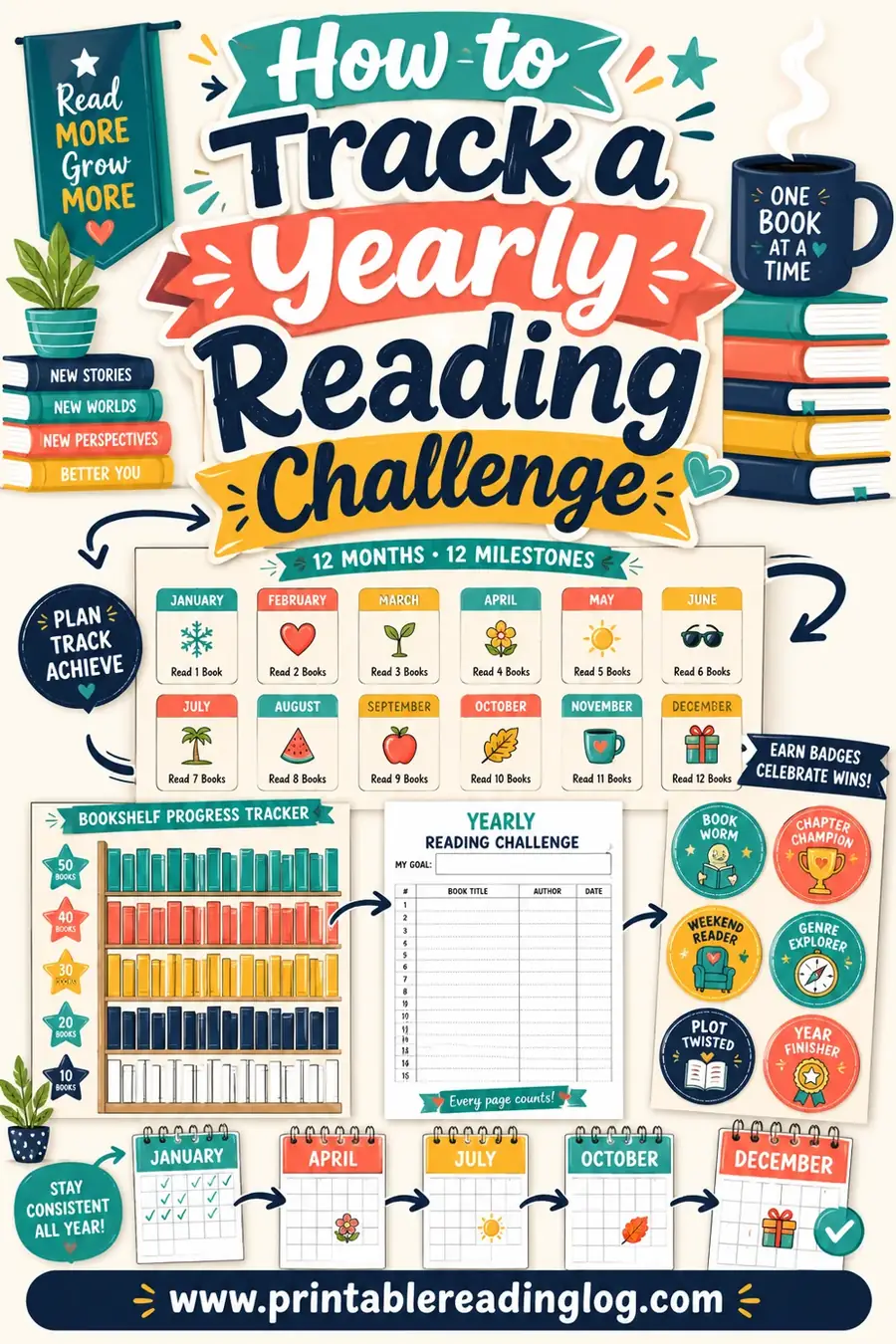
Count what you read in the last year, then add 30 to 50 percent. Read 10? Try 14. Read 20? Try 28. To set this up properly, see our guide on how to track a yearly reading challenge.
Step 2: Always Have a Book Going
You can't read more if you have to go hunting for something to read. Keep a book within reach at all times, so reading is the path of least resistance.
A few easy ways to do this:
- Keep a physical book by your bed and another in your bag.
- Load your phone with an ebook app so you always have a book in your pocket.
- Queue up an audiobook for the car and the kitchen.
- Line up your next read before you finish the current one, so there's no gap.
The goal is simple: never finish a book and find yourself with nothing to start next.
Step 3: Stack Reading Onto Existing Habits
The easiest new habit is one glued to a habit you already have. Pick a daily anchor and attach reading to it. Your brain stops asking "should I read now?" because the answer is already built in.
Try pairing reading with:
- Your morning coffee, ten quiet pages before the day starts.
- Your lunch break, instead of scrolling.
- Your commute, with an audiobook or ebook.
- Your bedtime routine, a chapter before lights out.
Pick one anchor to start. Once it's automatic, add another.
Step 4: Use Audiobooks to Reclaim Dead Time
Audiobooks are the secret weapon of busy readers. They turn time you can't read with your eyes, driving, dishes, folding laundry, walking the dog, into reading time. And yes, audiobooks count.
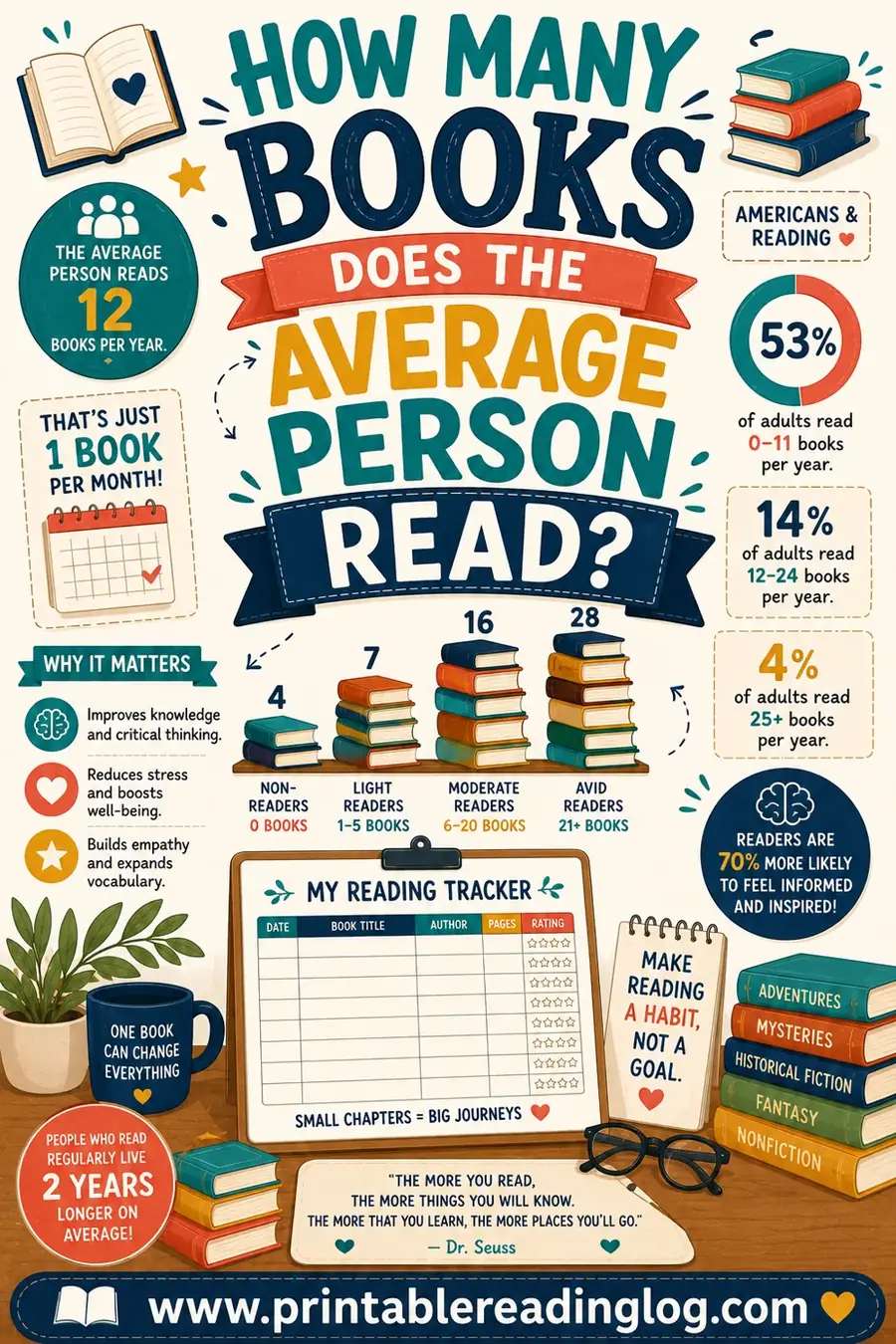
A 30-minute commute each way is five hours of "reading" a week. That alone can be 20-plus extra books a year. If you've ever felt too busy to read, audiobooks are probably your answer. Curious how this affects the numbers? See how many books the average person reads.
Step 5: Cut Reading-Time Thieves
Most of us aren't short on time, we're short on attention. The minutes vanish into a phone. Reclaim even a slice of that and you've found your reading time.
You don't have to quit your phone. Just nudge the defaults:
- Move social apps off your home screen so they're harder to open by reflex.
- Swap one scroll session a day for a few pages. Just one.
- Keep your phone in another room while you read, so it can't tug at you.
- Set a 20-minute reading timer before bed instead of watching one more episode.
Small friction on the distractions, small ease on the reading. That swap does most of the work.
Step 6: Give Yourself Permission to Quit Books
Forcing yourself through a book you're not enjoying is the fastest way to stop reading entirely. A boring book becomes a wall, and you avoid the wall, and suddenly you haven't read in three weeks.
Give yourself a "did not finish" rule. If a book isn't working by, say, page 50 or 75, set it down and move on. Mark it as DNF in your log and grab something you're excited about. Reading should pull you in, not feel like homework.
Track your DNFs, too
It's worth logging the books you quit. Over time, the pattern tells you what to avoid, maybe a genre that never clicks or an author whose style isn't for you. That's useful data for picking better books next time.
Step 7: Mix Up Length and Format
Variety keeps you moving. If every book is a 600-page epic, your count crawls and momentum sags. Sprinkle in shorter reads to rack up finishes and keep the good feeling going.
| Read type | Why it helps |
|---|---|
| Short novels & novellas | Quick wins that build momentum |
| Graphic novels | Fast to read, totally count |
| Essay & short-story collections | Read in bite-size pieces |
| Audiobooks | Fit into commutes and chores |
| Long epics | Save for when you've got the appetite |
Finishing books feels good, and that feeling is fuel. A few quick reads between the big ones keeps your streak alive.
Step 8: Make Your Progress Visible
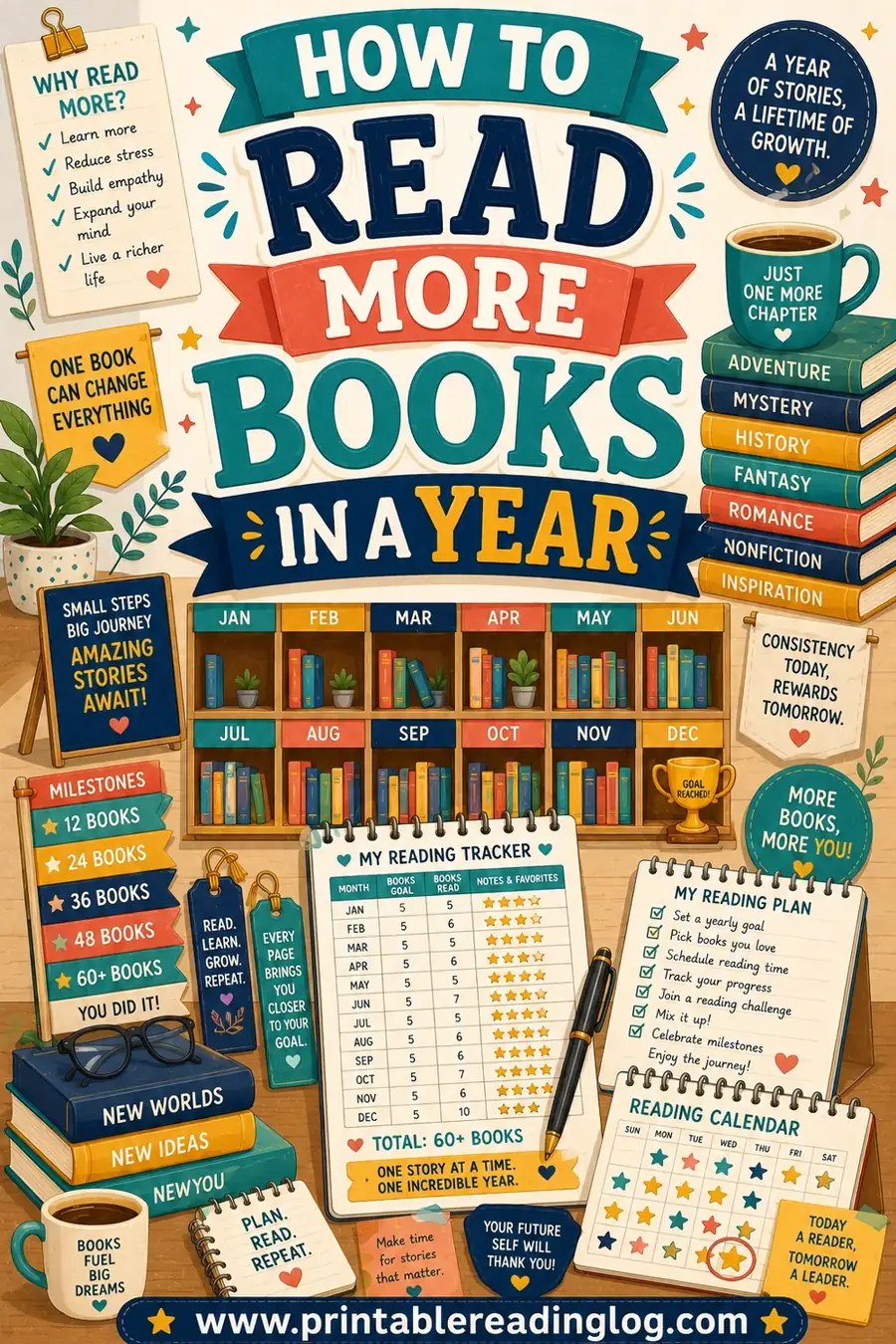
You'll read more when you can see yourself reading more. A reading log on the wall, with rows filling in and a count climbing, turns an abstract goal into something you watch grow.
Print a log, add each book the moment you finish, and keep it somewhere you'll see it daily. Watching "8 / 20" become "9 / 20" is a small, real hit of motivation, and it nudges you to pick the book up tonight.
Step 9: Join a Community or Buddy Up
Reading is more fun with company. A friend who's also reading, a book club, or an online reading group adds gentle accountability and a steady stream of recommendations.
You don't need anything formal. Text a friend your monthly count. Share what you finished. Trade "you have to read this" picks. A little social momentum makes the habit stickier, and you'll never run dry on what to read next.
Putting It All Together
You don't need every tip at once. Pick two or three and start this week. A realistic goal, a daily reading anchor, and a visible log will get most people well past the average. Add audiobooks and a buddy, and you'll be amazed how the books stack up.
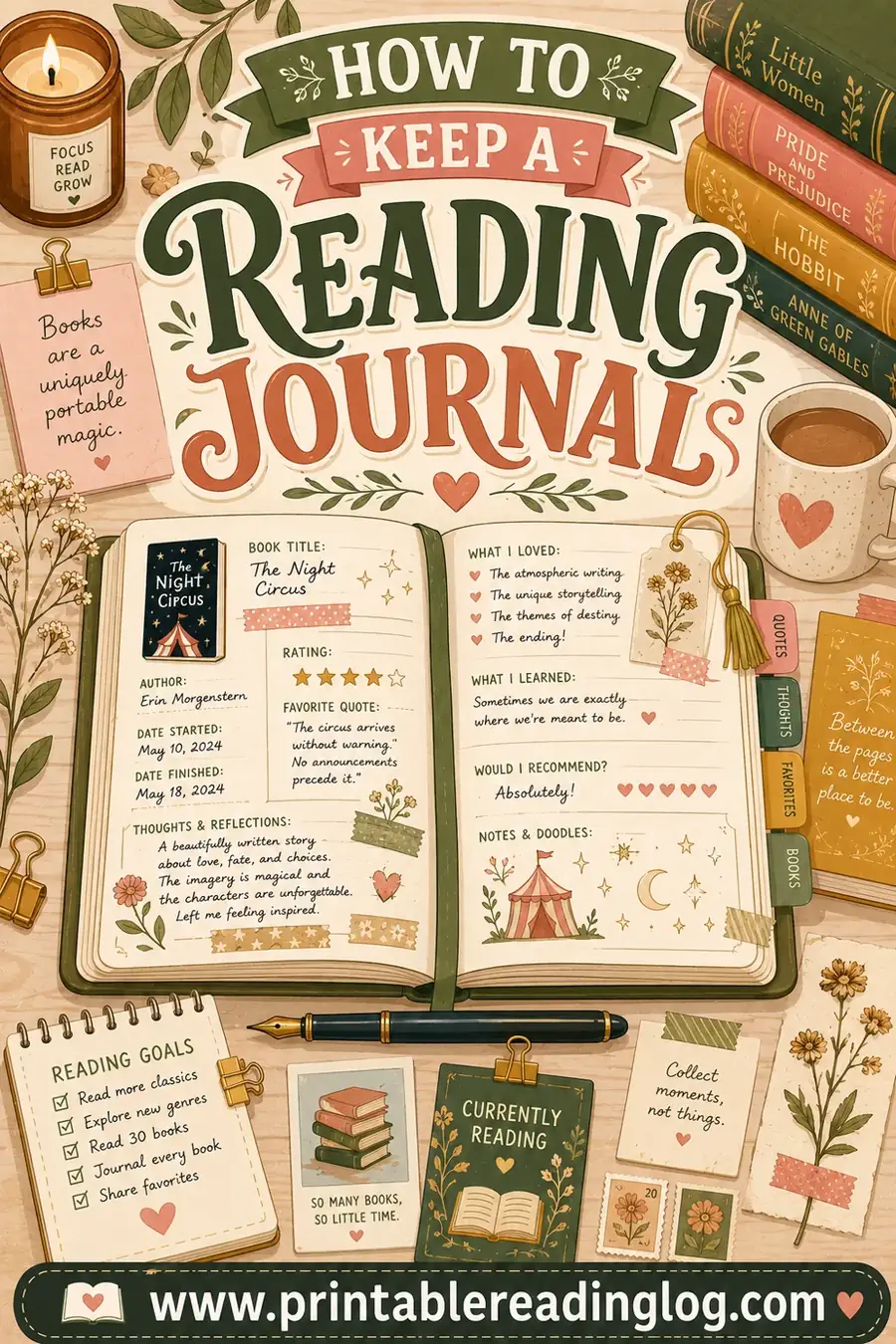
The thread running through all of it: read a little every day, and track what you finish. For the tracking half, a reading journal or a printable log is your best friend.
Frequently Asked Questions
How many books can I realistically read in a year?
For most people, 20 minutes of reading a day adds up to about 15 to 25 books a year. Read 30 minutes daily and you're looking at 25 to 35. The number depends on book length and reading speed, but daily consistency matters far more than speed.
Do I need to read faster to read more?
No. Speed-reading isn't the answer for most people, and it often hurts comprehension. Reading more comes from reading more often, a little every day, not from racing through pages. Build the daily habit first.
Do audiobooks count toward reading more?
Yes. Audiobooks deliver the full story and let you read during commutes, chores, and walks. They're one of the best ways for busy people to add 15 or 20 books a year without finding extra sit-down time.
Is it okay to quit a book I'm not enjoying?
Completely. Forcing through a book you dislike is the quickest way to stall your reading habit. Set a "did not finish" page limit, mark it in your log, and move to something you're excited about.
How do I stay motivated to read more?
Make your progress visible and reading easy. Keep a book within reach, attach reading to a daily habit like coffee or bedtime, and track every finish on a printed log you'll see often. Watching the count climb keeps you going.
What's the best way to track how much I read?
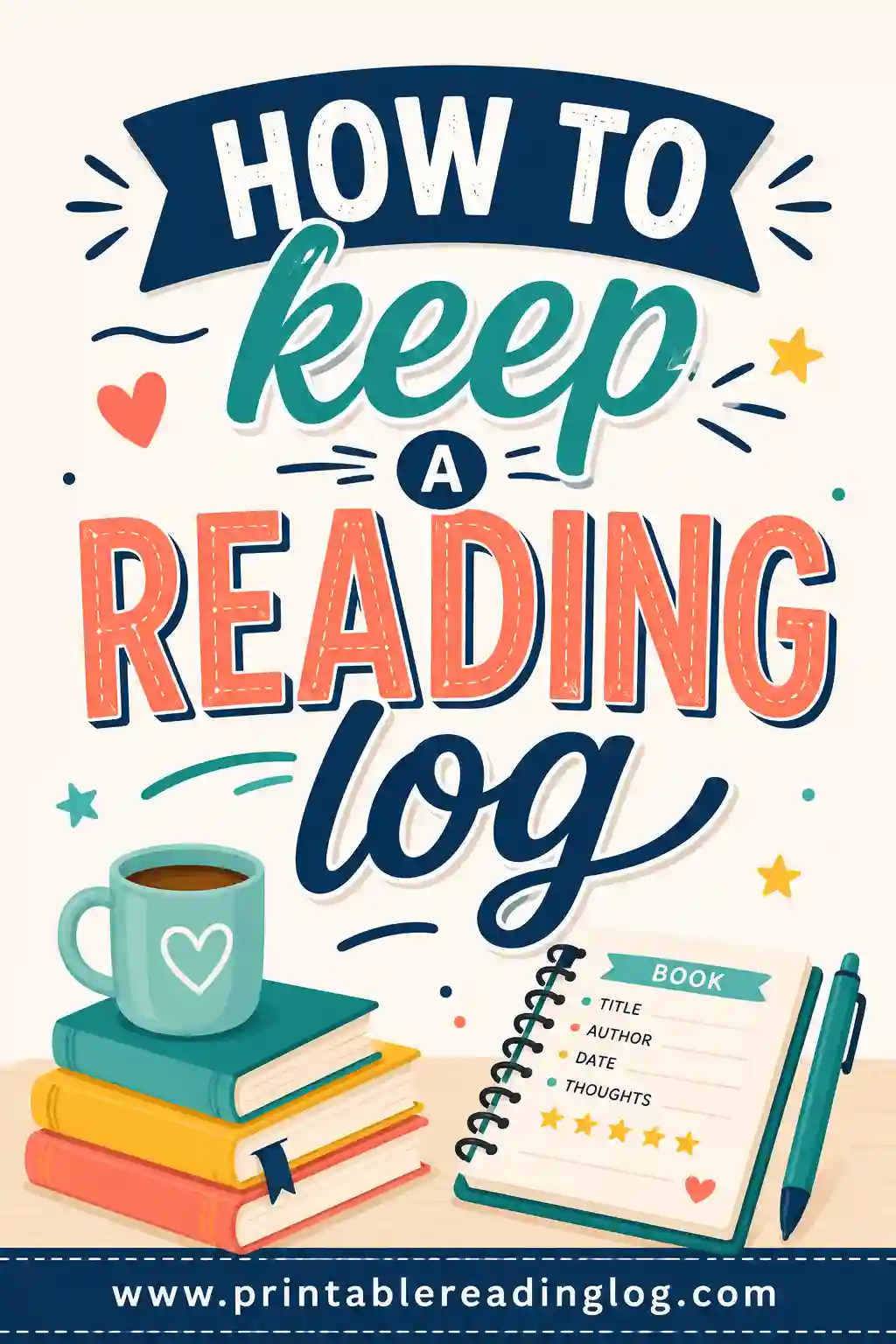
A printable reading log. Add a row for each finished book, update it the moment you turn the last page, and tally it monthly. Seeing the list grow is both a record and a motivator.
Ready to Read More This Year?
Start small and start today. Pick a daily reading anchor, keep a book within reach, and open the free reading log maker to print a page that tracks every book you finish. It's free, there's no sign-up, and a year from now you'll have read more than you thought possible, with the log to prove it. Happy reading.