Reading Log for Tutoring: A Free Printable for Sessions
A reading log for tutoring is a simple sheet that records what a student reads during and between sessions, how long they read, and how they did. It gives the tutor, the student, and the parents one shared place to see progress over time. The fastest way to get one is to use a free reading log maker that builds a printable log around your tutoring schedule, then print a fresh copy for each student.
Want to skip ahead and just make one? Open the free tool, pick whether you're tracking minutes, pages, or books, add a column or two for tutor notes, and print. No sign-up, no fee, no software to install.
What a Tutoring Reading Log Actually Tracks
A tutoring log is a little different from a classroom one. In a classroom, a teacher tracks 25 kids at a glance. In tutoring, you're working one-on-one, so you can go deeper. You have time to note the small wins and the sticking points.
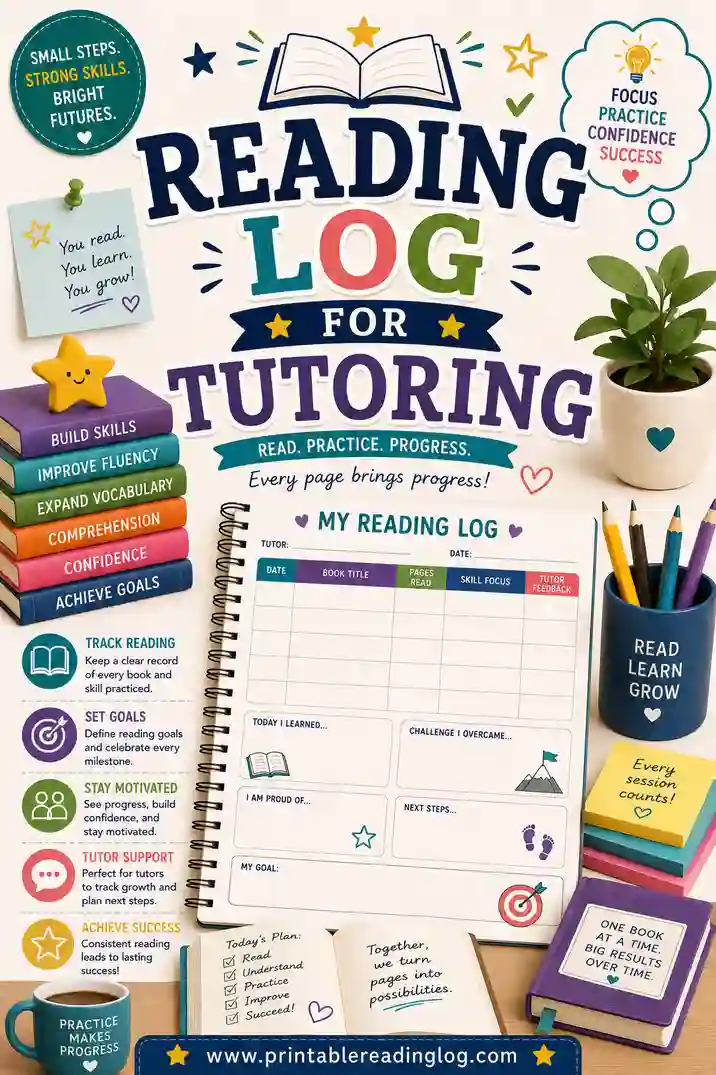
A good tutoring log usually captures:
- Date and session number. So you can see the arc of the whole engagement.
- Book or passage. The title, or the chapter and page range you covered.
- Minutes or pages read. Pick one unit and stick with it.
- Words or skills practiced. Sight words, blends, comprehension, fluency, whatever you're targeting.
- Tutor notes. One or two lines on what clicked and what to revisit next time.
- A quick rating. A smiley scale or a 1–5 number works fine.
That last column is the one tutors skip and later wish they hadn't. A single rating per session turns into a trend line you can show a parent in thirty seconds.
Why Use a Reading Log in Tutoring at All
You're already in the room with the student. Why write it down? Because memory fades, sessions blur together, and parents pay for proof. A reading log for tutoring does three jobs at once.
- It shows progress. "He's improving" is an opinion. A log that shows reading time climbing from 8 minutes to 20 over six weeks is evidence.
- It keeps you consistent. When you can see what you did last time, you don't re-teach the same blend or forget the book you left off in.
- It motivates the student. Kids love watching a row of checkmarks grow. The log becomes a small reward in itself.
There's a fourth quiet benefit: it protects you. If a parent ever questions whether the sessions are working, you have a clean record instead of a shrug.
Choose Your Log Format
Not every student needs the same sheet. Match the format to the goal you're working toward.
| Format | Best for | Tracks |
|---|---|---|
| By minutes | Building reading stamina | Time read each session |
| By pages | Chapter-book readers | Pages or chapters finished |
| By books | Older students, book counts | Titles completed |
| Skills-based | Phonics or decoding work | Specific skills mastered |
| Comprehension | Older or advanced readers | Summary + a question or two |
If you're brand new to a student, start with a by-minutes log. Time is the easiest thing to measure, and reading stamina is usually the first thing that needs to grow.
A sample tutoring log entry
Here's what one filled-in row might look like, so you can picture the finished sheet:
| Date | Book / passage | Minutes | Skill focus | Note | ⭐ |
|---|---|---|---|---|---|
| 6/3 | Frog and Toad, ch. 1 | 12 | Short vowels | Stumbled on "shouted" | 3 |
| 6/10 | Frog and Toad, ch. 2 | 15 | Short vowels | Smoother, read aloud well | 4 |
| 6/17 | Magic Tree House #1 | 18 | Fluency | Chose this one himself! | 5 |
Three rows already tell a story: the minutes are climbing, the books are getting harder, and by week three the student is picking his own book. That's the whole point.
How to Make a Reading Log for Tutoring in 4 Steps
You don't need a designer or a spreadsheet. Here's the whole process with the free tool.
- Pick your unit. Decide if you're tracking minutes, pages, or books for this student. You can always change it later.
- Add your columns. Keep a column for the date, the book, the unit, and a notes column for yourself. Add a star or smiley column for the student.
- Set the rows. One row per session works well. Print enough for a month or a full term so you're not reprinting every week.
- Print and clip it in. Hit print, slip it into the student's folder, and you're ready for the next session.
That's it. Most tutors set up a reusable template once and reprint it for every new student.
Tutoring Reading Logs by Age and Level
The log changes shape depending on who you're working with. Here's how to adjust it.
Early readers (ages 5–7)
Keep it visual and short. Use big rows, picture-friendly book titles, and a smiley-face rating instead of numbers. Track minutes, not pages, because a young reader's win is sitting and reading for a little longer each week. A log for reluctant readers works well here too, since the format is low-pressure.
Elementary readers (ages 8–11)
This is the sweet spot for a pages-or-chapters log. Add a small comprehension column: one sentence on what happened, or one question the student answers out loud. That builds the habit of reading for meaning, not just speed.
Middle and high school (ages 12+)
Go heavier on comprehension and lighter on minutes. A log with a summary line suits older students, where they jot a two-sentence takeaway after each session. For test prep or assigned reading, track pages against the due date so nobody's cramming the night before.
Filling It In: Tips That Make the Log Useful
A log is only as good as the habit of using it. A few small things keep it from becoming a blank sheet in a folder.
- Fill it in during the session, not after. Take the last two minutes of each session to write the row together. The student sees you valuing it, so they value it.
- Let the student write some of it. Even a young reader can write the date or color the smiley. Ownership boosts buy-in.
- Keep notes short and specific. "Good job" tells you nothing next week. "Confused 'b' and 'd' in three words" tells you exactly what to drill.
- Review the log every fourth session. Flip back and read the trend out loud. "Look, you've doubled your reading time this month." That moment is gold.
Sharing progress with parents
Parents are paying for results, and the log is your easiest reporting tool. At the end of a month, snap a photo of the sheet or copy the totals into a short message. You don't need a fancy report. A clear log that shows minutes climbing and books getting harder does the talking for you. Many tutors keep a classroom-style log for the same reason: it scales cleanly when you're juggling several students.
Printing and Organizing Your Logs
Once you've got the format right, a little setup keeps everything tidy across multiple students.
- One folder per student. Print a term's worth of log pages and clip them in. Everything for that kid lives in one place.
- Print on regular paper. These get written on and replaced, so no need for cardstock.
- Add a totals box at the bottom. A small space to add up the month's minutes or books makes parent updates effortless.
- Keep a blank master. Stash one clean copy so you can reprint instantly when a new student starts.
If you tutor a full caseload, print a stack at the start of each term. Ten minutes of setup saves you a scramble before every session.
Using the Log to Plan Your Next Session
A reading log isn't just a record of what happened. It's the best planning tool you have. Before each session, take thirty seconds to read the last entry. It tells you exactly where to pick up: the book you were in, the skill you were drilling, and the note you left for yourself.
This little habit makes you a sharper tutor. Instead of starting cold and asking "so, what did we do last time?", you walk in already knowing the plan. The student notices that continuity, and it builds trust. They feel like you remember them, because you do, it's right there on the sheet.
The log also flags problems early. If the same skill keeps showing up in your notes week after week, that's a signal to change your approach, not just repeat it. And if the minutes stall instead of climbing, the log tells you to dig into why before a parent ever asks.
Turning notes into a simple plan
Here's a quick rhythm that works. At the end of each session, write one note about what to do next time, something concrete like "review long vowels" or "start chapter 3." Then, at the start of the next session, that note becomes your opening move. The log basically writes your lesson plan for you, one line at a time, and you never lose the thread between weeks.
Frequently Asked Questions
What should a reading log for tutoring include?
At minimum: the date, the book or passage, how long or how much was read, a short tutor note, and a quick rating. The notes and rating columns are what turn a plain attendance sheet into a real progress record you can show a parent.
Should I track minutes or pages for tutoring?
Track minutes for early readers and anyone building reading stamina, since time is the easiest win to grow. Switch to pages or chapters once the student reads fluently and you're working on comprehension and longer texts.
How do I show parents that tutoring is working?
Use the log. A sheet that shows reading time or page counts climbing week over week is concrete proof. Photograph it or copy the totals into a quick monthly message, and the data speaks for itself.
Can I use one log for several students?
You can use one template for everyone, but print a separate copy per student and keep each in its own folder. That keeps each child's progress clean and easy to review without flipping past other kids' entries.
Is the reading log really free to print?
Yes. You build it and print it yourself at no cost. There's no sign-up and no watermark, so you can make a fresh log for every student you tutor.
How often should the student fill it in?
Every session. Spend the last two minutes filling in the row together. It takes seconds, builds the habit, and gives the student a small win to look at before they leave.
Ready to Build Your Tutoring Reading Log?
Set up the format once, open the free reading log maker, and you'll have a clean, printable log ready for every student in minutes. It's free, there's no sign-up, and you can tailor the columns to exactly what each reader needs. Print a stack for the term and watch the minutes climb.